Vue lecture

Ukraine gave up 1,900 nuclear warheads in 1994 on Western promises that didn’t work. New plan would replace them with Britain’s shield instead

UK Prime Minister Andy Burnham speaks at a lectern before an audience.

A plan presented to the UK's new Prime Minister, Andy Burnham, would extend Britain's nuclear umbrella to Ukraine and other non-NATO European states. In exchange, Britain would regain access to the EU single market for goods, The Telegraph reported on 9 August.

The proposal comes as European governments question whether they can rely on US protection and struggle to turn moral support for Ukraine into troops and weapons. Russia's invasions, despite the assurances Kyiv received from the US and the UK when it surrendered its nuclear arsenal under the Budapest memorandum, have also revived calls for nuclear-backed guarantees.

Former Conservative MP Nick Boles drafted the plan. He proposes a "European Confederation" that combines single-market access with NATO-style mutual defense commitments. 

For Ukraine, it would provide protection modeled on NATO Articles 4 and 5 while Kyiv pursued full EU membership.

Ukraine would maintain a large army as Europe's bulwark against Russia and share defense technology with other members of the Confederation. Britain would raise defense spending to 3.5% of GDP, while both countries would gain full access to the EU's single market for goods.

Boles said Europe needed a new security model because neither US President Donald Trump nor a future US president could be guaranteed to "defend Europe as if it were Kansas." 

Boles's plan is not Burnham government policy. Nevertheless, it has circulated among officials, including National Security Adviser Jonathan Powell, as London considers deeper cooperation with the EU.

Britain's support bumps against Europe's political limits

Prime Minister Burnham entered Downing Street as a firm supporter of Ukraine. He assured Ukrainian President Volodymyr Zelenskyy that British support remained unchanged and pledged to preserve aid levels.

Britain also co-leads with France the Coalition of the Willing, which plans to deploy forces in Ukraine after a ceasefire to deter another Russian attack.

The Coalition has brought together representatives of 40 countries. Still, members remain divided over how far to support Ukraine.

Britain and France have formally declared their intention to deploy forces after a potential ceasefire in Ukraine. Yet Poland offered logistical support but ruled out troop deployment, while Bulgaria has withdrawn from the Coalition. Europe has promised deterrence, but key deep-strike missiles may not arrive until 2029.

Boles's plan would pair Britain's nuclear deterrent with Ukraine's conventional military strength. Unlike the Coalition’s voluntary plans, Boles's proposed European Confederation would place its defense guarantees in a treaty. NATO would initially be responsible for carrying them out.

From surrendered weapons to a nuclear shield

Ukraine inherited the world's third-largest nuclear arsenal after the Soviet collapse, including about 1,900 strategic warheads. 

Kyiv relinquished them under the 1994 Budapest Memorandum after receiving security assurances from Russia, Britain, and the US. Despite these promises, Russia invaded Ukraine in 2014 and launched its full-scale war in 2022.

Russia's invasions have revived calls among Ukrainian lawmakers for nuclear-backed security guarantees. Politician Roman Kostenko has called for guarantees that could include British and French nuclear retaliation in the event of another Russian attack. 

Under Boles's proposal, Ukraine would not regain its own warheads. It would instead come under Britain's nuclear shield.


  •  

A $20,000 “welcome bonus” that was never paid: how a Colombia-registered recruiter sent Peruvians into Russia’s war

Illustrative photo. The flag of Peru. Photo: Getty Images

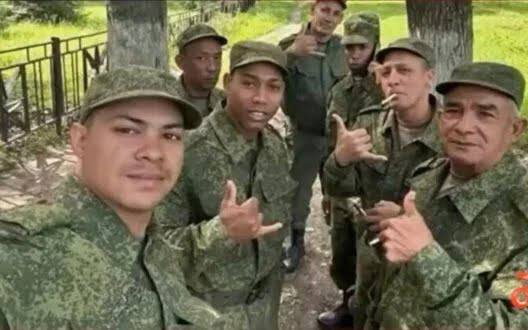
On 9 August, Peru's foreign ministry officially reported that 459 Peruvians had been recruited into the Russian army. Of these soldiers, 11 have been killed, 114 are missing, and three have been captured by the Ukrainian army. Another 31 Peruvians were evacuated: three of them chose to stay in Europe, and the rest returned home.

As of 29 April 2026, Russia had drawn in at least 27,000 foreign nationals from more than 130 countries to take part in its war against Ukraine, the International Federation of Human Rights reports. The Peru case is part of Russia's systematic recruitment of foreigners into its military, often through deception. Some men were offered civilian jobs or roles far from the front, only to end up in the thick of the fighting.

Relatives of the recruited men held demonstrations in Peru

On 29 April 2026, relatives of men recruited into the Russian army demonstrated outside Peru's foreign ministry in Lima, urging the authorities to help bring their family members home, according to SwissInfo.

Relatives of Peruvians affected by Russia's war against Ukraine demand urgent repatriation. 2026. Photo: Carlos Félix/LR

On 30 April, the Russian embassy in Peru responded that it agreed some Peruvian men were taking part in the war on Russia's side, but said this was their own voluntary choice. La República, however, reports that before leaving for Russia, the men were made to sign papers in Russian.

On arrival, their documents were taken, after which they underwent brief military training and were ultimately sent to the front. According to media reports, most were former military and police personnel lured by promises of jobs as security guards or civilian specialists, with salaries of $2,600–4,000 a month and bonuses of up to $20,000.

A “rear position” — until it isn’t

First, recruiters promise foreigners high salaries, signing bonuses, and “rear” or civilian positions. Debt traps and threats of deportation are also used. They lure people even through video games and chats. Once in Russia, recruits are forced to sign contracts, after which their documents are confiscated to keep them at the front. The contracts are often written in Russian, a language the foreign recruit does not understand.

Instead of the promised “rear positions,” recruits are thrown into infantry “meat assaults” after just a few days or a week of training. Mercenaries are killed while carrying out missions, while the wounded are often left on the battlefield without evacuation. Some men go missing or flee. Russia treats foreign mercenaries as “expendable labor,” according to leaked recordings cited by Radio Free Europe/Radio Liberty.

This is not an isolated case

Facing losses that now outpace its own mobilization, Russia has turned to citizens of other countries to keep its ranks filled in its war against Ukraine.

Kenya has become one of the largest sources of people recruited through deception. At first, Nairobi believed the number was only a few hundred, but the scale proved much larger. Nairobi thought Russia had recruited around 200 Kenyan citizens, but a new report says the figure is over 1,000. The scheme relied on fake job and education offers, after which recruits had their documents confiscated to keep them on the front line. The European Parliament found that Russia confiscates African recruits' documents and sends them to the front line in Ukraine.

In Cuba, recruiters promised people lucrative jobs, only to lure them into a trap. A Cuban captured near Kupiansk said he joined Russia's war effort under threat of deportation. The scale of the recruitment has been enormous. Ukrainian intelligence estimates that around 20,000 Cuban mercenaries have fought on Russia's side against Ukraine.

ukrainian intel nearly 20000 cuban mercenaries fighting russia’s side against ukraine nationals wearing russian military uniform 2023 video x/pstyle0ne1 florida lawmakers officials highlighted threat regional security news reports
Cuban nationals wearing Russian military uniforms. 2023. Screenshot from a video, via X/PStyle0ne1

The Philippines case shows what awaits the recruited at the end of this pipeline. Ukrainian military intelligence identified a Filipino named John Patrick among Russian soldiers killed in Donetsk Oblast. He was sent into a "meat assault" after just one week of training. He did not speak Russian and carried only a piece of paper with his unit number and his commander's name. After he was wounded, he was left to die in a tree line without evacuation, and Ukrainian intelligence warned that any work in Russia now carries a real risk of forced deployment into an assault unit. The deception relied on promises of high salaries, non-combat positions in the rear, and fast-tracked Russian citizenship, after which recruits were sent into infantry assaults.

  •  

70 ballistic missiles and 12 launchers: Ukraine lines up deep-strike refill from an unlikely supplier

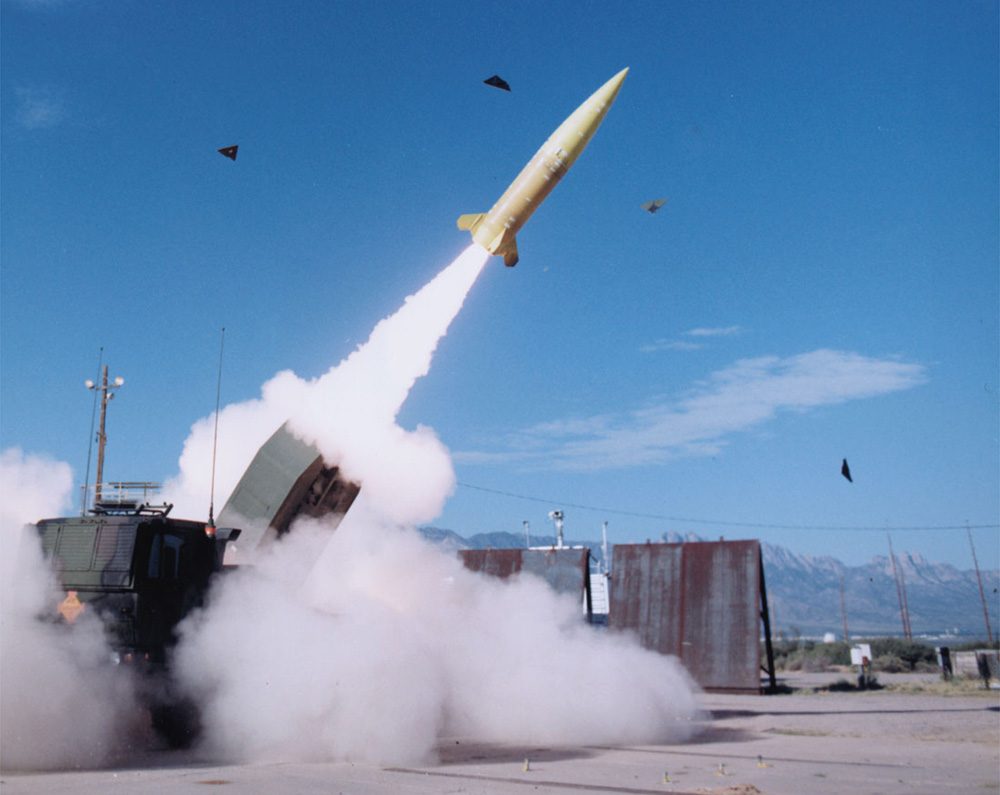
ukraine seeks us approval atacms use kursk offensive missile launch lockheed martin mfc-atacms-block-1a-unitary-02-hjpgpc-adaptive1280medium

Ukraine has agreed to buy a batch of American-made ballistic missiles and rocket launchers from Türkiye, according to Militarnyi. The weapons sit in Turkish stockpiles and still need to clear a routine US review before they ship.

Ukraine's deep strikes run on a scarce, politically gated supply of Western missiles, which it burns through faster than allies' resupply.

What Ukraine is buying

US government paperwork lists 70 M39 ATACMS (Army Tactical Missile System) missiles and 12 M270 rocket launchers, plus tens of thousands of cluster munitions. The M270 is a tracked launcher that fires guided rockets and ATACMS, the heavier sibling of the wheeled HIMARS.

The cluster load adds 2,524 M26 rockets for the M270 launchers and 47,000 M509A1 shells for Ukraine's 2S7 Pion and M110 guns. Both scatter bomblets over a wide area. The deal surfaced in US State Department notifications in the US Congressional Record for 6 August 2026. Türkiye wants to shed older weapons and fund newer systems, the filings say. The shipment moves through Turkish, Bulgarian, and American exporters.

How the sale clears Washington

Explore further

Frontline report: ATACMS returns to battlefield as Ukraine destroys Russian training facility in Voronezh

Because these are US-origin weapons, Washington must sign off first. The filings note that US law forces the State Department to notify Congress once major equipment tops $14 million, or other articles and services top $50 million. There is no approval vote: if neither chamber blocks the sale within 15 days, US consent takes effect automatically. Both chambers sit in recess past that deadline — the House until 31 August 2026, the Senate until 14 September 2026.

What the M39 ATACMS is

The M39 is the original production model of ATACMS, flying about 165 kilometers, or roughly 103 miles—shorter than later versions Ukraine has fired. It steers by laser gyroscopes with no GPS correction, which makes it less precise. Instead, it carries a 560-kilogram cluster warhead of 950 M74 submunitions built to hit troops, unarmored vehicles, and air defenses.

ATACMS, illustrative image. Credit: Wikimedia Commons
Explore further

Ukraine marks invasion anniversary with ATACMS strikes on Russian command and supply lines (MAP)

How Ukraine uses ATACMS

Ukraine has fired ATACMS at Russian command posts, ammunition depots, and air defenses across occupied land and inside Russia. Even occasional launches force Russia to shift air defenses back from the front, easing pressure on Ukrainian troops. That firepower had gone quiet. Ukraine ran through its US-supplied ATACMS months ago, and US approvals came slowly. Buying 70 more through Türkiye lets Ukraine rebuild without waiting on fresh US aid.

  •  

Ukraine’s Crimea campaign could strike seven times more targets with faster funding, Brovdi says

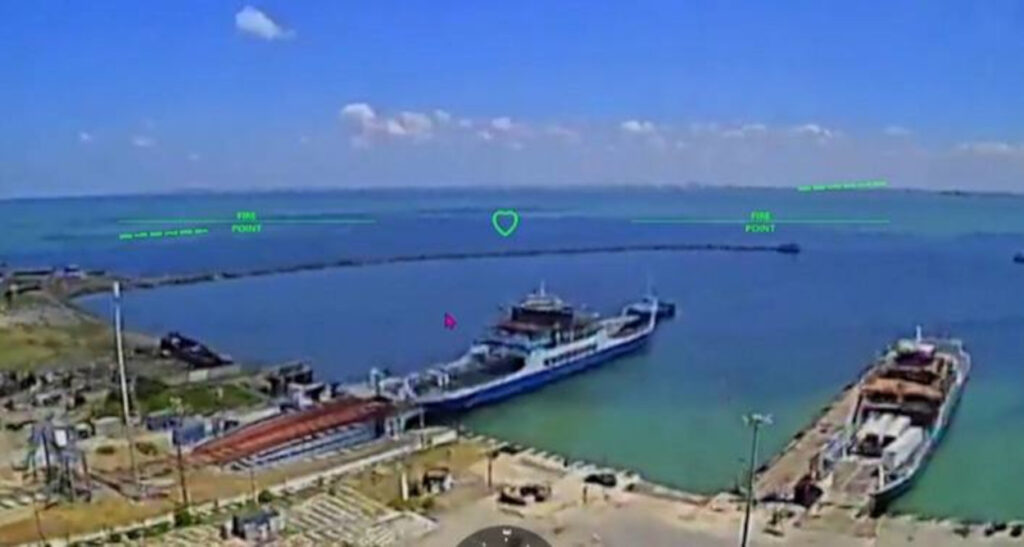
A photo shared by Robert “Madyar” Brovdi shows the Russian ferry “Maria” before it was struck in Ukrainian drone operations, with the damaged “Panagia” ferry visible to the right. Photo: Robert "Madyar" Brovdi

Ukraine's Crimea campaign aims to make the occupied peninsula unusable to Russian forces, its drone-forces commander told The Associated Press. Russia annexed Crimea in 2014. The campaign is only the first phase, said Maj. Robert "Madyar" Brovdi. His units could strike seven times more military targets with faster Western funding, he said.

The constraint is financing, not factory output. Brovdi put his forces at 14 percent of the strength a full-capacity operation would require. He traced the gap to the timing of allied money, not to Ukraine's drone production. "It's not that the production capacity of Ukrainian manufacturers doesn't allow us to make the necessary quantities" of drones, he said. He added: "It's the banal problem of untimely financing, which our partners do allocate, but which moves significantly slower than our plans."

Even so, Brovdi framed the peninsula as decisive. "Crimea falls within the key conceptual pillars on the path to ending the war," he said.

What the Crimea campaign has hit

The summer strikes have hit rail bridges, oil depots, and power infrastructure. These aim to cut supply lines and blind Russian air defenses as drones approach. To pry open a "window" for those drones, the force destroyed more than 300 air defense assets in recent months. Those included surface-to-air systems, radar stations, and electronic-warfare equipment.

Where Starlink connectivity reaches, an average of three drones can now destroy even a heavily defended target, Brovdi said. In turn, his crews match the munitions to each aim. One mix suits a bridge pier; another fits a fuel truck or a moving train. Even so, his forces avoid civilian infrastructure, he added. Still, strikes on the power grid have cut electricity for residents. Brovdi said he has twice publicly apologized to Ukrainians living in Crimea.

He also pointed to one measure of progress. Across four recent large-scale Russian barrages from the peninsula, launch sites fired only five missiles in total. He credited that drop, however, to the destruction of Russian air defenses. The AP could not independently verify the claim.

Forcing Russia off the peninsula

Much of Russia's Soviet-era air defense runs on the power grid. That is one reason Crimea's electricity network keeps drawing fire. As a result, losing power leaves Russian soldiers "blind," Brovdi said, with only machine guns and rifles.

Meanwhile, Ukraine is working to dismantle Crimea's role as a naval base. "Creating conditions that make it impossible for any kind of military capability … to remain there will make Crimea uninteresting … as a military staging ground," he said.

The offensive began in late June. Two weeks in, Ukrainian intelligence indicated Russia had ordered its military commands and security services off the peninsula, Brovdi said. In addition, a covert order called for removing secret archives and artworks. The AP could not independently verify the account.

Russian countermeasures and the missile threat

Russia is pushing back against the Crimea campaign. It is installing jamming systems that will degrade Starlink to some degree, Brovdi said. Russia is also building its own satellite network to rival the service. "This is a risk for the entire planet," he said, "because a dictatorship will gain access to information across the whole globe."

Other threats are mounting as well. Jet-powered Shahed drones are harder for Ukraine to shoot down. Their concentration has risen two and a half times in recent weeks, he said. Moreover, Russia can now fire a simultaneous salvo of 77 ballistic missiles and plans to raise that to 200. As a result, the danger is pressing. Ukraine is short of interceptors for the US-made Patriot, its only defense against ballistic missiles.

"Even if they only manage half of that, it will all be flying at us," Brovdi said. The only way to bring the number down is to hit every facility that builds the missiles, he added. That, he said, is why Ukraine's long-range strikes inside Russia matter.

Wildberries in the crosshairs

One civilian-facing target Brovdi named was Wildberries, Russia's largest online marketplace. Many call it the country's answer to Amazon. "Wildberries is, first of all, a supply platform—it's the war's quartermaster," he said. The company also runs a dedicated section selling goods for Russia's military, he noted.

For now, these strikes aim to make ordinary Russians feel the war directly. He declined to give a timeline. Instead, the strikes will continue "until it becomes impossible for it to recover quickly," he said.

Finally, he cast the retailer as a pressure point on morale. "Ultimately, Wildberries is, forgive the expression, a consumer gambling addiction," he said, comparing lost access to restrictions on social media. "It turned out to be a sensitive sensor of the comfort of Russia's massive population—people who consider themselves completely untouched by the actions of the aggressor country."

  •  

Russia’s advance in Ukraine slows as casualties per square kilometer rise 3.5-fold, Radio Svoboda reports

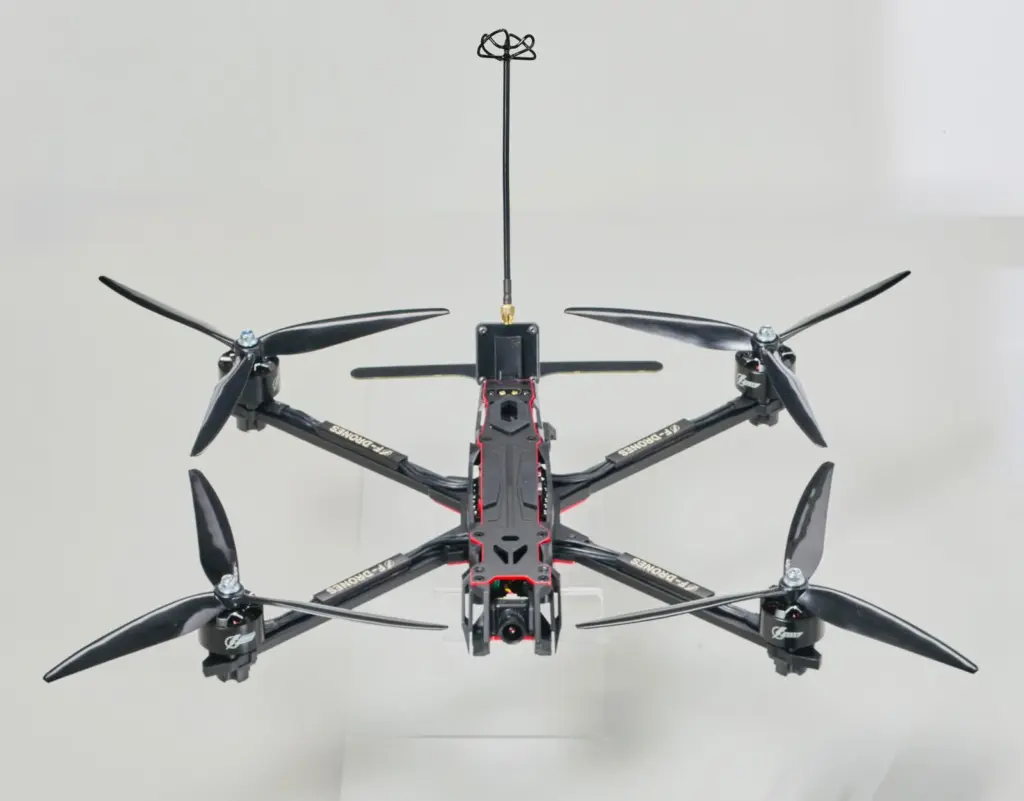
F-10 strike drone.

The pace at which Russian forces are occupying Ukrainian territory has fallen sharply since the start of 2026, while the scale of Russian losses has not, Radio Svoboda's Russian Service reports, citing data from the Ukrainian project DeepState, which tracks the front line.

DeepState's figures show Russia seized 450 to 550 square kilometers a month at the 2025 peak. The rate then declined steadily from December 2025 through July 2026: 445 square kilometers in December, 160 in April, and 27 in July. A comparable Russian project, Slivochny Kapriz, which by contrast credits the Russian army with any area where its personnel have been spotted—even without confirmed control—recorded a similar slowdown, from 550–600 square kilometers a month last year to 112 in June.

A shrinking prize in northern Donbas

At the end of last year, roughly 5,000 square kilometers remained under Ukrainian control in northern Donbas, including three "fortress" cities larger than Pokrovsk: Kostiantynivka, Kramatorsk, and Sloviansk. Even using Slivochny Kapriz's more generous estimate of the current pace, capturing that territory would take a year and a half.

Losses hold steady as gains shrink

Despite the slowdown, Ukrainian military estimates of Russian losses have not fallen and remain at roughly the level recorded in the second half of 2025. Both Ukraine's General Staff and its Ministry of Defense now publish official loss estimates. According to the General Staff, Russia lost nearly 164,000 people from February through June 2026—five months—an average of 32,800 a month. The Ministry of Defense's verified count for the same period was 157,000 killed and wounded, or 31,500 a month on average. The General Staff puts Russia's total losses since the start of the full-scale invasion at 1.4 million, a figure that includes killed, missing, wounded, and other losses, not only irrecoverable ones.

Western officials have offered comparable figures. UK intelligence chief Anne Keast-Butler said in May 2026 that the Russian army had lost 500,000 servicemen killed alone; at a ratio of two to three wounded per fatality, that implies total Russian losses of 1.5 to 2 million, according to British intelligence. US Secretary of State Marco Rubio estimated Russian losses at 7,000 soldiers a week roughly six months ago, a figure that broadly matches Ukrainian military estimates.

The cost of a square kilometer has tripled

The American Institute for the Study of War calculated in 2024 that Russia lost 125,800 people while capturing 2,356 square kilometers between September and November—53 losses per square kilometer. Radio Svoboda's own calculations, based on General Staff and DeepState data, put the 2025 figure at 85 losses per square kilometer. By the latest 2026 estimates, that figure has risen to 290—3.5 times the 2025 rate.

Drones make breakthroughs impossible, officials say

The slowdown is now widely attributed to Ukraine's growing advantage in drone warfare. CIA Director John Ratcliffe, citing US intelligence, said the average lifespan of a Russian recruit arriving at the front in Ukraine is 20 to 30 minutes. He said the Russian advance has slowed because Ukraine has made major gains in the use of drones and asymmetric warfare methods that are leveling the battlefield: "AI drones have become specialized and inexpensive killing machines."

Current Time, the Russian-language network run by Radio Svoboda, reports that the slow pace of both armies' advances today stems from the specific nature of this war: drones have made rapid breakthroughs impossible.

A Ukrainian drone operator, whose name Radio Svoboda withheld for security reasons, said the decline in the Russian advance stems from a collapse in the training level of Russian troops: "He's worse than he was a year ago. Actually, he's simply not there. They grabbed men from the garage, gave them a rifle, and said: 'Run!'"

The operator said Russian commanders now resort to any means necessary to force some forward movement: "In Kostiantynivka, they now drop supplies for the [infiltrated] soldiers a block away from where they're sitting, just so there's some kind of advance. It's absurd, but unfortunately, that's the reality." That tactic helps Russian forces advance, he said, but at a catastrophic cost: only one soldier in 15 survives.

Russian infiltration groups of two to six fighters cover 15 to 20 kilometers on foot to reach positions, carrying "everything that will help them survive," which makes them, in the operator's words, "the easiest possible target for us." He acknowledged that some Russian soldiers still slip through: "Recently, while we were destroying Russian equipment near one settlement, we missed some motorcyclists who are now hiding somewhere in the tree lines." Stopping the Russian advance entirely, he said, is simply not possible: "We're constantly adjusting our tactics, but so are they—though technology helps us, while for them, as usual, everything is done with an axe."

Kremlin prepares for a new mobilization wave

President Volodymyr Zelenskyy said recently that Russian leader Vladimir Putin is preparing to announce a new mobilization wave after Russia's State Duma elections in September, aiming to recruit 300,000 to 500,000 people. The Kremlin denies planning a mobilization, but the Institute for the Study of War says Russian authorities are taking steps consistent with preparations for a large-scale draft.

Analysts point to a law Putin signed in November 2025 allowing reservists to be sent into combat zones without a formal mobilization declaration. On 22 July, the State Duma passed in three readings a law expanding the pool of people with criminal records or under investigation who may sign military service contracts during mobilization and martial law. The day before, a draft amendment was published under which Russia's National Guard would revise its civil defense rules to explicitly reference mobilization and martial law, requiring advance protective measures for its employees, civilian staff, and their families "from dangers arising during mobilization, during martial law, in wartime," according to Meduza.

The Ukrainian drone operator said mobilization could increase the pace of the Russian advance: "You can't keep track of everyone."

  •  

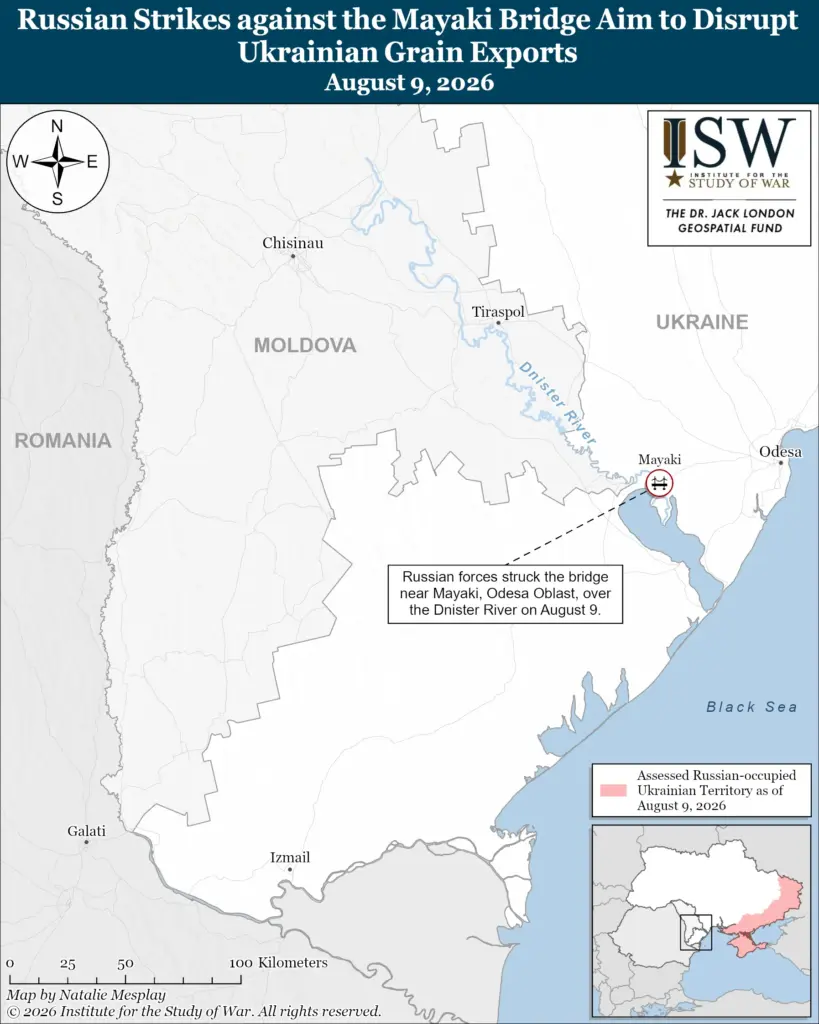
ISW: Russia strikes the Mayaki bridge linking southern Ukraine to Romania and Moldova

ISW

Russian forces struck the Mayaki bridge on the M-15 highway on 9 August, the Institute for the Study of War reported. The strike severed a road link that ties southern Ukraine to Moldova and Romania. That Odesa–Reni route crosses the Dniester and feeds the Danube ports. Those ports have become Kyiv's main export outlet since Russian strikes crippled its Black Sea shipping.

Conflicting claims over the Mayaki bridge

Russian milbloggers reported the attack, though their accounts diverged sharply. One claimed that Russian forces had destroyed the span. Others published footage purporting to show that it still stands. A local outlet serving nearby Izmail reported on 9 August that the strike damaged the crossing. Ukraine's State Border Guard Service separately confirmed that authorities briefly restricted traffic on the route. Moscow had already targeted the same structure in December 2025.

Why the land corridor matters

Russia likely hit the Mayaki bridge to choke Ukrainian grain exports, ISW assessed. Those exports now move through a land corridor that Kyiv has leaned on since strikes disrupted its maritime routes. Moscow has steadily intensified this campaign since July 2026. Navy Spokesperson Captain Third Rank Dmytro Pletenchuk offered one measure on 31 July. He said Russian strikes had damaged more than 20 ships near the Black Sea and sharply slowed cargo flows. Meanwhile, the country's main farmers union weighed in on 15 July. The Ukrainian Agri Council estimated that Russian attacks had cut about a third of Ukraine's grain-export capacity.

Minister of Agrarian Policy and Food Taras Vysotskyi has described the fallout. He said the strikes are forcing Kyiv to reroute grain and cargo through the Danube River. Russia used the same playbook in July 2023. Back then, then-Minister Mykola Solskyi reported that strikes destroyed 60,000 tons of grain at Chornomorsk port overnight on 19 July. Therefore, ISW concluded, Russia is likely shifting its strikes from the sea corridor to the land corridor. The aim, analysts wrote, is to block grain exports and weaken Ukraine's wider economy.

Russian forces are likely shifting their strikes from Ukraine's sea corridor to its land corridor to block grain exports and degrade the economy. — Institute for the Study of War

Türkiye floats a Black Sea moratorium

Turkish Foreign Minister Hakan Fidan raised a separate track on 9 August. He said Ankara had proposed a Russian–Ukrainian moratorium on strikes against merchant ships in the Black Sea. Both Moscow and Kyiv have received the offer, Fidan added, and Türkiye now awaits their response.

  •  
❌