❌

Vue lecture

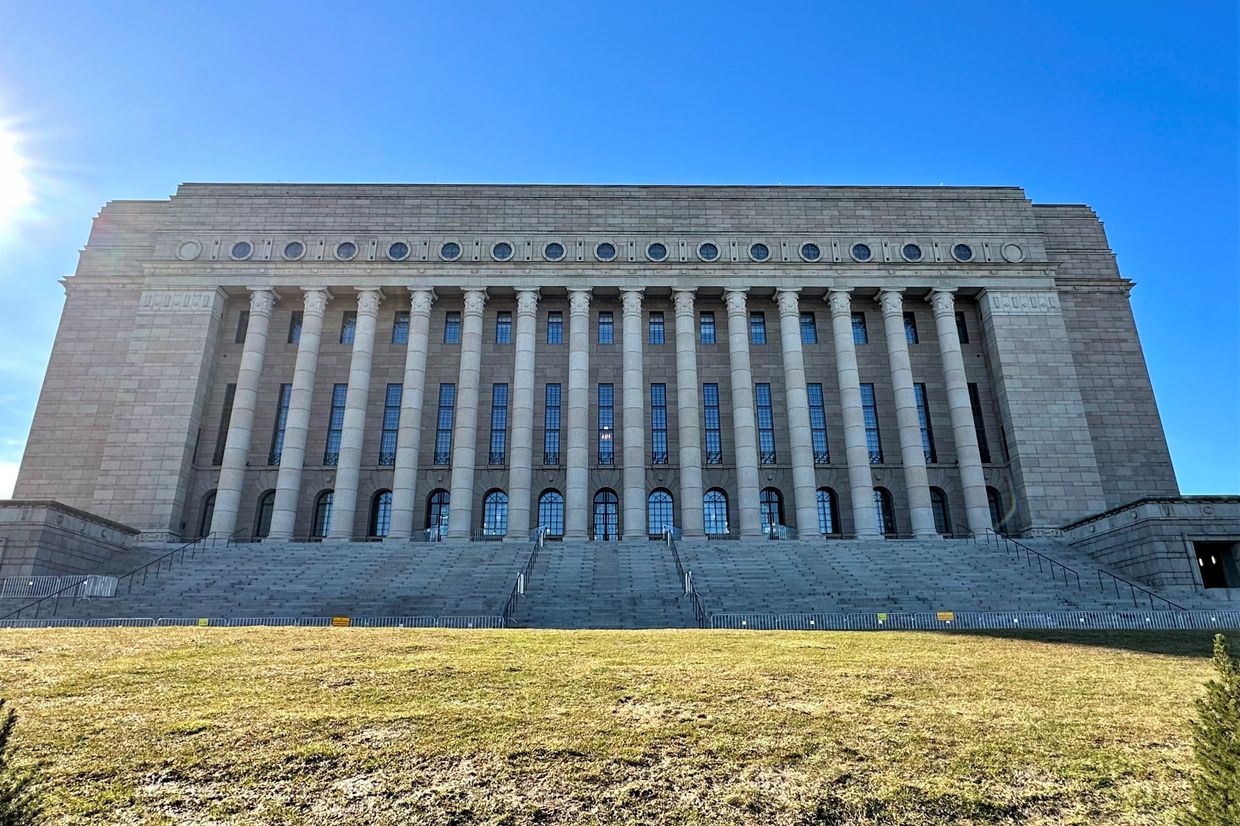
Finnish Lawmakers Report Suspicious Home Break-Ins

The speaker of Parliament said there were a “considerable” number of mysterious entries in which perpetrators appeared to have taken nothing.

© Essi Lehto/Reuters

The Finnish Parliament building in Helsinki. Prime Minister Petteri Orpo said that it was “very possible” there was a foreign actor behind the suspected home entries, the national broadcaster reported.
  •  

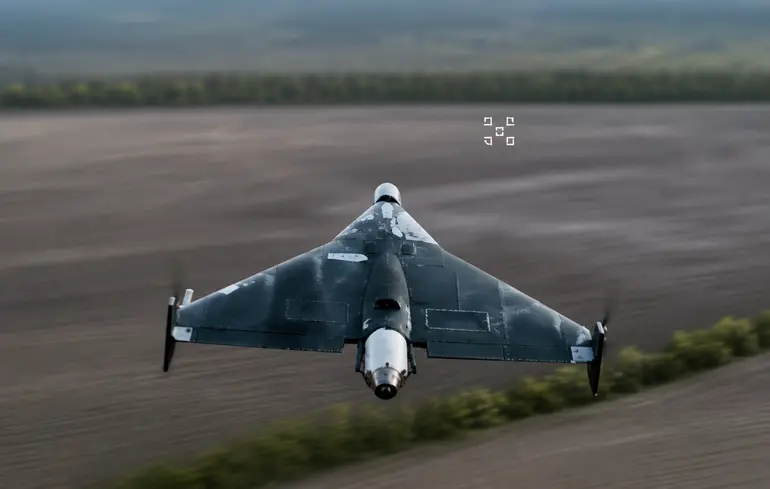
Ukraine’s jet-drone kill rate just hit 55%. Russia’s answer: $12 billion to make more of them

ukraine's jet-drone kill rate just hit 55% russia's answer $12 billion make more · post geran-5 small cruise missile sights sting s interceptor drone герань-5 в прицилі дрона-перехоплювача стоп-кадр з

Ukraine's defense forces intercepted 55% of Russia's jet-propelled drones in September—more than 1,500 out of over 2,730 launched—Ukrainian President Volodymyr Zelenskyy said in his 26 September evening address.

Russia's full-scale aerial campaign has shifted from propeller-driven Shaheds Ukraine learned to shoot down at over 90% to jet-propelled models that fly faster, resist jamming, and often slip past existing defenses.

55% and climbing

Zelenskyy said military intelligence had briefed him on Russian weapons production—not just jet Shaheds but other technological systems. The documents detail what Moscow is preparing for next year: the volumes and the financing. "We are preparing our countermeasures, and for every line item there must be a Ukrainian answer," he said.

Several effective interceptor prototypes are already in combat.

"Interceptors have been identified that can become the main tool of our defense. Production, components—all of this we are scaling up. There will be an answer," Zelenskyy said.

The goal is to match the interception rate for regular propeller-driven Shaheds, which exceeds 90%. At 55%, the jet-drone rate is climbing but still leaves nearly half reaching their targets.

$12 billion for one category

Russia plans to spend $12 billion in 2027 on jet drones and loitering munitions alone, Zelenskyy said. "This concerns not only Ukraine and not only us," he added, warning that multiple intelligence agencies have information Russia wants to expand its war to other countries and regions.

He said this is why Ukraine is pushing for stronger sanctions and the Drone Deal format. Ukraine has signed 11 such agreements, the latest with Finland at the UN General Assembly this week, and is preparing a 12th with what Zelenskyy called "a strong country."

The warning came as Russia struck a Kyiv data center twice on the morning of 27 September, injuring three people including two children, Zelenskyy wrote. Overnight strikes killed three people in Zaporizhzhia Oblast and one man in Kyiv.

In total this week, Russia launched more than 2,200 strike drones, roughly 1,650 aerial bombs, and 38 missiles—a significant share of them ballistic—at Ukraine, he said.

russia steers its long-range drones ground towers—kyiv says hit one occupied crimea · post russia’s new “geran-4 seeker” shahed variant uses machine-vision ai targeting geran 4 ukraine news ukrainian reports
Explore further

A $50 computer just flew Russia’s newest jet drone into a Ukrainian grain ship—and jamming couldn’t stop it

Jet drones are now Russia's main aerial weapon

Russia's jet-propelled Geran-4 and Geran-5 drones have become the dominant threat in Russia's aerial campaign against Ukrainian cities. By August, production of jet Geran-4/5 models exceeded that of propeller-driven Geran-2s, according to Ukraine's military intelligence (HUR). Russian factories produce roughly 3,000 jet models per month alongside about 2,800 of the older type. The Geran-5 is technically a drone but functions as a small cruise missile—faster, harder to jam, and increasingly guided by AI and mesh networking that complicate interception.

Ukraine's answer has been interceptor drones—cheap, fast enough to chase a Geran, and guided by machine vision. A Ukrainian interceptor recently scored its first kills against jet Gerans and is heading into mass production, though a presidential adviser warned that speed alone cannot catch them—machine vision and automatic guidance decide the chase.

  •  

Born in the USSR, claimed stateless in Finland, fighting for Ukraine—now jailed in Russia

Mikael, who is currently imprisoned in Russia.

A man who volunteered to fight for Ukraine has landed in a Russian prison—seized not on the battlefield but on another continent, according to an investigation by Finnish daily Helsingin Sanomat (HS). He had gone to West Africa for civilian work when a Russia-aligned junta grabbed him and handed him to Moscow.

Russia has turned the Sahel's coup governments into clients, trading security for mining access. Its grip now reaches far enough that in what Yle calls the first such case, a man who once fought against Moscow was picked up on another continent and delivered to its courts—the war's reach no longer stops at Ukraine's borders.

From Ukraine's army to an African gold mine

The 50-year-old, identified in the reporting only as Mikael, joined a Ukrainian army unit soon after Russia's full-scale invasion in 2022. Fluent in Finnish and Russian, he later worked as a liaison between foreign fighters and Ukrainian troops. His return to Finland at the end of winter 2025 was abrupt: Ukrainian authorities had opened an investigation into his handling of funds and imported cars.

HS's investigation also found he had given false information about himself to both his family and Finnish authorities, and that his Finnish criminal record includes embezzlement and fraud. By spring, he joined about ten men bound for Sierra Leone to guard a gold mine, HS reported, as Yle relayed. They wanted work that wasn't the war.

Handcuffed hours after arrival

When most of the group moved on, Mikael and an Italian named Paolo—another Ukraine volunteer—continued to Burkina Faso for the same mining firm. Within hours of reaching their hotel in Ouagadougou in June 2025, men blindfolded and handcuffed the two and drove them off, according to the same HS investigation, carried by NV. Burkina Faso's Russia-backed junta found Mikael's Ukrainian military passport and identified both as men who had fought in Ukraine. Italy's embassy freed Paolo after three months. Mikael stayed behind.

Stateless on paper—but maybe not

In autumn 2025, Burkina Faso secretely handed Mikael to Russia, which charged him with "mercenarism"—the statute carrying seven to 15 years that Moscow uses against foreigners who fought for Ukraine. His trial lasted about two months. Moscow's Basmanny District Court, which handles cases the state treats as sensitive, ruled in November 2025 and classified its decision. The sentence and its finality stay unknown, and he now sits in a prison in Samara. Mikael holds no Finnish passport: born in the Soviet Union, he lived in Finland on a residence permit and traveled on documents marking him "stateless"—a status HS's investigation calls into question.

HS's investigation, though, found he likely holds a Russian passport—a status Russia has not confirmed, and one that may explain why Helsinki never treated him as its own to rescue. His relatives pressed Finland's Foreign Ministry to help while he was still in Burkina Faso, but it never demanded his return. Russia tried him, it seems, as a foreigner—a citizen would have faced treason charges. Finnish police, the security service, and the Foreign Ministry are now investigating, with National Bureau of Investigation commissioner Sami Liimatainen saying they aim to locate a missing man and suspect no crime.

  •  

Finland votes to withdraw from landmine treaty, citing Russian threat

Finland votes to withdraw from landmine treaty, citing Russian threat

Finland's parliament voted on June 19 to withdraw from the Ottawa Convention banning anti-personnel landmines, citing growing security concerns from Russia's aggressive posture and the threat it poses to the region, Reuters reported.

The vote aligns Finland with its Baltic allies, Estonia, Latvia, and Lithuania, whose parliaments have already approved similar exits from the treaty.

Defending the decision earlier this week, Finnish President Alexander Stubb said the security reality along Finland's 1,300-kilometer (800-mile) border with Russia had changed dramatically since the full-scale invasion of Ukraine, according to TVP.

"The reality in the endgame is that we have as our neighboring country an aggressive, imperialist state called Russia, which itself is not a member of the Ottawa Treaty and which itself uses landmines ruthlessly," Stubb said.

Russia has widely deployed landmines across Ukrainian territory since launching its invasion in 2022, a tactic condemned by human rights organizations and Western governments.

Finland, which joined NATO in 2023, has significantly ramped up its defense posture amid growing concern over potential Russian provocations. The country closed its border with Russia over a year ago, accusing Moscow of orchestrating a "hybrid operation" by directing asylum seekers toward Finnish territory. Helsinki claims such hybrid tactics have intensified since it joined the alliance.

The Finnish Border Guard completed the first 35 kilometers (22 miles) of a planned 200-kilometer (124-mile) fence along its eastern frontier on May 21. The move came amid growing evidence of Russian military infrastructure expansion near the Finnish border.

Finland is "closely monitoring and assessing Russia's activities and intentions," Finland's Defense Minister Antti Hakkanen told AFP on May 22.

"We have excellent capabilities to observe Russian operations. As a member of the alliance, Finland holds a strong security position."

Russia's Defense Minister Andrei Belousov said in December 2024 that Moscow must be ready for a potential conflict with NATO within the next decade. Western officials have repeatedly warned of the possibility that Moscow could target NATO members in the coming years.

Diplomacy in crisis: G7 letdowns reveal limits to Western solidarity on Ukraine
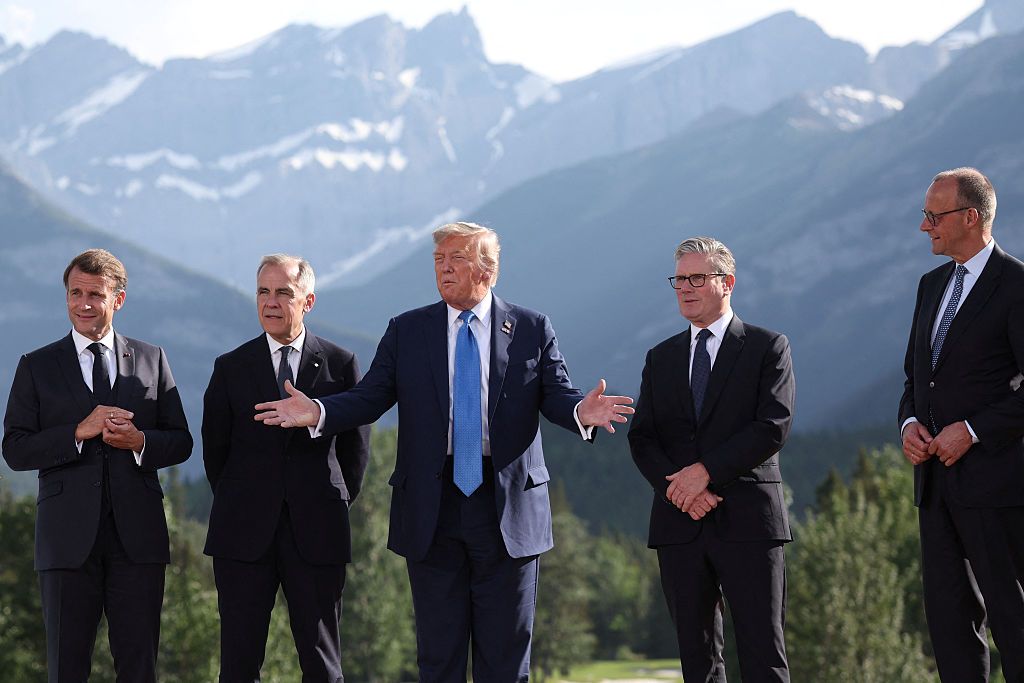
KANANASKIS, Canada — The Group of Seven (G7) Leaders’ Summit ended on June 17 with no joint statement in support of Ukraine, no commitments to provide desperately needed U.S. weapons, and no meeting between President Volodymyr Zelensky and U.S. President Donald Trump. The Ukrainian delegation headed into the summit,
Finland votes to withdraw from landmine treaty, citing Russian threatThe Kyiv IndependentDmytro Basmat
Finland votes to withdraw from landmine treaty, citing Russian threat
  •  
❌