❌

Vue lecture

Ukraine’s Donetsk counteroffensive wins not by force but by stealth: it gathers troops under Russian nose and seizes two villages before they react
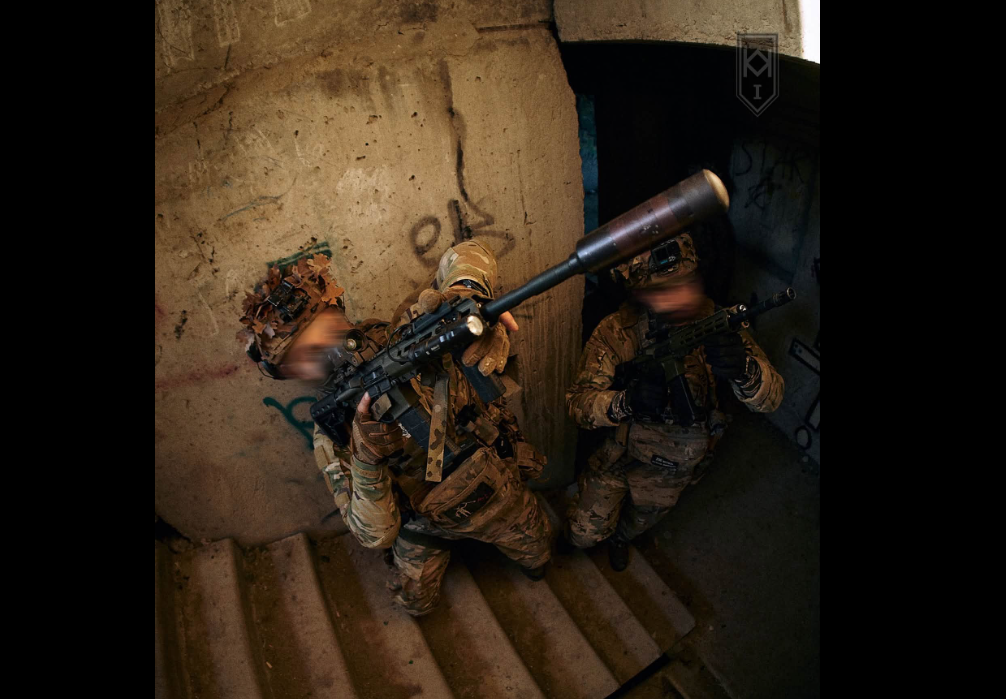
Ukrainian soldiers. Source: The Third Separate Assault Brigade of the Ukrainian Ground Forces

Ukrainian troops gathered for an assault on two Russian-held villages, and the Russians never saw them coming. A captain of the 60th Mechanized Brigade, with the callsign Akhmet, says the concealed buildup near Derylove and Drobysheve was what allowed his units to take the villages once Operation Vivaldi began, Suspilne reports.

The account fills in how Vivaldi actually takes ground: not by overwhelming force but by concealment, timing, and technology. Only the first phase of the "Operation Vivaldi" counteroffensive, which the Third Army Corps is running near Lyman in northern Donetsk Oblast, has cleared 75 square kilometers of Russian infiltrators and liberated another 10 square kilometers of territory.

Concealment set up the assault

The brigade's task was to free Derylove and take control of Drobysheve. The key, Akhmet says, was accumulating forces as covertly as possible in Drobysheve and on the outskirts of Derylove, so the units could begin exactly on schedule.

The Russians, he believes, failed to spot the buildup because Ukraine had done its reconnaissance well during the planning and preparation. Constant coordination with neighboring units, sharing information, and lending help mattered too. The point was to keep the movement and massing hidden until the appointed hour, so nothing tipped the Russians off before the assault opened.

The captain coordinates the fight

As a battle captain, Akhmet oversaw the tasks set by brigade command and the work of several strands at once: reconnaissance, drones, electronic warfare, and air defense.

"We determine where the enemy sits, we inflict fire damage on Russian soldiers, and we cover our groups on the ground," he said.

The job was to find the Russians, strike them, and shield the assault teams as they moved up.

Timing cleared the infantry's path

The brigade also located where Russian drones were taking off and hit those launch points at set times, to keep enemy operators from scouting and firing on the Ukrainian troops working below. Getting the timing right was the whole point, Akhmet explains, so the infantry could move to its positions and reach cover without being caught in the open.

The two villages were a piece of a larger aim: the Institute for the Study of War has assessed that Vivaldi disrupted Russia's plan to encircle the fortified belt of Donetsk cities.

  •  

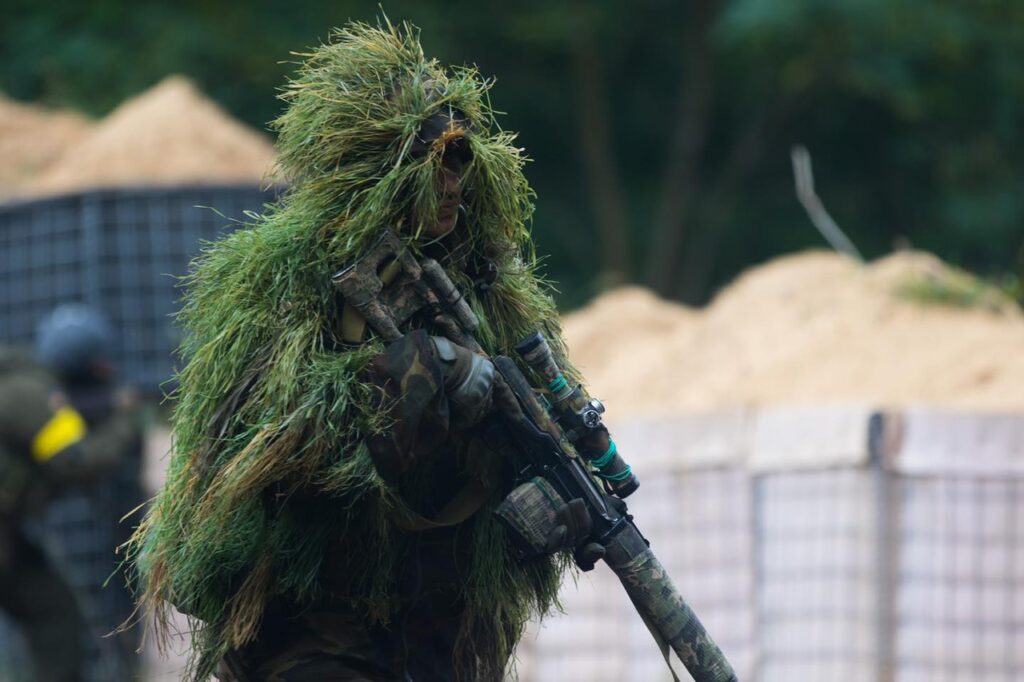
Ukraine’s snipers didn’t vanish in the drone war—their job changed beyond recognition

ukraine's snipers didn't vanish drone war—their job changed beyond recognition · post ukrainian sniper ukraine news reports

Drones get most of the attention in this war, and deservedly so—but the snipers are still out there, two Ukrainian marksmen told Army Inform, and the same drones have made their work far harder to survive. It now turns on watching, not shooting: long stretches at a hidden position, a thermal scope always running, and a constant fight to stay unseen.

Across the drone-saturated front, cheap cameras overhead have rewritten nearly every job—infantry, logistics crews, and now marksmen—so that surviving depends less on firepower than on never being seen.

The job is mostly watching

The men—a squad leader in a special-purpose sniper company, callsign Efiop, and his partner Maister—serve in the National Guard of Ukraine's 3rd Operational Purpose Brigade Spartan. Maister worked a factory milling machine before joining in 2022. He saw what Russian troops were doing, he said, and Ukrainian children started dying: he went to fight for the children, and he has a daughter of his own. A team takes a sector and holds it around the clock through a thermal scope.

"We can sit 40 days and never fire a shot. Or we go in, and in a single day we take down a lot of them," Efiop said.

His longest stint at one spot ran 48 days, and the greatest distance he has worked was 2,540 meters—more than a mile and a half.

Up to 154 pounds on your back, over 12 miles to cross

Reaching a position is often the hardest part. A sniper carries a vest, helmet, an assault rifle and the sniper rifle, and what supplies will fit—60 to 70 kilograms, or 132 to 154 pounds. They stay more than a month, and a month's worth will not go on one back. That load sometimes crosses more than 20 kilometers, over 12 miles, of open ground with no tree line to hide behind.

"You don't walk, you run," Maister said.

Lately it has eased a little: food can be dropped in by a heavy Vampire bomber drone.

Drones rewrote the rulebook

The biggest shift came from the sky. Russian drones with thermal cameras can see a bullet in flight because it is warm, Efiop said, and then burn out the position.

"They caught us like that once. We took out three, they saw where we fired from and burned the spot. We moved right away, and everyone lived," Efiop noted.

Now the snipers watch remotely from a safer place instead of lying behind the scope for hours. Once, that safer setup saved a life outright: a mortar round came in and pierced only the rifle scope.

  •  

20% to 70%: Ukraine’s National Guard rewired its drone war around cables

The fiber optic drone flying, showcasing the wire attached. Photo via Ukraine's Ministry of Defense.

Ukraine's National Guard now uses fiber-optic control for 70% of its drones, its commander said in an interview reported by Ukrinform on 9 September. Russian jamming cannot touch that link.

On a front where both sides jam radio signals around the clock, cable-guided drones have become some of the most effective weapons in the war—and Russia has turned to them too.

From radio signals to a cable

National Guard Commander Oleksandr Pivnenko gave that share on the YouTube channel LB Live. Earlier, the split ran the opposite way—about 20% fiber-optic, 80% radio-controlled.

These drones swap the radio link for a hair-thin cable that unspools as they fly, leaving Russian jammers no signal to block. The change was not smooth. Pivnenko said the National Guard first wrestled with the cable's quality and the way the drones handled. Crews have since learned to fly them for reconnaissance and strikes.

Twice as many drone-hunting crews

The force has also doubled its number of interceptor-drone crews over the past six months, Pivnenko said.

The National Guard plans to keep building those capabilities, Pivnenko added, calling the development of unmanned systems units one of its priorities. Ukraine's Defense Procurement Agency has also opened its first competitive tenders for fiber-optic and deep-strike drones, bought to Defense Ministry specifications rather than by product name. Since the full-scale invasion began, the force's drone crews had struck more than 243,000 enemy targets, Pivnenko said in late July.

  •  
❌