❌

Vue lecture

Ukraine keeps hitting the fuel that Russia’s war runs on. Its latest target is the Slavyansk-EKO refinery, with an annual processing capacity of at least 3 million tonnes
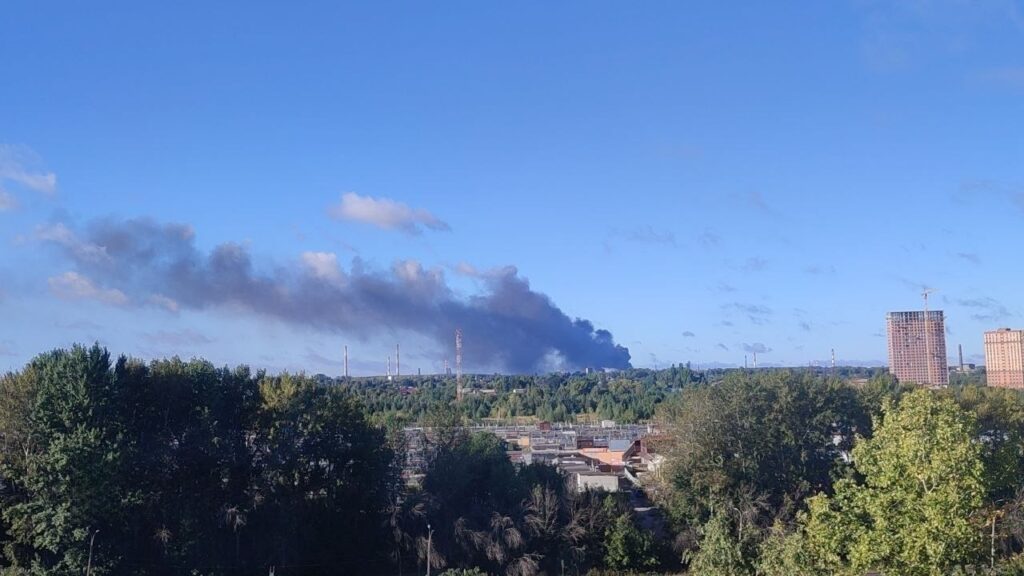
Smoke from a fire at the oil refinery in Slavyansk-on-Kuban. 13 September, 2026. Photo: Exilenova+

An oil refinery in Slavyansk-on-Kuban in southern Russia was attacked overnight on 13 September, Astra reported. By morning, residents began posting videos showing smoke over the refinery and nearby areas. That same morning, Ukraine’s Defense Intelligence (HUR) reported that Ukrainian drones had struck the Slavyansk-EKO refinery.

Ukrainian strikes on Russian oil refineries have become systematic, aimed in part at reducing the Russian military’s access to fuel, which is critical for waging the war. Ukrainian forces have been striking strategic facilities located hundreds of kilometers from the front line.

The design capacity of Slavyansk-EKO is approximately 5.2 million tonnes per year, though actual volumes are lower by about one to two million tonnes, Militarnyi reports.

Thick smoke visible for dozens of kilometers

The Ukrainian strike hit a key oil-processing unit and the facility’s oil storage tank farm, which “fuels the criminal war against Ukraine,” HUR reported.

Two oil storage tanks were destroyed in the strike, according to photos published by Dnipro Osint. Militarnyi noted that the photos also show damage to neighboring tanks.
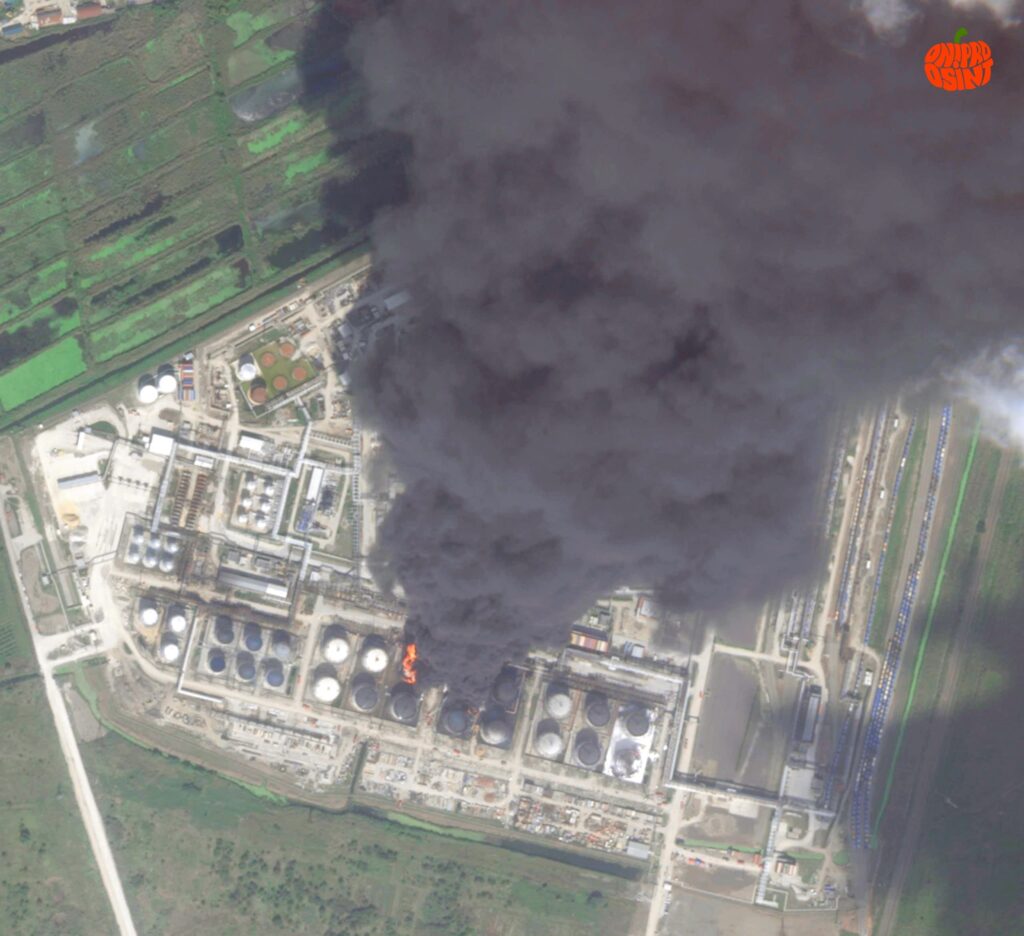
Satellite imagery of the Slavyansk oil refinery after a nighttime UAV attack on 13 September. Part of the refinery is obscured by thick smoke from a fire in the tank farm, Krasnodar Krai, Russia. Photo: Dnipro Osint


The strike reportedly hit the area containing the facility’s largest storage tanks. The refinery operates using purchased or tolling crude oil because it does not have its own crude oil production base.
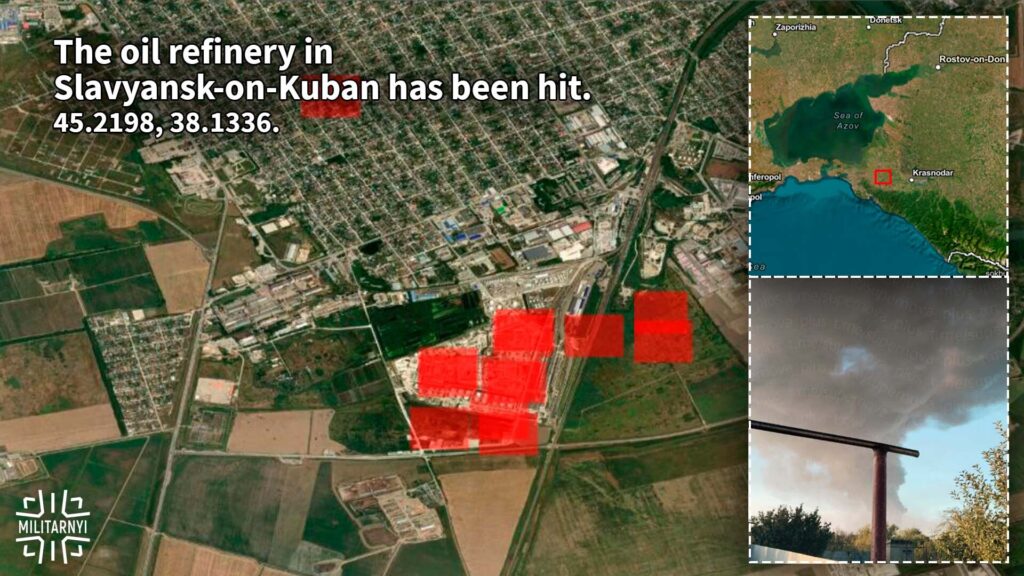
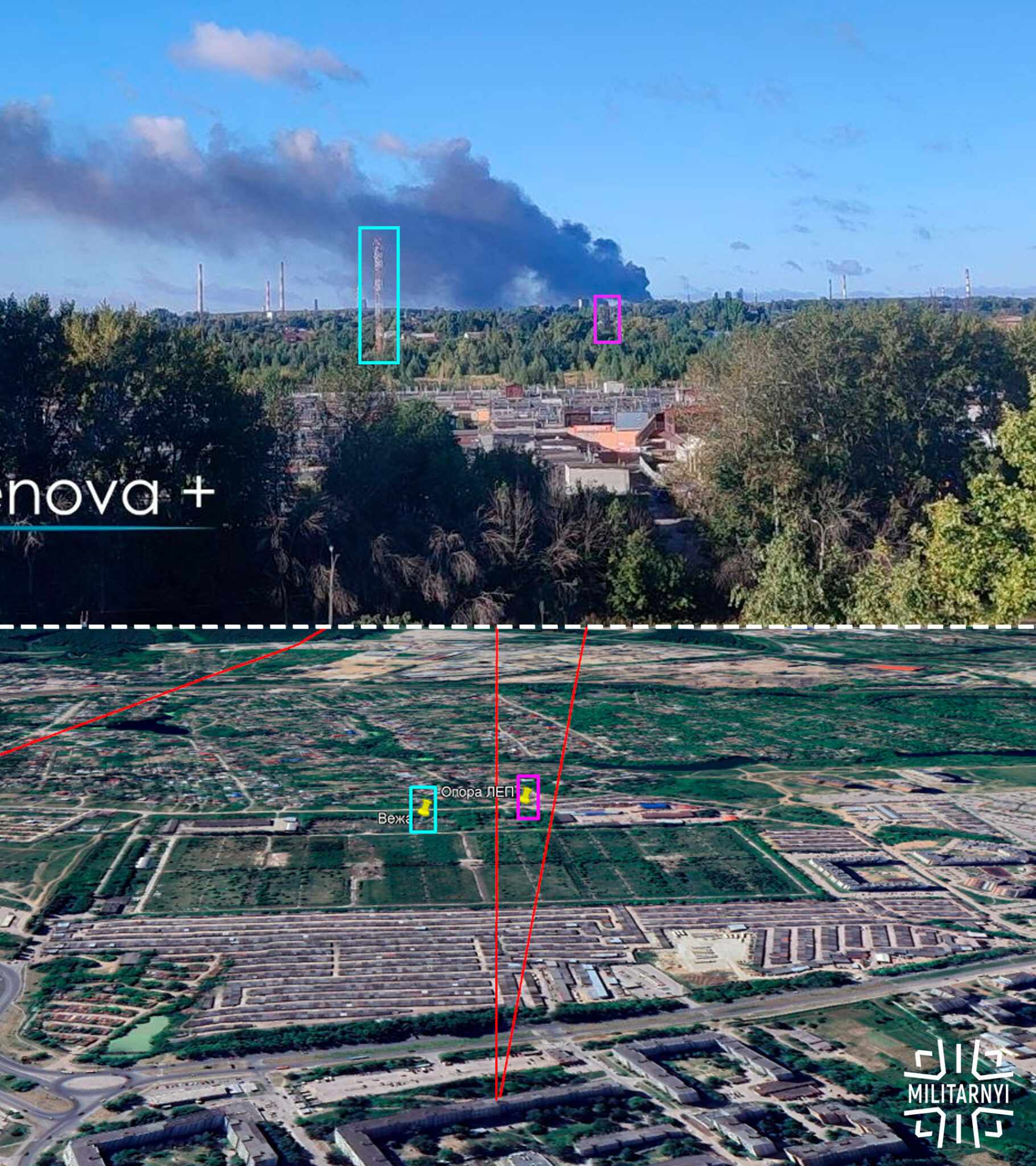
Fire broke out at the oil refinery in Slavyansk-on-Kuban following an attack by Ukrainian drones on September 13, 2026. Analysis by Militarnyi, with an Esri map and NASA FIRMS data

The refinery has been targeted before

Slavyansk-EKO is one of the largest independent oil refineries in southern Russia. The facility is located in Slavyansk-on-Kuban, about 69 kilometers northwest of Krasnodar.

Ukraine’s General Staff said that the refinery is “part of the energy rear of the Russian Federation and involved in supplying the armed forces of the aggressor.”

Before the 13 September strike, Ukrainian drones had struck the refinery at least four times, starting in 2024:

  • 27 April 2024 — a Ukrainian drone attack damaged the Slavyansk refinery, after which a fire broke out at the facility.
  • 19 May 2024 — SBU drones attacked the Slavyansk refinery, after which the facility suspended operations.
  • 26 January 2026 — Ukrainian Defense Forces struck infrastructure at the Slavyansk-EKO refinery. According to preliminary data, elements of the primary oil refining unit were damaged.
  • Five months later, on 28 June, Ukraine struck the Slavyansk refinery again, causing a large fire at the facility. EP noted that the refinery supplies fuel, including to occupied Crimea.
  •  

Ukrainian drones took Ryazan’s blending unit after knocking out two of its four crude units

ukrainian drones took ryazan's blending unit after knocking out two its four crude units · post black smoke rising over ryazan oil refinery drone strike russia 6 2026 пожежа на

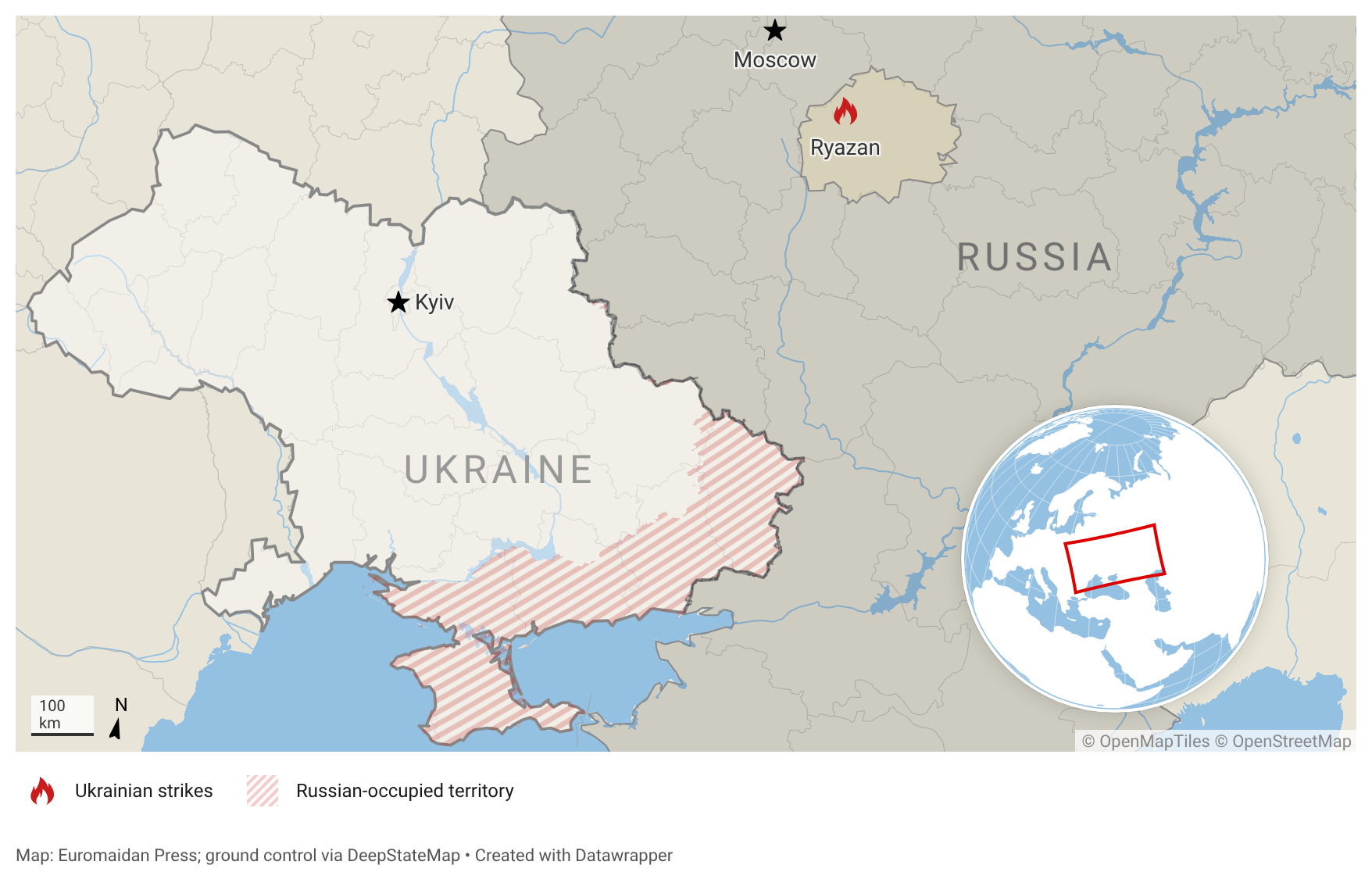
Ukrainian drones struck the Ryazan oil refinery in Russia on the morning of 6 September and set one of its core units on fire, Ukrainian defense outlet Militarnyi reported. The unit produces the high-octane component the Rosneft plant needs for its higher grades of gasoline. Russian regional authorities acknowledged a fire without naming the site. Ryazan is situated southeast of Moscow, about 470 km from Ukraine.

Ukraine has spent this year pushing long-range drones deeper into Russia, working methodically through refineries, pipelines, and export terminals to cut the fuel that moves Russian armies and the oil income that pays for the war. The pressure now runs deep past Russia's borders, with the shortage reaching Central Asian markets.

What burned at Ryazan

Drones hit the low-temperature isomerization unit for pentane-hexane fractions, designated Izomalk-2-LIN-800, according to Militarnyi's analysis. The unit sits on the refinery's grounds and is one of the critically important links in the plant's production cycle.

It converts low-octane straight-run oil fractions into a cleaner high-octane blending component. That component is what allows the refinery to produce gasolines of the higher environmental classes, Euro-5 among them, without adding harmful additives. 

ukrainian drones took ryazan's blending unit after knocking out two its four crude units · post geolocation fire ryazan oil refinery drone strike russia 6 2026 sss ukraine news reports
Geolocation of the fire at the Ryazan oil refinery after a Ukrainian drone strike, Ryazan, Russia, 6 September 2026. Graphic: Militarnyi, imagery: ESRI
The refinery belongs to Rosneft and ranks among Russia's largest refining enterprises, with a capacity of about 17 million tons of crude a year. It makes motor gasolines of all grades, diesel, aviation kerosene, fuel oil, liquefied gases, bitumen, and petrochemical feedstock. Four crude distillation units sit on the site, along with equipment for vacuum gasoil hydrotreating, cracking, and catalytic reforming.

Ukrainian monitoring channel Exilenova+ published videos of the strike.

Ryzan Oil refinery pic.twitter.com/VcPfnSGgi4

— Exilenova+ (@Exilenova_plus) September 6, 2026

The same unit was hit in December

Drones already attacked this unit in December 2025 and damaged it. Earlier waves targeted the plant's ELOU-AVT-3, ELOU-AVT-6, and AVT-1 units.

By May 2026 the refinery had lost 90–100% of its refining capacity. Satellite imagery from 3 August 2026 showed Ukraine's Defense Forces had disabled two of the four crude distillation units on site.

Ukrainian drones struck the refinery in May, and FP-1 drones set it and a nearby warehouse burning in July.

Russian officials report a fire, not a target

Ryazan Oblast governor Pavel Malkov confirmed the region came under drone attack. Drone debris damaged residential buildings in Ryazan and Sapozhkovsky district, he stated, and a fire broke out at an enterprise he did not name. He said there were no casualties and that emergency services were working.

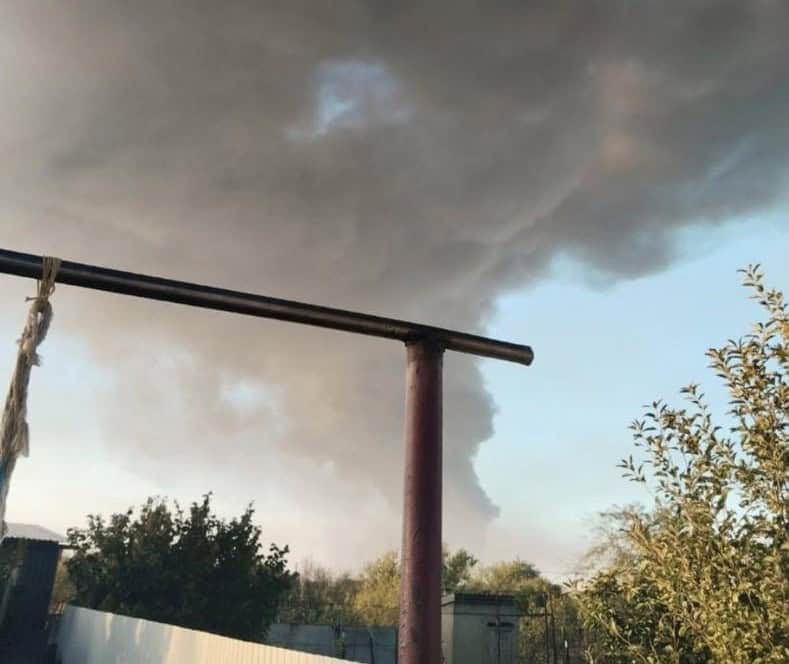
Russian news Telegram channel Astra said its analysis of photographs taken by residents established that the fire was on the grounds of the Ryazan refinery. Ukrainian channel Exilenova+, which tracks such attacks, also reported a hit on the plant.

Ryazan, locals report oil refinery is on fire after attack pic.twitter.com/0Dqhjo5FNI

— Exilenova+ (@Exilenova_plus) September 6, 2026

Russia's fuel squeeze

Ukraine's General Staff said strikes on 26 August and 1 September fully stopped two large refining enterprises: Lukoil-Nizhegorodnefteorgsintez in Kstovo, Nizhny Novgorod Oblast, and the Novatek-Ust-Luga complex in Leningrad Oblast. Both supply the Russian army.

Short of gasoline, Russia has been buying more fuel abroad. Moscow discussed importing gasoline from Kazakhstan in June, and a Kazakh refinery deal would cover 0.3% of Russian demand. Belarus increased its gasoline supplies to Russia nearly 20-fold in the first half of the year.

  •  

Kazakh refinery deal could ease Russia’s front-line fuel pressure—but it covers just 0.3% of demand

Kazakh President Kassym-Jomart Tokayev and Russian President Vladimir Putin walk past an honor guard in Astana, Kazakhstan, on 27 November 2024.

Kazakhstan’s privately owned Kondensat refinery will process Russian crude and return about 70% of the resulting petroleum products to Russia, Kazakh Energy Minister Yerlan Akkenzhenov said on 25 August, Radio Liberty reported.

Based on figures reported by Radio Liberty, the roughly 70% of Kondensat’s maximum gasoline output bound for Russia would amount to about 0.3% of the country’s daily summer gasoline demand. That makes the arrangement a limited stopgap rather than a solution. John Roberts of the Atlantic Council nevertheless told the outlet that even small additional supplies could help during an acute shortage, including at the front: “It helps, but it doesn’t solve the problem.”

Ukrainian drone strikes have knocked dozens of Russian refineries offline in recent months, forcing Moscow to restrict fuel exports and reimpose rationing, Radio Liberty reported. Gasoline caps returned to Moscow and St. Petersburg in August, while Rosneft reportedly limited fills to 30 liters per car at every station nationwide.

Kondensat has processed Russian oil before. The refinery began handling supplies delivered through Tatneft’s TANECO refinery in 2024, when Kazakhstan and Russia agreed to permit exports of fuel produced from Russian feedstock back to Russia. The arrangement was renewed in 2025, according to Radio Liberty.

Central Asia has no spare refining capacity that could materially change Russia’s situation, Ukrainian energy analyst Hennadiy Riabtsev told Radio Liberty’s Schemes project. Possible contributions from Kazakhstan, Kyrgyzstan, India, China, and Belarus would remain a drop in the ocean for the Russian market, he said.

Prospective suppliers also understand that Russian fuel demand supports the war effort and that assisting Moscow could carry sanctions risks, Ukraine’s presidential sanctions commissioner, Vladyslav Vlasiuk, told Schemes. Kyiv therefore does not expect a queue of countries willing to supply Russia with petroleum products, he said.

Russia’s fuel shortage gives Kazakhstan room to bargain

Russia’s shortage has spread from gas station queues to farming and public transport, with fuel-sale restrictions officially covering more than 40 regions by July, Euromaidan Press reported, citing The Moscow Times. Moscow’s export restrictions have also raised prices and tightened supplies across Central Asia.

Yet Russia’s growing dependence gives Kazakhstan additional bargaining room. Ukrainian strikes have previously prompted Russian retailer Wildberries to expand its warehousing operations in Kazakhstan, while Astana has promoted domestic competitors.

  •  
❌