Tens of thousands are still under evacuation orders or warnings amid ‘human-caused’, wind-driven blaze
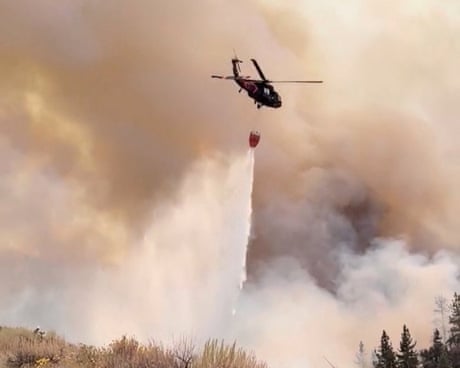
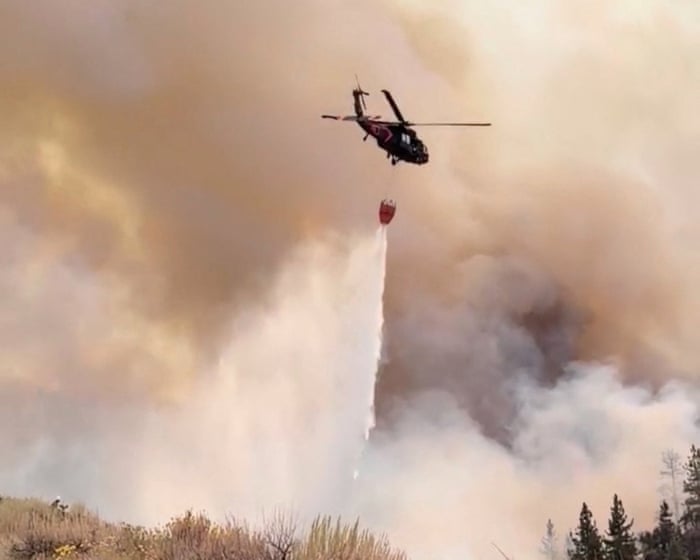
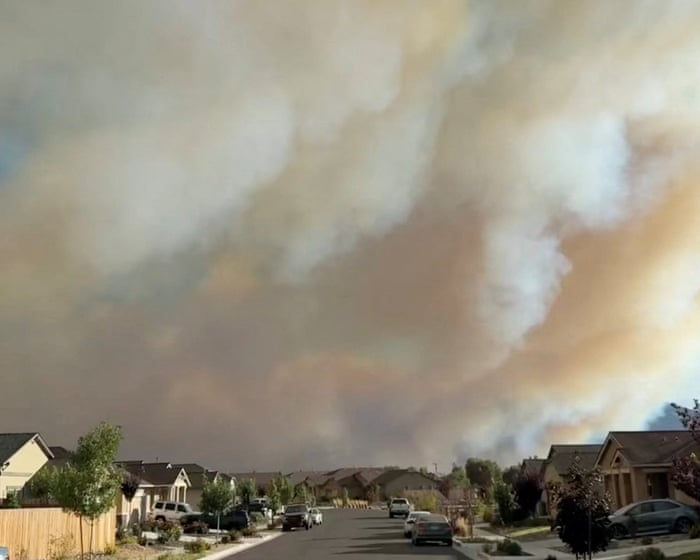
The Hawk fire is about 27% contained, authorities said on Monday afternoon, two days after the fast-moving, wind-driven wildfire sparked near Reno, Nevada.
Authorities added that 23,000 people are under a “go-now” order and 40,000 people are under a “get-set” warning, an improvement from the 90,000 Nevadans under evacuation orders or warnings on Monday morning.
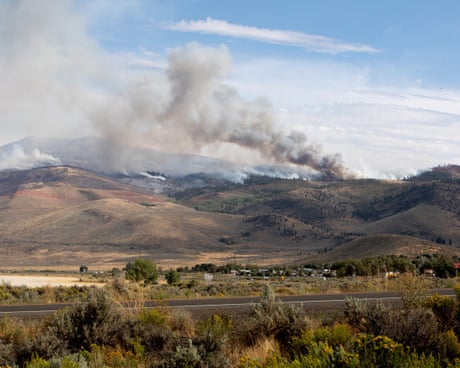
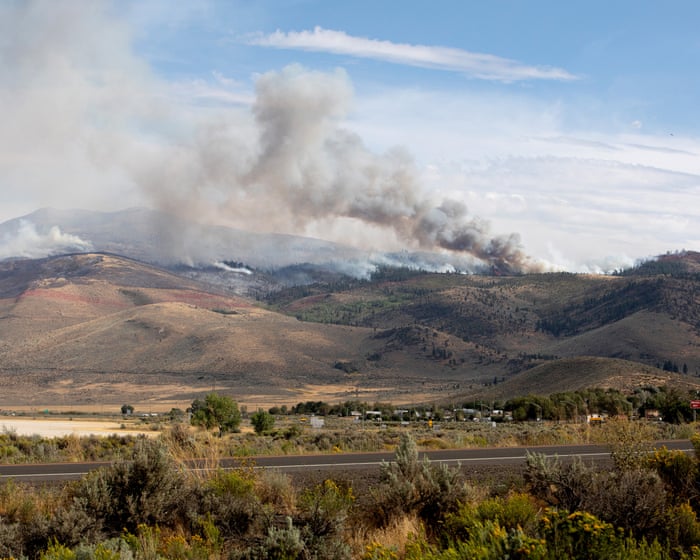
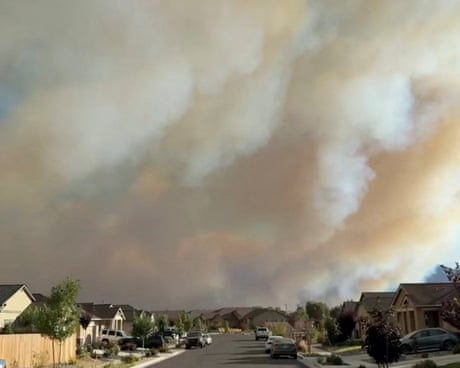
A fast-moving Nevadawildfire exploded to more than 15,000 acres (6,000 hectares) on Sunday, pushing from the Sierra foothills toward the centre of Reno and forced nearly 90,000 residents to evacuate as flames threatened neighbourhoods and reached the edge of the University of Nevada campus
The unusual weather pattern and dried out peatlands, a kind of wetland, have been behind some of the country’s worst fire seasons. This year could be one.
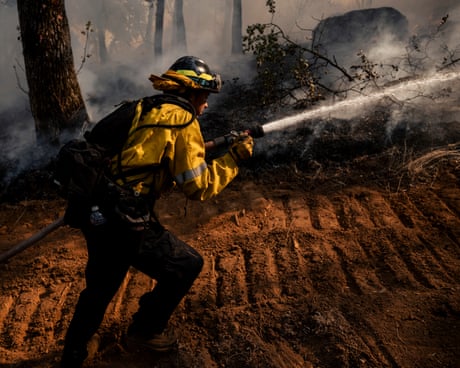
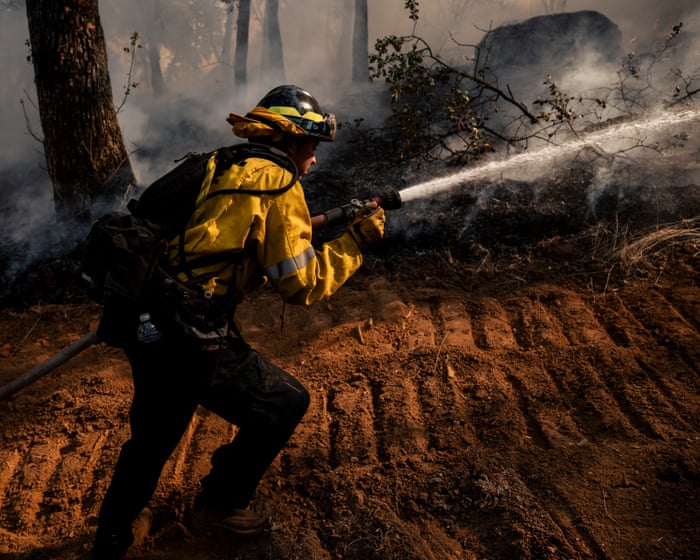
A firefighter battles a wildfire in Ogan Ilir, South Sumatra, Indonesia, earlier this month. This fire season, the country has had an unusually high number of hot spots, according to one estimate.
Human-caused Hawk fire covers more than 15,000 acres as blaze approaches University of Nevada campus in Reno
A fast-moving Nevadawildfire exploded to more than 15,000 acres (6,000 hectares) on Sunday, pushing from the Sierra foothills toward the center of Reno and urging nearly 90,000 residents to evacuate as flames threatened neighborhoods and reached the edge of the University of Nevada campus.
The Hawk fire’s “GO NOW” evacuation zone had expanded to the edge of the university campus as strong, gusty winds, low humidity and dry vegetation fueled the blaze, according to Truckee Meadows Fire and Rescue in Reno. Of those urged to evacuate, 42,000 were under strict orders. An additional 45,000 people were in the evacuation warning zone, and encouraged to leave now and be prepared to stay away for several days to clear the roads for first-responders.
The Hawk fire has burned over 15,000 acres and is encroaching on the northern part of the city. About 42,000 people are under formal evacuation orders and thousands more have been urged to flee.
Firefighters describe being pushed to limit by a brutal wildfire season, with key leadership roles going unfilled
The US has faced a critical shortage of firefighters at the US Forest Service (USFS) this summer as thousands of fires erupted across the country.
Despite officials’ claims that the firefighting workforce was stronger than ever, the agency has failed to keep pace with escalating conditions and the catastrophic fires fueled by them, according to nine firefighters who spoke to the Guardian anonymously, because they are barred from disclosing the information to the public.
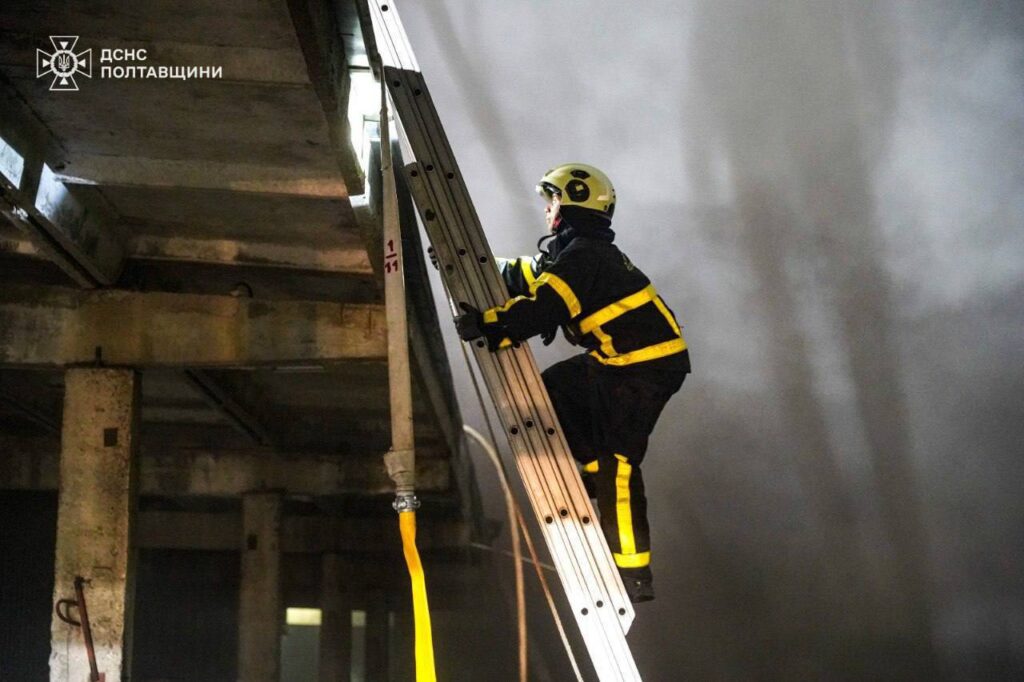
Ukraine sent rescuers to help fight wildfires in France, and they returned from a first-of-its-kindmission. Workers of Ukraine's State Emergency Service (DSNS) have reached Ukraine from France, where they spent nearly two weeks helping to contain large forest fires, Interior Minister Ivan Vyhivskyi announced.
The deployment was Ukraine's first mission to aid an EU member state under the bloc's own civil-protection system, with a combined unit of 70 rescuers and 15 pieces of special equipment, a role reversal for a country that has spent the war receiving European aid rather than sending it.
What the team did in France
The Ukrainians worked the fires alongside crews from several countries. Their work involved dozens of call-outs, hundreds of hectares of surveyed territory, and fire pockets that kept smoldering underground, Vyhivskyi says
With them, they took wartime methods to the work. The Ukrainian rescuers patrolled the forests, used drones to spot new ignitions, and contained the fire together with their colleagues. The days became shared work and shared experience, uniting rescuers from Ukraine, France, Slovakia, and other countries, with different languages but with one profession and goal. For the European emergency employees, it was a chance to grasp the unique experience they gained during the full-scale war.
Ukrainian rescuers returned home after nearly two weeks helping fight massive wildfires in France, their first mission under the EU Civil Protection Mechanism
A joint unit of 70 rescuers and 15 pieces of specialized equipment patrolled forests alongside French, Slovak, and… pic.twitter.com/SXJvqemgQm
Vyhivskyi says that every day, Ukraine's rescuers respond to the aftermath of Russian strikes dozens of times, working in extremely difficult conditions, but despite those challenges, Ukraine is always ready to lend a shoulder to its partners.
When Ukrainian and French forces fought wildfires together, the combined detachment deployed six water tankers on the ground, supported from the air by three French aircraft, two planes, and a helicopter.
During the mission, the Ukrainian rescuers discovered that local residents hang “thousand thanks” banner in recognition of their service.
With temperatures set to soar as high as 109 degrees Fahrenheit (43 Celsius) this week, Europeans and tourists say that summer in Europe has lost its appeal.

 Connexion