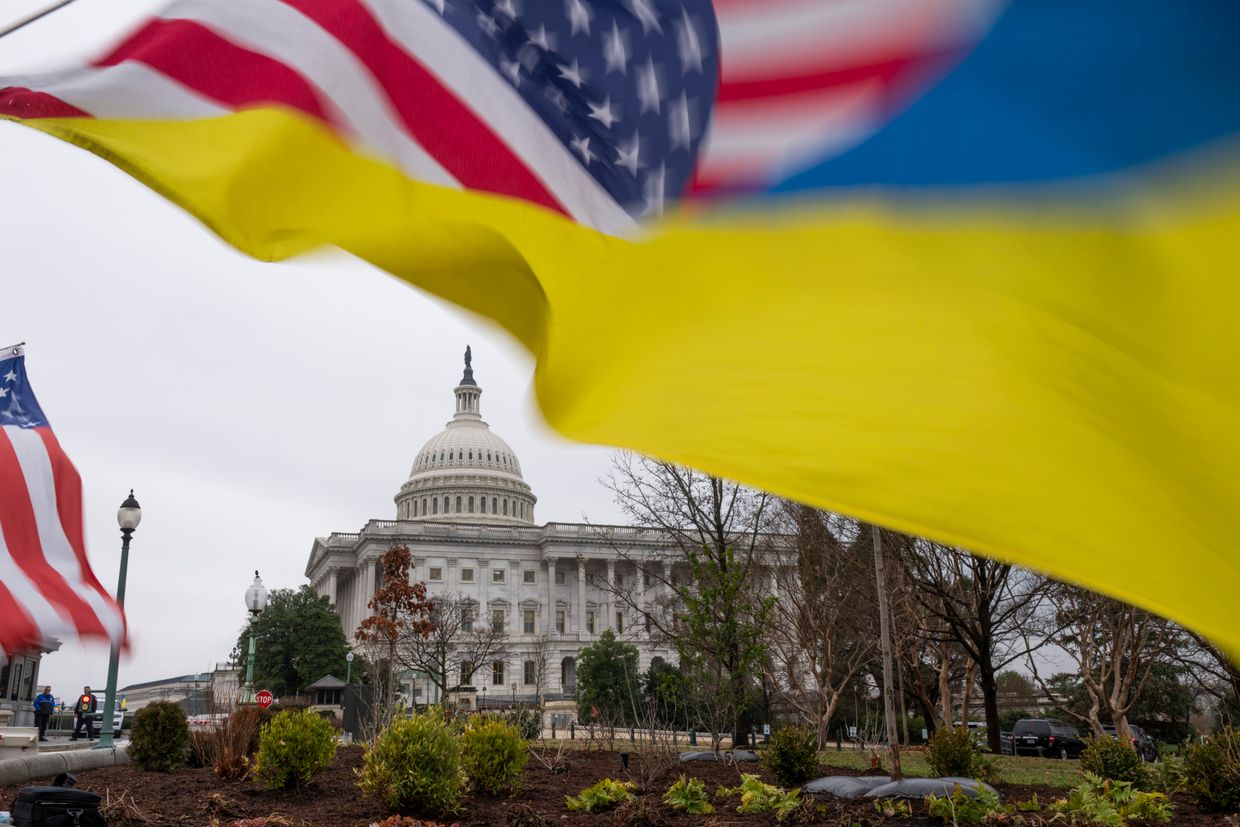
The U.S. Senate is postponing action on a bipartisan Russia sanctions bill until at least July, as other legislative and foreign policy priorities dominate the agenda, Semafor reported on June 18.
Senators Lindsey Graham (R-S.C.) and Richard Blumenthal (D-Conn.) have been working on a revised version of their bill that would impose secondary sanctions on Russian trading partners, while shielding Ukraine’s allies from penalties and making technical adjustments. But momentum has stalled as Republicans push President Donald Trump’s sweeping tax and spending bill, and the escalating conflict between Iran and Israel demands urgent attention.
Senate Majority Leader John Thune (R-S.D.) acknowledged on June 18 that a "July timeframe" was now more realistic for the sanctions bill. "We’re very open to moving, we’re trying to work with the administration from a timing standpoint," Thune said, according to Semafor. Graham added that the Senate is "going to have to wait a bit," citing shifting global developments. "Things are changing now with Iran… that doesn’t mean I’ve forgotten about Russia or Ukraine. Not at all. Iran is center stage, but sooner rather than later," he said.
Trump has not yet signaled support for the legislation, which remains a critical obstacle.
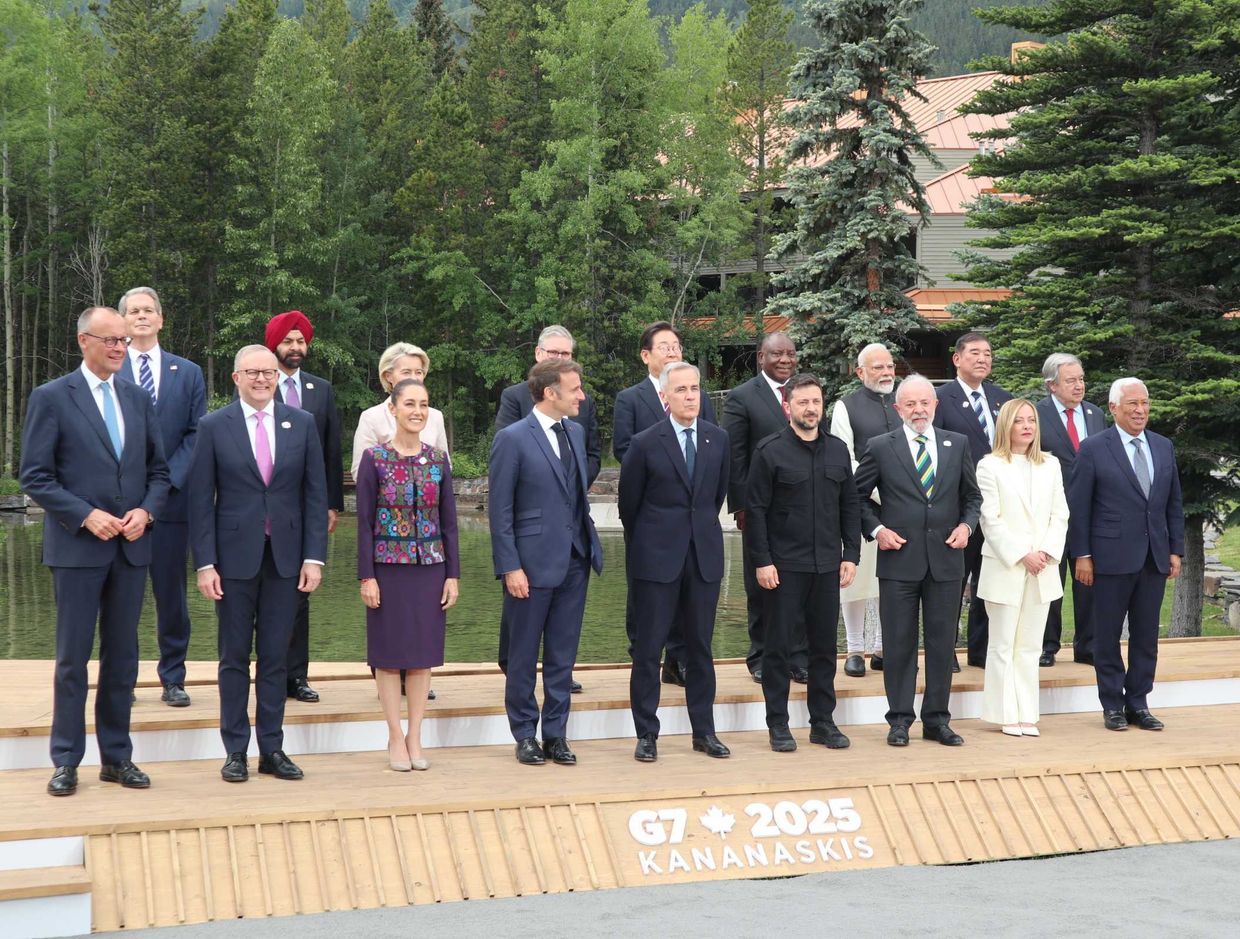
While sanctions enjoy broader Republican backing than direct military aid to Ukraine, GOP lawmakers are hesitant to move forward without Trump’s approval. The U.S. president left the G7 summit in Canada early, skipping a planned meeting with President Volodymyr Zelensky, as attention shifted to a potential U.S. response to Iran’s nuclear ambitions. "All the focus is on Israel and Iran right now," said Sen. Tommy Tuberville (R-Ala.), though he noted that he is "all for putting sanctions" on Russia.
Graham and Blumenthal had hoped to secure passage of the bill ahead of the G7 summit after visiting Ukraine earlier this year. Blumenthal said he and Graham were "making tremendous progress" with the administration, but acknowledged that other priorities were pushing the legislation off the floor.
Supporters of the sanctions argue the bill would give Trump more leverage in negotiations with Russian President Vladimir Putin. "We want to strengthen our hand in the negotiation," said Sen. John Hoeven (R-N.D.). "We want to help effectuate an outcome in Ukraine, so we’re trying to use it in a way that actually helps get something done." The legislation would authorize secondary sanctions on countries that continue to purchase Russian energy or conduct other major trade with Moscow.
Despite uncertainty around timing, both Graham and Blumenthal continue to refine the bill to ensure broader support, including a carveout for Ukraine’s allies and changes to accommodate the global banking system. "There is no evidence that Putin is going to slow down," Graham told Semafor. "We need to change the approach. I think the sanctions will give the president leverage."
Editor's note: This item has been updated to include Kremlin spokesperson Dmitry Peskov's statement.
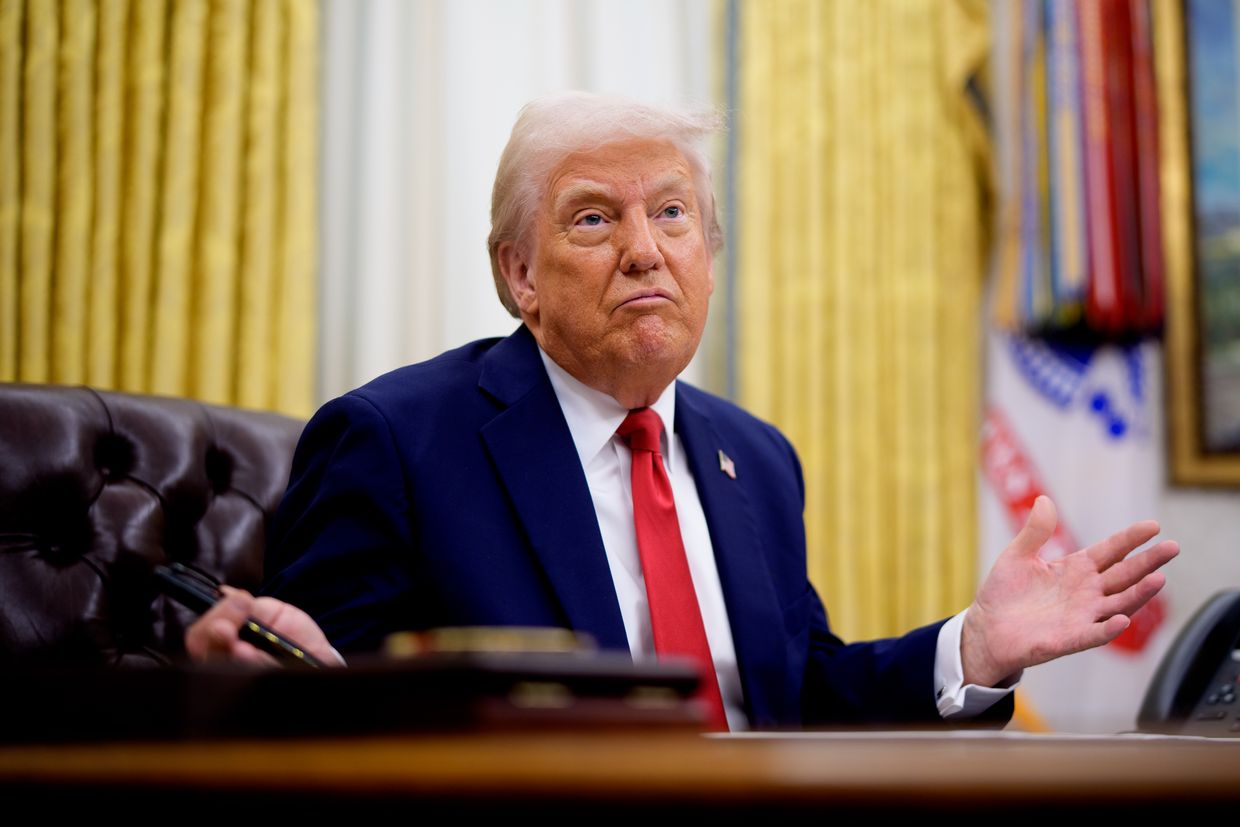
U.S. President Donald Trump said on June 18 that he had turned down Russian President Vladimir Putin's offer to mediate the escalating conflict between Israel and Iran.
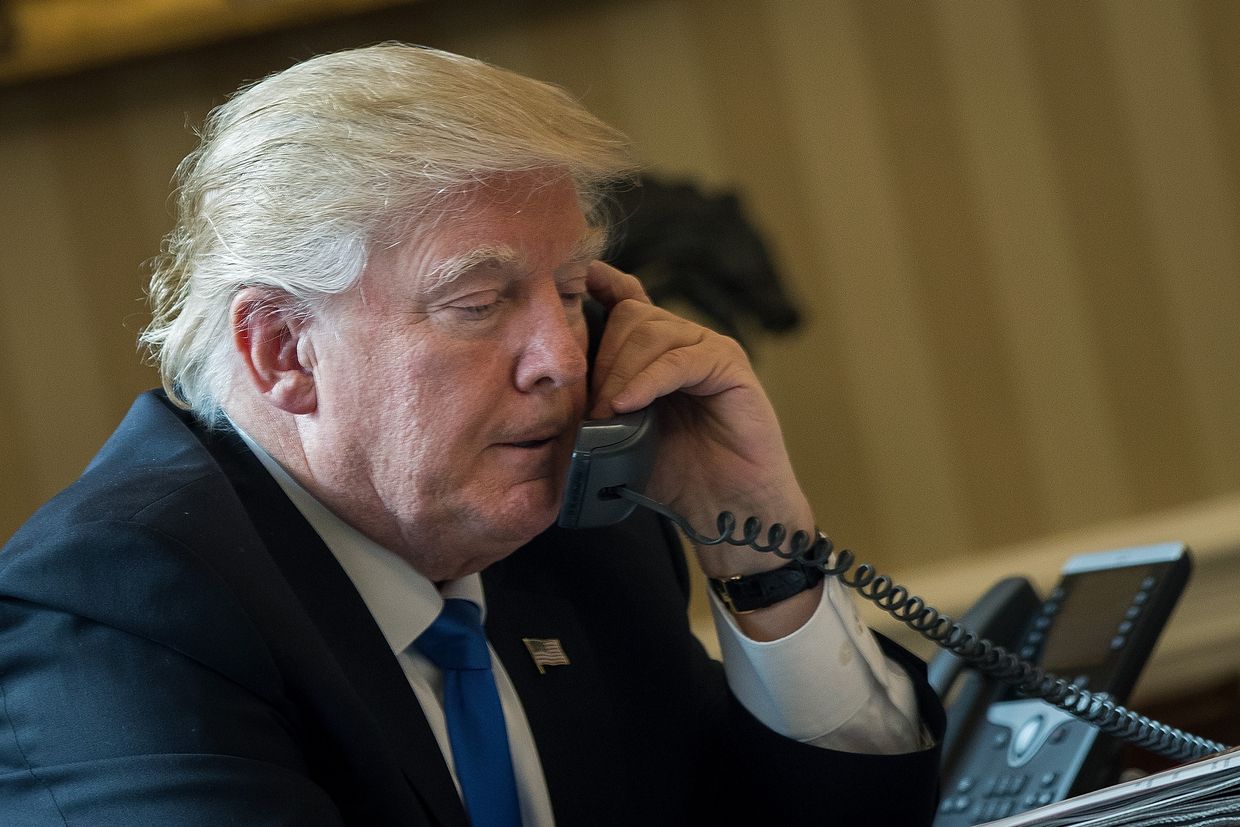
"I spoke to him yesterday, and, you know, he actually offered to help mediate. I said, do me a favor. Mediate your own," Trump told reporters. "Let's mediate Russia first, okay? I said, Vladimir, let's mediate Russia first. You can worry about this later."
Shortly after Trump's statement, Kremlin spokesperson Dmitry Peskov said the U.S. president was speaking "figuratively" when referring to a conversation with Putin, according to the Russian state news agency TASS.
"Life is so eventful these days that a retrospective covering several days is like looking back at yesterday," Peskov added, implying there had been no such conversation on June 17.
Trump's comments come just days after he had said he was "open" to the idea of Putin serving as a mediator between Israel and Iran, sparking criticism from U.S. allies. On June 15, Trump claimed Putin was "ready" and had discussed the possibility at length in a recent phone call.
Putin, whose country has been deepening military cooperation with Tehran, spoke separately with Israeli Prime Minister Benjamin Netanyahu and Iranian President Masoud Pezeshkian on June 13. He condemned Israel's air strikes on Iran and offered Russian mediation.
Those strikes, described by Israel as "preemptive," involved 200 warplanes and 330 munitions targeting Iranian nuclear and military sites. Iran responded with missile attacks on Israeli cities, including Tel Aviv, that killed at least five Ukrainian citizens on June 14.
Putin's offer of mediation has been dismissed by several Western leaders.
Trump says Putin offered to mediate in the war between Israel and Iran.
Trump: "Do me a favor. Mediate your own. Let's mediate Russia first. I said, Vladimir, let's mediate Russia first. You can worry about this later.”
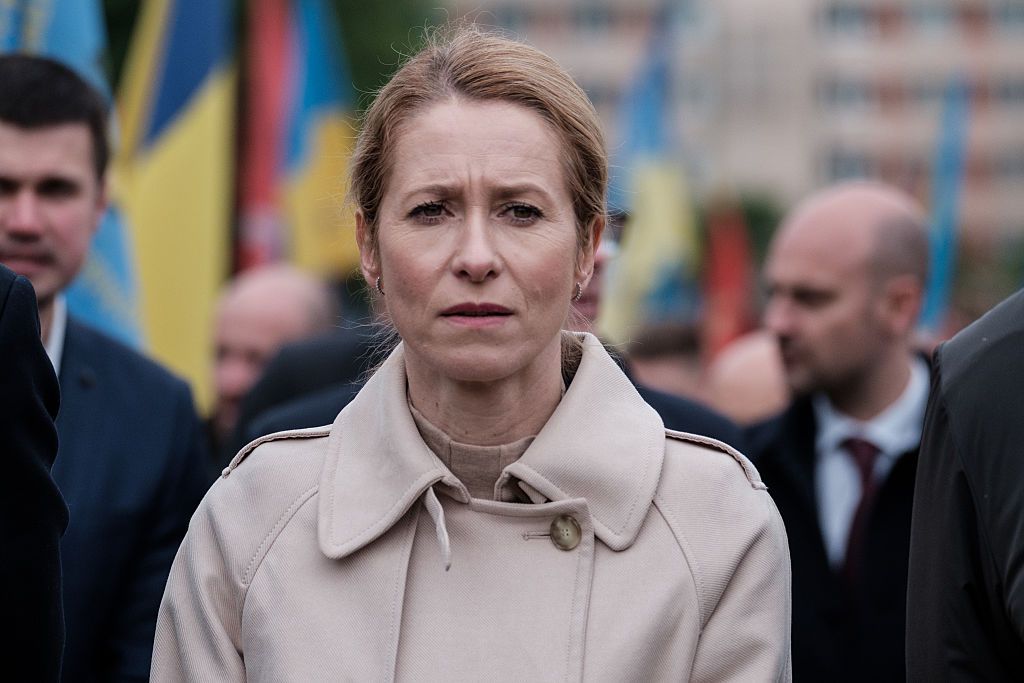
French President Emmanuel Macron said Russia "cannot be a mediator," given its war against Ukraine. EU foreign policy chief Kaja Kallas echoed that sentiment, saying on June 17 that Putin "cannot be trusted to mediate peace" while continuing to wage war on Ukrainian civilians.
Kremlin spokesperson Dmitry Peskov said on June 17 that Israel appeared unwilling to accept Moscow's mediation. Israel has not publicly commented on the offer.
Ukraine, which has been targeted by thousands of Iranian-made Shahed drones and missiles supplied to Russia, warned that Tehran is a "source of problems" both regionally and globally.
Despite Trump's latest rebuke of Putin's mediation ambitions, the U.S. president has continued to avoid placing additional sanctions on Moscow, even as the Kremlin refuses to agree to a ceasefire in its war against Ukraine.
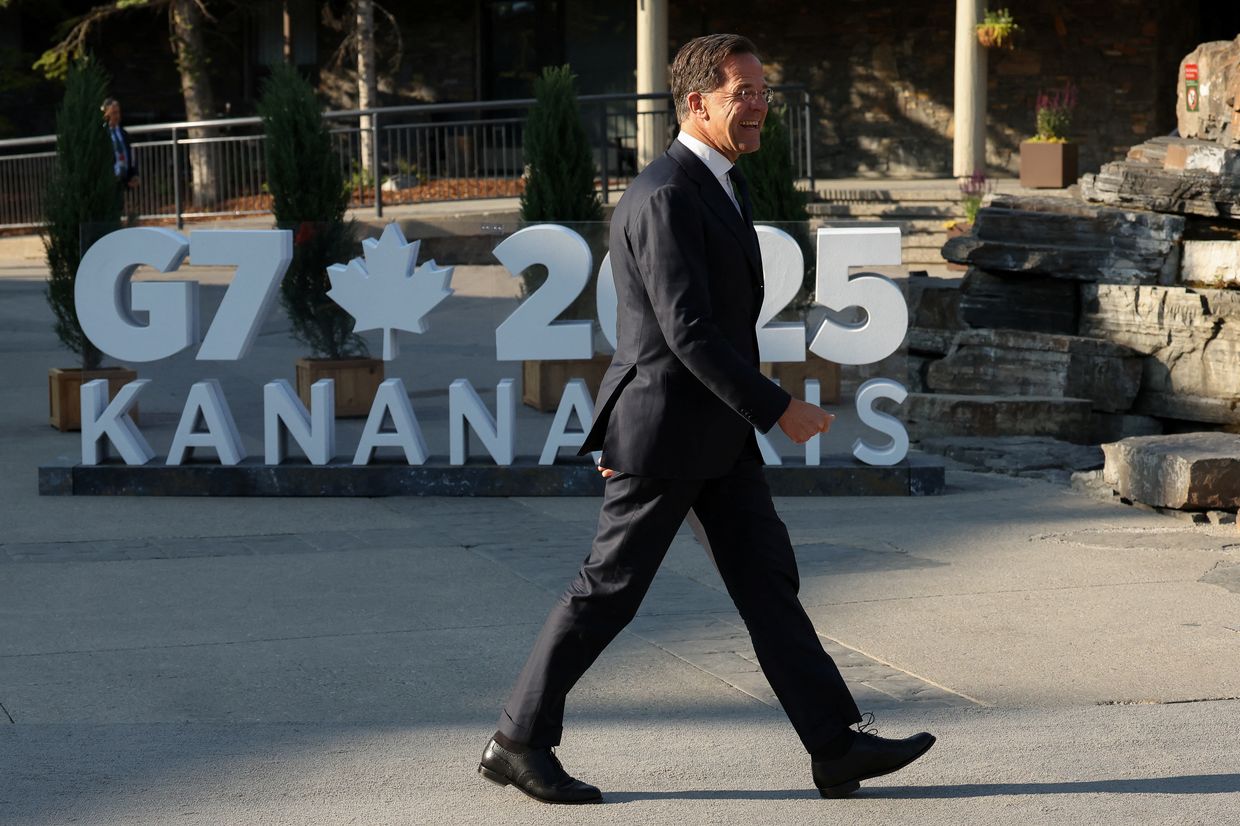
All 32 NATO member states are on track to meet the alliance's 2% GDP defense spending benchmark in 2025, Secretary General Mark Rutte said on June 17 at the G7 summit in Canada.
The announcement marks a major shift for the alliance, which has faced repeated criticism from U.S. President Donald Trump for failing to meet spending commitments.
The U.S. president has long pushed NATO members to spend more on defense, at one point suggesting the threshold be raised to 5% of GDP.
"This is really great news," Rutte said, praising announcements from Canada and Portugal, the last two holdouts. "The fact that you decided to bring Canada to the 2% spending when it comes to NATO this year is really fantastic," he told Canadian Prime Minister Mark Carney.
In 2024, only 23 alliance members met the 2% target, according to NATO estimates. Poland led all members with 4.12% of GDP allocated to defense, followed by Estonia (3.43%) and the U.S. (3.38%).
Rutte's comments come ahead of the June 24–25 NATO summit in The Hague, which has been reportedly scaled back to a single working session on defense spending and alliance capabilities.
The move, according to Italian outlet ANSA, is designed to avoid friction with Trump, whose presence at the summit remains unconfirmed.
Ukraine has been invited to the summit, but President Volodymyr Zelensky may reconsider his attendance amid uncertainty over the U.S. delegation, the Guardian reported on June 17.
According to the outlet, some in Kyiv are questioning whether Zelensky's presence at the summit would be worthwhile without a confirmed meeting with Trump.
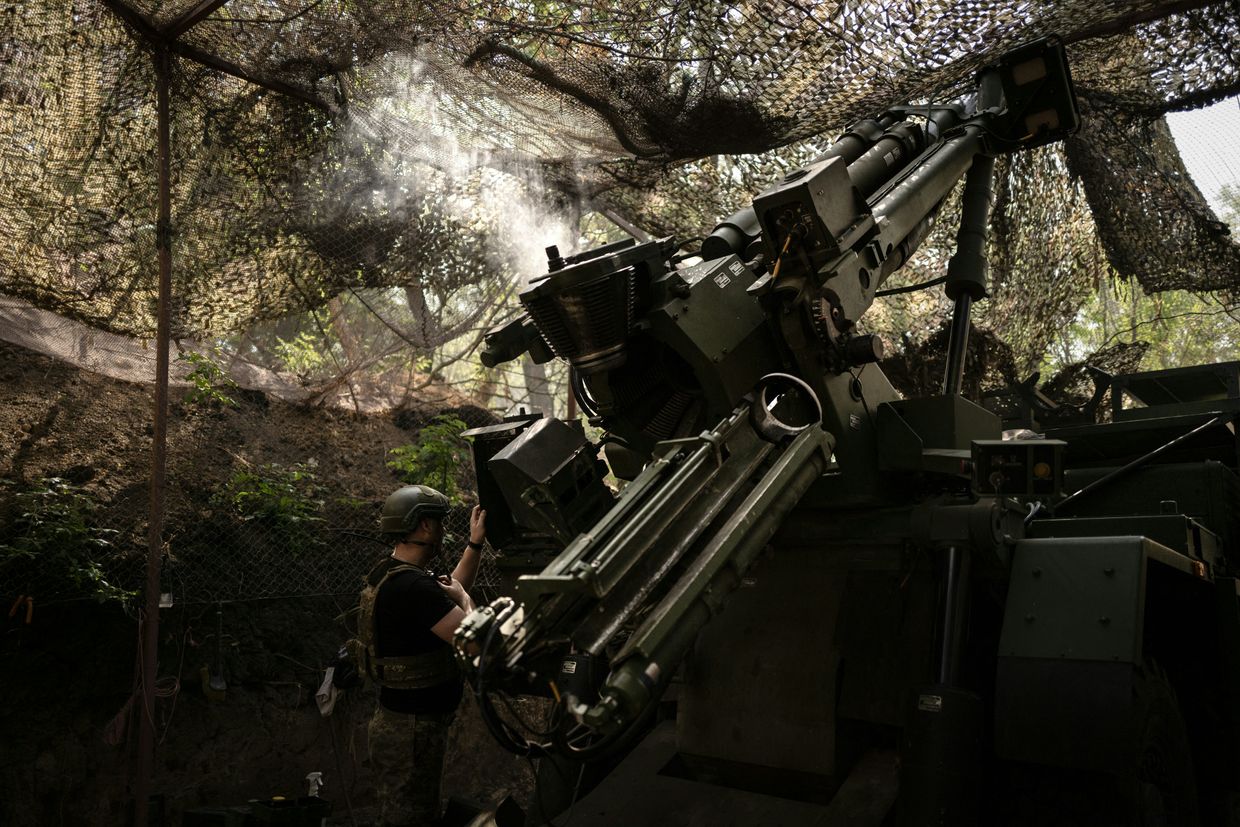
Many NATO members have cited Russia's ongoing war against Ukraine and Trump's isolationist rhetoric as reasons to accelerate defense spending and prepare for potential future threats.
President Volodymyr Zelensky may reconsider attending the NATO summit in The Hague, as questions remain over U.S. President Donald Trump's participation, the Guardian reported on June 17, citing unnamed Ukrainian officials.
According to the Guardian, some in Kyiv are unsure if Zelensky's presence at the June 24-25 summit would be worthwhile without a confirmed meeting with Trump, whom they had hoped to engage directly in efforts to pressure Russian President Vladimir Putin into accepting a ceasefire.
Earlier, Zelensky had traveled to the G7 summit in Canada, hoping to meet one-on-one with Trump and push for stronger sanctions against Russia. Trump left the summit early, citing the crisis in the Middle East, and no bilateral meeting or joint G7 statement took place.
One official told the Guardian that Ukraine is in a "permanent hazard" of becoming a victim of "Trump's short attention span," adding that Russia has exploited this uncertainty by fresh aerial attacks. The source added that there had been "all sorts of promises for this summit," including U.S. arms.
The Russian attack on Ukraine that occurred during the G7 summit killed at least 24 civilians and injured 134 in Kyiv. Trump has not responded to the attack as of the day after.
German Chancellor Friedrich Merz has reportedly said Trump had previously promised to attend the NATO gathering, though no official confirmation has been issued from Washington.
Despite the setback, Zelensky said the G7 meeting had concrete results for Ukraine. In a Telegram post on June 17, he thanked partners for increased military aid, new sanctions on Russia, and the decision to allocate frozen Russian assets for Ukraine’s reconstruction.
"It is important that our partners are ready not only to support our defense now, but also to rebuild Ukraine together after the war ends," he said.
Canadian Prime Minister Mark Carney announced a support package that includes 2 billion Canadian dollars ($1.5 billion) in military assistance and another $1.6 billion in reconstruction loans. The aid includes drones, armored vehicles, ammunition, and sanctions to disrupt Russia's energy revenues.
U.K. Prime Minister Keir Starmer also unveiled new sanctions targeting Russia's military-industrial complex and 20 oil tankers from Russia's "shadow fleet."
Zelensky later told G7 leaders that "diplomacy is now in a state of crisis" and called on allies to press Trump to "use his real influence" to help end the war.
Ukraine has been invited to the NATO summit, and Zelensky previously called the invitation "important" during a June 2 press briefing. At the time, he did not confirm whether he would attend in person.
The U.S. Embassy in Kyiv on June 18 condemned Russia's massive missile and drone attack on Kyiv that killed at least 23 people and injured more than 130 a day earlier, saying it "runs counter" to U.S. President Donald Trump's peace efforts.
"Today, with all of Ukraine, we join a day of mourning in Kyiv for the victims of Russia's June 17 attack," the U.S. Embassy in Ukraine said in a statement. "We extend deepest condolences to the victims' families. This senseless attack runs counter to President Trump's call to stop the killing and end the war."
The nine-hour overnight attack, which began late June 16, has become one of the largest aerial assaults on the Ukrainian capital since the start of Russia's full-scale invasion in 2022.
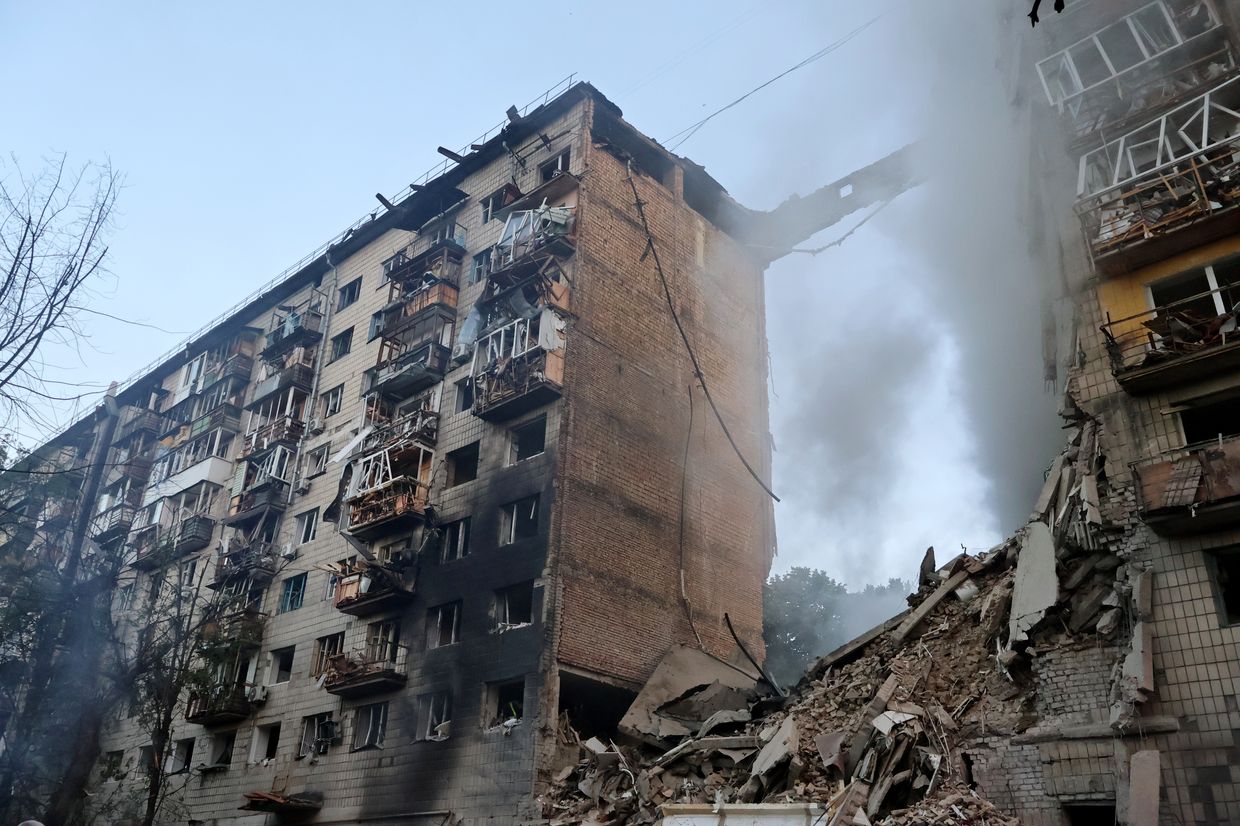
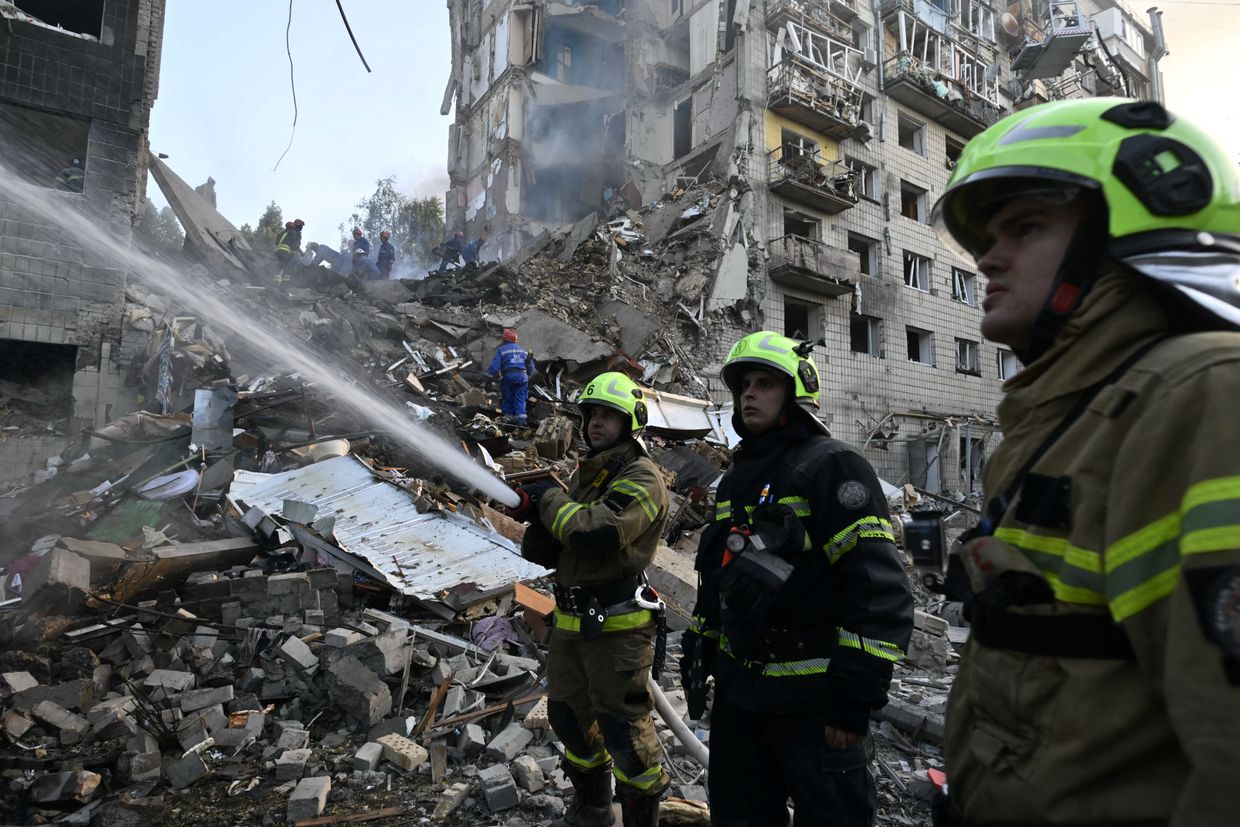
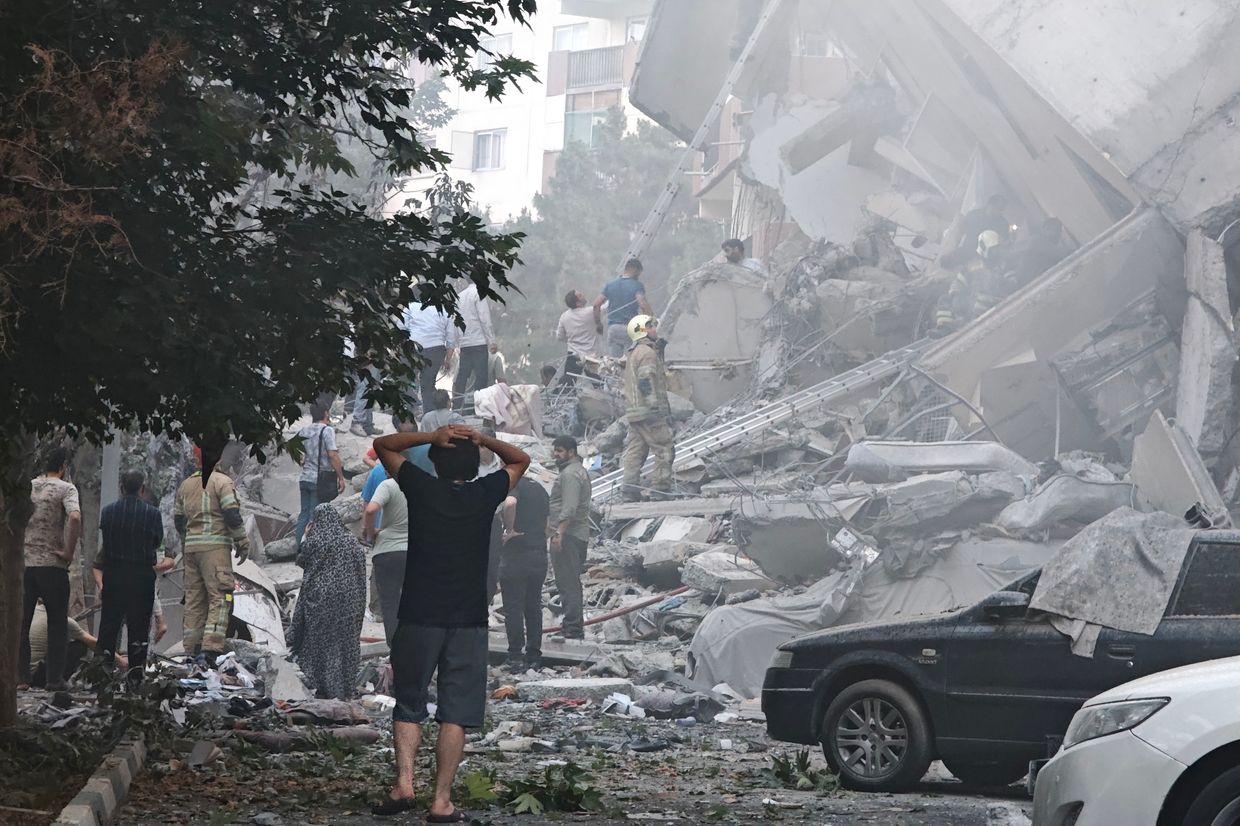
Ukrainian officials said Russia launched 472 aerial weapons, including nearly 280 Shahed-type attack drones and cruise and ballistic missiles. Ukraine's air defense downed 428 targets, but several struck residential areas, including a nine-story apartment building in Kyiv's Solomianskyi district.
Among the dead was a U.S. citizen, State Department Press Secretary Tammy Bruce confirmed at a briefing on June 17.
"We are aware of last night's attack on Kyiv, which resulted in numerous casualties, including the tragic death of a U.S. citizen," Bruce said. "We condemn those strikes and extend our deepest condolences to the victims and to the families of all those affected."
President Volodymyr Zelensky called it "one of the most horrifying attacks on Kyiv" and urged stronger international support to help Ukraine defend itself.
Despite the scale of the attack, Trump appeared to be unaware of the strike when questioned by reporters aboard Air Force One early on June 17.
"When was that? When?" Trump responded when a reporter asked for his reaction. Told that the drone and missile attack had occurred "very recently," Trump said: "Just now? You mean as I’m walking back to see you, that’s when it took place? Sounds like it. I’ll have to look at it."
As of a day later, the White House had still not issued an official response to the strike.
The June 17 attack caused extensive damage across the capital. Civilian infrastructure hit included kindergartens, a university dormitory, residential neighborhoods, and industrial sites.
Fahrenheit, a Ukrainian manufacturer of military and civilian clothing, reported that its Kyiv factory was damaged and operations were suspended. Ukrposhta, the national postal service, lost two branches. Ukrainian Railways said a grain-carrying train was struck, disrupting transit.
Kyiv Mayor Vitali Klitschko said unexploded cluster munitions were found in the city — a type of weapon banned by some countries due to the danger they pose to civilians. June 18 was declared a day of mourning in Kyiv.
Foreign Minister Andrii Sybiha called the timing of the attack, as G7 leaders gathered in Canada, a deliberate message from the Kremlin. Moscow has escalated strikes on Ukrainian cities in recent weeks, targeting residential areas and critical infrastructure.
Ukraine has urged Western allies to respond by reinforcing air defense capabilities and tightening economic pressure on Russia.
President Volodymyr Zelensky said on June 17 that the G7 summit had produced concrete results for Ukraine, including increased military support, new tranches of aid using frozen Russian assets, and additional sanctions targeting the sources of Russia’s war effort.
"It is important that our partners are ready not only to support our defense now, but also to rebuild Ukraine together after the war ends. I thank everyone who helps us fight Russian aggression and who, together with Ukraine, is building a strong security architecture for the future," he added in a Telegram post.
Canadian Prime Minister Mark Carney announced a new support package for Ukraine earlier in the day, including two billion Canadian dollars ($1.5 billion USD) in military aid and over two billion Canadian dollars ($1.6 billion USD) loan for reconstruction. The package also includes funding for drones, ammunition, armoured vehicles, and new sanctions targeting Russia’s energy revenues and sanctions evasion.
U.K. Prime Minister Keir Starmer also announced a set of measures aimed at increasing pressure on Russian President Vladimir Putin, who continues to reject calls for an unconditional ceasefire in Ukraine. "The 30 targets strike across Russia’s financial, military and energy sectors in response to Putin’s continued aggression," reads the U.K. government statement. The new sanctions also "crack down further on Putin’s shadow fleet," targeting 20 of his oil tankers.
Starmer added that he "strongly" supports tightening the price cap on Russian crude oil to further cut into the Kremlin’s energy revenues.
The G7 nations, however, struggled to present a unified stance on the war in Ukraine after U.S. President Donald Trump voiced support for Russian President Vladimir Putin and called for Russia to be readmitted to the group. Russia was expelled from what was then the G8 after its 2014 invasion of Crimea.
Trump left the summit a day early to address the Israel-Iran conflict from Washington, departing without meeting Zelensky, who had hoped for a one-on-one conversation to press for stronger sanctions against Russia.
Zelensky had already cut his own visit to Canada short on June 17 and was preparing to return to Kyiv while G7 talks were still underway. He had been scheduled to travel to Calgary for events and a press conference with the Ukrainian diaspora, a source told a Kyiv Independent journalist on the ground, but those plans were canceled following a deadly Russian missile strike on Kyiv and changes to the summit agenda.
Zelensky later said he told G7 leaders that "diplomacy is now in a state of crisis" and urged allies to continue pressing Trump "to use his real influence" to help end the war.
Editor's note: This is a developing story and is being updated.
President Volodymyr Zelensky is cutting his visit to Canada short and will return to Kyiv on June 17, while G7 talks are still ongoing, a source told a Kyiv Independent journalist on the ground.
He had been scheduled to travel to Calgary for additional events and a press conference, but those plans have been cancelled. The change comes in the wake of a deadly Russian missile strike on Kyiv overnight, as well as changes to the G7 agenda.
Zelensky had travelled to the summit hoping to meet one-on-one with U.S. President Donald Trump and to push for stronger sanctions against Russia. However, Trump left the summit early, citing the crisis in the Middle East, and no bilateral meeting or unified G7 statement took place.
Zelensky said he had told the G7 leaders that "diplomacy is now in a state of crisis" and noted the allies need to continue calling on Trump "to use his real influence" to force an end to the war."
"Even if the American President is not putting enough pressure on Russia right now, the truth is that America still has the broadest global interests and the largest number of allies. All of them will need strong protection," he said in a Telegram post.
Meanwhile, Canada dropped plans for the G7 to issue a joint statement on the war in Ukraine after the United States pushed to weaken the language, according to a Canadian official speaking on the sidelines of the summit. The official said Canada felt a watered-down version would not be fair to Ukraine.
"Canada and the rest of the G7 should strengthen their support for Ukraine, particularly by furnishing it with additional military assistance that would include, among other things, increased ammunition," Alexander Lanoszka, an associate professor of international relations in the department of political science at the University of Waterloo, told the Kyiv Independent.
"One hopes that the specter of U.S. disengagement would catalyze increases in assistance. Unfortunately, despite whatever they say, G7 leaders could very well lack the confidence for whatever reason to do much absent strong U.S. leadership," Lanoszka added.
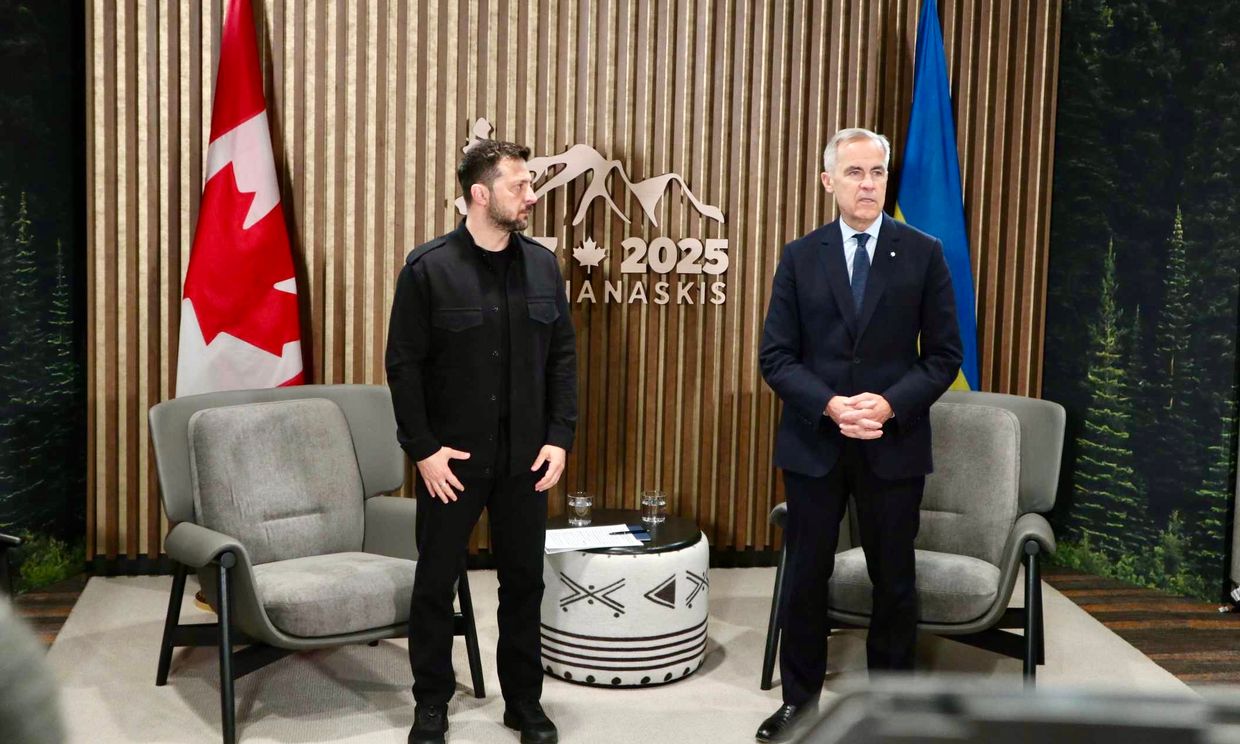
Canada did announce a sweeping new support package for Ukraine on June 17, during a bilateral meeting with Zelensky on the final day of the G7 summit in Kananaskis. The measures include two billion Canadian dollars ($1.5 billion USD) in military funding and new sanctions aimed at restricting Russia’s energy revenues and evasion tactics.
U.K. Prime Minister Keir Starmer also announced a set of measures aimed at increasing pressure on Russian President Vladimir Putin, who continues to reject calls for an unconditional ceasefire in Ukraine. "The 30 targets strike across Russia’s financial, military and energy sectors in response to Putin’s continued aggression," reads the U.K. government statement. The new sanctions also "crack down further on Putin’s shadow fleet," targeting 20 of his oil tankers.
Starmer added that he "strongly" supports tightening the price cap on Russian crude oil to further cut into the Kremlin’s energy revenues.
Zelensky said late on June 17 that the G7 summit still produced concrete results for Ukraine, including increased military support, new tranches of aid using frozen Russian assets, and additional sanctions targeting the sources of Russia’s war effort.
A dinner discussion among Group of Seven leaders on June 16 failed to shift U.S. President Donald Trump’s position on tougher sanctions against Russia, Bloomberg reported, citing sources familiar with the talks.
Trump has continued urging Russian President Vladimir Putin to agree to a ceasefire in Ukraine but has resisted additional sanctions, despite previously threatening to introduce more. At the G7 dinner, he reportedly repeated concerns that sanctions were too costly for the United States.
A chair’s statement expected from Canadian Prime Minister Mark Carney will affirm G7 support for U.S.-led peace efforts, according to Bloomberg. The statement is also set to highlight that Ukraine has demonstrated readiness for a ceasefire, while Russia has not, and emphasize the need for continued pressure on Moscow through sanctions. Carney’s office did not comment on the expected statement.
The European Union introduced its 18th package of sanctions ahead of the summit, while the United Kingdom followed with new restrictions targeting Russia’s energy and financial sectors. Both the EU and the U.K. have pushed to lower the G7 price cap on Russian oil, a move the U.S. has so far opposed.
The debate over sanctions comes amid intensified Russian strikes on Ukraine. Overnight, at least 14 people were killed in Kyiv in what President Volodymyr Zelensky described as “one of the most horrific attacks” since the start of the full-scale war. Multiple areas of the capital were hit by drones, missiles, or falling debris, including a direct strike on a nine-story residential building, which caused part of the structure to collapse. Search and rescue operations were ongoing.
“Such attacks are pure terrorism,” Zelensky said in a post on X after arriving in Canada for the G7 meeting. “And the whole world, the United States, and Europe must finally respond as a civilized society responds to terrorists.”
Zelensky had been scheduled to meet with Trump on June 17, but the meeting was canceled after the U.S. president left the summit early, citing the crisis in the Middle East. European officials, according to Bloomberg, are increasingly uncertain about Trump’s reliability and are working to reinforce security cooperation with other allies as U.S. support for Ukraine appears to be wavering.
U.S. President Donald Trump is weighing direct military action against Iran, including potential strikes on its nuclear facilities, Axios reported on June 17, citing unnamed U.S. officials.
Trump demanded Iran's "unconditional surrender" on Truth Social on June 17 and threatened Supreme Leader Ayatollah Ali Khamenei, boasting about U.S. air superiority.
The U.S. president is expected to meet with his national security team later in the day to determine the scope of involvement in the escalating conflict between Israel and Iran, according to Axios.
The meeting comes after his early departure from the G7 Leaders' Summit on June 16, where he had been scheduled to meet with President Volodymyr Zelensky the following day.
"We now have complete and total control of the skies over Iran," Trump wrote on Truth Social.
He added that "we know exactly where the so-called 'Supreme Leader' is hiding."
"He is an easy target, but is safe there - We are not going to take him out (kill!), at least not for now," Trump continued. "But we don't want missiles shot at civilians, or American soldiers. Our patience is wearing thin."
The U.S. president is increasingly leaning toward using military force to target Iran's nuclear facilities, moving away from a diplomatic resolution, CNN reported, citing two unnamed U.S. officials.
Although Trump continues to be receptive to negotiations, CNN sources indicated that any agreement would require significant concessions from Tehran.
German Chancellor Friedrich Merz said on June 17 that U.S. involvement in Israel's military campaign is under serious consideration, and a decision could be "made in the near future," Politico reported.
Merz said the decision depends on whether the Iranian regime "is prepared to return" to the negotiating table.
Israel launched a series of massive air strikes on Iran starting June 13, targeting nuclear facilities and senior military figures. The Israeli government claimed Tehran was nearing nuclear weapons capability.
Iran responded with missile strikes on Tel Aviv and other Israeli cities, which resulted in civilian casualties, including five Ukrainian citizens on June 14.
Iranian officials claimed 224 people have been killed in Israeli attacks so far, most of them civilians. The figures have not been independently verified.
As tensions grow, Trump has floated the idea of Russian President Vladimir Putin serving as a mediator between Israel and Iran. Putin spoke with both Iranian President Masoud Pezeshkian and Israeli Prime Minister Benjamin Netanyahu on June 13, offering mediation and condemning Israeli strikes.
Israel has not publicly responded to Russia's proposal, but Kremlin spokesperson Dmitry Peskov said on June 17 that Tel Aviv appeared unwilling to accept Russian mediation.
French President Emmanuel Macron dismissed the suggestion entirely, saying on June 15 that Moscow, given its war in Ukraine and disregard for the UN Charter, "cannot be a mediator."
Tehran has become one of Russia's closest military partners during its war against Ukraine, supplying thousands of Shahed drones and ballistic missiles used in daily strikes on Ukrainian cities.
Israel, which has historically maintained careful relations with Russia and is home to a substantial Russian-speaking population, has not joined in Western sanctions against Moscow.
On June 13, Kyiv expressed its support for Israel, describing Iran as a "source of instability in the region and beyond," citing Tehran's extensive military cooperation with Russia.
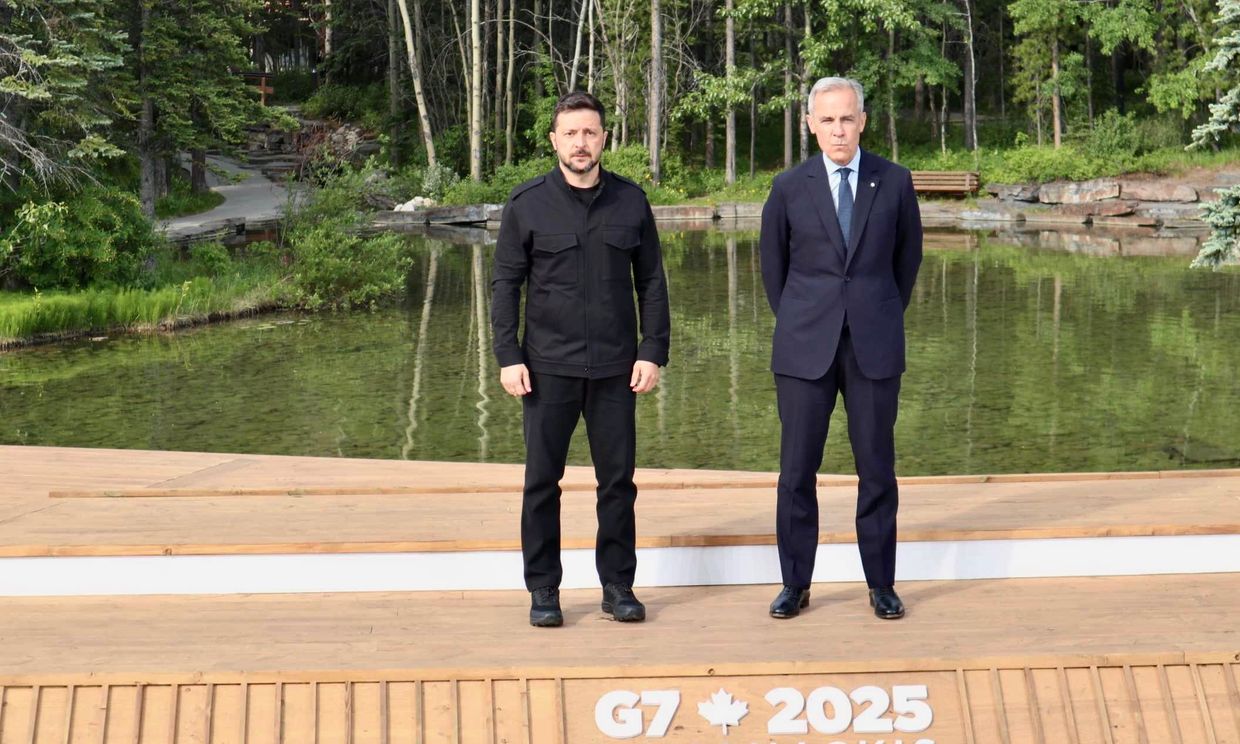
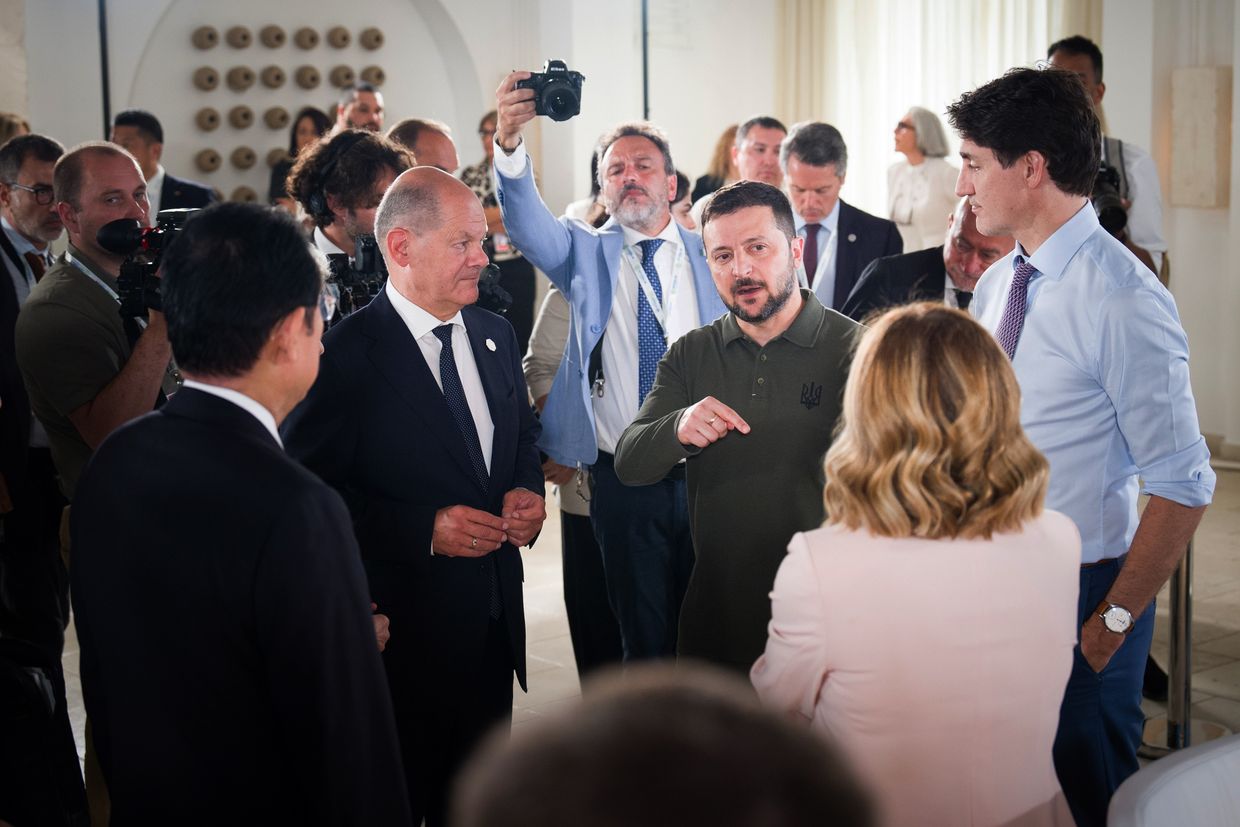
President Volodymyr Zelensky arrived at the G7 Leaders' Summit in Canada on June 17 ahead of the final day of the G7 Leaders' summit, according to a Kyiv Independent journalist on the ground.
Zelensky was greeted by Canadian Prime Minister Mark Carney in Kananaskis, Alberta, where the summit is being held.
"We need more from our allies... We are ready for peace negotiations... But for this, we need pressure," the Ukrainian president said.
The Ukrainian president was expected to meet U.S. President Donald Trump at the summit. However, it is not clear if the meeting will take place because Trump left the summit early due to escalating tensions in the Middle East.
White House spokesperson Caroline Leavitt confirmed Trump's early departure from the summit, citing the ongoing escalation between Israel and Iran.
The Israeli military launched a large-scale attack on Iran's nuclear and military infrastructure on June 13, which was followed by retaliatory ballistic missile strikes from Tehran. Israel has since struck key defense targets in Tehran, including the headquarters of Iran's Defense Ministry.
Zelensky was to hold his third in-person meeting with Trump, which may signal the future of Trump and Zelensky's relationship, as well as offer insight into the United States' commitment to supporting Ukraine.
In February, Zelensky and Trump held their first meeting, which escalated into a heated argument, with Trump and Vice President JD Vance lambasting the Ukrainian leader over what they described as "a lack of gratitude for U.S. support."
The second meeting between Trump and Zelensky in the Vatican in April led to the U.S. president reiterating calls for a ceasefire in Ukraine and even threatening to impose sanctions on Russia.
In the month since their last in-person meeting, tensions between Trump and Zelensky have risen again. Despite issuing several threats, Trump has not followed through on implementing additional economic pressure on Moscow.
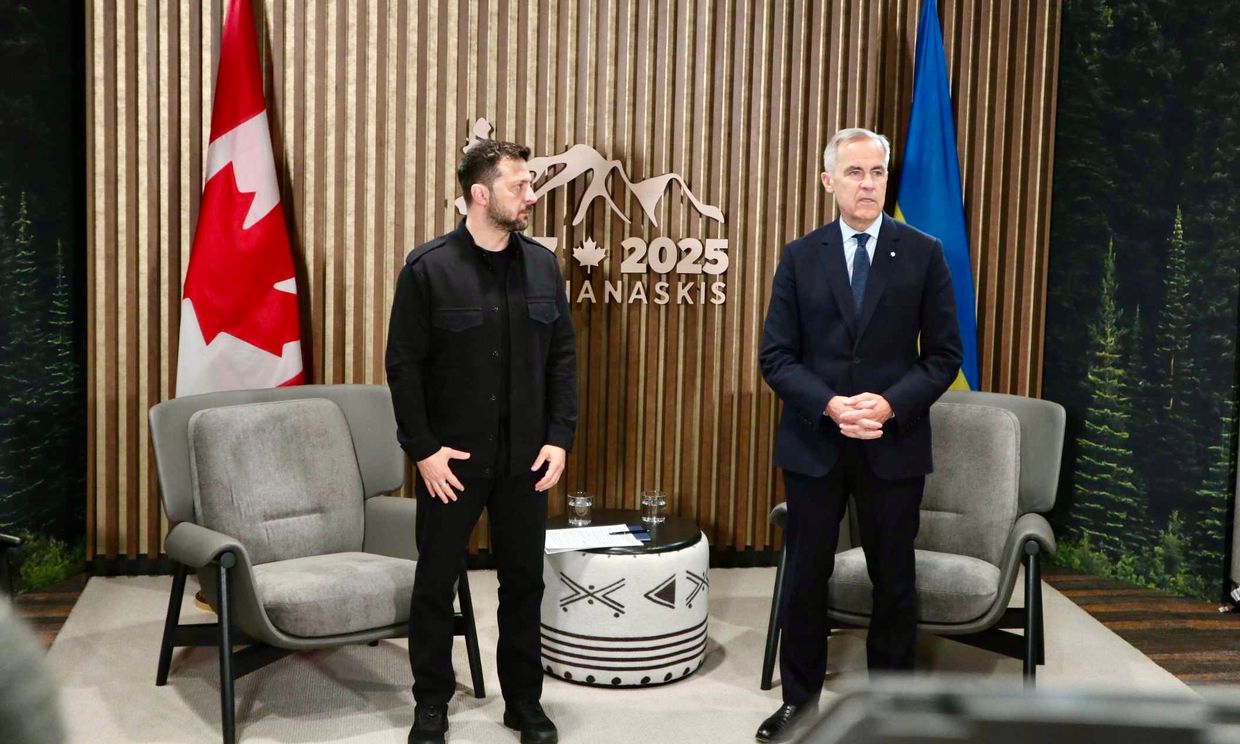
Canadian Prime Minister Mark Carney welcomes President Volodymyr Zelensky during the Group of Seven (G7) Summit in Kananaskis, Alberta, Canada on June 17, 2025. (Dmytro Basmat / The Kyiv Independent)
Canadian Prime Minister Mark Carney welcomes President Volodymyr Zelensky during the Group of Seven (G7) Summit in Kananaskis, Alberta, Canada on June 17, 2025. (Dmytro Basmat / The Kyiv Independent)
Ahead of the summit, European leaders urged G7 nations to impose harsher sanctions on Moscow in order to secure a ceasefire in the war against Ukraine.
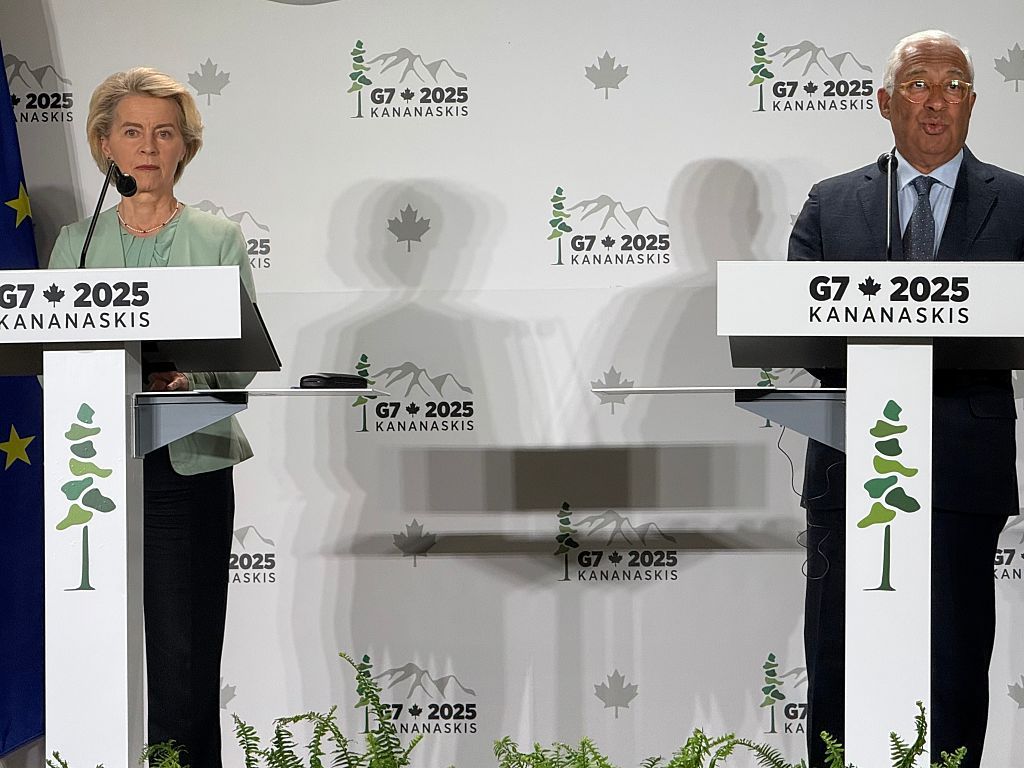
"To achieve peace through strength, we must put more pressure on Russia to secure a real ceasefire, to bring Russia to the negotiating table, and to end this war. Sanctions are critical to that end," European Commission President Ursula von der Leyen said on June 15 at a press briefing attended by a Kyiv Independent journalist.
Zelensky is still expected to attend the scheduled meetings with other G7 leaders.
Zelensky said in a closed-door meeting attended by the Kyiv Independent on June 13 that his priority is to speak with Trump about sanctions against Russia, peace talks, weapons purchases, and U.S.-Ukraine economic cooperation.
"There are steps forward we can take — but we need the political will of the U.S. president, if he wants," Zelensky said on June 13.
Amid increased anxiety around Trump's commitment to ending the war, U.S. Defense Secretary Pete Hegseth recently announced that the Pentagon would reduce funding allocated for military assistance to Ukraine in its 2026 defense budget.
Canada, which holds the G7 presidency in 2025, invited Zelensky to participate in summit, marking the Ukrainian president’s fourth G7 meeting since the outbreak of the full-scale invasion in 2022.
U.S. President Donald Trump was unaware of a deadly Russian drone and missile strike on Kyiv that killed at least 15 people and injured over 120, when asked about the attack by reporters on June 17.
On board Air Force One as he flew back from Canada, Trump was questioned about the attack by a reporter. A clock in the plane shows it was shortly after 1:30 a.m. Washington time, 8:30 a.m. Kyiv time, two-and-a-half hours after the nine-hour-long attack ended, and after reports of casualties had been made public.
When asked for his reaction, he responded: "When was that? When?"
The reporter then says the "Russian drone attack on Kyiv" occurred "very recently."
"Just now? You mean as I’m walking back to see you, that’s when it took place? Sounds like it. I’ll have to look at it," Trump replies.
At the time of writing some seven hours later, the White House has still yet to comment on the attack.
The comments came a few hours after Ukraine endured the largest aerial attack on Kyiv in 2025. According to Ukraine's Air Force, Russia launched 472 aerial weapons overnight, including nearly 280 Shahed-type attack drones, 16 Kh-101 cruise missiles, two Kinzhal ballistic missiles, and other guided munitions, primarily targeting the capital.
Air defenses downed 428 of them, including 239 Shaheds and 15 cruise missiles, while at least one Kinzhal was intercepted.
The almost nine-hour assault killed 15 people and injured 124, according to local authorities. A nine-story residential building in the Solomianskyi district was struck and partially collapsed, killing residents.
Kyiv Mayor Vitali Klitschko said cluster munitions were discovered in the city, a type of weapon banned under international conventions due to their indiscriminate nature and long-term threat to civilians. June 18 has been declared an official day of mourning in Kyiv.
President Volodymyr Zelensky called the strike "one of the most horrifying attacks on Kyiv" and urged international partners to respond decisively. Foreign Minister Andrii Sybiha said the timing of the strike, as G7 leaders meet, was a deliberate message from the Kremlin.
Civilian sites hit in the capital include kindergartens, residential areas, a university dormitory, and production facilities. Ukrainian manufacturer Fahrenheit, which produces military and civilian clothing, announced its factory was damaged and all orders suspended indefinitely. Ukrposhta, the national postal service, lost two branches. A Ukrainian Railways train carrying grain was also struck, temporarily halting traffic.
Russia has escalated attacks on Ukrainian cities in recent weeks, including mass strikes on energy infrastructure and residential areas.
A U.S. government working group that formulated strategies for pressuring Russia into peace talks and ending the war in Ukraine has been disbanded by the White House, Reuters reported on June 17.
Officials cited by the news outlet said it was established this spring but became increasingly irrelevant as it became clear U.S. President Donald Trump wasn't willing to apply any concrete pressure on Moscow during peace talks.
"It lost steam toward the end because the president wasn't there. Instead of doing more, maybe he wanted to do less," an anonymous official said.
As Ukraine and the U.S. continue to push for an unconditional ceasefire, Russia has maintained maximalist demands and rejected all such proposals.
At the same time it has escalated attacks on Ukrainian civilians, killing at least 15 people and injuring scores of others in the latest attack on Kyiv overnight on June 17.
Trump has expressed frustration with Moscow's intransigence and growing violence but has yet to impose any new sanctions on Russia.
On June 16 while speaking in Canada ahead of a G7 summit, Trump said barring Russia from the G8 for its invasion of Ukraine in 2017 had been a "mistake."
According to Reuters, the working group, staffed by officials from the National Security Council, State Department, Treasury Department, the Pentagon and intelligence community, was decimated in a purge of personnel around three weeks ago.
Trump pledged to "stop the wars" when he was elected U.S. president for the second time but after just five months in office, the world is a far more violent place.
As well as Russia escalating attacks on Ukraine, Israel and Iran are now locked in a conflict that further threatens stability in the Middle East.
Editor's note: This is a breaking story and is being updated.
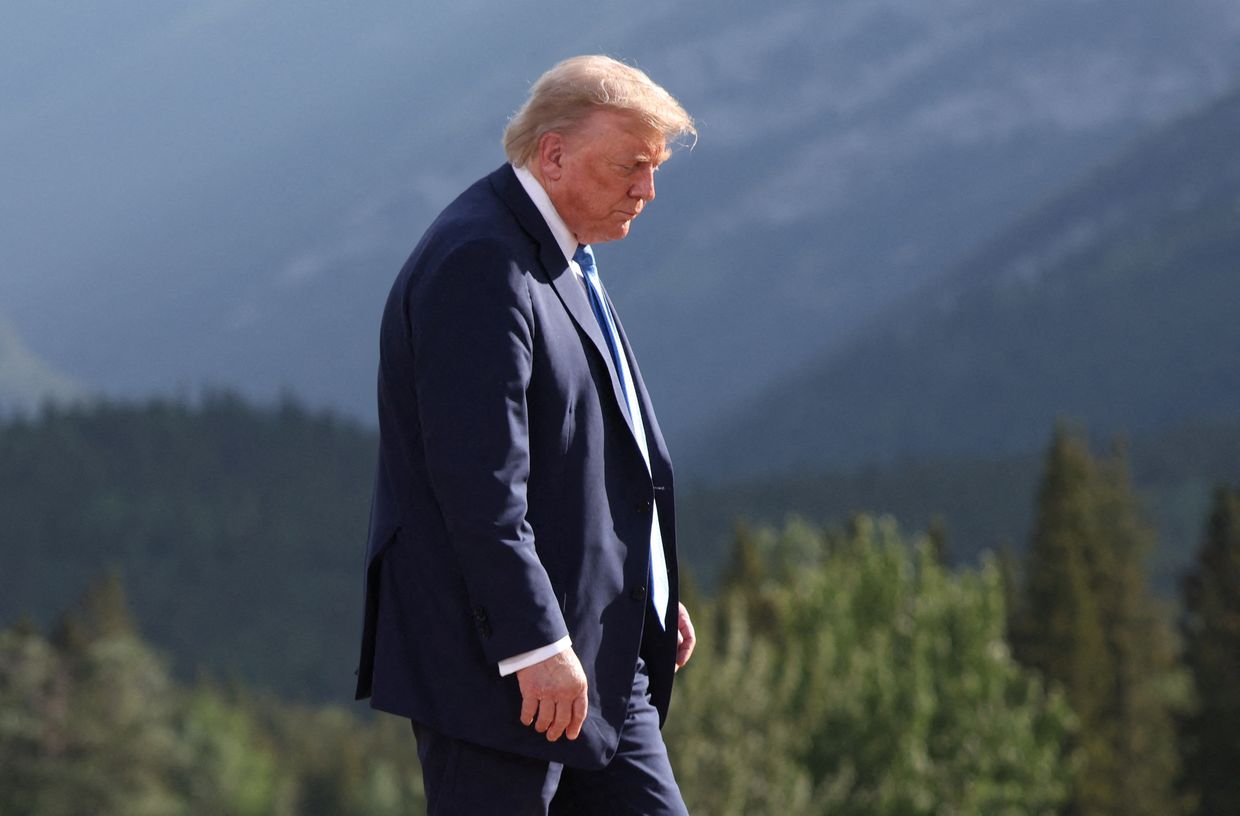
U.S. President Donald Trump departed the G7 Leaders' Summit late on June 16, ahead of an anticipated high-stakes meeting with President Volodymyr Zelensky on June 17.
White House Press Secretary Karoline Leavitt said that the departure comes as Trump is set to attend to "important matters."
"Because of what’s going on in the Middle East, President Trump will be leaving tonight after dinner with Heads of State," Leavitt wrote on X.
"I have to be back as soon as I can... because of what's going on in the Middle East" Trump told reporters.
"I have to be back early for obvious reasons," Trump said, without further elaborating.
In a post on Truth Social, Trump warned ahead of the departure that "Everyone should immediately evacuate Tehran!"
It was not immediately clear as to whether Trump will return for the final day of the summit on June 17.
Zelensky is expected to participate in previously planned G7 events as scheduled.
Zelensky was expected to meet with Trump on the sidelines of the G7 summit on June 17, marking their third in-person meeting since the American president took office in January. The proposed meeting was set to serve as an inflection point for Zelensky as pressure mounts on Trump from Western allies.
"Both teams are working to ensure we meet," Zelensky said on June 14 during a closed-door briefing attended by the Kyiv Independent.
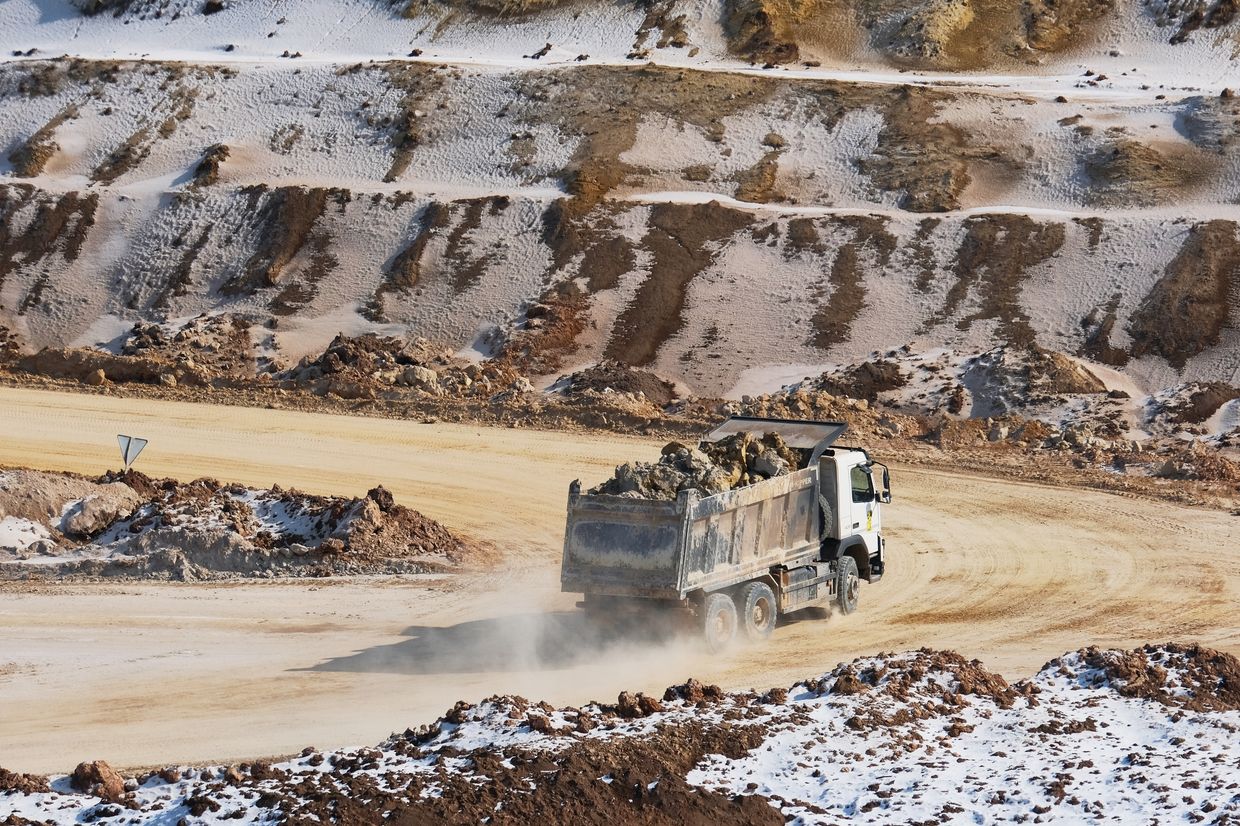
More than a month after Ukraine signed a landmark agreement granting the United States a stake in its mineral reserves, Kyiv has approved initial steps to open one of its largest lithium deposits to private investors, the New York Times (NYT) reported, citing two government officials.
On June 16, the Ukrainian government agreed to begin drafting recommendations for a bidding process to develop the Dobra lithium field in central Ukraine. According to the officials, who spoke to NYT on condition of anonymity, this would be the first project advanced under the U.S.-Ukraine minerals deal.
The Dobra lithium ore site is located in the Novoukrainskyi district of Kirovohrad Oblast, rougly 300 kilometers southeast of Kyiv.
The deal, signed by President Volodymyr Zelensky on May 12, is aimed at deepening economic ties, boosting Ukraine's reconstruction, and positioning the country as a supplier of strategic resources to the U.S.
Among the likely bidders for the Dobra field is a consortium including TechMet, an energy investment firm partly owned by the U.S. government, and billionaire Ronald S. Lauder, a close associate of the U.S. President Donald Trump. The group has long expressed interest in the Dobra site and encouraged Zelensky to open it to bids last year.
Under the broader agreement, half of the revenues from mineral extraction would go to a joint U.S.-Ukraine investment fund. While the Ukrainian government would reinvest its share into the domestic economy, the United States would claim a portion of the profits — a structure Mr. Trump has framed as partial repayment for U.S. assistance to Ukraine.
TechMet CEO Brian Menell said investors were pushing for production-sharing agreements, which offer long-term stability and tax incentives. Monday’s step toward opening the Dobra field is based on such an arrangement, according to the outlet.
U.S. President Donald Trump arrived in Canada for the Group of Seven (G7) Leaders' Summit late on June 15, according to a Kyiv Independent journalist on the ground.
Trump's arrival comes ahead of his expected high-stakes meeting with President Volodymyr Zelensky on June 17 in Kananaskis, Alberta.
Canada, which holds the G7 presidency in 2025, invited Zelensky to participate in the 3-day summit, which will mark Zelensky's fourth G7 Leaders' Summit since the outbreak of the full-scale invasion in 2022.
After a disastrous first in-person meeting between the two leaders in the Oval Office in February — during which Trump and Vice President JD Vance lambasted Zelensky over what they described as "a lack of gratitude for U.S. support" — a second meeting in the Vaticanled to Trump reiterating calls for a Russian ceasefire and even threatening to impose sanctions on Russia.
In the month since their last in-person meeting, tensions between Trump and Zelensky have risen again. Despite issuing several threats, Trump has not followed through on implementing additional economic pressure on Moscow.
Zelensky said in a closed-door meeting attended by the Kyiv Independent on June 13 that his priority is to speak with Trump about sanctions against Russia, peace talks, weapons purchases, and U.S.-Ukraine economic cooperation.
The anticipated third meeting could signal the future of Trump and Zelensky's relationship, as well as offer insight into the United States' commitment to supporting Ukraine.
Amid increased anxiety around Trump's commitment to ending the war, U.S. Defense Secretary Pete Hegseth recently announced that the Pentagon will reduce funding allocated for military assistance to Ukraine in its 2026 defense budget.
On June 12, Zelensky decried Washington's lack of urgency around sanctions, suggesting that Russia is "lying to Trump." He said that Russian President Vladimir Putin's strategy is to maintain the illusion of dialogue without ever committing to a ceasefire.
"There are steps forward we can take — but we need the political will of the U.S. president, if he wants," Zelensky said on June 13.
Germany aims to prioritize defense spending in the next EU budget while firmly opposing any increase in national contributions, according to a position paper obtained by the Financial Times (FT).
As the bloc’s largest economy and top net contributor, Berlin wants EU funds to support joint arms procurement and help expand production capacity among European weapons manufacturers.
The paper reportedly reflects Germany’s broader shift toward higher domestic military spending in response to Russia’s ongoing threat and amid calls by U.S. President Donald Trump for Europe to shoulder more of its own defense.
Berlin argues the EU budget should also fund dual-use technologies, military transport corridors, and other security-related initiatives despite current treaty restrictions on defence spending from the common budget, according to FT.
To free up funds for these priorities, Germany proposes cutting administrative costs and simplifying the EU budget structure. The government supports reducing the number of programes, granting the European Commission more flexibility to shift funds, and focusing spending on strategic areas such as cross-border infrastructure, energy security, digitalisation, and innovation.
Germany also opposes any extension of the EU’s post-Covid joint borrowing programme, stressing that repayments for the 800 billion euro fund must begin in 2028 as scheduled. While Berlin is open to discussing new EU-level revenue sources such as a carbon border levy or minimum corporate tax, it continues to reject an increase in direct national contributions to the budget, which currently total about 1% of EU GDP.
Israeli officials have asked the Trump administration to join military operations targeting Iran’s nuclear program, including a strike on the fortified Fordow uranium enrichment site, Axios reported on June 14, citing two Israeli officials.
The request comes as Israel continues its assault on Iranian targets and warns that it lacks the capability to destroy Fordow alone. The underground facility, located deep within a mountain, is beyond the reach of Israel’s conventional weapons. U.S. forces in the region, however, have the necessary bunker-busting bombs and bomber aircraft to hit the site.
According to an Israeli official who spoke to Axios, Trump suggested in a recent conversation with Israeli Prime Minister Benjamin Netanyahu that he would consider joining the operation if needed. But a White House official denied that claim on June 13.
A second U.S. official confirmed that Israel had urged the U.S. to take part, but said the administration is not currently considering involvement. Israeli Ambassador to the U.S. Yechiel Leiter told Fox News on June 13 that "the entire operation… really has to be completed with the elimination of Fordow."
An Israeli source told Axios that the U.S. is considering the request, and that Israel hopes Trump will agree to it.
A senior White House official told Axios on June 14 that "whatever happens today cannot be prevented," referring to the Israeli attacks. "But we have the ability to negotiate a successful peaceful resolution to this conflict if Iran is willing. The fastest way for Iran to accomplish peace is to give up its nuclear weapons program," the official added.
U.S. officials have so far maintained that Iranian retaliation must not target American forces, arguing that the current Israeli operation does not justify attacks on U.S. interests.
Editor's note: This is a developing story and is being updated.
U.S. President Donald Trump and Russian President Vladimir Putin held a phone call on June 14 in which the two leaders discussed Ukraine and the conflict between Israel and Iran.
"Another telephone conversation between Russian President Vladimir... Putin and U.S. President Donald Trump," Russian state media reported, citing Putin's foreign policy aide Yuri Ushakov.
The phone call took place on Trump's birthday, as the U.S. president marks the occasion with a military parade in Washington.
The two leaders discussed Russia's ongoing war against Ukraine and the situation in the Middle East as Israel and Iran continue to exchange aerial attacks.
"The exchange of opinions naturally focused on the dangerous escalation of the situation in the Middle East," Ushakov said.
The phone call between Trump and Putin lasted 50 minutes, he said.
"Russia expressed its readiness to continue negotiations with the Ukrainians, as agreed, after June 22. Donald Trump took note of this information and once again noted his interest in a speedy end to the Russian-Ukrainian conflict," Ushakov said, according to Russian state media.
Trump later confirmed he held a phone call with Putin, saying that the main topic the two leaders covered was Iran.
"President Putin called this morning to very nicely wish me a Happy Birthday, but to more importantly, talk about Iran, a country he knows very well," Trump said in a post to Truth social.
Trump noted that the phone call between the two leaders lasted about one hour, with Putin congratulating Trump on his birthday.
"Much less time was spent talking about Russia/Ukraine, but that will be for next week. He is doing the planned prisoner swaps — large numbers of prisoners are being exchanged, immediately, from both sides," Trump said.
The latest round of prisoner swaps occurred on June 14. Ukraine mainly returned severely wounded and seriously ill soldiers, many of whom were captured during the defense of Mariupol in 2022.
Russia has intensified drone and missile attacks on Ukraine following two rounds of largely inconclusive peace talks between Moscow and Kyiv in Turkey on May 16 and June 2.
Israel and Iran continued to exchange attacks on June 14, more than 24 hours after Israel launched its first strikes on Iran's nuclear sites and military leadership.
Trump has said that the U.S. military is on high alert and watching for any kind of retaliation, adding that the U.S. will respond to defend itself or Israel if Iran strikes back.
President Volodymyr Zelensky's office has confirmed plans for a high-stakes meeting with U.S. President Donald Trump at the upcoming G7 summit on June 17, according to the Kyiv Independent journalist who attended a closed-door briefing with Zelensky on June 13.
"Both teams are working to ensure we meet," Zelensky said.
The meeting would mark the third in-person encounter between the two leaders during Trump's second term in the White House. Their most recent meeting took place on April 26 at St. Peter's Basilica in the Vatican, where they spoke privately on the sidelines of Pope Francis' funeral. Both sides described the meeting as productive and constructive, though details remained sparse.
Earlier in February, Zelensky met Trump and Vice President JD Vance in the White House when the infamous tense Oval Office exchange erupted, with Trump criticizing Kyiv's perceived lack of gratitude for U.S. support
Zelensky said his priority is to discuss with Trump sanctions against Russia, peace talks, weapons purchase, and U.S.-Ukraine economic cooperation.
"The United States communicates with the EU on sanctions at the level of senators and congressmen. But I want to raise this issue personally with President Trump," Zelensky said.
"There are steps forward we can take — but we need the political will of the U.S. president, if he wants."
He added that Ukraine has long prepared a "strong" weapons package to purchase from Washington. "Only at the presidential level can we finalize it," Zelensky said ahead of the G7 summit.
Russian offensives in Sumy, Dnipropetrovsk oblasts
Zelensky said that heavy fighting is ongoing along Ukraine's northeastern border. Russian forces have concentrated around 53,000 troops in the Sumy sector, pushing into multiple settlements such as Andriivka, Kindrativka, and Oleksiivka.
According to the open-source monitoring group DeepState, Russian troops have been advancing along the border in Sumy Oblast, with the current front line lying just about 20 kilometers away from the regional capital of Sumy.
According to media reports, Russia exploited a thinning of Ukraine's front-line forces, which were later replaced by newer, under-equipped formations.
Zelensky said that Russia only pushed seven kilometers deep into Sumy, adding that the Russian army "has been stopped there."
Zelensky added that Ukrainian forces had successfully struck Russian positions in the neighboring Russian Kursk Oblast, near Tyotkino, to stall Russian momentum and split their offensive groups.
In Dnipropetrovsk Oblast, Zelensky confirmed that small Russian reconnaissance groups had briefly crossed into Ukrainian territory — likely for propaganda purposes. One six-man unit was reportedly eliminated one kilometer from the administrative border.
"For them (Russia), it's an important story, to take a photo, video," Zelensky said. "That's why they are launching small working groups to do just that."
Earlier, the Kremlin has claimed the operations in Dnipropetrovsk are part of an effort to create a so-called "buffer zone." Ukrainian officials have rejected these claims as disinformation.
When speaking about the recent escalation between Israel and Iran in the Middle East, Zelensky said that the subsequent regional tension had driven up oil prices, enhancing Russia's war financing through energy exports.
"This factor clearly doesn't help us," he said, adding that Ukraine will urge Washington to implement stricter price caps on Russian oil at the G7.
He further revealed that U.S. weapons previously allocated to Ukraine, including 20,000 air-defense interceptors used to counter Iranian-designed Shahed drones, were redirected to support Israel ahead of its recent strikes on Iran.
"That was a serious blow... We were counting on these missiles," Zelensky said.
Zelensky warned that Ukraine must not become "a bargaining chip" in larger geopolitical negotiations involving the U.S., Russia, and the Middle East. Russia and Iran have deepened their cooperation since 2022, with Iran supplying weapons and technology to boost Moscow's war machine.
"I was constantly afraid that we could become a bargaining chip, just one factor in the negotiations between the United States and the Russians. So, along with the situation with Iran, the situation with Ukraine was also a factor. They are really dependent on each other," he said.
Zelensky voiced concerns about a slowdown in Western diplomatic momentum, particularly around the "coalition of the willing" initiative led by France and the UK.
Earlier, media reported that the "coalition of the willing," aimed at offering post-ceasefire security guarantees to Ukraine, has faced delays due to the absence of U.S. commitment.
"Europe hasn't yet decided what to do if America steps back," he said. "Their energy depended on U.S. resolve. Without it, things slow down."
Still, Zelensky made clear that Ukraine would not accept any ultimatums from Moscow amid the uncertainty of Western support. He described the latest Russian ceasefire proposals as capitulation.
"They pretend to be ready for talks, but all they offer is an ultimatum," Zelensky said. "We won't go along with that. Not now, not ever."
Zelesnky also expressed optimism that the European Union's 18th sanctions package would pass later this month and said he would personally push for closer U.S.-EU coordination at the G7.
Zelensky confirmed that prisoner exchanges with Russia are continuing and that another round of direct peace talks with Moscow may take place soon after.
"We expect that they (prisoner swaps) can be completed on the 20th or 21st (of June)," he said.
Over the week, Ukraine and Russia held a series of exchanges under an agreement reached during peace talks in Istanbul. Most recently, on June 12, Ukraine brought home another group of severely wounded and seriously ill service members.
The June 12 operation followed a similar swap two days earlier, both conducted without immediate disclosure of the number of released prisoners.
The June exchanges are part of a phased prisoner swap arrangement agreed during the second round of direct talks between Ukrainian and Russian delegations in Istanbul on June 2. While no political breakthroughs emerged from the discussions, both sides agreed to continue exchanging POWs and repatriating the remains of fallen soldiers.
U.S. President Donald Trump on June 12 praised Russia's role in World War II, saying Russian President Vladimir Putin is "confused" why everyone "hates" Moscow.
Speaking at a White House press conference, Trump recounted a conversation with French President Emmanuel Macron about World War II commemorations.
"I said, 'You're celebrating our victory?' He said, 'Yes.' I said, "Your victory?'" Trump said.
"And then I spoke to President Putin at the time. He lost 51 million people. He (sic!) fought with us in World War II. Russia did fight. It's interesting, isn't it? It fought with us in World War II, and everyone hates it.
"And now everybody hates Russia and loves Germany and Japan. It's a strange world."
Trump said Putin had expressed confusion over the West's treatment of Russia post-war, citing the Soviet Union's wartime alliance with the U.S. and U.K.
"We were your ally," Putin allegedly told Trump. "Now everybody hates Russia."
Trump's remarks align with a Kremlin propaganda narrative that downplays the Soviet Union's World War II non-Russian casualties. According to Ukraine's Institute of National Remembrance, Ukraine alone lost more than 10 million people during the war and suffered immense destruction on its territory — a fact often overlooked in Kremlin-led historical revisionism.
Russia has frequently weaponized its version of World War II history to justify present-day aggression. The Kremlin has invoked anti-Nazi rhetoric and Soviet-era heroism to rationalize its full-scale invasion of Ukraine, launched in February 2022 — a war that has resulted in tens of thousands of deaths and the displacement of millions.
Trump has positioned himself as the only leader capable of ending the Russia-Ukraine war, but his reluctance to apply real pressure on Moscow has left Kyiv and its allies doubtful. The U.S. president has softened his tone on Russia while repeatedly threatening sanctions over its attacks on Ukraine — yet no new measures have been imposed.
Talking at the press conference about the war and the stalled peace efforts, Trump said he was "disappointed" with both Russia and Ukraine, adding that "deals could have been made."
Trump has previously said that he refrained from imposing additional sanctions in hopes of securing a peace deal between Kyiv and Moscow.
"If I think I'm close to getting a deal, I don't want to screw it up by doing that," he said on May 28, adding that a decision would come "in about two weeks."
Despite failed peace efforts in Istanbul and Russia's continued refusal to agree to a ceasefire, Trump reportedly asked Senate Republicans to delay voting on a bipartisan sanctions bill that would impose a 500% tariff on imports from countries buying Russian oil.
The legislation, introduced in April, has broad bipartisan support, including backing from Senate Minority Leader Chuck Schumer and House Speaker Mike Johnson.
Meanwhile, Russia continues its offensive in Ukraine and has shown no signs of seeking peace. It continues escalating its attacks on Ukrainian cities, causing numerous civilian casualties.
Editor's note: The article was updated with Trump's statement on Truth Social.
U.S. President Donald Trump said on June 13 that he was aware of Israel's plans to conduct strikes on Iran in advance and that Washington is watching for any signs of retaliation by Tehran, Fox News reported.
"Iran cannot have a nuclear bomb and we are hoping to get back to the negotiating table. We will see. There are several people in leadership that will not be coming back," Trump told Fox News' anchor Bret Baier.
The comments come after Israel launched heavy air strikes against 100 sites in Iran, targeting the country's nuclear program and reportedly killing Hossein Salami, the commander-in-chief of the Islamic Revolutionary Guard Corps (IRGC), and other top officials.
In a statement released by the State Department, U.S. Secretary of State Marco Rubio said that the United States was not involved in the strikes on Iran, calling it a "unilateral action."
The U.S. has reached out to at least one Middle Eastern ally to say that the strike is going to happen, but that Washington was not involved, Fox News reported.
Trump said the U.S. military is on high alert and watching for any kind of retaliation, adding that the U.S. will respond to defend itself or Israel if Iran strikes back.
The Israel Defense Forces (IDF) said that Tehran had already launched over 100 drones against Israel, which are expected to reach their targets within the next few hours.
On the Truth Social media platform, Trump said he gave Iran a "chance after chance to make a deal" and had warned Tehran that "it would be much worse than anything they know" if there is no agreement.
"Certain Iranian hardliners spoke bravely, but they didn't know what was about to happen. They are all dead now, and it will only get worse!" Trump wrote.
The U.S. president added that there is still time to stop the slaughter, calling upon Iran to make a deal "before there is nothing left."
Before the attacks, Trump emphasized that despite tensions, he is committed to avoiding conflict and prefers a diplomatic solution to Iran's nuclear aspirations. "I want to have an agreement with Iran," Trump said, referring to ongoing Iran-U.S. nuclear talks in Oman.
Iran insists its nuclear program is for peaceful purposes and has expressed willingness to accept limited restrictions in exchange for the lifting of sanctions.
In turn, the International Atomic Energy Agency released a report highlighting Iran’s failure to comply with its obligations to fully disclose activities at its nuclear facilities.
Beyond the Middle East, Iran has emerged as a key ally of Russia in its war against Ukraine, supplying Moscow with drones used in attacks on Ukrainian cities.

 Connexion
 The Kyiv IndependentTim Zadorozhnyy