Vue lecture

Russia is working to modernize its weapons on every front. This month, its drones are expected to carry 20-element anti-jam antennas to outpace Ukraine’s jamming
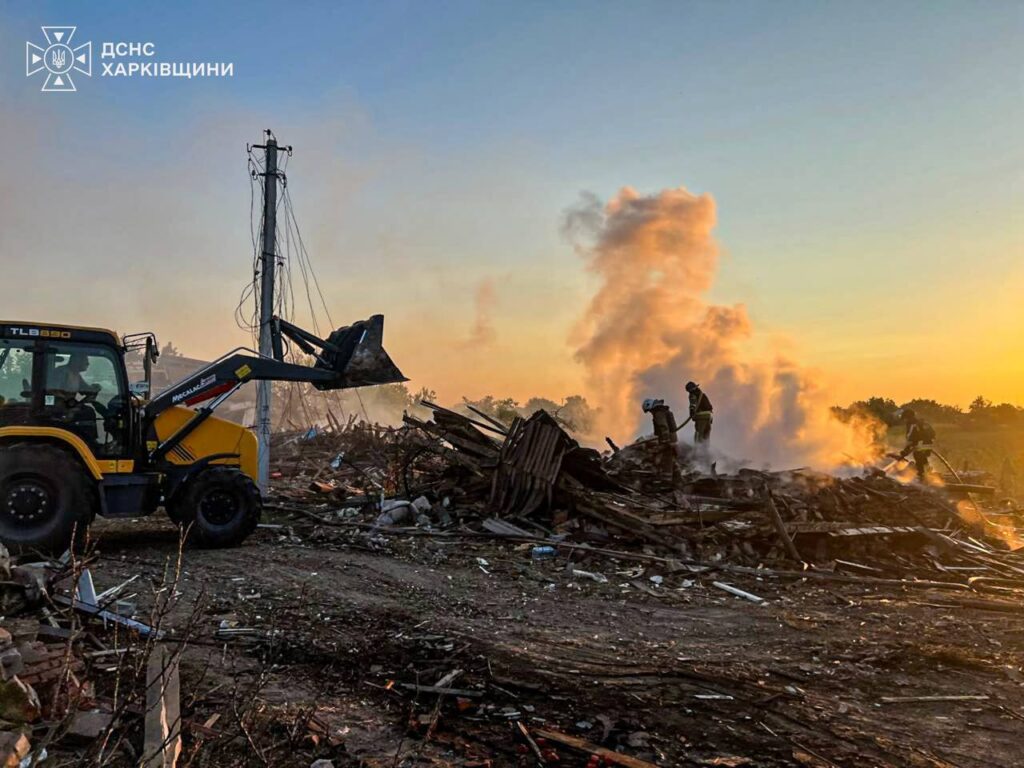
Emergency workers respond to the aftermath of a Russian drone attack in Lebiazhe, Kharkiv Oblast, Ukraine, 21 August 2026. Photo: Ukraine’s State Emergency Service

Russia is working methodically to modernize its attack drones on every possible front. This month, its drones are expected to carry 20-element anti-jam antennas in place of the 16-element ones, harder for Ukrainian electronic warfare to defeat, Serhii "Flash" Beskrestnov, President Volodymyr Zelenskyy's defense-technology adviser, said.

Russia's knack for scaling and upgrading its weapons is something Ukrainian experts keep flagging. Serhii Bratchuk, spokesperson for the Ukrainian Volunteer Army, recently put it bluntly, "Credit to the Russians. They know how to scale." Meanwhile, military analyst Oleksandr Kovalenko of the Information Resistance group has argued that Russia plans its terror campaigns years out and adapts almost monthly, a foresight Ukraine has struggled to match.

The antenna work is another example, and it will not stop at 20 elements: the main supplier, VNIIR "Progress", plans 24-element arrays in 2027, and Chinese firms are mounting similar efforts, shipping multi-element antennas to Russia disguised as farm equipment.

Autonomous drones need GPS jamming

Not every jet drone that reaches Kyiv is flown by a live operator, Beskrestnov said. A large share runs on ordinary satellite navigation, and a few weeks ago, Russia upgraded the drones' inertial navigation, the backup that holds a course when the satellite signal drops.

The distinction changes how Ukraine fights back. A drone under live control can be stopped by jamming its communication link, the mobile or satellite internet the operator uses, which cuts the operator off. A drone flying on its own has no such link to jam. There, Ukraine has to jam the GPS or GLONASS signals the drone relies on.

Cruise missiles share the weakness

The same logic applies to Russia's newer cruise weapons. The Banderol and the Dan-T, which Russia is betting on, carry no operator link at all, only satellite and inertial navigation, Beskrestnov said.

The Dan-T is a strange case: it began as the Dan-M, a jet-powered target drone that Russia's Sokol bureau built in the early 1990s to mimic US Tomahawk cruise missiles for air-defense practice, now fitted with a warhead and fired at Ukrainian cities.

Because these weapons navigate rather than being flown, Ukrainian electronic warfare is one of the few tools that can throw them off course, even as Russia races to harden the navigation they depend on.
  •  

From Russian classrooms to Iran’s defense industry: how Moscow trains Iranian specialists

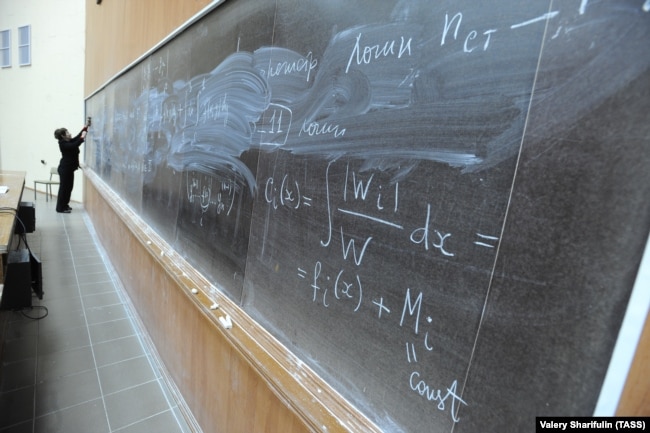
Lecture at the Moscow Aviation Institute, 2021. Photo: Valery Sharifulin/TASS

RFE/RL's investigative project Sistema examined hundreds of Russian-Iranian scientific papers published over the past decade and identified links between Russian universities and Iran's defense industry.

Russia has been invading Ukraine since 2014 and has pounded its cities nightly since 2022 with Shaheds, the Iranian-designed attack drones it turns out by the thousand. And now Russian universities are where some of Iran's military engineers learn their trade, before returning to institutions tied to Iran's army and Revolutionary Guards.

At St Petersburg's ITMO University, Iranian co-authored papers almost equaled German ones in number in 2025, although Germany had been a key partner before Russia's full-scale invasion of Ukraine, Sistema's count shows.

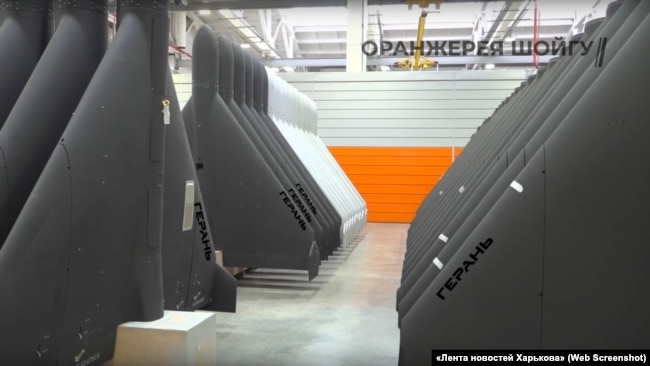
Russian adaptations of Iranian Shahed-type drones. Photo: “Lenta Novostei Kharkova” / Web Screenshot
Russian adaptations of Iranian Shahed-type drones. Photo: Lenta Novostei Kharkova / Web Screenshot

Academic ties with a military edge

For almost four decades, Russia has trained Iranian engineers in fields including aircraft manufacturing, missile development, satellite navigation, and nuclear technology, Sistema reported. Almost 10,000 Iranian students were enrolled at Russian universities in 2025, 42% more than two years earlier, according to Russia's science ministry. Medicine remains the most popular field.

In some cases, the training goes beyond ordinary academic exchange. In 2018, Iranian students from the Moscow Aviation Institute (MAI) interned at Vympel, a Russian manufacturer of missile weapons, alongside other foreign students, Sistema reported.

The investigation also examined the career of Ali Mohammad Amoui, who completed postgraduate study in gas turbine engines in 2000 at the MATI technological university in Moscow, later absorbed into MAI. From 2017 to 2022, he served as deputy director general for trade and international relations of Farsco Aviation MRO Center, whose shareholders, according to Iranian corporate records cited by the investigation, include Iran's Aviation Industries Organization, part of the country's Defense Ministry, and the sanctioned airline Mahan Air. Farsco presents itself as a civilian maintenance business.

Iranian drone Kyiv shahed
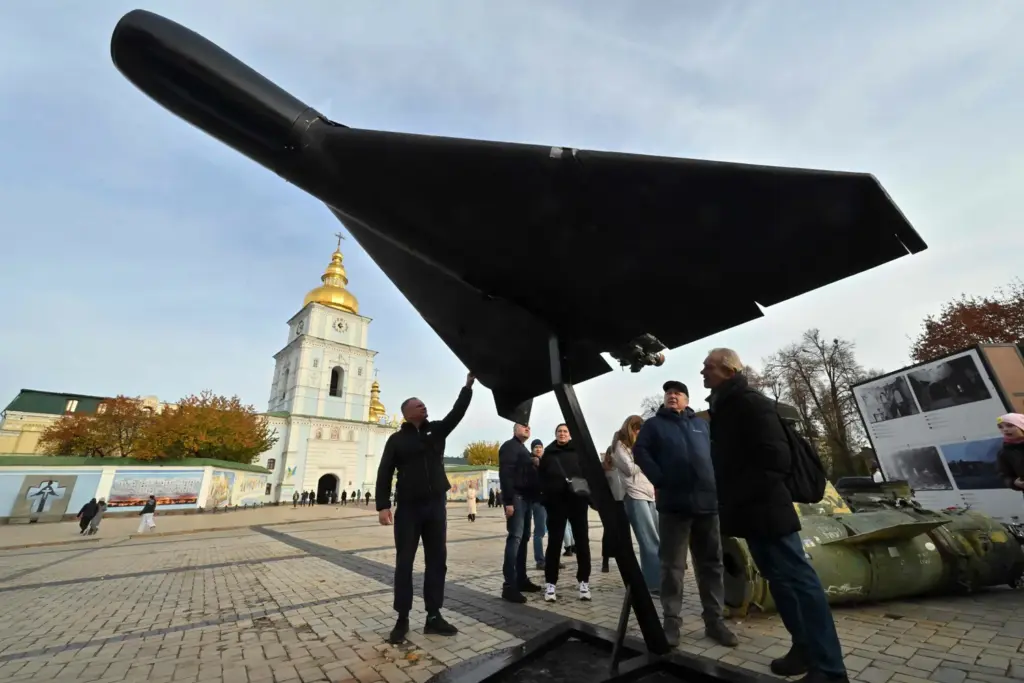
People look at an Iranian-designed Shahed 136, (Geranium-2) drone of Russian Army at an open-air exhibition of destroyed Russian equipment near Saint Michael's Golden-Domed Cathedral in Kyiv on November 2, 2025, amid the Russian invasion of Ukraine. Photo by Sergei SUPINSKY / AFP/Eastnews

Amoui co-authored research with MAI scientists on protective coatings for turbine blades and the strengthening of titanium components in aircraft engines. He also listed Iran's Malek Ashtar University of Technology, which answers to the Iranian Defense Ministry, as his workplace.

Another area of cooperation is satellite navigation and electronic warfare. Iranian professor Mohammad-Reza Mousavi, who edits a journal published by Iran's naval academy, researched GPS spoofing and worked with specialists at Samara University in 2016.

His PhD student Amir Tabatabaei also studied in Samara and worked on GLONASS, Sistema reported. It added that the two developed a method to detect fake GPS signals and published their research in a journal of the Russian defense concern Elektropribor, which develops navigation systems for the Russian Navy.

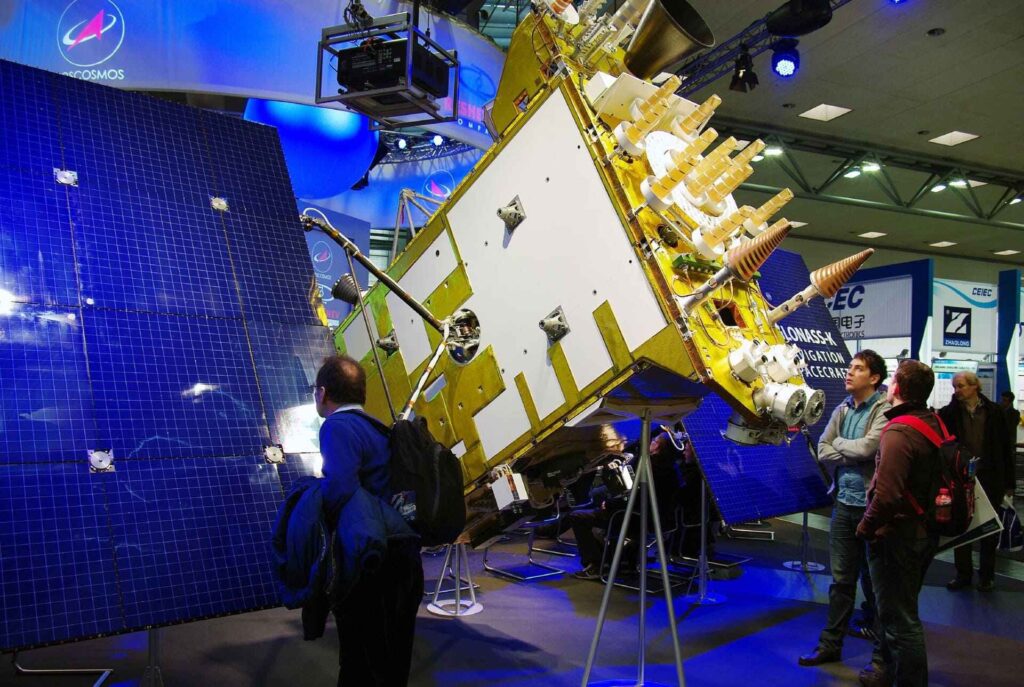
GLONASS-K navigation satellite model at CeBIT 2011. Photo: Jürgen Treutler

Russia and Iran share scientific interests in nuclear physics

Some of this work is dual-use, with civilian and military applications alike. Sistema describes Iranian Mohammad Hosseinpour Khanmiri, who studied methods for measuring uranium and thorium isotopes at St Petersburg State University. By 2022, he had applied a method he had developed with a Russian scientist to ore from Iran’s Saghand deposit. He later listed the Atomic Energy Organization of Iran as his workplace.

His co-authors also had links to Iran’s nuclear program, the investigation reports. Mohammad Outokesh, who studied the operation of gas centrifuges, co-authored a paper with Javad Karimi-Sabet, a deputy head of the Atomic Energy Organization of Iran. Iran's then president, Mahmoud Ahmadinejad, commended Karimi-Sabet in 2006 for his work on nuclear equipment at Natanz, including a new generation of centrifuges. The US and European countries later imposed sanctions on Karimi-Sabet.

  •  
❌