❌

Vue lecture

Ukraine hits another bridge, this time over Siverskyi Donets River in Luhansk Oblast. It also damages three Russian transport planes
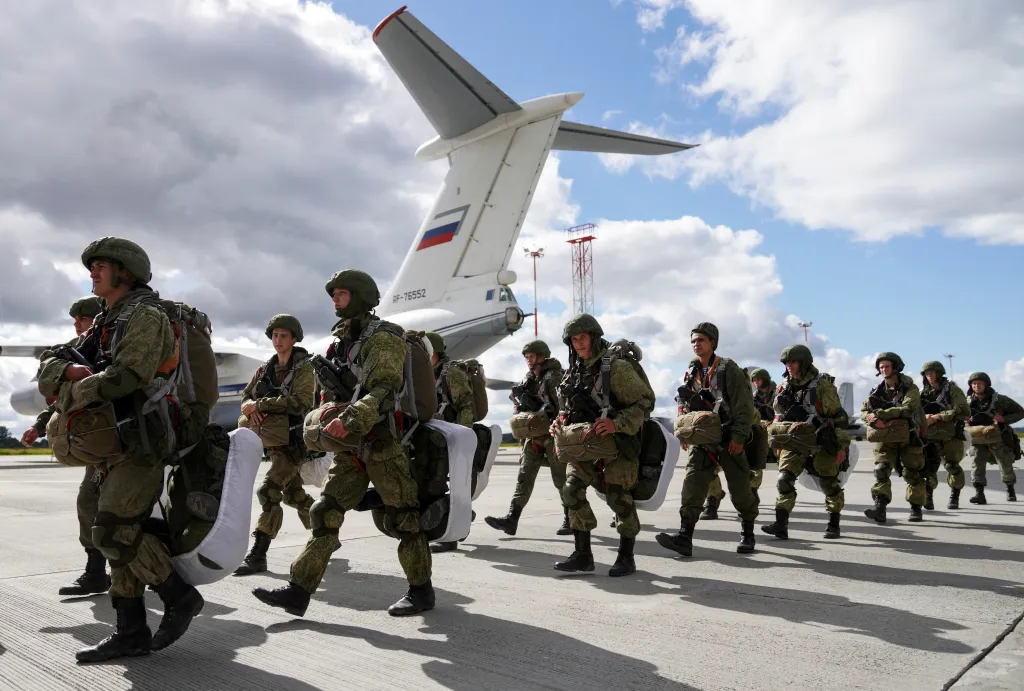
zapad 2021

In its new operation, Ukraine went after the supply lines that keep Russia’s war fed. Its Defense Forces have struck a frontline road bridge and a repair base in Russia’s Kursk Oblast, and confirmed damage to three Russian military transport planes, Ukraine’s General Staff reports.

Each target was a piece of Russia’s war machinery rather than its front line: a crossing that carries ammunition and fuel to the troops, a base where damaged vehicles are patched up and sent back, and the planes that haul men and cargo across the country. Hitting them is part of a widening Ukrainian long-range campaign against the rear that sustains the fighting.

A bridge that carries the front its ammunition and fuel

On 17 November and overnight into 18 November, Ukrainian forces hit Russian military logistics. Near Stanytsia Luhanska in Luhansk Oblast, they struck a road bridge over the Siverskyi Donets that Russian troops use to move ammunition, fuel, and equipment up to the front.

The Defense Forces also hit a Russian unit’s repair base near Khomutovka in Russia’s Kursk Oblast, where Russian crews were mending damaged equipment to send it back to the front.

Three transport planes, and a badly hit Il-76

Additionally, the General Staff confirmed the results of an earlier strike carried out on 10 November against the 123rd Aircraft Repair Plant in Staraya Russa, in Russia’s Novgorod Oblast about 640 kilometers from the Ukrainian border.

The attack damaged three military transport aircraft, one of them an Il-76 that took very heavy damage, and knocked the planes out of service for a time, the General Staff said.

That is the hardware Russia leans on to move troops, weapons, equipment, and ammunition, and the same plant services the A-50 radar planes it uses to watch Ukraine’s skies. Russia flies a largely Soviet-era transport fleet it cannot easily replace, so every plane knocked out, and every repair line hit, bites. The General Staff vowed that such strikes on key Russian military targets will go on until Russia’s armed aggression against Ukraine ends.

  •  

A logistics general takes over Ukraine’s state arms group, and the company is counting on him to make it build more

Lieutenant General Ivan Havryliuk, the new director general of Ukroboronprom

Lieutenant General Ivan Havryliuk, a former head of the army’s logistics and an ex-first deputy defense minister, is the new head of Ukroboronprom, Ukraine’s state defense-industrial group, the company announced on 3 November. He won an open contest and takes over from a stand-in who had run the group since its previous chief left in July.

Russia keeps hitting Ukraine’s arms plants, and Ukraine’s arms industry keeps growing faster than the state can pay for it. Its capacity rose from about $1 billion a year at the start of the full-scale invasion to $35 billion, but domestic contracts covered only a third of that last year, leaving factories idling below capacity. Kyiv is betting on controlled exports of surplus weapons to fund production, and most new growth has moved to private firms. For the state’s own factories, the task is to produce more with too little money, under Russian fire.

Chosen in an open contest

The supervisory board picked Havryliuk after a competitive selection and final interviews with candidates, Ukroboronprom said. The Ukrainian office of the international recruiter Amrop Partnership searched for and assessed the candidates. The board announced the contest on 1 September.

ukroboronprom makes historic entry top 50 global defense firms kamyshin says credit gmk center
Explore further

Ukroboronprom makes historic entry into top 50 global defense firms, Kamyshin says

The company tied his appointment to three goals. His experience and “deep understanding of the needs of Ukraine’s Defense Forces” are “important preconditions” for developing the company, “building up the enterprises’ production capacity,” and strengthening Ukraine’s defense industry, it said. It called the move another step in turning Ukroboronprom into a modern, competitive defense company.

From the army’s rear to the Defense Ministry

Havryliuk, 55, studied at the Sumy Higher Artillery Command School and the National Defense Academy of Ukraine. He headed the Armed Forces’ rear services, the army’s logistics branch, from 2014 to 2018. He then became deputy chief of the General Staff.

Ukroboronprom’s stand at the MSPO defense industry exhibition in Kielce, Poland, September 2026
Ukroboronprom’s stand at the MSPO defense industry exhibition in Kielce, Poland, September 2026. Photo: Ukroboronprom

In October 2023, the government made him deputy defense minister, and in May 2024, first deputy. He resigned in April 2025. He later told a parliamentary investigative commission he did so after then-Defense Minister Rustem Umierov said at a meeting there were rumors he was stealing money on arms purchases. At the time, Umierov said Havryliuk would stay on the ministry’s team. Havryliuk returned as first deputy in July 2025.

In February 2026, he became a deputy minister under Defense Minister Mykhailo Fedorov, and the government dismissed him in May. As first deputy minister, he said in February 2025 that Russia had recruited 427,000 soldiers in 2024.

His predecessor left after Vyshneve

Herman Smetanin led the group of roughly 100 enterprises, which make missiles, drones, armored vehicles, and ammunition, from June 2023, with a break as Minister for Strategic Industries. During that break, the board appointed retired General Oleh Huliak, another former head of the army’s logistics, in October 2024. Smetanin announced his departure on 14 July.

Explore further

Ukraine’s not just fighting with NATO weapons—it’s building them now

Days earlier, a Russian strike set off an ammunition depot of one of the group’s enterprises in Vyshneve, near Kyiv. The depot stood next to homes in breach of the law. The blast damaged 13 hectares of residential buildings and killed eight residents, the town council later told the Kyiv Independent. ZN.ua put the toll at nine.

An armored vehicle and ground drones on display at Ukroboronprom’s stand at MSPO in Kielce, Poland, September 2026
An armored vehicle and ground drones on display at Ukroboronprom’s stand at MSPO in Kielce, Poland, September 2026. Photo: Ukroboronprom

The board then put Serhii Boiev, a former deputy minister for strategic industries and deputy defense minister, in charge until the contest picked a new head.

New missiles for Ukraine’s air defense

The group has been showing new weapons abroad. At Poland’s MSPO arms fair in September, its Luch Design Bureau presented the RK-19, a new missile for Soviet-era Osa air defense systems. A Ukroboronprom image at the same fair showed the Koral, a home-built missile designed to hit ballistic targets.

  •  

Azov says it struck more than 100 Russian trains in occupied Donbas in four months, in part thanks to donations

The moment a Ukrainian UAV prepares to strike a Russian train, likely carrying military supplies, 2026. Screenshot from a video released by Azov

Fighters of the 1st Corps of the National Guard of Ukraine "Azov" struck more than 100 Russian trains carrying fuel and other supplies for occupying forces, the corps reported on social media on 28 October. The strikes disabled locomotives, fuel tank cars, and other equipment, the statement said.

Russian President Vladimir Putin claimed on 16 October that seizing all of Donetsk Oblast remains one of Russia's main tasks. Azov notes that these strikes help "destroy" Russia's offensive capabilities.

Small Ukrainian drones strike Russia's 100-ton locomotives

Azov emphasizes that neither mobile fire groups nor electronic warfare systems can protect Russian logistics routes.

"The enemy is doing its utmost to create an image of successfully capturing settlements, but is unable to protect key railway stations through which the fuel supply chain runs toward the front," Azov said.

The rail hubs hit had carried Russian military trains to the fighting in Donbas and southern Ukraine, Defense Express reported on 29 October. The count of more than 100 trains covers Azov's operations over the past four months, the outlet said.

The mass of any diesel locomotive exceeds 100 tons, yet the Ukrainian military struck these large Russian targets using small UAVs, the outlet also notes.

Donations helped make the strikes possible

Donations and the work of the Come Back Alive foundation contributed to the operation's results, Azov said. In particular, the foundation provided the military with 440 Starlink Mini terminals, the corps added.

War on Credit: Over 100 Trains Hit

The enemy is doing all it can to create the image of successfully capturing settlements, yet it cannot protect the key railway stations through which its fuel supply chain toward the front runs. Neither mobile fire groups nor electronic warfare… pic.twitter.com/QpqEQHyxvp

— First Corps Azov of the National Guard of Ukraine (@azov_media) October 28, 2026

Azov announced Operation Hell back in the summer

On 2 July, the Azov Corps announced Operation Hell and released the first footage of strikes on Russian railway equipment. The video shows a strike on a diesel locomotive that was likely used by Russian forces for military logistics.

Operation "Inferno." Coming soon.

This wasn't just about our distaste for old Soviet cartoons. Demilitarization is the priority. Decommunization's just a bonus.

So what's happening in the video? This isn't a random hit — it's part of a carefully planned operation by First Corps… pic.twitter.com/feNc72isUk

— First Corps Azov of the National Guard of Ukraine (@azov_media) July 2, 2026

The corps said the strike was part of a carefully planned operation and promised details soon.

  •  
❌