Vue lecture

After years of disputes, Hungary finds common ground with Ukraine—on honoring Soviet deportations from Zakarpattia
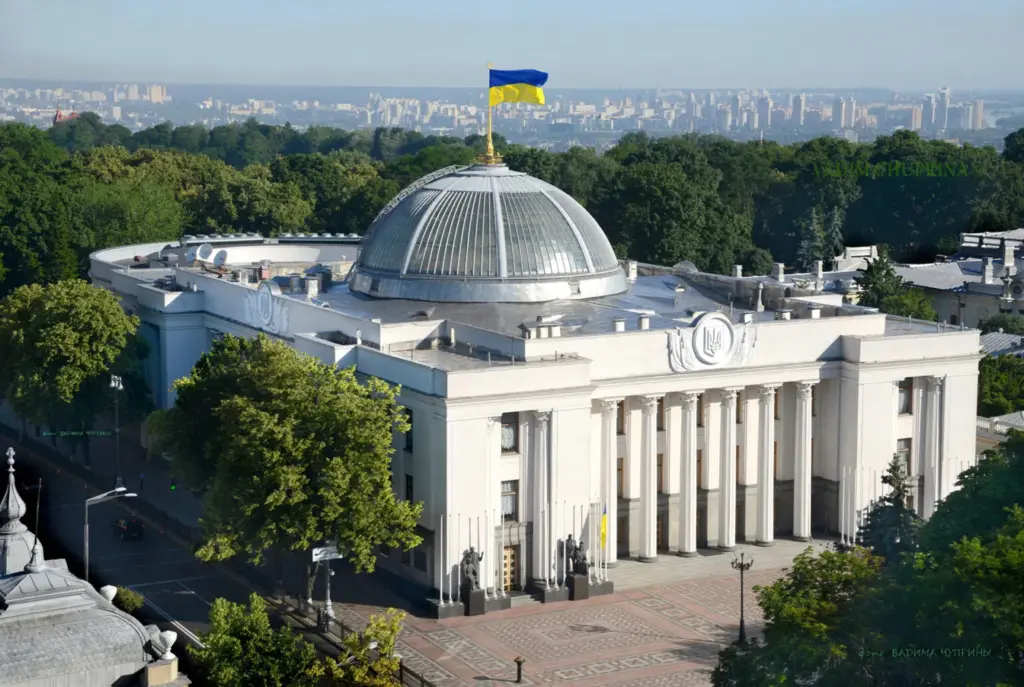
Aerial view of Ukraine’s Verkhovna Rada building in Kyiv, topped by the Ukrainian flag.

Budapest praised the Verkhovna Rada—Ukraine’s parliament—after it voted 261–0 to classify mass arrests, deportations, and persecution by the Soviet military administration in Zakarpattia (also known as Transcarpathia) from 1944 to 1946 as crimes of the communist regime.

The vote makes the Verkhovna Rada the first state body in the world to recognize the repression of Zakarpattia’s Hungarian community as a crime, according to European Pravda. It creates an opening for historical reconciliation after years of minority-rights disputes, strained relations, and blocking Ukraine’s EU accession. However, Budapest continues to press Kyiv for further concessions.

After Soviet forces took control of Zakarpattia—Ukraine’s westernmost region, bordering Hungary and home to the country’s largest ethnic Hungarian community—the NKVD, Stalin’s secret police, and SMERSH, Soviet military counterintelligence, detained civilian men aged 18 to 50 under the pretext of mobilization.

The men were deported without trial to labor camps and the Soviet Gulag prison-camp system. Hungary’s Foreign Ministry said tens of thousands of Hungarian- and German-speaking men were deported, and many thousands died under the inhumane conditions of forced labor.

The campaign became known in Hungarian as malenkij robot. Derived from a Russian phrase meaning “a little work,” Soviet troops used this deceptive phrase when taking people away.

Hungarian Foreign Minister Anita Orbán—no relation to former Prime Minister Viktor Orbán—called the declaration “a fitting tribute” to thousands targeted by Soviet terror because of their Hungarian identity. She said Hungary was ready to help uncover the truth about the past and honor the victims.

Hungary welcomes the Ukrainian parliament’s declaration condemning Soviet authorities' coercive measures against the Hungarian community in Transcarpathia between 1944 and 1946. The declaration is a fitting tribute to the thousands of victims of deportation and forced labor…

— Anita Orban (@_OrbanAnita) September 3, 2026

The resolution calls for memorials, archival publications, research, and the inclusion of the repression in educational programs. It also draws a parallel with Russia’s present-day occupation practices, saying Moscow is committing similar large-scale repression against civilians in occupied Ukraine.

Marton Hajdu, chair of the Hungarian parliament’s foreign affairs committee, nevertheless said reconciliation must be accompanied by Kyiv’s full implementation of its June agreement with Budapest on minority rights.

A cautious thaw in Hungarian-Ukrainian relations

The exchange adds to tentative signs of improving relations since Péter Magyar ended Viktor Orbán’s 16 years in power in April. Magyar’s government summoned Russia’s ambassador after Moscow struck Zakarpattia and later closed a money-laundering case involving $82 million belonging to Ukraine’s state-owned Oschadbank, reversing another Orbán-era dispute.

Budapest and Kyiv also reached a June agreement covering Hungarian-language education and the use of Hungarian in public services. Yet Magyar’s government has continued to slow parts of Ukraine’s EU accession process amid domestic pressure to defend Zakarpattia’s Hungarian community. The recognition of Soviet crimes, therefore, provides new common ground without settling the wider disagreements between the neighbors.

  •  

Former Ukrainian president has made offer to Zelenskyy amid Russia’s new type of war on Kyiv

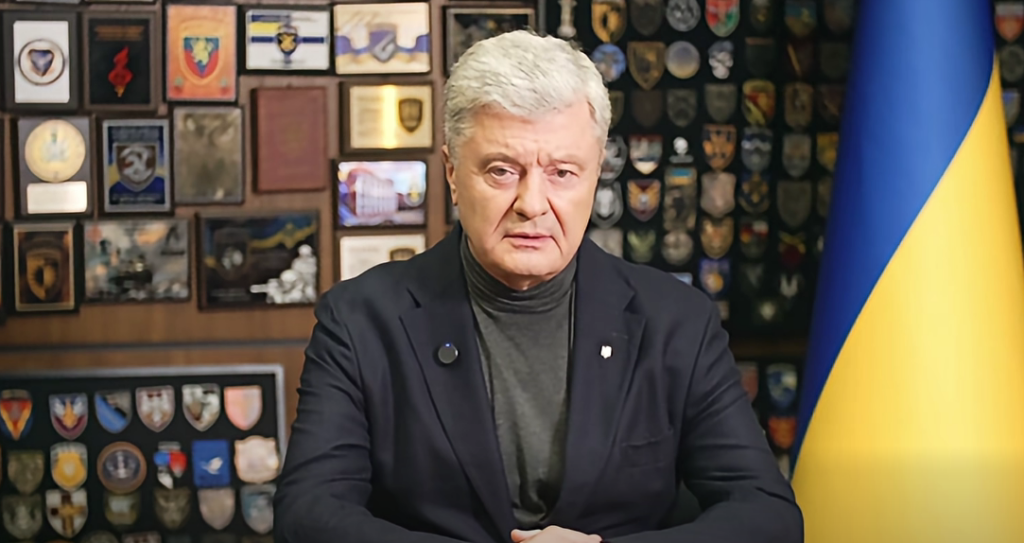
Former Ukrainian President Petro Poroshenko, leader of the opposition European Solidarity party. Source: European Solidarity

Former Ukrainian President Petro Poroshenko, leader of the opposition European Solidarity party, has offered to unite with President Volodymyr Zelenskyy in a new type of government. He has explained his initiative as necessary to save the country and adopt crisis-response measures amid a new phase of the war.

Russia's strike campaign has become a governance problem as much as a military one. Each attack on Kyiv costs the city about $12 million, and they now arrive almost twice a week. Agriculture Minister Taras Vysotskyi said on 28 August that, roughly speaking, 90% of retail chains' food logistics had been destroyed in the latest attacks, which included jet-powered drones that trigger an air alert in Kyiv every hour.

"We are the opposition, but we are ready to cooperate with the authorities in the legislative provision of all necessary decisions, up to the creation of a coalition and a government of national unity," he said.

Speaking in a video address on 31 August, he set out five issues to solve for the parliamentary session.

One: keep the capital running

The current barrage has forced Kyiv to a near-standstill, with alerts sounding through the working day. If they are permanent, Poroshenko argued, the rules for how the city runs must change, and the government, military, transport operators, and business must agree on a single published procedure. When the capital is shut down for hours, much of the economy stops with it, and the lost billions never reach the army, he added.

"Let us say honestly what Putin is doing. He wants to switch Kyiv off. To make people finally say: it is impossible to live here," Poroshenko said.

Two: give parents a school plan

The school year opens on 1 September under a rule allowing in-person classes only where a school has a shelter with room for everyone. Kyiv's administration told UNN that 94% of city schools have basic shelters, but capacity limits set the ceiling, forcing shifts or blended formats when a shelter cannot hold every child at once.

"Tomorrow is 1 September. Thousands of parents still do not understand how their children will study, especially where there are no proper shelters," Poroshenko said.

Three: return Kyiv's money

Kyiv has lost revenue to the central budget even as its defense costs climb, a dispute with the government that predates the barrage. Poroshenko demanded the return of about $180 million to the budget, along with the personal income tax paid by combat brigades.

"This week Kyiv is forced to carry out a budget sequester for the first time," he explained, cutting spending on doctors, teachers, and the socially vulnerable to fund the city's own defense.

Four: scale up war-risk insurance

Russia's strikes have hit businesses faster than any recovery system can answer, with warehouses and logistics hubs among the targets this month. Business needs war-risk insurance, money for rapid recovery after strikes, new logistics, and the ability to invest in its own protection, including private air defense, Poroshenko said.

Five: fund energy resilience now

Putin has named energy as his main target, the former president pointed out, and the coming winter is the pressure point. Kyiv's small, maneuverable generation, cogeneration, and backup power for hospitals, water utilities, and communications must be installed now, he added.

  •  

Porn decriminalization petition in Ukraine reaches 25,000 signatures, forcing Zelensky response

Porn decriminalization petition in Ukraine reaches 25,000 signatures, forcing Zelensky response

Ukrainian President Zelensky must consider a petition to decriminalize pornography after it reached the required 25,000 signatures, according to data on the official Ukrainian government petitions website.

Pornography production and distribution are illegal in Ukraine, with broad interpretations meaning even sharing nude photos can result in jail time.

Despite being illegal, models on subscription-based site OnlyFans, known for being an adult content platform, must declare their income and pay taxes, as required for all paid content creators.

The decriminalization petition was created by Ukrainian OnlyFans model Svetlana Dvornikova, who argued that "law enforcement should focus on real crimes instead of conducting operations to buy intimate photos."

"Over five years, I've paid more than Hr 40 million ($958,062) in taxes to the state," Dvornikova wrote in the petition.

"But instead of gratitude for this money, the state opened a criminal case against me."

In January 2025, Ukraine's OnlyFans content creators declared more than $7 million in income, paying $1.5 million in personal income and military taxes, though it's unclear what specific content these users create on the platform.

Ukrainian MP Yaroslav Zhelezniak, who has initiated bills to legalize pornography, calculated that from 2020 to 2022, 5,000 Ukrainians earned $123 million on OnlyFans.

"Porn today is mostly online platforms, and those who earn on these platforms officially pay taxes. That's millions of dollars going to the armed forces," Zhelezniak said on his YouTube channel.

The latest bill to legalize pornography was registered in November 2024 and supported by parliament's law enforcement committee in December, but hasn't been brought to a vote yet.

The bill proposes decriminalizing only the creation and storage of pornographic content by consenting adults.

Criminal liability would still apply for revenge porn, deepfake porn, extreme porn, child pornography, and distribution to minors.

"We're simply changing Article 301 of the Criminal Code so that adults who film and distribute intimate videos aren't thrown in prison for 3-5 years," Zhelezniak wrote on his Telegram channel.

"Currently, under Article 301, you can be punished even for storing nude photos on your personal phone."

In July 2022, a similar petition to legalize pornography reached the required number of signatures. It didn't lead to changes, and Zelensky responded by citing existing laws about "protecting public morality."

Russia seizes Ukraine’s most valuable lithium deposits, but US minerals deal not at risk, investor says
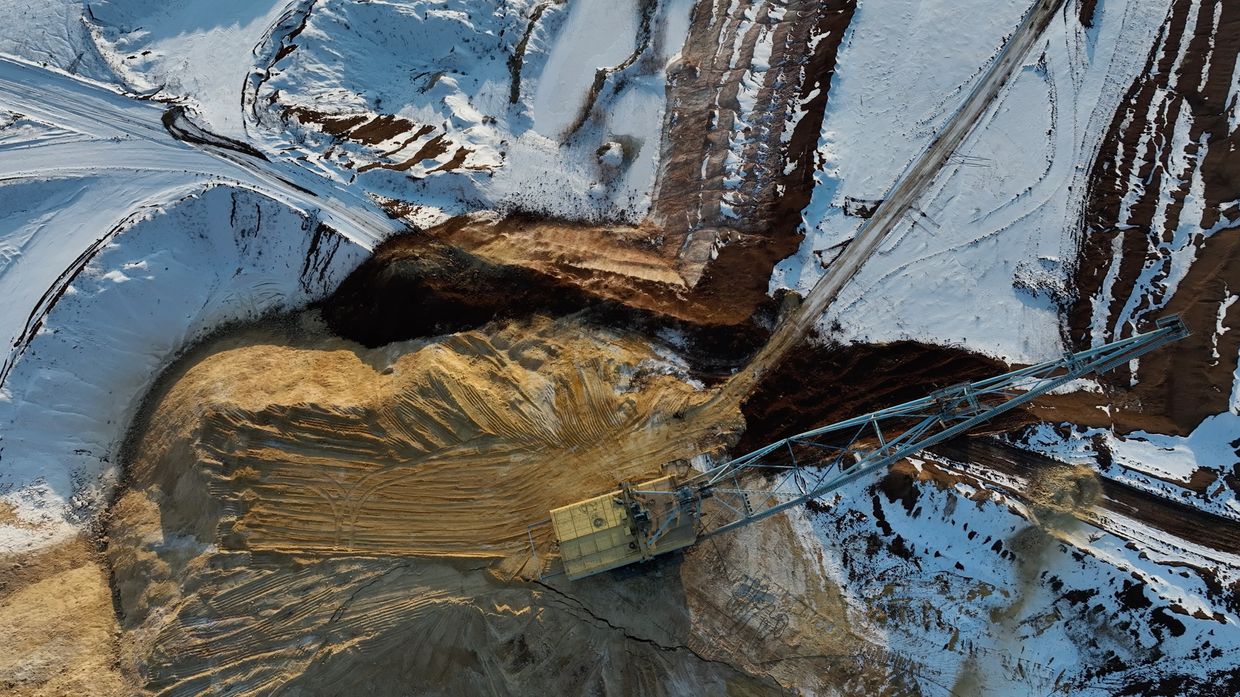
Russian troops have taken over the site of one of Ukraine’s most valuable lithium deposits near the village of Shevchenko, Donetsk Oblast, as Russia ramps up its summer offensive. While Ukrainian troops control territories near the site, the deposit is now under Russian occupation, Roman Pohorilyi, founder of open-source
Porn decriminalization petition in Ukraine reaches 25,000 signatures, forcing Zelensky responseThe Kyiv IndependentDominic Culverwell
Porn decriminalization petition in Ukraine reaches 25,000 signatures, forcing Zelensky response
  •  

Ruslan Kravchenko approved as Ukraine's new Prosecutor General

Ruslan Kravchenko approved as Ukraine's new Prosecutor General

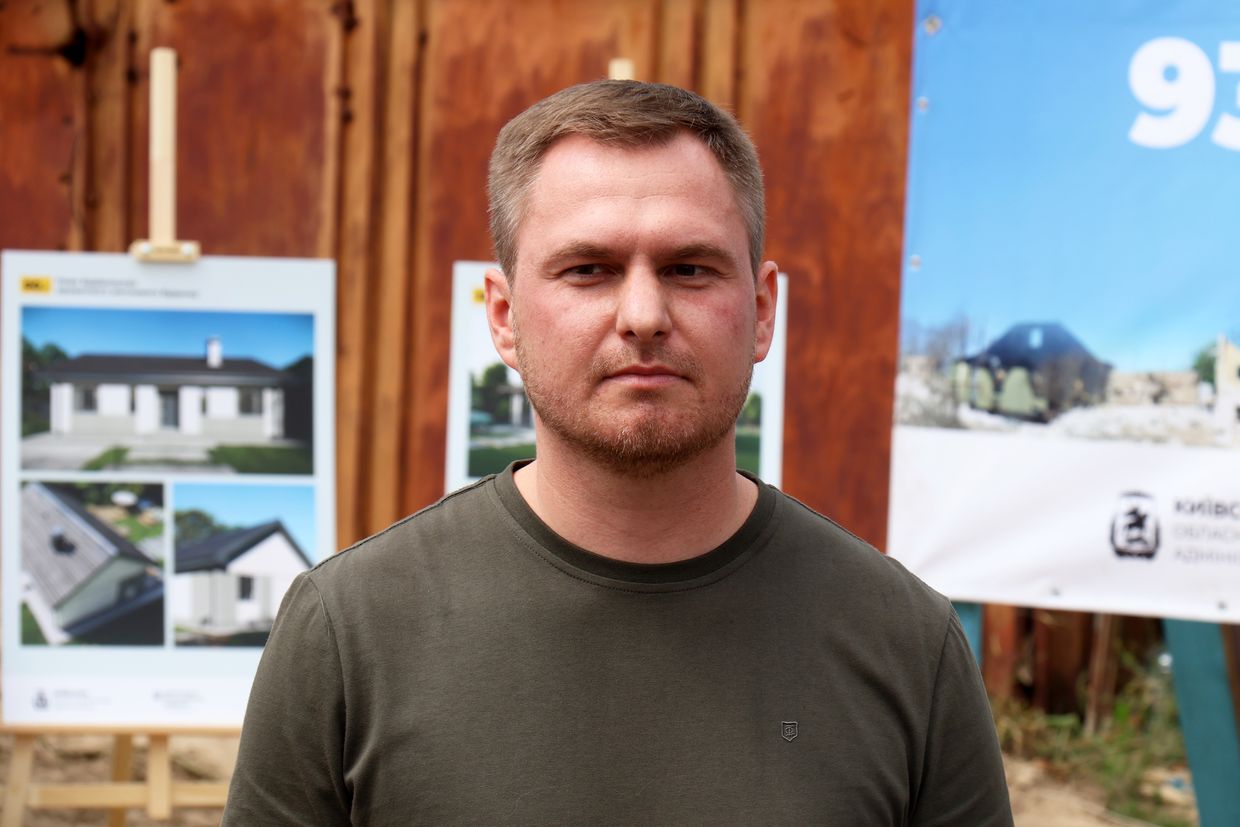
Ukraine's parliament on June 17 approved President Volodymyr Zelensky's nomination of 35-year-old Ruslan Kravchenko as the country's new prosecutor general, making him the youngest person to ever hold the post.

Kravchenko, a former military prosecutor and most recently head of Ukraine's tax service, replaces Andrii Kostin, who stepped down in October 2024 following a scandal involving fraudulent disability claims by dozens of prosecutors in Khmelnytskyi Oblast.

Lawmakers supported Kravchenko's appointment with 273 votes in favor, according to Yaroslav Zheleznyak, an MP from the Holos party.

A native of Sievierodonetsk in eastern Ukraine, Kravchenko served as a military prosecutor in Crimea before leaving the peninsula after Russia's annexation in 2014. He was one of the prosecutors in the case of fugitive President Viktor Yanukovych.

Kravchenko will now lead the Prosecutor General's Office amid war, reforms, and heightened scrutiny of law enforcement bodies' work. His predecessor, Kostin, resigned after the media revealed that at least 50 prosecutors had allegedly received disability status fraudulently — a scandal that sparked widespread criticism.

The Prosecutor General's Office has played a central role in documenting Russian war crimes and enforcing anti-corruption efforts, especially since Russia's full-scale invasion began in February 2022.

Zelensky welcomes G7 support as summit delivers no strong breakthrough for Ukraine
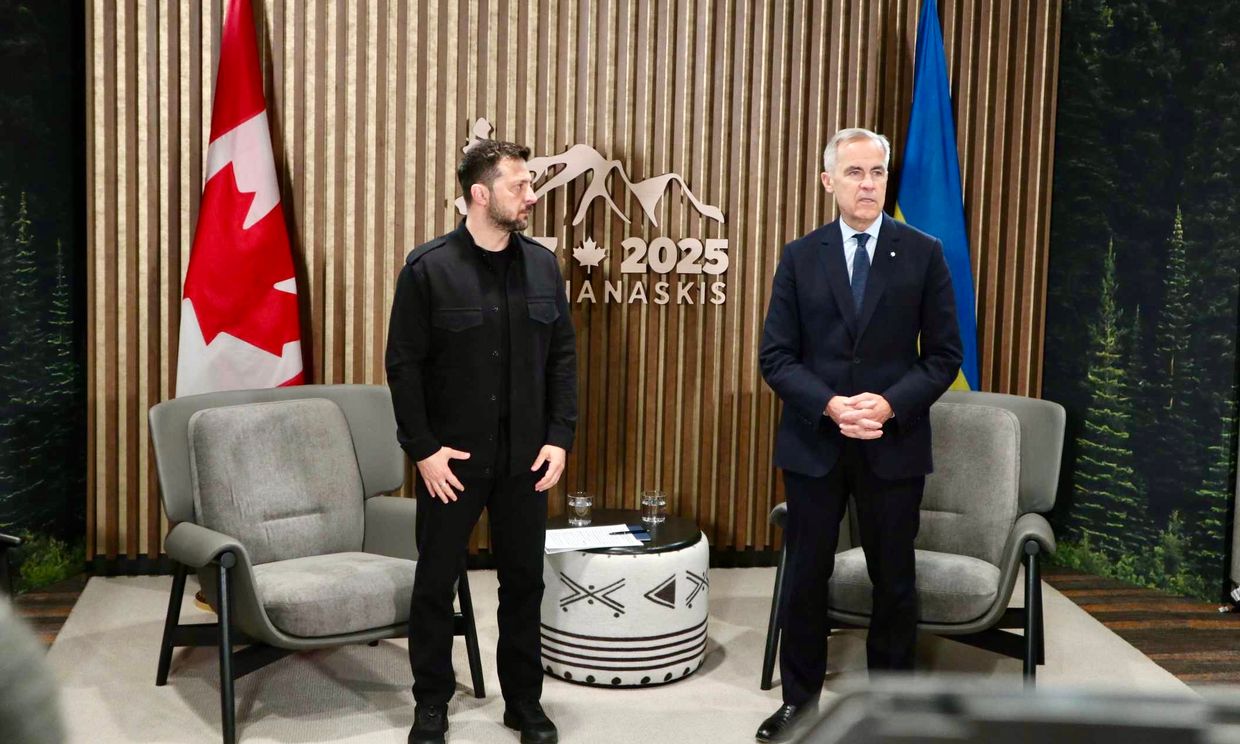
President Volodymyr Zelensky said on June 17 that the G7 summit had produced concrete results for Ukraine, including increased military support, new tranches of aid using frozen Russian assets, and additional sanctions targeting the sources of Russia’s war effort.
Ruslan Kravchenko approved as Ukraine's new Prosecutor GeneralThe Kyiv IndependentOlena Goncharova
Ruslan Kravchenko approved as Ukraine's new Prosecutor General
  •  

Zelensky proposes Ruslan Kravchenko as new Prosecutor General

Zelensky proposes Ruslan Kravchenko as new Prosecutor General

President Volodymyr Zelensky proposed to the Verkhovna Rada the appointment of Ruslan Kravchenko as Ukraine's next Prosecutor General, Parliament Speaker Ruslan Stefanchuk said on June 16.

Kravchenko, 35, currently heads the State Tax Service and is expected to be formally introduced to lawmakers during a faction meeting of Zelensky's Servant of the People party on June 17. A vote on his confirmation is expected the same day, according to lawmaker Yaroslav Zheleznyak.

The nomination ends a six-month vacancy at the top of Ukraine's prosecution service, following the resignation of Andriy Kostin in October 2024. First Deputy Prosecutor General Oleksiy Khomenko has served in an acting capacity since.

Kostin resigned amid a scandal involving prosecutors illegally obtaining disability status, which was discussed during a National Security and Defense Council meeting chaired by Zelensky.

Kostin later admitted to "many shameful facts of abuse" within the prosecutor's office.

Kravchenko, a native of Sievierodonetsk in Luhansk Oblast, has held several senior roles in law enforcement and regional government. He previously served as head of the Kyiv Regional Military Administration and led the Bucha District Prosecutor's Office.

He is best known for serving as the lead prosecutor in the treason case against exiled pro-Kremlin former President Viktor Yanukovych, who was convicted of aiding and abetting Russia's war against Ukraine.

If confirmed, Kravchenko will take over an office tasked with overseeing wartime prosecutions, including war crimes investigations and anti-corruption efforts linked to Ukraine's ongoing reforms.

Satellite images show expansion at 5 Russian nuclear sites near Europe
One of the most notable developments is in Kaliningrad, where the suspected nuclear weapons storage site has undergone significant reconstruction.
Zelensky proposes Ruslan Kravchenko as new Prosecutor GeneralThe Kyiv IndependentTim Zadorozhnyy
Zelensky proposes Ruslan Kravchenko as new Prosecutor General
  •  
❌