Vue lecture

How much does Donald Trump care about winning the midterms? Apparently, not much at all | Jonathan Freedland

Such is the US president’s narcissism that he would see a Democratic victory as proof that he’s indispensable – meanwhile, his every decision spells calamity for voters

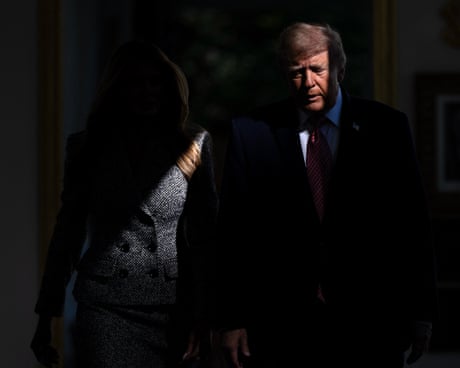
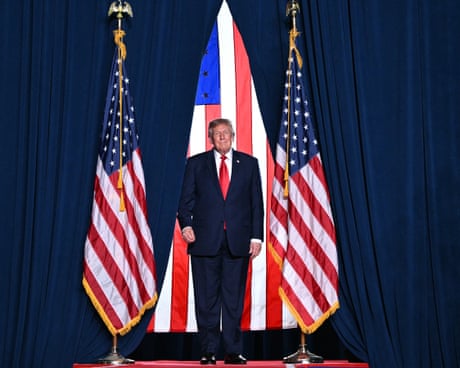
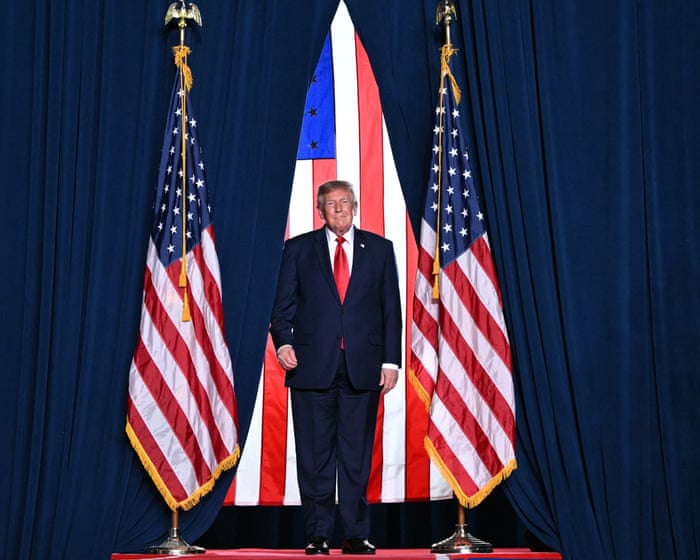
What is Donald Trump playing at? If it’s true that the best way of understanding the behaviour of an organisation is to assume it’s controlled by a secret cabal of its enemies, perhaps that same logic extends to the current conduct of the president of the United States. Maybe he secretly wants Republicans to lose the looming midterm elections that will decide the balance of power in the US for the next two years and for which the first postal ballots were sent out today.

That’s not as mad a theory as it sounds. Indeed, there are at least two reasons why Trump might either be unbothered by Republican defeat in November or even covertly desire it. We’ll come to those, but let’s start with a pattern of behaviour that is hard to explain as anything other than calculated self-sabotage.

Jonathan Freedland is a Guardian columnist

Continue reading...

© Photograph: Randall Hill/EPA

© Photograph: Randall Hill/EPA

© Photograph: Randall Hill/EPA

  •  

US added 162,000 jobs in August, with unemployment rate holding steady

Number of new jobs being added has been fluctuating, with private companies adding 38,000 jobs in August

The US economy added 162,000 jobs in August, an uptick after a sluggish summer for the labor market.

The unemployment rate held steady at 4.1%, still down from its most recent peak of 4.5% last November, according to new data from the Bureau of Labor Statistics (BLS). Despite the relative stability of the unemployment rate, the number of new jobs added to the economy has been fluctuating, going from 214,000 in March down to a 21,000 gain in July and then back up in August.

Continue reading...

© Photograph: Patrick T Fallon/AFP/Getty Images
© Photograph: Patrick T Fallon/AFP/Getty Images
© Photograph: Patrick T Fallon/AFP/Getty Images

  •  

In 2016, Trump pledged to erase the federal debt. It just hit $40tn | Steven Greenhouse

The trillions in tax cuts going to the rich and corporations could have instead been used to address the affordability crisis

Dear reader, I recognize that your eyes might glaze over at any mention of the nation’s $40tn federal debt. But your reaction to this mind-boggling number shouldn’t be ennui; it should be outrage and dismay.

Outrage is in order because the nation’s debt has climbed to more than $40tn under Donald Trump, even though back in 2016, when the debt was less than half what it is today, candidate Trump insisted that he’d totally eliminate the debt within eight years. That was yet another example of the Demagogue-in-Chief’s willingness to say anything, no matter how insincere or untrue, to woo voters.

Continue reading...

© Photograph: Annabelle Gordon/EPA

© Photograph: Annabelle Gordon/EPA

© Photograph: Annabelle Gordon/EPA

  •  

Mark Carney tells US to ‘start being serious’ amid escalating trade war

Canadian PM is set to retaliate against tariffs levied by Donald Trump and criticized US officials over insults

Mark Carney has rebuked Donald Trump’s administration and urged officials in Washington to “start being serious” amid escalating trade tensions between the US and Canada.

Days before Canada is due to retaliate against Trump’s sweeping tariffs with its own duties on US goods, the Canadian prime minister criticized US officials for insulting his country. “It is beneath their office,” he said.

Continue reading...

© Photograph: Jim Watson/AFP/Getty Images

© Photograph: Jim Watson/AFP/Getty Images

© Photograph: Jim Watson/AFP/Getty Images

  •  

As US-Canada tensions flare, who’s calling the shots in Trump’s trade team?

US trade representative Jamieson Greer has a level-headed reputation but commerce secretary Howard Lutnick and White House adviser Peter Navarro also have key roles

Having reportedly read Victor Hugo’s Les Misérables, in French, during a military tour of duty in Iraq, Jamieson Greer considered himself an unlikely target for accusations of francophobia.

But Donald Trump’s US trade representative, hitherto one of the president’s less high-profile cabinet members, found himself in that uncomfortable position amid the acrimonious collapse of bilateral trade talks with Canada that now threatens to degenerate into an all-out trade war between the two close trading partners whose economies are tightly intertwined.

Continue reading...

© Photograph: Getty Images

© Photograph: Getty Images

© Photograph: Getty Images

  •  

OnlyFans and AI training: why gen Z doesn’t care where our money comes from | Alice Lassman

With traditional goals such as stability and home ownership feeling out of reach, young people are focused on the present

By now, we all know the shape of financial nihilism: the throw-your-money-at-anything reaction to the dissolution of the slow, linear path to wealth; the prediction markets, meme stocks, cryptocurrencies and microluxuries growing in its place. We’re left in an economic no man’s land. But financial nihilism only describes where we put our money. What about how we earn it in the first place?

The modern economy has long relied on our need for stable employment – to pay the mortgage, to keep our kids fed, or, for some, to chase prestige and power – to generate the work ethic that keeps the wheel of production turning. None of this is going well for young people. Our jobs are insecure, we can’t afford houses, we’re deferring having kids (if we have them at all), and only 6% of us say a leadership position is our primary career goal. Hope is one of the economy’s most productive inputs, powering our willingness to endure long hours. When the production function of income – the mechanism that turns hard work into a stable salary, then a mortgage, then a pension – breaks down, so does our relationship with the input. I call this production nihilism: my generation’s growing indifference to the kinds of work we’re willing to participate in, and where we’re willing to earn.

Continue reading...

© Photograph: Michael Simons/Alamy

© Photograph: Michael Simons/Alamy

© Photograph: Michael Simons/Alamy

  •  

‘Inept, incompetent, craven’: Scott Bessent struggles to clean up the president’s mess

There’s little optimism about treasury secretary’s ability to handle Trump’s tariffs, Iran sanctions and colossal US debt

History remembers Gen Dwight Eisenhower, the supreme commander of the allied forces in Europe during the second world war, for his role in the D-day invasion of Normandy. Whether Scott Bessent will achieve similar posterity as the face of the “economic D-day” in Iran remains to be seen.

The US treasury secretary, already trying to manage a $40tn national debt pile, this week took charge of Donald Trump’s effort to reverse-engineer his war of choice. Whereas the US would typically take on an adversary with diplomacy, sanctions and military force, in that order, the US president started with a six-month bombing campaign and now hopes that economic isolation can finish the job.

Continue reading...

© Photograph: Julia Demaree Nikhinson/AP

© Photograph: Julia Demaree Nikhinson/AP

© Photograph: Julia Demaree Nikhinson/AP

  •  

‘If it’s made in the US, I don’t buy it’: Canadians on boycotting Trump’s America

Avoiding US goods and services – from tech to whisky to air travel – has forced many to find a new way of living

For William McDonald, 38, a diesel mechanic from Thunder Bay, Ontario, “Canadian is always the first choice,” even if it means his weekly bills are higher.

“As soon as Trump started putting those tariffs on in February [last year], I started boycotting US goods,” he said. “Avoiding American products has driven my costs up, and I’m still happy to do it.

Continue reading...

© Photograph: Chris Helgren/Reuters

© Photograph: Chris Helgren/Reuters

© Photograph: Chris Helgren/Reuters

  •  

Fed chair says delivering ‘stable prices’ is central bank’s job as inflation persists

However, Kevin Warsh didn’t say if interest rates would change in coming months, as inflation remains stubborn

The US Federal Reserve is not done fighting high inflation, its chair, Kevin Warsh, said in his first major speech in the role on Friday, emphasizing that it was “the Fed’s job to deliver stable prices”.

Warsh did not indicate where the Fed will take interest rates in the coming months, despite US inflation remaining stubbornly above the central bank’s 2% target amid the war in Iran. But his speech was taken by markets as a signal that rates may rise in the coming months, a move that may put him at odds with Donald Trump, who has aggressively called for rates to be cut.

Continue reading...

© Photograph: Natalie Behring/Getty Images
© Photograph: Natalie Behring/Getty Images
© Photograph: Natalie Behring/Getty Images
  •  

Detroit despairs as ‘insanity’ of Trump’s Canada trade war punishes city

Unpopular new policy comes as midterms loom and control of Congress could be decided by several Michigan races

Every day $1bn worth of goods crosses the river dividing Detroit, Michigan, and Windsor, Ontario, two largely blue-collar US and Canadian cities that have come to act as one in the creation of North America’s auto industry.

News this week of Donald Trump’s escalating trade spat with Canada has everyone worried. Political and economic leaders and observers labeled the move an act of “hubris” , blamed Trump’s “ego”, and called the escalation “insanity”.

Continue reading...

© Photograph: Jeff Kowalsky/AFP/Getty Images
© Photograph: Jeff Kowalsky/AFP/Getty Images
© Photograph: Jeff Kowalsky/AFP/Getty Images
  •  

We surveyed 6,000 Americans. Here is the winning message for Democrats | Dustin Guastella

It’s about ‘kitchen-table populism’: focusing on Americans’ day-to-day economic struggles
This year’s Democratic primaries look and sound a lot more populist than usual. Brian Poindexter, a union iron worker running on a “workers first” message, won a House primary outside Cleveland. Sherrod Brown is mounting a Senate comeback in Ohio on the same “rigged system” message that has allowed him to outshine other Democrats in Ohio. Troy Jackson, a fifth-generation logger who built his career fighting corporate landowners, is the Democratic Senate nominee in Maine. And Josh Turek, a self-described “prairie populist”, is on the Senate ballot in Iowa.
In fact, according to research we’ve conducted through the Center for Working-Class Politics (CWCP), more than 70% of 2026 Democratic candidates now rely on populist rhetoric in their campaigns, laying the blame for our broken system on rich elites of one kind or another.

Continue reading...

© Photograph: Brian Snyder/Reuters

© Photograph: Brian Snyder/Reuters

© Photograph: Brian Snyder/Reuters

  •  

This is the question Democrats should ask voters in order to win this November | Robert Reich

They should ask the question Reagan asked at the end of his debate against Jimmy Carter: ‘Are you better off now than you were before this presidency?’

The midterm elections are already upon us, and every Democrat and independent running against a Republican should ask voters the question Ronald Reagan asked on 28 October 1980, at the end of his televised debate against Jimmy Carter: “Are you better off now than you were before this presidency?”

Unless you’re very, very rich, the answer is obviously: “No, I’m worse off.”

Energy bills have increased three times faster than the rate of inflation while Trump has been president. The national average monthly utility bill reached $280 in early 2026, a 12% increase since the end of 2024, just before the second Trump administration took office.

Continue reading...

© Photograph: Angela Weiss/AFP/Getty Images

© Photograph: Angela Weiss/AFP/Getty Images

© Photograph: Angela Weiss/AFP/Getty Images

  •  

Is the Trump Treasury panicking over the level of US debt?

With the federal deficit near 6% of GDP and the national debt over $40tn, America’s fiscal position looks increasingly precarious

Are we seeing the first signs of panic in Donald Trump’s Treasury? The US is by far the world’s biggest debtor, and the steady rise in global long-term interest rates – which I have long argued was inevitable – is starting to cause real pain.

Until now, the Treasury secretary, Scott Bessent, has dismissed concerns about US debt, which recently surpassed $40tn, as a big nothingburger. Growth, in his telling, will be so spectacular the US will easily be able to meet its interest obligations without any significant tax rises or spending cuts, while the rest of the world will happily keep feeding it money. But if Bessent really believes that, why is he trying to strong-arm the bond market by fiddling with the maturity structure of government debt?

Continue reading...

© Photograph: Kent Nishimura/AFP/Getty Images

© Photograph: Kent Nishimura/AFP/Getty Images

© Photograph: Kent Nishimura/AFP/Getty Images

  •  

Billionaire investor says he used AI to write critique of former mentee Scott Bessent

Stanley Druckenmiller said he was ‘proud of using it’ as wider media grapples with parameters around AI use

Stanley Druckenmiller, a billionaire investor, said he used artificial intelligence to pen his viral Wall Street Journal op-ed in which he sharply criticized the interference of Scott Bessent, the US treasury secretary, in the US bond market.

Many news outlets, including the Guardian, covered the editorial, highlighting Druckenmiller’s rebuke of his former mentee, Bessent. As the story circulated online, some readers questioned rhetorical choices that resembled AI-generated text.

Continue reading...

© Photograph: Brendan McDermid/Reuters

© Photograph: Brendan McDermid/Reuters

© Photograph: Brendan McDermid/Reuters

  •  

The Guardian view on Trump’s economic threats: bullies can overplay their hand | Editorial

Par : Editorial

Tariffs on Canada, threats against Iran’s partners and bond market intervention show a president weaponising US power while making Americans poorer at home

Three moves in the last week have exposed the limits of Donald Trump’s economic bullying. The US slapped 50% tariffs on another $20bn of Canadian goods – then threatened the same rate on the cars, trucks, parts and steel that America Inc depends on. On Monday, the Treasury secretary, Scott Bessent, menaced Iran’s trading partners with exclusion from the US financial network, hoping that coercion can deliver what months of war have not. And as the costs of war, tariffs and pro-billionaire tax cuts helped send US bond yields higher, the Treasury stepped in to tame long-term rates. These are not contradictory policies but a gamble: that US economic power can be repeatedly weaponised without reducing others’ willingness to depend on it.

The Trump administration’s “D-day” sanctions are potentially the most consequential because they expose the scaffolding of American financial power. While markets shrugged off the immediate threat, that calculation might change were the US to target a major Chinese refinery or bank. Such an escalation could spark a trade war with Beijing. The US has leverage. But China has pressure points – especially farmers in Republican states – that make using it costly. In the long run, there is a price to pay. Nations hold one another’s currencies partly because they trust the political relationship. Mr Trump is testing what happens when they don’t.

Continue reading...

© Photograph: Will Oliver/UPI/Shutterstock

© Photograph: Will Oliver/UPI/Shutterstock

© Photograph: Will Oliver/UPI/Shutterstock

  •  

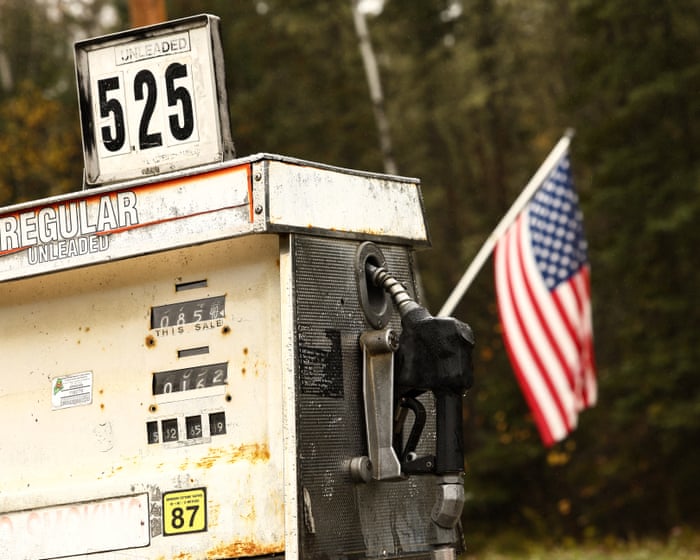
US consumer confidence falls in August as gas prices remain above $4 per gallon

Confidence index drops to 89.4 in August from 90.2 in July amid frustration after five years of elevated inflation

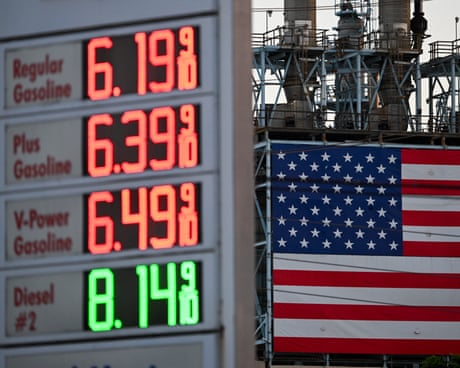
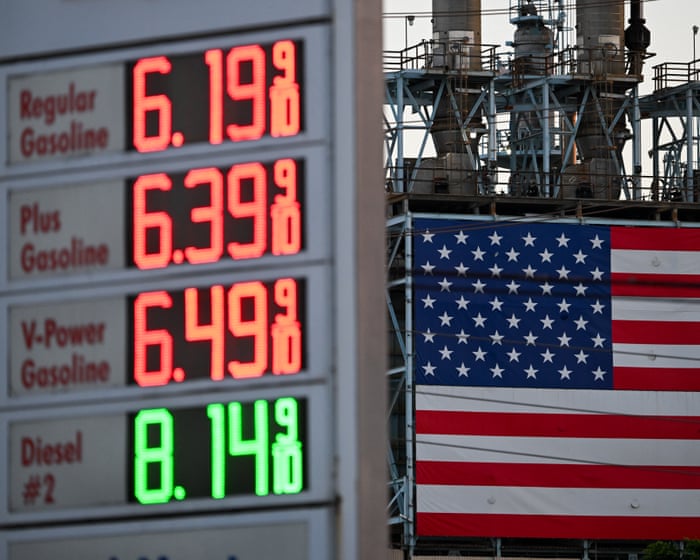
Americans’ confidence in the economy declined again this month as the ongoing conflict in Iran continued to push US gasoline prices above $4 per gallon.

The Conference Board said on Tuesday that its consumer confidence index dipped to 89.4 in August from 90.2 in July. That was the lowest level in seven months but was essentially within the same lukewarm range it has been in since the beginning of the year. In late 2024 and early 2025, readings were consistently above 100.

Continue reading...

© Photograph: Frederic J Brown/AFP/Getty Images

© Photograph: Frederic J Brown/AFP/Getty Images

© Photograph: Frederic J Brown/AFP/Getty Images

  •  

US Treasury’s Scott Bessent ‘will lose’ battle with bond markets, former mentor warns

Trump ally should cut budget deficit rather than try to suppress bond yields, says billionaire Stanley Druckenmiller

Scott Bessent’s attempt to calm the bond markets and push down America’s cost of borrowing have attracted a rebuke from the US Treasury secretary’s former mentor.

The billionaire investor Stanley Druckenmiller, who worked with Bessent at George Soros’s fund management firm in the 1990s, has warned that his former pupil is courting danger by trying to suppress US bond yields.

Continue reading...

© Photograph: Evelyn Hockstein/Reuters

© Photograph: Evelyn Hockstein/Reuters

© Photograph: Evelyn Hockstein/Reuters

  •  

The treasury bond mess: is this the demise of the US as a safe haven?

The US is scooping up treasury bonds in an effort to raise their price and push yields down – but it’s not working

The bond market is driving the Trump administration crazy. Last week, the treasury secretary, Scott Bessent, announced that the government would sharply ramp up its purchase of treasury bonds, in an effort to raise their price and thus push down their yield, which amounts to the interest rate the government pays on its debt.

It didn’t quite work as planned. Yields on treasurys fell after Bessent’s bond market intervention but soon bounced back. By Friday afternoon, the yield on the 10-year treasury was back near where it was before the secretary’s announcement. The yield on the 30-year bond was again trading around its highest level in 20 years or more.

Continue reading...

© Photograph: Andrew Thomas/CNP/Andrew Thomas - CNP/Shutterstock

© Photograph: Andrew Thomas/CNP/Andrew Thomas - CNP/Shutterstock

© Photograph: Andrew Thomas/CNP/Andrew Thomas - CNP/Shutterstock

  •  

New Fed chair faces critical test at Jackson Hole as inflation fears mount

Investors will hope Kevin Warsh offers ‘comfort blanket’ at annual meeting of central banks amid bond market anxiety

The new US Federal Reserve chair, Kevin Warsh, faces a critical test this week amid anxiety in government bond markets over inflation and Donald Trump’s tax and spending plans.

As the world’s most powerful central bank prepares for its annual Jackson Hole conference, analysts said bond traders would be looking for signals from Warsh over its commitment to fighting inflation.

Continue reading...

© Photograph: Evelyn Hockstein/Reuters

© Photograph: Evelyn Hockstein/Reuters

© Photograph: Evelyn Hockstein/Reuters

  •  

Jumpy bond markets make it clear: Trump risks driving US into debt crisis | Heather Stewart

Treasury secretary Scott Bessent’s attempt to calm bond markets is a sign of weakness not strength

“Look, there’s nothing magic about that $40tn number,” the US Treasury secretary, Scott Bessent, told CNBC insouciantly last week, as the country’s debt mountain surpassed another bleak record.

Yet Bessent’s decision to intervene in government bond markets in an effort to combat soaring yields belied his studied calm in TV interviews – and reignited fears the US may be on the road to a debt crisis.

Continue reading...

© Photograph: Al Drago/EPA

© Photograph: Al Drago/EPA

© Photograph: Al Drago/EPA

  •  

‘Starve the beast’? The $40tn cost of Republicans’ false promises to cut spending

The enormous US debt under Trump will hobble the next Democratic administration – just as the GOP planned

You could pin the US’s staggering $40tn in government debt to Donald Trump’s Keystone Cops-style governance. Tariffs he sold as a new source of revenue were struck down by the supreme court, forcing the government to return tens of billions of dollars to importers. Elon Musk’s “department of government efficiency” (Doge), ostensibly created to stop wasteful government spending, decimated federal programs and probably killed millions of children, but did nothing to close the budget deficit. The burst of inflation following Trump’s misguided adventure in Iran sharply raised the cost of serving the government’s obligations.

Yet as the federal debt hits an all-time high, up from about $35tn when Trump took office less than two years ago, it is worth noting that the US’s gargantuan indebtedness is in fact the product of a longstanding Republican strategy that took shape well before Trump could even dream about gold-plating the White House. It was called “starve the beast”.

Continue reading...

© Photograph: Mandel Ngan/AFP/Getty Images

© Photograph: Mandel Ngan/AFP/Getty Images

© Photograph: Mandel Ngan/AFP/Getty Images

  •  

Has Trump no shame about all the money he has made since being in office? | Francine Prose

By now we know that charity, generosity and compassion are virtues that the US president doesn’t seem to have even in trace amounts

Many years ago, in the crowded corridor of a Manhattan hotel, I was surprised to find myself standing face-to-face with Imelda Marcos, then the first lady of the Philippines. At that time, she was said to possess 3,000 pairs of shoes.

I desperately longed to ask the wife of the dictatorial president Ferdinand Marcos why anyone could need all those shoes. And more importantly, why would someone spend so much of her country’s wealth on stiletto heels when so many citizens were so desperately poor? But natural reticence, good manners or simply fear prevailed, and I walked away.

Continue reading...

© Photograph: Al Drago/Pool/Al Drago - Pool/CNP/Shutterstock

© Photograph: Al Drago/Pool/Al Drago - Pool/CNP/Shutterstock

© Photograph: Al Drago/Pool/Al Drago - Pool/CNP/Shutterstock

  •  
❌