❌

Vue lecture

Poland provided secret military aid to Ukraine, Zelenskyy hints amid air defense shortages
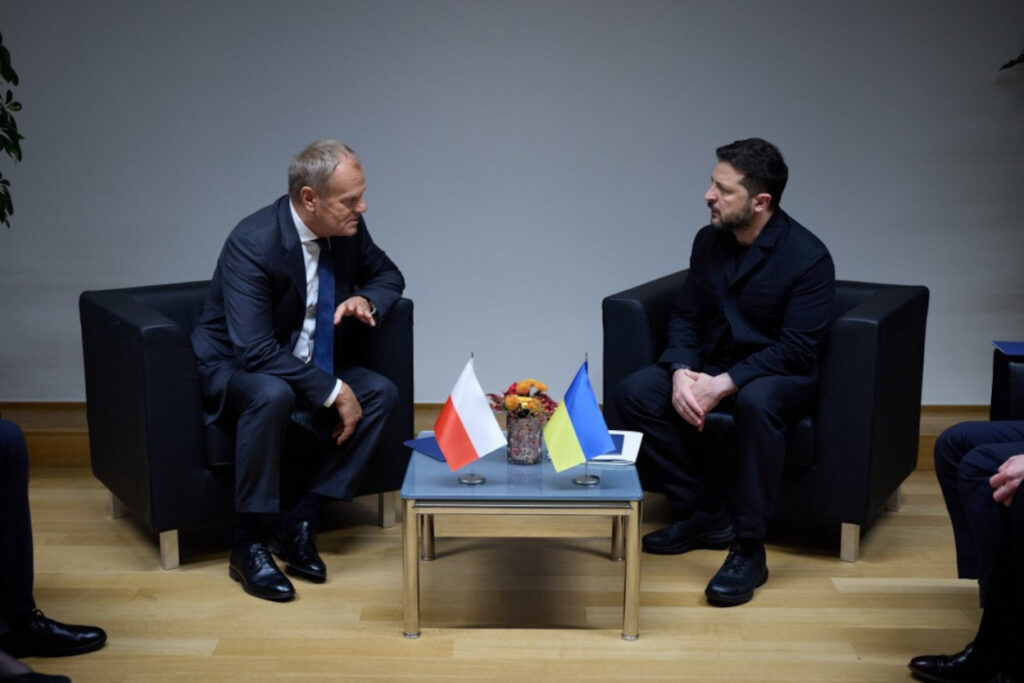
Polish Prime Minister Donald Tusk and Ukrainian President Volodymyr Zelenskyy in Brussels, 15 October 2026. Photo: Ukrainian President's Office

Ukraine has received undisclosed assistance from Poland as it struggles to defend against increasingly intense Russian drone and missile attacks, President Volodymyr Zelenskyy hinted during a meeting with Polish Prime Minister Donald Tusk in Brussels on 15 October, Radio Svoboda reported.

Ukraine’s air defense needs are greater than at any point since 2022, as intensified Russian drone and missile attacks strain existing systems and expose shortages of interceptor missiles. With US support increasingly uncertain amid tensions between Kyiv and Washington, European military aid is becoming more critical to Ukraine’s ability to defend its cities and infrastructure.

Zelenskyy thanked Warsaw for its support, suggesting that some assistance had to remain confidential. He also specifically mentioned 20 mm ammunition, which Ukraine needs to defend its cities against Russian attacks.

“Sometimes this has to stay between the two of us,” Zelenskyy said, thanking Tusk for the aid.

European support increasingly important amid US rift

Ukraine is facing mounting pressure on its air defenses as Russia increases the scale of its aerial attacks. Ukrainian forces are also struggling with shortages of interceptor missiles, particularly Patriot missiles needed to counter Russian ballistic strikes, leaving the country vulnerable to further attacks.

The need for additional support comes amid growing uncertainty over US assistance under President Donald Trump. Washington has taken steps that have strained ties with Kyiv, including easing some restrictions on Russian fuel and pressing for an energy ceasefire that Ukraine says Russia has continued to violate. 

Recent disruptions to US-linked intelligence and satellite support have also raised concerns about Ukraine's ability to detect and counter Russian attacks.

As uncertainty over Washington's role grows, European military assistance is becoming increasingly important for Ukraine's defense.

The White House, seen from Lafayette Square. File photo, June 2024.
Explore further

White House ordered limits on Ukraine’s military satellite service — Reuters. Who made the decision remains unclear

Defense cooperation continues despite political tensions

Tusk reaffirmed Poland's commitment to supporting Ukraine, saying Kyiv could count on Poland and the European Union. He also opposed easing EU sanctions against Russia, arguing that Europe should not take steps that help Moscow finance its war.

The meeting also came amid strained relations between Kyiv and Warsaw over historical disputes. However, Poland's government has maintained that these disagreements should not undermine military support for Ukraine, whose ability to resist Russian aggression is closely tied to Poland's own security.

  •  

Germany detains two Turkish nationals suspected of torching a Polish Starlink station that helps route internet to Ukraine

Officers of Poland's Internal Security Agency (ABW).

German services detained two Turkish citizens on 12 October over the 23 September arson attack on a Starlink ground station in Wola Krobowska, near Warsaw, Poland’s Internal Security Agency (ABW) said. Both are suspected of arson, and Polish officials blame Russian intelligence. RMF24 later reported that German police also detained two more people who may be connected to the attack.

Poland is one of the main corridors for Western aid to Ukraine, and Polish Foreign Minister Radosław Sikorski has said Poland spends about $50 million a year on Ukraine's Starlink service. That puts Polish infrastructure in the path of a Russian campaign that already hacks cameras to track arms heading east.

Fingerprints, DNA, and a route out

The men were held under European arrest warrants and now await transfer to Poland. Interior Minister Marcin Kierwiński wrote that the suspects would face charges of “subversion, sabotage on behalf of a foreign intelligence service” after their transfer to Poland. Polish authorities issued European arrest warrants for the suspects, who were subsequently detained in Germany.

Działania @PolskaPolicja i @ABW_GOV_PL we współpracy ze służbami niemieckimi (BKA) doprowadziły
do zatrzymania na terenie Niemiec 2 obywateli Turcji odpowiedzialnych za podpalenie stacji Starlink w Woli Krobowskiej. Zarzut-dywersja, sabotaż na rzecz obcego wywiadu. @CBSPolicji

— Marcin Kierwiński (@MKierwinski) October 12, 2026

Police chief Marek Boroń said investigators reconstructed how the suspects prepared the attack and fled. “We have secured recordings pointing to this specific action. We have fingerprints, the perpetrators’ DNA, how they moved, when they came to Poland, and when they were evacuated from our country,” he said. One suspect lives in Germany, and the other had been ordered to leave the country, he added.

Warsaw points at Moscow

Prime Minister Donald Tusk called the fire another act of Russia's hybrid war and promised the saboteurs will answer to Polish justice.

Na zlecenie polskich służb niemiecka policja zatrzymała dwóch obywateli tureckich podejrzanych o podpalenie stacji Starlink na Mazowszu. To kolejny akt wojny hybrydowej. Sprawcy sabotażu odpowiedzą przed polskim wymiarem sprawiedliwości.

— Donald Tusk (@donaldtusk) October 12, 2026

“We have no doubt that Russian intelligence services are behind this act of sabotage,” said Tomasz Siemoniak, the minister coordinating Poland’s special services.

Those services increasingly turn to people tied to the criminal world, he added.

Two more possible links

German counterterrorism officers detained a woman in Berlin, and a man is also in German custody, Polish radio RMF FM reported, citing its reporter. Both may be linked to the arson. The woman allegedly picked up the Turkish men near Łódź after they entered Poland from Germany, then drove them to Wola Krobowska. The man’s role is still being examined.

  •  

U.K. and Europe Recoil From Trump’s Diesel Deal With Putin

Shocked by the U.S. agreement with Russia, which Ukraine has called “a gift” to President Putin, officials in Europe have coalesced around a cautious diplomatic message.

© Alex Kent/The New York Times

President Trump departing Joint Base Andrews, Md., on Saturday for a campaign rally in Clarksville, Tenn.
  •  

NATO Details Plan to Shield Ukraine’s European Allies From Russia

With the Russians intensifying sabotage, arson and cyberattacks against European nations supporting Ukraine, NATO divulged a blueprint, in case of war, to deter the Kremlin.

© Omar Marques/Getty Images

Gen. Alexus G. Grynkewich of the U.S. Air Force, NATO’s top military commander, speaking at the Warsaw Security Forum on Monday.
  •  

Europe is overreacting to Russian threats, Finland’s president says—his intelligence sees no imminent danger

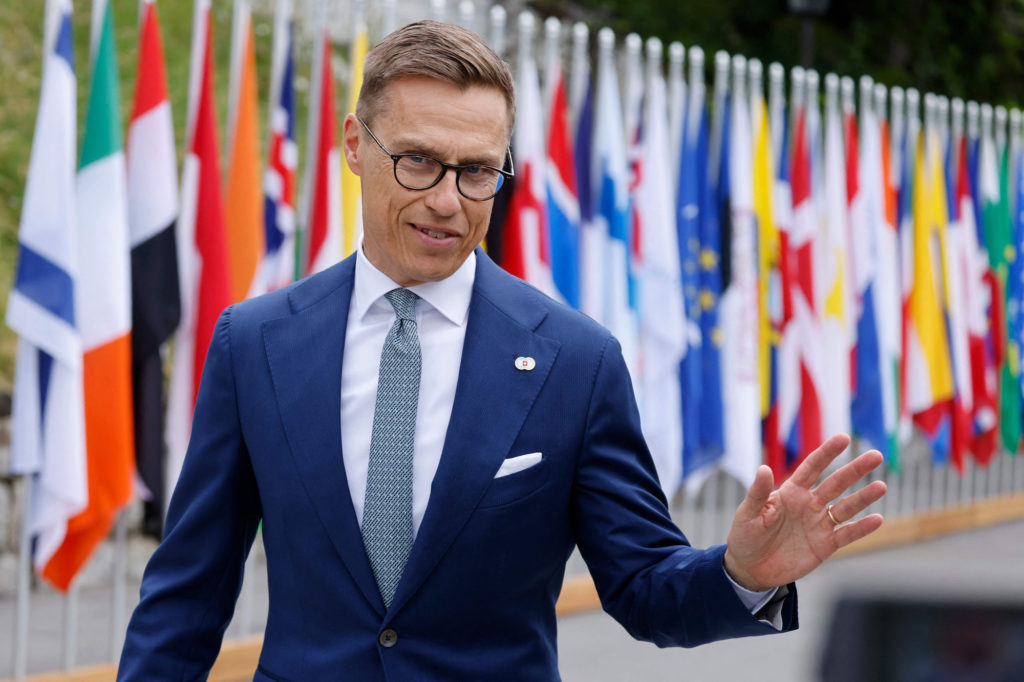
Finland's President Alexander Stubb. Photo via Eastnews.ua.

Russia is trying to "scare Europe" through hybrid attacks so that it provides less support to Ukraine, but Moscow has neither an interest in nor the capability to escalate to a full-scale military confrontation with NATO, Finnish President Alexander Stubb told Politico on 21 September during an interview on the sidelines of the UN General Assembly—even as other European leaders warn that Russian strikes on NATO territory could come within months.

Ukraine critically needs Western support as Russia's full-scale invasion continues. NATO's PURL program has provided about 75% of all Patriot battery missiles and 90% of the missiles used in other air defense systems since its launch last summer, according to NATO Secretary General Mark Rutte on 3 February. Some countries are also hubs for defense companies that produce weapons for Ukraine. Russia is trying to pressure such countries, including through hybrid attacks. Polish Prime Minister Donald Tusk and the head of the Czech security service have warned that Russia could strike NATO territory within months. The Finnish president says his own intelligence sees activity but no imminent military threat, and calls it an "overreaction" when intelligence services tell their neighbors they are next for a Russian invasion.

Finnish intelligence sees Russian activity but no imminent military threat, Stubb says

Stubb calls claims by some intelligence services that Europe is next for a Russian invasion an "overreaction" and says he sees no evidence of this.

"We think we have to be vigilant and awake. But, you know, we have the longest border in NATO with Russia, it's half the border. In our intelligence we see that there is activity but no imminent military threat right now," Stubb added.

He says Russia will continue hybrid attacks, so Europe must be prepared and support Ukraine

Europe should prepare for Russia's "continued hybrid and sabotage attacks," but should not "overreact" to them, as Russia wants to scare its allies so that they slow down their support for Ukraine, the Finnish president said.

"And any time we overreact to a hybrid attack, they have actually won the battle in that particular way," Stubb told Politico.

Europe should remain "cool, calm and collected" during such Russian intimidation, the Finnish president said.

Germany's recent decision to officially hold Russia responsible for an attempted drone attack in Leipzig is "exactly what you need to do," Stubb said.

"You need to point the finger and say, we know what you're doing, and these are the consequences," he added.

Drone found near a Ukrainian An-124 aircraft in Leipzig, Germany, on 5 August, 2026. Photo: screenshot from Bild video

A pro-Kremlin group, Global Citizens Against War 1984, issued an ultimatum to Latvia, Poland, and Portugal to stop supplying weapons to Ukraine by 7 October, threatening to disrupt defense companies in those countries.

Warnings from Warsaw and Prague paint a different picture

Russia could carry out "accidental" drone or missile strikes against NATO countries supporting Ukraine in an attempt to weaken the Alliance's integrity and persuade members that Article 5 is more theoretical than practical, Polish Prime Minister Donald Tusk said in parliament on 17 September, citing NATO, Ukrainian, and Polish intelligence assessments.

"There is a real risk that drones or other types of missiles could enter the territory of one or several NATO countries on the eastern flank," Tusk said.

The head of the Czech security service warned separately that Russia could undertake a limited incursion, false-flag provocations, and a massive influence campaign in a matter of months rather than years.

  •  

Russia plans ”accidental” drone strikes on NATO countries, Tusk says

donald tusk

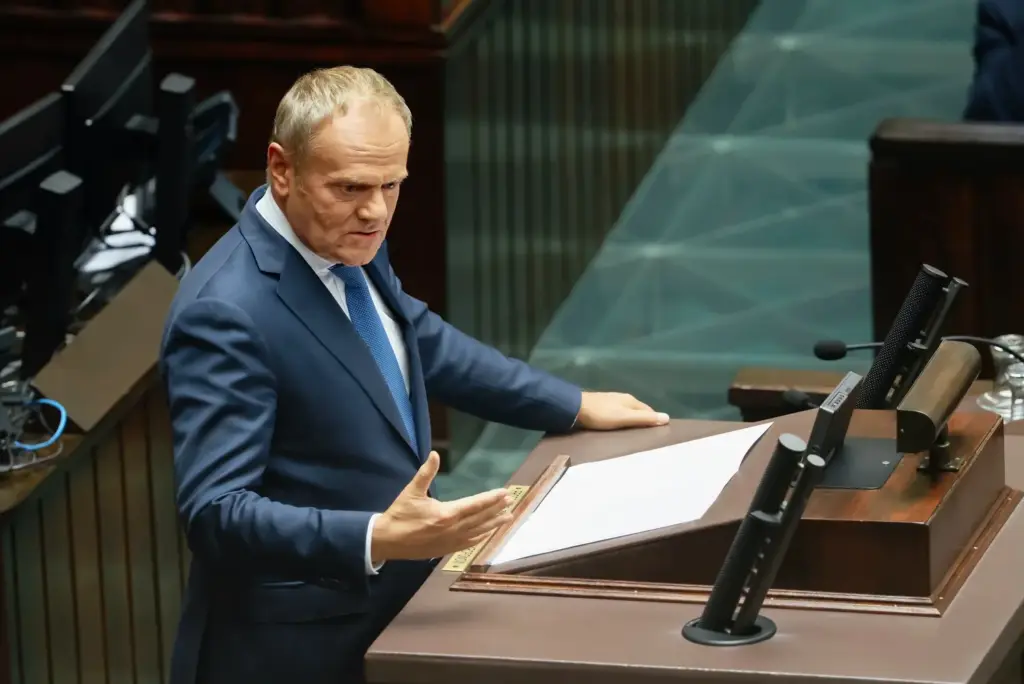
Intelligence assessments indicate that Russian plans include drone and missile strikes against countries supporting Ukraine, including Poland, Polish Prime Minister Donald Tusk told parliament on 17 September. He said Russia could seek to make such attacks appear accidental in order to weaken NATO's resolve.

The warning comes after an escalating pattern of drone incidents and suspected sabotage in Poland, Lithuania and Germany, as European governments face growing security risks linked to Russia's war against Ukraine.

Tusk cites NATO, US and Ukrainian intelligence

Tusk said he was relying on intelligence from NATO, Ukraine, and the United States. He described late autumn and winter as the most critical phase of the war so far and warned of escalating attacks on Ukrainian infrastructure.

"There is a real risk that the territory of one or several NATO countries on the eastern flank may be entered by drones or other types of missiles," Tusk said.

He said the purpose could be to show that Article 5 "exists only in theory" and to weaken NATO's willingness to respond.

Jet-powered drones near the Polish border

The 17 September attack struck near Yahodyn, close to the Dorohusk border crossing. Tusk said Russia had used jet-powered drones that travel at higher speeds and altitudes, making them harder to intercept.

A pattern of incidents near NATO territory

The warning follows several incidents near NATO's eastern border. On 13 September, a drone struck a passenger train at Yahodyn, near the Ukraine-Poland border. Ukraine's state railway company said it was "highly probable" that the Russian drone's intended target was a diplomatic train that had carried former British Prime Minister Boris Johnson and former Swedish Prime Minister Carl Bildt. Former CIA Director David Petraeus was on a separate train that remained at the station. No one was injured.

On 15 September, Italian NATO jets shot down a drone in Lithuanian airspace after it apparently entered from Belarus. Lithuanian authorities said the wreckage indicated it had likely been carrying explosives. Poland also recovered a Gerbera-type drone carrying a live warhead from the Baltic coast near Rusinowo.

Germany on 1 September blamed Russia for an attempted drone attack involving explosives at Leipzig/Halle Airport on 4–5 August, adding another NATO country to the series of incidents.

From warning to coalition

Tusk visited Ukraine on 18 September for the inaugural Carpathian Eight summit. Zelenskyy said Ukraine and its European partners were building an anti-ballistic coalition, while Polish Deputy Prime Minister Radosław Sikorski said Warsaw was preparing its largest military aid package for Ukraine, potentially including Patriot missiles.

Russia's Foreign Ministry rejected Tusk's accusations as "contrived" and "far-fetched".

  •  
❌