Vue lecture

Russia’s answer to Starlink was written off as a failure—its satellites are still climbing
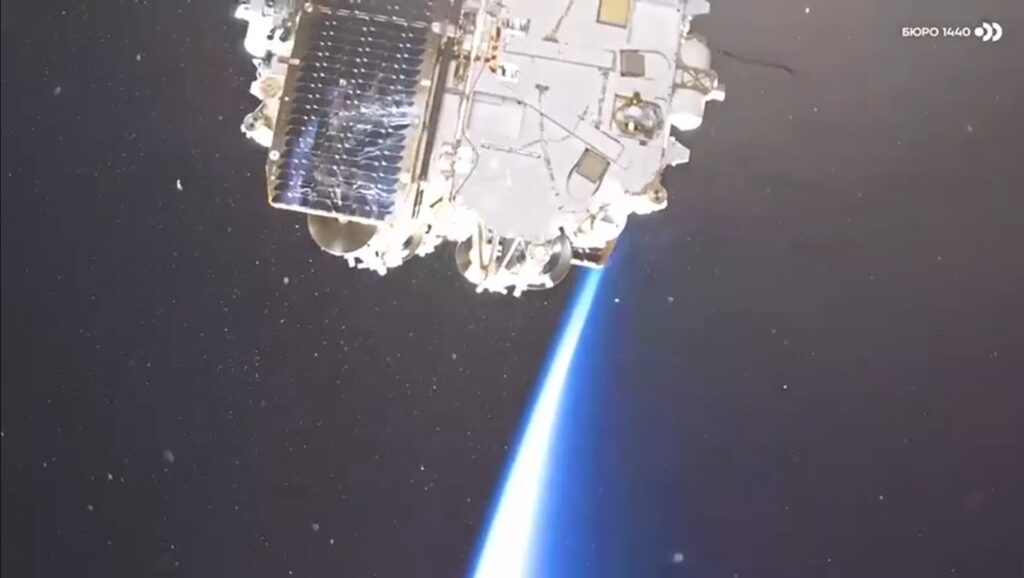
Video still from Bureau 1440's recent launch of 16 Rassvet satellites into low earth orbit

Russia's newest batch of Starlink-style satellites is gaining altitude sooner and sitting higher than the country's already-working first batch did at the same point, an analysis by Ukrainian defense outlet Militarnyi found. That complicates recent reports that the batch will stay far below its working altitude—though a few of the craft clearly have malfunctioned.

Moscow is racing to field its own orbital network to replace the Starlink service its troops used without authorization, a system experts warn could one day relay commands to long-range strike drones.

Where the "failure" verdict came from

Business Insider reported that all 16 satellites in the second Rassvet batch—launched 19 July—had fallen short of their target orbit, citing public US Space Force tracking data. The Institute for the Study of War (ISW) noted that many of the craft sat between 300 and 400 kilometers, well below their intended orbit. Russia looks unprepared to deploy at this pace and will likely face further delays, ISW assessed. At those low heights, thicker air drags on satellites and shortens their lives. Rassvet—Russian for "Dawn"—is built by the Russian firm Bureau 1440. Moscow rushed the network in after SpaceX cut off Russian forces' access to Starlink.

What the altitude data shows

Militarnyi's own reading of the tracking record points the other way. A rocket drops the satellites near 300 kilometers, and they raise themselves over months on their own engines. The July batch fired those engines days earlier than the March group, giving it a head start. By day 46, the new batch's median altitude was 365 kilometers, against 314 for the first. Thirteen of the new craft had passed 320 kilometers and ten cleared 350, against five and one for the first batch. The newer craft climb at a slower daily pace, but the early start left them well ahead on height.

Militarnyi cautions that the batch cannot be judged before roughly 100 to 125 days after launch—around late October—the window in which most of the March craft passed 500 kilometers.

The malfunctions are real

Two satellites show no real climb and are sinking toward the atmosphere, a third rose and slipped back, and a fourth stalled with the cause unclear. The March launch lost one craft outright and left two more stuck below working height. The company had listed a target orbit near 800 kilometers, yet the first batch settled far lower and still works. Militarnyi counts thirteen of its satellites in a stable orbit near 508 kilometers, where Business Insider and ISW put twelve of them at roughly 550. By its count, they now open at least two communication windows over Ukraine each day, each running longer than an hour.

  •  

Russia is secretly building a mortar-launched drone-killer—and a resistance group just leaked the blueprints

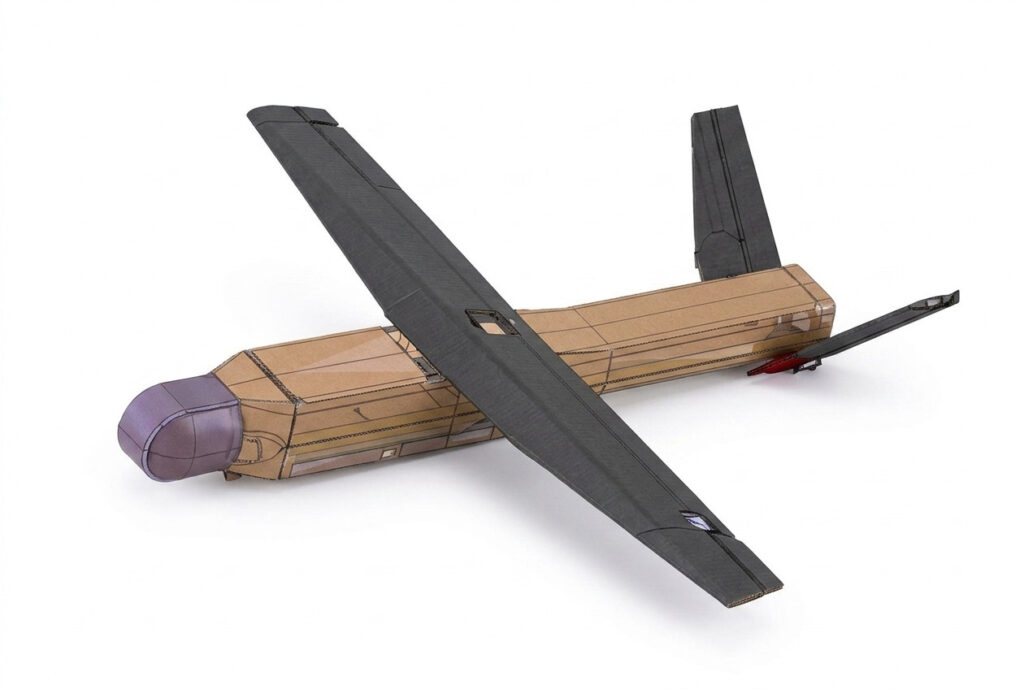
Modified UBB-M drone adapted for interceptor missions.

A Russian drone company is developing an interceptor drone—the cheap counter-drone weapon Ukraine has fielded at scale against Russian attack drones—internal documents published by the Russian resistance group Black Spark describe, the defense outlet Militarnyi reported. The documents describe two designs under consideration, and Black Spark alleges the company cooperated with Boeing before the full-scale invasion and spied on European companies.

Interceptor drones—unmanned aircraft that hunt other drones—scaled up out of Ukraine's need to shoot down Russia's mass Shahed attacks without spending million-dollar missiles on them. Ukraine now fields them from dozens of licensed makers, and their spread has pushed Russia toward faster jet-powered attack drones. Russia already flies anti-drone interceptors of its own—Ukrainian troops downed one in July—and the leaked designs would fly far faster than that machine.

Mortar-launched drone-killer

NIK is considering two interceptor designs. The first modifies the company's existing UBB-M, a folding-wing loitering munition that launches from a 160 mm container by mortar-style ejection. For the interceptor role, designers changed the wing from straight to swept, shrank the wingspan, installed a larger battery, and fitted a more powerful motor.

Electronic warfare equipment from Shahed drones.
Explore further

Russia’s attack drones now jam the cheap interceptors sent to kill them

The modified drone weighs 15-16 kg, carries a 3 kg payload—likely a warhead—and flies at 250-300 km/h with a 20 km operating radius and up to 10 minutes of flight time, operating between 20 meters and 4.5 km altitude. NIK's second design has a cone-shaped fuselage with four electric motors. Its specifications remain unknown.

Espionage claim comes with no documents

Black Spark says the documents came from someone inside the company, not a break-in, and that it holds evidence the firm spied on European companies. It gave no details on the Boeing cooperation beyond dating it before the invasion.

The leak is Black Spark's latest operation against Russia's defense industry. The group, which operates inside Russia, says it infiltrated the Alabuga factory where Russia assembles Shahed-derived Geran drones and copied personnel databases. Ukraine's Special Operations Forces have acknowledged joint missions with Black Spark, including attacks on Russian oil infrastructure.

  •  

Ukraine mapped Russia’s Su-35 down to individual control units—and found 22 firms nobody has sanctioned

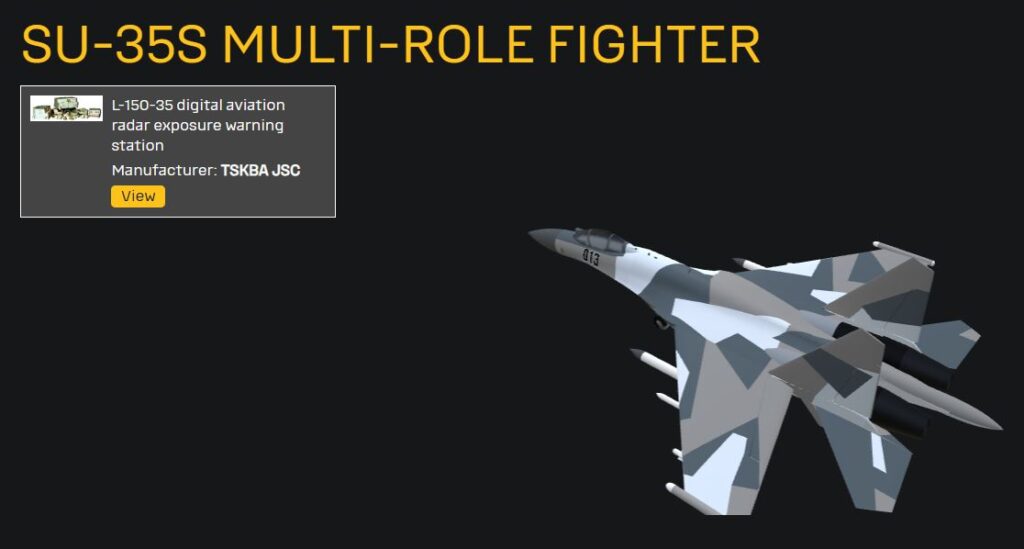
ukraine mapped russia's su-35 down individual control units—and found 22 firms nobody has sanctioned · post interactive 3d model su-35s multirole fighter published ukraine's war&sanctions portal l-150-35 radar warning station

Ukraine's military intelligence has named the Russian companies that build the Su-35S fighter jet and singled out those no country has sanctionedaccording to the Main Intelligence Directorate of Ukraine's Defense Ministry (HUR). The unsanctioned suppliers make parts as ordinary as wheels and fuel-system units, and one of them helped develop the aircraft. Kyiv wants sanctions efforts synchronized across every link of Russia's military-industrial complex.

More than four years of harsh restrictions have made Russia's arms industry slower and costlier to run rather than idle, and it keeps closing the gaps by substituting parts and buying through third countries. Every restriction works one company at a time, which makes the depth of a sanctions list, not its length, the thing that decides whether production slows.

The 22 firms no one has sanctioned

HUR identified 79 companies in the Su-35S production chain. Of those, 22 face no sanctions from any country restricting Russia over the war. The agency highlighted three. Rubin Aviation Corporation supplies the aircraft's braking and non-braking wheels. Gidroavtomatika builds the AU46-05 control units inside the fuel system. The Oktava research institute carried out design and development work on the Su-35S itself.

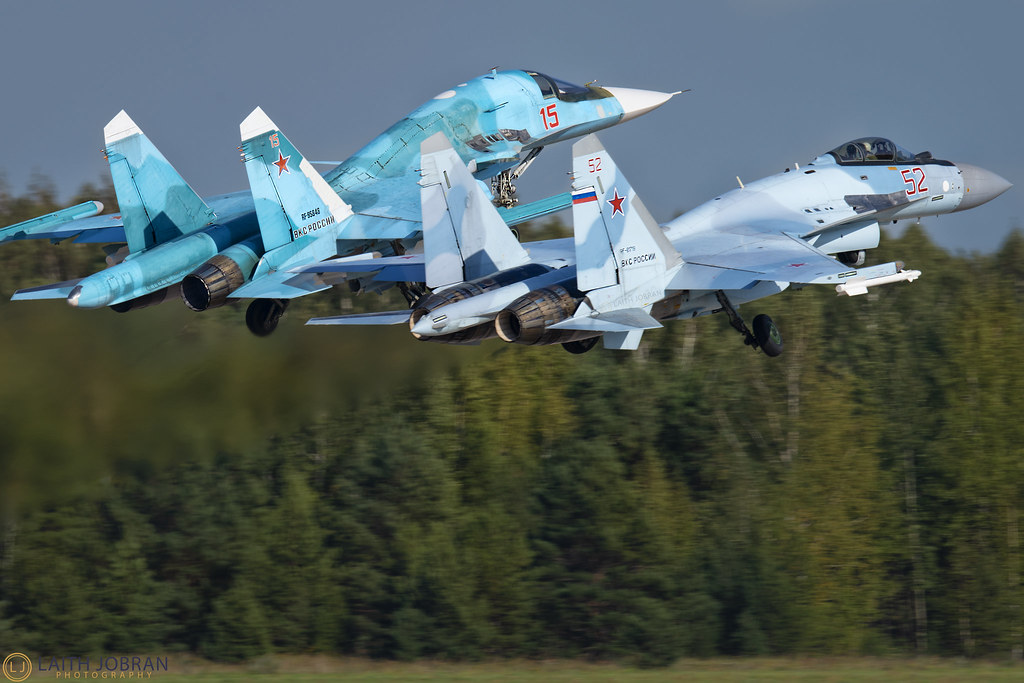
Russian Airspace Force's Su-34 fighter-bomber (left) and Su-35 fighter jet (right). Illustrative image: Flickr/Laith Jobran

What the rest of the network builds

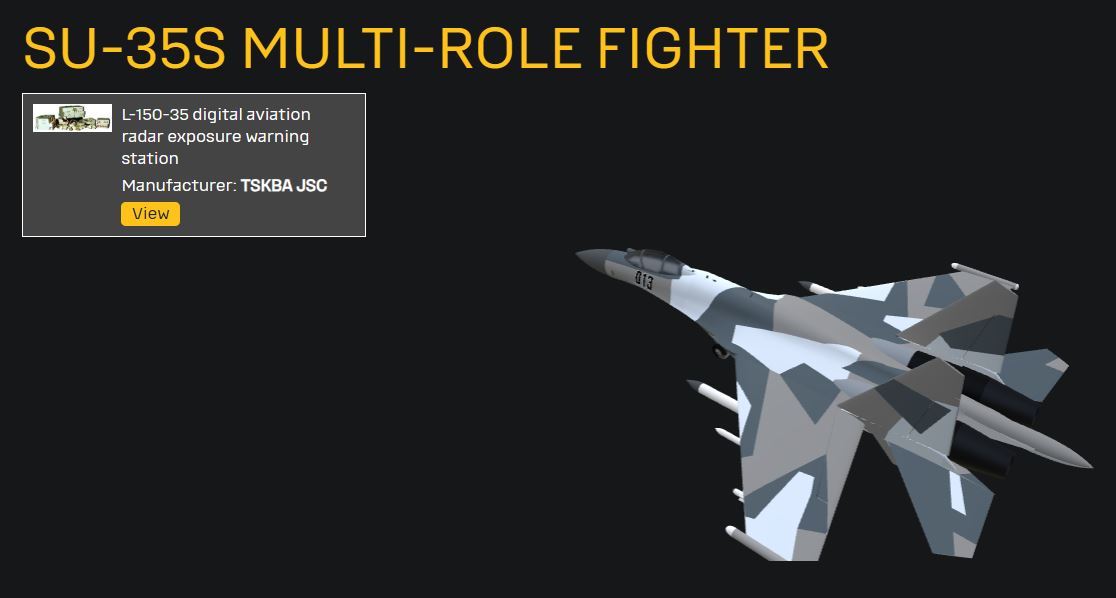
The 79 firms develop and produce the engines and fuel system, the control, communications, and guidance systems, the electronic warfare suite, and the main aviation missiles the jet carries into the war against Ukraine. HUR set the data out in the "Components in weapons" section of its War&Sanctions portal. The page carries a rotatable 3D model of the aircraft whose parts open onto the firms behind them, alongside directory listings and a profile for each company.

Russia uses the jet mainly to cover its own Su-34 fighter-bomber strike groups, ground troops, and installations. It also intercepts Ukrainian drones and cruise missiles, and works against Ukrainian air defense systems. Ukraine's Air Force said in July it had shot one down over the east, and such losses are hard for Moscow to replace: Russian factories ordered 12 of the jets in 2024 and delivered 10.

ukraine mapped russia's su-35 down individual control units—and found 22 firms nobody has sanctioned · post interactive 3d model su-35s multirole fighter published ukraine's war&sanctions portal l-150-35 radar warning station
Explore further

Ukraine mapped Russia’s Su-35 down to individual control units—and found 22 firms nobody has sanctioned

Three sanctions regimes, loosely aligned

The gaps HUR points to exist because the restrictions are not one list. The EU legislates in packages, the US and other G7 states maintain their own designations, and Ukraine issues sanctions by presidential decree, each covering a different set of firms. Kyiv has spent years asking partners to synchronize those lists, and its own designations often run ahead of them. A company can therefore supply a frontline fighter and still trade freely under most of them.

Previously, HUR ran the same exercise on the Su-34, where a third of the production network was still unsanctioned. The same pattern shows up above the component level, with Russia's largest arms conglomerate covered by EU measures while hundreds of its subsidiaries are not, and Western machine tools still sitting inside Russian missile plants. 

  •  

Ex-FSB general who wired Russia’s spies and army found dead in Moscow—a gunshot, no note, no official report

gunshot note official word—russia reports ex-fsb general dead moscow · post igor laptev ігор лаптєв фото укрінформ ukraine news ukrainian

retired Russian FSB major-general whose company built secure communications for the Kremlin's security services and military has been found dead in his Moscow apartment, RFE/RL's Current Time reported. Russian outlets, citing their own sources, say the 83-year-old apparently killed himself, though authorities have released nothing. His death adds to a run of senior Russian military and security figures dying in the capital.

Russia's war keeps killing the people who build and run it — defense-industry figures and officers assassinated near Moscow, occupation officials blown up in occupied Ukraine — so a reported suicide in a Kremlin insider's apartment rarely settles how he actually died.

An FSB veteran who wired Russia's spies

Igor Laptev, 83, was found dead in an apartment in Moscow. Russian outlet MK and others, citing sources, wrote that he probably took his own life on the afternoon of 20 August. Izvestia claimed he died from a gunshot wound to the head. No suicide note or motive has been reported, and Russian law enforcement has issued no official statement.

gunshot note official word—russia reports ex-fsb general dead moscow · post products russia's informtekhnika company display minicomru militarnyi стенд з виробами компанії «информтехника» в рф фотo ukraine news ukrainian
Products of Russia's Informtekhnika company on display. Illustrative photo: Minicom.ru via Militarnyi

Laptev was a chemist-technologist by training who served in the Soviet KGB, including combat in Afghanistan, according to Delovoy Peterburg. In the KGB and later the FSB, he worked on information security. In the late 1990s, he was a deputy minister for taxes and duties, and from 1998, he chaired the board of Informtekhnika i Svyaz, now the Informtekhnika group.

leading russian electronic warfare designer killed bryansk car explosion head design bureau russia's electromechanical plant yevgeny rytikov (l) eliminated responsible modernization anti-drone systems krasukha (r) dead-russian-ew-clown vehicle carrying senior military
Explore further

Leading Russian electronic warfare designer killed in Bryansk car explosion

A supplier to the FSB, the guards, and the army

The company says on its own site that it makes communications systems for federal authorities and security structures, including the FSB, the FSO federal guard service, the Defense Ministry, and the interior ministry. According to OSINT VARTA, it develops and produces specialized telecom equipment and software for secure communications, building switching systems and special-comms platforms for security agencies and state bodies. It also works with Voentelecom, a Russian Defense Ministry structure, to supply troops with digital telecom gear, Militarnyi reported.

A string of deaths among Russia's brass

Laptev's death is not the first in Moscow involving retired Russian generals. On 2 May, retired colonel-general Stanislav Petrov — founder of Russia's radiological, chemical and biological defense troops, who helped create the TOS-1 Buratino heavy flamethrower system — was found dead in a central Moscow apartment. Weeks ago, Moscow buried a general under roadblocks and metal detectors after a bombing that likely killed him at a commander's gathering.

  •  

Ukraine has knocked out seven of Russia’s 10 biggest warehouses as its air defenses fall short, ISW says

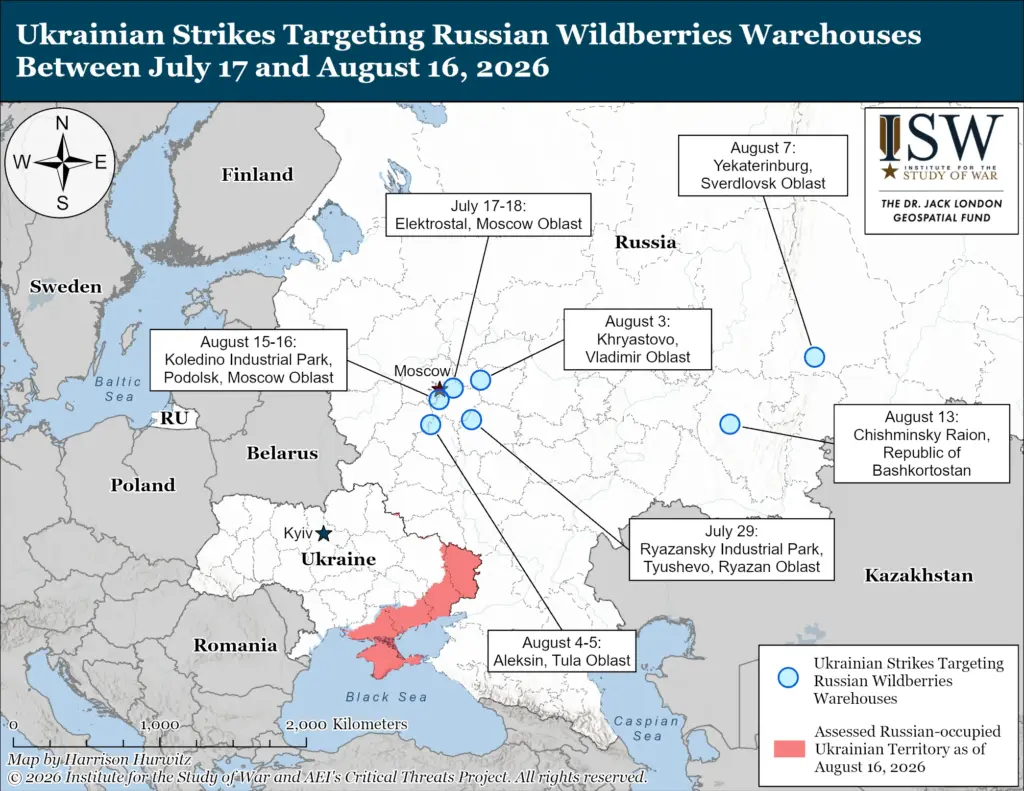
ukraine has knocked out seven russia's 10 biggest warehouses its air defenses fall short isw says · post ukrainian strikes targeting russian wildberries between 17 16 2026 ukrainian-strikes-targeting-russian-wildberries-warehouses-between-july-17-and-august-16-2026 news reports

Ukraine has knocked out seven of the 10 largest logistics hubs run by Russia's biggest online retailer, the US-based Institute for the Study of War assessed. The strikes are part of a campaign to wear down Russia's defense industry and the dual-use supply lines that feed its war. The newest raids hit two warehouses near Moscow overnight.

Ukraine has pushed its long-range drone war deep into Russia, hunting the oil, freight, and factory sites that keep Moscow's invasion supplied. Each strike that lands far from the front tests how much of its own territory Russia can actually defend. ISW assessed that the campaign is squeezing both Russia's economy and its overstretched air defenses, with no sign the retailer's biggest depots are getting any safer.

Two hubs near Moscow burned overnight

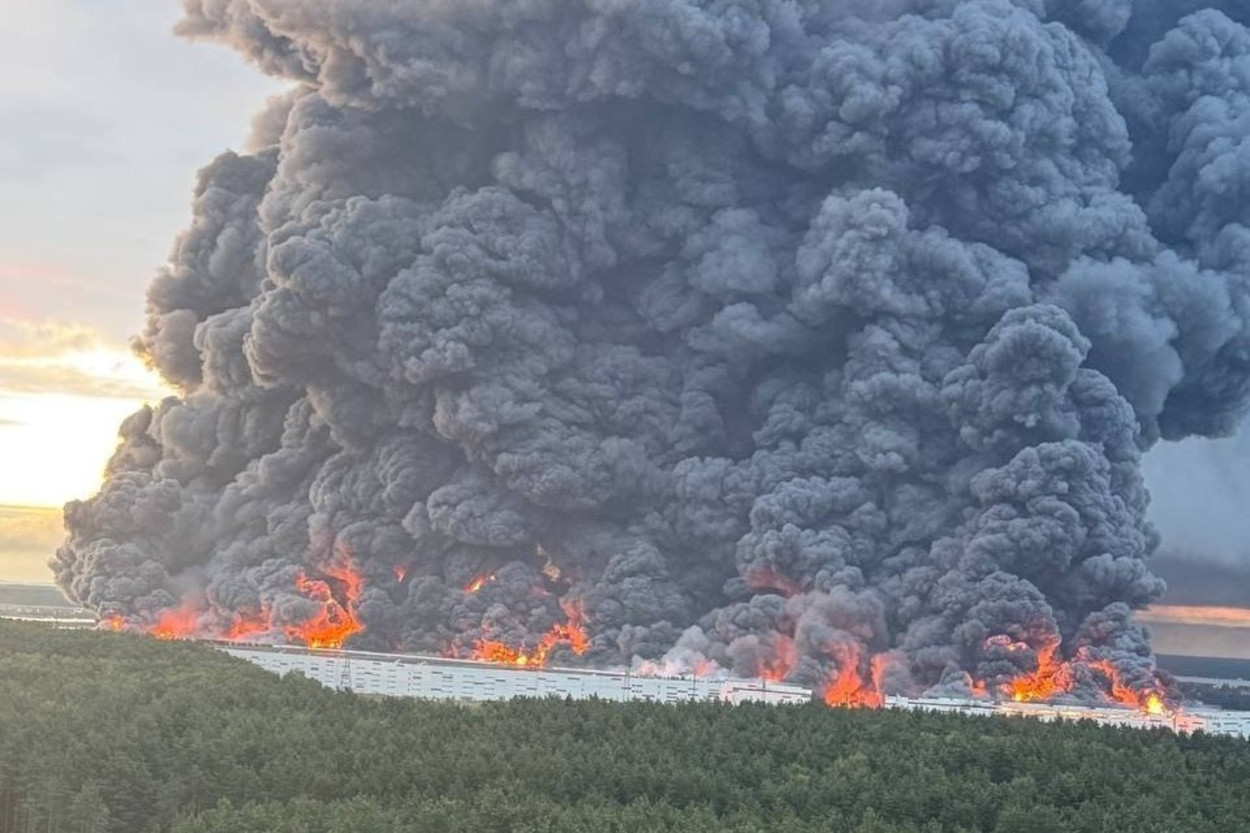
On 15-16 August, Ukrainian drones struck Wildberries' single largest hub, a 250,000-square-meter depot in the Koledino Industrial Park in Podolsk, Moscow Oblast. Ukraine's Defense Ministry reported the hit, about 420 kilometers from the border.

Wildberries warehouse burning in Russia's Koledino following a Ukrainian drone strike, 16 August 2026. Photo: Exilenova+
Explore further

“One of the most massive” Ukrainian drone attacks hits Moscow Oblast: two major warehouses ablaze

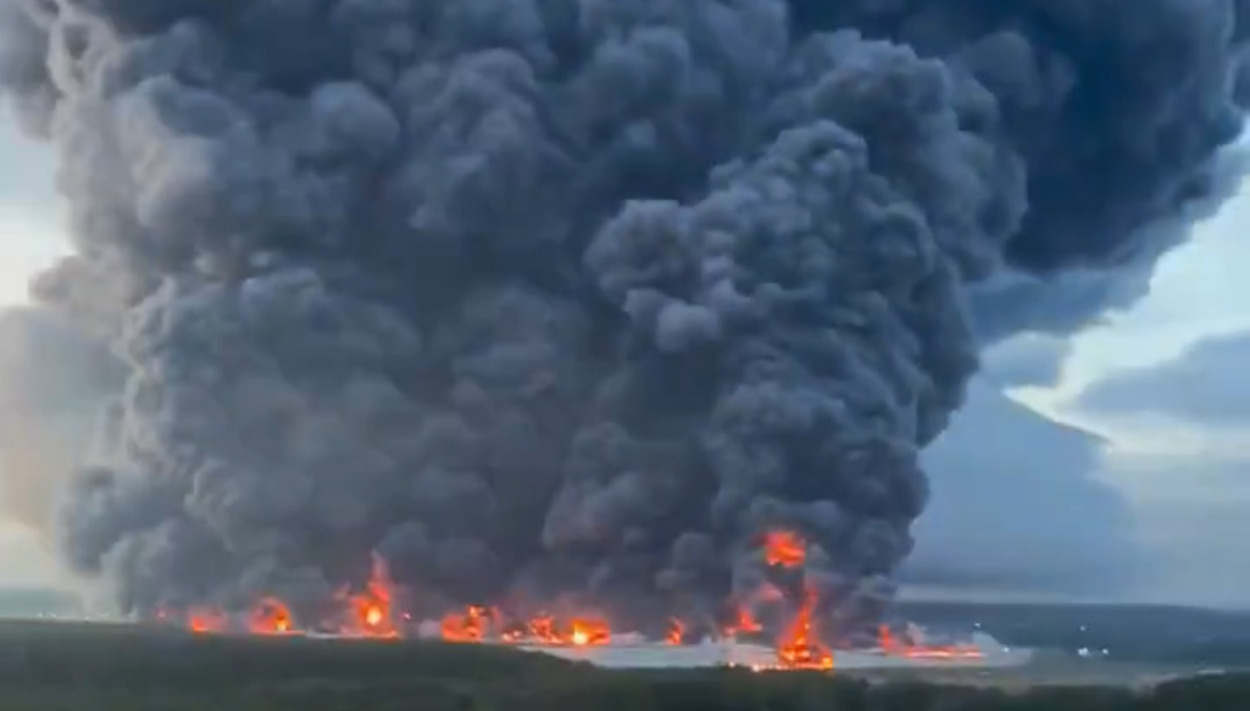
Wildberries confirmed the fire and said it had to reorganize its supply chains. Moscow Oblast Governor Andrei Vorobyov acknowledged the strike, and geolocated footage showed the depot ablaze.

Drones also hit a second warehouse the same night, in Domodedovo, roughly 430 kilometers from the border. Footage showed a fire at the Severnoye Domodedovo complex.

Why the warehouses are targets

Ukrainian officials say Wildberries helps supply the Russian military, moving drone components and navigation gear. Kyiv folded the retailer into a deep-strike campaign that began in mid-July.

The company is Russia's answer to Amazon, its largest online marketplace. Its sprawling depots make broad, hard-to-defend targets.

Wildberries warehouse burning in Russia's Koledino following a Ukrainian drone strike, 16 August 2026. Screenshot from video: bayraktar_1love

The damage keeps growing

By early August, the strikes had destroyed at least 1.18 million square meters of Wildberries storage, about a fifth of its capacity, ISW noted. The toll has climbed since.

The losses ripple outward to independent sellers who rent space in the hubs. Many have watched their stock burn with no compensation.

  •  
❌