❌

Vue lecture

Russia cuts power to more than 600,000 in Dnipropetrovsk Oblast as Zelenskyy says the strikes aim to squeeze Ukraine before talks

A house destroyed by a Russian drone strike in Dnipro, Ukraine, 8 November 2026

Russia attacked Ukraine overnight on 8 November with three Kh-59/69 guided missiles and 164 Shahed-type drones, 112 of them jet-powered, Ukraine's Air Force said, recording hits at 23 locations. The strikes targeted power facilities across several oblasts and left more than 600,000 customers without electricity in Dnipropetrovsk Oblast alone. A drone killed one person in a Dnipro suburb, and Russian shelling killed one in Odesa.

Russia is waging its war on Ukraine's cities as a campaign against power and heat, with winter only weeks away. This week alone, Russia fired 115 missiles, nearly 1,900 guided bombs, and more than 3,000 attack drones at Ukrainian cities and communities, President Volodymyr Zelenskyy said. On 4 November, it carried out one of its largest attacks of the war on the energy system. Zelenskyy ties the escalation to diplomacy. Russia sees diplomacy "as a subtype of aggression" and is using the strikes to build pressure on Ukraine and its partners before a new push for talks, he said on 7 November. Ukraine is also short of interceptors for its Patriot systems, and the US can help most, he added.

Dnipropetrovsk Oblast takes the hardest hit

More than 600,000 customers in five districts lost power, and hospitals switched to generators, oblast head Oleksandr Hanzha said. The Energy Ministry reported new outages in Dnipropetrovsk, Zhytomyr, Rivne, Sumy, Kharkiv, and Chernihiv oblasts. Emergency blackouts followed in Kharkiv, Poltava, and Sumy oblasts, and Kyiv Oblast switched to them by midday.

In a Dnipro suburb, a drone destroyed at least one private house, the oblast administration said. One person was killed and others were hurt, police said, and the number of injured rose to three, the oblast administration added. Strikes on Dnipro also set warehouses and trucks at a transport company on fire, it reported.

Ukrainian President Volodymyr Zelenskyy and Spanish Prime Minister Pedro Sánchez hold talks at the Moncloa Palace in Madrid, Spain, 5 November 2026
Explore further

Ukraine’s skies need interceptors. Spain’s new €437 million came out of a Madrid meeting with no list attached

Substations, heating, and a food warehouse

In Zhytomyr Oblast, strikes hit homes and heat and power facilities in four communities, including Ovruch. In the city of Zhytomyr, 140 apartment blocks were left without heating, and more than 312,000 customers in the oblast are on hourly outages, the oblast administration said. Drones destroyed the Ovruch substation, and residents should prepare for a long blackout, the Ovruch city council said.

In Kharkiv Oblast, a Shahed-type drone hit critical infrastructure and cut power to about 250,000 customers, Zlatopil Mayor Mykola Baksheiev said. In Odesa, Russian shelling killed one person and damaged an administrative building. In the morning, Russia hit a food warehouse it had attacked before, starting a large fire, the oblast administration said.

Firefighters at a food warehouse hit by Russia in Odesa, Ukraine, 8 November 2026
Firefighters at a food warehouse hit by Russia in Odesa, Ukraine, 8 November 2026. Photo: Odesa Oblast Military Administration

Four ballistic missiles on a Kyiv bridge

The overnight attack followed a ballistic strike on 7 November, when Russia fired 36 ballistic missiles and Ukraine shot down only four, Zelenskyy said. By preliminary data, North Korean KN-23 missiles hit one key energy facility, he added. Six ballistic missiles targeted Kyiv's Pivnichnyi (Northern) Bridge, and four hit it, Zelenskyy said in his evening address. A day earlier, he had warned, citing intelligence, that Russia was preparing a strike on the energy sector, bridges across the Dnipro, and civilian infrastructure.

The bridge was closed in both directions, Kyiv Mayor Vitalii Klitschko said. Zelenskyy ordered the Interior Ministry and the city to prepare backup transport schemes, saying none exist at city level. In October, Russia struck Kyiv's Southern Bridge, and the city began preparing backup river crossings.

A map of the Mius River bridge at km 97 of the R-280 highway in Rostov Oblast, Russia, a street-level view of the bridge, and Rostov Oblast Governor Yuri Slyusar's posts on the drone attack of 8 November 2026, with the posts machine-translated
Explore further

Russia was widening this bridge to four lanes for its Crimea road. Drones have now closed it

Zaporizhzhia: a nuclear plant on diesel and a strike on rescuers

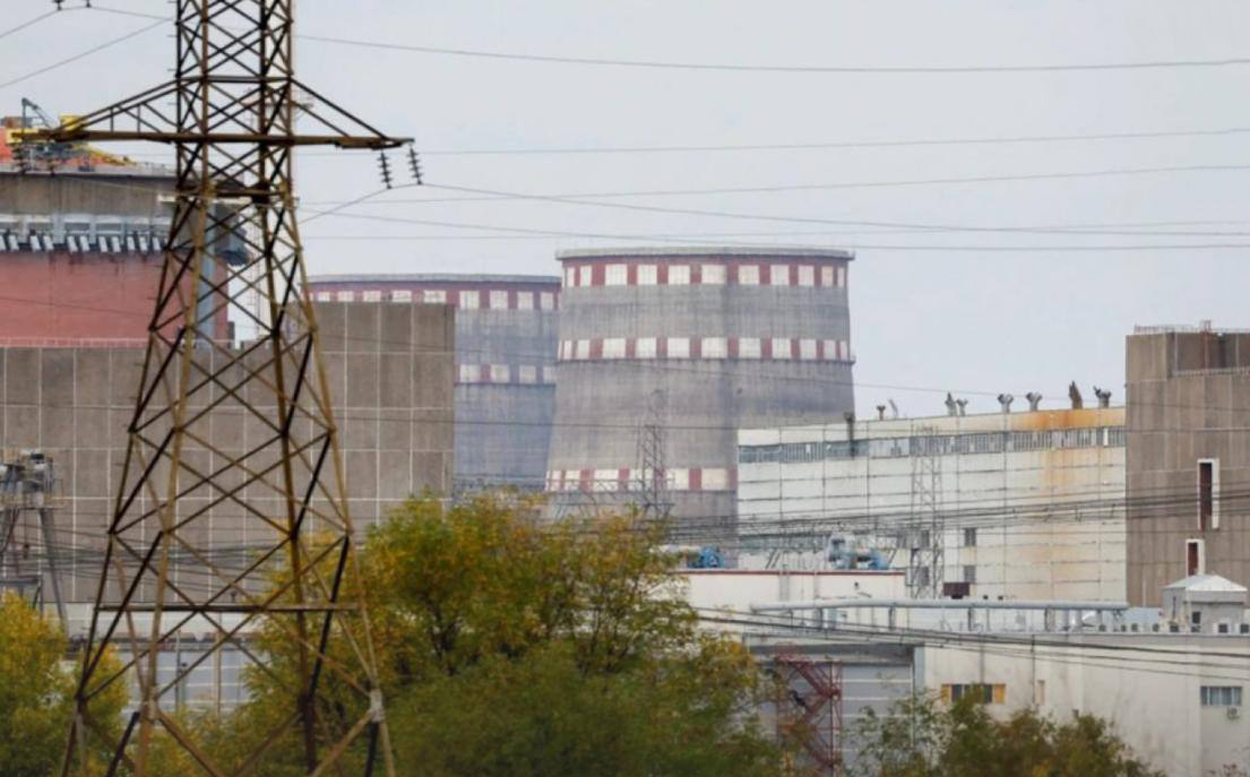
The Russian-occupied Zaporizhzhia Nuclear Power Plant lost its last external power line at 02:36 on 8 November and now runs on diesel generators alone, Ukraine's nuclear operator Energoatom said. It is the plant's 16th full blackout this year. If the generators fail or run out, the cooling of nuclear fuel is at risk, which could lead to a radiation accident, Energoatom warned.

In Komyshuvakha, also in Zaporizhzhia Oblast, a Russian drone hit rescuers on the morning of 8 November. They have been searching the site of the 2 November guided-bomb strike for a week. Rescue equipment was damaged and no one was hurt, the State Emergency Service said. So far, 55 bodies have been recovered and 45 people are still listed missing, some of whom are probably among the dead already found, the oblast administration said.

  •  

Police find missing woman alive four days after Russian bombing of Komyshuvakha underground school. Death toll rises to 43.

Rescuers continue searching the rubble of the underground school in Komyshuvakha on 5 November 2026, where a Russian bombing on 2 November killed at least 43 people. Photo: Ukraine's State Emergency Service

The death toll from Russia's 2 November bombing of an underground school in Komyshuvakha, Zaporizhzhia Oblast, has risen to 43. Seven residents previously reported missing have also been found alive, Ukrainian authorities said on 5 November.

The latest developments bring some relief to families awaiting news of their relatives, but the search for people still unaccounted for continues after Russia struck a civilian aid distribution point with powerful aerial bombs.

Russian forces repeatedly bombed the school while civilians were gathering to receive humanitarian aid. The attack struck an underground shelter where people had taken cover, killing dozens of civilians and emergency responders.

Ukrainian President Volodymyr Zelenskyy announced the updated death toll on 5 November, the fourth day of search and rescue operations.

Seven missing residents found alive

Police established the whereabouts of seven Komyshuvakha residents whose families had lost contact with them following the bombing. All seven were found alive and uninjured, Zaporizhzhia Oblast police chief Artem Kysko said, according to NV.

The last person located was a 56-year-old woman named Olha, who was found on Thursday, the fourth day of search and rescue operations. Her relatives had contacted police after being unable to reach her following the attack.

Police continue searching for other people reported missing after the bombing.

Russia dropped nine more bombs on the shelter

On 2 November, Russian forces repeatedly attacked a school in Komyshuvakha where residents were receiving humanitarian aid.

According to Zaporizhzhia Oblast officials, Russia initially struck the site with FAB-500 guided aerial bombs before dropping nine more bombs on the shelter where people had taken refuge. These included the three-ton FAB-3000 aerial bomb.

Rescuers search the rubble of the underground school in Komyshuvakha, Zaporizhzhia Oblast, Ukraine, November 2026
Rescuers search the rubble of the underground school in Komyshuvakha, Zaporizhzhia Oblast, Ukraine, November 2026. Photo: State Emergency Service of Ukraine in Zaporizhzhia Oblast

The attack initially killed 26 people, including two emergency workers and four police officers. The death toll continued rising as rescuers recovered bodies from the rubble.

By 4 November, rescuers had recovered 37 bodies, with dozens of people still listed as missing.

By 5 November, the confirmed death toll had reached 43.

  •  

A three-ton bomb fell on an aid queue on Monday—two days later, rescuers have found 37 dead. And now Russia strikes Ukraine’s power stations

Rescuers search the rubble of the underground school in Komyshuvakha, Zaporizhzhia Oblast, Ukraine, November 2026

The death toll from Russia's bombing of an aid distribution point in Komyshuvakha rose to 37, the Zaporizhzhia Oblast Military Administration reported on 4 November. Russian attacks on 3 and 4 November killed and wounded civilians across seven oblasts. Moscow also kept hitting Ukraine's power system and aimed drones at a substation serving a nuclear plant.

Russia is running two campaigns at once this autumn: one against people in front-line towns, the other against the grid the whole country relies on. Ukraine says it intercepted a Russian plan for this winter that lists 60 critical infrastructure sites as targets for up to 1,000 missiles, drones, and bombs. Nuclear plants now produce roughly half of Ukraine's electricity, and the substations that feed them have been targeted before. Hitting those links can black out the country without striking a reactor.

Komyshuvakha's toll keeps rising

On the third day of searches, rescuers had identified 12 of the dead, while 59 people were still listed as missing, Ukraine's National Police reported. Some of the missing may be among those already found, and up to 38 more people may lie under the rubble. Ivan Fedorov, head of Ukraine's State Agency for Restoration and Infrastructure Development, said Russia hit people collecting humanitarian aid with a FAB-3000, a three-ton aerial bomb, on 2 November. Five people were injured.

On 2 November, Russian forces struck a school in Komyshuvakha, Zaporizhzhia Oblast, killing 26 people. Source: Ukraine's State Emergency Service
Explore further

Russia strikes school where civilians recieved aid in Zaporizhzhia Oblast days after Oleshky truce. Nine more bombs hit its shelter, killing at least 26

The underground school was built to a single standard design and checked by every relevant service, but no underground school in Ukraine is designed to withstand a FAB-3000, Fedorov told a briefing, Ukrinform reported. “These were launches of nine aerial bombs, some of them quite rare 'three-thousanders',” he said. Latvian Foreign Minister Baiba Braže called for an extraordinary meeting of the UN Security Council over the strike. Latvia chairs the Council this month.

Russia kills civilians in Zaporizhzhia, Dnipropetrovsk, and Donetsk oblasts

Two Russian strikes on Vilniansk killed a woman, 52, and a man, 63, and injured a man, 59, the oblast administration reported on 4 November. A fire broke out in a five-story apartment building. Russian shelling also killed a 53-year-old man in Bilenke, in the same district. Over the previous day, Russia killed two people and injured three in Zaporizhzhia and its district, striking 51 towns and villages 857 times, Fedorov wrote.

outages
Explore further

One of largest Russian attacks yet on Ukraine’s energy system forces emergency blackouts across regions and leaves Kyiv without water

On 3 November, Russian drones, artillery, and missiles killed two people in Dnipro and injured 38 across Dnipropetrovsk Oblast, oblast head Oleksandr Hanzha reported. Fourteen people hurt in Dnipro are still in hospital, four in serious condition. Overnight, a Russian strike set an enterprise in Dnipro on fire and injured two men.

Aftermath of a Russian attack on Dnipro, Ukraine, 3 November 2026
Aftermath of a Russian attack on Dnipro, Ukraine, 3 November 2026. Photo: Dnipropetrovsk Oblast Military Administration

On 3 November in Donetsk Oblast, Russia killed one person in Kramatorsk and one in Yasnohirka, where four guided bombs also injured five, oblast head Vadym Filashkin said. Three more people were wounded in Sloviansk.

Russian drones also wounded a 69-year-old woman in Sumy Oblast and, on 3 November, three people at a farm business in Zhytomyr Oblast's Liubar community. In Rivne Oblast, a Russian attack hit a gas station and hurt a man on 3 November, and a woman was injured overnight. In Kherson, a man stepped on a Russian mine.

russia blacked out europe's largest nuclear plant 15 times since occupying 2022 · post zaporizhzhia power energoatom znpp russian-occupied (znpp) again lost external 40th anniversary chornobyl disaster said same day
Explore further

Russia won’t start a nuclear war. It might cause a nuclear disaster.

Drones sent at a substation serving the Khmelnytskyi nuclear plant

During the 3 November mass attack, Russia sent three drones at a substation critical to the stable operation of the Khmelnytskyi nuclear plant, First Deputy Prime Minister and Energy Minister Denys Shmyhal said. He called it “a serious step of escalation.” Ukraine informed the International Atomic Energy Agency (IAEA), which had not commented.

Overnight on 4 November, Russia hit an energy facility, a shopping center, and homes in Odesa Oblast, the oblast administration reported. Critical infrastructure in Vinnytsia was also damaged. By late morning, Ukraine's Air Force was still tracking Russian jet-powered drones heading for Bila Tserkva, south of Kyiv.

  •  

Russia strikes school where civilians recieved aid in Zaporizhzhia Oblast days after Oleshky truce. Nine more bombs hit its shelter, killing at least 26

On 2 November, Russian forces struck a school in Komyshuvakha, Zaporizhzhia Oblast, killing 26 people. Source: Ukraine's State Emergency Service

On 2 November, Russian forces struck a school in Komyshuvakha, Zaporizhzhia Oblast, that local residents used to pick up humanitarian relief, killing 26, according to Ukraine's State Emergency Service. The strike was divided into two attacks. After the first blast, they dropped nine more guided bombs on the shelter where people had fled, President Volodymyr Zelenskyy said.

The second blast is the signature of a tactic Ukrainian prosecutors have documented across the war, the “double-tap” strike timed to kill rescuers and neighbors who rush to the wounded. The strike on Komyshuvakha killed 26 people.

It landed days after a rare Ukraine-Russia truce let civilians out of Russian-occupied Oleshky, a contrast Zelenskyy seized on to argue that Moscow has no intention of easing its war.

A strike on a site everyone knew handed out aid

The school housed one of the region’s “resilience centers", where residents who have stayed near the front line received the aid. Zelenskyy described the sequence plainly in his evening address.

“After the first strike of aerial bombs, there was a repeat strike of nine more bombs, and precisely on the shelter where people were," he explained.

Many of those killed and wounded were civilians who had come for aid or hurried back to help after the first bomb fell. The Russians could not have failed to know what the site was, Zelenskyy said, because local people had been receiving aid there every week.

A rising toll, and a pointed contrast with Oleshky

As of the evening of 2 November, 27 people were still unaccounted for beneath the rubble, Zelenskyy and regional officials said, and the toll was expected to climb.

    Zelenskyy tied the attack to the humanitarian mission that days earlier had brought civilians out of Russian-occupied Oleshky under the longest ceasefire of the war.

    If Russia genuinely wanted to wind down the fighting, he argued, the days after Oleshky were the moment to show it, and Ukraine had proposed further steps, but Russia keeps killing.

    •  
    ❌