Connexion

The Kerch Bridge span fell without Starlink, a Ukrainian officer says. Only weeks earlier Kyiv was asking Washington for Starshield to strike deep, Rubio said

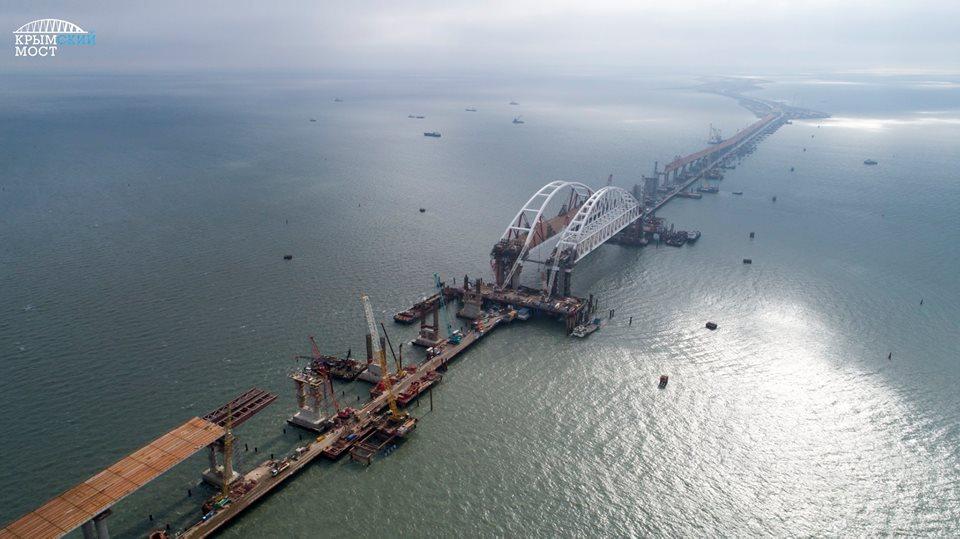
Ukraine hit Russia’s Kerch Bridge on 16–17 November without SpaceX’s Starlink or its military version, Starshield, relaying radio signals over connections Ukraine developed itself instead, an officer involved in the mission told The Times. “We showed we can conduct such operations without Starlink,” he said.
Some of Ukraine’s interceptor drones work through Starlink, and a 160 km/h cap on Starshield disrupted Ukraine’s drone missions from 14 October. An unstable connection would make some high-speed drones, mid-range strike models in particular, impossible to launch, Ukraine’s 7th Rapid Reaction Corps warned. The Starshield cap was back, President Volodymyr Zelenskyy said on 12 November, and SpaceX denied any change. The Kerch strike came days later, and what the officer calls a first “in history” is the relay that worked around the cap: drones feeding video to missiles so they could strike exact points on the bridge. If the account holds, Kyiv can guide strikes like this one on links it controls itself.
The strike, which sent the road span into the sea, was planned as a symbolic gesture before Russian President Vladimir Putin’s meeting with US President Donald Trump and Chinese President Xi Jinping in China on 19 November, meant to show Putin as weak, the officer said. The operation involved missile troops, drone pilots from the 7th Deep Strike Center (known as Magyar’s Birds), the 1st Special Operations Brigade of the Unmanned Forces, the Security Service of Ukraine (SBU), parts of the special operations forces, and the navy, The Times reported, citing Ukrainian military sources.
Zelenskyy said the uplink held to the last seconds
Palianytsia drones hit the bridge’s road section, while Neptune missiles, Ruta drones, and FP-5 Flamingos hit its railway section, Zelenskyy said on 17 November. The Flamingo strike was precision-guided, and “the communications uplink worked flawlessly until the very last seconds,” he said. Official videos show the Flamingo cruise missiles were not the usual version, and remote operators steered them through onboard cameras, defense journalist David Axe wrote. That kind of control needs a stable, low-lag link, possibly a mesh network of drones relaying signals, he added.
Ukraine’s tech adviser said commercial Starlink can’t be used for deep strikes
Starlink and Starshield speeds were restored after the first cap, Ukraine’s Defense Ministry said on 24 October. If Starlink were turned off, “the Ukrainian front line would collapse immediately,” SpaceX owner Elon Musk wrote hours later. Starlink does not work over Russia, and terminals over Ukraine and occupied areas had been capped since winter, presidential adviser on defense technology Serhii Beskrestnov wrote the same day.
“So we PHYSICALLY CANNOT USE COMMERCIAL STARLINK for deep strikes and mid-range strikes,” Beskrestnov wrote.
Starshield was not available to Ukraine, and Kyiv had asked for it for deep strikes, US Secretary of State Marco Rubio told reporters on 17 October. Yet Ukrainian units had recorded major Starshield disruptions, Zelenskyy reported on 12 November. Efforts were underway to restore Starshield’s speed, NATO Secretary General Mark Rutte said five days later. Ukraine’s deep strikes had not been effective in ending the war, US Under Secretary of War for Policy Elbridge Colby told Ukraine’s backers in Brussels on 17 November, the day the span fell, though he said strikes on “Russia’s warmaking machinery” could help slow Russia’s advance.
Read also
-
Missile-drones, cruise missiles, and a Flamingo guided to the last second: Kyiv’s account of the night Russia’s Kerch bridge lost its road
-
Who capped Ukraine’s Starlink? “Ultimately POTUS,” Musk said. Ultimately Musk, reports now say
-
Rubio thinks Starlink is fixed. Kyiv says it still cuts out above 161 km/h