❌

Vue lecture

Russia is betting another year of European elections to outlast support for Ukraine, Kyiv analyst says
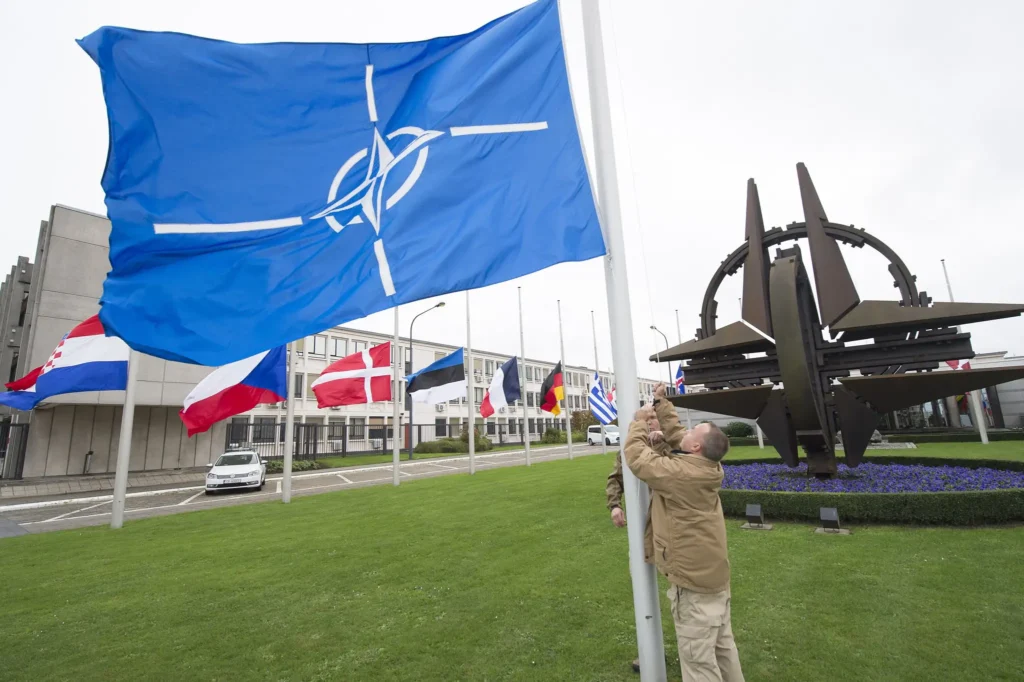
Flags NATO

Russia has no reason to hurry toward a peace deal, a Ukrainian foreign-policy analyst says. Moscow can still sustain the war with its own resources and is counting on a year of political change in Europe to erode support for Ukraine, Iuliia Osmolovska, who heads the Kyiv office of the GLOBSEC think tank, told Euromaidan Press.

That calculation shapes how Moscow treats the US-brokered talks now under way, using them to run down the clock rather than to end the war, according to the analyst. Osmolovska sees no sign Russia intends the concessions a real settlement would require.

Time is working in Russia’s favor

Next year’s cycle of political change in Europe could sharply weaken the political, diplomatic, and financial support Ukraine depends on, and Russia is counting on it, Osmolovska argues.

Moscow expects to keep attacking through another winter to force its aims on its own terms.

“Anyone who puts themselves in the Russians’ place strategically understands that, from that position, time is working in their favor today,” she said.

Time is draining Ukraine in other ways, too: its population has fallen by about 10 million since the full-scale invasion, by UN figures.

Winter is a weapon

Moscow is also counting on its strikes to devastate Ukraine’s energy system, Osmolovska argues.

“Winter matters to them because they have vulnerabilities in Ukraine: a complete lack of protection against ballistic missiles and the absence of ready solutions against jet-powered drones,” she warned.

Russia has been pounding the grid before the cold sets in, with one strike leaving a crater the size of a house at a substation.

The real aim is to break NATO

Russia has pushed for broader talks on Europe’s security architecture, reviving its demands to curb NATO’s expansion and military presence near its borders, a stance 40 European countries rejected in a declaration on 12 November.

Earlier, Reuters reported that Russian diplomat Drobinin raised the idea of Moscow signing non-aggression pacts with individual NATO members.

Osmolovska reads the real aim as the collapse of NATO itself: Russia will try to break the Alliance with hybrid attacks until its decision-making seizes up.

  •  

40 countries tell Russia: Ukraine’s security and Europe’s alliances are not yours to decide

European leaders and heads of state pose for a family photo at the ninth European Political Community summit in Dublin, Ireland, on 12 November 2026.

Forty European countries, including Ukraine, signed a declaration on 12 November reaffirming that states have the right to choose their own alliances and that any decisions affecting European security must involve Europeans.

The declaration comes as Russia pushes for broader negotiations on Europe's security architecture, including its longstanding demands to limit NATO's expansion and military presence near Russian borders. European leaders have warned that such discussions must not come at the expense of Ukraine's sovereignty or allow Moscow to dictate the security arrangements of other countries. 

The Dublin Declaration on key principles of European security was adopted at the ninth European Political Community summit in Ireland. It also links future discussions on European security arrangements to the end of Russia's war against Ukraine, reinforcing the position that a ceasefire and peace must come before negotiations over the continent's wider security architecture.

Declaration reaffirms countries' right to choose their alliances

The signatories reaffirmed that every state has the right to determine its own relations with other countries and freely choose whether to join treaties, alliances, or international organizations.

The document also reiterates support for Ukraine's independence, sovereignty, and territorial integrity within its internationally recognized borders. It calls for robust and credible security guarantees to prevent another Russian attack.

The declaration states that Ukraine's security is an integral part of Euro-Atlantic security and that future developments in European strategic stability will depend on the conclusion of Russia's war against Ukraine.

It also says that discussions on additional risk-reduction and risk-management mechanisms should take place once the conditions are met and peace is restored in Europe. At the same time, signatories commit to strengthening their defense capabilities, military cooperation, and European defense industry. 

The document further reaffirms NATO's role as the foundation of collective security for its members, including their commitment to Article 5, and calls for a stronger European Union capable of responding to security threats.

Kallas warns against Russia's negotiating trap

EU foreign policy chief Kaja Kallas said a ceasefire must come before discussions about Europe's wider security architecture. She made the remarks on arrival at the informal EU summit in Dublin, according to European Pravda.

Kallas welcomed US envoy Jared Kushner's statement that Europeans would take part in upcoming peace talks, saying she hoped the EU would have meaningful influence over the negotiations.

However, she warned that shifting the focus to Russia's demands for a new security architecture would play into Moscow's hands.

"If we start to talk about what Russia is asking regarding the security architecture, we actually walk into the traps that Russia is setting us," Kallas said.

She argued that such discussions risk diverting attention from the absence of a ceasefire and Russia's responsibility for the war.

"We have one aggressor and one victim," she said, urging European leaders to keep the focus on ending Russia's aggression.

The Dublin declaration gives that position a collective political expression: European security cannot be negotiated over Ukraine's head, and Russia cannot dictate the alliances or security choices of sovereign European states.

  •  
❌