Russia struck a foreign-flagged civilian bulk carrier with cruise missiles as it left Odesa loaded with grain, killing much of its crew, Ukraine's Navy said. Fire broke out aboard the ship, and a search-and-rescue operation ran through the night to reach survivors. Ukrainian officials condemned the strike as another deliberate attack on unarmed civilian shipping.
Moscow can no longer blockade Ukraine's Black Sea ports, so it bombs the ships and terminals that keep the export route open — a campaign that squeezes Ukraine's single largest source of hard currency and puts the foreign crews sailing the corridor in the line of fire. This comes amid Ukraine's campaign against Russian shipping in the Black and Azov seas.
Three cruise missiles hit the ship as it sailed out
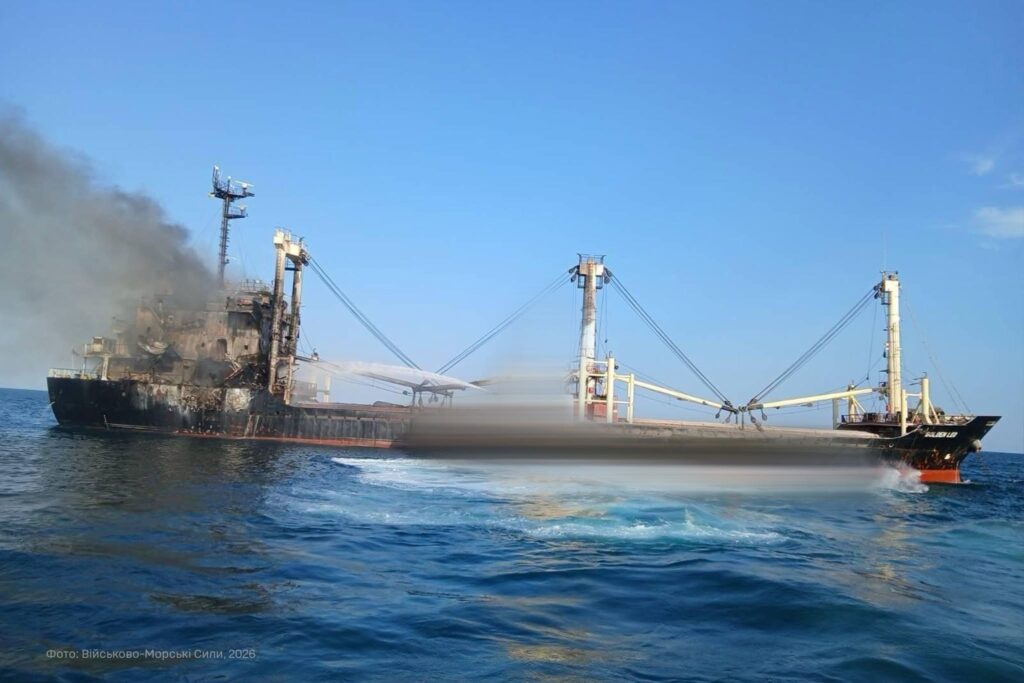
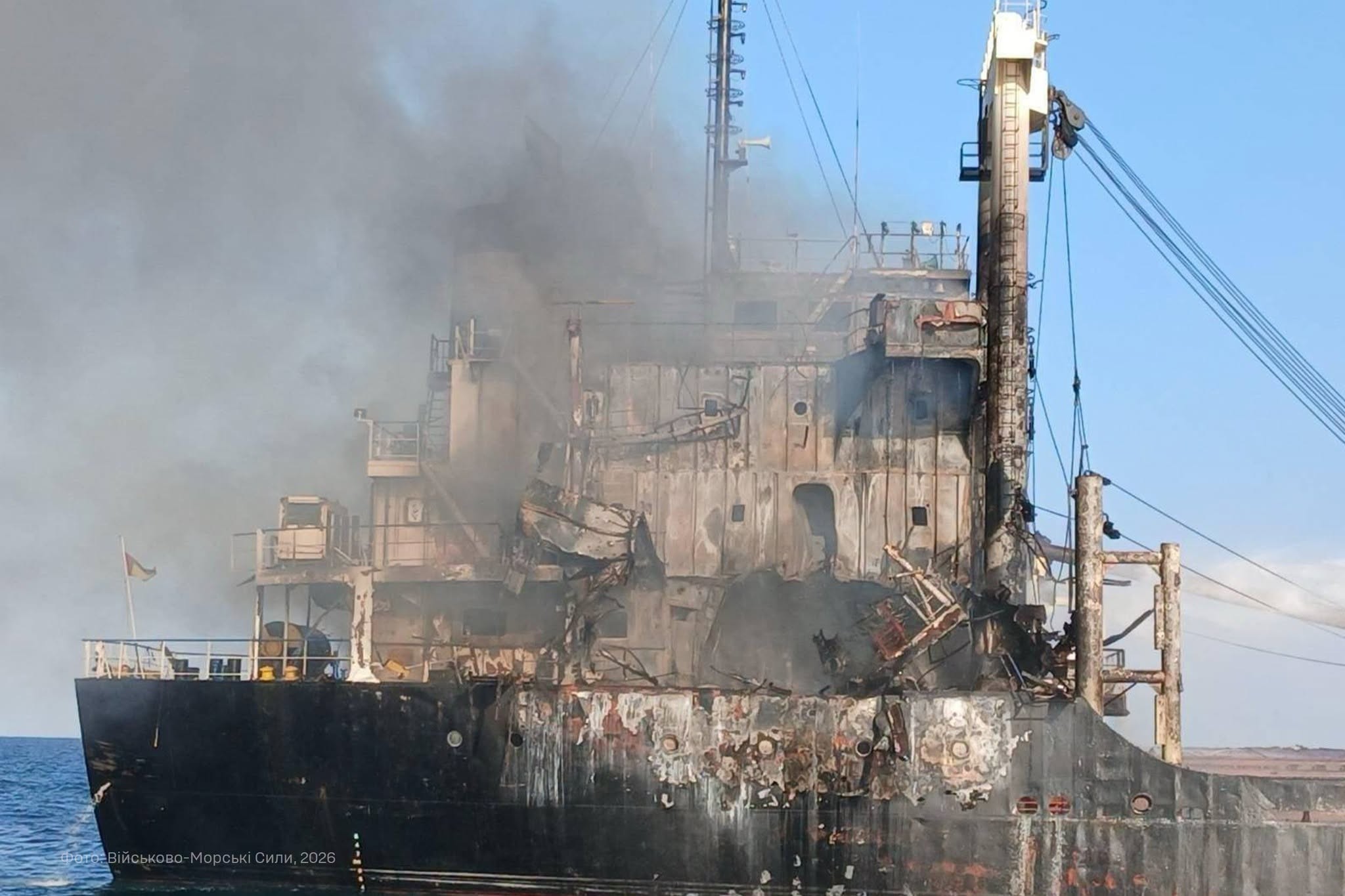
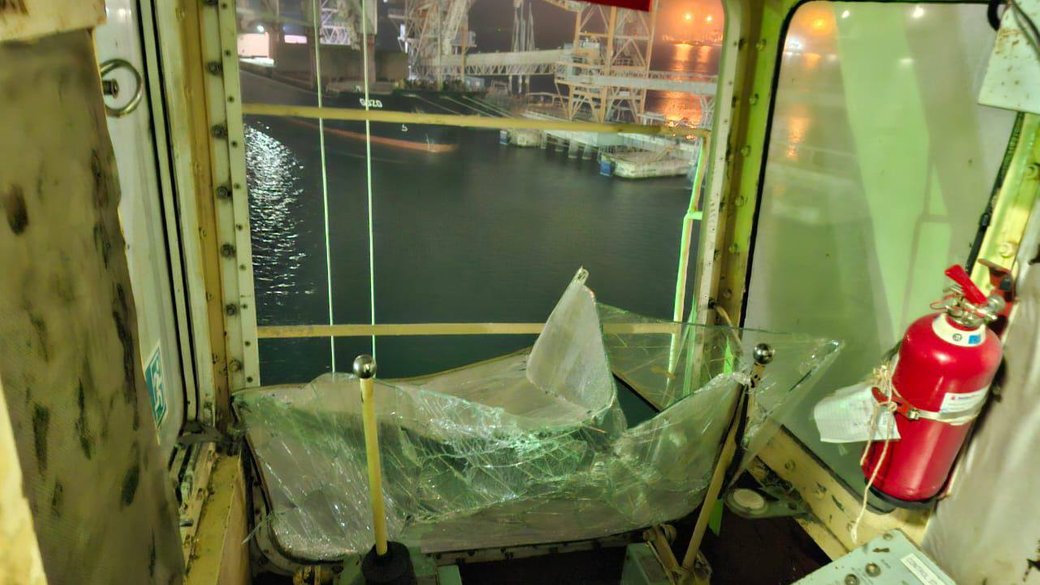
Russian forces fired three Kh-59/Kh-69 cruise missiles at the GOLDEN LEO, a Guinea-Bissau-flagged bulk carrier owned by a Turkish company, as it moved out of the combat zone with a cargo of corn on 19 July, Ukraine's Navy reported. The strike hit the starboard side of the superstructure, and a fire broke out on board.
The burned, smoking superstructure of the GOLDEN LEO after the Russian missile strike, in the Black Sea off Odesa, 19 July 2026. Photo: Ukraine's Navy
The missiles came in from the sea. Ukraine's Air Force warned of Russian missiles approaching Odesa and Chornomorsk from the Black Sea in the late afternoon, minutes before explosions were heard in the city. The ship took serious damage but did not sink, the Odesa outlet Dumska showed in photos from the scene, as tugs and rescue crews fought to keep it afloat.
The toll climbed to 10 overnight, including a Ukrainian sea pilot
The death toll rose through the night. The Ukrainian Sea Ports Authority (USPA) said10 people were killed, among them a Ukrainian sea pilot from its Delta-Pilot branch, and that eight crew members were rescued and brought ashore. A sea pilot boards a vessel to guide it safely in and out of port through difficult or dangerous waters.
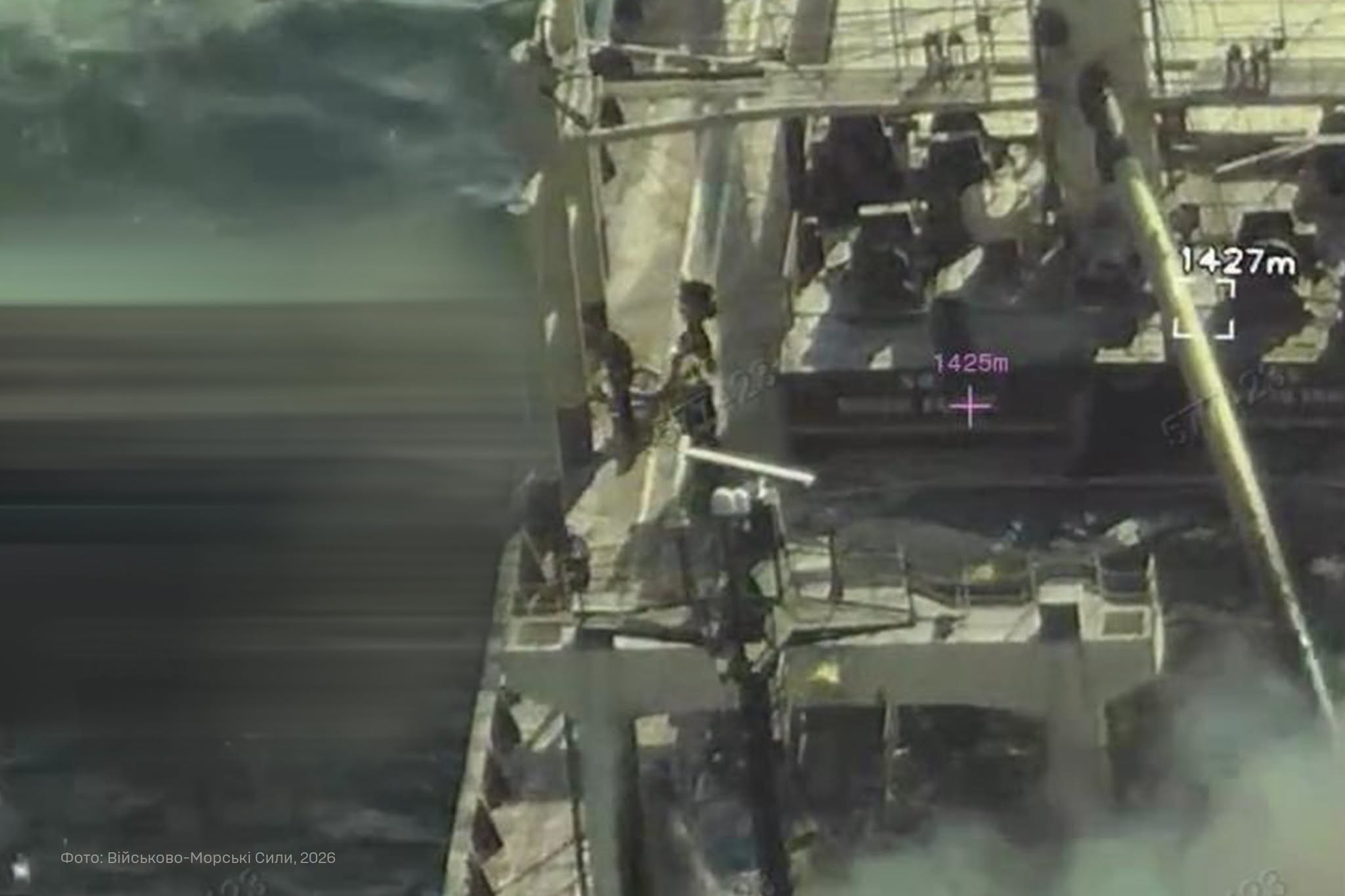
Eighteen people were on board: crew members from Syria and India, along with the Ukrainian pilot. Eight of the rescued were taken to an Odesa hospital, two of them injured. By Monday, the USPA said the fire aboard the ship had been contained.
A frame from Navy footage shows the deck of the civilian bulk carrier GOLDEN LEO, struck by Russian missiles in the Black Sea off Odesa on 19 July 2026. Photo: Ukraine's Navy
Ukraine calls it terror against civilian shipping
The Navy says the strike was an act of terror and a violation of the laws of war.
"This is another deliberate Russian strike on an unarmed civilian vessel under a foreign flag that posed no military threat," it said. "The attack is an act of terror against peaceful shipping and a gross violation of international humanitarian law."
Prime Minister Serhii Koretskyi instructed the Foreign Ministry to immediately inform the states whose citizens were affected and Ukraine's international partners. The government and military command are separately preparing measures meant to strengthen the safety of shipping and shield civilian vessels and sailors from Russian attacks.
The strike lands in a month when Russia has been hammering the Odesa ports that carry the overwhelming share of Ukraine's farm exports. Russian forces have repeatedly gone after foreign-flagged ships moving through the maritime corridor, and used Geran-4 drones against grain carriers at Chornomorsk earlier in July.
Explore further
Russia hit two grain-loaded ships under Palau and Barbados flags in Odesa port overnight — grain bunker and administrative buildings also damaged
Botswana has become the latest African country to accuse Russia of tricking its citizens into fighting against Ukraine, luring them abroad with fake job offers and then forcing them into combat, Bloomberg reported. The government told its people to treat foreign work offers with suspicion, warning that the scheme is spreading fast. The move echoes alarms raised across the continent as Russia scours Africa for soldiers to feed its war.
Rather than order a politically risky general mobilization at home, Moscow has kept its army filled with contract soldiers, convicts, and foreign recruits drawn from low-income regions across three continents.
Botswana sounds the alarm on a recruitment trap
Botswana's Ministry of International Relations issued the warning in a statement on 18 July. It said a growing number of its nationals are being coerced into Russian military service, and urged everyone to confirm that any overseas job offer is real before accepting it.
The ministry described people drawn out of the country under false pretenses, only to be pushed onto the battlefield once they arrive.
"The number of Batswana being misled into such arrangements is rising at an alarming rate," the ministry said, using the term for Botswana's citizens. It added that it "continues to receive heartbreaking calls from Batswana already on the front line, describing the perilous conditions they face."
Explore further
Wagner’s remnants run an opioid empire in the Central African Republic, WSJ reveals
Botswana joins Kenya and South Africa
The warning places Botswana alongside other African states that have traced the same pipeline. In Kenya and South Africa, prosecutors have already detained and charged suspects accused of funneling recruits into Moscow's ranks.
The European Parliament went further in March, condemning the practice as human trafficking and describing recruits who were deceived, stripped of their documents, and treated as expendable.
The toll is already counted in the dead
The recruitment has a body count. Inpact, the nonprofit behind the All Eyes On Wagner project, reported in February that Russia's war has already claimed at least 316 African lives, with most of the dead sent to the front barely trained.
Kenya, on its own, has put at 1,000 the number of its nationals swept into Moscow's military.
Russia launched the largest ballistic missile attack on Kyiv since the start of its full-scale invasion overnight on 19 July, firing more than 40 missiles at the capital in less than an hour.
At least one person was killed and 16 others were injured as explosions and falling debris damaged residential neighborhoods and civilian infrastructure across the city.
President Volodymyr Zelenskyy said Russia launched more than 40 missiles of various types overnight, most of them targeting Kyiv, alongside 120 attack drones across Ukraine. He described the assault as "one of the most massive ballistic attacks" on the capital.
Nearly 600 emergency workers were deployed across multiple impact sites as rescuers spent the morning extinguishing fires, searching damaged buildings, and clearing debris.
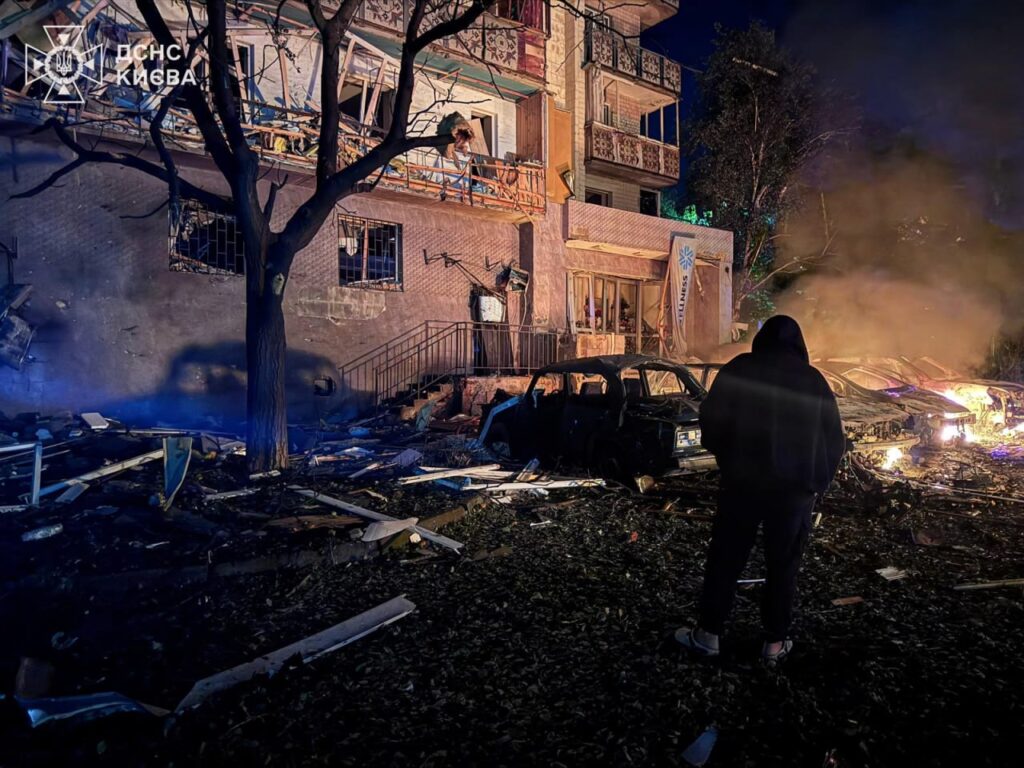
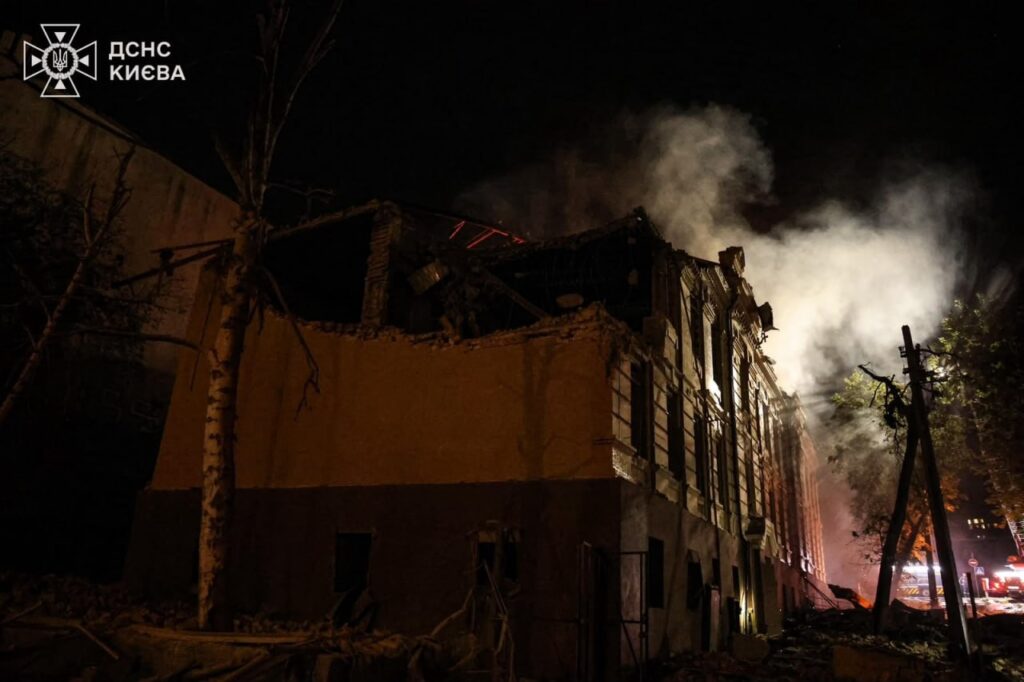
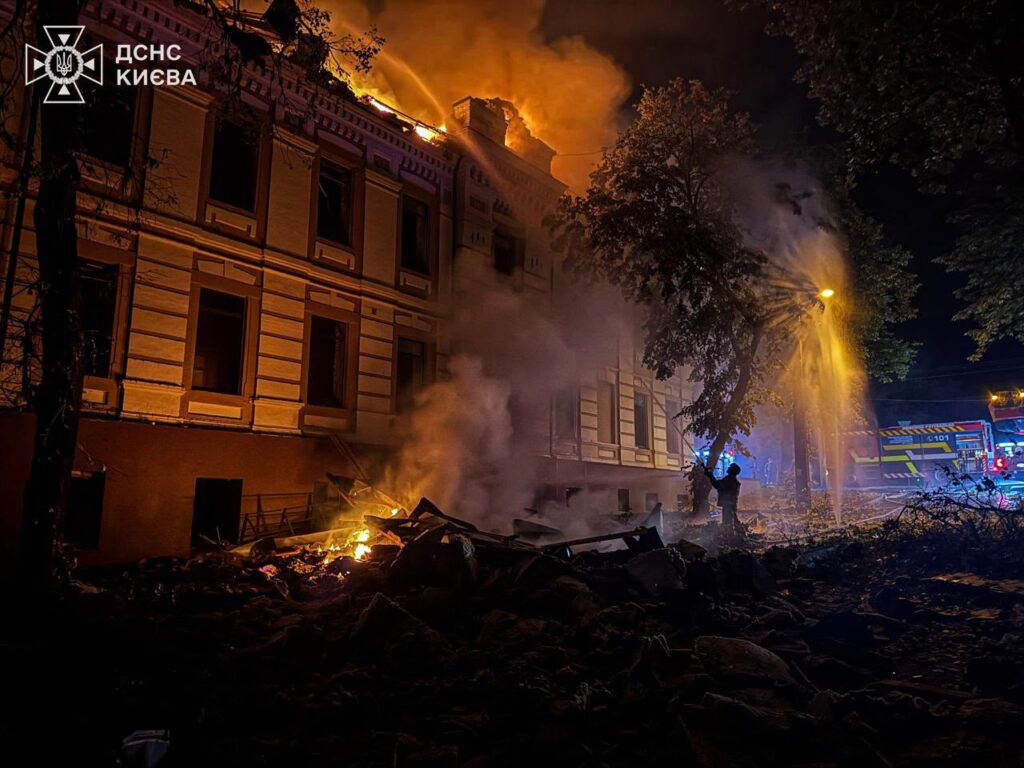
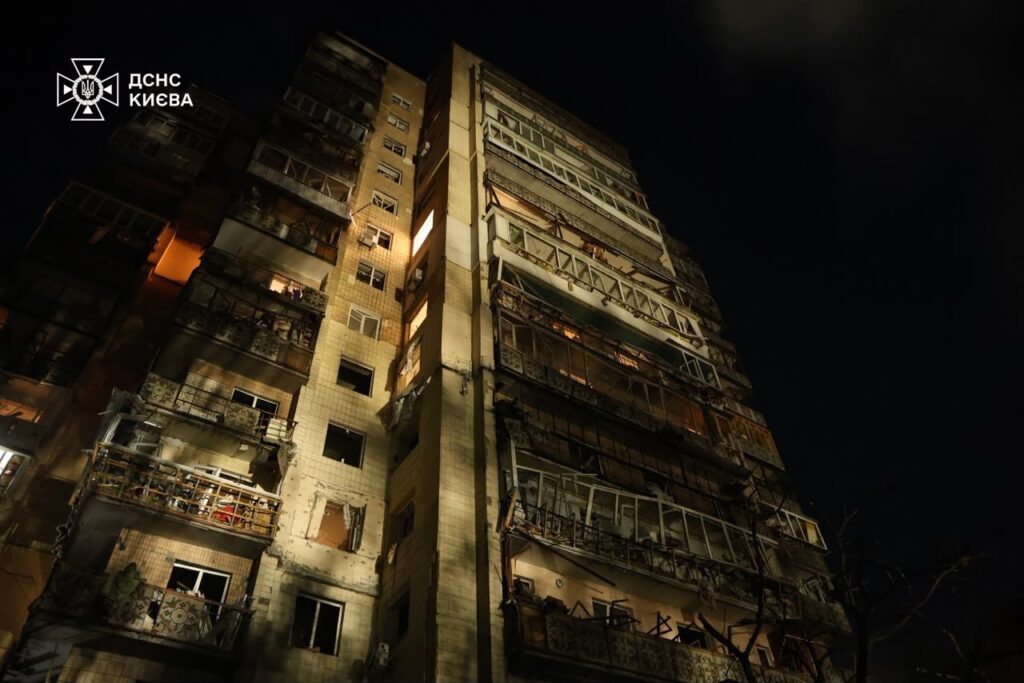
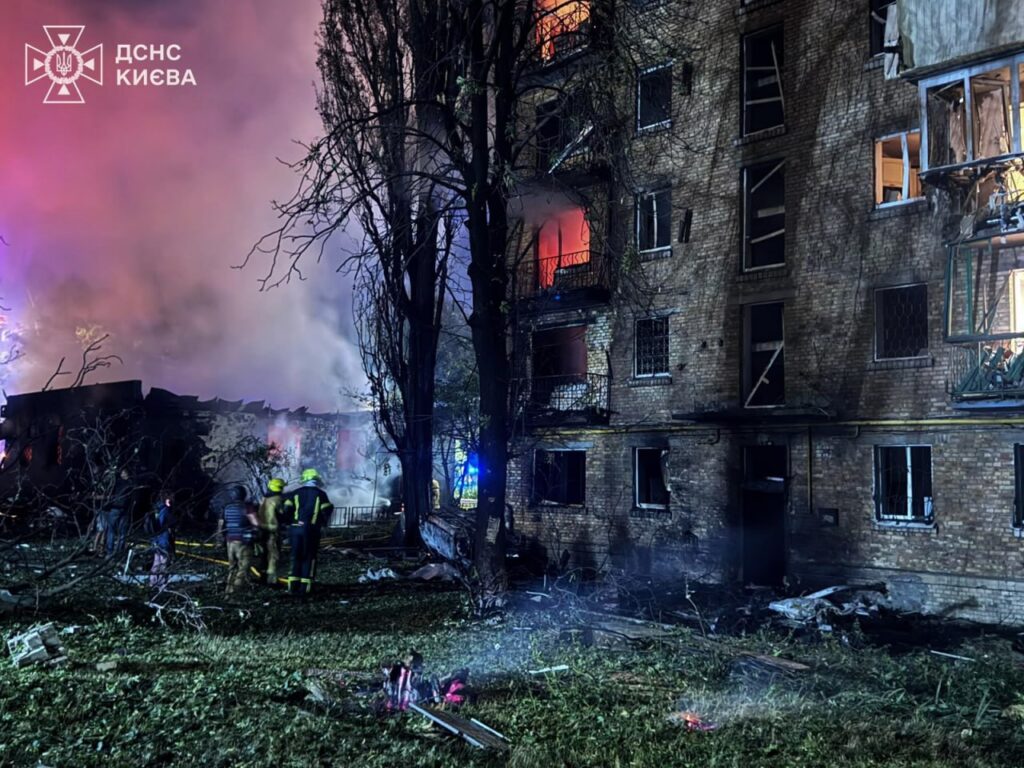
Aftermath of a massive Russian ballistic missile attack on Kyiv, 19 July 2026. Photo: Ukraine's State Emergency ServiceAftermath of a massive Russian ballistic missile attack on Kyiv, 19 July 2026. Photo: Ukraine's State Emergency Service
The attack featured some of Russia's most difficult weapons for Ukraine to intercept. Unlike drones or cruise missiles, ballistic missiles travel at extremely high speeds and require specialized anti-ballistic systems such as the US-made Patriot, which Ukraine has repeatedly said remain in limited supply.
The missiles' extreme speed also sharply reduces warning time for civilians. While drone attacks can often be tracked for hours, ballistic missiles can reach Kyiv within minutes of launch, leaving residents with only a short time to seek shelter after air raid sirens sound.
Kyiv was the main target
The Ukrainian Air Force said Russia launched a total of 166 aerial weapons overnight, including 41 missiles and 125 drones, with Kyiv identified as the primary target.
The missile barrage included 25 Iskander-M and S-400 ballistic missiles, 10 Zircon hypersonic missiles, three Oniks anti-ship missiles, and three Kh-59/69 guided air-launched missiles. Russia also launched 125 Shahed attack drones and other unmanned aerial vehicles, including decoys and loitering munitions.
Ukraine's air defenses intercepted or suppressed 126 incoming targets, including 18 missiles and 108 drones. According to the Air Force, 23 missiles and 10 attack drones nevertheless struck targets at 20 locations, while debris from intercepted drones fell at another 18 sites.
Russia hit Kyiv with a massive missile barrage on 19 July, and monitoring channels are putting the number at roughly 40 ballistic missiles in a single strike
The main part of the ballistic assault unfolded in less than an hour, with successive missile launches striking the capital before emergency responders could fully assess the initial impacts.
The attack damaged residential buildings, offices, warehouses, vehicles, and other civilian infrastructure across at least five districts of Kyiv, including Solomianskyi, Shevchenkivskyi, Dniprovskyi, Desnianskyi, and Sviatoshynskyi, according to Ukraine's State Emergency Service (DSNS).
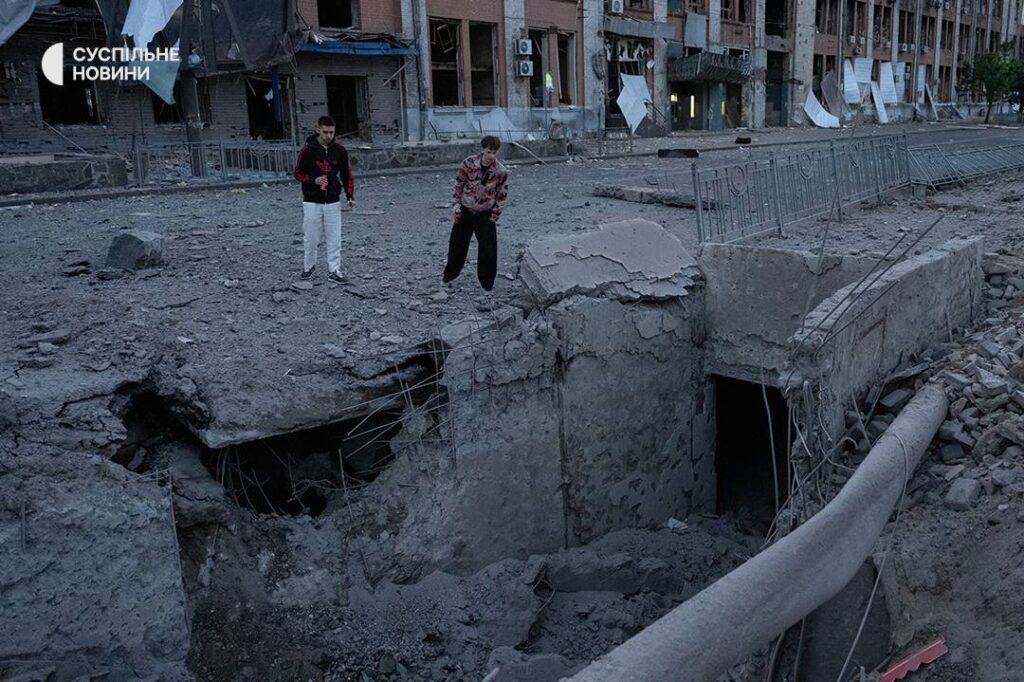
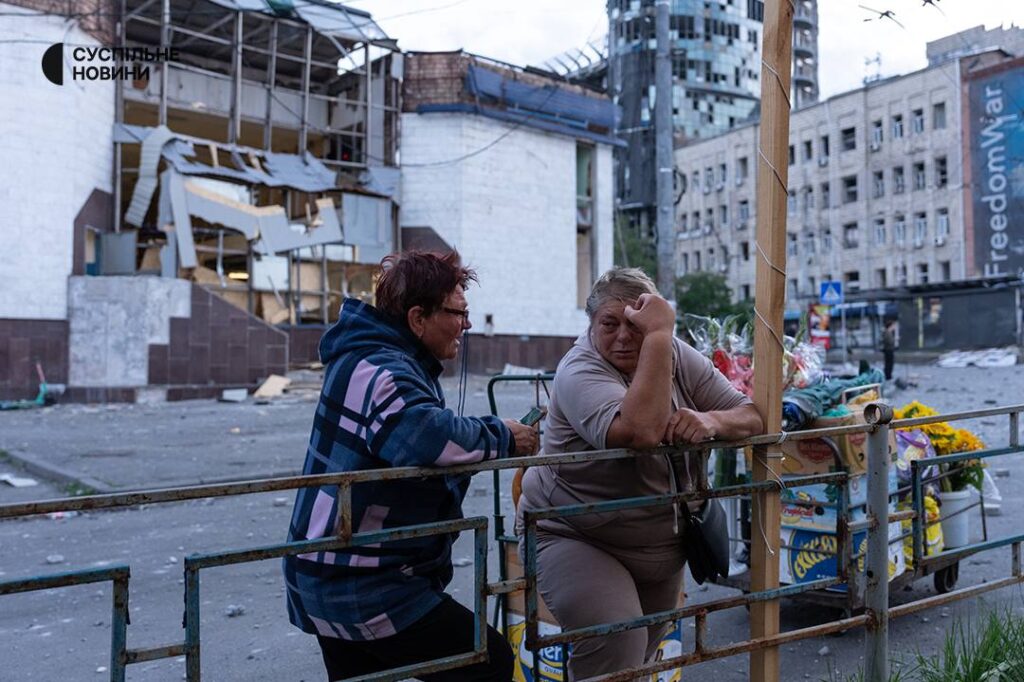
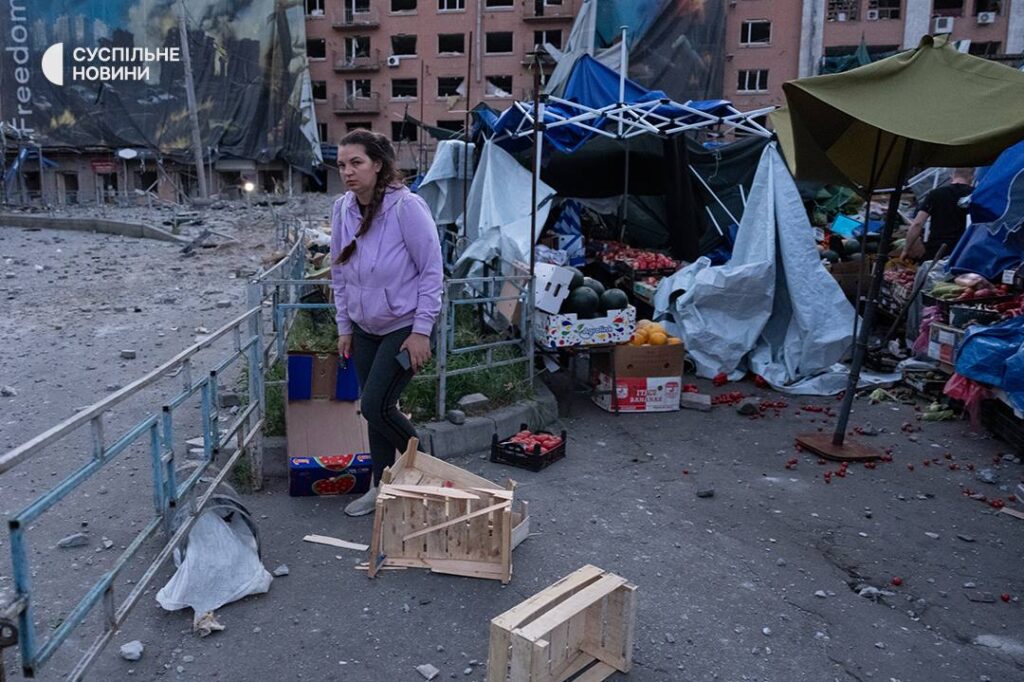
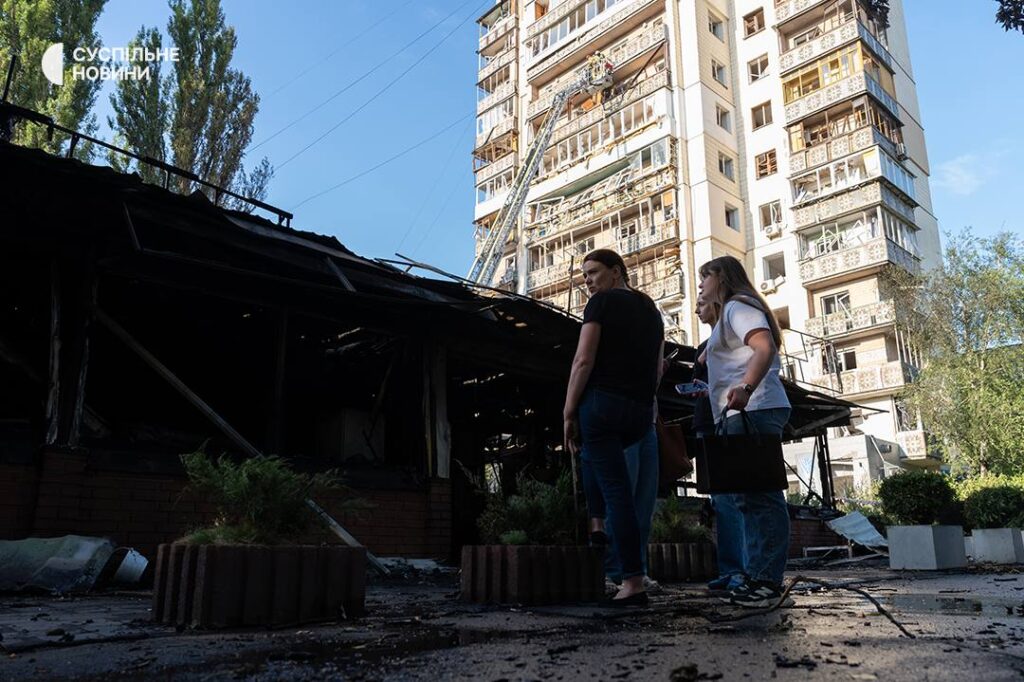
One of the hardest-hit locations was the area around Lukianivska metro station in Kyiv's Shevchenkivskyi district, where explosions damaged civilian buildings and sparked multiple fires. The neighborhood was also heavily struck during a Russian missile attack in May, when widespread destruction was recorded around the station.
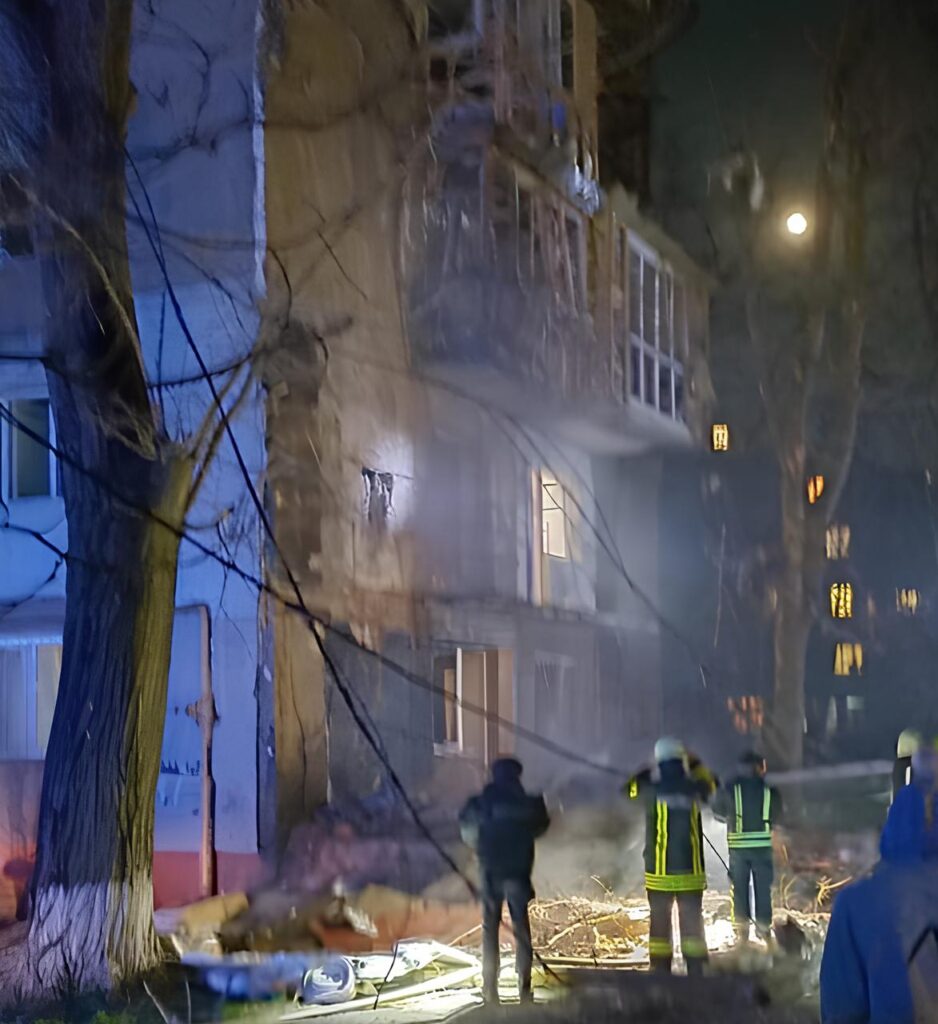
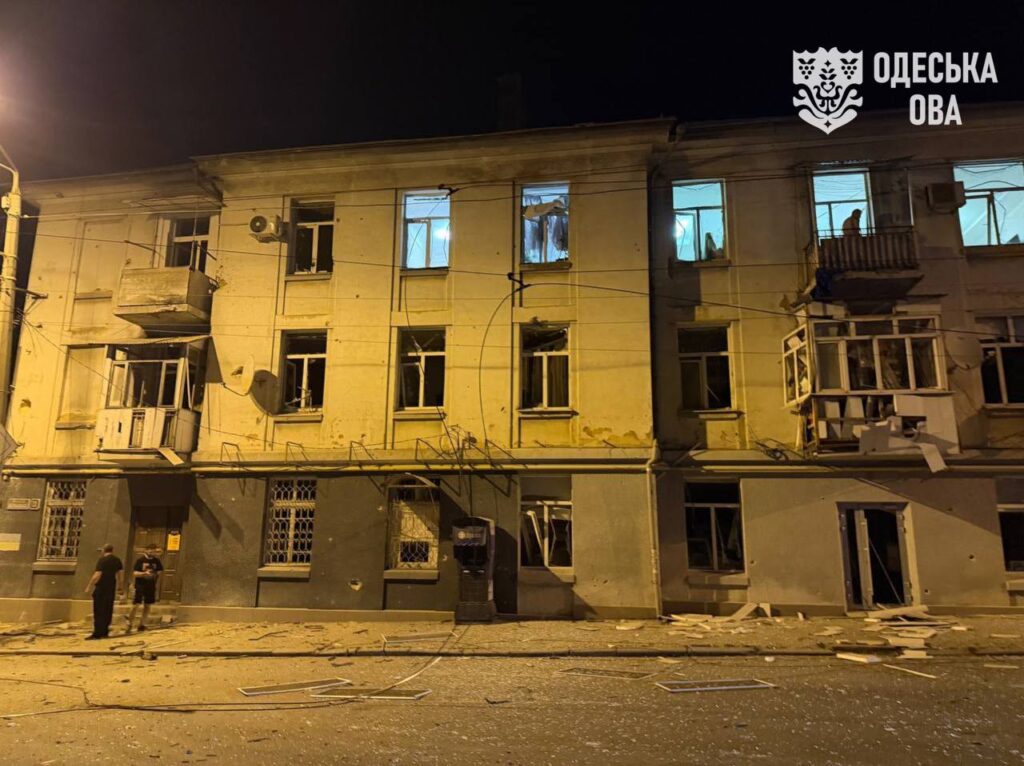
Aftermath of a massive Russian ballistic missile attack in Kyiv's Lukianivka district, 19 July 2026. Photo: SuspilneAftermath of a massive Russian ballistic missile attack in Kyiv's Lukianivka district, 19 July 2026. Photo: SuspilneAftermath of a massive Russian ballistic missile attack in Kyiv's Lukianivka district, 19 July 2026. Photo: SuspilneAftermath of a massive Russian ballistic missile attack in Kyiv's Lukianivka district, 19 July 2026. Photo: Suspilne
This is what the entrance to Kyiv's Lukianivska metro station looks like right now, damaged after tonight's ballistic missile attack
A subway entrance in ruins, in the capital of a European country, in 2026 Kyiv Info pic.twitter.com/4PSUygSagZ
In Solomianskyi district, firefighters battled blazes in an office building, residential buildings, and other structures. A five-story apartment building sustained significant damage, and later in the day rescuers removed unstable facade sections and balconies to protect residents.
In Shevchenkivskyi district, emergency crews extinguished fires in a three-story building, non-residential facilities, and more than 10 parked vehicles. The attack's only confirmed fatality was recovered there during rescue operations.
Aftermath of a massive Russian ballistic missile attack on Kyiv, 19 July 2026. Photo: Ukraine's State Emergency ServiceAftermath of a massive Russian ballistic missile attack on Kyiv, 19 July 2026. Photo: Ukraine's State Emergency Service
Elsewhere, fires broke out in a dormitory, private homes, industrial buildings, and vehicles across the city. By late morning, the DSNS said all fires caused by the attack in Kyiv had been extinguished, although recovery operations continued.
Ukraine's emergency responders spent the night battling the aftermath of Russia's largest ballistic missile attack on Kyiv since the start of the full-scale invasion.
More than 40 missiles struck the capital in under an hour, killing one person and injuring at least 16.… pic.twitter.com/SUcdBnah1y
The assault also caused major destruction in Kyiv Oblast. In Bucha district, Russian strikes ignited a massive fire covering about 100,000 square meters across two warehouse buildings. More than 200 firefighters, 73 vehicles, and three helicopters were deployed to contain the blaze.
Russian strikes ignited multiple large fires in Kyiv Oblast's Bucha district overnight, setting warehouses and a logistics facility ablaze.
Emergency crews responded to several impact sites as firefighters worked to contain the blazes. According to preliminary information, two… pic.twitter.com/siqmjqHlMZ
Zelenskyy said Russia launched around 1,450 attack drones, more than 1,640 guided aerial bombs, and 99 missiles against Ukraine over the past week alone, causing casualties and destruction across numerous regions.
Calling protection against ballistic missiles Ukraine's "constant and highest priority," the president urged partners to accelerate deliveries of Patriot interceptors and other anti-ballistic capabilities, saying each new air defense package "literally saves lives" during Russia's increasingly frequent mass missile attacks.
He also called for continued sanctions pressure on Moscow, warning that delays in new measures give Russia time to prepare further strikes and adapt to existing restrictions.
A Russian missile killed a 16-year-old boy in Odesa. Russian forces struck civilian infrastructure in Odesa Oblast on the evening of 18 July, wounding at least seven other residents, the Odesa Oblast Prosecutor's Office said.
Prosecutors opened a war crimes investigation under Part 2 of Article 438 of Ukraine's Criminal Code.
The strike came at the end of a week that had made Odesa one of Russia's most hit targets. Odesa's ports carry more than 90% of Ukraine's agricultural exports.
The evening attack damaged two private houses, buildings at a sports-and-entertainment complex, and eight cars, according to prosecutors.
Russia hit recreation park with families
Beyond the 16-year-old killed, the wounded included a two-year-old child, four women aged 22 to 28, and two men aged 27 and 40, all hospitalized.
Oblast administration head Oleh Kiper reported that a missile hit a recreation park, destroying fishermen's houses, and that people might still be under the rubble as a search-and-rescue operation continued. The casualty figures were still being clarified late on 18 July.
Eyewitnesses posted video of people digging through sand and debris by hand, apparently in the moments right after the missile struck, searching for anyone trapped.
Toll was still being counted late on 18 July
The information from the scene shifted through the evening, as it typically does in the hours after a strike.
Kiper initially reported two people killed and four wounded, including a child, at the recreation park, with people possibly still trapped under the rubble. He said a second location in another settlement saw a residential building and two cars damaged, with one person hurt.
The Security Service of Ukraine's Odesa directorate is conducting the pre-trial investigation and documenting the strikes as war crimes.
Odesa has been under sustained fire for over week
The 18 July strike is the latest in a campaign that has hammered Odesa and its ports throughout July. From 11 to 15 July, Russian strikes hit three Greater Odesa ports and the merchant ships anchored there, cutting the region's grain-export capacity by roughly a third, perReuters.
The civilian toll has run alongside the economic one. On 16 July, a Russian strike on Odesa killed Olena Arkhipova, a Red Cross first-aid instructor and single mother of three, as she hurried to shelter with her children; the children survived.
Ukrainian citizen Olena Arkhipova has been teaching other people how to keep someone alive since 2023. She was killed on the evening of 16 July, hurrying to a shelter with her three children when a Russian missile struck Odesa. The Ukrainian Red Cross Society (URCS) said her children survived and are receiving all necessary care.
Russia spent hammering Odesa for about a week, targeting Greater Odesa ports and the merchant ships anchored there, killing civilians in strikes on apartment buildings, homes, and shipping, and cutting the region's grain-export capacity by roughly a third, Reuters reports. Odesa's ports carry more than 90% of Ukraine's agricultural exports.
She was one of two people killed in the strike, which hit the Khadzhybeiskyi district and wounded at least eight others, including three children, according to Serhiy Lysak, head of the Odesa City Military Administration.
Arkhipova raised three children on her own. She joined the Ukrainian Red Cross in 2023 as a first-aid instructor, and in 2026 also became an instructor in first aid for animals.
Arkhipova taught people whose job is to respond
She lived in Odesa and gave herself to helping others. She ran first-aid training for workers of Ukraine's State Emergency Service and the National Police, for adults and children, for anyone who wanted to learn skills that save lives. She was an active volunteer with the Odesa regional branch of the Ukrainian Red Cross.
Colleagues describe a person who came when called
"For colleagues and friends, Olena will forever remain a bright, sincere, responsible person who was always ready to come to the aid of others," the URCS said.
According to the organization, "she taught others to save lives and every day proved by her own example that humanity, care, and not being indifferent are capable of changing the world."
The organization offered condolences to her family, her friends, and the whole volunteer community.
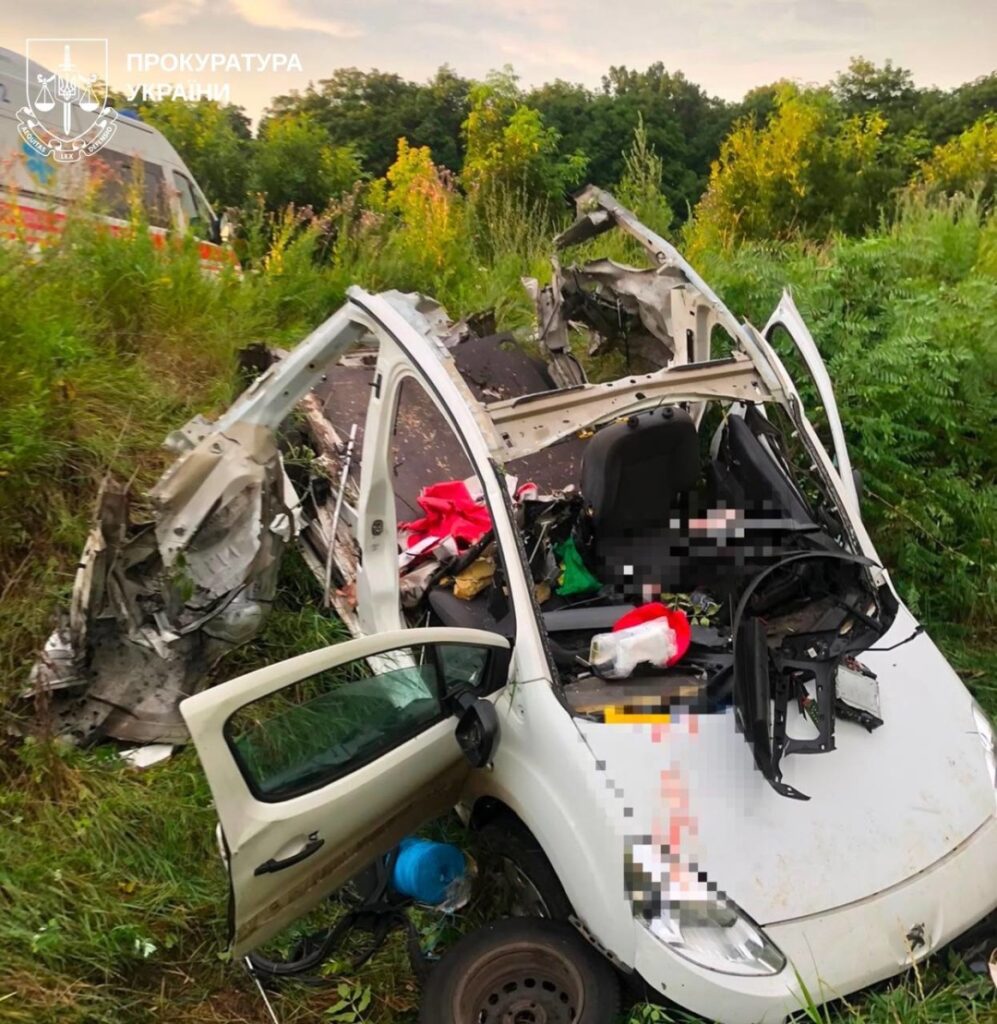
A Russian drone killed a man driving his car in Kharkiv Oblast. The strike hit a Peugeot on the Zolochiv-Maksymivka road near the village of Berezivka in Bohodukhiv raion on the evening of 14 July, killing the 61-year-old driver, the Kharkiv Oblast Prosecutor's Office said on Telegram. The drone was preliminarily identified as a Molniya.
The precise hit on the moving car suggests that the Molniya was piloted in real-time.
Prosecutors opened a pre-trial investigation into a war crime that caused a death, under Part 2 of Article 438 of Ukraine's Criminal Code. Russian drones hunting civilian cars on Kharkiv Oblast roads is a documented pattern.
In October 2025, a Russian Molniya drone hit a car in the Kupiansk district, wounding a 37-year-old volunteer, and an FPV drone killed two men in another car in the same raion two hours later. Both were classified as war crimes.
Molniya is cheap, common, and now flies itself
The Molniya is among the cheapest weapons in Russia's arsenal. It is a low-cost kamikaze drone built close to the front, reliable and ubiquitous. Russia launches up to ten a day on the Zaporizhzhia axis alone.
Ukraine shot down an AI-equipped Molniya over Zaporizhzhia for the first time on 9 July. The AI variant has no antenna, no operator link, and no emissions for a detector to catch, making electronic warfare useless against it. Ukraine's answer is kinetic interception. Defense Ministry adviser Serhii Beskrestnov has warned that a fiber-optic Molniya is already in testing, which would emit no radio signal at all.
Russia's terror documented
Ukraine's Prosecutor General's Office has documented over 11,000 Russian FPV attacks on civilians since 2024, with 2,010 recorded in the first four months of 2026 alone.
The road between Zolochiv and Maksymivka is a public road in a Ukrainian oblast. A man was driving home on it.
Earlier, a Russian FPV drone killed a 57-year-old hospital worker walking along a road in the same oblast — the last resident of the border village of Tokarivka Druha.

 Connexion


 Realnyi Kyiv