❌

Vue normale

  • ✇Euromaidan Press
  • 15-kilometer flight into kill zone: Ukraine’s drone rescues wounded soldier by air
    Stranded and wounded for 57 days, a Ukrainian soldier was finally flown out by drone. Andrii, callsign Donbas, 54, had lost a foot and could not be reached by the usual means at a position about two kilometers from the Russian border until fighters of the CODE 9.2 unit used the StarGate aerial evacuation system to lift him out, RBC-Ukraine reports. Getting the wounded off the battlefield has become one of the deadliest tasks of the war. Aerial drones like StarGate can reach positions th
     

15-kilometer flight into kill zone: Ukraine’s drone rescues wounded soldier by air

2 novembre 2026 à 15:31

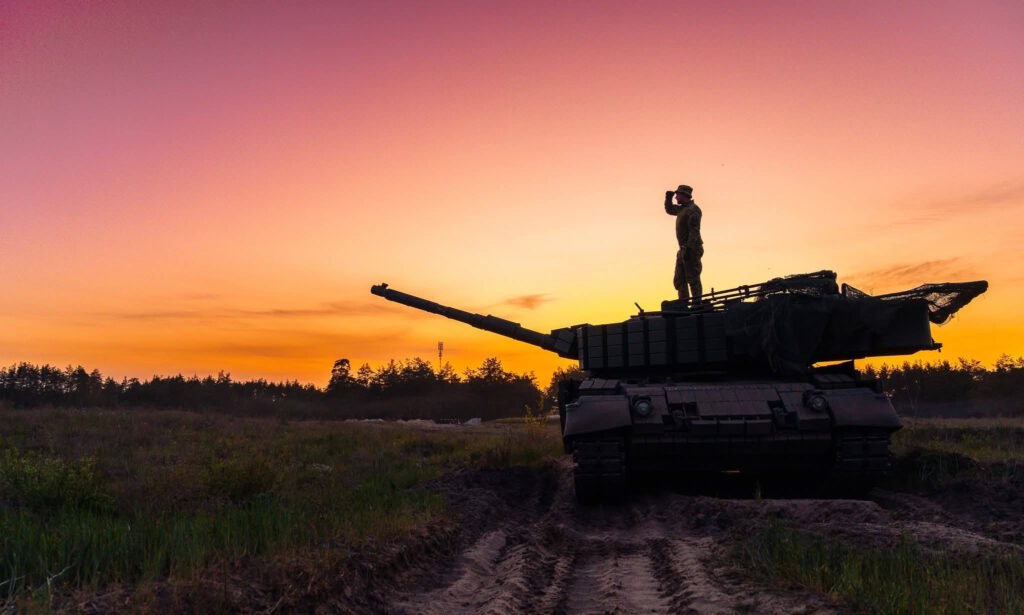
A Ukrainian soldier standing on a tank. Source: The 5th Separate Heavy Mechanized Brigade

Stranded and wounded for 57 days, a Ukrainian soldier was finally flown out by drone. Andrii, callsign Donbas, 54, had lost a foot and could not be reached by the usual means at a position about two kilometers from the Russian border until fighters of the CODE 9.2 unit used the StarGate aerial evacuation system to lift him out, RBC-Ukraine reports.

Getting the wounded off the battlefield has become one of the deadliest tasks of the war. Aerial drones like StarGate can reach positions that ground vehicles and crawling robots cannot, opening a way out where soldiers were once left to wait.

A 15-kilometer flight to a position no one could reach

To reach Andrii, the StarGate drone flew about 15 kilometers to his position and carried him out of the exposed area; he is now in a hospital receiving treatment.

StarGate, a purpose-built aerial medical-evacuation drone from the Ukrainian company SkyFall, has been in front-line testing only since mid-October, and this was its third evacuation.

Unlike the ground robots Ukraine usually relies on, which mud, mines, or a single Russian strike can stop, it flies over the terrain that traps them.

A Ukrainian heavy drone flew about 15 km to rescue Andrii, 54, a soldier who lost a foot and waited 57 days to be evacuated

It was the third battlefield evacuation by the StarGate drone. Andrii is now in a hospital
🎥 Operaivno ZSU pic.twitter.com/5adxCm98RU

— Euromaidan Press (@EuromaidanPress) November 2, 2026

Ukraine is racing to carry its wounded out, and still losing some

The flight is one answer to a problem of evacuation for Kyiv. Over the past year it has shifted much of its casualty evacuation onto unmanned ground vehicles, known as NRKs, which have run more than 100,000 supply and evacuation missions this year and carry the wounded in armored capsules.

But the robots are slow and easy to hit: in one case, the 1st Separate Medical Battalion needed seven attempts and lost six robots over 33 days to bring out a single soldier kept alive by a tourniquet.

Crewed armor is no safer: Tetiana Chornovol, a platoon commander, has described how, during one rescue, her combat vehicle, fitted with electronic warfare and an anti-mine grader, blew up on an anti-tank mine dropped by a drone, and a second vehicle lost its driver’s legs to another.

Most units still lack dedicated evacuation teams, and the shortage of medical-evacuation vehicles has been put as high as 80%. A drone that simply flies over the mines is built for the positions none of that can reach.

  • ✇Euromaidan Press
  • Ukraine turns old BTR into rolling bomb — then drove it straight into Russian lines, battalion commander says
    Ukrainian troops have turned a worn-out armored carrier into a crewless bomb on wheels. Engineers fitted an old BTR, a Soviet-type armored personnel carrier, with a remote-control system, packed it with explosives, and drove it into Russian positions, where it detonated, says Andrii Kupriianov, callsign Darwin, a Hero of Ukraine and battalion commander in the 125th Brigade, in an interview with Glavcom. The improvised bomb-carrier is one corner of a fast-growing shift to ground robots,
     

Ukraine turns old BTR into rolling bomb — then drove it straight into Russian lines, battalion commander says

2 novembre 2026 à 09:43

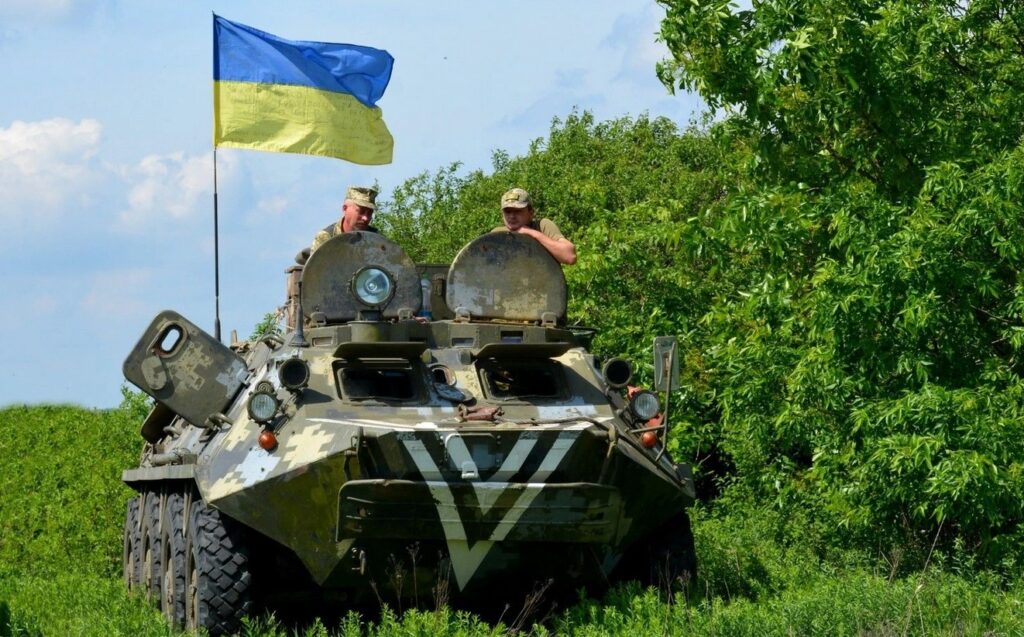
A BTR-60B. Source: Ukraine's Ministry of Defense.

Ukrainian troops have turned a worn-out armored carrier into a crewless bomb on wheels. Engineers fitted an old BTR, a Soviet-type armored personnel carrier, with a remote-control system, packed it with explosives, and drove it into Russian positions, where it detonated, says Andrii Kupriianov, callsign Darwin, a Hero of Ukraine and battalion commander in the 125th Brigade, in an interview with Glavcom.

The improvised bomb-carrier is one corner of a fast-growing shift to ground robots, which Ukraine is pushing to the front for the jobs that get soldiers killed. Those machines now haul ammunition and food, carry out the wounded and even fight, in missions that have multiplied over the past year, sparing troops the deadliest trips across open ground.

An old carrier sent in without a crew

Kupriianov said his forces installed a remote-control system on the BTR so it could be driven with anyone inside.

“They packed it with explosives and sent it straight at Russian positions, where it blew up and caused great damage,” he shared with the journalists.

It is the kind of improvisation Ukrainian units have used elsewhere, converting Western armor the same way, including an M113 carrier turned into an unmanned machine for mine-clearing and logistics.

The jobs robots now do so soldiers don’t have to

Across the Defense Forces, ground robotic complexes are increasingly taking on tasks that once fell to people, Kupriyanov said, logistics above all: the robots carry ammunition and food to the line, so troops leave cover and cross open ground less often.

“Previously a soldier had to walk far for ammunition and carry it back. It took a lot of time, sometimes days. It was dangerous, because the soldier could be spotted from the sky and hit. No guaranteed result: sometimes you simply couldn’t get there. The robot simplifies this work,” Kupriianov explained.

The machines also pull out the wounded and the dead, he added: a casualty can be laid on the complex and carried to safety, where before it took several soldiers to evacuate one wounded man, baring their positions and risking more lives.

The Oleshky truce saved hundreds, but Russia used it to bring fresh troops, armor, and fuel within nine kilometers of Kherson, marines say

2 novembre 2026 à 08:08

Drone footage shows Russian armor in occupied Oleshky during the humanitarian truce

Russian forces used the six-day ceasefire around occupied Oleshky to rotate units, fortify positions, expand anti-drone protection on roads, and bring up ammunition, Ukraine’s General Staff said on 2 November.

US First Lady Melania Trump, who coordinated the truce, wrote that she hoped Oleshky would serve “as a foundation for lasting peace.” The truce ended on 1 November. Sky News could not release the footage until the evacuees had reached Ukrainian-held territory, a journalist who worked on the report said. That footage shows Russian armor and supplies moving into Oleshky, nine kilometers from Kherson, during the pause. That suggests the next humanitarian ceasefire may come at a military price, and the marines across the river expect to fight a resupplied enemy.

Armored vehicles on the streets, aid carried off from the hospital

Sky News correspondent Stuart Ramsay watched the operation from the control center of the 34th Separate Marine Brigade. Even before the evacuation began, armored vehicles were on Oleshky’s streets, and soldiers with large rucksacks were filing into buildings with basements. After the convoy left on 30 October, one black vehicle peeled off and delivered supplies to Russian soldiers, Ukrainian military intelligence told Sky. Russian troops then carried boxes and sacks of aid out of the hospital to their positions.

The brigade’s commander, Lieutenant Colonel Dmytro Pulinets, told Sky what the brigade had recorded Russia doing:

  • repairing or replacing its artillery
  • retaking abandoned positions
  • rotating the troops cut off in Oleshky
  • bringing in new forces, aerial reconnaissance equipment, and fuel

The evacuation should have happened sooner, last year, he said. But “this is going to create a great deal of work for us once the ceasefire ends.”

Yana Borysova, Sky’s source inside the town, is now safe. She said Russian forces had “already brought in tanks, armored personnel carriers and soldiers.”

Bodies taken to occupied Henichesk

The footage also shows bodies being carried out of the hospital grounds in double body bags on 30 October and loaded onto a truck under Russian soldiers’ supervision. “Over 30 have been held there,” Ramsay said. Residents told Sky the dead had been killed in violent circumstances.

“There will be no investigation or inquiry into what happened to them,” Ramsay added.

Bodies are carried out of the hospital grounds in Russian-occupied Oleshky during the humanitarian truce
Bodies are carried out of the hospital grounds in Russian-occupied Oleshky during the humanitarian truce, 30 October 2026. Screenshot: Sky News / YouTube

On 1 November, Kherson journalist Oleh Baturin reported that 47 bodies kept in the hospital basement since May had been taken to occupied Henichesk, citing volunteer Kseniia Arkhipova. It is not clear whether they include the bodies in Sky’s footage. In September, Arkhipova told Ukrainska Pravda that Russian forces barred burials. She said they wanted the bodies examined in Henichesk to produce reports blaming Ukraine’s army. Tetiana Hasanenko, head of the Oleshky City Military Administration, put the number of bodies in the basement at about 100 at the time. Occupation authorities have long kept families from recovering their dead.

Nearly 800 out, as many as two-thirds stayed

Melania Trump also said the mission had evacuated nearly 800 people. She did not say how many went to Ukrainian-held territory and how many to Russia. Sky’s sources said as many as two-thirds of residents stayed in Oleshky. Those evacuated to Ukrainian-held territory were taken out through Russia and Belarus, Sky reported, and crossed the border on 31 October.

❌