FlyDubai Passenger Who Helped Subdue Pilot Describes Stabbing Attack in Cockpit

© Erik Marmor/Getty Images


© Erik Marmor/Getty Images


© Luke Sharrett for The New York Times


© Jack Guez/Agence France-Presse — Getty Images


A Ukrainian combat simulator can now be found and ordered in NATO's supply catalogs by a single code. L7 Simulators, whose trainers have prepared more than 500,000 Ukrainian troops, has had its entire lineup NATO-codified, with each device assigned a 13-digit NATO Stock Number, Defender Media reports.
L7's more than 50 trainers, from the Browning M2 to the Stinger to the NLAW, now carry those codes, and the company can codify new ones itself, opening the door to government procurement in Ukraine and across the alliance. It is another Ukrainian defense maker stepping toward NATO's standards and supply chain.
Every trainer gets a NATO number
A NATO Stock Number is a unique 13-digit code, a kind of military barcode for supplies, that lets defense logistics systems across the alliance identify, catalog, and purchase equipment. Every simulator in L7's catalog now has one, and the firm has also won the status to assign numbers to its future products directly, rather than starting the process over for each one.
The code identifies, not certifies
The company is careful about what the step does and does not mean. Codification is not a certification that the product meets NATO's technical standards, L7 stresses, but rather a mechanism for unambiguously identifying an item within the shared defense-logistics system.
The firm entered that system in December 2024, when its UNITS training platform, already cleared for use by Ukraine's Defense Ministry, received the first number.
Half a million have trained on them
L7's range runs to more than 50 types of trainers, tied together in a single ecosystem the company calls UNITS: fire-training systems, anti-tank and air-defense simulators, and trainers for unmanned aircraft, with models for the Stinger, NLAW, Carl Gustaf, RPG-7, and SPG-9 among them.
The simulators are used by the armed forces, the National Guard, and other security agencies, and more than 500,000 service members have trained on them, with over 70,000 of them free of charge at the company's own training center.


© vie Agence France-Presse

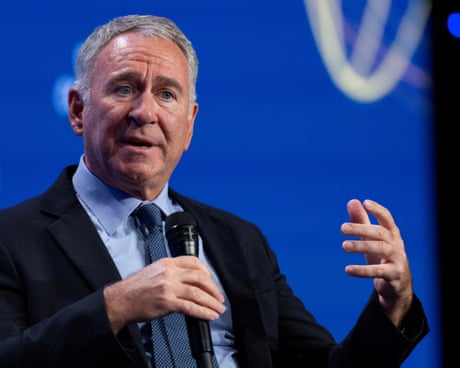
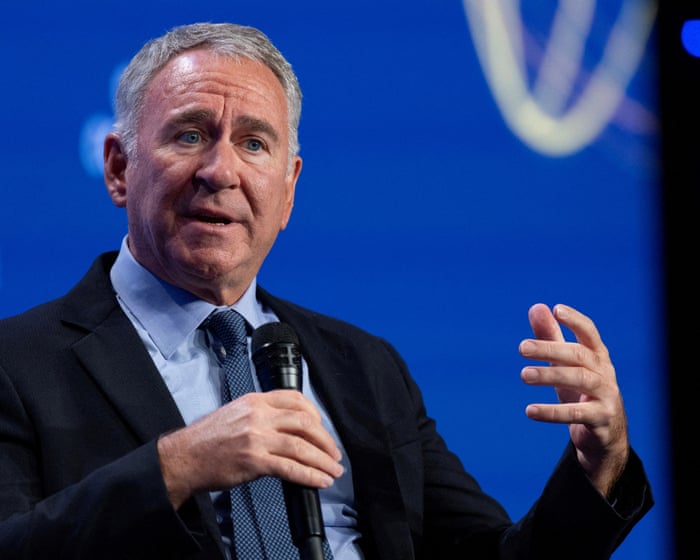
Unprecedented university donation from Citadel CEO Ken Griffin will go toward building a new Miami campus
Carnegie Mellon University will receive an unprecedented $3bn donation from the billionaire investor Ken Griffin, making it the largest single donation in the history of US education.
Griffin, 57, is the founder and CEO of Citadel, described as the most profitable hedge fund in history. The money is going toward a new Miami campus as well as big investments at the university’s longtime home in Pittsburgh.
Continue reading...
© Photograph: Mike Blake/Reuters

© Photograph: Mike Blake/Reuters

© Photograph: Mike Blake/Reuters


© Ohad Zwigenberg/Associated Press


© Agence France-Presse — Getty Images


© Emil Salman/Pool, via Associated Press


© Agence France-Presse — Getty Images

After switching tactics, federal agents are detaining and deporting record numbers of people from the US
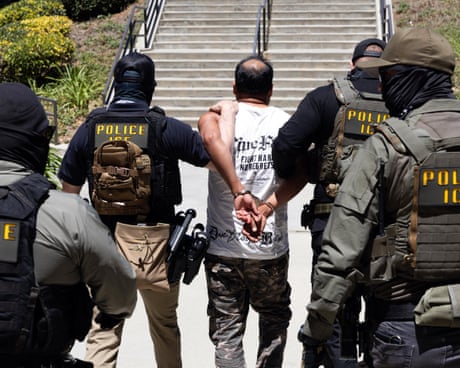
When federal agents fatally shot US citizen protesters Alex Pretti and Renee Good in Minneapolis in January during the nation’s largest immigration-enforcement operation ever, it marked a turning point for the second Trump administration’s mass deportation campaign.
Donald Trump in his second term had sparked outrage and huge protests with federal immigration officers descending en masse to one Democratic-run city after another in what some leaders called militarized “invasions”. Los Angeles, Chicago, Charlotte, New Orleans, then Minneapolis saw lines of masked and armored officers swaggering into town to conduct street arrests, ambushes of day workers waiting in Home Depot car parks for hire, and neighborhood sweeps. Adults and kids were whisked off to detention and protests met with aggressive deployment of chemical spray, teargas, fists and batons. The killings in Minneapolis were the culmination of what appeared to many to be a federal shock force increasingly out of control while being defended by federal leaders – and public opinion broadly turned against this violence.
Continue reading...
© Photograph: Blake Fagan/AFP/Getty Images

© Photograph: Blake Fagan/AFP/Getty Images

© Photograph: Blake Fagan/AFP/Getty Images

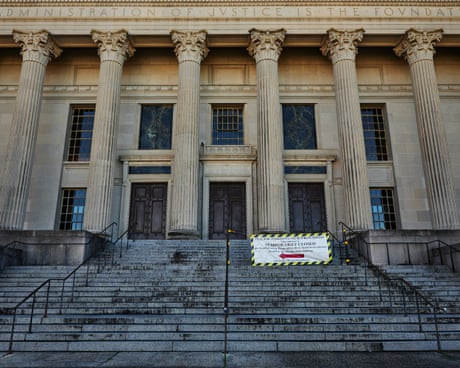
Kimya Holmes’ police report over a news segment on a real-estate transaction invokes law that no longer exists
A New Orleans state court judge filed a police complaint against a local CBS affiliate after it aired a segment scrutinizing a real-estate transaction in which she was involved, with the jurist invoking a section of law that no longer carries criminal penalties, according to the journalist who reported the story.
The situation centering on New Orleans criminal court judge Kimya Holmes and investigative reporter David Hammer was only the latest in a series of high-profile matters pitting Louisiana journalists against members of the state’s court system.
Continue reading...
© Photograph: Edmund D Fountain/The Guardian

© Photograph: Edmund D Fountain/The Guardian

© Photograph: Edmund D Fountain/The Guardian


© Ulysses Ortega for The New York Times


The company that actually assembles Russia's homegrown answer to Starlink has been left off every Western sanctions list, a US research group and a Ukrainian anti-corruption watchdog separately told Euromaidan Press this month.
Both landed on the same gap—the manufacturer, Bureau 1440, and its leaders remain untouched by the West, even though Kyiv has already placed the firm on Ukraine's own sanctions list. They differ on how much a Western designation would achieve, not on where the opening is.
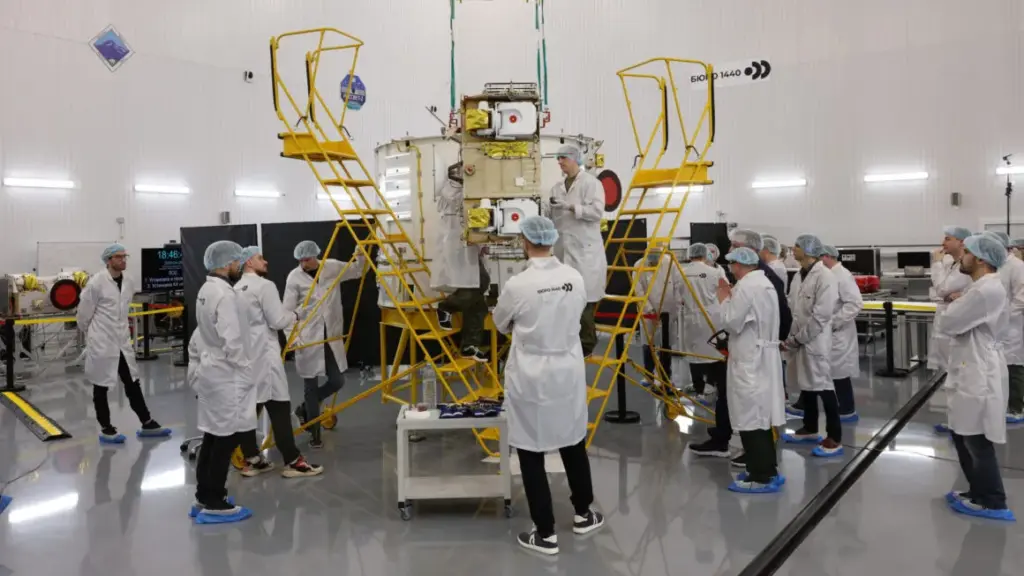
Rassvet is Russia's low-Earth-orbit satellite constellation, built by the private firm Bureau 1440 to give Moscow's troops communications independent of SpaceX. Bureau 1440 launched its first 16 satellites in March 2026, building the network after SpaceX cut off the Russian units' unauthorized Starlink access. C4ADS, a US-based research organization, confirmed to Euromaidan Press that Bureau 1440 and its leadership sit outside every Western sanctions regime, and called designating the manufacturer the single most visible and effective step available.
Viktoriia Vyshnivska, a senior analyst at the Independent Anti-Corruption Commission (NAKO), a Ukrainian watchdog, was more measured. "We shouldn't expect a magical effect," she said, but sanctions would make the Western boards and components Bureau 1440 depends on harder and costlier to source. Many of those goods are already banned under EU export controls, she noted—yet the manufacturer itself remains off the lists.
The EU has already moved once. Its 21st sanctions package, adopted on 23 July, targeted the Rassvet network but stopped short of the manufacturer, leaving Bureau 1440 and its chief executive off the lists. On 28 August, Ukrainian Foreign Minister Andrii Sybiha said Kyiv had sent a formal note to the UN's telecom agency requesting that Ukraine be excluded from Rassvet's coverage. Days later, he urged EU ministers to sanction the project. Ukraine gave partners a list of nine entities tied to it, Militarnyi reported, citing sources.
For years Ukraine could find, jam, or knock out the communication links Russian forces leaned on. Rassvet may be the first it cannot. Vyshnivska put the useful window to slow it at about a year. Russia, by Ukrainian calculations, needs five to eight years to see it through.
Euromaidan Press examined how Russia built Rassvet, and how far it still has to go.