❌

Vue normale

  • ✇Euromaidan Press
  • “Food must never be used as a weapon”: EU calls for Black Sea attack moratorium
    EU foreign-policy chief Kaja Kallas called for a moratorium on attacks in the Black Sea to restore safe navigation and allow Ukraine's grain exports to reach global markets. She made the call at a UN General Assembly side event co-chaired with the foreign ministers of France, Romania, and Ukraine on 22 September in New York. Since June, Russia has systematically struck Ukrainian ports, grain terminals, and commercial cargo ships in the Black Sea, killing crew members and crippling the e
     

“Food must never be used as a weapon”: EU calls for Black Sea attack moratorium

23 septembre 2026 à 12:27

food never used weapon eu calls black sea attack moratorium · post foreign-policy chief kaja kallas speaks press stakeout during un general assembly new york 23 2026 ukraine news ukrainian

EU foreign-policy chief Kaja Kallas called for a moratorium on attacks in the Black Sea to restore safe navigation and allow Ukraine's grain exports to reach global markets. She made the call at a UN General Assembly side event co-chaired with the foreign ministers of France, Romania, and Ukraine on 22 September in New York.

Since June, Russia has systematically struck Ukrainian ports, grain terminals, and commercial cargo ships in the Black Sea, killing crew members and crippling the export corridor that carries the bulk of Ukraine's agricultural output. The campaign—part of Russia's broader war, now in its fifth year—has disrupted global food supply chains and pushed the Black Sea toward a crisis the EU warned could surpass the 2022 grain-price shock.

Kallas said Black Sea exports have effectively ground to a halt since August because Russian attacks made commercial shipping unviable. The Gulf conflict and climate change are adding further pressure, she said. Ukraine supplies 15% of global corn exports, 10% of wheat, 15–20% of barley, and about 50% of sunflower oil, with around 90% moving through the Black Sea corridor, Kallas said. Egypt, the world's largest wheat importer, has shifted some purchases away from Russia and Ukraine as costs have risen.

"Food must never be used as a weapon in the Black Sea or anywhere else," Kallas said. "Wars make affordable food disappear from dinner tables of millions of people around the globe."

Kallas called the proposal a new "Black Sea grain arrangement," separate from the Black Sea Grain Initiative, a 2022 deal brokered by Türkiye and the United Nations that Russia left in July 2023. She said the 2022 grain-price surge showed the strategic importance of the Black Sea for global security, international trade, energy, and food security.

She called on the international community to ensure safe passage of civilian vessels, protect critical infrastructure, and restore the trade route. If Russia simply stopped its attacks in the Black Sea, farmers, traders, and international food markets would have the predictability they need at this critical moment, she said. In 2025 alone, the EU mobilized €2.1 billion to strengthen global food security, Kallas added, and the EU Solidarity Lanes have facilitated about €304 billion in trade since May 2022.

At a press stakeout on 23 September, Kallas said the EU was "particularly concerned by the attacks in the Black Sea" and that "Russia is trying to choke off Ukrainian grain exports, thus jeopardizing global food security."

Russia has not publicly responded to Kallas's call. In August, Moscow dismissed a similar proposal relayed by Türkiye, with Foreign Ministry spokeswoman Maria Zakharova stating it saw no grounds for measures that would give Kyiv a "temporary reprieve."

A summer of strikes

Russia intensified strikes on Ukrainian ports and commercial shipping in June and July. Those strikes cut Ukrainian deepwater terminal capacity from roughly 7 million to 4–5 million metric tons per month, according to Barva Invest analyst Bohdan Kostetskyi. Ukrainian forces, in turn, struck Russia's grain terminals at Novorossiysk and Taman. Those strikes and the suspension of navigation in the Sea of Azov since July took more than 90% of Russia's Azov–Black Sea grain export capacity offline by mid-August.

The cost of sailing

The Lloyd's of London Joint War Committee has extended its high-risk designation to the entire Black Sea, pushing war-risk insurance premiums to hundreds of thousands of dollars per voyage. Alternative routes through the Danube have partly compensated, but shipping from Ukraine to Egypt has taken 26–33 days, more than twice as long as before.

For Ukraine, restoring safer navigation would reopen its largest agricultural export route, reduce reliance on slower and more expensive alternatives, and help exporters move the harvest and earn foreign currency.

The attacks have not stopped. Overnight on 23 September, Russia struck a cargo ship under an Antigua and Barbuda flag in the Black Sea, killing its captain, a Ukrainian citizen, Ukraine's sea ports administration said. The Navy evacuated the crew and put out the fire.

  • ✇Euromaidan Press
  • Foreign volunteers retrain as drone operators as Ukraine’s battlefield changes
    Four foreign volunteers serving in the Babai rifle battalion are training to operate FPV drones in Ternopil Oblast in western Ukraine, where they have formed a dedicated drone team, Suspilne reported on 22 September. Ukraine's military increasingly looks to unmanned systems for roles traditionally carried out by soldiers. In May, an adviser to the commander of Ukraine's Third Army Corps said the corps planned to replace roughly 30% of its infantry with ground robotic systems by the end
     

Foreign volunteers retrain as drone operators as Ukraine’s battlefield changes

23 septembre 2026 à 08:46

foreign soldiers

Four foreign volunteers serving in the Babai rifle battalion are training to operate FPV drones in Ternopil Oblast in western Ukraine, where they have formed a dedicated drone team, Suspilne reported on 22 September.

Ukraine's military increasingly looks to unmanned systems for roles traditionally carried out by soldiers. In May, an adviser to the commander of Ukraine's Third Army Corps said the corps planned to replace roughly 30% of its infantry with ground robotic systems by the end of 2026 "to save the lives of our soldiers." The plan concerns ground robots rather than FPV aircraft, but reflects the broader move toward using unmanned systems on the battlefield.

From mortars to FPV drones

The team was assembled by Harry, a British volunteer who has fought in Ukraine since arriving in March 2022. He served as a machine gunner in Kharkiv and during the Kharkiv counter-offensive, as well as in Bakhmut and Zaporizhzhia.

Before coming to Ukraine, Harry served with People's Defense forces against ISIS in Syria. He said Ukraine's battlefield is fundamentally different, with drones and artillery making combat more dangerous.

foreign soldier
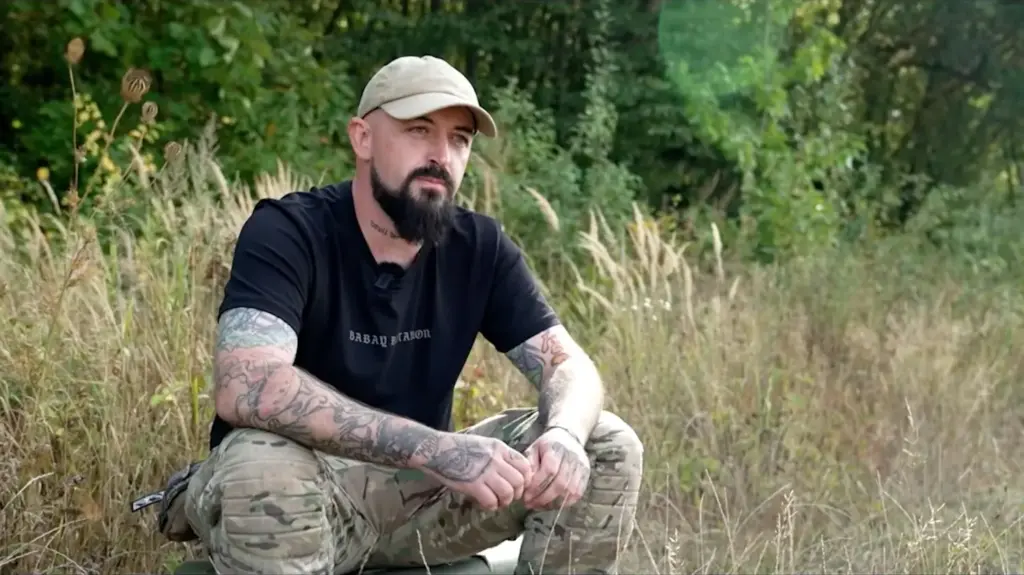
British volunteer Harry. Screenshot from video: Suspilne Ternopil

For Fuzzy, a former British Army infantryman and counterterrorism specialist, the transition came after more than two years as a mortar operator. He arrived in April 2022 and initially trained Ukrainian defenders before moving into combat roles.

Fuzzy said he had initially been reluctant to switch from mortars to FPVs but found the drones not as difficult to operate as he had expected after training for more than two months.

foreign soldier
Former British Army infantryman Fuzzy. Screenshot from video: Suspilne Ternopil

Not everyone on the team flies. Rupert, who served in the British and Israeli armies, called Ukraine the clearest case of right against wrong since 1939 and said anyone who does nothing will regret it. His role on the team is technical: setting up antennas and checking drones before flights. "The younger guys can fly," he said.

Mac, an American with no previous military service, joined the war in a different role. He arrived in February 2025 and served with the Azov brigade as a logistics specialist in Donbas. Ukraine first appeared on his radar with the 2014 Maidan protests, he said, and when Russia's full-scale invasion began—"seeing the massacre in Bucha, the maternity hospital blown up in Mariupol"—he called it a higher calling and began preparing to come.

Adapting to the battlefield

The volunteers came to Ukraine with different backgrounds and have taken different roles during the war. Harry assembled the FPV team from fighters he had served with in different Ukrainian units. Fuzzy said the changing nature of the war made the transition necessary.

"The war has changed so much that what I was teaching could no longer be applied everywhere," Fuzzy added. "At this stage of the war, we have to keep pace with the times—everything is improving now."

Harry said his long-term goal is to live permanently in Ukraine and open a business. "I see Ukraine as my home," he said. "I want to defend not just the Ukrainian people but also the place where I want to live the rest of my life."

  • ✇Euromaidan Press
  • Strike copters lead Ukraine’s 650 new military drone approvals—jam-proof and interceptor models close behind
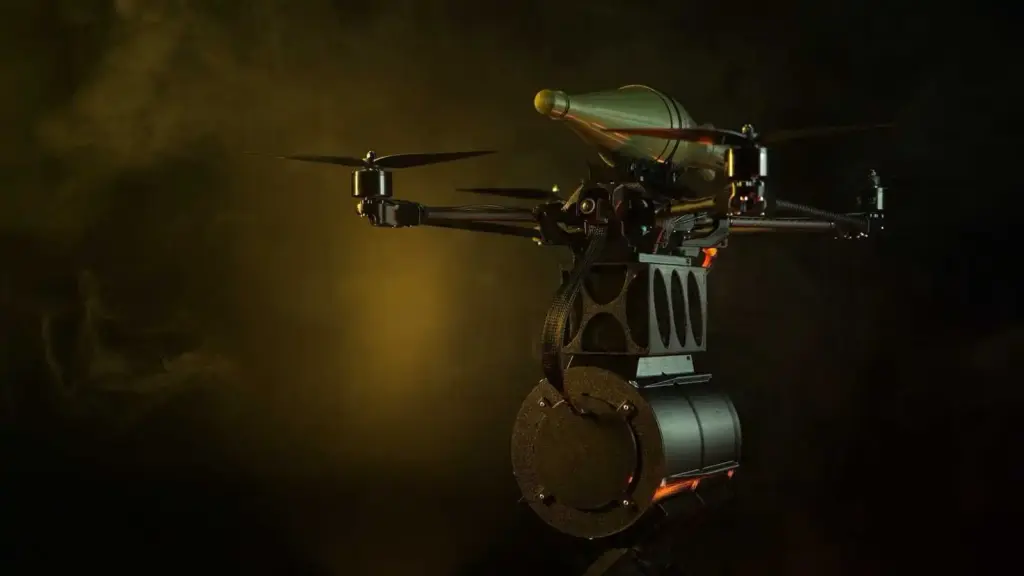
    Ukraine's Defense Ministry has approved 650 unmanned aerial systems for military use since the start of 2026, most of them Ukrainian-made, the ministry said on 22 September. The approved types range from strike copters and jam-proof fiber-optic drones to interceptors and deep-strike systems, expanding the arsenal Ukraine fields against Russian aerial attacks. The approvals are expanding the range of systems available to Ukraine's military in the fifth year of Russia's full-scale war, in
     

Strike copters lead Ukraine’s 650 new military drone approvals—jam-proof and interceptor models close behind

23 septembre 2026 à 08:03

jam-proof drone-killing uavs lead ukraine's 650 new military drone approvals · post ukraine’s deadliner q1 ukraine news ukrainian reports

Ukraine's Defense Ministry has approved 650 unmanned aerial systems for military use since the start of 2026, most of them Ukrainian-made, the ministry said on 22 September. The approved types range from strike copters and jam-proof fiber-optic drones to interceptors and deep-strike systems, expanding the arsenal Ukraine fields against Russian aerial attacks.

The approvals are expanding the range of systems available to Ukraine's military in the fifth year of Russia's full-scale war, including drones designed to operate despite electronic warfare and others intended to intercept enemy drones. For Ukraine, the growing range gives its forces more options to counter Russian drones and the electronic warfare used against them. In July, the ministry said the number of UAV systems approved at that point in 2026 was more than 30% higher than during the equivalent period in 2025 and more than 73% above the same point in 2024.

What was approved

The approved systems include 238 strike copter-type UAVs, 231 fiber-optic-controlled systems, 42 interceptor UAVs, 32 middle-strike UAVs, and nine deep-strike drones. The five named categories account for 552 of the 650 systems.

Fiber-optic-controlled drones use a physical cable rather than radio signals to communicate with their operator, making them resistant to jamming from electronic warfare. Interceptor drones are designed to destroy other unmanned aircraft in flight, providing another way to counter drone attacks alongside conventional air defense.

The 650 figure counts types of systems that have cleared the ministry's codification process—the step that allows equipment to be procured for the armed forces—not individual drones produced or deployed.

The interceptor race

By mid-year, the ministry had cleared 413 drone types—more than two a day—with copter-type strikers and fiber-optic systems dominating the list. The interceptor category has filled especially fast: the ministry ordered 8,000 Octopus interceptors, and by September at least 20 firms were racing to field interceptors against Russia's jet-powered Shaheds, with two having completed combat tests.

Domestic share rising

In the first eight months of 2026, the ministry codified 1,526 new weapons and military equipment models for the armed forces, with nearly 91% produced domestically, the ministry said—of those, 565 were Ukrainian-made unmanned aerial systems. In the same period last year, the ministry had approved 983 models, with 86% made domestically.

❌