❌

Vue normale

Russia’s threat isn’t better missile, it’s 14,000 cheap ones. Its new deadly weapon was built in early 1990s, experts say

21 septembre 2026 à 15:42

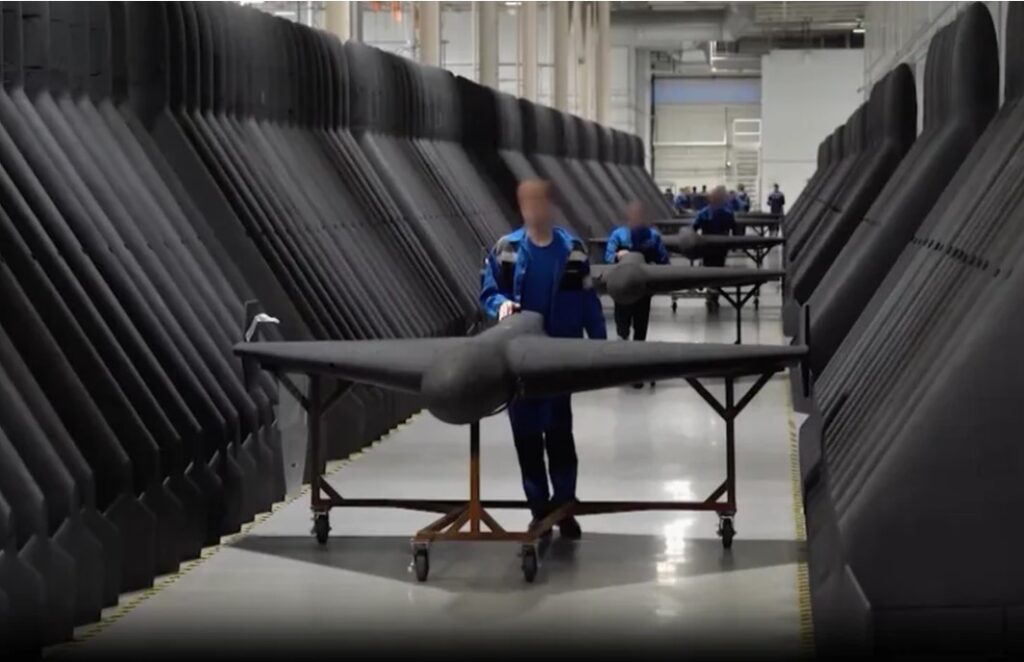
A Dan-M target drone

Russia wants to build 14,000 of a new cruise missile next year, enough to fire them at Ukrainian cities by the thousand. The weapon, the Dan-T, is a cheap air-launched jet missile that flies hundreds of kilometers on its own, RBC-Ukraine reported.

The danger is volume, not finesse. Russia aims to produce up to 2,000 Dan-T missiles by the end of this year and scale it drastically, RBC-Ukraine's sources say. Fired in large numbers, it would add a fresh layer to the Gerans and the cruise and ballistic missiles that already saturate Ukraine's skies on the worst nights.

Numbers make the threat

The experts are less worried about any single Dan-T than about the swarm. High speed, long range, and the ability to launch the missiles by the thousand would stretch Ukraine's air defense further with every strike, forcing crews to spend scarce interceptors on yet another cheap target.

The missile flies to its objective autonomously, and Russia claims a special flight profile designed to make it harder for air defense to spot and shoot down.

A target drone becomes a weapon

The Dan-T has an unusual pedigree. It began as the Dan-M, a jet-powered target drone Russia's Sokol bureau built in the early 1990s and imitated US Tomahawk cruise missiles for air-defense practice, now planned to be stripped of its recovery parachute, fitted with a warhead, and fired at Ukrainian cities. Like Russia's other new cruise weapons, it carries no operator link, steering itself by satellite and inertial navigation.

The Banderol joins the list

The Dan-T is not the only new weapon unsettling Ukraine's military. The experts named it alongside the S8000 Banderol, a separate cheap cruise missile that Russia already builds at up to 80 a month and has used in some of its heaviest strikes on Kyiv. The Dan-T closely resembles the Banderol and, being cheaper, may end up replacing it.

Russia has warned its cities about every strike for years. During the heaviest raid yet, on election day, it left the sirens silent

21 septembre 2026 à 12:35

Vladimir Putin voted in the presidential election in Russia

Russian authorities left residents in and around Moscow without air raid sirens or phone alerts during Ukraine's largest combined strike on Moscow Oblast, apparently to guard turnout at Russia's parliamentary elections, the Institute for the Study of War (ISW) said. The silence angered residents and even pro-war commentators as a major oil refinery burned.

For most of this war, Russia has handled strikes on its cities as a routine to be announced, warned about, and waited out. Withholding warnings during the heaviest raid yet, in the middle of a national vote, suggests authorities will trade residents' safety for the look of a calm election when a political milestone is on the line.

Sirens stayed off during the biggest raid

Ukraine hit strategic sites across the Moscow area overnight on 19-20 September, the last day of Russia's State Duma vote. Moscow Oblast officials did not switch on air alert sirens or send the SMS warnings they had used during far smaller attacks. They quietly restricted mobile service without major public notice. Ukraine struck oil and logistics targets, not polling stations, according to the experts, and authorities appeared to place high turnout above protecting civilians.

Moscow Oblast residents complained that no alert reached them, some posting on the Telegram channel of regional Governor Andrei Vorobyov before it closed comments. A prominent Kremlin-linked military blogger attacked the official response, saying it erodes public trust and that cutting mobile service does "not really help."

What the drones hit

Ukraine's General Staff reported striking the Gazpromneft-Moscow Oil Refinery in the city's Kapotnya district, one of Russia's largest plants, causing a large fire. Ukrainian manufacturer Fire Point said its FP-1 drones completely shut down the refinery, with all primary processing units damaged.

Governor Andrei Vorobyov claimed air defenses countered 249 drones across 17 municipal districts. The strike was part of Ukraine's widening campaign against the fuel sector funding Russia's war, with about a fifth of Russian refining capacity offline.

  • ✇Euromaidan Press
  • Russia’s secret drone math: one Tatarstan plant could yield 28,000 more drone bodies a year
    Russia is quietly moving to expand the capacity of the plant behind its long-range attack drones, a step that could sharply raise how many it launches at Ukraine, according to Politico. The plan turns on a single carbon fiber factory in Russia's Tatarstan region and runs to the end of the decade. These files add something narrower than Russia's known intent to fight on: they identify carbon fiber as a critical material capping how many drones it can build. To break that cap, the Kremli
     

Russia’s secret drone math: one Tatarstan plant could yield 28,000 more drone bodies a year

21 septembre 2026 à 09:31

axios cuba has acquired over 300 russian iranian military drones · post russia's drone factory tatarstan shahed_plant alabuga video ukraine news ukrainian reports

Russia is quietly moving to expand the capacity of the plant behind its long-range attack drones, a step that could sharply raise how many it launches at Ukraine, according to Politico. The plan turns on a single carbon fiber factory in Russia's Tatarstan region and runs to the end of the decade.

These files add something narrower than Russia's known intent to fight on: they identify carbon fiber as a critical material capping how many drones it can build. To break that cap, the Kremlin is funding production lines that will not run until the decade's end—a bet on winning by out-building Ukraine, even as the strikes grind on.

The bottleneck Russia wants to break

Politico obtained internal documents from Russian state nuclear corporation Rosatom showing its Alabuga-Volokno plant would add 500 tons of military-grade aerospace carbon fiber a year by 2029. Rosatom declined to comment. Weapons expert David Albright, who heads the Institute for Science and International Security, estimated that volume could yield airframes for about 28,000 more attack drones a year—a 78% jump.

Ukraine already estimates Russia can build more than 36,000 Shahed/Geran kamikaze drones a year. Carbon fiber is the choke point: it keeps the airframes light and strong, and Russia has no cheap substitute.

"Without the carbon fiber, they can't make the drone. Can't substitute for the carbon fiber in the drone and keep its weight down," Albright said.

Moscow is investing in the raw material, not just more assembly halls—the fiber, not floor space, is what caps output.

Ground already cleared in Tatarstan

Documents gathered by the Ukrainian Security and Cooperation Center describe a new factory on the site designed to produce UMT42S-3K aerospace-grade fiber. Satellite images from May to July show land cleared for construction. Albright's own August imagery shows foundations going in. He said the stated 2027 completion date "requires rapid construction." Russia has spent the past year adding new assembly halls at the same site.

The plant and its parent, Rosatom's Umatex Group, already sit under US, UK, and other Western sanctions. The US House Select Committee on China and the Ukrainian government both verified the documents, officials told Politico.

The push comes as Russia leans harder on jet-powered Shaheds, which Ukraine's Air Force says are hard to down with conventional defenses. Kyiv has fielded its first jet interceptor and tested a new one in September—but the plant is a bid to out-build those defenses faster than Ukraine can scale them.

  • ✇404 Media
  • Is Your City Using Axon License Plate Cameras? We Need Your Help
    Cities around the country are ditching Flock’s automatic license plate reader (ALPR) cameras, and replacing them with equivalent cameras from law enforcement contracting giant Axon. That move in large part comes in response to 404 Media’s coverage of how local cops performed lookups in Flock for Immigration and Customs Enforcement (ICE), and how a cop in Texas searched Flock cameras nationwide to look for a woman who self-administered an abortion.That brings up questions: what are cities and
     

Is Your City Using Axon License Plate Cameras? We Need Your Help

21 septembre 2026 à 09:22
Is Your City Using Axon License Plate Cameras? We Need Your Help

Cities around the country are ditching Flock’s automatic license plate reader (ALPR) cameras, and replacing them with equivalent cameras from law enforcement contracting giant Axon. That move in large part comes in response to 404 Media’s coverage of how local cops performed lookups in Flock for Immigration and Customs Enforcement (ICE), and how a cop in Texas searched Flock cameras nationwide to look for a woman who self-administered an abortion.

That brings up questions: what are cities and law enforcement agencies using Axon ALPRs for? And who are they in turn sharing that data with? 404 Media has started to find out, but needs the help of local residents and community members to figure out what is happening across the country.

👮
Have you obtained Axon ALPR activity logs? We think this information is important so we can learn how police are using Axon's surveillance cameras. Please feel free to send the files to us! You can email joseph@404media.co.

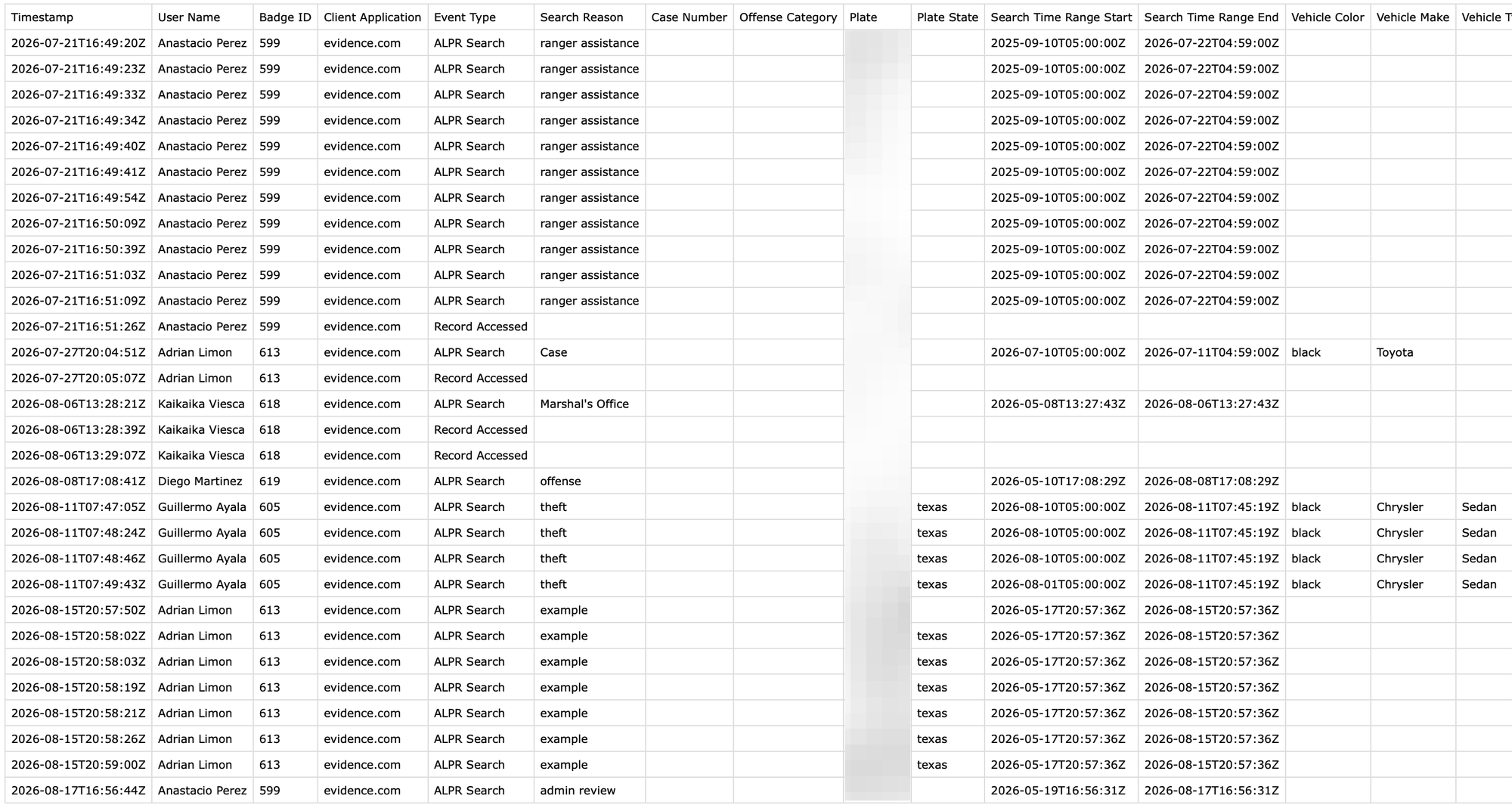
Over the last few weeks, 404 Media has filed requests with various cities and police departments for Axon “activity reports” and “sharing reports.” These show in granular detail when a police officer searched Axon’s ALPRs, the name of the officer, their badge number, the license plate they reached, and, most importantly, the stated reason why. These activity reports are essentially Axon’s version of Flock’s “network audits,” which has been the basis of much of 404 Media’s Flock reporting, and local and national media outlets’ around the country. You can see an example of one here:

Is Your City Using Axon License Plate Cameras? We Need Your Help
404 Media redacted the plates in this screenshot.
Is Your City Using Axon License Plate Cameras? We Need Your Help
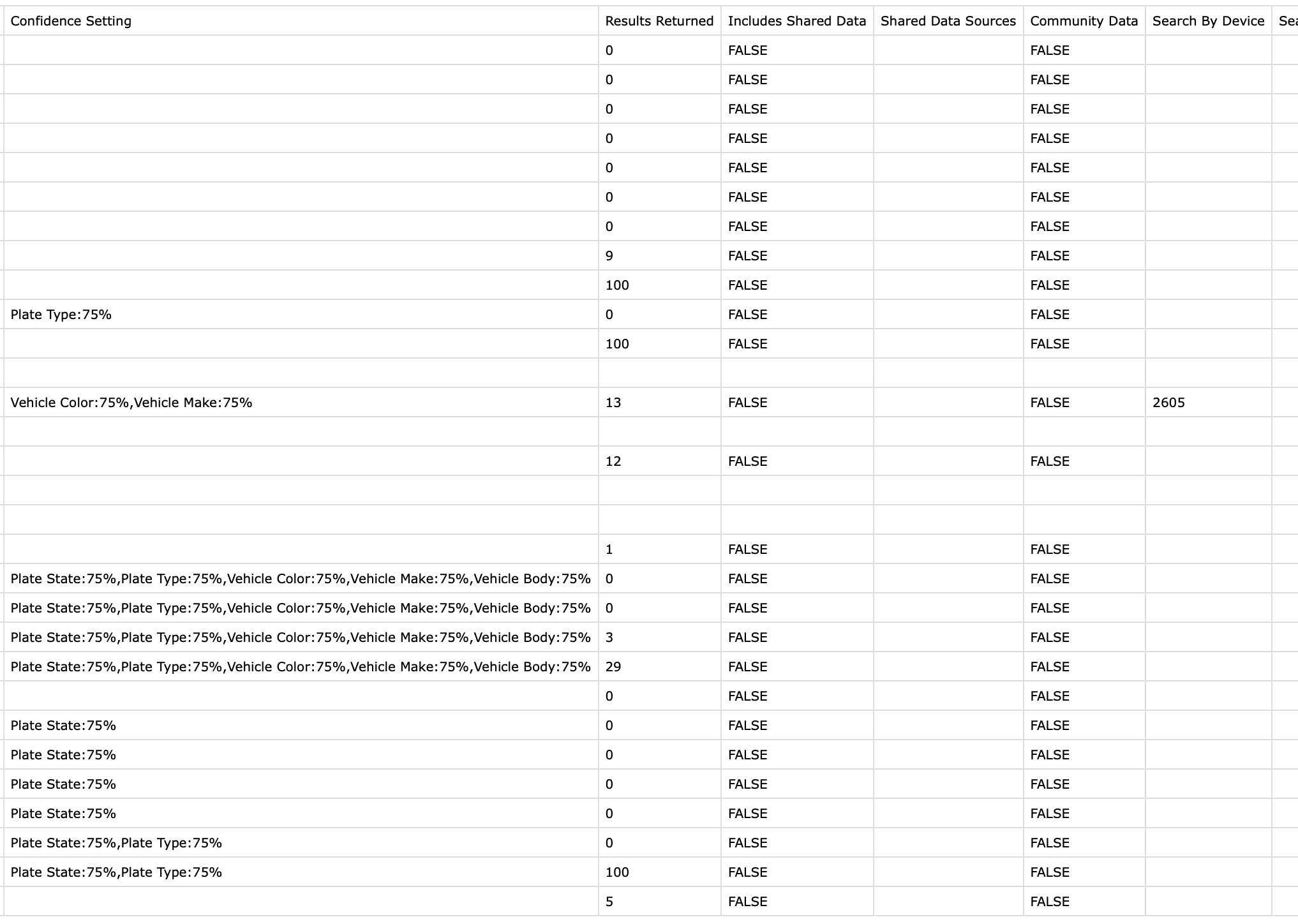
Another screenshot from an Axon activity report.

So far, 404 Media has obtained activity reports from the Benton County Sheriff's Office, WA; Falmouth Police Department, ME; Johns Creek Police Department, GA; Ocean Shores Police Department, WA; Pleasanton Police Department, TX; and Red Wing Police Department, MN.

But we need your help. Has your local police department or city switched to Axon ALPR cameras? Were they already using Axon? And do you want to know what they’re using those cameras for?

We’re asking interested readers to file the below public records request. You can simply copy this language, tweak it a little if necessary to apply to your state, then file the request with the relevant agency. You can do this by finding their relevant public records request email address, or by filing it through Muckrock. This is the platform we use for sending and organizing our records requests.

The Internal ALPR Activity report is the one shown above. The Network ALPR Activity report shows what other agencies the police department or city shares their data with. The ALPR Data Sharing report provides a history of when other agencies were invited, or removed, to receive the data. And the ALPR Hostlist Management Audit report details changes made to alerts the agency may receive.

If you file a request and get data back, please feel free to email it to us at joseph@404media.co. We’ve seen with the nationwide conversation about Flock that local residents can do a lot to reveal how surveillance technology is being used in their own communities. We hope we can find out a bit more about how agencies are using Axon’s cameras too.

To Whom It May Concern:

Pursuant to the [YOUR STATE’S PUBLIC RECORDS LAW], I hereby request the following records:

1. Internal ALPR Activity report in Axon.

The report should include data logged from the period of January 1, 2025, to the date this request is processed. Per Axon's documentation, the Internal ALPR Activity report is available within the LPR > ALPR Search > LPR Audit menu. You can find instructions to locate this here: https://www.axon.com/help/fusus/software/fusus/alpr/alpr-audit.htm

2. Network ALPR Activity report in Axon.

The report should include data logged from the period of January 1, 2025, to the date this request is processed. Per Axon's documentation, the Network ALPR Activity report is available within the LPR > ALPR Search > LPR Audit menu. You can find instructions to locate this here: https://www.axon.com/help/fusus/software/fusus/alpr/alpr-audit.htm

3. ALPR Data Sharing report in Axon.

The report should include data logged from the period of January 1, 2025, to the date this request is processed. Per Axon's documentation, the ALPR Data Sharing report is available within the LPR > ALPR Search > LPR Audit menu. You can find instructions to locate this here: https://www.axon.com/help/fusus/software/fusus/alpr/alpr-audit.htm

4. ALPR Hotlist Management Audit report in Axon.

The report should include data logged from the period of January 1, 2025, to the date this request is processed. Per Axon's documentation, the ALPR Hotlist Management Audit report is available within the LPR > ALPR Search > LPR Audit menu. You can find instructions to locate this here: https://www.axon.com/help/fusus/software/fusus/alpr/alpr-audit.htm

The requested documents will be made available to the general public, and this request is not being made for commercial purposes.

In the event that there are fees, I would be grateful if you would inform me of the total charges in advance of fulfilling my request. I would prefer the request filled electronically, by e-mail attachment if available or CD-ROM if not.

Thank you in advance for your anticipated cooperation in this matter. I look forward to receiving your response within the time period that the statute requires.

Sincerely,

[YOUR NAME]

❌