The proposals for 2030 are among significant changes that would upend a process for helping allot congressional seats and shape policies that address disparities.
The proposals for 2030 are among significant changes that would upend a process for helping allot congressional seats and shape policies that address disparities.
A naturalization ceremony at Ellis Island in 2022. The Trump administration has proposed new census regulations that would no longer ask Americans about race, ethnicity and sexual orientation, and would exclude noncitizens without green cards.
Census Bureau also considers race and ethnicity questions in overhaul that would have dramatic effect on voter mapsThe Trump administration on Wednesday proposed changes to the US census intended to exclude immigrants without legal status in addition to other groups, with potentially significant effects on the allocation of federal resources and drawing of districts in the US House of Representatives.In a proposed rule published in the Federal Register, the Census Bureau also announced it was co
Census Bureau also considers race and ethnicity questions in overhaul that would have dramatic effect on voter maps
The Trump administration on Wednesday proposed changes to the US census intended to exclude immigrants without legal status in addition to other groups, with potentially significant effects on the allocation of federal resources and drawing of districts in the US House of Representatives.
In a proposed rule published in the Federal Register, the Census Bureau also announced it was considering changes to the data it collects about race and ethnicity, amid the Trump administration’s push to rid the government of diversity, equity and inclusion programs.
Russia plans to test-fire a new type of ballistic missile before the end of 2026, one built to fly farther than the Iskander missiles it now launches at Ukraine, according to Ukraine's military intelligence. Its deputy chief outlined the plan at a Ukraine-NATO meeting on 8 September, ZN reported.
A longer-range missile would erode the relative safety of western Ukraine, where the routes carrying Western aid run beyond the front, and stretch air defenses already struggli
Russia plans to test-fire a new type of ballistic missile before the end of 2026, one built to fly farther than the Iskander missiles it now launches at Ukraine, according to Ukraine's military intelligence. Its deputy chief outlined the plan at a Ukraine-NATO meeting on 8 September, ZN reported.
A longer-range missile would erode the relative safety of western Ukraine, where the routes carrying Western aid run beyond the front, and stretch air defenses already struggling against ballistic strikes.
A longer reach into western Ukraine
Russia plans final tests of a new ballistic missile with a range of up to 800 kilometers, or about 500 miles, by year's end, Vadym Skibitskyi, deputy head of the Defense Intelligence of Ukraine (HUR), told the Ukraine-NATO Interparliamentary Council, citing the agency's own assessments. Russian forces may try to hit targets in western Ukraine during those tests, he said.
The deputy chief noted that Moscow is raising both the output and the range of its ballistic missiles to intensify strikes and push Ukraine into a social and economic crisis. He urged partners to tighten sanctions until Russia loses access to the foreign components in its long-range weapons.
Russia's modernized 9M723-2, also called the Iskander-1000, reaches up to 550 km, HUR says, and the older 9M723-1 covers 390 km. An 800-km weapon would carry strikes well past the front.
The missile Russia already fields
Russia already fields a longer-range Iskander variant. This summer, its forces first fired the modernized 9M723-2—part of the Bora-M system—in a combined missile strike on Kyiv. A bigger engine and a larger launcher gave that missile its extended reach, HUR said. Ballistic missiles are the hardest of Russia's strikes for Ukraine to stop, and Moscow has poured them out in recent months, running its plants above quota and firing them in larger salvos.
Losing more soldiers than it signs up
Russia is waging a war of attrition despite heavy losses and has not given up on destroying Ukrainian statehood, Skibitskyi said. Skibitskyi put Russia's August losses at 43,000 soldiers against 39,000 recruited. Russia has struggled to fill its ranks for months. Russia's General Staff sees intensified mobilization as the only way to reach its main goals—fully occupying the Ukrainian Donbas and seizing the strategic initiative—he explained.
The Kremlin plans to mobilize about 600,000 people across 2026 and 2027, half of them by the end of this year, he said. Russia will also try to close the Black Sea to Ukraine and to drag Belarus into the war and into hybrid operations against NATO, he added, though HUR sees no signs of Russian strike groupings forming there yet.
Each new kilometer of range puts more of Ukraine within reach from deep inside Russia, without moving a launcher closer to the border.
When a truck driver unexpectedly collapsed and died in a remote village, frontline medical staff scrambled to safely isolate his body, triggering a standoff.
When a truck driver unexpectedly collapsed and died in a remote village, frontline medical staff scrambled to safely isolate his body, triggering a standoff.
A coffin maker in the Democratic Republic of Congo has seen a significant increase in the number of coffins needed in Bunia since the latest Ebola outbreak began in May.
A coffin maker in the Democratic Republic of Congo has seen a significant increase in the number of coffins needed in Bunia since the latest Ebola outbreak began in May.
Ukraine is contracting about 1,000 missiles for its American-made Patriot air defense systems, but most arrive only in later years, so at the Ramstein meeting of its allies it asked for interceptors out of their existing stocks before winter, the Defense Ministry said. Nine governments announced new contributions there, and Germany was the only one to commit interceptors from its own stocks. The Ramstein format meeting is the Ukraine Defense Contact Group, a coalition o
Ukraine is contracting about 1,000 missiles for its American-made Patriot air defense systems, but most arrive only in later years, so at the Ramstein meeting of its allies it asked for interceptors out of their existing stocks before winter, the Defense Ministry said. Nine governments announced new contributions there, and Germany was the only one to commit interceptors from its own stocks. The Ramstein format meeting is the Ukraine Defense Contact Group, a coalition of roughly 50 countries that coordinates weapons for Ukraine, named after the US air base in Germany where it first met in 2022.
Kyiv is short of the anti-ballistic interceptors that stop Russian ballistic missiles, and Russia keeps exploiting the gap. Arming Ukraine has become mostly a European job, run through a coalition that meets every couple of months, pledges its own arms supplies, and pays for weapons built elsewhere. Willingness is not the only limit now — so is lead time: orders placed this autumn defend the country a year from now, so the coming winter gets fought with whatever already sits in warehouses.
Ukraine contracts for later, asks for stock now
Ukraine's Defense Minister Yevhenii Khmara told partners the country is signing for roughly 1,000 Patriot missiles, whose PAC-3 version is the only round in its arsenal that reliably stops Russian ballistic missiles, paid for with partner support and the European Union's credit line. Those deliveries take time. So Ukraine asked allies to release missiles from their warehouses now and take the improved contracted rounds later. It made the same case for air-to-air missiles and shoulder-fired launchers, which crews use against cruise missiles and, as a stopgap, against the jet-powered Shahed attack drones, the Iranian-designed weapons Russia now flies at Ukrainian cities by day.
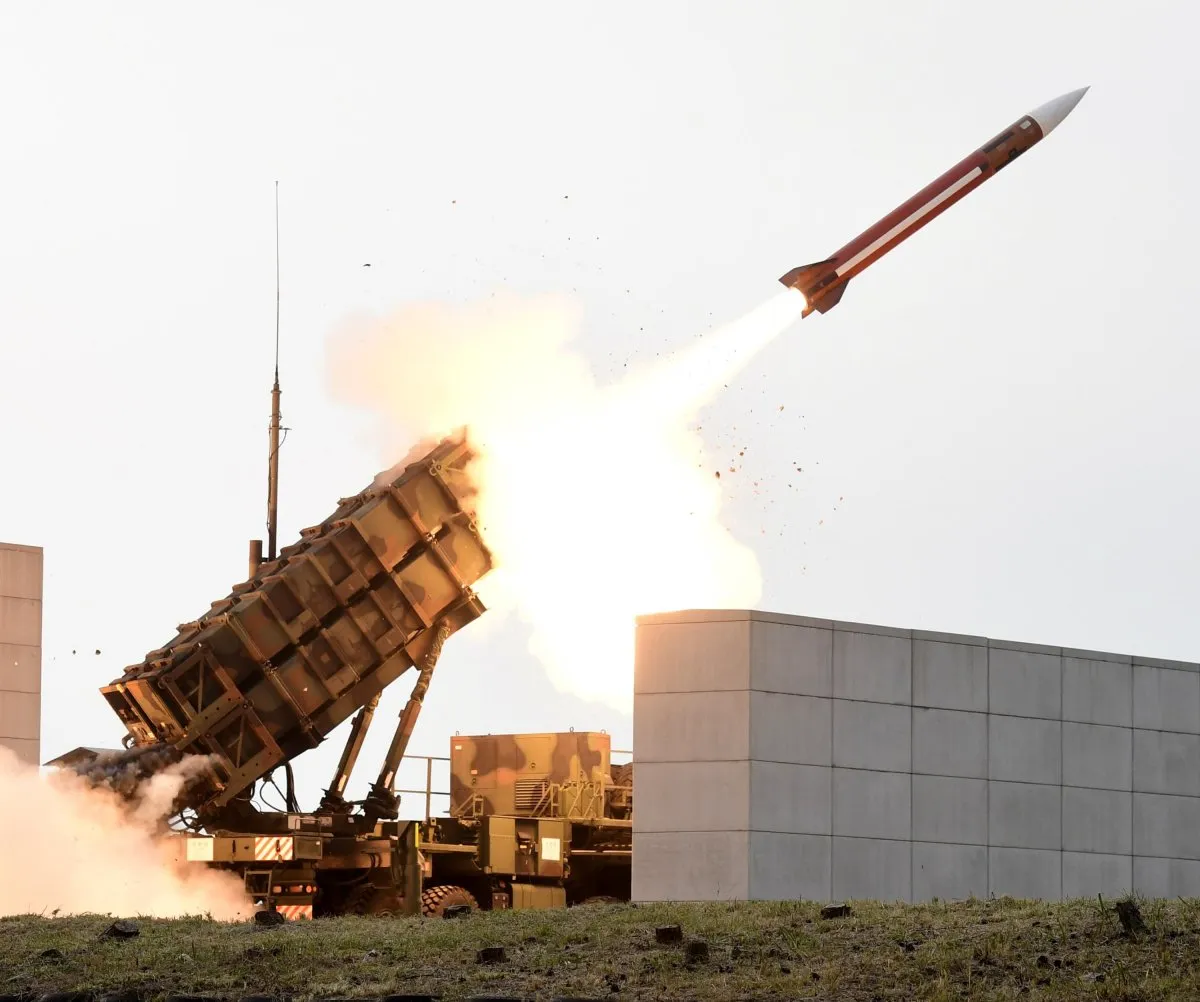
A Patriot PAC-2 missile launch. Illustrative photo: Yonhap
The European Commission cleared the loan money for interceptors days earlier. How many rounds it buys depends on the price Washington sets.
Germany promised interceptors for Patriot systems and for F-16 fighter jets, plus drone purchases.
The United Kingdom put up £100 million ($135 million) through PURL, short for the Prioritized Ukraine Requirements List, the NATO mechanism that lets allied and partner governments buy US-made arms for Ukraine. London added another 95,000 drones by the end of the year and tens of thousands of extended-range artillery shells financed by other countries.
The Netherlands pledged $300 million for the Drone Line, Ukraine's program that holds a drone-strike zone over the front, and 300 counter-drone missiles.
Estonia committed to keep its support at at least 0.25% of its economic output in 2027.
Norway confirmed a previously announced $200 million for Patriot missiles.
Spain gave €2 million ($2.3 million) for fuel through NATO's procurement agency, plus air-defense missiles and artillery ammunition.
Lithuania put $10 million into PURL.
Poland prepared a €50 million ($58 million) package including air-defense equipment.
Sweden pledged $28 million, half of it to PURL.
It was the coalition's 36th session, co-chaired online by Germany and the United Kingdom according to the German Defense Ministry's invitation, and the first for Khmara and for Commander-in-Chief Mykhailo Drapatyi, the general who took over Ukraine's army in July.
Explore further
Brussels cleared Ukraine to spend EU loan money on American Patriot missiles for the coming winter of Russian attacks
Germany opens its own warehouse
German Defense Minister Boris Pistorius said he decided, alongside the NATO summit, to give Ukraine urgently needed PAC-2 interceptors, an older Patriot round, from the stocks of the Bundeswehr, Germany's armed forces, before winter. Russia has announced it will attack Ukraine's energy system. He told the others to check their reserves and do the same.
Germany will also step up deliveries of AIM-9 air-to-air missiles from the same stocks, the US-made rounds fighter jets fire at incoming drones and missiles, and keep delivering IRIS-T air defense systems, including serially produced guided missiles for them. Ukraine intends to order several thousand more IRIS-T rounds using the EU loan.
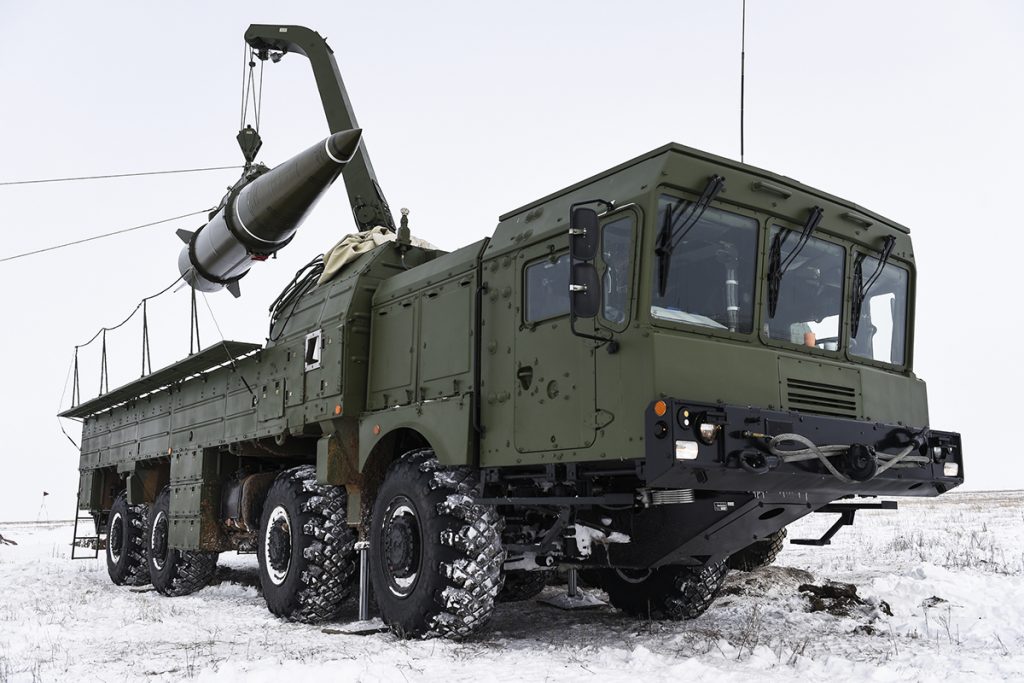
Transporter-loader vehicle 9T250 of Russia's Iskander missile system. Photo via Militarnyi.
The money and the deadline
Allies allocated more than $10 billion over the past year for American weapons through PURL and the US foreign military sales program, $3.5 billion of it under the EU loan, NATO Secretary General Mark Rutte said. Khmara said partners promised €70 billion ($81 billion) this year, while Ukraine sees €62 billion, and the missing €8 billion is needed to meet that pledge, with the total defense deficit at €23 billion ($27 billion), according to the ministry's readout. He asked for those decisions by November. A day earlier, Ukraine handed the alliance a list of priority air- and missile-defense needs, the Defense Ministry reported.
Two timelines at the table
Elbridge Colby, the US under secretary of war for policy and the Pentagon's top policy official, told the group his department cannot predict when the war ends, that Russia is rebuilding its forces and defense industry, and that Ukraine's needs will persist for months and years. Europeans already lead on conventional defense and provide most of the support, he said.
Russia is expanding its manpower too, and by Ukraine's estimate plans to mobilize about 300,000 more soldiers this year and the same in 2027, Khmara said, Radio Svoboda reported. He presented the war plan Ukrainian forces now operate under, and said their drone kill zone stops Russian advances and kills more than 30,000 Russian soldiers a month, by the military's own count.

 Connexion