Vue normale

Estonia paid $81 million for Ukraine’s shells to firm that had never made one—now its defense minister is out

3 septembre 2026 à 14:04

Estonia's Defense Minister Hanno Pevkur.

Estonia's defense minister resigned on 2 September over a failed €70 million ammunition deal for Ukraine, ERR reported. The state procurement agency paid EU funds to companies that had never sold artillery shells. Estonian taxpayers may now have to cover the losses.

The Baltic states have poured billions into defense since Russia's full-scale invasion of Ukraine. Estonia alone redirected €500 million toward air defense and drones. It pledged 0.25% of GDP in annual aid for Kyiv. Defense budgets have grown faster than the procurement systems managing them.

Minister walks over "socks and ammunition"

Hanno Pevkur has held the post since 2022. Amid the scandal, he told Estonian public broadcaster ETV he would step down.

"The minister does not count socks and ammunition," Pevkur said.

RKIK's former chief countered that no major decisions were made without the ministry's approval.

Three opposition parties called for his resignation before he announced it. Prime Minister Kristen Michal said Pevkur was not personally at fault but acknowledged political responsibility applied. The resignation followed a National Audit Office report released on 28 August. Estonia's Prosecutor's Office has also opened a criminal investigation into the procurement.

The deal that fell apart

In 2024, Estonia's Center for Defense Investments (RKIK) signed four contracts with Datasel S.R.L., an Italian-registered firm. Eesti Ekspress reported that the Indian company Neco Defense Munitions owned it. Neither had ever sold a single artillery shell. RKIK paid roughly $81 million in advance using the EU's European Peace Facility. The first delivery was due in November 2024. Ammunition that arrived failed to meet quality standards. Estonia canceled the deals and filed a case at the European Court of Arbitration in Strasbourg.

Pevkur is the second Baltic defense minister to resign in four months. Latvia's Andris Sprūds stepped down in May after drone incursions from Russia's war destabilized the country's government.

  • ✇Euromaidan Press
  • Russia now hunts Kyiv by daylight too, Flash explains why
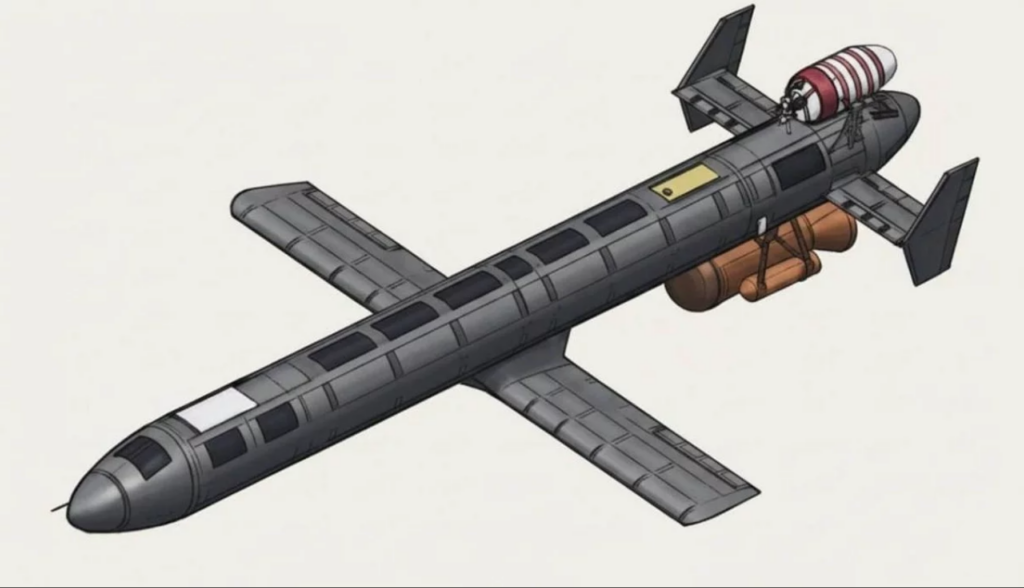
    Russia has started launching its strike drones during the day, not only after dark. The reason is the new jet-powered Geran drones, which fire groups cannot take down, so for Russia there is no longer any difference between attacking by day or by night, Serhii "Flash" Beskrestnov, President Zelenskyy's adviser on defense technologies, told Glavcom. The near-hourly daytime raids are the new face of a campaign that culminated on 1 September, Knowledge Day, when Russia hit
     

Russia now hunts Kyiv by daylight too, Flash explains why

3 septembre 2026 à 06:07

geran-5

Russia has started launching its strike drones during the day, not only after dark. The reason is the new jet-powered Geran drones, which fire groups cannot take down, so for Russia there is no longer any difference between attacking by day or by night, Serhii "Flash" Beskrestnov, President Zelenskyy's adviser on defense technologies, told Glavcom.

The near-hourly daytime raids are the new face of a campaign that culminated on 1 September, Knowledge Day, when Russia hit Kyiv and its region with ballistic missiles and jet-powered drones and killed 12 people. That strike culminated a six-day assault on the capital that began on 27 August, two days after CIA Director John Ratcliffe arrived in Moscow. However, even after that, the attack continued. Sirens now sound across Kyiv and the surrounding oblast roughly once an hour, around the clock.

Why the shift to daylight

The daytime raids carry an added economic and psychological weight, he said. The threat of strikes forces shops and businesses to open and close unpredictably, snarls transport, and can halt rail service.

"They understand perfectly well that daytime attacks hurt the population and business," Beskrestnov said, adding that the state railway Ukrzaliznytsia is paralyzed.

Keeping the defenders on their feet

A further aim is to hold Ukraine's air defense in a permanent state of readiness, Beskrestnov said. Round-the-clock attacks mean radar stations and generators must run without pause.

"Radar stations and generators run constantly, and that also puts a strain on our troops," he added.

Kyiv remains a Russian prime target because it carries symbolic as well as military weight, as the capital houses the government, business, and warehouses, and a strike there would resonate far more than terrorizing a small town.

Russian forces first concentrated on districts nearer the drones' launch corridors — Kyiv's Left Bank, and the Brovary and Boryspil raions — before switching to the other bank to hunt for targets. As the cold season approaches, he expects Russia to intensify strikes on the energy infrastructure it has so far spared.

For first time, Ukraine shows its British Rapid Ranger air-defense system mounted on Spanish off-road chassis. Its crews call it “close-range storm”

3 septembre 2026 à 03:00

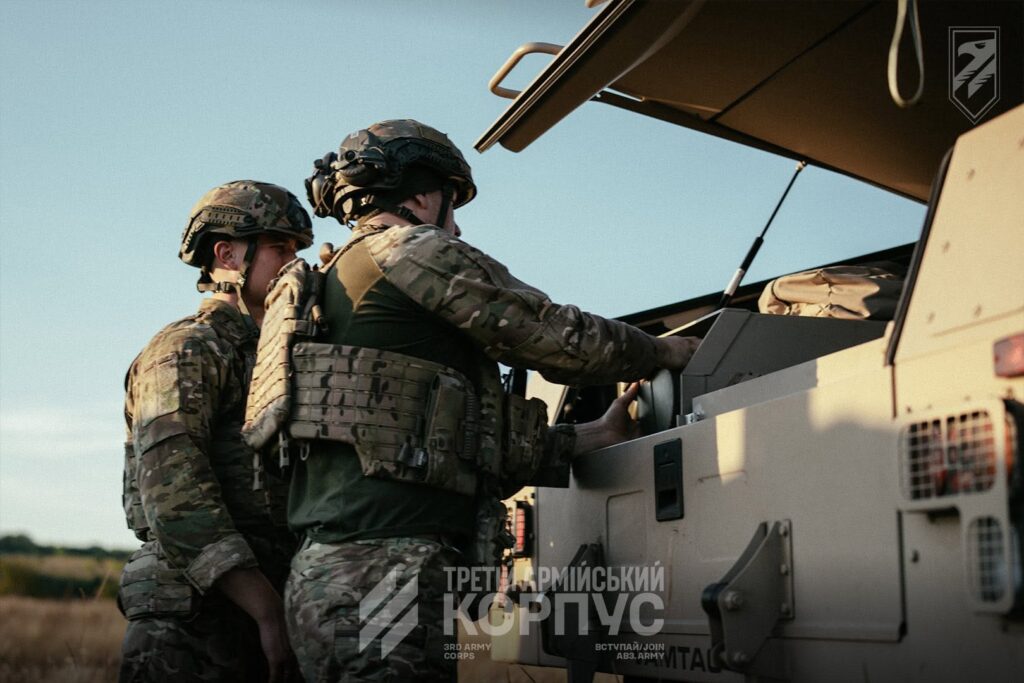
A crew from Ukraine’s 1030th “Aquila” Anti-Aircraft Missile and Artillery Regiment is loading the RapidRanger with anti-aircraft missiles ahead of a combat deployment. Source: Ukraine’s 1030th “Aquila” Anti-Aircraft Missile and Artillery Regiment

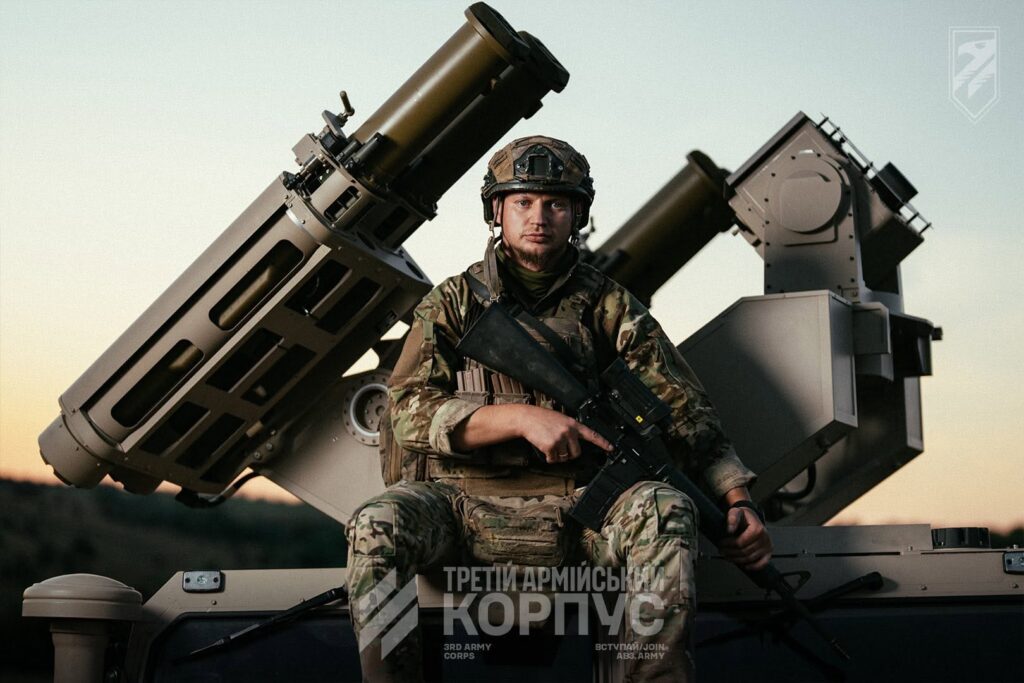
Ukraine’s Third Army Corps has released photos of the RapidRanger air defense system mounted on a URO VAMTAC armored vehicle. The troops themselves described the system as a “short-range storm.”

The system defends the sky in areas where radar cannot spot a target and other weapons cannot reach it, filling the gap between mobile fire groups and heavy, less-mobile air-defense systems. That niche — fast, cheap, and radar-independent — is exactly where Russia's Shaheds and small reconnaissance drones have been slipping through.

A crew from Ukraine’s 1030th “Aquila” Anti-Aircraft Missile and Artillery Regiment is loading the RapidRanger with anti-aircraft missiles ahead of a combat deployment. Source: Ukraine’s 1030th “Aquila” Anti-Aircraft Missile and Artillery Regiment

The images show a crew of the 1030th "Aquila" Anti-Aircraft Missile-Artillery Regiment arming the launcher with missiles before going on combat duty for the first time, RBC-Ukraine reports.

Light enough to ride a pickup

Rapid Ranger weighs only 500 kilograms and has a modular design that allows it to be mounted on pickups, armored cars, or even tracked platforms.

The systems in Ukrainian service ride Spanish URO VAMTAC tactical off-roaders, which reach 135 km/h, drive on public roads, and can change position quickly or cover long distances.

A crew from Ukraine’s 1030th “Aquila” Anti-Aircraft Missile and Artillery Regiment is loading the RapidRanger with anti-aircraft missiles ahead of a combat deployment. Source: Ukraine’s 1030th “Aquila” Anti-Aircraft Missile and Artillery Regiment

That mobility is the point: a launcher that can shoot and move is far harder for Russian forces to find and destroy than a fixed battery.

Laser guidance beats the decoys

The system's LMM Martlet missiles are 1.3 meters long, weigh 13 kilograms, and reach 1,800 km/h, striking targets up to seven kilometers away. Crucially, the missiles use laser guidance, not only infrared, so Rapid Ranger can hit targets with a low thermal signature or those carrying heat-emitting decoys. That makes it effective against Russian reconnaissance drones like the Orlan-10, whose small heat trail slips past heat-seeking weapons.

A crew from Ukraine’s 1030th “Aquila” Anti-Aircraft Missile and Artillery Regiment is loading the RapidRanger with anti-aircraft missiles ahead of a combat deployment. Source: Ukraine’s 1030th “Aquila” Anti-Aircraft Missile and Artillery Regiment

A 360-degree electro-optical surveillance suite gives the crew all-around coverage, and the system detects targets out to about 15 kilometers, which is more than twice its engagement range, giving the crew time to track a threat before firing.

Rapid Ranger reached Ukrainian units as part of a British military aid package, and Euromaidan Press reported in April that the system was already downing Shaheds from its Spanish mounts. The 3rd Corps' photos are the newest confirmation that Ukraine's newest Western air-defense hardware is now integrated and standing combat duty at the front.

❌