Vue normale

  • ✇Euromaidan Press
  • Kazakh refinery deal could ease Russia’s front-line fuel pressure—but it covers just 0.3% of demand
    Kazakhstan’s privately owned Kondensat refinery will process Russian crude and return about 70% of the resulting petroleum products to Russia, Kazakh Energy Minister Yerlan Akkenzhenov said on 25 August, Radio Liberty reported. Based on figures reported by Radio Liberty, the roughly 70% of Kondensat’s maximum gasoline output bound for Russia would amount to about 0.3% of the country’s daily summer gasoline demand. That makes the arrangement a limited stopgap rather than
     

Kazakh refinery deal could ease Russia’s front-line fuel pressure—but it covers just 0.3% of demand

2 septembre 2026 à 14:04

Kazakh President Kassym-Jomart Tokayev and Russian President Vladimir Putin walk past an honor guard in Astana, Kazakhstan, on 27 November 2024.

Kazakhstan’s privately owned Kondensat refinery will process Russian crude and return about 70% of the resulting petroleum products to Russia, Kazakh Energy Minister Yerlan Akkenzhenov said on 25 August, Radio Liberty reported.

Based on figures reported by Radio Liberty, the roughly 70% of Kondensat’s maximum gasoline output bound for Russia would amount to about 0.3% of the country’s daily summer gasoline demand. That makes the arrangement a limited stopgap rather than a solution. John Roberts of the Atlantic Council nevertheless told the outlet that even small additional supplies could help during an acute shortage, including at the front: “It helps, but it doesn’t solve the problem.”

Ukrainian drone strikes have knocked dozens of Russian refineries offline in recent months, forcing Moscow to restrict fuel exports and reimpose rationing, Radio Liberty reported. Gasoline caps returned to Moscow and St. Petersburg in August, while Rosneft reportedly limited fills to 30 liters per car at every station nationwide.

Kondensat has processed Russian oil before. The refinery began handling supplies delivered through Tatneft’s TANECO refinery in 2024, when Kazakhstan and Russia agreed to permit exports of fuel produced from Russian feedstock back to Russia. The arrangement was renewed in 2025, according to Radio Liberty.

Central Asia has no spare refining capacity that could materially change Russia’s situation, Ukrainian energy analyst Hennadiy Riabtsev told Radio Liberty’s Schemes project. Possible contributions from Kazakhstan, Kyrgyzstan, India, China, and Belarus would remain a drop in the ocean for the Russian market, he said.

Prospective suppliers also understand that Russian fuel demand supports the war effort and that assisting Moscow could carry sanctions risks, Ukraine’s presidential sanctions commissioner, Vladyslav Vlasiuk, told Schemes. Kyiv therefore does not expect a queue of countries willing to supply Russia with petroleum products, he said.

Russia’s fuel shortage gives Kazakhstan room to bargain

Russia’s shortage has spread from gas station queues to farming and public transport, with fuel-sale restrictions officially covering more than 40 regions by July, Euromaidan Press reported, citing The Moscow Times. Moscow’s export restrictions have also raised prices and tightened supplies across Central Asia.

Yet Russia’s growing dependence gives Kazakhstan additional bargaining room. Ukrainian strikes have previously prompted Russian retailer Wildberries to expand its warehousing operations in Kazakhstan, while Astana has promoted domestic competitors.


  • ✇Journal Le Soir
  • Automne 2026 : l’ADAUQAR mise sur l’innovation
    L’Association pour le développement des ainés et ainées à l’UQAR (ADAUQAR) dévoile sa programmation d’automne 2026, une saison qui se distingue par plusieurs premières et une offre renouvelée d’environ 80 formations, conférences et visites. L’ADAUQAR propose une programmation audacieuse et profondément ancrée dans les enjeux contemporains, notamment en santé, activité physique, environnement, géopolitique, patrimoine et innovation régionale. Parmi les nouveautés figure Je Déstresse en Sage
     

Automne 2026 : l’ADAUQAR mise sur l’innovation

2 septembre 2026 à 14:00

L’Association pour le développement des ainés et ainées à l’UQAR (ADAUQAR) dévoile sa programmation d’automne 2026, une saison qui se distingue par plusieurs premières et une offre renouvelée d’environ 80 formations, conférences et visites.

L’ADAUQAR propose une programmation audacieuse et profondément ancrée dans les enjeux contemporains, notamment en santé, activité physique, environnement, géopolitique, patrimoine et innovation régionale.

Parmi les nouveautés figure Je Déstresse en Sagesse, un programme conçu par le Centre d’études sur le stress humain.

Grâce à des activités interactives et des outils pratiques, les participants apprendront à reconnaître les mécanismes du stress et à mieux les gérer au quotidien. Ce projet est financé en partie par le programme Nouveaux Horizons pour les aînés du gouvernement du Canada.

Par ailleurs, la formation Le voyage au bout de son âge est offerte en présence à Lévis (une nouveauté !) grâce à une collaboration avec la Maison du loisir 50+ de Lévis.

L’ADAUQAR offre également, pour la première fois, des activités physiques en gymnase avec des initiations au pickleball et à l’Ultimate frisbee, deux disciplines accessibles qui favorisent le maintien d’un mode de vie actif.

L’ADAUQAR accueille Sami Aoun et Gaétan Lelièvre, des experts reconnus, pour traiter d’enjeux géopolitiques à l’échelle internationale et québécoise.

Connaissances sur le Saint-Laurent

Les questions environnementales occupent aussi une place importante notamment avec Lyne G Morissette.

Les participants pourront approfondir leurs connaissances sur le Saint-Laurent, le papillon monarque, les innovations liées à l’érable rouge ainsi que les nouvelles cartographies des zones inondables.

Trois visites immersives permettront par ailleurs de découvrir des acteurs clés de l’innovation régionale. À L’Isle-Verte, Litière Ouellet présentera ses installations modernisées, sa robotisation et ses pratiques environnementales.

GE Vernova ouvrira les portes de l’un des plus importants sites de fabrication de pales d’éoliennes en Amérique du Nord, à Gaspé.

À Rimouski, Innovation maritime et le Centre de formation en plongée professionnelle offriront un aperçu des recherches appliquées et des formations spécialisées qui soutiennent l’industrie maritime québécoise.

Pour information et inscription 

Tous les renseignements sur la programmation de l’automne 2026 sont disponibles sur le site web à www.adauqar.ca. On peut également communiquer avec Élizabeth Rioux au 1 800 511-3382, poste 1661 ou par courriel à info@adauqar.ca. L’inscription à toutes les activités, même celles gratuites, est obligatoire. 

  • ✇Euromaidan Press
  • Estonia quarantines emails from Russian domains over cyberattack risk
    Estonia is automatically diverting emails using Russia’s .ru internet domain into quarantine for additional security checks before they reach state institutions connected to the country’s secure government network, Justice and Digital Affairs Minister Liisa Pakosta told Estonia's public broadcaster ERR. The measure is intended to protect Estonian government computer systems amid a post-2022 surge in cyberattacks that officials link to Russia. It applies only to institut
     

Estonia quarantines emails from Russian domains over cyberattack risk

2 septembre 2026 à 11:18

Abstract illustration of computer code and binary numbers glowing blue and green against a dark background.

Estonia is automatically diverting emails using Russia’s .ru internet domain into quarantine for additional security checks before they reach state institutions connected to the country’s secure government network, Justice and Digital Affairs Minister Liisa Pakosta told Estonia's public broadcaster ERR.

The measure is intended to protect Estonian government computer systems amid a post-2022 surge in cyberattacks that officials link to Russia. It applies only to institutions operating inside the secure state network, leaving local governments and some state bodies outside.

Many Estonian residents, particularly Russian speakers, still use .ru email services, ERR noted. Because the filter is triggered solely by the address ending, legitimate messages will be screened alongside potentially malicious ones and may take longer to arrive.

Pakosta said the safeguard was necessary because cyberattacks against Estonia had increased “exponentially” since 2022 and that many were linked to Russia. She said such attacks had not succeeded against Estonia, while major public-sector cyberattacks had succeeded in both Latvia and Lithuania.

The rerouting is automatic and handled centrally, so agencies do not need to take any action, Pakosta said. A large proportion of state institutions have already moved behind the government’s unified cyber shield, while the transition continues.

Pakosta described the quarantine as one small measure within Estonia’s wider cybersecurity work. Estonia’s courts have gone further, saying they will ask parties in legal proceedings to stop using .ru addresses for official communication, according to ERR.

How the Baltic states are hardening against Russia

Estonia's email quarantine forms part of a broader Baltic effort to limit Russian influence and strengthen defenses against military, cyber, and covert threats.

Estonia, Latvia, and Lithuania are constructing a Baltic Defense Line, a planned network of bunkers, anti-tank ditches, and other barriers, along their borders with Russia and Belarus. Latvia has also banned imports of Russian and Belarusian books, clothing, toys, and other goods.

The threat extends beyond cyberattacks: an Estonian court found that Russia’s military intelligence agency, the GRU, ordered the 2024 firebombing of a Ukrainian restaurant in Tallinn, part of a wider Russian sabotage campaign targeting European supporters of Ukraine.

  • ✇Euromaidan Press
  • A masked figure got into a Polish drone-parts plant—Poland now suspects a foreign spy service set the fire
    A fire at a Polish plant that makes drone parts for Ukraine's and Poland's militaries is being investigated as possible sabotage by a foreign intelligence service, Militarnyi reported. Poland's National Prosecutor's Office opened the case on two counts: foreign-intelligence activity against the country and a terrorist offense. Fires and break-ins like this fit a widening pattern — the factories and supply lines that keep Ukraine armed are increasingly targets far from t
     

A masked figure got into a Polish drone-parts plant—Poland now suspects a foreign spy service set the fire

2 septembre 2026 à 09:13

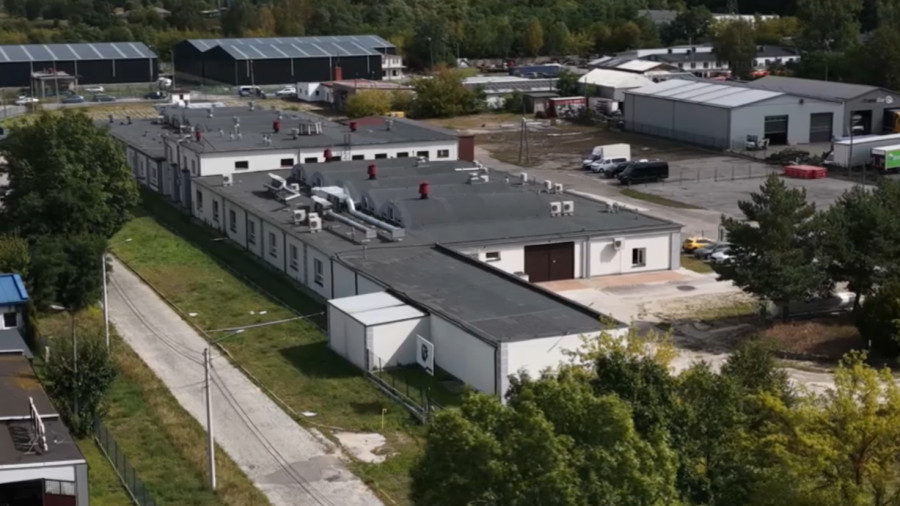
View of the WB Group factory building in Skarżysko-Kamienna, Poland. August 2026.

A fire at a Polish plant that makes drone parts for Ukraine's and Poland's militaries is being investigated as possible sabotage by a foreign intelligence service, Militarnyi reported. Poland's National Prosecutor's Office opened the case on two counts: foreign-intelligence activity against the country and a terrorist offense.

Fires and break-ins like this fit a widening pattern — the factories and supply lines that keep Ukraine armed are increasingly targets far from the front line. Across the continent, prosecutors keep opening the same kind of arson case against plants tied to Ukraine's defense.

A masked intruder and a two-hour fire

The fire started shortly after midnight on 31 August in the assembly hall of the WB Electronics plant in Skarżysko-Kamienna and spread to the storage rooms. Five crews put it out in under two hours. No one was hurt, but the storage rooms were destroyed, leaving at least 15 million zloty ($4 million) in damage. The plant had no permanent guards on site; a security company monitoring it remotely reported the fire.

Prosecutors say the blaze was set deliberately with a planted charge of flammable material, and no one has been charged. Security cameras recorded a masked person who climbed a fence and got onto the site.

Why Poland is looking at Moscow

Czesław Mroczek, deputy head of Poland's Interior Ministry, told RMF FM radio that many signs point to arson, and that a Russian trail is the obvious inference. An attack on the defense industry can suggest Russian involvement, he said, since European states have faced sabotage for years while backing Ukraine. Mroczek said protection plans for key defense plants must be richer than what this site had. No one has been detained, and investigators are still tracing how the intruder got in and who may have ordered it.

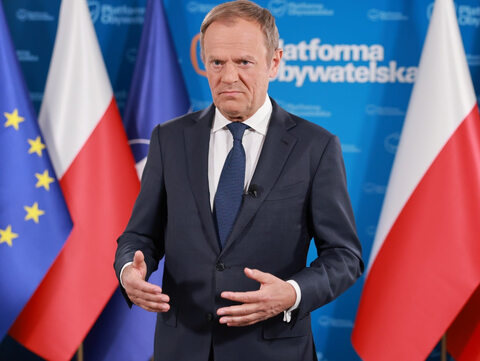
tusk polish prime minister
Explore further

After CIA head’s visit to Moscow, Poland’s PM warns Russia is preparing to escalate war. He puts critical window at seven or eight months

What the plant actually makes

WB Electronics is the core of WB Group, Poland's biggest private arms holding, whose firms build reconnaissance and strike drones such as the FlyEye and the Warmate. The Skarżysko-Kamienna site itself makes drone components for unmanned systems, used by both Polish and Ukrainian forces. Ukraine received FlyEye drones back in 2022 under its Army of Drones program, and in 2025 WB Group launched drone production inside Ukraine.

❌