Vue normale

  • ✇Euromaidan Press
  • Gasoline rationing returns to Moscow and St. Petersburg as Rosneft caps fills nationwide

    Russia’s summer fuel crisis is back for a second wave, driven by Ukrainian strikes on its oil refineries. This time, it has forced rationing back into both Moscow and St. Petersburg and pushed its largest oil producer to cap gasoline nationwide.St. Petersburg drivers ran into limits again on 20 August, when several major oil companies restricted sales across the city, Bumaga first reported. Gazprom Neft reinstated a 60-liter-per-receipt cap it had lifted on 4 August and bl
     

Gasoline rationing returns to Moscow and St. Petersburg as Rosneft caps fills nationwide

21 août 2026 à 09:57

a dry pump at a russian gas station, july 2026

Russia’s summer fuel crisis is back for a second wave, driven by Ukrainian strikes on its oil refineries. This time, it has forced rationing back into both Moscow and St. Petersburg and pushed its largest oil producer to cap gasoline nationwide.

St. Petersburg drivers ran into limits again on 20 August, when several major oil companies restricted sales across the city, Bumaga first reported. Gazprom Neft reinstated a 60-liter-per-receipt cap it had lifted on 4 August and blocked customers from filling more than one canister.

Tatneft capped AI-95 and AI-92 at 50 liters. Many Gazprom Neft stations carried no AI-95 at all, its own station map showed. “Gazprom and Lukoil are dropping dead,” one driver wrote in a local chat.

The limits followed Moscow’s by a day. There, Gazprom Neft cut sales to 40 liters per car, and AI-95 turned up at a single Neftmagistral station, The Moscow Times reported. Rosneft went furthest, capping gasoline at 30 liters per car at every one of its stations across Russia, with no limit on diesel. In June, the same network was still letting drivers take up to 90 liters a fill.
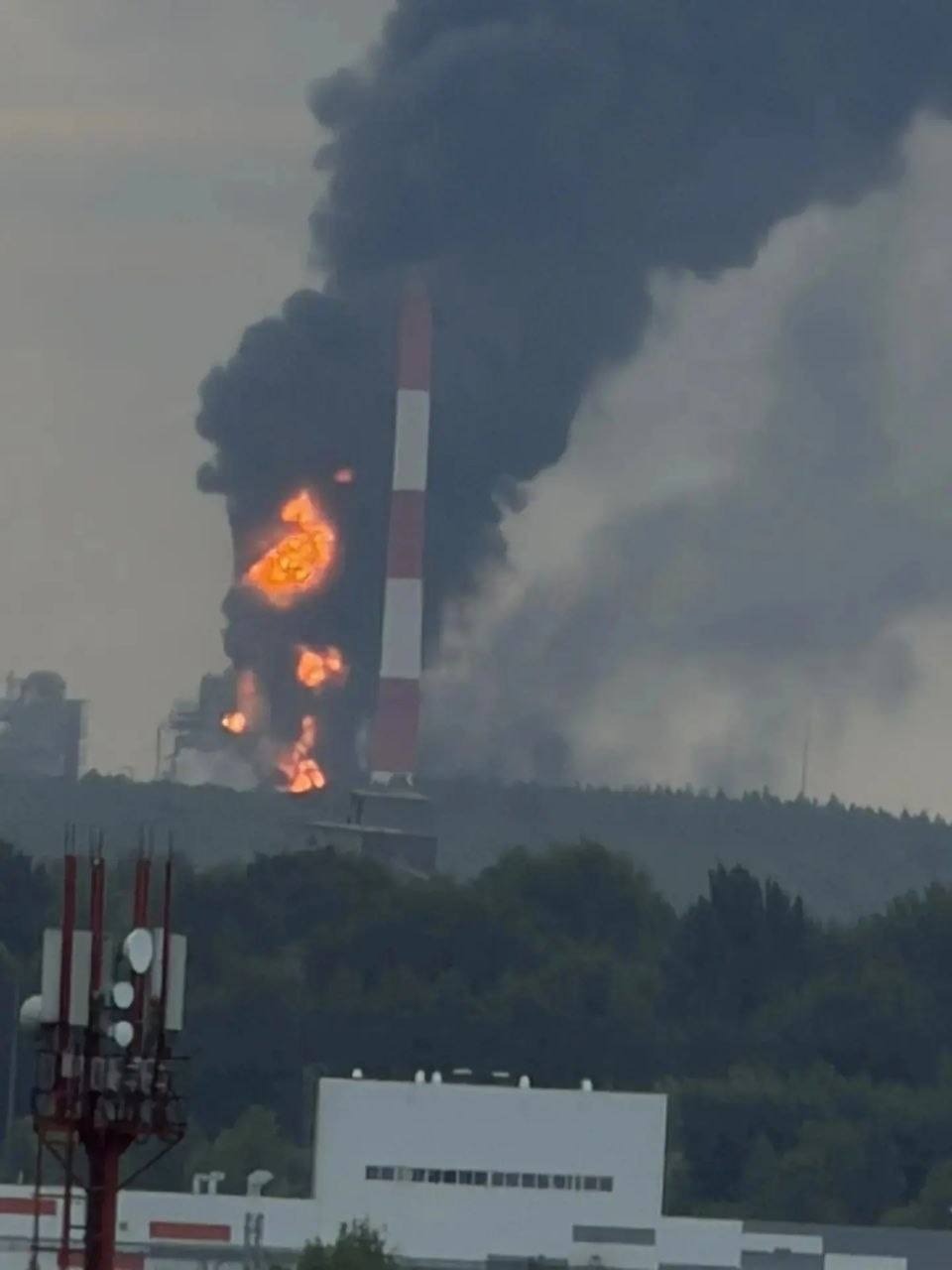
ukraine confirms strikes two tatarstan refineries rocket-fuel rubber plant tolyatti · post fire engulfs industrial unit next chimney after ukrainian strike nizhnekamsk russia 12 2026 2bd5189f-62e7-4645-ae48-dc42a84a9054 ukraine's defense forces set
Explore further

Russia’s biggest oil company stopped selling gasoline in canisters nationwide after Ukraine’s strikes. It blames “seasonal demand”

By mid-August, gas stations in at least 12 regions were again seeing hours-long lines, Meduza’s regional roundup found, citing a count by the outlet 7×7. Lipetsk Oblast brought back odd-even rationing by license plate on 13 August and held fills to 30 liters, a step Governor Igor Artamonov announced; Sochi’s authorities asked residents and tourists to leave their cars at home.

Ukraine has spent months hitting the plants to choke off both the fuel Russia’s army runs on and the oil revenue that funds its war. At least four refineries went offline in August alone.

Officials say supply is holding. Energy Minister Sergei Tsivilyov said on 18 August that fuel remains available, even as he acknowledged the lines. Gasoline averaged 76.04 rubles a liter ($0.89) on 10 August, off a July peak that ran nearly 20% above where the year began.

Ex-FSB general who wired Russia’s spies and army found dead in Moscow—a gunshot, no note, no official report

21 août 2026 à 09:20

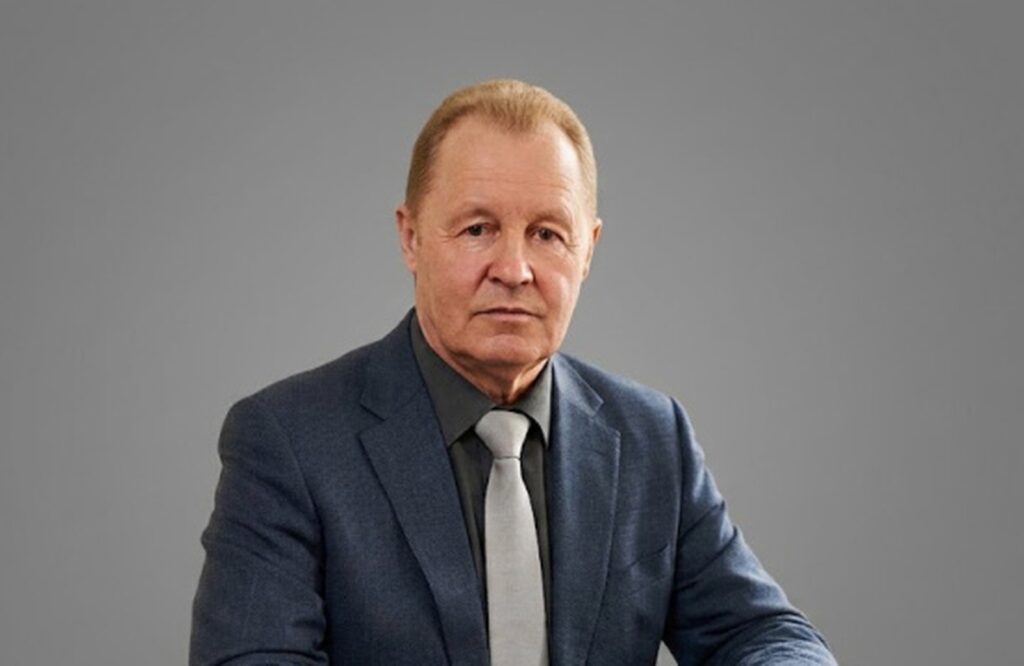
gunshot note official word—russia reports ex-fsb general dead moscow · post igor laptev ігор лаптєв фото укрінформ ukraine news ukrainian

retired Russian FSB major-general whose company built secure communications for the Kremlin's security services and military has been found dead in his Moscow apartment, RFE/RL's Current Time reported. Russian outlets, citing their own sources, say the 83-year-old apparently killed himself, though authorities have released nothing. His death adds to a run of senior Russian military and security figures dying in the capital.

Russia's war keeps killing the people who build and run it — defense-industry figures and officers assassinated near Moscow, occupation officials blown up in occupied Ukraine — so a reported suicide in a Kremlin insider's apartment rarely settles how he actually died.

An FSB veteran who wired Russia's spies

Igor Laptev, 83, was found dead in an apartment in Moscow. Russian outlet MK and others, citing sources, wrote that he probably took his own life on the afternoon of 20 August. Izvestia claimed he died from a gunshot wound to the head. No suicide note or motive has been reported, and Russian law enforcement has issued no official statement.

gunshot note official word—russia reports ex-fsb general dead moscow · post products russia's informtekhnika company display minicomru militarnyi стенд з виробами компанії «информтехника» в рф фотo ukraine news ukrainian
Products of Russia's Informtekhnika company on display. Illustrative photo: Minicom.ru via Militarnyi

Laptev was a chemist-technologist by training who served in the Soviet KGB, including combat in Afghanistan, according to Delovoy Peterburg. In the KGB and later the FSB, he worked on information security. In the late 1990s, he was a deputy minister for taxes and duties, and from 1998, he chaired the board of Informtekhnika i Svyaz, now the Informtekhnika group.

leading russian electronic warfare designer killed bryansk car explosion head design bureau russia's electromechanical plant yevgeny rytikov (l) eliminated responsible modernization anti-drone systems krasukha (r) dead-russian-ew-clown vehicle carrying senior military
Explore further

Leading Russian electronic warfare designer killed in Bryansk car explosion

A supplier to the FSB, the guards, and the army

The company says on its own site that it makes communications systems for federal authorities and security structures, including the FSB, the FSO federal guard service, the Defense Ministry, and the interior ministry. According to OSINT VARTA, it develops and produces specialized telecom equipment and software for secure communications, building switching systems and special-comms platforms for security agencies and state bodies. It also works with Voentelecom, a Russian Defense Ministry structure, to supply troops with digital telecom gear, Militarnyi reported.

A string of deaths among Russia's brass

Laptev's death is not the first in Moscow involving retired Russian generals. On 2 May, retired colonel-general Stanislav Petrov — founder of Russia's radiological, chemical and biological defense troops, who helped create the TOS-1 Buratino heavy flamethrower system — was found dead in a central Moscow apartment. Weeks ago, Moscow buried a general under roadblocks and metal detectors after a bombing that likely killed him at a commander's gathering.

  • ✇Euromaidan Press
  • Ukraine planned 1,000 AI-guided drones a night to shut Moscow airports, Atlantic reports
    President Volodymyr Zelenskyy allowed preparations for an AI-guided drone campaign against Moscow-area airports, The Atlantic reported on 20 August, citing two anonymous sources with direct knowledge of the proposal. The reported plan sought to keep civilian flights grounded long enough to pressure Russia’s elite. Had it proceeded, it would have moved Ukraine toward large-scale autonomous strikes, raising questions under the laws of war about attacks without human confi
     

Ukraine planned 1,000 AI-guided drones a night to shut Moscow airports, Atlantic reports

21 août 2026 à 09:11

Smoke rises behind illuminated apartment buildings in Moscow at night following a reported Ukrainian drone attack.

President Volodymyr Zelenskyy allowed preparations for an AI-guided drone campaign against Moscow-area airports, The Atlantic reported on 20 August, citing two anonymous sources with direct knowledge of the proposal.

The reported plan sought to keep civilian flights grounded long enough to pressure Russia’s elite. Had it proceeded, it would have moved Ukraine toward large-scale autonomous strikes, raising questions under the laws of war about attacks without human confirmation. The Atlantic's disclosure follows months of reported Ukrainian attacks that repeatedly forced Moscow-area airport closures and sent increasingly large drone swarms toward the capital.

How the drone operation would have worked

Code-named M&Ms, the operation called for as many as 1,000 drones to fly toward Moscow-area airports each night and overwhelm Russian air defenses, one source said.

Onboard cameras would compare live views with preloaded maps and target images. They would also allow the drones to strike without pilot confirmation and to navigate without a remote-control link that is vulnerable to Russian electronic jamming, the sources said.

One source said prolonged airport closures were intended to pressure Kremlin-linked elites and push Vladimir Putin toward negotiations.

The plan was presented to Zelenskyy during the winter of 2025–26, The Atlantic reported. Preparations stopped after Zelenskyy dismissed Defense Minister Mykhailo Fedorov, whom The Atlantic described as the operation’s mastermind, in July, both sources said. One source said another team could revive the project within about three months.

Both sources said Zelenskyy allowed preparations despite concerns that a drone could hit a civilian airliner. Planners proposed warning airlines, according to one source.

A Zelenskyy spokesperson declined to comment. Another unnamed presidential office official called the report “total nonsense,” saying Ukraine lacked long-range weapons reliable enough to strike the airports without posing undue risks to civilians.

Previous Ukrainian strikes on Moscow

The alleged M&Ms operation never launched, but other reported Ukrainian drone attacks repeatedly disrupted Moscow’s airports.

From 5 to 7 May 2026, restrictions imposed amid reported Ukrainian drone attacks delayed more than 450 flights at Moscow airports. Limits at Vnukovo remained in place for nearly 18 hours, EP reported, citing the independent Russian investigative outlet Agentstvo.

Earlier this week, Russian authorities claimed that 620 drones flew toward Moscow in one night, EP reported. The Atlantic placed Russia’s nationwide interception claim for that night at 791 drones. Ukraine’s military did not claim the attack.

❌