Vue normale

  • ✇Euromaidan Press
  • Ukraine’s refinery strikes push Russia’s fuel crisis into Central Asia
    Gasoline prices have risen roughly 10–13% in Tajikistan, Kyrgyzstan, and Uzbekistan as Russia restricts exports after Ukrainian strikes on its refineries, Kazakh economist Aidar Alibayev estimated in a 20 August interview with Current Time. He did not specify the comparison period. Earlier Ukrainian attacks disrupted Kazakhstan’s crude exports through Russia’s Black Sea ports. Strikes at refineries are creating a different kind of squeeze: Russia has less gasoline avail
     

Ukraine’s refinery strikes push Russia’s fuel crisis into Central Asia

20 août 2026 à 10:54

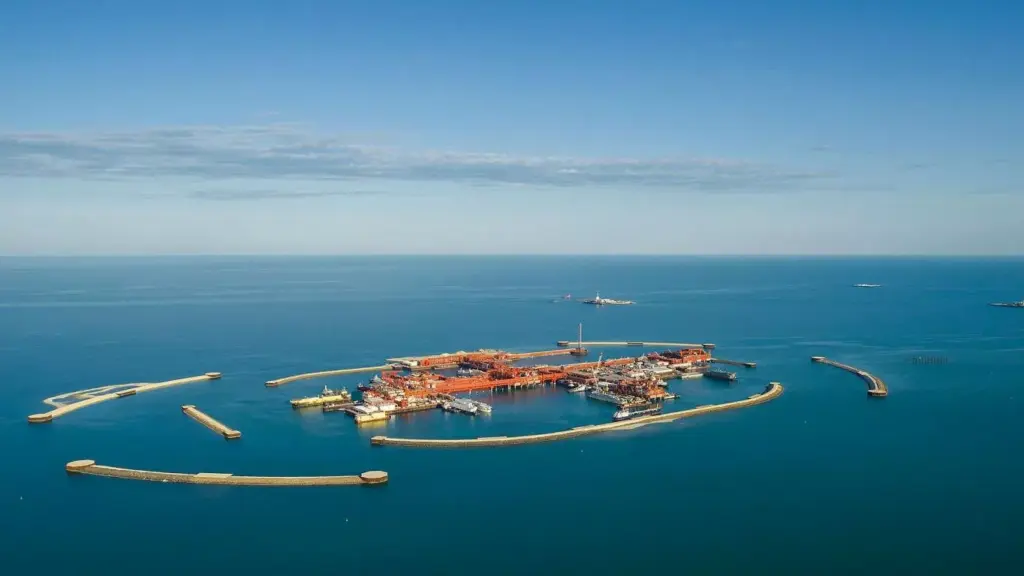
Aerial view of Kazakhstan’s Kashagan offshore oil field, surrounded by breakwaters in the Caspian Sea.

Gasoline prices have risen roughly 10–13% in Tajikistan, Kyrgyzstan, and Uzbekistan as Russia restricts exports after Ukrainian strikes on its refineries, Kazakh economist Aidar Alibayev estimated in a 20 August interview with Current Time. He did not specify the comparison period.

Earlier Ukrainian attacks disrupted Kazakhstan’s crude exports through Russia’s Black Sea ports. Strikes at refineries are creating a different kind of squeeze: Russia has less gasoline available to dependent neighbors. Tajikistan and Kyrgyzstan are seeking other suppliers, while Kazakhstan could face growing pressure if the shortages persist.

Tajikistan has been hit hardest because it depends heavily on Russian fuel and has the region’s most difficult delivery routes, Alibayev said. He estimated gasoline prices there had risen 12–13%. Current Time reported that Tajikistan is exploring supplies from China; Alibayev said it was also turning to Iran.

Kyrgyzstan, which sources more than 90% of its gasoline from Russia, asked its neighbors, Azerbaijan and Kazakhstan, as well as other countries, for help. Current Time reported that a deputy prime minister said its reserves would last about six weeks. Alibayev estimated prices had climbed around 10%, compared with 11–11.5% in Uzbekistan, which he estimated gets half its fuel from Russia.

In Uzbekistan, Alibayev estimated that fuel prices had risen by about 11% and said the country gets about half of its fuel from Russia.

Russia extended its gasoline and diesel export restrictions through 31 January 2027 as shortages mounted. Intergovernmental and humanitarian shipments remain exempt, while diesel producers regain some export rights from 1 September. Current Time also reported that Russian companies had begun buying gasoline from Belarus.

Kazakhstan is better insulated than its neighbors because its refineries in Atyrau, Shymkent, and Pavlodar produce enough fuel to meet most domestic demand, Alibayev noted. Motorists from Russia and neighboring states are crossing its borders to refuel. He attributed Kazakhstan’s price rises mainly to domestic taxes and the end of an export moratorium—not Russia’s shortage alone.

Central Asia looks for routes beyond Russia as war drags on

Ukraine’s Black Sea campaign has repeatedly struck oil infrastructure around Novorossiysk, where the Caspian Pipeline Consortium terminal handles about 80% of Kazakhstan’s crude exports. Separate tanker attacks cut CPC loadings by a fifth and forced Kazakhstan to reduce production. In contrast, disruptions at the terminal forced Kazakhstan to send Kashagan crude to China for the first time.

Kashagan oil field near Atyrau. CPC disruptions have prompted Kazakhstan to reroute crude to China. Map: Euromaidan Press / Datawrapper

At an informal summit of Central Asian leaders in Cholpon-Ata in early August, Tajik President Emomali Rahmon proposed building a refinery to serve the whole region. For now, Alibayev said, the decisive factor is how long Russia’s troubles last: the longer Ukraine’s strikes continue, the more they will weigh on prices across Central Asia.
Ukraine hits major Russian refinery and Black Sea oil terminal as drones strike substation powering occupied Crimea

20 août 2026 à 08:01

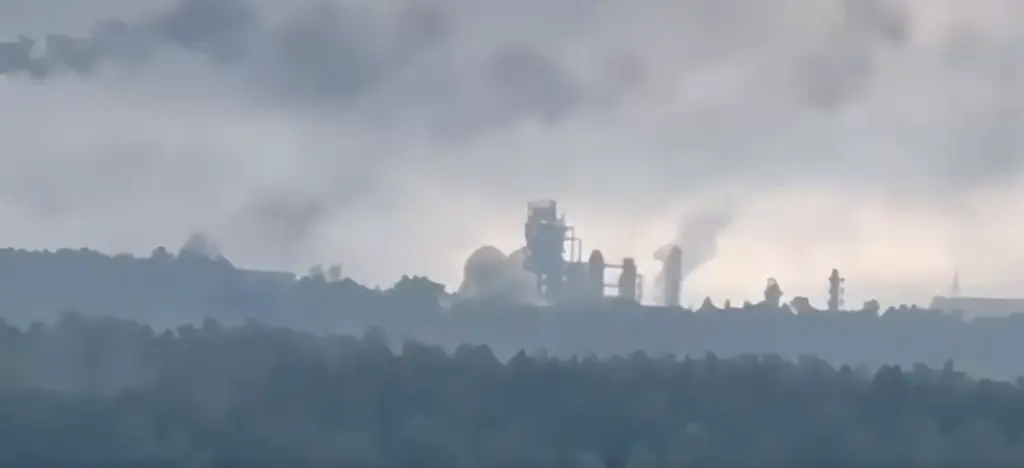
Distant refinery structures silhouetted beneath a cloudy sky, with several gray plumes rising above the industrial complex.

Ukraine’s Defense Forces struck a major oil refinery and a Black Sea oil terminal on 19 August and overnight into 20 August, Ukraine’s General Staff reported. Drones also hit a key mainland electricity hub supplying occupied Crimea, Militarnyi reported after analyzing NASA satellite data.

Together, the reported strikes put three parts of Russia’s war machine under attack within hours: fuel production, Black Sea oil exports, and the mainland electricity bridge to occupied Crimea. They continue a deep-strike campaign intended to disrupt fuel supplies and logistics supporting Russia's invasion

A major refinery deep inside Russia

Ukraine struck the TANECO refinery in Nizhnekamsk, in the Russian republic of Tatarstan, where the General Staff reported a fire at the production site. Militarnyi had earlier identified the same facility from eyewitness footage showing a drone reaching the city’s industrial zone despite Russian air-defense fire.

Ukrainian attack drones swarmed Russia’s Nizhnekamsk Oil Refinery this morning, scoring multiple hits and setting the plant on fire.

Seen here, a Ukrainian Fire Point FP-1 maneuvers and then dives into one of the already-burning Russian refinery’s process units. pic.twitter.com/3v9AjEZFs5

— OSINTtechnical (@Osinttechnical) August 20, 2026

Owned by Tatneft, TANECO is one of Russia’s newest, largest, and most technologically advanced refineries. It can process more than 16 million tons of crude annually and produces gasoline, diesel, aviation fuel, marine fuel, and other petroleum products.

Neither the General Staff nor the available imagery established whether processing equipment was damaged or production stopped.

A Black Sea terminal moving about 20 million tons a year

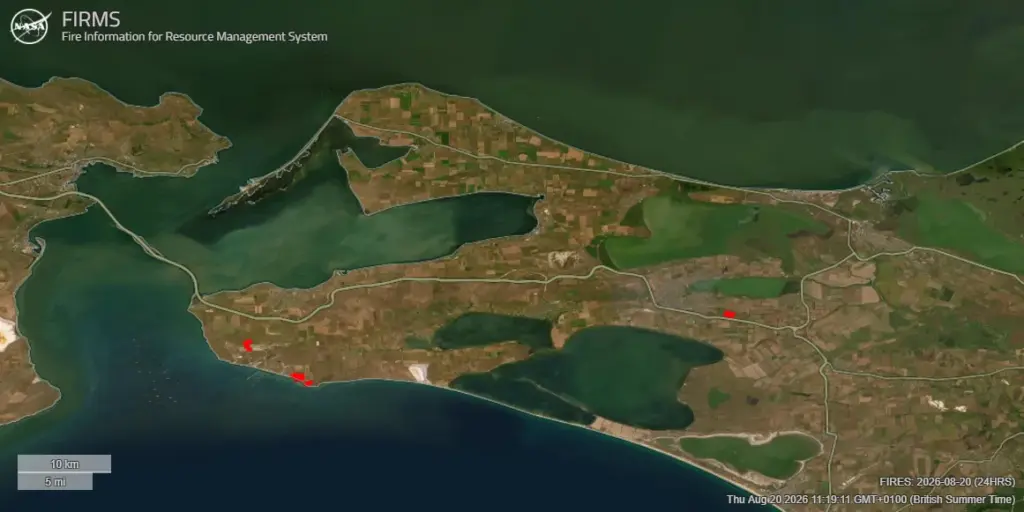
Ukraine also hit the Tamanneftegaz oil and gas terminal in the village of Volna, Krasnodar Krai, where the General Staff reported another fire. Militarnyi found a corresponding fire in NASA Fire Information for Resource Management System (FIRMS) data and assessed that storage tanks were likely burning.

Taman Peninsula with FIRMS data showing 20 August  Ukrainian strikes
Thermal anomalies on NASA FIRMS from left to right: Tamanneftegaz terminal and Taman 500-kilovolt substation. Source: NASA FIRMS

Militarnyi described Tamanneftegaz as southern Russia’s largest private oil terminal. The complex can handle about 19.9 million tons annually, while its tank farm held more than 1 million cubic meters before Ukrainian attacks began.

The Tamanneftegaz terminal receives, stores, and loads petroleum products onto tankers, making it an important link in Russia’s Black Sea exports. Drones previously hit three tanks and pipelines there on 30 July.

The mainland electricity gateway to occupied Crimea

Drones hit the Taman 500-kilovolt substation in Krasnodar Krai, where NASA satellite data recorded a fire, Militarnyi reported. All four lines of Russia’s power bridge across the Kerch Strait pass through this high-voltage hub, making it the principal mainland gateway for electricity sent to occupied Crimea, Militarnyi reported.

⚠ Confirmed: Metrics show a sudden decline in internet connectivity across Russian-controlled Crimea with high impact to Sevastopol and Simferopol corresponding to a power blackout after overnight Ukrainian drone attacks targeting energy infrastructure 🔌 pic.twitter.com/dqCXzTDcWO

— NetBlocks (@netblocks) August 20, 2026

Power failed in Simferopol, Sevastopol, Kerch, Feodosia, and Yalta around 1:45 a.m., according to Suspilne Crimea. Electric transport stopped in several cities. Sevastopol’s occupation chief said restrictions were lifted after about 90 minutes, although the grid remained unstable and some nearby settlements still lacked electricity. Social facilities in Sevastopol switched to backup power.

Crimean Wind also reported explosions near the Kafa and Malorechenske substations inside Crimea, Suspilne Crimea reported. The available evidence therefore does not establish that the Taman strike alone caused the outages.

Ukraine’s sustained long-range strike campaign

Ukraine's long-range strikes on Russian targets have ramped up in recent months. One day earlier, drones hit a key crude-processing unit at the Bashneft-UNPZ refinery in Ufa, Militarnyi reported. Ukraine had also struck TANECO on 10 August and both Nizhnekamsk refineries on 12 June, Suspilne reported.

Euromaidan Press reported that Ukrainian deep strikes hit 18 Russian oil and gas facilities in May, making it the heaviest month of 2026 at that point. On 6 August, drones attacked a top-five refinery in Yaroslavl for the seventh time this year. Five days later, they reached Orsk, about 1,500 kilometers from Ukraine.

❌