Vue normale

  • ✇Euromaidan Press
  • More than 100 drones detected near Romania in four days, NATO jets scrambled seven times
    More than 100 drones were detected near Romania over the past 96 hours, with NATO fighter jets scrambled seven times in response to the increased aerial activity, Romanian Defense Minister Radu Miruță said, according to Antena 3 CNN. The figures come as Romania faces a growing number of drone incidents linked to Russia’s war against Ukraine. Romanian forces have recently shifted from monitoring and escorting drones to actively destroying those that enter Romanian airspa
     

More than 100 drones detected near Romania in four days, NATO jets scrambled seven times

14 août 2026 à 16:42

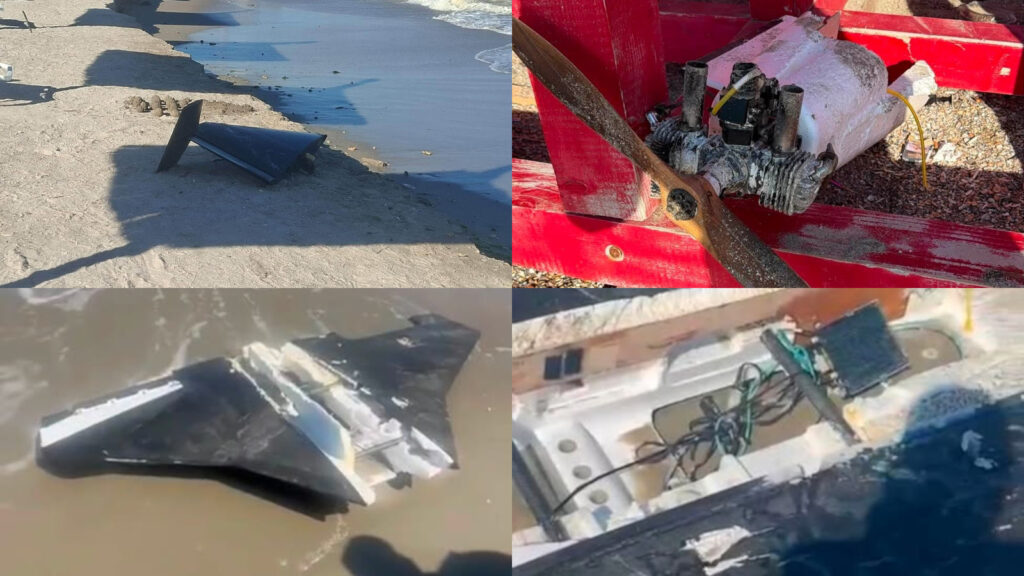
Drone debris washed ashore in Romania after Russian attacks on Ukraine, 13-14 August 2026. Photos: Radu Miruță

More than 100 drones were detected near Romania over the past 96 hours, with NATO fighter jets scrambled seven times in response to the increased aerial activity, Romanian Defense Minister Radu Miruță said, according to Antena 3 CNN.

The figures come as Romania faces a growing number of drone incidents linked to Russia’s war against Ukraine. Romanian forces have recently shifted from monitoring and escorting drones to actively destroying those that enter Romanian airspace, while NATO aircraft are increasingly being called on to respond to aerial threats along the alliance’s eastern flank.

NATO aircraft repeatedly activated

According to Miruță, Romanian authorities detected more than 100 drones in the vicinity of Romanian territory during the four-day period. NATO fighter jets participating in air-policing missions were activated seven times.

Miruță did not report how many of the detected drones entered Romanian airspace, nor how many were identified as Russian or Ukrainian.

Miruță said most of the drones were destroyed by Ukrainian air defenses outside Romania, but close enough for their debris to reach Romanian shores.

“[Russia’s war in Ukraine] is a real war, with real consequences. That is why we are taking every measure we can to limit the indirect consequences that are also being felt here,” Miruță wrote on Facebook.

The report comes shortly after Romania destroyed two Russian Gerbera-type drones that were found drifting in the Black Sea near the Neptun Deep offshore gas project on 11 August. Romanian military divers carried out controlled detonations after Ukraine confirmed the drones were not Ukrainian.

Romania has begun shooting down drones

The latest figures follow a significant change in Romania’s response to drone incursions.

In late July, Romanian F-16s shot down three drones over Romanian territory and territorial waters in three consecutive days. One of the drones was identified as a Russian Shahed-type attack drone, while investigations were conducted into the others.

The July incidents marked a shift from Romania’s previous approach of tracking or escorting drones that crossed into its airspace during Russian attacks on Ukraine. Four of the five drones shot down in EU and NATO countries at that point had been neutralized by Romanian military pilots, according to Miruță.

Romanian President Nicușor Dan called the repeated violations of Romanian airspace “inadmissible and intolerable” and Bucharest prepared a diplomatic protest to Moscow after one of the downed drones was identified as Russian.
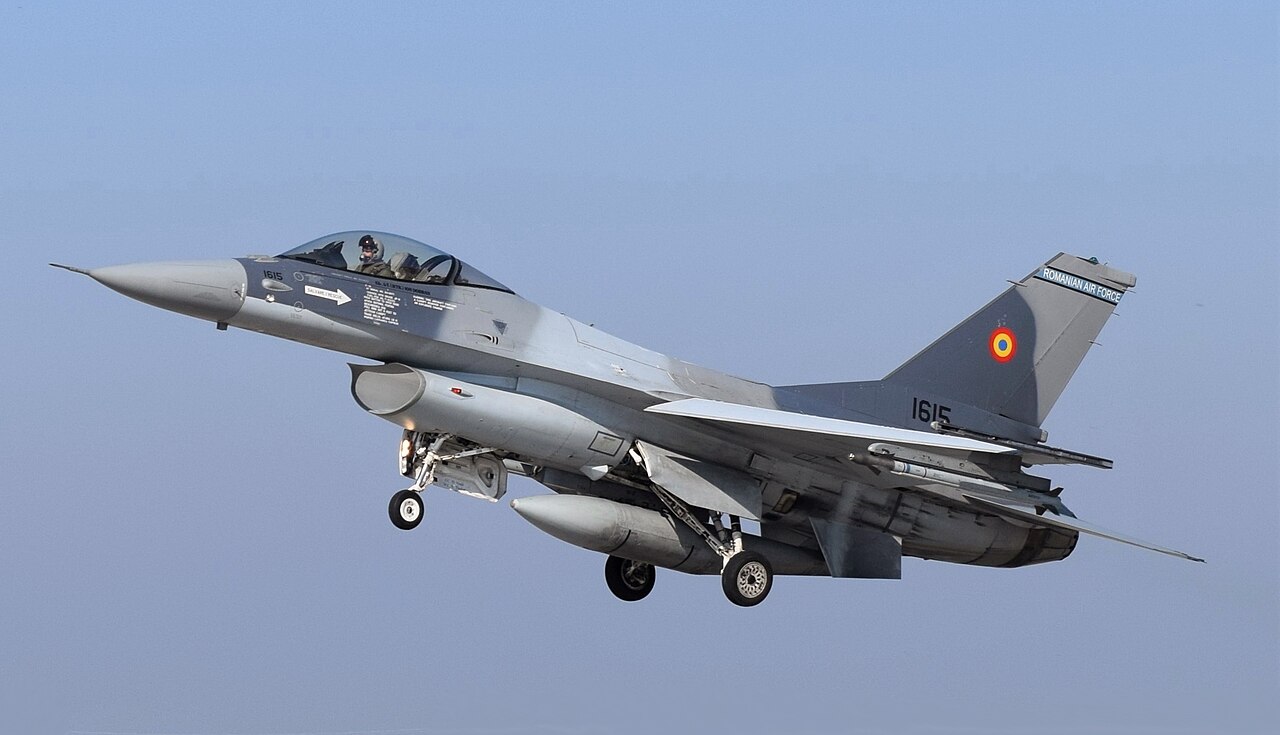
romania knocks third drone its sky 72 hours · post romanian air force f-16 fighting falcon fighter jet lands borcea base 2023 dvidshubnet romanian_f-16_fighting_falcon_lands_at_borcea_air_base_romania ukraine news ukrainian reports
Explore further

Romania knocks a third Russian drone from its sky in 72 hours

Drone war reaches beyond Ukraine

Romania has repeatedly dealt with drones crossing its border during Russian attacks on Ukrainian territory, particularly in the vicinity of Ukrainian ports on the Danube and the Black Sea.

In June, a Ukrainian sea drone that had lost control, which Kyiv attributed to Russian electronic warfare, exploded near an oil terminal in the Romanian port of Constanța. No one was injured, but more than 1,000 people were evacuated from the area as a precaution.

The incidents have also extended beyond Romania. On 14 August, NATO fighter jets shot down a foreign drone after it entered Latvian airspace. Latvia said the drone had entered its airspace as a result of Russian electronic warfare activity.

The repeated incidents have made drone activity around NATO’s eastern border an increasingly regular consequence of Russia’s war against Ukraine.

  • ✇Euromaidan Press
  • Russia plans to remove border zones separating Russia from occupied Ukrainian territories
    Russia’s Federal Security Service (FSB) plans to abolish special border zones along several boundaries with Ukrainian territories occupied by Russia, according to draft orders reviewed by the Russian outlet Agentstvo. The proposed changes would remove restrictions that currently treat movement between Russia and occupied parts of Ukraine much like crossing an international border. The FSB says the move follows Russia’s claimed incorporation of the occupied Ukrainian ter
     

Russia plans to remove border zones separating Russia from occupied Ukrainian territories

14 août 2026 à 15:58

Map of Ukraine, with Russian-occupied territory marked in red, 14 August 2026. Map: DeepState

Russia’s Federal Security Service (FSB) plans to abolish special border zones along several boundaries with Ukrainian territories occupied by Russia, according to draft orders reviewed by the Russian outlet Agentstvo.

The proposed changes would remove restrictions that currently treat movement between Russia and occupied parts of Ukraine much like crossing an international border. The FSB says the move follows Russia’s claimed incorporation of the occupied Ukrainian territories into Russia.

FSB seeks to remove border zones

The draft orders, as reported by Ukrainska Pravda, would invalidate previous FSB orders establishing border zones along the boundaries between Russia’s Rostov and Voronezh oblasts and the occupied territories of Ukraine.

A similar change is planned for occupied Crimea, where the current border zone along the boundary with occupied Kherson Oblast would be abolished.

The existing rules effectively impose additional controls on people entering and leaving the occupied territories, making movement subject to procedures similar to those used at Russia’s state border.

In the draft orders, the FSB justifies the changes by referring to the alleged “admission into the Russian Federation” of the occupied parts of Donetsk, Luhansk, and Kherson oblasts.

Russia illegally claimed to annex those territories, along with Zaporizhzhia Oblast, in September 2022. The move has been rejected by Ukraine and the international community, and Russia does not control all of the territory it claims to have annexed.

Border zone would remain around Crimea's islands

The FSB proposal would not completely eliminate the border zone in occupied Crimea.

A restricted zone would remain “within the boundaries of the Black Sea islands belonging to the Russian Federation,” according to the draft. The FSB’s regional directorate would determine where and when people could enter the zone and would install warning signs.

The proposed changes would remove the existing border zones along Russia’s boundaries with occupied Ukrainian territories, while retaining a border zone around certain Black Sea islands in occupied Crimea.

Russia treats occupied territory as part of its territory

The planned changes reflect Moscow’s effort to incorporate occupied Ukrainian territories into Russia’s administrative and legal system.

In September 2022, Russian President Vladimir Putin signed so-called “accession treaties” claiming to incorporate Donetsk, Luhansk, Kherson, and Zaporizhzhia oblasts into Russia. Russia’s parliament subsequently approved the claims.

The treaties purported to define the boundaries of the annexed territories according to the borders they had on the day Russia claimed to admit them into the Russian Federation, despite Russia not controlling the entirety of those regions.

Russia previously used similar measures to formalize its control over occupied Crimea after illegally annexing the peninsula in 2014.

A Russian soldier kept a Ukrainian woman in a basement and raped her for two months – Ukrainian court sentences him to 12 years

14 août 2026 à 14:17

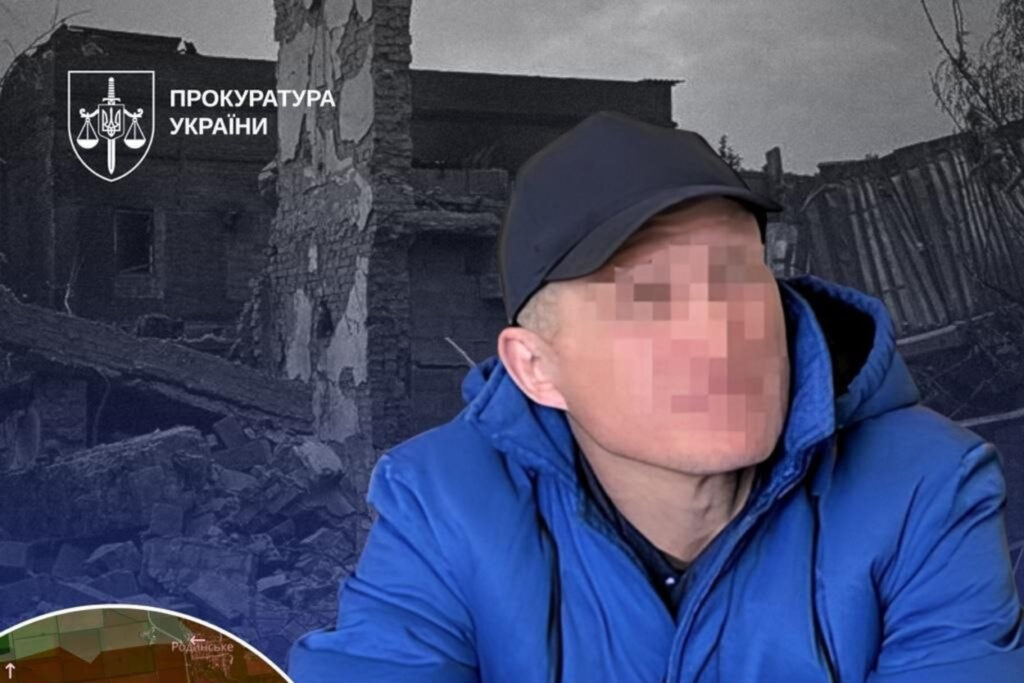
A Russian soldier was sentenced to 12 years for repeatedly raping a Ukrainian civilian woman in occupied Donetsk Oblast. Ukraine's Prosecutor General’s Office

A Ukrainian court has sentenced a Russian soldier to 12 years in prison for repeatedly raping a 57-year-old civilian woman for about two months in an occupied village in Donetsk Oblast, Ukraine’s Prosecutor General’s Office said on 14 August.

Ukrainian authorities and international monitors have documented hundreds of cases of conflict-related sexual violence by Russian forces in Ukraine, while warning that the true number is likely higher because many cases go unreported, particularly in occupied territories.

Woman was trapped with Russian soldiers

The 50-year-old Russian serviceman entered a village in the Pokrovsk district in September 2025 as part of a small infantry group, according to prosecutors. He and two other Russian soldiers occupied the basement of a private home where two local civilians were sheltering from Russian attacks.

During one of the attacks, the civilian man was killed. The woman was then left in the basement with the three armed Russian soldiers.

In early October, one of the soldiers began sexually assaulting her. The court found that the abuse became systematic and continued for about two months.

The soldier threatened to kill the woman if she refused. Two other Russian servicemen were present during this period, while the woman was effectively unable to leave the basement or protect herself.

The abuse ended in December, when Ukrainian forces captured the Russian soldier during fighting. The woman was freed.

Convicted Russian soldier had spent 32 years in prison

The convicted man is a resident of Russia’s Sverdlovsk Oblast who had spent a total of 32 years in prison for robbery and armed robbery before joining the Russian military.

He signed a contract with the Russian army while serving his sentence and was later deployed as a rifleman with the 114th Separate Motor Rifle Brigade of Russia’s 51st Combined Arms Army.

The defendant denied committing the crime in court. Prosecutors presented evidence that the court found sufficient to establish his guilt in the cruel treatment of a civilian.

He was sentenced to 12 years in prison, the maximum punishment under the provision of Ukraine’s Criminal Code used in the case.

Sexual violence as a weapon of Russia’s war

Ukraine’s Prosecutor General’s Office had recorded 401 cases of sexual violence against civilians allegedly committed by Russian military personnel since the start of the full-scale invasion as of June 2026.

The victims included 250 women and 151 men, including 23 girls and one boy.

Donetsk Oblast had the second-highest number of documented cases, with 92, behind Kherson Oblast’s 124. Ukrainian prosecutors had sent 64 indictments involving 81 people to court, while Ukrainian courts had issued 19 verdicts against 26 individuals. All those convicted received prison sentences.

The documented figures do not capture the full scale of the abuse. The Prosecutor General’s Office has noted that the actual number may be higher because these are cases victims have been able to report.

“Responsibility is inevitable”: Zelenskyy warns Russian collaborators in occupied territories after explosion kills defector

14 août 2026 à 12:13

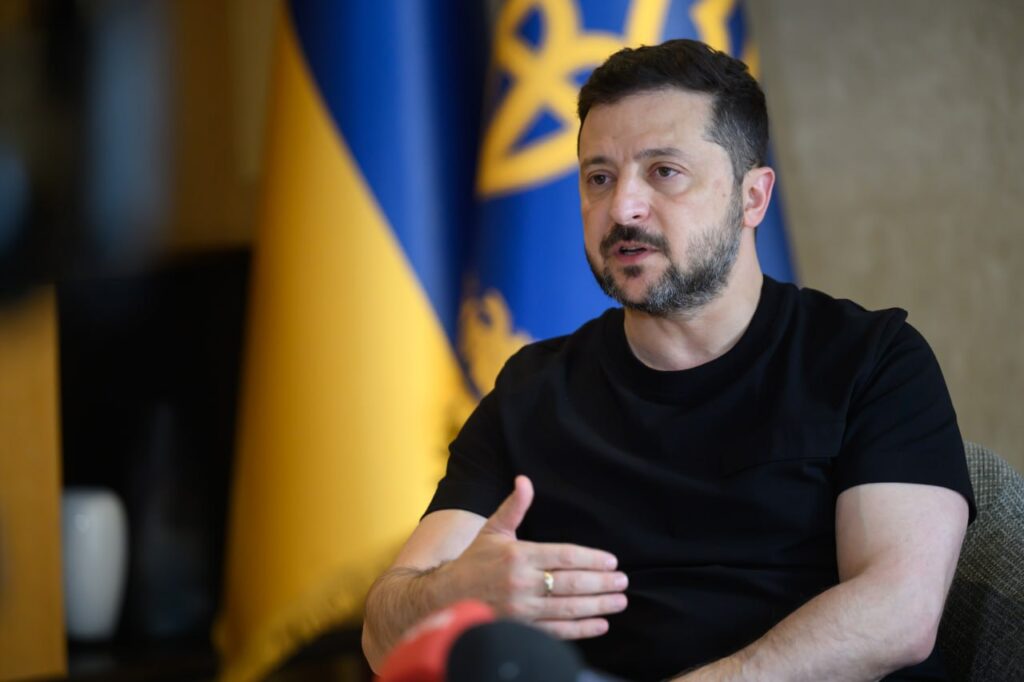
Ukrainian President Volodymyr Zelenskyy, 8 August 2026. Photo: Zelenskyy on Telegram

Ukrainian President Volodymyr Zelenskyy said Ukrainian special services are conducting targeted operations against collaborators in Russian-occupied territories who assist Russia’s attacks against Ukraine and Ukrainians.

Speaking after a meeting of Ukraine’s top military leadership on 14 August, Zelenskyy said he received a separate briefing from Ukraine’s special services on the progress of these operations.

He specifically mentioned occupied Sevastopol, where Ukrainian officials have previously accused local collaborators of supporting Russia’s military operations.

“Responsibility for collaborators is inevitable,” Zelenskyy said.

Operations target those helping Russia

Zelenskyy did not identify the individuals targeted or provide operational details, saying only that the special services had reported on the implementation of “targeted operations” against collaborators in occupied territories.

He said the targets include people who participate in Russian attacks against Ukraine and Ukrainians.

The comments signal that Ukraine is continuing to pursue individuals in occupied territory who assist Russian forces, including through intelligence, military support, or other forms of cooperation.

Sevastopol explosion on 13 August

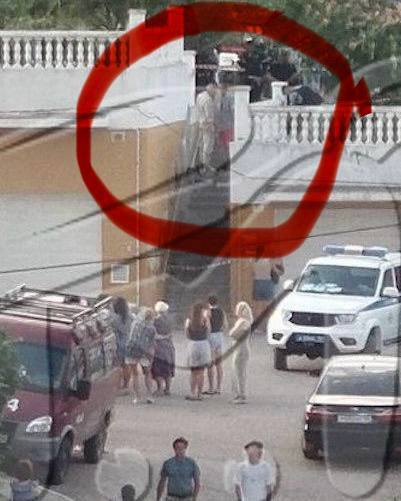
The statement comes shortly after an explosion in occupied Sevastopol on 13 August killed a Russian military officer.

Russian and Ukrainian sources have circulated claims that the victim was Robert Shageyev, reportedly a former Ukrainian Navy officer who joined Russia after the occupation of Crimea and later served in Russia’s Black Sea Fleet. 

His identity and the circumstances of the explosion have not been officially confirmed by Ukrainian authorities.

Russian sources had suggested Ukrainian involvement in the incident, but Ukraine has not publicly claimed responsibility.

Sevastopol
Explore further

Man killed in explosion in occupied Sevastopol, Russian sources report

Ukraine prepares for Russia’s next moves

The discussion of operations against collaborators was part of a broader meeting focused on Ukraine’s military preparations for the coming months.

Zelenskyy said the main issue was securing funding for Ukraine’s defense and security forces through the fall and winter. Officials identified funding gaps and additional requirements for expanding production of advanced weapons.

Among the priorities are faster production of Ukrainian strike weapons and new defensive systems, including jet-powered interceptor drones designed to counter Russian aerial threats.

Ukrainian intelligence also provided updated information about Russia’s plans, according to Zelenskyy. He said Ukraine is preparing countermeasures, including asymmetric responses.

The meeting also covered the effectiveness of Ukraine’s long-range and medium-range sanctions against Russia. Zelenskyy said the existing sanctions plan is being implemented and that priorities are being adjusted to ensure Ukraine has the capabilities needed to achieve its objectives.

❌