Vue normale

Russia hunted civilians by drone in Kherson. Victims are suing the US firm they say helped connect the attackers
14 août 2026 à 18:31

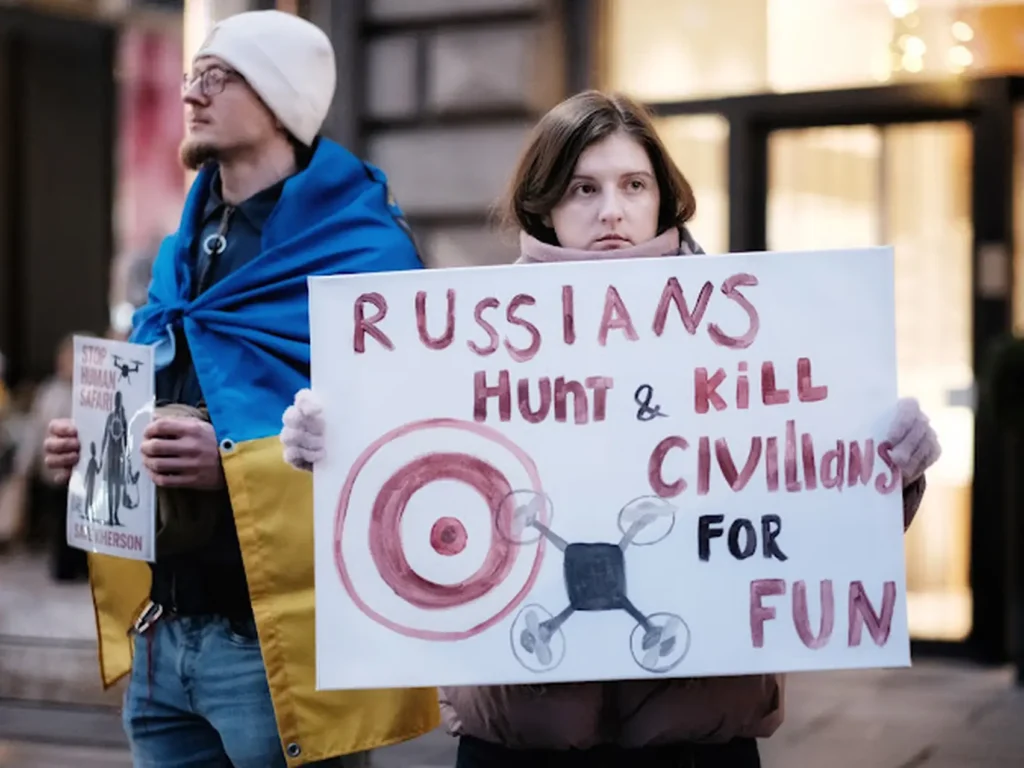
Russia hunts kills protest targets civilians with drones stop human safari save kherson

A New York networking company sold radios that let signals travel 100 kilometers. Ukrainian civilians say Russian drone crews used them to hunt people in Kherson, and they are asking a Manhattan jury to hold the company responsible.

Ukrainian civilians and relatives of people killed by Russian drones sued Ubiquiti Inc. in the US District Court for the Southern District of New York on 11 August, alleging the company's wireless equipment became the backbone of the command network behind Russia's "human safari" against civilians.

The case rests on a comparison that the plaintiffs draw themselves. In February 2026, Starlink terminals that Russian forces had mounted on reconnaissance and strike drones were shut off after Ukraine and SpaceX built a whitelist of authorized terminals. Ubiquiti, the complaint alleges, had the same technical and contractual power over its own devices and did not use it.

That precedent cuts both ways. SpaceX had denied for years that Russian forces were using Starlink systematically, and the whitelist came together only after Ukraine's newly appointed defense minister, Mykhailo Fedorov, approached the company directly. The fix was technically possible—and it took a government to force it.

During this interview with a lovely Khersonian lady, Russian drones made several appearances.

To anyone who has not been to Kherson in the last two years, this might seem impossible or insane.

Nothing about flying machines with explosives attached to them is sane or normal. pic.twitter.com/M0MYorF2FR

— Zarina Zabrisky 🇺🇸🇺🇦 (@ZarinaZabrisky) August 11, 2026

What the lawsuit claims

The law firm DiCello Levitt LLP filed the case, Kovalenko et al. v. Ubiquiti, Inc., No. 1:26-cv-06838. The plaintiffs are Ukrainian civilians who were maimed, displaced, or forced to live under drone surveillance, along with family members of civilians killed in drone attacks. They are seeking a jury trial.

Ubiquiti, listed on the New York Stock Exchange as UI, makes long-range wireless "bridges" widely used for internet access in areas without cable. Its radio bridge antennas and airMAX technology are subject to US export restrictions on Russia. The complaint alleges the devices kept reaching Russian forces through intermediary supply chains, and that they now link reconnaissance units, drone operators, attack units, and commanders across roughly 100 kilometers of encrypted battlefield network.

"Battlefield communications are the central nervous system of the Russian occupation forces: without them, they could not coordinate the human safari or maintain the occupation," Scott Gilmore, the lead attorney for the plaintiffs and a partner at DiCello Levitt, said in an interview with Euromaidan Press.

The complaint cites US export-control restrictions, Russian import data, public reporting, Russian military statements, battlefield images and video, and Ubiquiti's own device telemetry. It alleges the company held location data showing where its devices were operating, including inside Russia and occupied Ukrainian territory, and that it was repeatedly warned its products were being smuggled across the border.

It further alleges Ubiquiti continued issuing firmware updates and technical support that kept those devices running, and that it could have cut the pipeline off—by geofencing, by terminating distributors tied to sanctions-evasion routes, or by building a remote-disable feature into its firmware.

This case is not about standard warfare: it's about murdering civilians.

Scott Gilmore, lead attorney for the plaintiffs

"Companies cannot willfully blind themselves when sanctions and export controls are being breached, and their devices are being foreseeably used in dangerous ways," Gilmore said. "US law is clear that companies bear legal responsibility when they entrust dangerous devices to end users who they know or should know are hurting people. This case is not about standard warfare: it's about murdering civilians."

The plaintiffs bring eight causes of action, including negligent entrustment, public nuisance, strict products liability for design defect, negligent product design, negligent infliction of emotional distress, and aiding and abetting assault, battery, and intentional infliction of emotional distress.

Russia human safari drone attacks civilians Kherson
Explore further

Russian drone kills 84-year-old goat herder who refused to abandon her animals

How the radios got to the front

The lawsuit follows an investigation published in January 2026 by Hunterbrook Media, which documented widespread use of Ubiquiti products by Russian forces. One Ukrainian communications officer told the outlet that an estimated 80% of the Russian bridges he had observed near the front line were Ubiquiti devices.

Analysis of trade records found the value of Ubiquiti shipments crossing into Russia rose by 66% after the full-scale invasion, despite US and EU export controls, and that the shipments included models released after the bans took effect. The goods moved mainly through distributors in third countries such as Kazakhstan and Türkiye. Russian units often received the bridges from volunteers who bought them with crowdfunded money.

Ubiquiti has been here before. In 2014, the company paid a $504,225 settlement to the US Treasury's Office of Foreign Assets Control after its products were delivered to Iran in violation of US sanctions between 2008 and 2011.

🔴Human safari: the first video of a drone chasing a civilian. CCTV camera footage I obtained in Aug 2024.

This systematic drone terror campaign has been going on for two years.

Today, in Kherson, as of 9 pm,

11 drone attacks reported;
6 civilians injured

Dozens unreported https://t.co/OU9i97Geyu

— Zarina Zabrisky 🇺🇸🇺🇦 (@ZarinaZabrisky) August 11, 2026

The campaign at the center of the case

Russia's "human safari" is a campaign in which small drones hunt and attack civilians, concentrated in Kherson and other front-line areas. Operators use drone cameras to track people, vehicles, and rescuers, and sometimes strike the same target twice.

UN investigators concluded in September 2025 that Russian short-range drone attacks on civilians along the west bank of the Dnipro River amount to the crimes against humanity of murder and forcible transfer of population. The finding covers more than 300 kilometers across Kherson, Dnipropetrovsk, and Mykolaiv oblasts. The complaint cites it as evidence.

Ukraine's Security Service has since charged 10 operators from Russia's 404th Motorized Rifle Regiment with war crimes in absentia, in a case that included explosives dropped on ambulances at a city hospital and a double strike on rescuers.

The incidents in the complaint include a married couple attacked in their car, a firefighter hunted and wounded by a drone while responding to a colleague, and an energy worker killed in a double-tap strike as colleagues tried to reach him.

"The human safari is one of the most horrific crimes against humanity of the 21st Century," Gilmore said. "We intend to present evidence of the widespread and systematic nature of this campaign in court, including international documentation. These coordinated attacks do not happen randomly: they require communications systems and a chain of command. That is precisely why the United States banned the export of Ubiquiti's radio bridge antennas to Russia—because they are necessary for Russia's war machine."

The human safari is one of the most horrific crimes against humanity of the 21st Century.

Scott Gilmore, lead attorney for the plaintiffs

Russian state media has shown the equipment in use.

Zvezda, the television channel run by Russia's Defense Ministry, aired footage on 3 July 2025 of a Ubiquiti UISP Litebeam 5AC device; a TASS report in October 2025 showed a serviceman logging into Ubiquiti's airOS operating system, and a Rossiya-1 segment that month showed one climbing a tower to mount an antenna carrying the company's logo.

A Russian seller supplied Hunterbrook with letters she said came from Russian military units, thanking her for wireless bridges they described as necessary for connections over long distances.

Ubiquiti has said nothing

Ubiquiti did not respond to a request for comment at the time of publication.

Neither the company nor its chief executive, Robert Pera, has publicly commented on the January investigation, according to the Foundation for Defense of Democracies. No US or EU authority has announced an enforcement action against Ubiquiti over Russia, and the company has not been formally accused of sanctions violations tied to Ukraine. The allegations in the complaint are untested, and Ubiquiti has not yet filed a response.

Human safari drone attacks Kherson civilians
Explore further

Inside Human Safari: the film that captures Russia’s drones hunting Ukrainians like prey

What the case would establish

If it survives, the suit would test whether ordinary US product-liability law reaches a manufacturer whose equipment ends up in a documented atrocity—a theory that does not require proving the company intended any of it, only that it knew or should have known and failed to act.

"The question is this: what would a reasonable company do if it learned its devices were being used to coordinate murder?" Gilmore said. "If it fails to follow reasonable safety measures, shouldn't it be held liable to the civilians who get hurt? Those are the questions we intend to put before a New York jury."

Gilmore, who has investigated war crimes for two decades, said the legal framework needed already exists at national and international levels, and that in mass-atrocity cases from Syria to Sudan, investigations, jurisdiction, and remedies take years. He said he expects accountability for Ukrainian victims to come through criminal prosecutions, civil litigation, and regulatory enforcement together.

"Our clients want to shine a light on the atrocities being committed against civilians in Ukraine and to remind companies that compliance with sanctions and export controls is not a mere technicality: it's a matter of life or death," he said.

"We are at the tip of the spear."

Editor's note: Euromaidan Press correspondent Zarina Zabrisky, who conducted this interview and reports from Kherson, co-developed draft US legislation on the drone campaign—the Liability for Operators and Responsible Authorities (LORA) Act—which would impose targeted sanctions on identified drone operators, restrict exports of drone components, and require public attribution of perpetrators. She has no connection to this lawsuit or to the firm that filed it. Her documentary Kherson: Human Safari is available free at khersonhumansafari.com.

  • ✇Euromaidan Press
  • More than 100 drones detected near Romania in four days, NATO jets scrambled seven times
    More than 100 drones were detected near Romania over the past 96 hours, with NATO fighter jets scrambled seven times in response to the increased aerial activity, Romanian Defense Minister Radu Miruță said, according to Antena 3 CNN. The figures come as Romania faces a growing number of drone incidents linked to Russia’s war against Ukraine. Romanian forces have recently shifted from monitoring and escorting drones to actively destroying those that enter Romanian airspa
     

More than 100 drones detected near Romania in four days, NATO jets scrambled seven times

14 août 2026 à 16:42

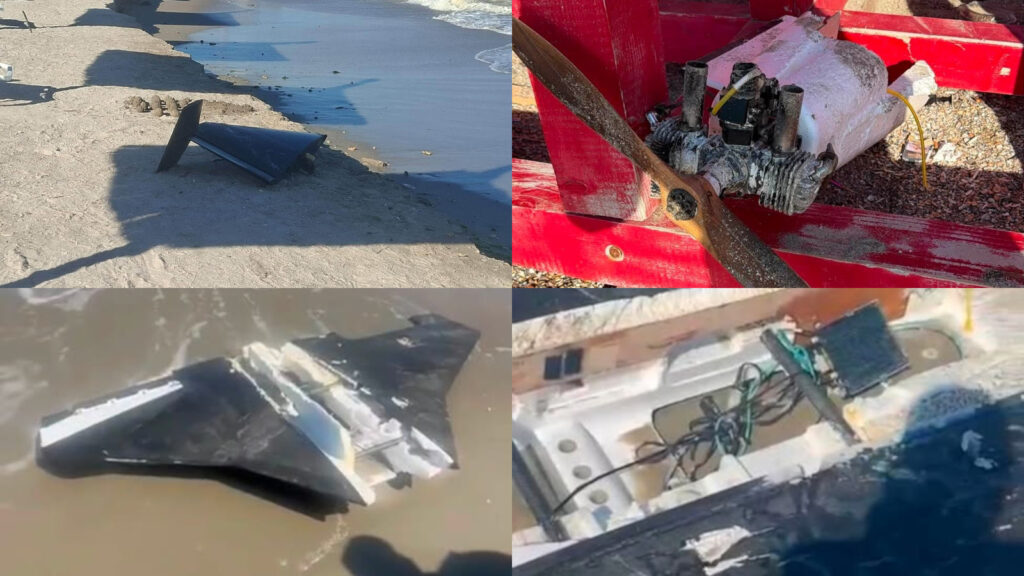
Drone debris washed ashore in Romania after Russian attacks on Ukraine, 13-14 August 2026. Photos: Radu Miruță

More than 100 drones were detected near Romania over the past 96 hours, with NATO fighter jets scrambled seven times in response to the increased aerial activity, Romanian Defense Minister Radu Miruță said, according to Antena 3 CNN.

The figures come as Romania faces a growing number of drone incidents linked to Russia’s war against Ukraine. Romanian forces have recently shifted from monitoring and escorting drones to actively destroying those that enter Romanian airspace, while NATO aircraft are increasingly being called on to respond to aerial threats along the alliance’s eastern flank.

NATO aircraft repeatedly activated

According to Miruță, Romanian authorities detected more than 100 drones in the vicinity of Romanian territory during the four-day period. NATO fighter jets participating in air-policing missions were activated seven times.

Miruță did not report how many of the detected drones entered Romanian airspace, nor how many were identified as Russian or Ukrainian.

Miruță said most of the drones were destroyed by Ukrainian air defenses outside Romania, but close enough for their debris to reach Romanian shores.

“[Russia’s war in Ukraine] is a real war, with real consequences. That is why we are taking every measure we can to limit the indirect consequences that are also being felt here,” Miruță wrote on Facebook.

The report comes shortly after Romania destroyed two Russian Gerbera-type drones that were found drifting in the Black Sea near the Neptun Deep offshore gas project on 11 August. Romanian military divers carried out controlled detonations after Ukraine confirmed the drones were not Ukrainian.

Romania has begun shooting down drones

The latest figures follow a significant change in Romania’s response to drone incursions.

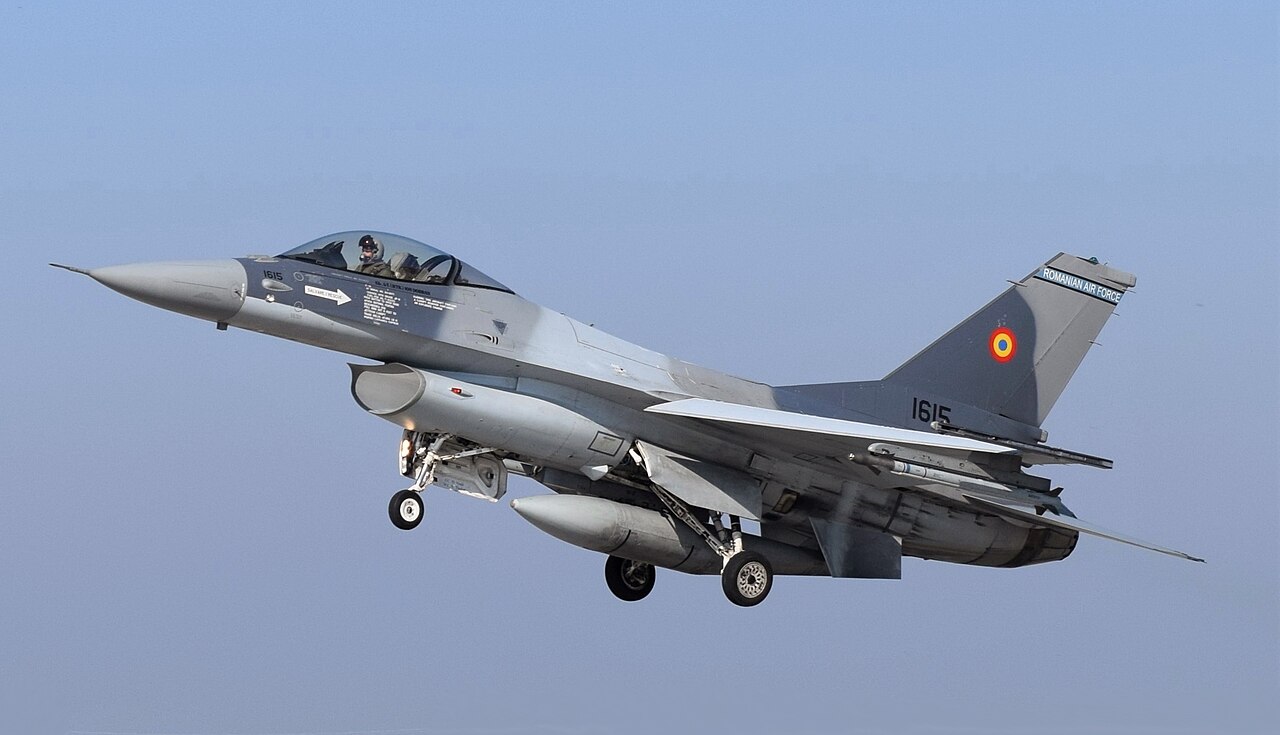
In late July, Romanian F-16s shot down three drones over Romanian territory and territorial waters in three consecutive days. One of the drones was identified as a Russian Shahed-type attack drone, while investigations were conducted into the others.

The July incidents marked a shift from Romania’s previous approach of tracking or escorting drones that crossed into its airspace during Russian attacks on Ukraine. Four of the five drones shot down in EU and NATO countries at that point had been neutralized by Romanian military pilots, according to Miruță.

Romanian President Nicușor Dan called the repeated violations of Romanian airspace “inadmissible and intolerable” and Bucharest prepared a diplomatic protest to Moscow after one of the downed drones was identified as Russian.

romania knocks third drone its sky 72 hours · post romanian air force f-16 fighting falcon fighter jet lands borcea base 2023 dvidshubnet romanian_f-16_fighting_falcon_lands_at_borcea_air_base_romania ukraine news ukrainian reports
Explore further

Romania knocks a third Russian drone from its sky in 72 hours

Drone war reaches beyond Ukraine

Romania has repeatedly dealt with drones crossing its border during Russian attacks on Ukrainian territory, particularly in the vicinity of Ukrainian ports on the Danube and the Black Sea.

In June, a Ukrainian sea drone that had lost control, which Kyiv attributed to Russian electronic warfare, exploded near an oil terminal in the Romanian port of Constanța. No one was injured, but more than 1,000 people were evacuated from the area as a precaution.

The incidents have also extended beyond Romania. On 14 August, NATO fighter jets shot down a foreign drone after it entered Latvian airspace. Latvia said the drone had entered its airspace as a result of Russian electronic warfare activity.

The repeated incidents have made drone activity around NATO’s eastern border an increasingly regular consequence of Russia’s war against Ukraine.

  • ✇Euromaidan Press
  • Ukraine’s quiet counteroffensive took 745 square km. Russia’s dead Starlink is how
    In six months of unheralded advances, Ukrainian forces liberated a wide stretch of the southeast The collapse of Russian communications turned a local push into a six-month advance Now the Russians may mobilize yet again, so the Ukrainians are digging in and consolidating their gains The scale of Ukrainian forces' counteroffensive in southeastern Ukraine early this year is finally becoming clear. In six months of maneuver starting on 29 January, a clutch of Uk
     

Ukraine’s quiet counteroffensive took 745 square km. Russia’s dead Starlink is how

Par : David Axe
14 août 2026 à 16:07

Soldiers of Ukraine's 79th Air Assault Brigade.

  • In six months of unheralded advances, Ukrainian forces liberated a wide stretch of the southeast
  • The collapse of Russian communications turned a local push into a six-month advance
  • Now the Russians may mobilize yet again, so the Ukrainians are digging in and consolidating their gains

The scale of Ukrainian forces' counteroffensive in southeastern Ukraine early this year is finally becoming clear. In six months of maneuver starting on 29 January, a clutch of Ukrainian units, including the 78th, 79th, 80th, 82nd, and 95th Air Assault Brigades and the 1st and 425th Assault Regiments—tens of thousands of troops, in all—marched through gaps in Russian defenses and, according to Ukrainian officials, liberated around 745 square km and 26 settlements. Mostly in Dnipropetrovsk Oblast but also in neighboring Zaporizhzhia and Donetsk Oblasts.

That is Kyiv's own accounting, and it is the high end. The Institute for the Study of War, which maps control from geolocated imagery, put the figure at roughly 627 square km across the Oleksandrivka direction and the northern Hulyaipole direction—while noting its own conservative method probably undercounts. Either number describes the largest Ukrainian territorial gain since 2023.

The Ukrainian gains helped to offset Russian gains around the last few free cities in eastern Ukraine's Donetsk Oblast. Between the start of February and the end of July, Russian regiments captured a net total of just 260 square km of Ukrainian soil, according to a tally by the Black Bird Group. It would've been more than 1,000 square km if those air assault and assault units hadn't been busy clearing the Russians from a wide swathe of the southeast.

According to our data, in July the net gains of the Russian armed forces in Ukraine were approximately 106km².

This is the fastest Russian advance since January, but their gains remain extremely limited. In July of 2025 the Russians captured nearly 5 times as much territory.

1/ pic.twitter.com/02931eDLk0

— Black Bird Group (@Black_BirdGroup) August 4, 2026

The Ukrainian counteroffensive kicked off on 29 January. Three days later, Elon Musk's Starlink bricked Russia's thousands of smuggled and stolen satellite terminals. Practically overnight, the Russians lost their best method for controlling small drones and guiding assault units across the disputed gray zone. Drones couldn't fly. Troops couldn't navigate.

Ukrainian commanders surely knew their communications advantage wouldn't last: the Russians would eventually adapt with new methods of command and control. Seizing the opportunity, Ukrainian paratroopers and assault troops pressed the attack. And in stark contrast to the usual assault tactics for both sides, the Ukrainians attacked in tanks and other armored vehicles, counting on the Russians' connectivity problems to clear a path for heavy forces.

The blackout was not the only thing working in Ukraine's favor. ISW credits the gains to five reinforcing factors: better operational planning, a campaign to suppress and destroy Russian air defenses, deeper strikes on Russian logistics, Ukrainian drone superiority at the tactical level—and the Starlink cutoff. But the cutoff is the one that arrived all at once, and it arrived just as Ukrainian armor was starting to move.

As expected, @Deepstate_UA and other Ukrainian 🇺🇦 media outlets followed on the liberation of multiple villages

Despite many "analysts" doubting OPSEC, not too much information filtered from this offensive. Thus, let's get back inside to understand what happened

🧵THREAD🧵⬇ pic.twitter.com/Sy2cYxiZy3

— Clément Molin (@clement_molin) August 12, 2026

Mechanized assaults

Not all the vehicles got through. The assault troops lost one up-armored M-1 Abrams tank in early February. But by March, other assault forces M-1s were engaging Russian troops at point-blank range with their 120-mm main guns. After clearing a few disputed villages along a 45-km front between Dobropillya and Zelenyi Hai, the Ukrainians focused their maneuver and firepower on Komar, 12 km southeast of Zelenyi Hai.

The Ukrainians "started a slow and quiet offensive, with very few videos and small teams, during April and May," mapper Clément Molin recalled. The strict information security obscured the Ukrainian moves for all but the closest observers, allowing Ukrainian commanders to press their attacks without drawing too much attention—and risking a Russian countercounteroffensive.

By summer, the Ukrainians were within mortar range of Komar. Embarrassed Russian commanders resorted to sending out small teams on virtual suicide missions to plant Russian flags in disputed territory. The flags could create the impression of Russian control on terrain that, in fact, neither side controlled. "Russia is trying to intoxicate us with flag videos, which are meant to hide the real situation to both us and their command," Molin wrote.

The reality was that the Ukrainians had gained ground. A lot of it.

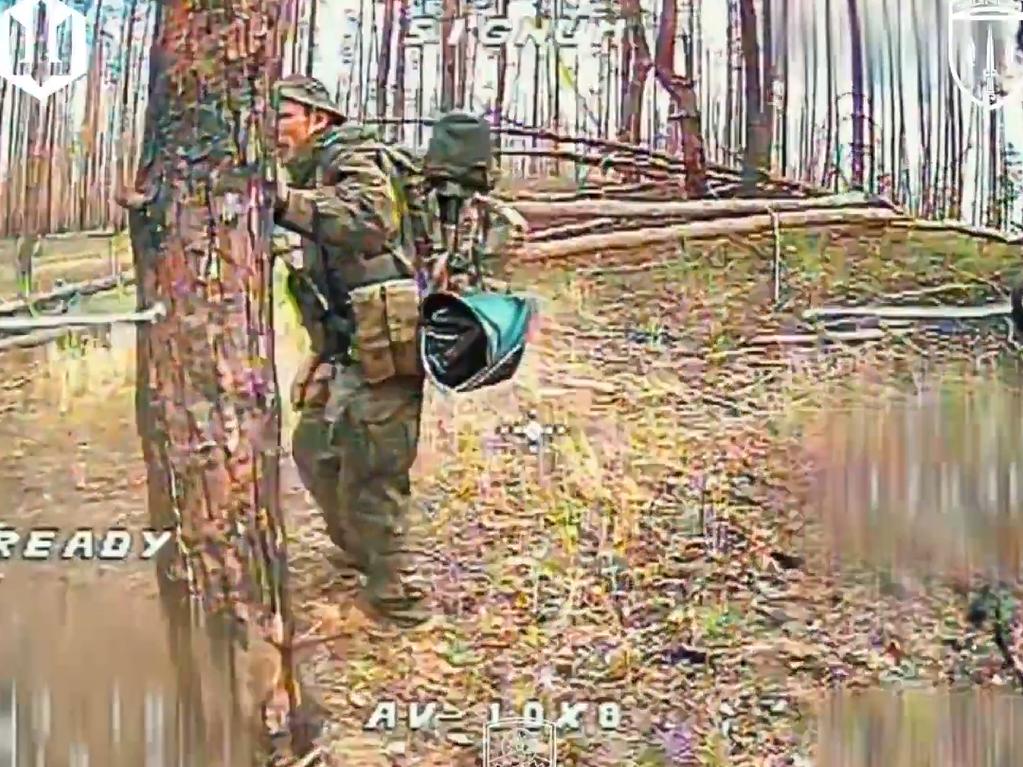
A Ukrainian drone right before it strikes a Russian soldier near Lyman.
Explore further

Russian troops inch toward Lyman. Drones keep delaying the plan.

Announcing the results on 12 August, Ukrainian officials also claimed 9,550 Russian troops killed and more than 6,600 wounded—figures no independent body has verified. Former commander in chief Oleksandr Syrskyi, who planned the operation, said it proved the Ukrainian army "is capable not only of steadfastly holding its defences, but also of launching offensives, seizing the initiative, and liberating Ukrainian land."

But the momentum was unsustainable. As the Russians gradually restored command and control through the summer, the Ukrainians encountered more resistance. Now the gray zone is stabilizing again. Observer Moklasen predicted new Ukrainian commander in chief Maj. Gen. Mykhailo Drapatyi will order his corps and brigade commanders "to dig in positions, consolidate and strengthen more army corps" instead of continuing to attack.

After all, the Russians are pushing hard in Donetsk, and the resources the Ukrainians had devoted to the southeastern counteroffensive could boost the defensive effort in the east. Moreover, there are worrying signs the Kremlin may attempt another mobilization soon, potentially surging hundreds of thousands of fresh troops into Ukraine.

The Ukrainians may soon prioritize holding over attacking.

A Russian soldier kept a Ukrainian woman in a basement and raped her for two months – Ukrainian court sentences him to 12 years

14 août 2026 à 14:17

A Russian soldier was sentenced to 12 years for repeatedly raping a Ukrainian civilian woman in occupied Donetsk Oblast. Ukraine's Prosecutor General’s Office

A Ukrainian court has sentenced a Russian soldier to 12 years in prison for repeatedly raping a 57-year-old civilian woman for about two months in an occupied village in Donetsk Oblast, Ukraine’s Prosecutor General’s Office said on 14 August.

Ukrainian authorities and international monitors have documented hundreds of cases of conflict-related sexual violence by Russian forces in Ukraine, while warning that the true number is likely higher because many cases go unreported, particularly in occupied territories.

Woman was trapped with Russian soldiers

The 50-year-old Russian serviceman entered a village in the Pokrovsk district in September 2025 as part of a small infantry group, according to prosecutors. He and two other Russian soldiers occupied the basement of a private home where two local civilians were sheltering from Russian attacks.

During one of the attacks, the civilian man was killed. The woman was then left in the basement with the three armed Russian soldiers.

In early October, one of the soldiers began sexually assaulting her. The court found that the abuse became systematic and continued for about two months.

The soldier threatened to kill the woman if she refused. Two other Russian servicemen were present during this period, while the woman was effectively unable to leave the basement or protect herself.

The abuse ended in December, when Ukrainian forces captured the Russian soldier during fighting. The woman was freed.

Convicted Russian soldier had spent 32 years in prison

The convicted man is a resident of Russia’s Sverdlovsk Oblast who had spent a total of 32 years in prison for robbery and armed robbery before joining the Russian military.

He signed a contract with the Russian army while serving his sentence and was later deployed as a rifleman with the 114th Separate Motor Rifle Brigade of Russia’s 51st Combined Arms Army.

The defendant denied committing the crime in court. Prosecutors presented evidence that the court found sufficient to establish his guilt in the cruel treatment of a civilian.

He was sentenced to 12 years in prison, the maximum punishment under the provision of Ukraine’s Criminal Code used in the case.

Sexual violence as a weapon of Russia’s war

Ukraine’s Prosecutor General’s Office had recorded 401 cases of sexual violence against civilians allegedly committed by Russian military personnel since the start of the full-scale invasion as of June 2026.

The victims included 250 women and 151 men, including 23 girls and one boy.

Donetsk Oblast had the second-highest number of documented cases, with 92, behind Kherson Oblast’s 124. Ukrainian prosecutors had sent 64 indictments involving 81 people to court, while Ukrainian courts had issued 19 verdicts against 26 individuals. All those convicted received prison sentences.

The documented figures do not capture the full scale of the abuse. The Prosecutor General’s Office has noted that the actual number may be higher because these are cases victims have been able to report.

“Responsibility is inevitable”: Zelenskyy warns Russian collaborators in occupied territories after explosion kills defector

14 août 2026 à 12:13

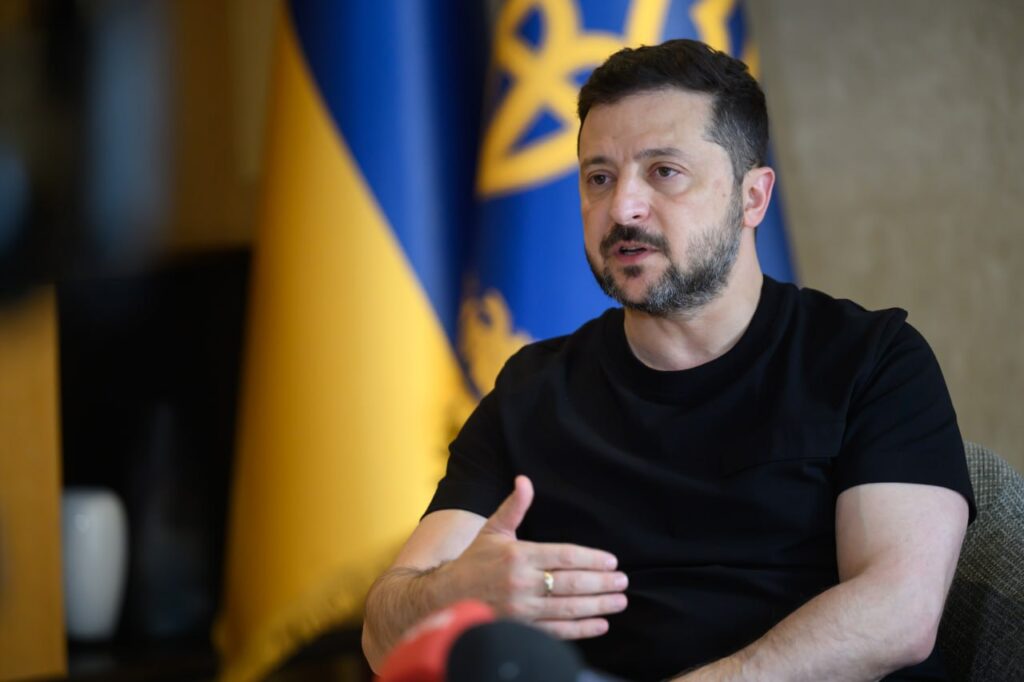
Ukrainian President Volodymyr Zelenskyy, 8 August 2026. Photo: Zelenskyy on Telegram

Ukrainian President Volodymyr Zelenskyy said Ukrainian special services are conducting targeted operations against collaborators in Russian-occupied territories who assist Russia’s attacks against Ukraine and Ukrainians.

Speaking after a meeting of Ukraine’s top military leadership on 14 August, Zelenskyy said he received a separate briefing from Ukraine’s special services on the progress of these operations.

He specifically mentioned occupied Sevastopol, where Ukrainian officials have previously accused local collaborators of supporting Russia’s military operations.

“Responsibility for collaborators is inevitable,” Zelenskyy said.

Operations target those helping Russia

Zelenskyy did not identify the individuals targeted or provide operational details, saying only that the special services had reported on the implementation of “targeted operations” against collaborators in occupied territories.

He said the targets include people who participate in Russian attacks against Ukraine and Ukrainians.

The comments signal that Ukraine is continuing to pursue individuals in occupied territory who assist Russian forces, including through intelligence, military support, or other forms of cooperation.

Sevastopol explosion on 13 August

The statement comes shortly after an explosion in occupied Sevastopol on 13 August killed a Russian military officer.

Russian and Ukrainian sources have circulated claims that the victim was Robert Shageyev, reportedly a former Ukrainian Navy officer who joined Russia after the occupation of Crimea and later served in Russia’s Black Sea Fleet. 

His identity and the circumstances of the explosion have not been officially confirmed by Ukrainian authorities.

Russian sources had suggested Ukrainian involvement in the incident, but Ukraine has not publicly claimed responsibility.

Sevastopol
Explore further

Man killed in explosion in occupied Sevastopol, Russian sources report

Ukraine prepares for Russia’s next moves

The discussion of operations against collaborators was part of a broader meeting focused on Ukraine’s military preparations for the coming months.

Zelenskyy said the main issue was securing funding for Ukraine’s defense and security forces through the fall and winter. Officials identified funding gaps and additional requirements for expanding production of advanced weapons.

Among the priorities are faster production of Ukrainian strike weapons and new defensive systems, including jet-powered interceptor drones designed to counter Russian aerial threats.

Ukrainian intelligence also provided updated information about Russia’s plans, according to Zelenskyy. He said Ukraine is preparing countermeasures, including asymmetric responses.

The meeting also covered the effectiveness of Ukraine’s long-range and medium-range sanctions against Russia. Zelenskyy said the existing sanctions plan is being implemented and that priorities are being adjusted to ensure Ukraine has the capabilities needed to achieve its objectives.

❌