Vue normale

  • ✇Euromaidan Press
  • North Korean ballistic missile kills 7 steelworkers on their way to shelter, shuts down Zaporizhstal plant
    A Russian ballistic strike on Zaporizhzhia, Ukraine, killed seven employees of the Zaporizhstal steel plant and injured 21 others, Ukrainian steelmaker Metinvest, the plant’s majority owner, said on 11 August. The workers were on their way to a shelter after an air raid alert was announced when the strike hit the industrial site, according to the company.  Metinvest said the attack also damaged energy facilities and infrastructure, as well as the main and auxiliary f
     

North Korean ballistic missile kills 7 steelworkers on their way to shelter, shuts down Zaporizhstal plant

11 août 2026 à 11:44

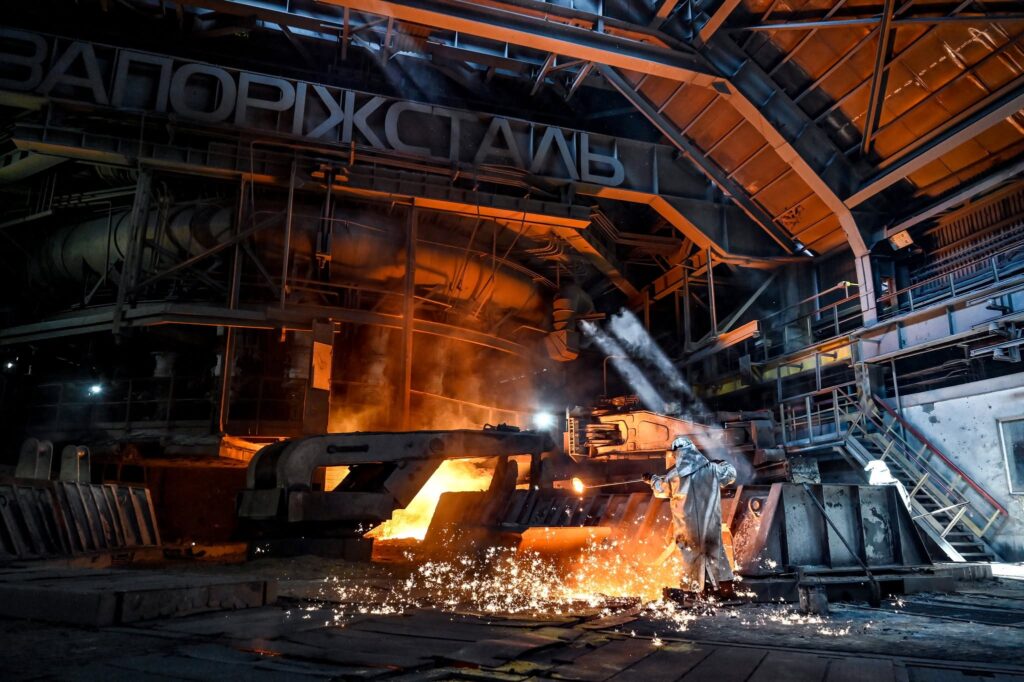
Inside the Zaporizhstal steel plant. Photo: Zaporizhstal on Facebook

A Russian ballistic strike on Zaporizhzhia, Ukraine, killed seven employees of the Zaporizhstal steel plant and injured 21 others, Ukrainian steelmaker Metinvest, the plant’s majority owner, said on 11 August.

The workers were on their way to a shelter after an air raid alert was announced when the strike hit the industrial site, according to the company. 

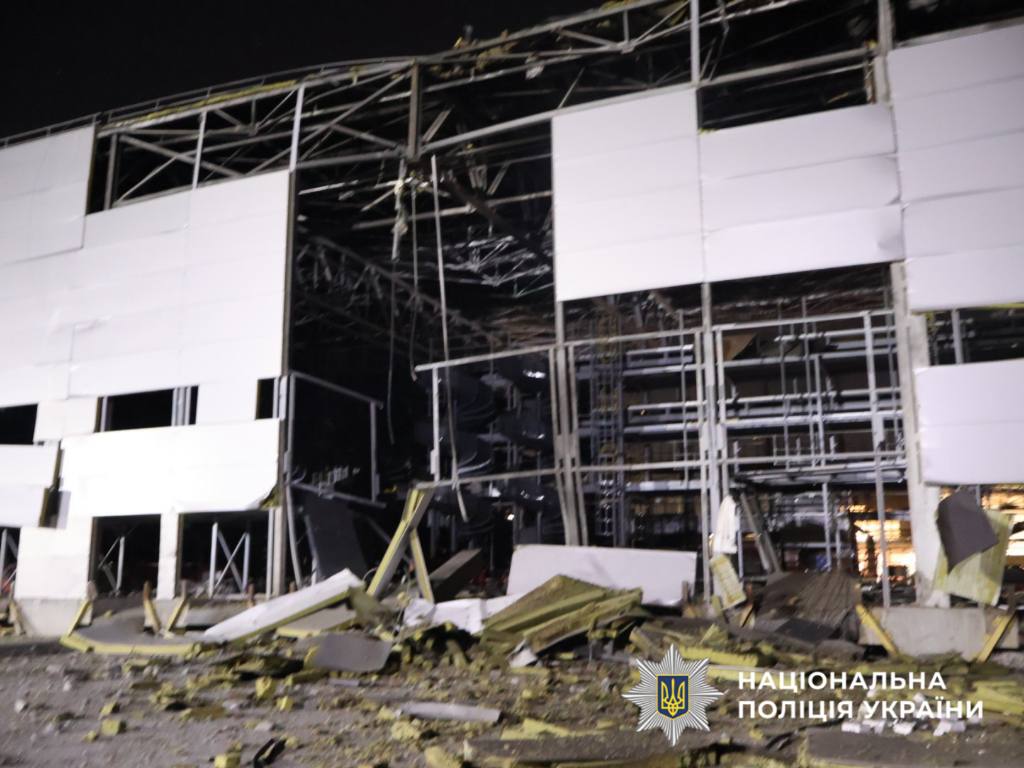
Metinvest said the attack also damaged energy facilities and infrastructure, as well as the main and auxiliary facilities of the plant’s coke and blast-furnace operations.

Russia’s ballistic missile strikes leave very little time between threat detection and impact for people to react and reach shelter. Several people have been killed from strikes across the country while on their way to bomb shelters. 

Zaporizhstal shuts down after strike

Metinvest said Zaporizhstal has been completely shut down following the attack, while its other production sites in the city are operating at reduced capacity.

Company specialists are assessing the damage and determining the scope and timeline of repairs. Emergency and restoration work is already underway, according to the statement.

The company said its Zaporizhzhia facilities are civilian industrial sites that employ tens of thousands of people and produce steelmaking and coke-chemical products.

Metinvest said it is providing medical assistance and support to the 21 injured employees and staying in contact with the families of those killed and wounded.

The company's facilities will fly flags at half-mast on 11 and 12 August in mourning for the seven Zaporizhstal workers killed in the attack.

North Korean missiles used against Zaporizhzhia

Ukrainian President Volodymyr Zelenskyy said Zaporizhzhia was targeted overnight with North Korean ballistic missiles, Russian Zircon missiles and guided aerial bombs.

Zelenskyy said the attack was designed to cause maximum damage to civilian infrastructure.

Ukraine's military intelligence said on 5 August that a North Korean missile unit had begun deploying to western Russia, potentially adding up to 120 ballistic missiles and six launchers to Russia's arsenal.

According to Ukrainian intelligence representative Andrii Cherniak, North Korea has supplied Russia with around 150 KN-23 and KN-24 missiles since late 2023, including a recent batch of 40 missiles.

The missiles have been linked to attacks with high civilian casualties, including a July strike on Radushne in Dnipropetrovsk Oblast that killed an entire family.

Ballistic threat is growing

The strike comes as Russia has increasingly relied on ballistic missiles in attacks on Ukrainian cities. Unlike drones and cruise missiles, ballistic missiles travel at very high speeds and are much harder for Ukraine to intercept, particularly because Kyiv has a limited supply of the advanced air defense interceptors needed to counter them, mainly US-made Patriot systems.

Ukraine has reported that most ballistic missiles launched in recent mass attacks have penetrated its air defenses, contributing to severe destruction and civilian casualties.
  • ✇Euromaidan Press
  • Two Russian refineries burn – Orsk hit by drones 1,500 km out, Komsomolsk ablaze 6,500 km east
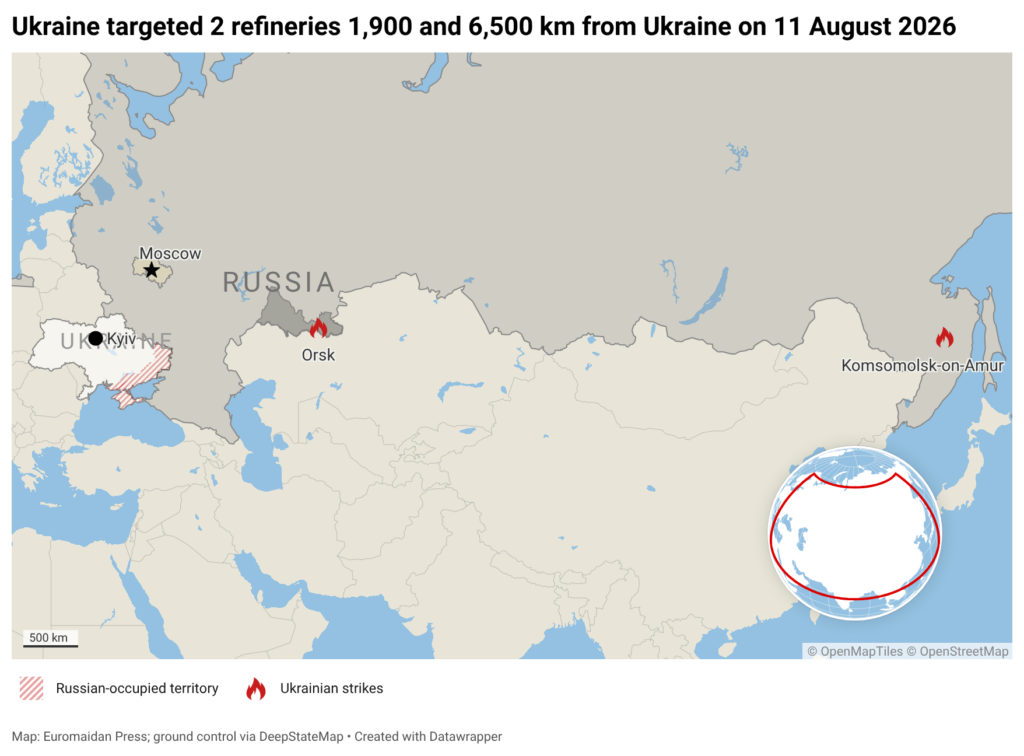
    Two Russian oil refineries caught fire on 11 August, but the two incidents tell very different stories. In Orsk, in Orenburg Oblast, drones sparked a blaze that Ukrainian monitoring channels quickly linked to Kyiv's long-range campaign. Meanwhile, thousands of kilometers farther east, a Rosneft plant in Komsomolsk-on-Amur burned for reasons that remain unexplained. A drone strike deep in Orenburg Oblast Early on 11 August, residents of Orsk reported explosion
     

Two Russian refineries burn – Orsk hit by drones 1,500 km out, Komsomolsk ablaze 6,500 km east

11 août 2026 à 05:55

“Orsknefteorgsintez” Orsk Oil Refinery

Two Russian oil refineries caught fire on 11 August, but the two incidents tell very different stories. In Orsk, in Orenburg Oblast, drones sparked a blaze that Ukrainian monitoring channels quickly linked to Kyiv's long-range campaign. Meanwhile, thousands of kilometers farther east, a Rosneft plant in Komsomolsk-on-Amur burned for reasons that remain unexplained.

A drone strike deep in Orenburg Oblast

Early on 11 August, residents of Orsk reported explosions near the Orsknefteorgsintez refinery, and a large fire soon followed. OSINT analysts at the Telegram channel Exilenova+ reported the strike. By their assessment, the drones flew more than 1,500 kilometers from Ukraine's border to reach Orsk. Preliminary findings pointed to damage at the plant's hydrocracking complex. Modernized in recent years, the unit can process 1.6 million tonnes a year.

Russian officials confirmed the attack, though they did not name the target at first. Orsk Mayor Artem Vorobyov urged residents to stay indoors and away from windows. Orenburg Governor Yevgeny Solntsev, meanwhile, activated the "Kovyor" (Carpet) airspace-safety plan across a 100-kilometer radius. Authorities also imposed temporary flight restrictions at the Orsk airport.

"The strike drones covered more than 1,500 kilometers from Ukraine's border to reach Orsk—among the deepest targets yet in the refinery campaign," Exilenova+, via OSINT monitoring

An unexplained blaze in the Far East

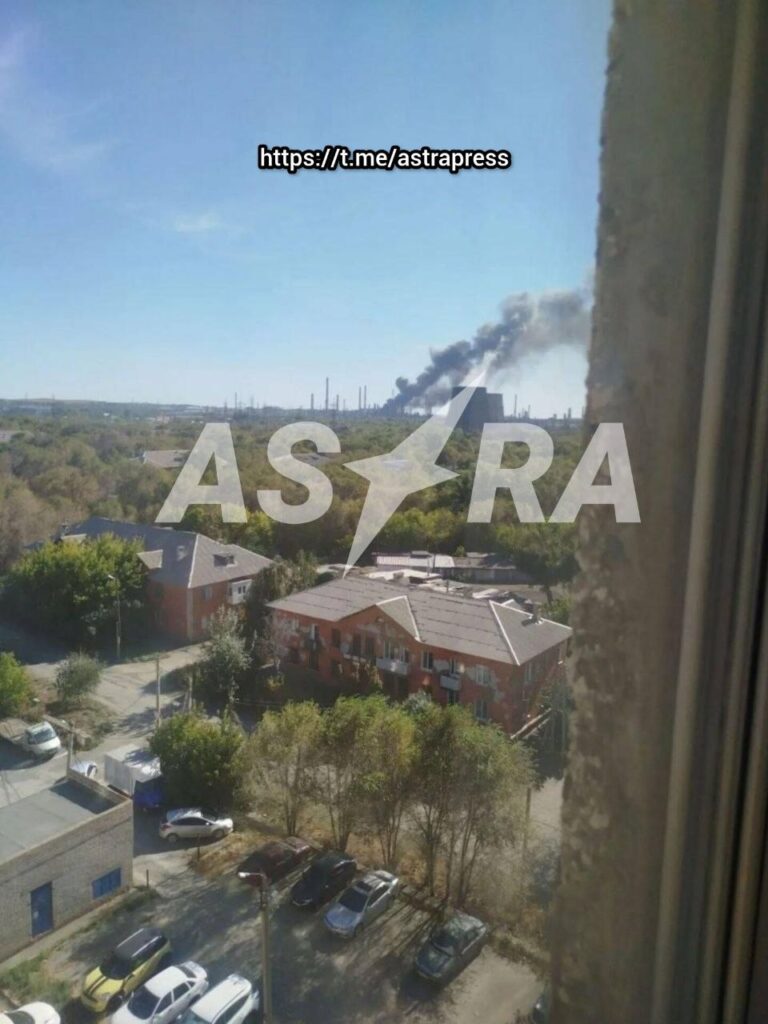
Far to the east, the picture is murkier. Around 11:00 local time, residents of Komsomolsk-on-Amur reported a fire near the city's refinery. ASTRA then geolocated the footage to Rosneft's RN-Komsomolsk plant. Notably, Ukrainian analysts cautioned that the fire does not appear to stem from a drone strike. After all, the site sits roughly 6,500 kilometers from Ukraine—far beyond the range of Kyiv's long-range drones. Coverage from the Kyiv Independent, meanwhile, flagged no clear cause.

The plant's press service reported no injuries, as relayed by Russian state agency TASS. Commissioned in 1942, the RN-Komsomolsk refinery has a design capacity of about 8 million tonnes of crude per year. In fact, it supplies more than 60% of the petroleum products across Russia's Far Eastern Federal District. Moreover, it produces gasoline, diesel, marine fuel, and other products for the region.

Ukraine's campaign against Russian oil refineries

The Orsk plant is no stranger to such strikes. Drones previously hit Orsknefteorgsintez on 3 October and 11 November 2025, and again on 29–30 April 2026. Since 2022, Ukraine has widened its deep-strike campaign against Russian oil refineries, fuel depots, and pipelines. Such targets power the Kremlin's army and bankroll the war through oil exports. Increasingly, Russian oil refineries have become the signature target of Ukraine's long-range war. Just the night before, on 10 August, Ukraine's General Staff confirmed a strike on the TANECO refinery in Tatarstan. A fire broke out there, too.

As of publication, Kyiv had not claimed the 11 August Orsk strike. Still, the timing fit a familiar pattern—a long-range campaign aimed at the fuel that keeps Russia's war machine moving.

  • ✇Euromaidan Press
  • With Ukraine short of Patriot interceptors, Russia sees no reason to enter real negotiations, ISW says
    Russia has rebuilt its missile industry around the weapons most likely to pierce Ukraine's thinning air defenses. The Institute for the Study of War (ISW) made that case on 10 August. Kyiv's Patriot interceptor shortage, it assessed, now hands Moscow no reason to negotiate. Because Kyiv can no longer reliably stop ballistic missiles, the Kremlin sees a clear military path to its maximalist aims. Factories retooled around the missiles that get through Since April 2026
     

With Ukraine short of Patriot interceptors, Russia sees no reason to enter real negotiations, ISW says

11 août 2026 à 03:42

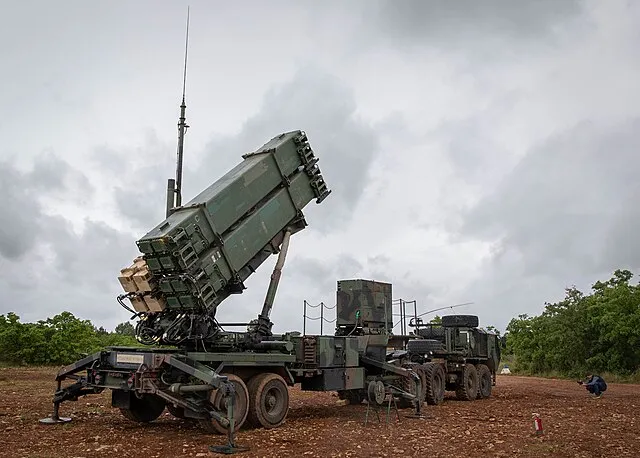
A Patriot air defense launcher raised into firing position on a military trailer.

Russia has rebuilt its missile industry around the weapons most likely to pierce Ukraine's thinning air defenses. The Institute for the Study of War (ISW) made that case on 10 August. Kyiv's Patriot interceptor shortage, it assessed, now hands Moscow no reason to negotiate. Because Kyiv can no longer reliably stop ballistic missiles, the Kremlin sees a clear military path to its maximalist aims.

Factories retooled around the missiles that get through

Since April 2026, Russian plants have prioritized ballistic and cruise missiles built to evade interception. HUR Deputy Head Major General Vadym Skibitskyi reported the shift. Monthly ballistic launches have more than tripled between April and July, he said. Meanwhile, output of key missile types runs 10 to 20% above plan. Moscow also met its full-year Zircon and Onyx targets by 3 August. To free capacity, it suspended the less accurate Kinzhal and Kh-32 lines. Skibitskyi flagged a newer twist, too: S-400 launchers now fire specially developed RM-48U rounds along a ballistic path. Russia is also striking Ukraine's defense plants, he warned, to choke off Kyiv's own ballistic-missile program.

Fired fresh, not from the stockpile

Crucially, these strikes draw on newly built missiles rather than war reserves. That approach lets Moscow sustain larger, more frequent salvos. Its stockpile stays intact for the occasional very large barrage. Unmanned Systems Forces commander Major Robert "Magyar" Brovdi put numbers on the trend. Russia can already loose a simultaneous salvo of 77 missiles, and it is pushing toward 200. He stressed that he meant weapons of all types, not ballistics alone. Kalibr cruise missiles, by contrast, are piling up unused. Moscow is shipping them to fleets beyond the Black Sea as Ukrainian crews down nearly all of them. Repeated strikes have meanwhile driven the Black Sea Fleet back to the port of Novorossiysk.

"The Patriot shortage hands Russia an opening to do serious damage over the winter — and a reason to keep meaningful talks at bay," - Institute for the Study of War assessed

Why the Patriot interceptor shortage stalls negotiations

This reprioritization feeds a winter strategy meant to break Ukraine's will to fight, ISW assessed. The Patriot is still the only system Kyiv fields that can down Russian ballistic missiles. And Kyiv has warned partners it cannot close the interceptor gap before the cold months. As a result, the Kremlin thinks it can hammer cities without paying a battlefield price. That calculation could drag the war into 2027, ISW noted. Putin's theory of victory still rests on outlasting Ukraine's defenses and Western resolve. On 9 August, Deputy Foreign Minister Mikhail Galuzin restated Moscow's line. Any "freeze" that ignores the war's "root causes" is unacceptable, he said — shorthand for the Kremlin's original demands.

Russian ballistic missiles struck the grounds of a Kyiv children’s hospital and set a warehouse ablaze — overnight strikes across Ukraine killed at least 9

11 août 2026 à 03:25

kyiv oblast

Russia struck the capital with ballistic missiles early on 11 August. One of them came down on the grounds of a Kyiv children's hospital in the Shevchenkivskyi district. Rescuers also fought a warehouse fire nearby that left one man injured.

The Kyiv children's hospital strike

Two craters opened on the hospital grounds, while the impact shattered windows and ruptured a gas line, rescuers reported. Utility crews sealed the leak within the hour. Staff at the Kyiv children's hospital had moved patients into the shelter before the strike, so it hurt no one there.

"Luckily, the children and medics were in the shelter — there were no casualties," - State Emergency Service reported

A warehouse ablaze and one man hurt

At a second address in the same district, a strike ignited a fire across 1,200 square meters of warehouse space. Crews first contained the flames, then put them out. Medics soon treated the lone casualty, a 28-year-old man. Earlier, the Air Force had warned of the ballistic threat before the missiles arrived.

Kyiv Oblast also under fire

The wider Kyiv Oblast took damage as well. In the Bucha district, the strike wrecked warehouse buildings and three trucks, although it caused no casualties. Officials said the enemy had again hit the region with ballistic missiles and attack drones.

A far deadlier night beyond Kyiv

Elsewhere, the toll climbed sharply. In Zaporizhzhia, a combined missile and guided-bomb strike killed six people and injured 19, regional authorities reported. Across the oblast, meanwhile, Russian forces launched 938 strikes on 58 settlements in a single day, injuring 52 residents in total. Officials also logged 341 reports of damage to homes, vehicles, and infrastructure.

In central Dnipropetrovsk Oblast, drones and artillery hit five districts more than 20 times. The strikes killed three people, among them a 15-year-old boy, and hurt five others, including a 7-year-old girl. To the northeast, an attack on Zlatopil in Kharkiv Oblast damaged civilian infrastructure and injured a resident.

Meanwhile, in Mykolaiv, drones hurt a 75-year-old woman and damaged homes and an industrial site, and officials described her condition as satisfactory. In nearby Snihurivka, six more drone strikes damaged houses, a shop, and a car, though they caused no injuries.

The strikes add to a wave of Russian attacks on Ukrainian cities this summer. The capital had already endured ballistic missiles days earlier, on the night of 8 August. That evening, explosions also echoed through Kyiv and Dnipro during a mass drone assault.

❌