Vue normale

  • ✇The Kyiv Independent
  • For the first time, Australia sanctions Russian shadow fleet oil tankers
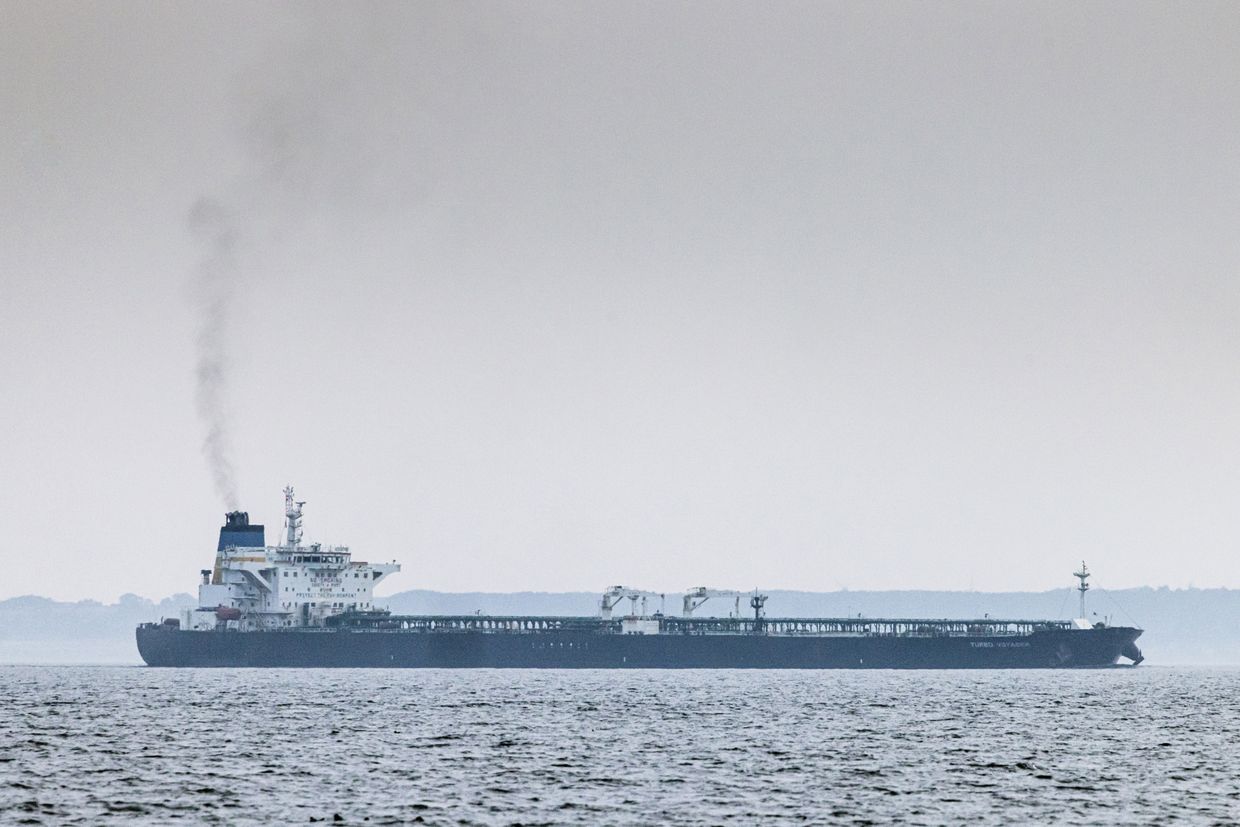
    Australia has, for the first time, imposed sanctions on Russia's so-called "shadow fleet" of oil tankers, targeting 60 vessels used to circumvent international sanctions and sustain the Kremlin's war effort in Ukraine, the Australian government said on June 18.The move aligns Canberra with similar measures introduced by the United Kingdom, Canada, and the European Union. Australia's Foreign Ministry said the sanctioned vessels operate under "deceptive practices, including flag-hopping, disabling
     

For the first time, Australia sanctions Russian shadow fleet oil tankers

18 juin 2025 à 08:20
For the first time, Australia sanctions Russian shadow fleet oil tankers

Australia has, for the first time, imposed sanctions on Russia's so-called "shadow fleet" of oil tankers, targeting 60 vessels used to circumvent international sanctions and sustain the Kremlin's war effort in Ukraine, the Australian government said on June 18.

The move aligns Canberra with similar measures introduced by the United Kingdom, Canada, and the European Union.

Australia's Foreign Ministry said the sanctioned vessels operate under "deceptive practices, including flag-hopping, disabling tracking systems and operating with inadequate insurance," enabling illicit Russian oil trade that undermines international sanctions.

"Russia uses these vessels to circumvent international sanctions and sustain its illegal and immoral war against Ukraine," the ministry said in a statement.

With this move, Australia has now sanctioned more than 1,400 Russian individuals and entities since Moscow's full-scale invasion of Ukraine began in February 2022, the government said.

The step comes amid the continued operation of Russia's shadow fleet. According to a recent study by the Kyiv School of Economics (KSE), Russia currently operates 435 tankers outside the control of Western regulators to evade sanctions such as the G7-EU price cap on Russian oil.

These vessels are typically un- or underinsured and pose a rising environmental risk due to their age and operational opacity.

KSE estimates that as of April 2024, 83% of Russia's crude oil and 46% of its petroleum product exports were shipped using shadow fleet tankers. The study warns that this undermines the effectiveness of Western sanctions and increases the likelihood of maritime disasters, as many of these ships fall outside international safety and insurance standards.

The EU formally adopted its 17th sanctions package against Russia in May, sanctioning nearly 200 vessels tied to the shadow fleet. EU foreign policy chief Kaja Kallas said the new measures also target hybrid threats and human rights violations, with more sanctions under consideration.

Some EU member states and observers have criticized the package for lacking stronger provisions to disrupt Russia's sanction evasion schemes.

Now, the EU seeks to approve its 18th sanctions package, which will add 77 more shadow fleet vessels to comply with the cap to prevent Russia from circumventing sanctions and propose imposing a ban on imports of petroleum products made from Russian oil.

The United States has signaled reluctance to pursue additional sanctions despite Moscow's continued aggression in Ukraine and rejection of ceasefire proposals supported by Western allies.

Putin ‘cannot be trusted’ as mediator, Kallas says, urges EU to tighten Russian oil cap after deadly Kyiv strike
EU High Representative Kaja Kallas urged the European Union to press forward with lowering the oil price cap on Russian crude, even without U.S. support, warning that Middle East tensions could otherwise drive prices up and boost Russia’s revenues.
For the first time, Australia sanctions Russian shadow fleet oil tankersThe Kyiv IndependentAnna Fratsyvir
For the first time, Australia sanctions Russian shadow fleet oil tankers

Putin 'cannot be trusted' as mediator, Kallas says, urges EU to tighten Russian oil cap after deadly Kyiv strike

18 juin 2025 à 02:24
Putin 'cannot be trusted' as mediator, Kallas says, urges EU to tighten Russian oil cap after deadly Kyiv strike

Russian President Vladimir Putin "cannot be trusted" to mediate peace in the Middle East while continuing to launch brutal attacks against civilians, EU High Representative Kaja Kallas said on June 17, following a mass Russian strike on Kyiv that killed at least 21 people and injured over 130.

"Clearly, President Putin is not somebody who can talk about peace while we see actions like this,” Kallas said during a briefing in Brussels. "He's not a mediator that can really be considered. Russia cannot be a mediator if they don't really believe in peace."

Russia has sought to position itself as a potential mediator in the escalating conflict between Israel and Iran. Kremlin spokesperson Dmitry Peskov said on June 17 that Israel appeared unwilling to accept Russia’s offer of mediation.

President Donald Trump said on June 15 that Putin had expressed willingness to help mediate between Tel Aviv and Tehran — an idea already dismissed by France. EU leaders have also questioned Moscow’s neutrality given its deep military ties with Iran, which has supplied Russia with drones and missiles used in attacks on Ukraine.

Kallas also pointed to Iran's role in enabling Russia's attacks. "Iran has helped Russia do these attacks… their cooperation is working in this regard," she said.

Kallas urged the European Union to press forward with lowering the oil price cap on Russian oil, even without U.S. support, warning that Middle East tensions could otherwise drive prices up and boost Russia's revenues.

"The whole idea of the oil price cap is to lower the prices," Kallas said. "We shouldn't end up in a situation where the crisis in the Middle East increases oil prices and makes Russia earn more… that would mean they can fund their war machine on a bigger scale."

Her warning comes after global oil prices soared on June 13, following an Israeli strike on Iran that raised fears of a broader regional conflict. Brent and Nymex crude prices surged more than 10% before stabilizing around 7.5% higher, with Brent at $74.50 a barrel and Nymex at $73.20, the BBC reported.

The spike threatens to undermine Western efforts to restrict Russia’s wartime revenues, which heavily depend on oil exports.

Earlier, Kallas said the EU can act independently to lower the oil price ceiling, noting that most Russian crude flows through European-controlled waters.

"Even if the Americans are not on board, we can still do it and have an impact," she said.

Her remarks come as the EU works on its 18th sanctions package targeting Russia's energy, banking, and defense sectors. The 17th package entered into force on May 20. European Commission President Ursula von der Leyen has said new measures will further target Russia's war-sustaining supply chains.

Kallas spoke hours after one of Russia's deadliest attacks on Kyiv since the start of its full-scale invasion. The nearly nine-hour assault saw Moscow fire 472 aerial weapons, including over 280 Shahed drones and multiple cruise and ballistic missiles.

Ukraine's Air Force reported intercepting 428 targets, but several missiles hit residential buildings, including a nine-story apartment block in Solomianskyi district, where 16 people were killed.

President Volodymyr Zelensky called the assault "one of the most horrifying attacks on Kyiv" and again called on Western leaders to act decisively.

After 3 years of full-scale war in Ukraine, Europe finally lays out road map to detox from Russian oil and gas
After three years of limited measures and political hangovers, the European Union has laid out a legal roadmap to finally end its long-standing addiction to Russian oil and gas. Under a new legislative proposal announced in Strasbourg on June 17, Brussels aims to cut off all remaining imports of Russian
Putin 'cannot be trusted' as mediator, Kallas says, urges EU to tighten Russian oil cap after deadly Kyiv strikeThe Kyiv IndependentAlex Cadier
Putin 'cannot be trusted' as mediator, Kallas says, urges EU to tighten Russian oil cap after deadly Kyiv strike
❌