❌

Vue normale

Ukrainian OSINT channel: Russia turned a bare field into a Geran-5 launch site in a month—and drones are already arriving
14 octobre 2026 à 03:49

ukrainian osint channel russia turned bare field geran-5 launch site month—and drones already arriving · post millerovo drone base 13 2026 satellite tme/absolutely_reliable ukraine news reports

Russia has nearly finished the first section of a new launch site for jet-powered Geran-5 attack drones near the town of Millerovo in Rostov Oblast, anonymous Ukrainian OSINT channel Absolutely Reliable Source reported on 13 October. The channel’s bio says it covers Ukraine’s deep strikes and that its author belongs to a larger, unnamed structure. It says Russia rushed the build to scale up attacks after its September strikes on Kyiv.

The site is meant for the kind of drone Ukraine stops far less often than the older Shaheds. Ukraine downs 55% of jet-powered Shaheds, the class that includes the Geran-5, and more than 90% of the older propeller-driven ones, President Volodymyr Zelenskyy said on 26 September. Russian industry makes about 3,000 Geran-4 and Geran-5 drones a month, Ukraine’s military intelligence (HUR) told Militarnyi in August. A new launch site is how Russia plans to fire more of them, the channel argues.

Built in weeks, by the channel’s count

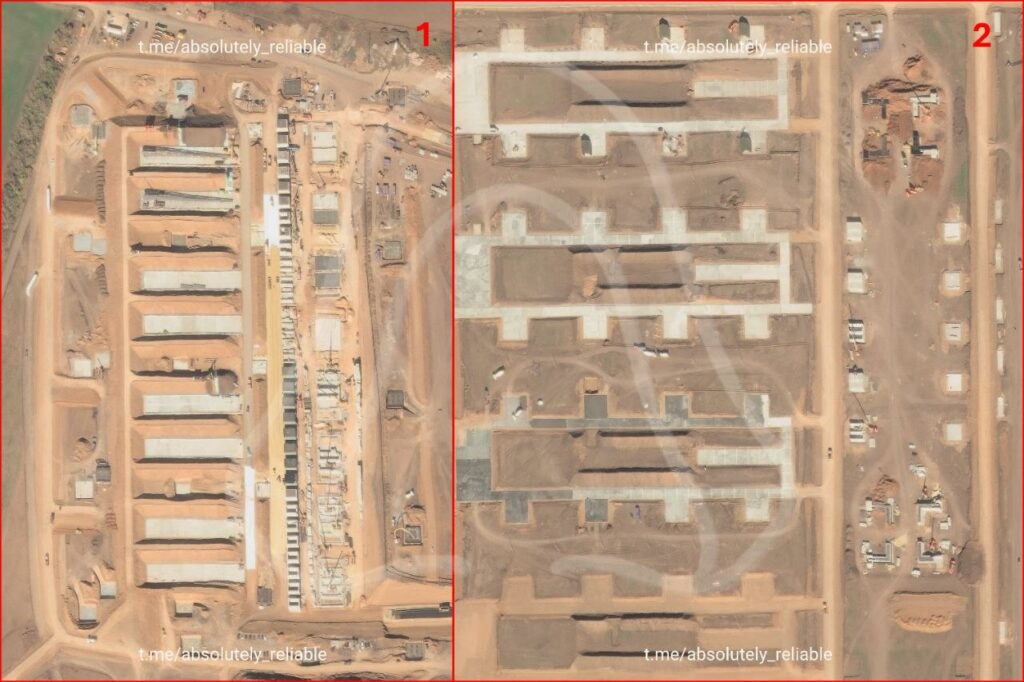
The channel’s images from 1 September show no construction at the site. The latest ones show eight prepared positions for launchers and 32 places for preparing drones for launch, the channel wrote. Imagery from the day before its post shows drones being unloaded in one zone, it said.

Millerovo drone base, September 1
Millerovo drone base, 1 September 2026. Satellite image: t.me/absolutely_reliable
Millerovo drone base,
Millerovo drone base, 12 October 2026. Satellite image: t.me/absolutely_reliable

The channel’s headline says the work took a month. Ukrainian outlet Militarnyi, comparing the channel’s own images from 1 September and 12 October, put it at about six weeks. Both readings rest on the same images, which have not been independently verified.

Built like Tsymbulova

The construction style is very similar to Tsymbulova, Russia’s jet-drone base in Oryol Oblast, the channel wrote. That base has separate positions for storing, preparing, and launching jet drones, Militarnyi said. By late May, less than a month into an expansion of Tsymbulova, Russia was already building 10 more launchers there.

Ukrainian drones have hit Tsymbulova repeatedly, though most of the damage imagery comes from Absolutely Reliable Source. Militarnyi reported strikes on the base’s bunkers and hangars in September. Ukraine’s Defense Forces struck it again overnight on 1 October, damaging two ground shelters and drone preparation areas, Absolutely Reliable Source said. On 10 October, OSINT channel Exilenova+ reported another drone strike there, saying several bunkers, one jet-drone launcher, and a drone storage area were hit.

  • ✇Euromaidan Press
  • Sea drone vs. air drone: Ukraine’s Sargan-3000 turns anti-aircraft gunner
    A Ukrainian Sargan-3000 sea drone shot down a Russian Shahed flying on a mesh radio network, Ukraine's Navy reported on 7 October. Ukrainian sea drones have downed Russian aircraft before, but with missiles. This one used a machine gun. Russia has been hitting Odesa with air attacks that come in waves with short gaps between them. Guarding the sky over water is harder than over land. Since fall 2025, Russia has also used mesh radio networks to reroute Shaheds mid-flight and dodge Ukrain
     

Sea drone vs. air drone: Ukraine’s Sargan-3000 turns anti-aircraft gunner

8 octobre 2026 à 04:54

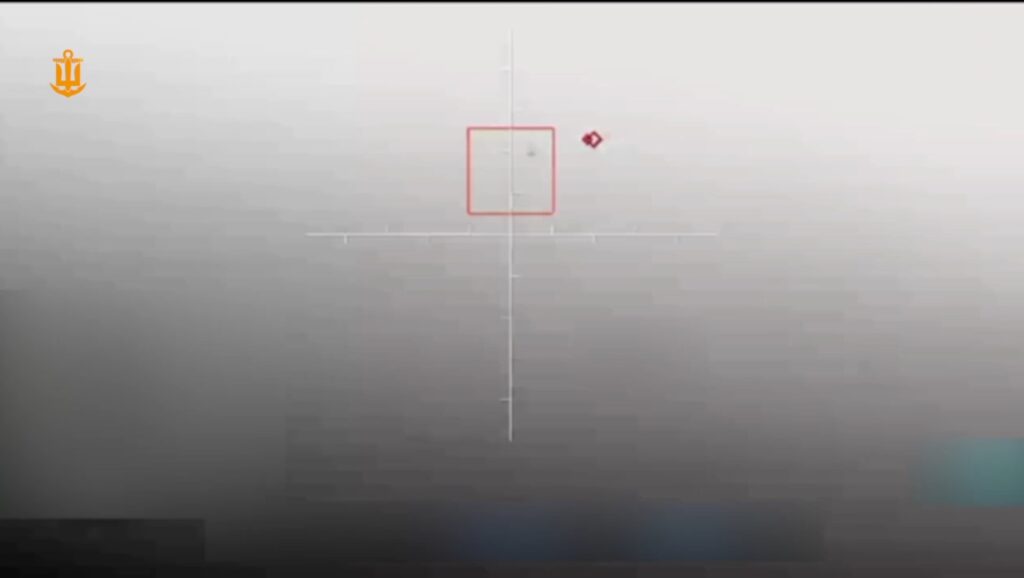
Russian drone seen through the camera of the RWS Protector module on the Ukrainian Sargan-3000 naval drone, October 2026.

A Ukrainian Sargan-3000 sea drone shot down a Russian Shahed flying on a mesh radio network, Ukraine's Navy reported on 7 October. Ukrainian sea drones have downed Russian aircraft before, but with missiles. This one used a machine gun.

Russia has been hitting Odesa with air attacks that come in waves with short gaps between them. Guarding the sky over water is harder than over land. Since fall 2025, Russia has also used mesh radio networks to reroute Shaheds mid-flight and dodge Ukrainian air defenses. That leaves Ukraine needing more ways to meet these drones out at sea, before they reach its ports and coast.

A Shahed steered by radio

A mesh-network drone passes its control signals along a chain of radio relays, drone to drone and on to ground antennas. That lets a Russian operator steer it in flight.

In May, Serhii "Flash" Beskrestnov, then a Defense Ministry adviser, said only about 5% of Shaheds had got through in a recent Russian strike, and predicted that Russia would answer with jet-powered versions and strikes near the border. By July, Ukraine was testing jamming against mesh-controlled jet Shaheds, he said.

Protector RWS turret on the Ukrainian Sargan-3000 naval drone, October 2026
Protector RWS turret on the Ukrainian Sargan-3000 naval drone, October 2026. Screenshot from a video by the Ukrainian Navy

The Sargan-3000 fired its Protector remote weapon station, Militarnyi reported. The station is a remotely operated 12.7-mm (50-caliber) machine gun with electro-optical sights. The outlet added that the Sargan-3000 is designed for combat missions far from Ukraine's coast.

Built for the open sea

Ukraine's Navy took the Sargan-3000 into service in April 2026, according to Militarnyi. The drone boat has a combat radius of up to 1,600 km. It moves at 40–55 knots and carries up to 450 kg of payload.

In September, a Sargan-3000 sank a Russian uncrewed boat with machine-gun fire. Militarnyi called it the first battle between uncrewed sea platforms in history. Analyst H.I. Sutton wrote that the boat carried a Protector made by Norway's Kongsberg. That is the same weapon station named in the October shootdown. Sutton added that Russian attack sea drones work closely with Shaheds, which can relay the boats' mesh radio signals.

Ukraine squeezes more defense out of Soviet-era stock, pairing Kub launcher and American RIM-7 interceptors to catch Russia’s jet-powered drones

7 octobre 2026 à 14:33

Ukraine's 156th Maksym Kryvonis Anti-Aircraft Missile Regiment has downed about 20 air targets using a Kub launcher firing under the radar and fire control of a Buk unit.

Kyiv is bolting two Soviet-era missile systems together to knock down Russia's fastest Geran-4 and Geran-5 drones. Ukraine's 156th Maksym Kryvonis Anti-Aircraft Missile Regiment has downed about 20 air targets using a Kub launcher firing under the radar and fire control of a Buk unit.

Russia has switched to jet-powered Gerans, faster drones that Ukraine's cheap interceptors struggle to catch, so more of them reach their targets. The damage from Russian strikes is set to reach up to $10 billion this year, according to Ukraine's Economy Ministry.

Meanwhile, Western resupply has thinned too. Deliveries of air defense missiles from partners fell threefold in the first half of 2026 against 2025, even though those partners hold the missiles, President Volodymyr Zelenskyy says.

So crews stretch what they have. In the Kub-Buk hybrid, a Kub launcher cannot aim on its own, lacking a radar to light up a target for its missile, according to Militarnyi. A Buk has that radar, so the two fire together, the Kub sending its 3M9 missile where the Buk points. The pairing is possible because both come from the same Soviet design line.

Western missiles in Soviet launchers

The same regiment reaches for a second workaround as Buk missiles run short. Its crews have rewired launchers to fire American RIM-7 interceptors, a Soviet-Western mongrel that troops nicknamed Frankenstein and the US calls FrankenSAM.

The patchwork earns its keep. One crew commander said some of these machines have more than 34 air kills each, and a single launcher has sent up RIM-7s 131 times, Ukrainian troops said.

A layered answer

The hybrids are one thread in a wider web. Ukraine is stitching together a layered defense against the jet-powered Gerans, leaning on electronic jamming, fighter jets, and a new class of homegrown interceptor drones. Each tool has limits, and the newest interceptors still bring down only the occasional jet drone.

The bet now is on numbers. Ukraine aims to build up to 400 interceptor drones a month by the end of October to chase the faster Gerans, Zelenskyy said on 2 October. Until that scale arrives, improvised launchers like the 156th Regiment keep filling the gap.

❌