❌

Vue normale

Fears that Ukraine will lose Starlink are back after Musk backed Trump against Zelenskyy. Adviser says profit makes cutoff unlikely

11 octobre 2026 à 15:10

SpaceX will not cut Ukraine off from Starlink satellite communications, Serhii “Flash” Beskrestnov, presidential adviser on defense technology, says. The reason is that the company could lose a large share of its revenue.

Ukraine’s troops and drones lean heavily on Starlink, a network Kyiv neither owns nor controls, and Elon Musk has used that control against it before. The latest shutdown fears spread after Elon Musk supported US President Donald Trump's criticism of Ukrainian President Volodymyr Zelenskyy.

    “Not a year goes by without it coming up again: ‘They’ll cut off our Starlink.’ The enemy’s Telegram channels fuel these rumors. We have good and stable partner relations with SpaceX,” Flash writes.

    Musk is first of all a businessman, and Ukraine brings SpaceX significant profit, so he is sure no one will switch Starlink off in Ukraine, Flash said. Unexpected moves are possible, he added, but of a different kind, such as turning Starlink on for Russia inside its own territory.

    The rumors come amid real US pressure

    The fears did not appear in a vacuum. After Trump allowed Russian diesel back to US markets, talk spread of "sanctions" on Ukraine if it keeps hitting the Russian refineries that fund Moscow, with the Financial Times reporting, citing European officials, that Trump’s administration has threatened to halt the mechanism for buying US weapons for Ukraine, known as PURL.

    Axios has also reported, citing a Ukrainian and an American official, that Washington has threatened to stop sharing intelligence with Ukraine if it continues striking Russian refineries.

    Ukraine is building a backup

    The scare feeds a longer effort to reduce dependence. Ukraine is working on a satellite system of its own, something similar to Starlink but beyond Musk’s control, President Volodymyr Zelenskyy said on 4 October.

    The timing is the reason, he said: some states will share the technology with Russia late this year or early next, and the Chinese are among them. Moscow is already fielding its own Starlink-style constellation, Rassvet, though for now it reaches Ukraine only in brief passes.

    • ✇Euromaidan Press
    • Ukraine wants to aim Starlink at Russian targets—and build a version Elon Musk can’t switch off
      Ukraine is working on a satellite system of its own, something similar to SpaceX's Starlink, Ukrainian President Volodymyr Zelenskyy said on 4 October, Interfax-Ukraine reported. He argued Kyiv should be free to turn Starlink on Russian military targets, warning that China and other states will share comparable satellite technology with Moscow within months. Ukraine's battlefield communications still ride on a network owned by Elon Musk, who has clashed with Kyiv and once limited its warti
       

    Ukraine wants to aim Starlink at Russian targets—and build a version Elon Musk can’t switch off

    5 octobre 2026 à 12:01

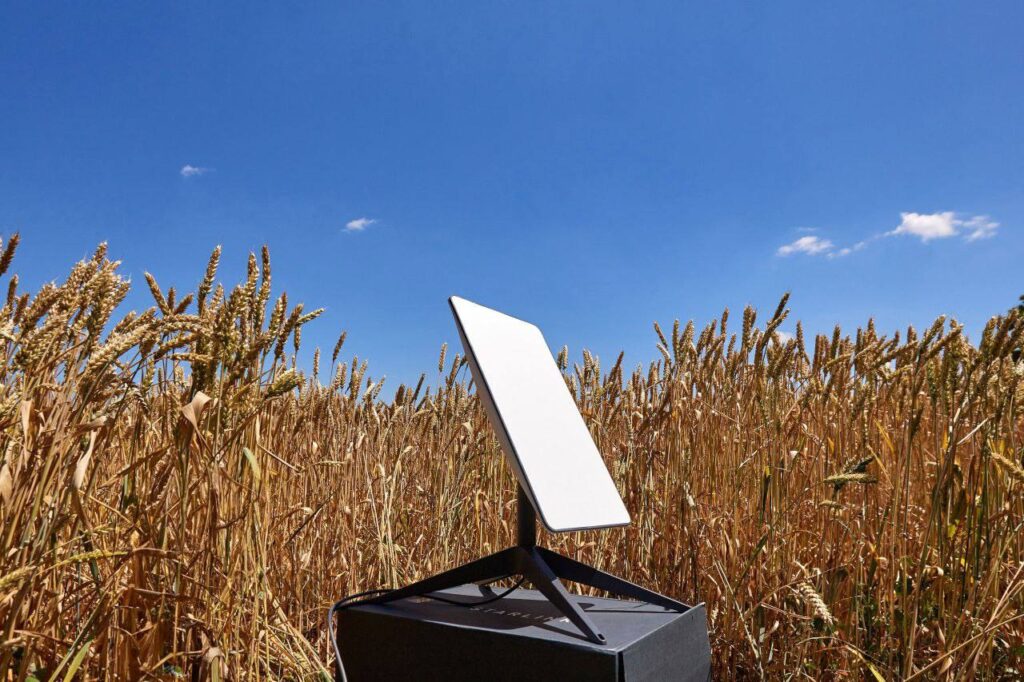
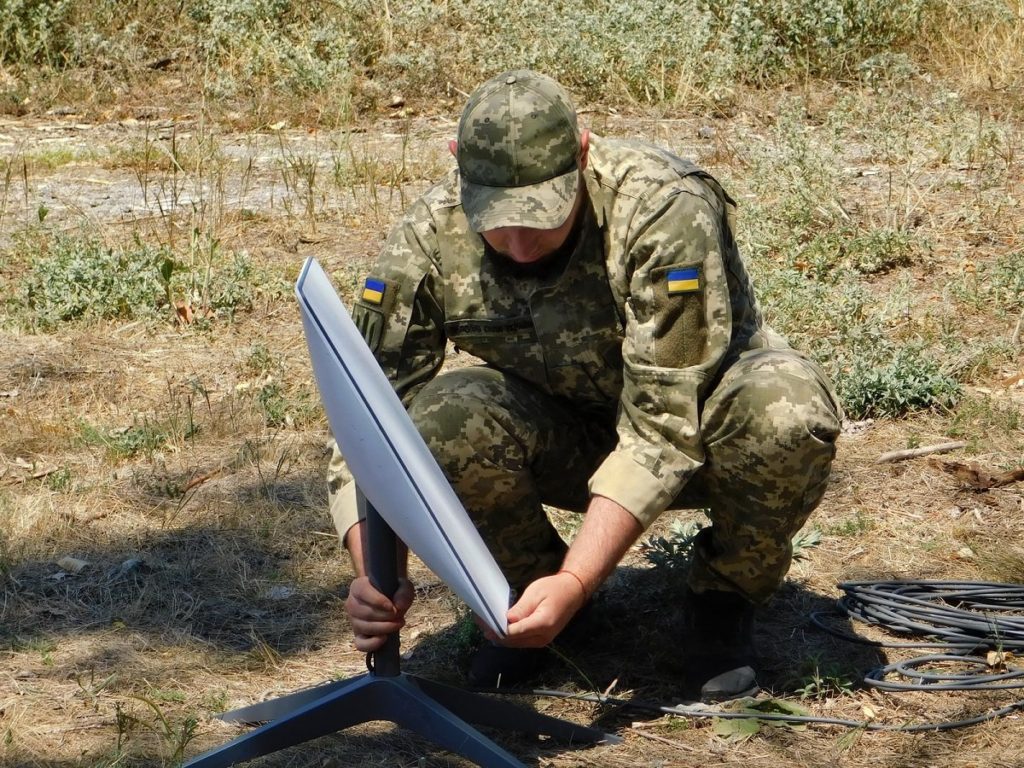
    A Starlink satellite terminal set up in a Ukrainian wheat field. Illustrative image shared by Digital Minister Mykhailo Fedorov via Telegram

    Ukraine is working on a satellite system of its own, something similar to SpaceX's Starlink, Ukrainian President Volodymyr Zelenskyy said on 4 October, Interfax-Ukraine reported. He argued Kyiv should be free to turn Starlink on Russian military targets, warning that China and other states will share comparable satellite technology with Moscow within months. Ukraine's battlefield communications still ride on a network owned by Elon Musk, who has clashed with Kyiv and once limited its wartime use.

    Low-orbit satellite internet has turned into a frontline utility that a single company or government can switch on or off, and both armies are now racing to own that link instead of renting it. Control of the network decides whose drones can see the battlefield and fly through the jamming to strike it—leverage Kyiv has gone without while its connection rode on hardware it does not run.

    Working on a Starlink of its own

    Zelenskyy said there was groundwork in place and that Ukraine was working on a system similar to Starlink. He called it fair for Ukraine to aim Starlink at military sites inside Russia. The timing is the reason, he said: some states will share the technology with Russia late this year or early next, and the Chinese are among them. Moscow is already fielding its own Starlink-style constellation, Rassvet, though for now it reaches Ukraine only in brief passes.

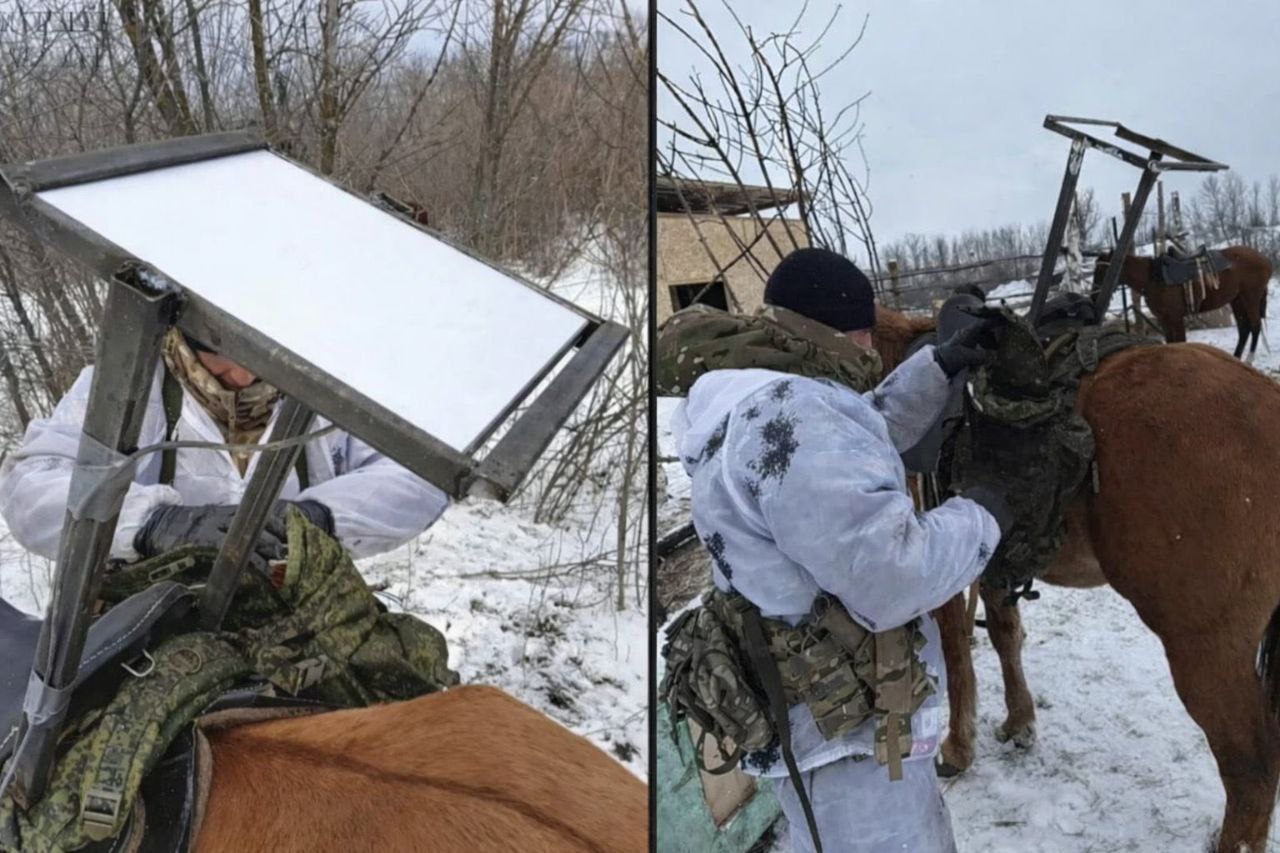
    latvia convicted one node starlink supply chain russia — two latvian citizens same network still await trial · post terminal mounted russian horse 2026 latvia's riga city court has sentenced
    Explore further

    Ukrainian brigades detail Starlink crackdown: Russian terminals “became just bricks,” assaults disrupted

    Ukraine's troops and drones lean heavily on Starlink, a network Kyiv neither owns nor controls. Musk has used that control against Kyiv before: in 2022 SpaceX refused a Ukrainian request to extend Starlink over occupied Crimea for a drone strike on Russia's warships, and it has since restricted the network's use for drone operations.

    Sanctions, and satellites of its own

    Zelenskyy has asked US President Donald Trump several times to sanction the Russian and Chinese companies building Russia's Rassvet network, most recently at the UN General Assembly in New York, he said in a recent Financial Times interview.

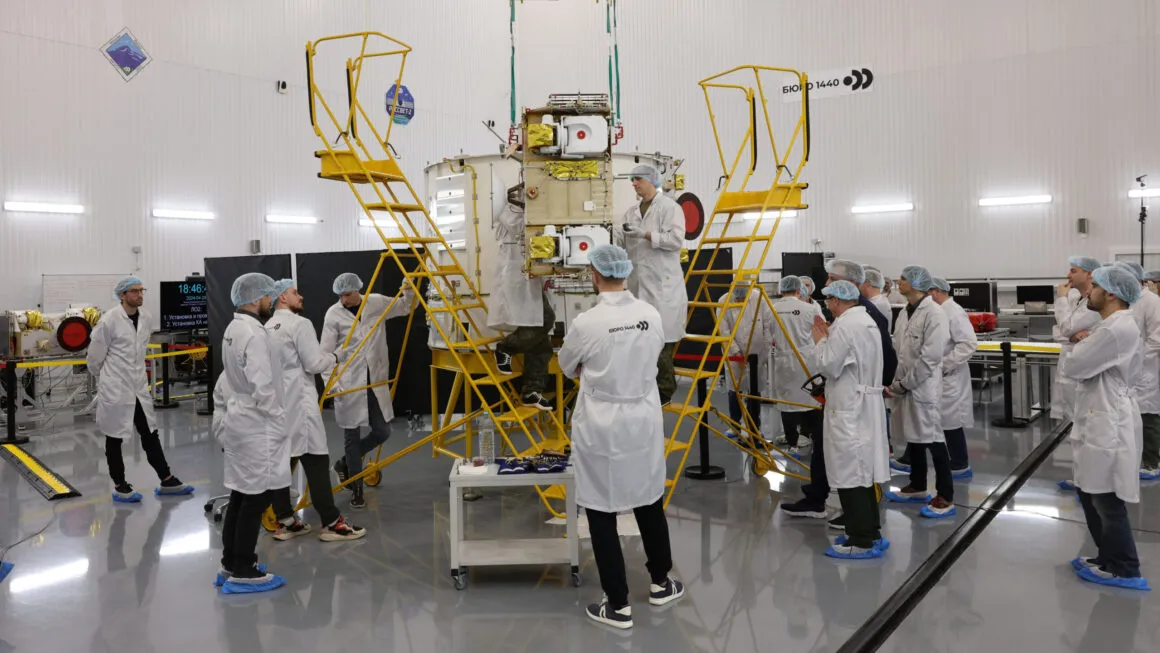
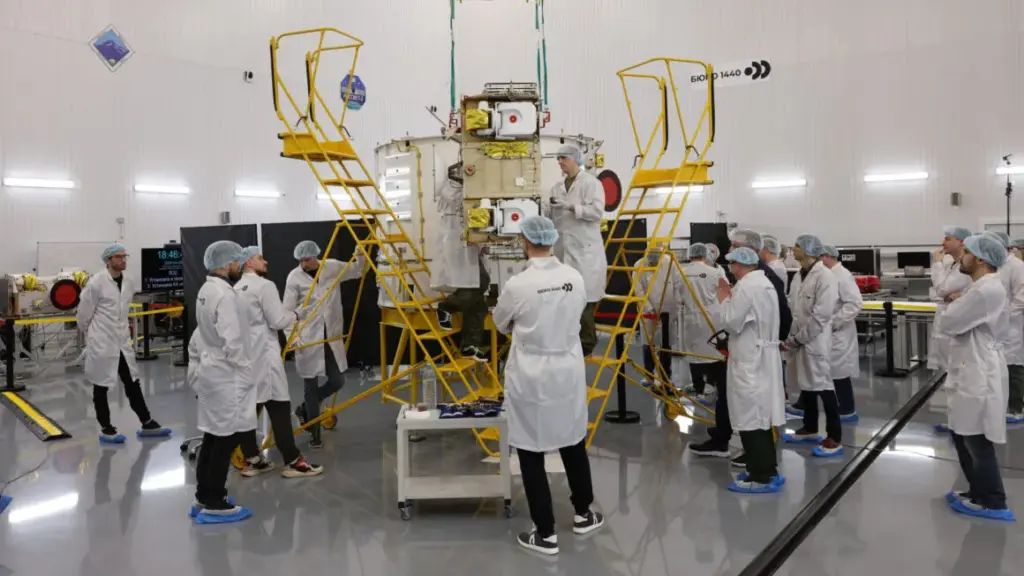
    Employees of Russian company Bureau 1440 work on a Rassvet communications satellite.
    Explore further

    The EU sanctioned Russia’s Starlink rival but not the company that builds it. Experts call that the gap that matters

    Denys Shtilerman, co-founder and chief designer at Ukrainian defense company Fire Point, told the Financial Times in May that the firm had launched two satellites this year and planned dozens more in 2027, aiming to reduce reliance on the US government and Western tech companies. To strike deep inside Russia and gather intelligence, he has said, Ukraine needs its own constellation covering all of Russia.

    The US has until 18 October to choose its Russia sanctions targets—if any. Kyiv’s wish list leads with the firms feeding Russia’s Starlink clone

    1 octobre 2026 à 04:18

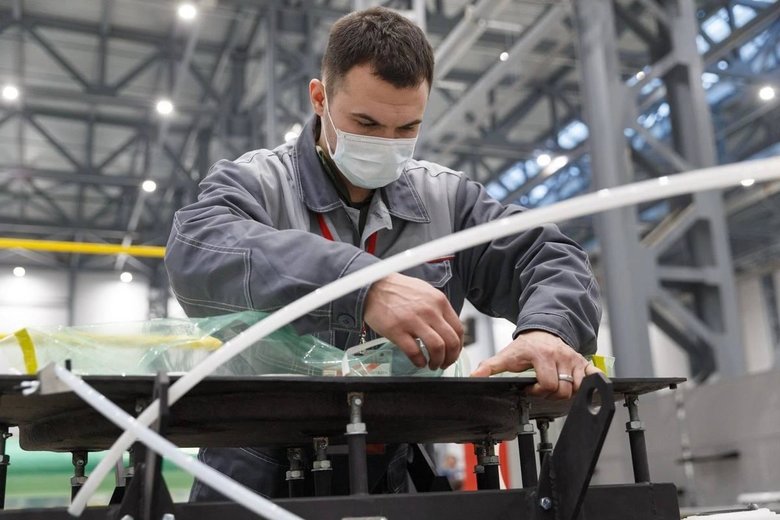
    A worker at the Kronstadt UAV production plant in Dubna.

    Ukraine is about to tell Washington exactly which Russian targets it wants punished under America's new sanctions law, the Associated Press reported. A senior Ukrainian diplomat said Kyiv will hand the Trump administration and Congress a wish list of companies, ships, and people this week—and at the top are the firms supplying parts for Russia's answer to Starlink.

    The law requires Washington to act but lets the president waive the sanctions if he certifies that doing so serves US national interests, and the first choice falls due in weeks. For Ukraine, a measure that names no targets changes nothing on the ground—which is why the fight now is over whose names make the list before the clock runs out.

    A list topped by Russia's Starlink clone

    Denys Sienik, chargé d'affaires at Ukraine's embassy in Washington, said the priority is a group of Russian firms making components for Rassvet, Moscow's homegrown satellite network, which Russia hopes to complete by the end of the year—though its own officials have put the start of service in 2027. Bureau 1440, the firm building Rassvet, is not itself on US sanctions lists, but its parent company, ICS Holding, is under US blocking sanctions, according to Militarnyi. The suppliers feeding the network parts are not sanctioned, and those are the ones Kyiv wants added to the list.

    Russia sped up the project after Ukraine and SpaceX cut off the Starlink terminals its troops had used without authorization at the front. If Russia completes the constellation, Sienik said, it could strike Ukraine at will with real-time information—a danger he warned would bite hardest this winter. "If these entities are not sanctioned, it will actually make this program possible for Russia and that will be a game-changer," he told reporters, Reuters reported. Kyiv wants access to Starlink inside Russia, too, so it can strike targets there.

    Euromaidan Press has reported how such a network would change the battlefield: the satellites transmit in high-frequency bands that are hard to jam, and a relay overhead would feed drones and missiles fresh coordinates mid-flight, letting them fly low under air defenses that struggle to see them.

    Oil tankers and attacks on US firms

    Ukraine is pushing for tougher action against Russia's shadow fleet, too—the aging tankers that sell its oil around Western restrictions—and is asking the administration and American industry to publicly condemn Russian attacks on US companies' operations inside Ukraine, Sienik said.

    The deadline Washington is now facing

    The requests arrive as the administration faces an 18 October deadline to decide which Russian entities, if any, to sanction under the Lindsey O. Graham Sanctioning Russia and Iran Act, which US President Donald Trump signed into law on 18 September. The law directs the White House to impose tariffs on Russia's biggest oil buyers and to block its banks, officials, and tankers—but lets the president waive those measures, which is why Kyiv is lobbying for the toughest list it can get.

    The EU sanctioned Russia’s Starlink rival but not the company that builds it. Experts call that the gap that matters

    30 septembre 2026 à 03:56

    Employees of Russian company Bureau 1440 work on a Rassvet communications satellite.

    The company that actually assembles Russia's homegrown answer to Starlink has been left off every Western sanctions list, a US research group and a Ukrainian anti-corruption watchdog separately told Euromaidan Press this month.

    Both landed on the same gap—the manufacturer, Bureau 1440, and its leaders remain untouched by the West, even though Kyiv has already placed the firm on Ukraine's own sanctions list. They differ on how much a Western designation would achieve, not on where the opening is.

    The company no Western government has sanctioned

    Rassvet is Russia's low-Earth-orbit satellite constellation, built by the private firm Bureau 1440 to give Moscow's troops communications independent of SpaceX. Bureau 1440 launched its first 16 satellites in March 2026, building the network after SpaceX cut off the Russian units' unauthorized Starlink access. C4ADS, a US-based research organization, confirmed to Euromaidan Press that Bureau 1440 and its leadership sit outside every Western sanctions regime, and called designating the manufacturer the single most visible and effective step available.

    Viktoriia Vyshnivska, a senior analyst at the Independent Anti-Corruption Commission (NAKO), a Ukrainian watchdog, was more measured. "We shouldn't expect a magical effect," she said, but sanctions would make the Western boards and components Bureau 1440 depends on harder and costlier to source. Many of those goods are already banned under EU export controls, she noted—yet the manufacturer itself remains off the lists.

    The EU named the network but not the firm

    The EU has already moved once. Its 21st sanctions package, adopted on 23 July, targeted the Rassvet network but stopped short of the manufacturer, leaving Bureau 1440 and its chief executive off the lists. On 28 August, Ukrainian Foreign Minister Andrii Sybiha said Kyiv had sent a formal note to the UN's telecom agency requesting that Ukraine be excluded from Rassvet's coverage. Days later, he urged EU ministers to sanction the project. Ukraine gave partners a list of nine entities tied to it, Militarnyi reported, citing sources.

    For years Ukraine could find, jam, or knock out the communication links Russian forces leaned on. Rassvet may be the first it cannot. Vyshnivska put the useful window to slow it at about a year. Russia, by Ukrainian calculations, needs five to eight years to see it through.

    Euromaidan Press examined how Russia built Rassvet, and how far it still has to go.

    • ✇Euromaidan Press
    • A bottle of flammable liquid in Poland, a nuclear option on a Russian wish-list—the hunt for Starlink widens
      A Russian academic and an ultranationalist media owner have drawn up a menu of ways to knock out Starlink, the satellite network keeping Ukraine's drones and troops online, the Ukrainian defense outlet Militarnyi reported. The ideas run from jamming to a nuclear blast in space, and come as Poland investigates a suspicious fire at a Starlink ground station serving Ukraine. Satellite internet is the nervous system of the drone war. Since a terminal cutoff early this year gutted Russian fr
       

    A bottle of flammable liquid in Poland, a nuclear option on a Russian wish-list—the hunt for Starlink widens

    25 septembre 2026 à 09:54

    Starlink

    A Russian academic and an ultranationalist media owner have drawn up a menu of ways to knock out Starlink, the satellite network keeping Ukraine's drones and troops online, the Ukrainian defense outlet Militarnyi reported. The ideas run from jamming to a nuclear blast in space, and come as Poland investigates a suspicious fire at a Starlink ground station serving Ukraine.

    Satellite internet is the nervous system of the drone war. Since a terminal cutoff early this year gutted Russian frontline coordination, Moscow's search for a workaround has widened from the spectrum to orbit—and from the battlefield toward the infrastructure that keeps the network alive.

    The scenarios

    Sergei Glazyev of the Russian Academy of Sciences and Konstantin Malofeyev, founder of the Russian outlet Tsargrad, laid out the proposals. Glazyev's list runs from cutting communication cables on land and undersea to crippling data centers and downing reconnaissance and command aircraft, whatever their nationality. Without American and British spotters, planners, and analysts, he claims, Ukraine's army would go blind. Glazyev's core argument is that Starlink satellites are not geostationary—nothing hangs over Ukraine, so the entire constellation must be struck at once.

    For electronic warfare, they push wider use of the Volna Kupol Garant, a roughly $1.5 million system that beams a signal to briefly deafen a passing Starlink satellite over what its developers claim is up to 20 km². Kinetic options follow—the A-235 Nudol and S-500 Prometheus interceptors—though they call spending one costly missile on one cheap satellite "insane extravagance." A third idea scatters metal pellets to spark what the authors call the Kessler effect—a debris cascade that would destroy everything at that altitude.

    The bluntest proposal detonates a nuclear device in space, its pulse frying electronics on low-orbit satellites. The authors admit this would also wreck Russia's own Rassvet network, which orbits at a similar altitude. "We can no longer hit Musk's creation for free," they write, "but it's still the optimal option. The legal consequences are unimportant."

    Video still from Bureau 1440's recent launch of 16 Rassvet satellites into low earth orbit
    Explore further

    Russia’s answer to Starlink was written off as a failure—its satellites are still climbing

    A station burns in Poland

    On 23 September, fire destroyed the distribution panel of a ground Starlink station in Wola Krobowska that feeds Poland and Ukraine. Poland's Deputy Prime Minister Krzysztof Gawkowski said sabotage could not be ruled out and that the pattern matched Russian services' modus operandi. A bottle of flammable liquid was found beside the burned distribution panel, according to sources cited by RMF24. Exatel, which the minister named as the station's operator, said it only subleases the land and transmits data there, and neither operates nor owns the infrastructure.

    ❌