Ali al-Zaidi is a political neophyte hoping to succeed where previous leaders failed. In an interview, he laid out an ambitious timeline that could prove hard to meet.
Ali al-Zaidi is a political neophyte hoping to succeed where previous leaders failed. In an interview, he laid out an ambitious timeline that could prove hard to meet.
The president vacillated but decided on Sunday not to join Saudi Arabia, for now, in joint strikes against the Houthis in Yemen. But he also needs the kingdom’s cooperation in his war against Iran.
The president vacillated but decided on Sunday not to join Saudi Arabia, for now, in joint strikes against the Houthis in Yemen. But he also needs the kingdom’s cooperation in his war against Iran.
The Kremlin said that an agreement would be “a very good idea” but that any deal would not have much effect on fuel markets, as President Trump had suggested.
The Kremlin said that an agreement would be “a very good idea” but that any deal would not have much effect on fuel markets, as President Trump had suggested.
Crown Prince Mohammed bin Salman asked the United States for more U.S. military help last week after the Iranian-backed Houthi forces in Yemen launched a broad offensive.
Crown Prince Mohammed bin Salman asked the United States for more U.S. military help last week after the Iranian-backed Houthi forces in Yemen launched a broad offensive.
Saudi Arabia’s crown prince, Mohammed bin Salman, last month. Prince Mohammed held talks on Monday with Adm. Brad Cooper, who leads U.S. Central Command.
The kingdom is in a state of strategic shock after coming under attack from an emboldened Iran and failing to win more U.S. military support, analysts say.
The kingdom is in a state of strategic shock after coming under attack from an emboldened Iran and failing to win more U.S. military support, analysts say.
Talks between the United States and Iran hit a dead end weeks ago, leaving Arab countries struggling to manage their ties to Tehran amid ongoing attacks.
Talks between the United States and Iran hit a dead end weeks ago, leaving Arab countries struggling to manage their ties to Tehran amid ongoing attacks.
A drone attack from Iraq forced Saudi Arabia to close its East-West pipeline, the kingdom said, threatening a key workaround to Iran’s Persian Gulf blockade.
A drone attack from Iraq forced Saudi Arabia to close its East-West pipeline, the kingdom said, threatening a key workaround to Iran’s Persian Gulf blockade.
Satellite images released by Planet Labs on Saturday showed the East-West pipeline facility in the Hejaz Region of Saudi Arabia on Sept. 8, and again, after sustaining damage, on Sept. 11.
Iran and its allies now hold sway over two key oil shipping routes, and Tehran is setting the stage for a diplomatic win that could enhance its stature.
Iran and its allies now hold sway over two key oil shipping routes, and Tehran is setting the stage for a diplomatic win that could enhance its stature.
The group, which includes Iran, has been split over the war. It called for “maximum restraint” in the Middle East without casting blame on any particular country.
The group, which includes Iran, has been split over the war. It called for “maximum restraint” in the Middle East without casting blame on any particular country.
The militia captured the island in the Bab al-Mandab Strait, a choke point for trade. Saudi Arabia also announced it had shut down a critical oil pipeline after a drone attack launched from Iraq.
The militia captured the island in the Bab al-Mandab Strait, a choke point for trade. Saudi Arabia also announced it had shut down a critical oil pipeline after a drone attack launched from Iraq.
The leaders of China, Russia, India, Iran and other nations in the BRICS club gather in New Delhi this weekend, but wars and soaring energy prices divide them.
The leaders of China, Russia, India, Iran and other nations in the BRICS club gather in New Delhi this weekend, but wars and soaring energy prices divide them.
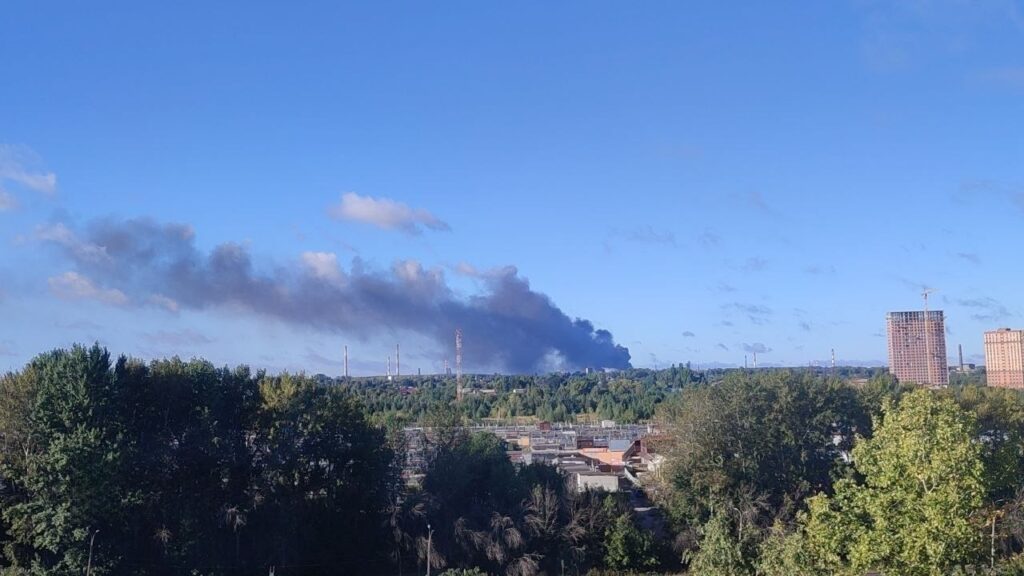
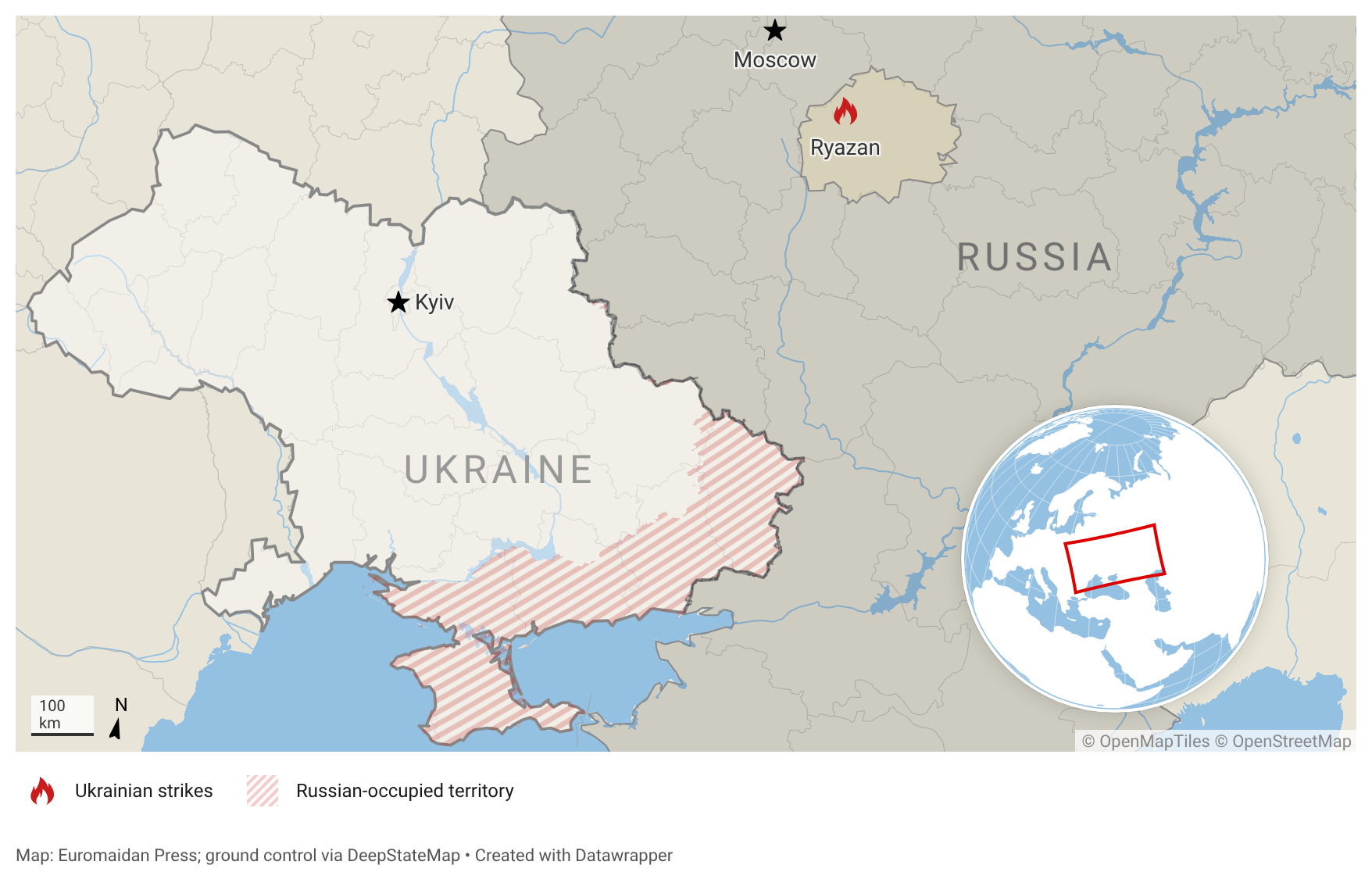
Ukrainian drones struck the Ryazan oil refinery in Russia on the morning of 6 September and set one of its core units on fire, Ukrainian defense outlet Militarnyi reported. The unit produces the high-octane component the Rosneft plant needs for its higher grades of gasoline. Russian regional authorities acknowledged a fire without naming the site. Ryazan is situated southeast of Moscow, about 470 km from Ukraine.
Ukraine has spent this year pushing long-range drones dee
Ukrainian drones struck the Ryazan oil refinery in Russia on the morning of 6 September and set one of its core units on fire, Ukrainian defense outlet Militarnyi reported. The unit produces the high-octane component the Rosneft plant needs for its higher grades of gasoline. Russian regional authorities acknowledged a fire without naming the site. Ryazan is situated southeast of Moscow, about 470 km from Ukraine.
Ukraine has spent this year pushing long-range drones deeper into Russia, working methodically through refineries, pipelines, and export terminals to cut the fuel that moves Russian armies and the oil income that pays for the war. The pressure now runs deep past Russia's borders, with the shortage reaching Central Asian markets.
What burned at Ryazan
Drones hit the low-temperature isomerization unit for pentane-hexane fractions, designated Izomalk-2-LIN-800, according to Militarnyi's analysis. The unit sits on the refinery's grounds and is one of the critically important links in the plant's production cycle.
It converts low-octane straight-run oil fractions into a cleaner high-octane blending component. That component is what allows the refinery to produce gasolines of the higher environmental classes, Euro-5 among them, without adding harmful additives.
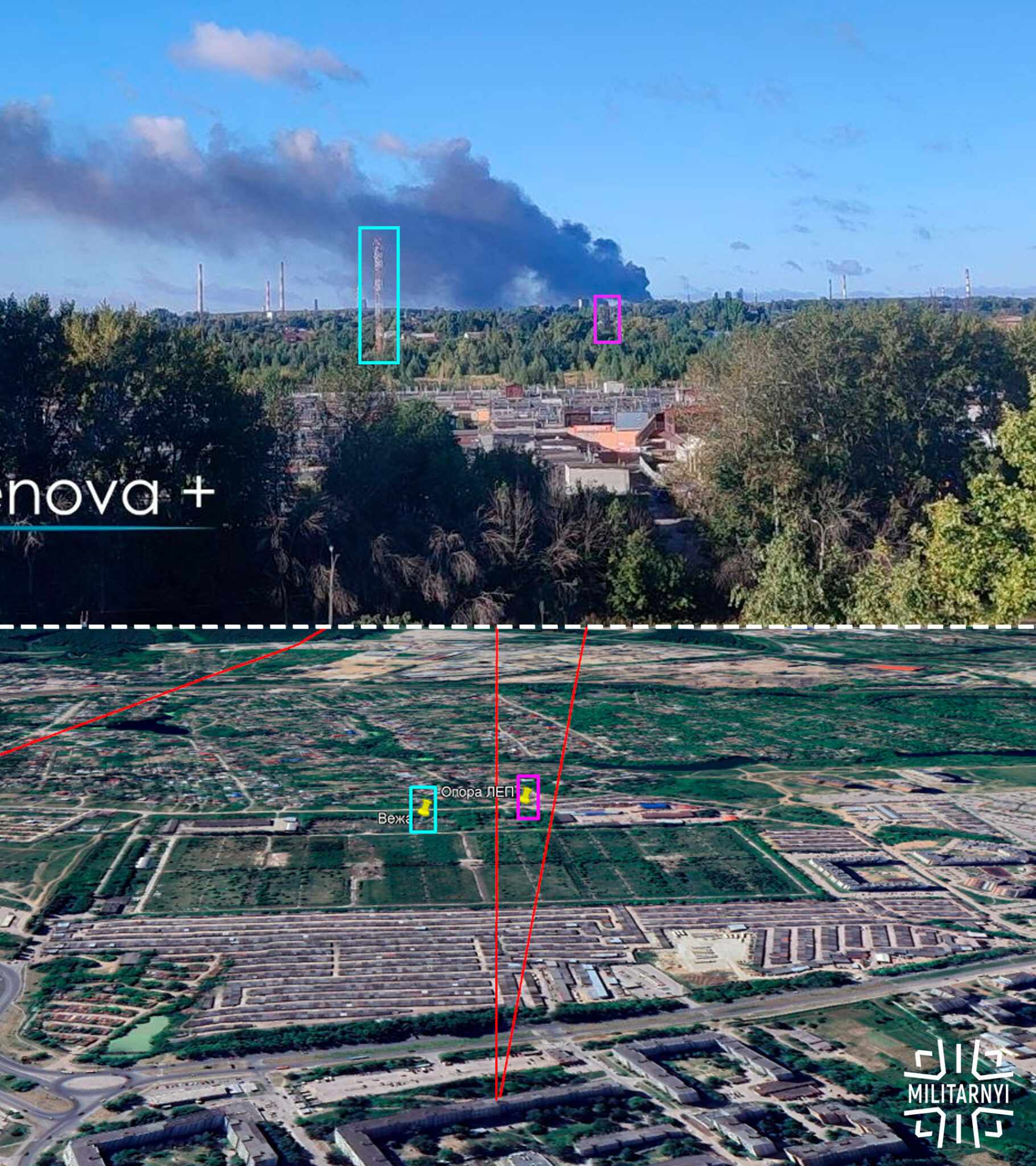
Geolocation of the fire at the Ryazan oil refinery after a Ukrainian drone strike, Ryazan, Russia, 6 September 2026. Graphic: Militarnyi, imagery: ESRI
The refinery belongs to Rosneft and ranks among Russia's largest refining enterprises, with a capacity of about 17 million tons of crude a year. It makes motor gasolines of all grades, diesel, aviation kerosene, fuel oil, liquefied gases, bitumen, and petrochemical feedstock. Four crude distillation units sit on the site, along with equipment for vacuum gasoil hydrotreating, cracking, and catalytic reforming.
Ukrainian monitoring channel Exilenova+ published videos of the strike.
Drones already attacked this unit in December 2025 and damaged it. Earlier waves targeted the plant's ELOU-AVT-3, ELOU-AVT-6, and AVT-1 units.
By May 2026 the refinery had lost 90–100% of its refining capacity. Satellite imagery from 3 August 2026 showed Ukraine's Defense Forces had disabled two of the four crude distillation units on site.
Ukrainian drones struck the refinery in May, and FP-1 drones set it and a nearby warehouse burning in July.
Russian officials report a fire, not a target
Ryazan Oblast governor Pavel Malkov confirmed the region came under drone attack. Drone debris damaged residential buildings in Ryazan and Sapozhkovsky district, he stated, and a fire broke out at an enterprise he did not name. He said there were no casualties and that emergency services were working.
Russian news Telegram channel Astra said its analysis of photographs taken by residents established that the fire was on the grounds of the Ryazan refinery. Ukrainian channel Exilenova+, which tracks such attacks, also reported a hit on the plant.
Ukraine's General Staff said strikes on 26 August and 1 September fully stopped two large refining enterprises: Lukoil-Nizhegorodnefteorgsintez in Kstovo, Nizhny Novgorod Oblast, and the Novatek-Ust-Luga complex in Leningrad Oblast. Both supply the Russian army.
Short of gasoline, Russia has been buying more fuel abroad. Moscow discussed importing gasoline from Kazakhstan in June, and a Kazakh refinery deal would cover 0.3% of Russian demand. Belarus increased its gasoline supplies to Russia nearly 20-fold in the first half of the year.

 Connexion