Vue normale

One pincer stalled a year ago, the other has just been broken near Kostiantynivka—Russia’s ring will not close, Ukrainian commander says
17 septembre 2026 à 07:32

one pincer stalled year ago other has just been broken near kostiantynivka—russia's ring close ukrainian commander says · post andrii biletskyi founder azov third assault brigade (center) 3d ukraine news

Russia's attempt to encircle the fortified cities of Donetsk Oblast has lost its northern pincer, the commander of Ukraine's Third Army Corps, Brigadier General Andrii Biletskyi, said in a television interview reported by Ukrinform. He described where the two Russian pincers were meant to meet, far behind the front line, and what Moscow must do now that one of them is gone. He also named what the Ukrainian operation there is meant to achieve, after declining to do so when he revealed it two days earlier.

Seizing all of Donetsk Oblast is Russia's central objective in the ongoing all-out war, on the battlefield and at the negotiating table alike, and Russian leader Putin has ordered it done by the end of 2026. Russian forces have already missed 15 of his earlier deadlines against a belt of fortified cities Moscow can neither storm nor bypass, and it is losing men faster than it can replace them.

Two pincers that were to meet in another oblast

Biletskyi set out the Russian design "to envelop the so-called fortress cities from the north and from the south"—the four cities, Sloviansk, Kramatorsk, Druzhkivka, and Kostiantynivka, that have been the backbone of Ukraine's defense in the oblast since 2022..

"From the south it was an envelopment through Dobropillia, and from the north through this salient, which is now being cut off, it went to the city of Sviatohirsk and further, to the settlement of Barvinkove, where these two claws of the Russian army, the Dobropillia one from the south and the Sviatohirsk one from the north, were supposed to close," the commander said.

Barvinkove sits in Kharkiv Oblast, west of the fortified belt. The distance from there to the current front line shows how far behind Ukrainian lines the ring was meant to close.

Neither pincer got near it. Ukrainian forces stopped the Russian infiltration near Dobropillia last year, Biletskyi said, and the situation there remains difficult but under control. Russian assault groups have kept pushing toward the town in recent weeks, though Ukrainian troops have mined or destroyed the main approaches.

On the northern pincer he was blunt: 

"The northern claw has effectively been routed and destroyed," he said.
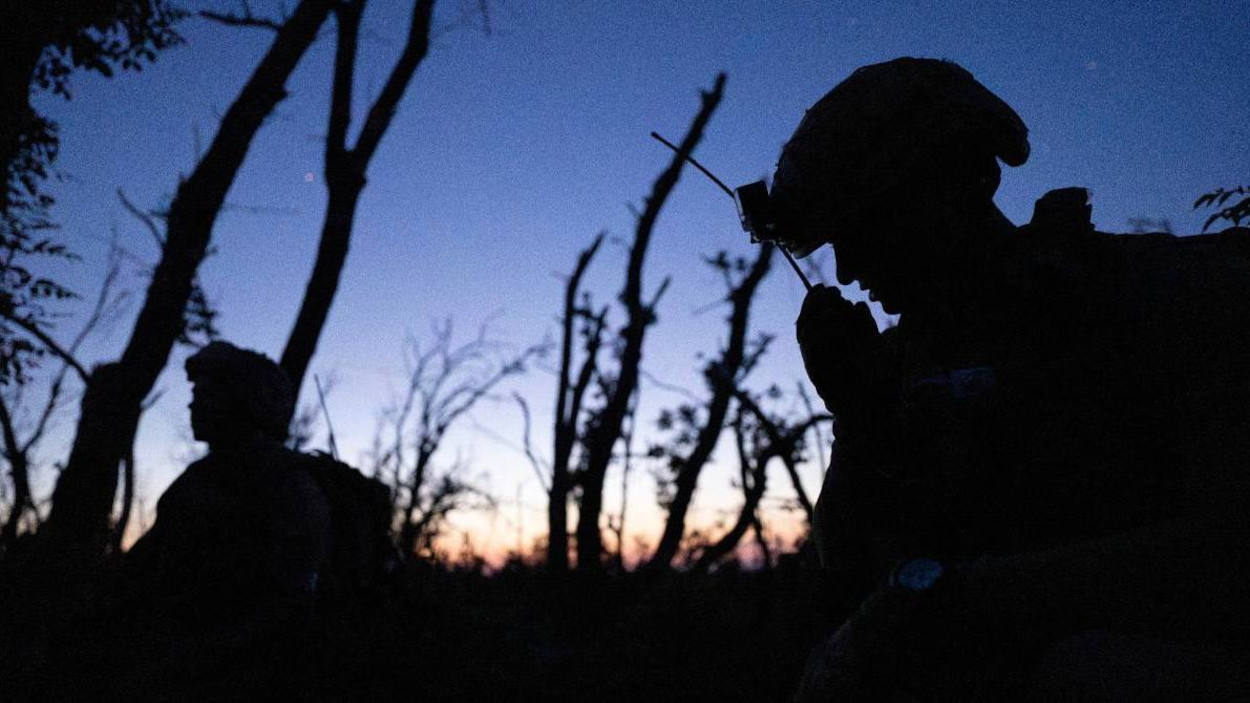
Soldiers of Ukraine's Third Army Corps. Photo: Ukraine's Third Army Corps
Explore further

“Only the first season” – Ukraine unveils secret counteroffensive in a region Russia has been trying to seize for 12 years

Now the cities have to be stormed

Holding that result now depends on Russian supply, Biletskyi said. The critical task is "paralyzing logistics, paralyzing the rear areas, not letting the Russians restore this offensive."

He then set out what the failure costs Moscow.

"Then they will have to storm the Sloviansk-Kramatorsk and the Druzhkivka-Kostiantynivka agglomerations head-on," he said. "And storming these cities head-on is a far more painful and costly business for them than trying to envelop them and effectively take them without a fight."
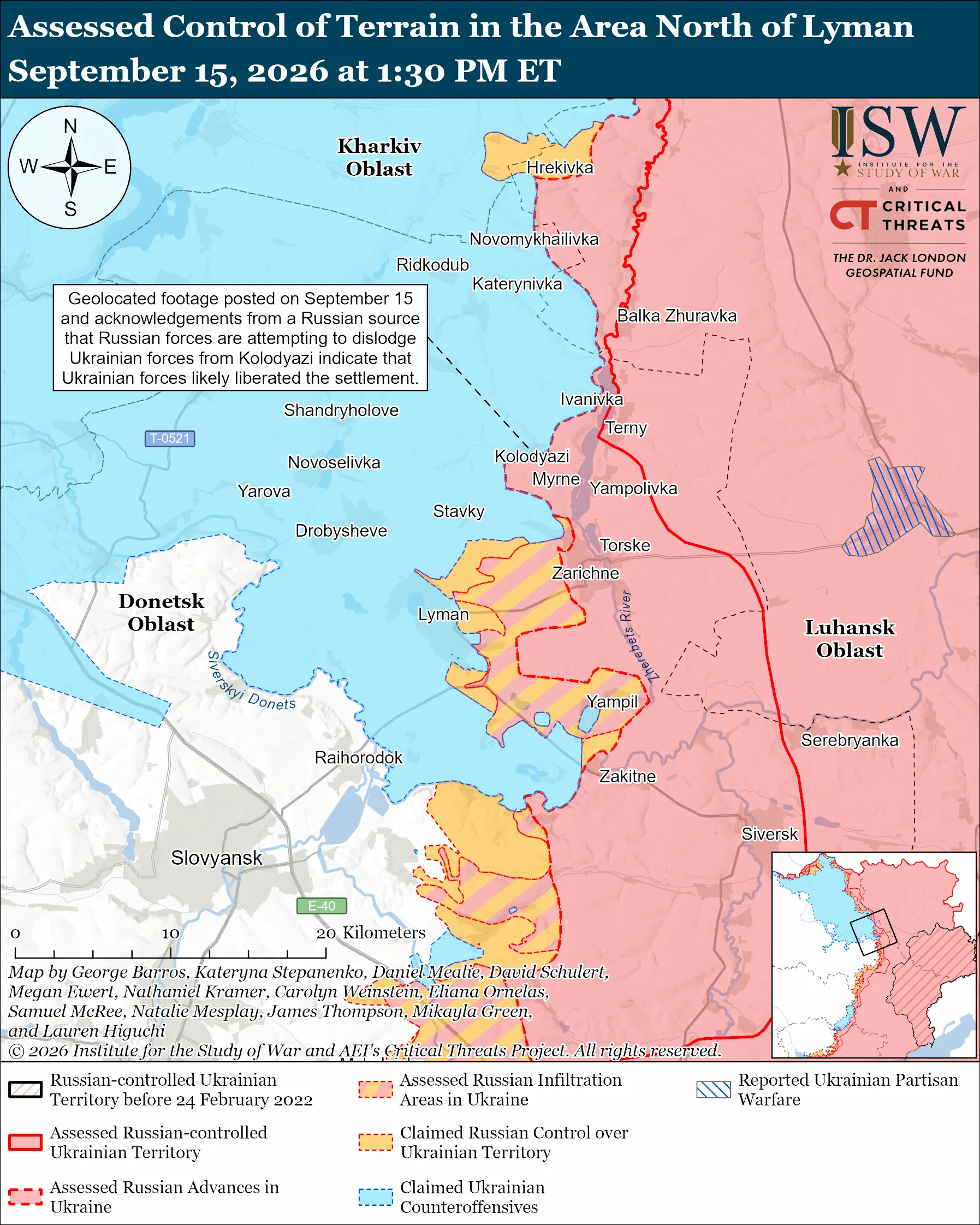
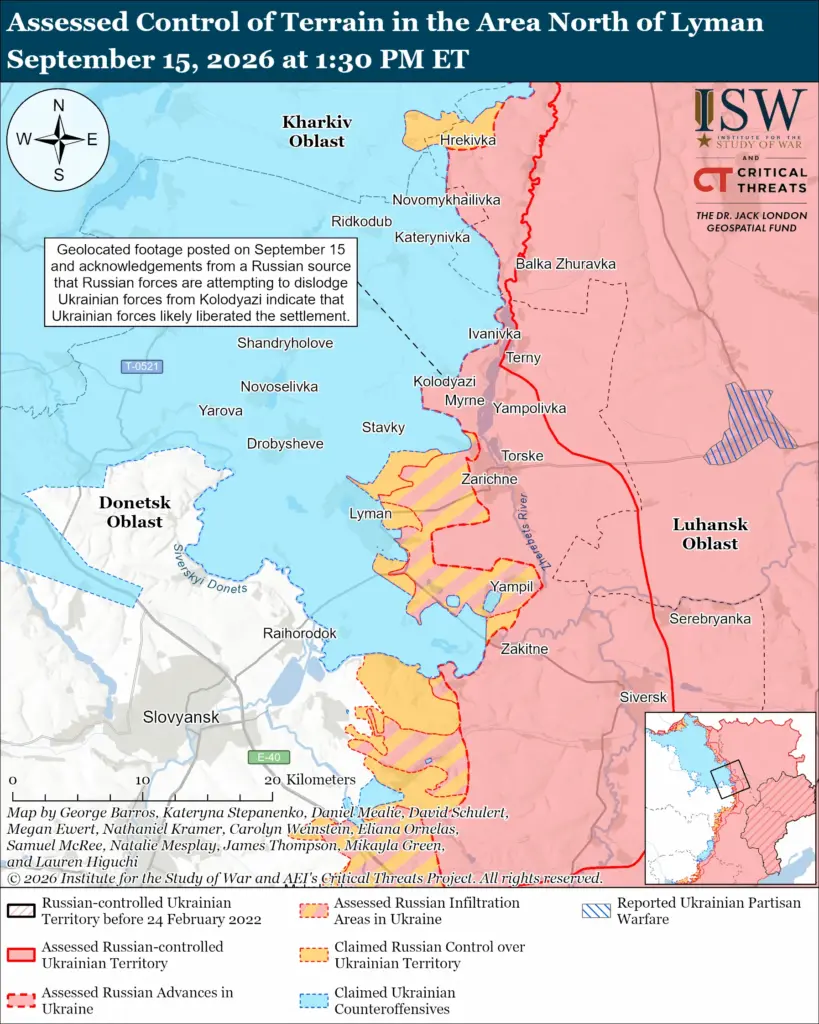
Map: ISW

Russia has taken none of them: it has been fighting for Kostiantynivka since October 2025 and has not reached the other three. Ukraine reinforced the sector last month, placing two newly formed groupings under Azov commanders. One of them has since warned that Russia may mobilize up to 600,000 troops for its next offensive.

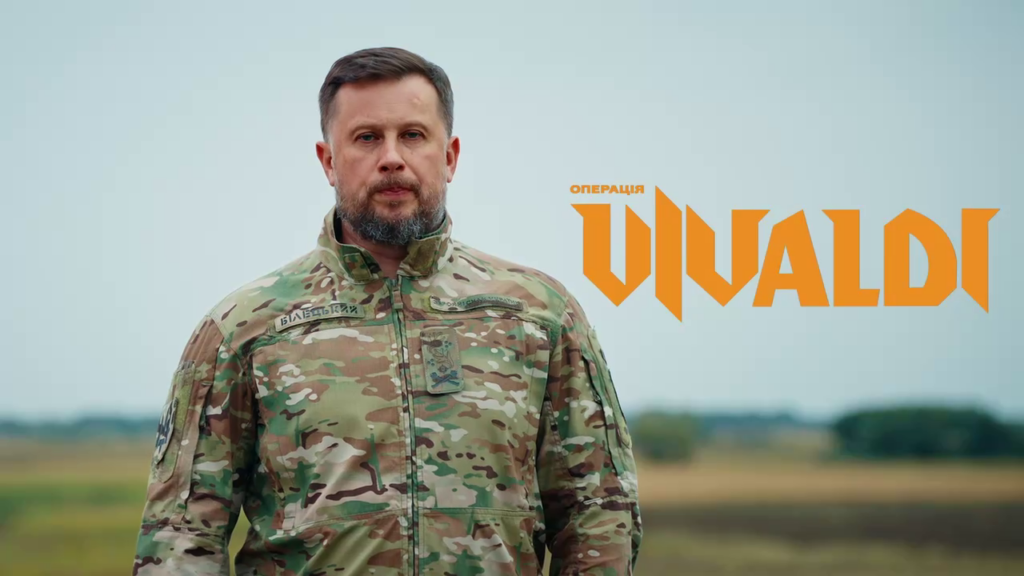
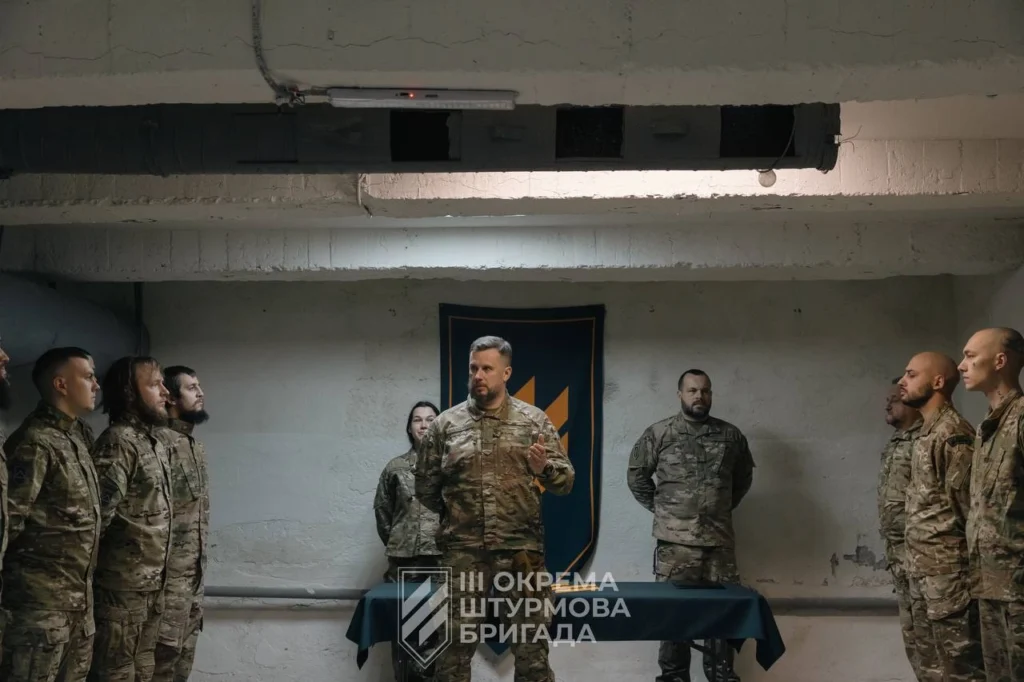
Ukraine's Third Army Corps commander Brigadier General Andrii Biletskyi announcing "Operation Vivaldi," 15 September 2026. Screenshot from video: Ukraine's Third Army Corps
Explore further

Ukraine’s Vivaldi counteroffensive disrupts Russia’s plan to encircle Donetsk Fortress Belt – ISW

What Vivaldi is actually for

Two days after the operation was made public without a stated objective, Biletskyi gave one, and it is defensive.

"Our main strategic task for the Armed Forces of Ukraine is defense on the Donetsk and Luhansk axes, the defense of Donetsk and Luhansk oblasts," he said.

Ukrainian forces are not trying to take as much ground as they can, he added. 

"We are not fighting there just for tens or hundreds, and at one time thousands, of kilometers. We are fighting first of all for favorable defensive lines."

Vivaldi is meant to put the troops on exactly those lines. That sets a different yardstick than captured settlements: the operation will be judged on the ground Ukraine ends up holding, not on how much of it there is.

Biletskyi confirmed the offensive in northern Donetsk Oblast on 15 September, after a period of information silence. His corps had cleared 75 square kilometers of Russian infiltrators and liberated 10 more, and its drone units had cut Russian supply routes and burned fuel infrastructure, the corps said at the time. Asked then what the operation was aiming at, he declined to say, offering only that Vivaldi has four seasons and this was the first. The Institute for the Study of War assessed a day later that the operation disrupts the Russian plan to encircle the fortress belt.
  • ✇Euromaidan Press
  • Ukraine’s Vivaldi counteroffensive disrupts Russia’s plan to encircle Donetsk Fortress Belt – ISW
    Ukraine’s Operation Vivaldi has disrupted Russia’s plan to encircle Ukraine’s heavily fortified “Fortress Belt” in Donetsk Oblast, the Institute for the Study of War (ISW) assessed, adding that Ukrainian forces have likely made additional gains beyond those publicly disclosed by Kyiv. The assessment comes a day after Ukraine’s Third Army Corps publicly confirmed that it is conducting a counteroffensive against Russian forces north and northwest of Lyman. ISW said the Ukrainian gains hav
     

Ukraine’s Vivaldi counteroffensive disrupts Russia’s plan to encircle Donetsk Fortress Belt – ISW

16 septembre 2026 à 07:07

Ukraine's Third Army Corps commander Brigadier General Andrii Biletskyi announcing "Operation Vivaldi," 15 September 2026. Screenshot from video: Ukraine's Third Army Corps

Ukraine’s Operation Vivaldi has disrupted Russia’s plan to encircle Ukraine’s heavily fortified “Fortress Belt” in Donetsk Oblast, the Institute for the Study of War (ISW) assessed, adding that Ukrainian forces have likely made additional gains beyond those publicly disclosed by Kyiv.

The assessment comes a day after Ukraine’s Third Army Corps publicly confirmed that it is conducting a counteroffensive against Russian forces north and northwest of Lyman. ISW said the Ukrainian gains have rendered Russia's plan to encircle the Fortress Belt from the north and south unfeasible.

Third Army Corps commander Brigadier General Andrii Biletskyi said on 15 September that Ukrainian forces had cleared Russian infiltrators from several settlements and liberated Serednie. The corps said its forces had cleared 75 square kilometers of Russian infiltrators and de-occupied another 10 square kilometers during the first phase of the operation.

Biletskyi said the operation, dubbed “Vivaldi,” was conducted under information silence and warned that the first phase was only one of four planned “seasons.”

Ukraine’s gains appear larger than initially disclosed

ISW assessed that Ukrainian forces have likely made additional gains beyond those announced by Biletskyi, with Russian sources beginning to acknowledge the deterioration of their position in the area.

In particular, Russian forces have been shelling Ukrainian positions in Kolodyazi, northeast of Lyman, according to geolocated footage. A prominent Russian milblogger also acknowledged that Russian forces were trying to push Ukrainian troops out of Kolodyazi – what ISW described as a “coy acknowledgement” that Ukrainian forces have likely liberated the settlement.

Russian sources have continued to report worsening conditions for Russian forces both north and south of Kolodyazi.

ISW also corroborated the Third Army Corps’ account of growing Russian logistical problems, noting that Ukrainian strikes have disrupted supplies for Russian forces in the Borova and Lyman directions. The corps said the pressure was severe enough that Russia moved some logistics and support elements across the state border into Russia’s Voronezh Oblast.

Soldiers of Ukraine's Third Army Corps. Photo: Ukraine's Third Army Corps
Explore further

“Only the first season” – Ukraine unveils secret counteroffensive in a region Russia has been trying to seize for 12 years

Vivaldi disrupts Russia’s plan for the Fortress Belt

The operation’s broader significance lies in its effect on Russia’s campaign in Donetsk.

Russia has made capturing the remaining Ukrainian-held parts of Donetsk Oblast a central military objective, with its forces seeking to advance toward the heavily fortified cities of the Donetsk “Fortress Belt” from several directions.

The Russian military had also sought to create a northern route around the Fortress Belt through the Lyman area. ISW now assesses that Ukraine’s gains north of Lyman have made that plan unfeasible.

The institute said the Ukrainian counteroffensive will delay Russia’s planned offensive toward Sloviansk, the major objective Moscow had been expected to pursue after capturing Lyman.

Map: ISW

Russian sources acknowledge setbacks

According to ISW, a prominent Kremlin-affiliated Russian milblogger similarly acknowledged that Ukraine’s gains will delay the Russian offensive toward Sloviansk and warned that the northern flank of Russian forces operating southeast of Lyman and east of Kramatorsk is now vulnerable to Ukrainian counterattacks and interdiction.

The Russian milblogger also claimed that Russian forces had lost positions south of Lyman and were struggling to recapture positions inside the city itself.

Russian sources have blamed the setbacks on the military’s culture of producing “beautiful reports” – exaggerated accounts of battlefield advances that can distort higher-level operational planning.

Another prominent milblogger reportedly claimed that some Russian commanders were attempting to conceal losses by rapidly assembling assault groups from inadequately trained personnel to retake lost positions.

Russia still presses its offensive elsewhere

Despite the setbacks around Lyman, ISW said Russian forces continue prioritizing frontal attacks against the Fortress Belt from the south and efforts to encircle it from the southwest, rather than advancing toward the cities from the east.

The institute said Russia may still be adjusting to the loss of the Lyman salient and the initiative in the area. It also assessed that Russian forces could seek to cut Ukrainian ground lines of communication to the Fortress Belt from the west.

For Ukraine, meanwhile, the counteroffensive is also undermining Russia’s ability to present advances in Donetsk as evidence of battlefield momentum.

And the full extent of Vivaldi remains unknown.

Biletskyi said the 85 square kilometers publicly disclosed by the corps represented only the first “season” of the operation, invoking Vivaldi’s Four Seasons.

“Vivaldi, as is known, has four seasons. And this is only the first one,” Biletskyi said on 15 September.

“Only the first season” – Ukraine unveils secret counteroffensive in a region Russia has been trying to seize for 12 years

15 septembre 2026 à 16:34

Soldiers of Ukraine's Third Army Corps. Photo: Ukraine's Third Army Corps

Ukraine’s Third Army Corps has revealed details of an offensive operation in northern Donetsk Oblast, saying its forces cleared Russian infiltrators from several settlements and liberated the village of Serednie.

Russia has made seizing the entirety of Donetsk Oblast both a battlefield and diplomatic priority of its invasion of Ukraine, repeatedly trying to break through heavily fortified Ukrainian defensive lines while demanding that Kyiv withdraw from the remaining Ukrainian-held territory in negotiations. Despite years of fighting and sustained Russian assaults, Moscow has failed to capture the entire oblast, and Ukraine is now conducting an offensive of its own.

The operation, dubbed “Vivaldi,” was conducted under a period of information silence and involved Ukrainian drone, reconnaissance, special operations, infantry, and other units working under a unified tactical command. The corps said the first phase cleared 75 square kilometers of Russian infiltrators and liberated another 10 square kilometers of territory.

The announcement was made by Third Army Corps commander Brigadier General Andrii Biletskyi on 15 September. 

Ukraine targets Russian infiltration

According to the corps, the operation focused initially on Russian troops that had infiltrated Ukrainian positions and settlements in the area.

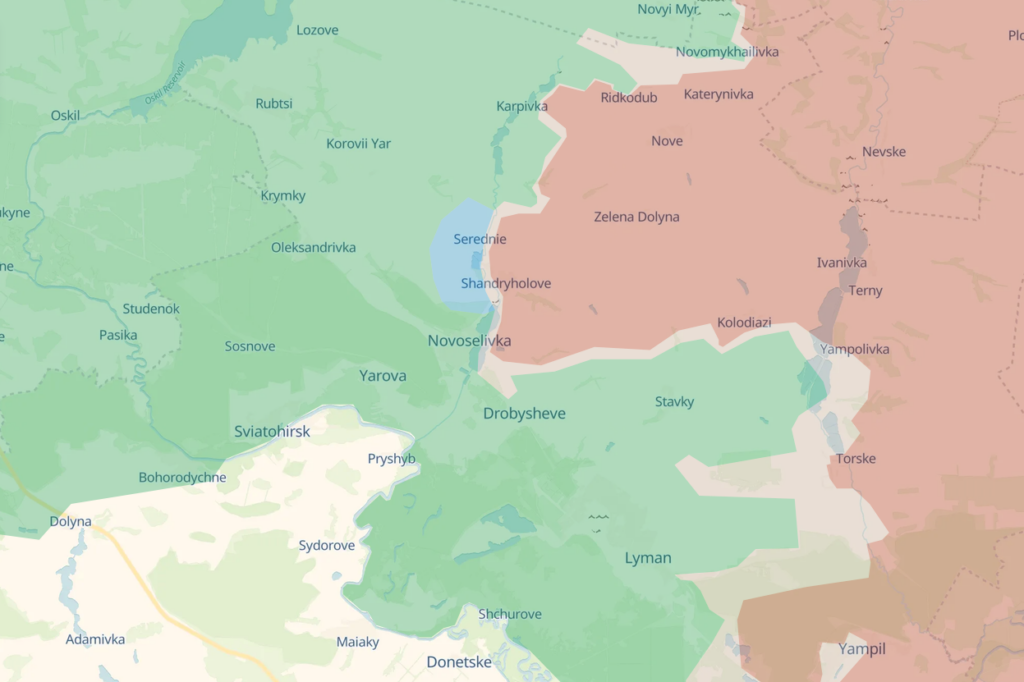
Ukrainian forces cleared Novoselivka, Oleksandrivka, Yarova, the outskirts of Korovyi Yar, and liberated Serednie, the corps said. It described the total area cleared or retaken as 85 square kilometers.

The operation brought together units from the 60th and 125th Mechanized Brigades, the Third Assault Brigade, the KRAKEN special unit, and other formations of the Third Army Corps, alongside attached units from the 66th Mechanized Brigade, Ukraine’s Special Operations Forces, the military intelligence unit Artan, and the State Border Guard Service.

The corps said the operation was coordinated by a joint headquarters that brought special operations and reconnaissance units under a single tactical plan specifically to counter Russian infiltrators, whom it referred to as “flagovtyky.”

Frontline situation around Serednie, northern Donetsk Oblast, Ukraine, 15 September 2026. Map: DeepState

Russian logistics pushed back across the border

The Ukrainian operation also targeted Russian logistics supporting the front.

The corps said its drone units cut Russian supply routes and struck fuel infrastructure and storage facilities that had been supporting Russian forces.

According to the Ukrainian military, Russian forces subsequently moved the supply of fuel and lubricants out of Ukraine and into Russia’s Voronezh Oblast after a pipeline and fuel depots were destroyed.

The corps claimed Russian forces lost around 1,500 personnel during this phase of the operation, as well as more than 12,000 drones and hundreds of armored vehicles, artillery systems, and other vehicles.

‘This is only the first season’

Biletskyi said the operation’s ultimate objective has been the subject of speculation in open sources, with some reports suggesting Ukrainian forces could be seeking to reach the Chornyi Zherebets River.

He declined to confirm that objective, instead emphasizing the name of the operation.

“Our operation is called Vivaldi. And Vivaldi, as is known, has four seasons. And this is only the first one,” Biletskyi said.

The remarks suggest Ukraine does not consider the actions revealed on 15 September to be a standalone tactical operation, although the corps did not disclose what its next phase will involve.

The Third Army Corps said further details would be released in subsequent official statements.

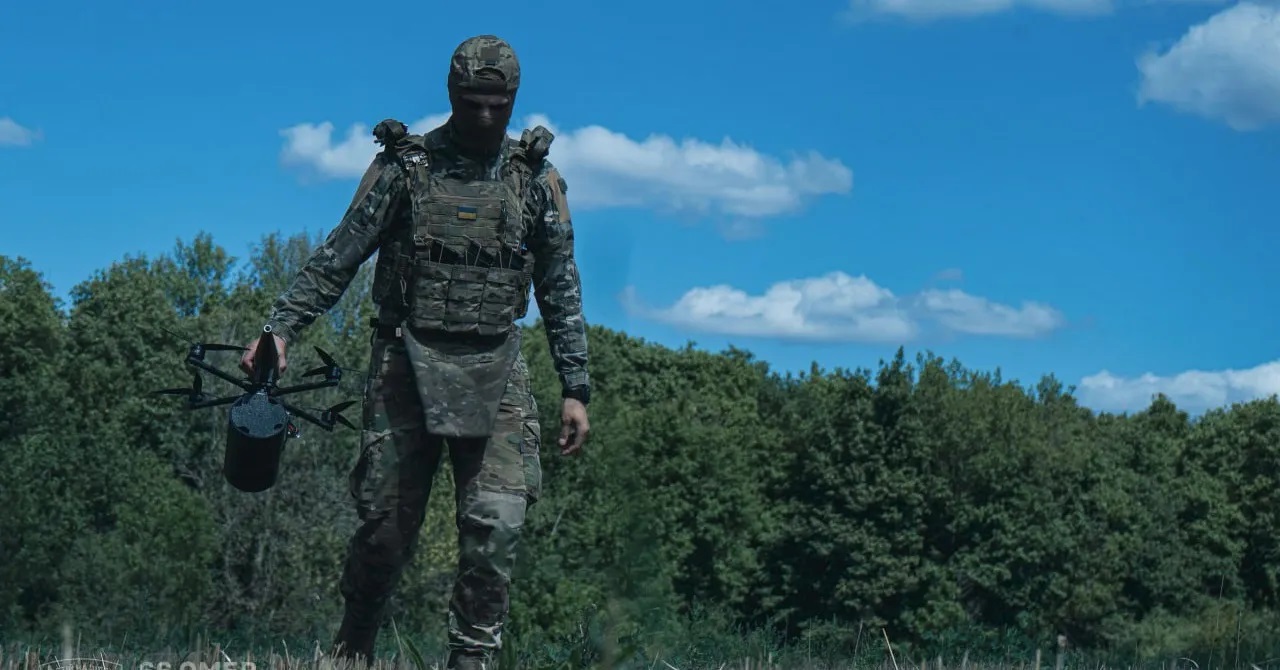
A Ukrainian soldier carries an FPV drone.
Explore further

Ukraine’s secret counteroffensive takes the pressure off Sloviansk

Donetsk remains Russia’s main territorial objective

Donetsk Oblast is central to Russia’s territorial demands in Ukraine. Moscow claims the entire oblast as Russian territory despite not controlling all of it, and has demanded that Ukraine withdraw from the remaining Ukrainian-held territory in Donetsk as part of peace talks.

The Donbas region – consisting of Donetsk and neighboring Luhansk oblasts – has been a battleground since Russia’s 2014 invasion, and capturing the remaining Ukrainian-held territory has remained the Kremlin’s core objective throughout the full-scale invasion since 2022.

❌