
 Connexion
Ukraine’s snipers didn’t vanish in the drone war—their job changed beyond recognition
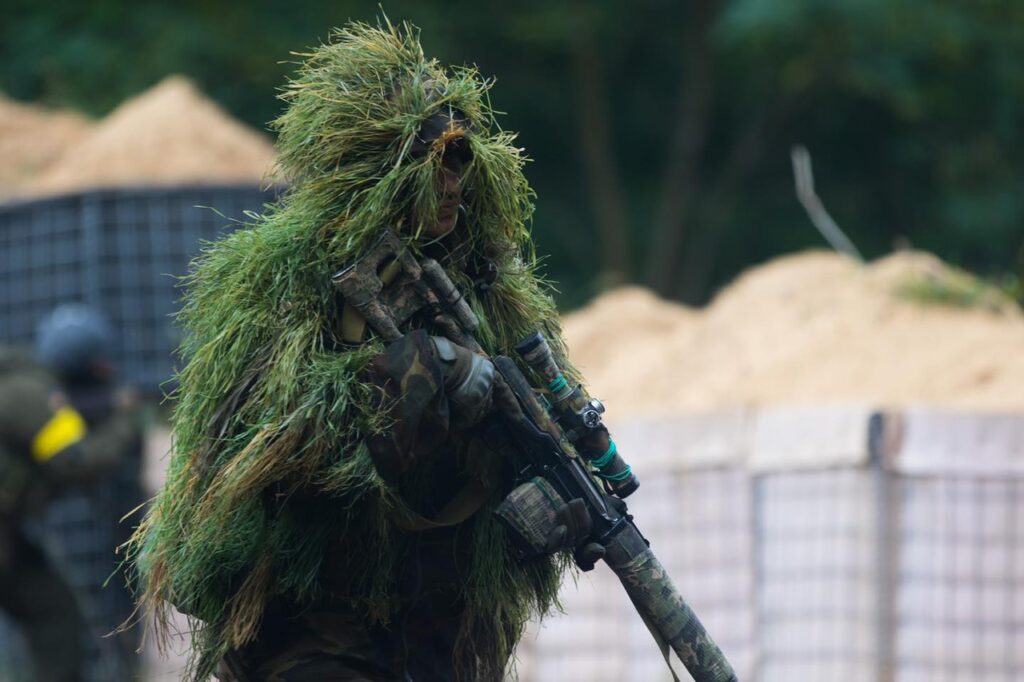
Drones get most of the attention in this war, and deservedly so—but the snipers are still out there, two Ukrainian marksmen told Army Inform, and the same drones have made their work far harder to survive. It now turns on watching, not shooting: long stretches at a hidden position, a thermal scope always running, and a constant fight to stay unseen.
Across the drone-saturated front, cheap cameras overhead have rewritten nearly every job—infantry, logistics crews, and now marksmen—so that surviving depends less on firepower than on never being seen.
The job is mostly watching
The men—a squad leader in a special-purpose sniper company, callsign Efiop, and his partner Maister—serve in the National Guard of Ukraine's 3rd Operational Purpose Brigade Spartan. Maister worked a factory milling machine before joining in 2022. He saw what Russian troops were doing, he said, and Ukrainian children started dying: he went to fight for the children, and he has a daughter of his own. A team takes a sector and holds it around the clock through a thermal scope.
"We can sit 40 days and never fire a shot. Or we go in, and in a single day we take down a lot of them," Efiop said.
His longest stint at one spot ran 48 days, and the greatest distance he has worked was 2,540 meters—more than a mile and a half.
Up to 154 pounds on your back, over 12 miles to cross
Reaching a position is often the hardest part. A sniper carries a vest, helmet, an assault rifle and the sniper rifle, and what supplies will fit—60 to 70 kilograms, or 132 to 154 pounds. They stay more than a month, and a month's worth will not go on one back. That load sometimes crosses more than 20 kilometers, over 12 miles, of open ground with no tree line to hide behind.
"You don't walk, you run," Maister said.
Lately it has eased a little: food can be dropped in by a heavy Vampire bomber drone.
Drones rewrote the rulebook
The biggest shift came from the sky. Russian drones with thermal cameras can see a bullet in flight because it is warm, Efiop said, and then burn out the position.
"They caught us like that once. We took out three, they saw where we fired from and burned the spot. We moved right away, and everyone lived," Efiop noted.
Now the snipers watch remotely from a safer place instead of lying behind the scope for hours. Once, that safer setup saved a life outright: a mortar round came in and pierced only the rifle scope.
Read also
-
Russia’s threat isn’t better missile, it’s 14,000 cheap ones. Its new deadly weapon was built in early 1990s, experts say
-
Ukraine says foreign defense suppliers owe country about $10.58 billion, including $1.7 billion already paid for goods delivered late or never at all
-
NATO would strike back if Russia attacks, Polish FM says he warned Moscow


