Vue normale

Ukraine takes Soviet BRDM-2s from its stockpile and rebuilds them into remote robots, with a Mercedes diesel under consideration
21 août 2026 à 08:04

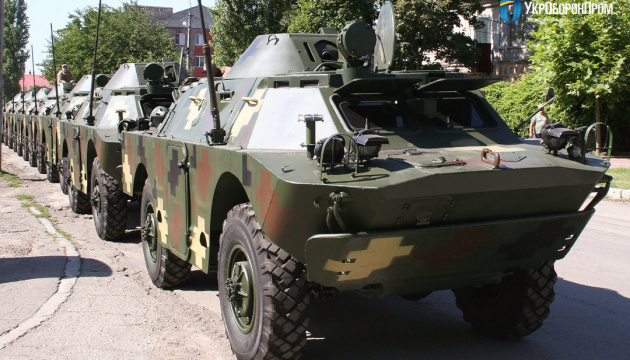
Soviet-made BRDM-2 armored reconnaissance vehicles. Source: Ukroboronprom

Ukraine is giving its stockpiled Soviet armored scouts a second life as robots that fight without a crew. Ukrainian producers are converting Soviet-made BRDM-2 armored reconnaissance vehicles into remote-controlled robotic platforms for use on the line of contact after testing, Colonel Vladyslav Voloshyn of the Armed Forces' Central Directorate for Innovation told Ukrinform.

The project turns obsolete Soviet stock into uncrewed platforms that keep soldiers out of danger. Ukraine holds a significant number of BRDM-2s in storage, and reworking them into remotely operated robots as part of a broader push to hand the most dangerous battlefield tasks to machines.

The converted vehicle fights without a crew aboard

The platform will have expanded capabilities to integrate a remote-controlled combat module with automatic weapons of at least 12.7mm caliber, which should increase units' effectiveness and help preserve soldiers' lives, Voloshyn said.

"The main thing is preserving the lives of personnel," he stressed.

It is equipped to operate remotely. The modernized vehicle will carry day-and-night cameras for situational awareness, remote-control systems for its main functions, and location, navigation, and orientation systems, with the combat module integrated over protected data channels.

The upgrades run deep

The conversion goes beyond adding a remote control. Ukraine is developing the ability to control the vehicle from up to 1,000 kilometers away. It also plans to replace the Soviet gasoline GAZ engine with a powerful foreign-made diesel engine, with General Motors or Mercedes engines under consideration, along with an automatic transmission, Voloshyn said.

It gets modern protection too. The vehicle will have added anti-mine protection for the hull bottom, tubeless high-mobility tires, a backup remote-control system inside the body, and anti-fragmentation protection, Voloshyn said.

The work is being accelerated

Preparation is underway for the vehicle's testing and use on the line of contact, according to the Ukrainian colonel, though he did not specify a completion date, explaining that some information on such projects is not for wide release.

One combat episode pushed the timeline up. After a particular battlefield case, the work is to be accelerated, Voloshyn said, adding that the modernized BRDM-2 "may well become a breakthrough on the line of contact."

  • ✇Euromaidan Press
  • 1.2 million weapons in a year: Inside Ukraine’s Amazon-for-arms that ships to the frontline in 24 hours
    Ukraine's weapons marketplace DOT-Chain Defense has compressed delivery times from months to weeks after one year of operation, the country's Defense Ministry reported. For the fastest product categories—electronic warfare gear, ground robots, interceptor drones—orders now reach units within 24 hours. Ukraine's war against Russia's invasion has pushed Kyiv to rebuild military procurement from the ground up, trading slow bureaucratic pipelines for digital platforms where
     

1.2 million weapons in a year: Inside Ukraine’s Amazon-for-arms that ships to the frontline in 24 hours

18 août 2026 à 15:46

A Ukrainian drone operator.

Ukraine's weapons marketplace DOT-Chain Defense has compressed delivery times from months to weeks after one year of operation, the country's Defense Ministry reported. For the fastest product categories—electronic warfare gear, ground robots, interceptor drones—orders now reach units within 24 hours.

Ukraine's war against Russia's invasion has pushed Kyiv to rebuild military procurement from the ground up, trading slow bureaucratic pipelines for digital platforms where frontline units pick and receive their own weapons faster than Western militaries have managed. Domestic manufacturers now make 90% of newly authorized systems.

Fastest deliveries measured in hours

The Defense Ministry and the Defense Procurement Agency DOT have jointly driven the acceleration, according to the ministry's statement.

"Delivery times for drones and other systems have shrunk from months to a matter of weeks, and often to days," the ministry said.

Beyond that general compression, several categories saw delivery within a single day. Electronic warfare systems, ground robotic platforms, reconnaissance and bomber drones, interceptor drones, and FPV drones on both fiber-optic and radio control all reached units within 24 hours. Ammunition for unmanned systems arrived within six days.

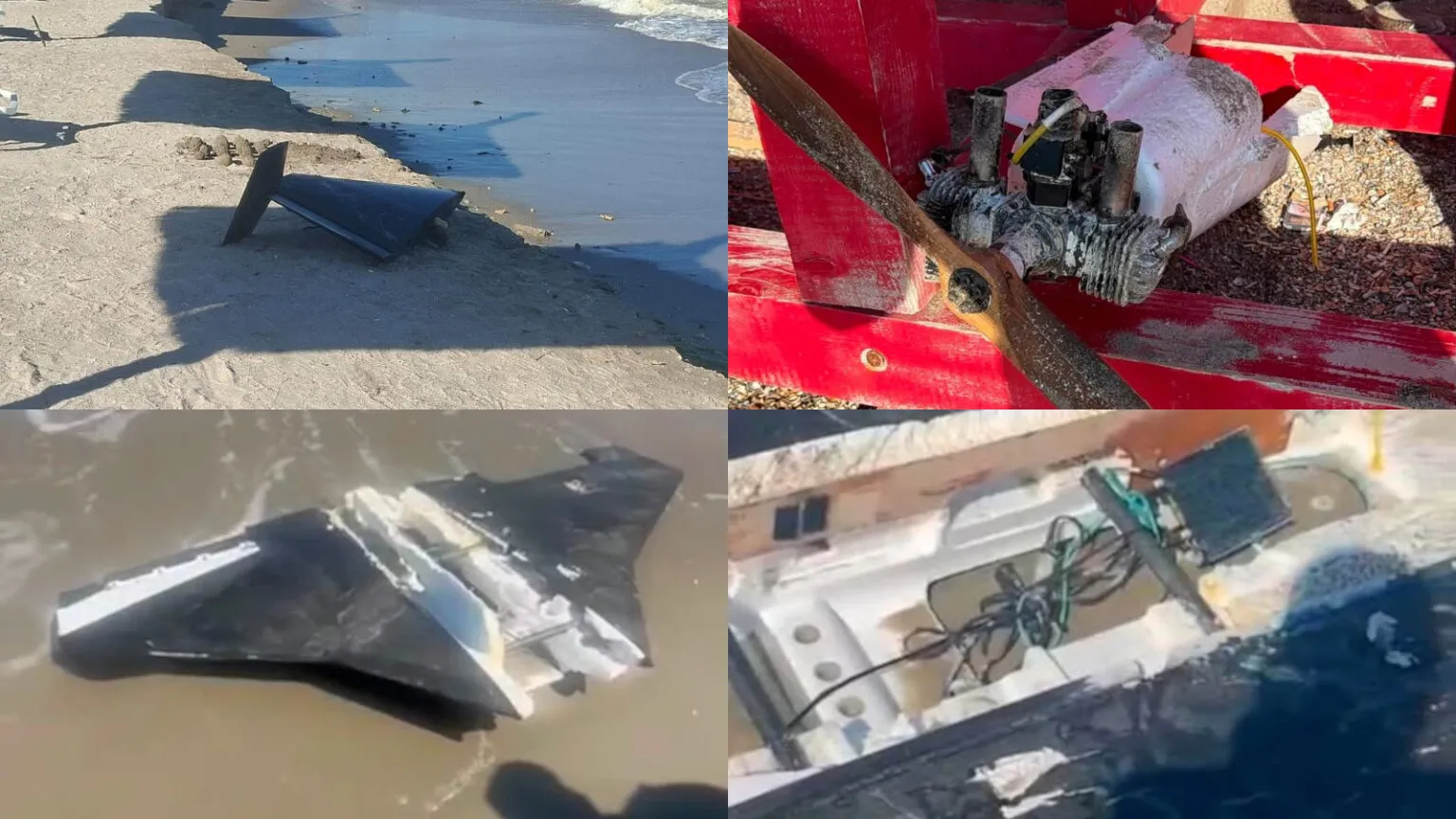
Four-image collage showing drone wreckage found on Romania’s coast and in nearby waters, including wing fragments, an engine and propeller, and exposed electronics.
Explore further

Russian drone attacks on Ukraine’s Danube ports hit recent high, Romania says

Over the first year, the platform shipped more than 1.2 million drones and other systems. Units now choose from 1,181 products made by 300 domestic manufacturers.

How the marketplace works

DOT-Chain Defense supplements centralized state supply rather than replacing it, the ministry noted. Combat units use allocated funds to browse and order the equipment they need for their section of the front. The marketplace handles contracts, payments, and delivery.

The platform's drone constructor tool lets units customize drone configurations before ordering. A dedicated training course on using the marketplace recently launched inside the Army+ mobile app.

ukraine timed its huliaipole operation around weather — worked here's why won't happen again soon · post ukrainian soldier 92nd assault battalion machine gun 2026 armed forces infantry frontline operations
Explore further

US copies Ukraine: Washington launches Amazon-backed UAVs marketplace, inspired by Kyiv’s Brave1 Market and DOT-Chain Defense

Broader procurement picture

The one-year milestone caps a period of rapid scaling across Ukraine's defense procurement. The country contracted about $8 billion worth of drones in the first half of 2026—double the same period last year, according to the Defense Ministry.

More than 400 combat units now shop for weapons through the marketplace's companion Brave1 Market program using points earned for confirmed battlefield activity. Washington modeled its own Unmanned Aircraft Systems Marketplace on the Ukrainian original earlier this year.

Ukraine’s ground robots ran nearly 17,000 missions in June. Every one depended on holding signal, problem this new antenna targets

16 août 2026 à 12:14

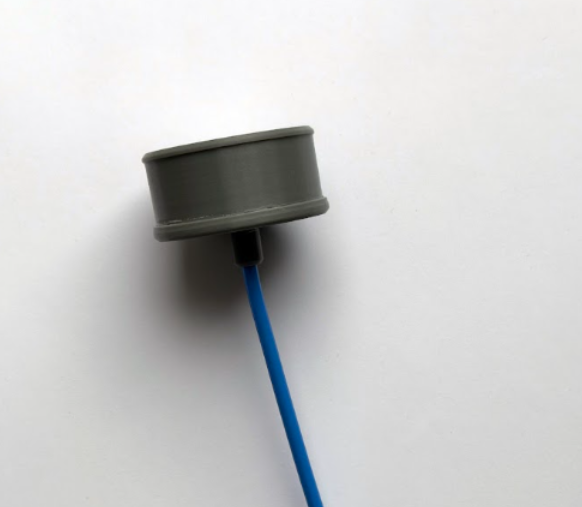
Ukraine's BlueBird Tech unveiled the CLOVER 5.8 GHz antenna. Source: RBC-Ukraine

A Ukrainian company has built a tiny antenna to solve one of the drone war's hardest problems: staying connected. Ukraine's BlueBird Tech has unveiled the CLOVER 5.8 GHz antenna, a 25-gram device for transmitting and receiving radio signals, according to RBC-Ukraine.

The antenna addresses the connectivity problem at the center of Ukraine's drone war. Keeping drones linked to their operators under heavy jamming is one of the war's persistent technical challenges, and the CLOVER is one Ukrainian company's answer.

Previously, Serhii “Flash” Beskrestnov, an adviser to the Ukrainian president, confirmed that the main problem for Ukrainian forces operating some 25,000 combat robots is not hardware limitations but connectivity restrictions.

The design is built to hold a link in motion

The antenna's shape is engineered for stability. Due to its clover design, circular polarization, and omnidirectional radiation pattern, the antenna works even in dynamic conditions.

Weight is decisive for a drone. At 25 grams, the CLOVER adds almost nothing to a small aircraft, leaving weight for payload, battery, or range, which matters for the small FPV drones that do much of the fighting, where a reliable signal and low weight are both at a premium.

It works on drones and ground robots

The antenna is not only for flying drones. It can be installed and used on ground robotic systems as well as FPV drones, and extended to the uncrewed ground vehicles that Ukraine increasingly uses for logistics and evacuation, which face the same connectivity challenge.

In June, Ukrainian ground robots ran nearly 17,000 supply and evacuation missions. Every one of those runs depends on the robot holding a signal, the problem the CLOVER is built to address.

It is built for quick integration. Despite its compact size, the CLOVER covers a wide 4.9-6.1 GHz range and comes with an SMA male connector and an RG402 cable, allowing it to integrate quickly into drone-detection tools, radio-monitoring complexes, and measurement equipment. It is compatible with the main systems on the market.

❌