On the Radio, Trump Has a Reunion (of Sorts) With Michael Cohen

© Seth Wenig/Associated Press


© Seth Wenig/Associated Press


© Kenny Holston/The New York Times


© Pool photo by Eva Plevier


© Nic Antaya for The New York Times


© Roger Kisby for The New York Times


© Sean Rayford/Getty Images


© Karsten Moran for The New York Times


© Saher Alghorra for The New York Times

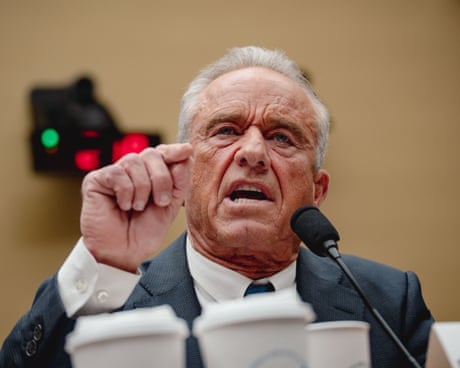
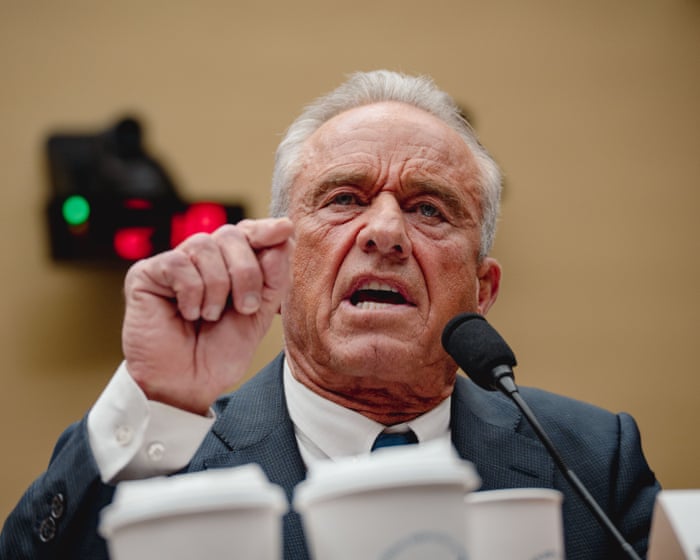
The president’s empty advice that children should receive separate jabs against measles, mumps and rubella will only lead to less take-up by parents
Nobody wants to hurt a child. The howl of pain, the tears, the look of betrayed shock all make it very hard to deliver a cherished small person to the needle-wielding nurse. But that’s part of being a responsible parent. It becomes a lot tougher if mum or dad is being fed mixed and erroneous messages about the benefits and harms of vaccination.
Parents have to make a lot of decisions about what’s right for their child, from the school they should go to and the food they should eat to the hours they should spend on the phone or watching TV. In the US, Donald Trump wants them to add another: do they choose to give their children separate jabs against measles, mumps and rubella, involving six visits to the clinic, or should they opt for the combined MMR vaccine, which does the job in two? For decades, the vast majority of families have been taking the advice of doctors, accepting their assurance that the MMR vaccine is safe and very effective. But what are they to think when a US president announces that the triple jab could be “quite lethal” and signs an executive order advising states to offer separate vaccines?
Continue reading...
© Photograph: Raphael Liy/ZUMA Press Wire/Shutterstock

© Photograph: Raphael Liy/ZUMA Press Wire/Shutterstock

© Photograph: Raphael Liy/ZUMA Press Wire/Shutterstock


© K.C. Alfred/The San Diego Union-Tribune, via Associated Press


© Mandel Ngan/Agence France-Presse — Getty Images


© Eric Lee/The New York Times

The enormous US debt under Trump will hobble the next Democratic administration – just as the GOP planned
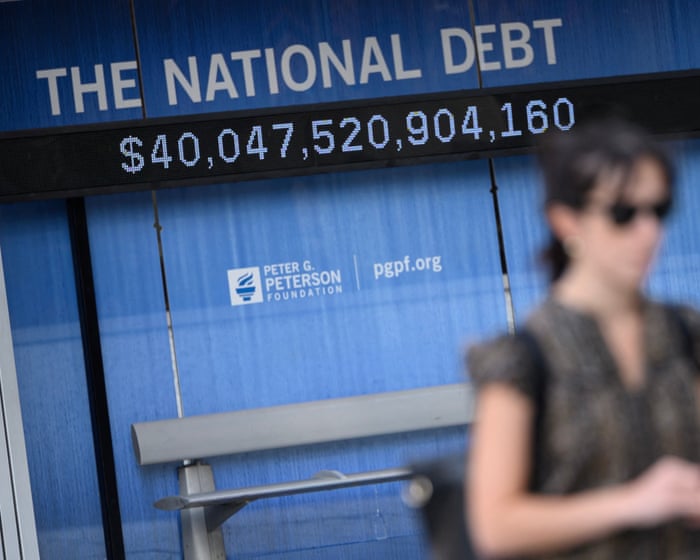
You could pin the US’s staggering $40tn in government debt to Donald Trump’s Keystone Cops-style governance. Tariffs he sold as a new source of revenue were struck down by the supreme court, forcing the government to return tens of billions of dollars to importers. Elon Musk’s “department of government efficiency” (Doge), ostensibly created to stop wasteful government spending, decimated federal programs and probably killed millions of children, but did nothing to close the budget deficit. The burst of inflation following Trump’s misguided adventure in Iran sharply raised the cost of serving the government’s obligations.
Yet as the federal debt hits an all-time high, up from about $35tn when Trump took office less than two years ago, it is worth noting that the US’s gargantuan indebtedness is in fact the product of a longstanding Republican strategy that took shape well before Trump could even dream about gold-plating the White House. It was called “starve the beast”.
Continue reading...
© Photograph: Mandel Ngan/AFP/Getty Images

© Photograph: Mandel Ngan/AFP/Getty Images

© Photograph: Mandel Ngan/AFP/Getty Images


© Jade Gao/Agence France-Presse — Getty Images


© Jade Gao/Agence France-Presse — Getty Images


© Joyce Zhou/Reuters

By now we know that charity, generosity and compassion are virtues that the US president doesn’t seem to have even in trace amounts
Many years ago, in the crowded corridor of a Manhattan hotel, I was surprised to find myself standing face-to-face with Imelda Marcos, then the first lady of the Philippines. At that time, she was said to possess 3,000 pairs of shoes.
I desperately longed to ask the wife of the dictatorial president Ferdinand Marcos why anyone could need all those shoes. And more importantly, why would someone spend so much of her country’s wealth on stiletto heels when so many citizens were so desperately poor? But natural reticence, good manners or simply fear prevailed, and I walked away.
Continue reading...
© Photograph: Al Drago/Pool/Al Drago - Pool/CNP/Shutterstock

© Photograph: Al Drago/Pool/Al Drago - Pool/CNP/Shutterstock

© Photograph: Al Drago/Pool/Al Drago - Pool/CNP/Shutterstock

Americans are backing progressives not because they want socialism, but because they want candidates who will fight for the working class
Most discussions about the Democratic party in this election cycle focus on the remarkable rise of progressive Democrats, such as the Florida state representative Angie Nixon, a democratic socialist who scored an upset win in the Democratic US Senate primary on Tuesday.
But an equally big story is the remarkable decline of corporate Democrats.
Continue reading...
© Photograph: Dave Decker/ZUMA Press Wire/Shutterstock

© Photograph: Dave Decker/ZUMA Press Wire/Shutterstock

© Photograph: Dave Decker/ZUMA Press Wire/Shutterstock


© Jung Yeon-Je/Agence France-Presse — Getty Images


© Jung Yeon-Je/Agence France-Presse — Getty Images


© Michael B. Thomas/Getty Images


© Al Drago for The New York Times
À la suite du report de l’instauration de nouveaux droits de douane américains, le gouvernement fédéral a confirmé hier qu’il finalisait un accord avec Washington.
Mark Carney s’est toutefois contenté d’évoquer des «progrès substantiels», en soulignant qu’«il reste encore du travail important à accomplir».
Aucun des deux gouvernements n’a dévoilé le contenu de l’accord qui serait en cours de finalisation. Seules indications:
[L'article Que sait-on sur le futur accord commercial Canada–États-Unis? a d'abord été publié dans InfoBref.]


© Alex Kent/The New York Times


© Doug Mills/The New York Times


© Seth Wenig/Associated Press


© Ilvy Njiokiktjien for The New York Times


© Al Drago for The New York Times


© Jung Yeon-Je/Agence France-Presse — Getty Images


© Carlos Osorio/Reuters


© Martina Tuaty for The New York Times


© Arash Khamooshi/Polaris for The New York Times


© Meg Kinnard/Associated Press


© Agence France-Presse — Getty Images


© Valerie Plesch for The New York Times


© Cole Burston/Agence France-Presse — Getty Images


© Doug Mills/The New York Times
Dans une publication sociale en fin de soirée mardi, le président américain a indiqué qu’il reportait de trois jours l’instauration de nouveaux droits de douane américains sur de nombreux produits canadiens.
Ces tarifs douaniers, de 50%, avaient été annoncés le mois dernier et devaient entrer en vigueur aujourd’hui.
D’intenses négociations commerciales entre le Canada et les États-Unis ont eu lieu ces derniers jours.
Trump a justifié le report de l’entrée en vigueur par le fait que les deux pays seraient parvenus à une entente, qui resterait cependant à finaliser par écrit.
[L'article Donald Trump a annoncé une entente de principe avec le Canada sur les tarifs douaniers a d'abord été publié dans InfoBref.]
Paul St-Pierre Plamondon a annoncé hier que si le Parti québécois remporte les élections en octobre:
Le second mandat de Trump doit se terminer en janvier 2029.
Le mandat du prochain gouvernement québécois doit, lui, se terminer en octobre 2030.
Le chef péquiste soutient que l’avenir politique du Québec exige «un débat éclairé et serein», et que ce débat ne doit pas «être confisqué par les coups d’éclat d’un président imprévisible».
[L'article Un gouvernement péquiste attendrait le départ de Trump pour tenir un référendum a d'abord été publié dans InfoBref.]


The US plan to sell Türkiye F-35 stealth fighter jets has stalled, blocked by a Russian missile system Ankara bought years ago, Semafor reported. Lawmakers in Washington won't clear the deal while Türkiye keeps the hardware. The lone buyer in talks hasn't budged, and destroying the system is now on the table.
Russia has long used arms exports to pull buyers into its orbit, and the war it started raised the price of those ties—leaving governments that bought Russian air defense to clash with the supplier that sold it.
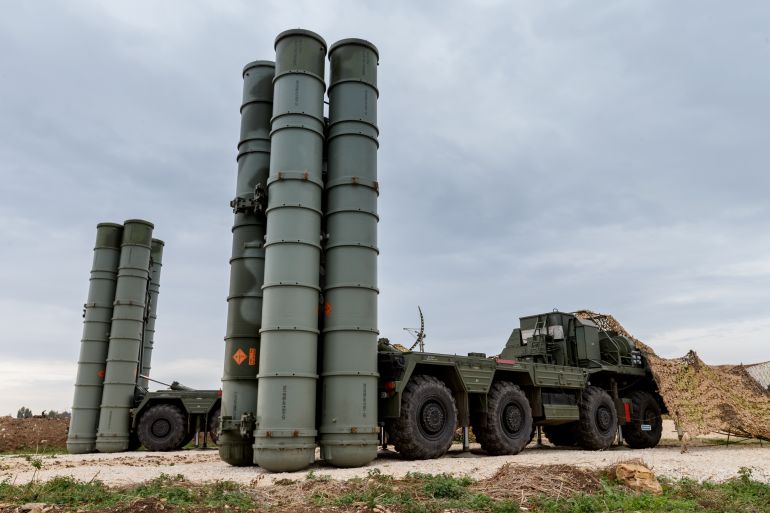
US sanctions law bars Türkiye from the F-35 program while it retains the Russian S-400, Semafor reported. That system is a long-range air defense, built to shoot down planes and missiles. Ankara already paid for six of the jets. They have sat in the United States since Washington expelled Türkiye from the F-35 program in 2019. US President Donald Trump announced plans to sell the jets more than a month ago, and nothing has moved since.
One way out is to sell the S-400 to another country. Türkiye reportedly opened talks with the United Arab Emirates (UAE) last month, but they don't appear to have progressed. American lawmakers insist Ankara must give up the system entirely first.
Republican Senator Rick Scott told Semafor that Türkiye shouldn't get the jets unless it becomes a true partner—"so if they have the S-400, they cannot have the F-35." Senate Foreign Relations Committee Chairman Jim Risch, a longtime opponent, said the process is "at a standstill."
The sharper obstacle sits in Washington, Semafor reported. A vote to sell would pit Israel against a NATO ally, and many of Trump's own allies want the S-400 scrapped completely. Israeli Prime Minister Benjamin Netanyahu warned the jets could "destroy the power balance in the Middle East." The outlet said AIPAC, the leading pro-Israel lobby in Washington, is pressing Congress to keep the block.
Any resale carries its own catch: Russia must approve the transfer of the S-400, giving the Kremlin a reason to block it. The only option that bypasses Moscow is to disable or destroy the system outright. Türkiye earlier tried to return the systems to Moscow, hoping to thaw relations with Washington. It didn't work.
The Trump administration says Ankara hasn't met all the conditions to buy the jets, and the State Department wants the S-400 issue settled with guarantees first.


© Carlos Osorio/Reuters


© Al Drago for The New York Times


© Lee Jin-man/Associated Press


© Arash Khamooshi/Polaris for The New York Times


© Moises Saman/Magnum, for The New York Times


France, Germany, and the UK are working to create a format representing Europe in talks over Russia’s war against Ukraine, The New York Times reported on 15 August, citing five European officials. Known collectively as the E3, the three countries would support Ukraine’s position and protect European interests in any settlement.
The initiative is Europe’s attempt to secure a place in talks the US is expected to lead. The three governments fear that Washington and Moscow could reach a deal without them, although Europe would have to enforce sanctions, decide how to use frozen Russian assets, and help protect Ukraine afterward. European officials also doubt Washington will stay committed to serious negotiations.
The officials expect Washington to lead negotiations with Moscow. The E3 wants to become the core group supporting Ukraine, following Kyiv’s request that it prepare for talks. France and Germany are shaping the position, while Britain fears damaging relations with Trump.
Poland, Italy, and the Nordic countries would be consulted, with the EU later involved. Some Baltic states and Hungary do not trust France and Germany to represent them. London called the discussion speculative.
The E3 forms the core of the Coalition of the Willing. At a 7 June meeting with President Volodymyr Zelenskyy, its leaders backed an immediate ceasefire and legally binding guarantees, including the deployment of a multinational force.
More than 600 British troops rehearsed with French paratroopers and an Italian platoon in February for a possible deployment. They could form the core of a 10,000-strong force pledged by London and Paris after a ceasefire.
Yet some members reportedly made Russia’s consent a condition for deploying troops, effectively giving Moscow a veto. Bulgaria has left, and Germany has not committed troops. The Coalition’s leadership is also shifting after Keir Starmer’s resignation and ahead of Emmanuel Macron’s departure in 2027.
European officials see few signs that Vladimir Putin is ready for serious negotiations, the NYT reported. A separate EU attempt to open direct contact with Moscow divided member states.
Experts told Euromaidan Press that Russia uses peace processes to stall, press maximalist demands, and improve its battlefield position. Moscow also dismissed a Black Sea ceasefire proposal after Kyiv offered a mutual halt to attacks on civilian targets.
Ukraine’s partners risk mistaking Russia’s presence at talks for a willingness to compromise. Former Ukrainian diplomat Iuliia Osmolovska warned that Moscow also benefits from failed negotiations by exhausting Western governments until they pressure Kyiv to concede.
Before 2022, Russia signed 26 ceasefires in eastern Ukraine; none lasted more than two weeks. A pause can bank concessions, rotate troops, and let Moscow resume fighting from a stronger position.


© Ali Saeedi/Getty Images