Vue normale

  • ✇Euromaidan Press
  • Ukraine says Russia can’t replace its losses, plans mass draft after elections—and again in 2027
    In an 11 August 2026 address, Ukrainian President Volodymyr Zelenskyy stated Russia is preparing a new mass mobilization drive after its parliamentary elections this fall, citing an assessment by Ukrainian military intelligence. Moscow plans to mobilize several hundred thousand people by the end of 2026 and roughly the same number by the end of 2027, he said. The mobilization would come on top of continuing contract recruitment.  Moscow has relied on contract soldier
     

Ukraine says Russia can’t replace its losses, plans mass draft after elections—and again in 2027

12 août 2026 à 11:54

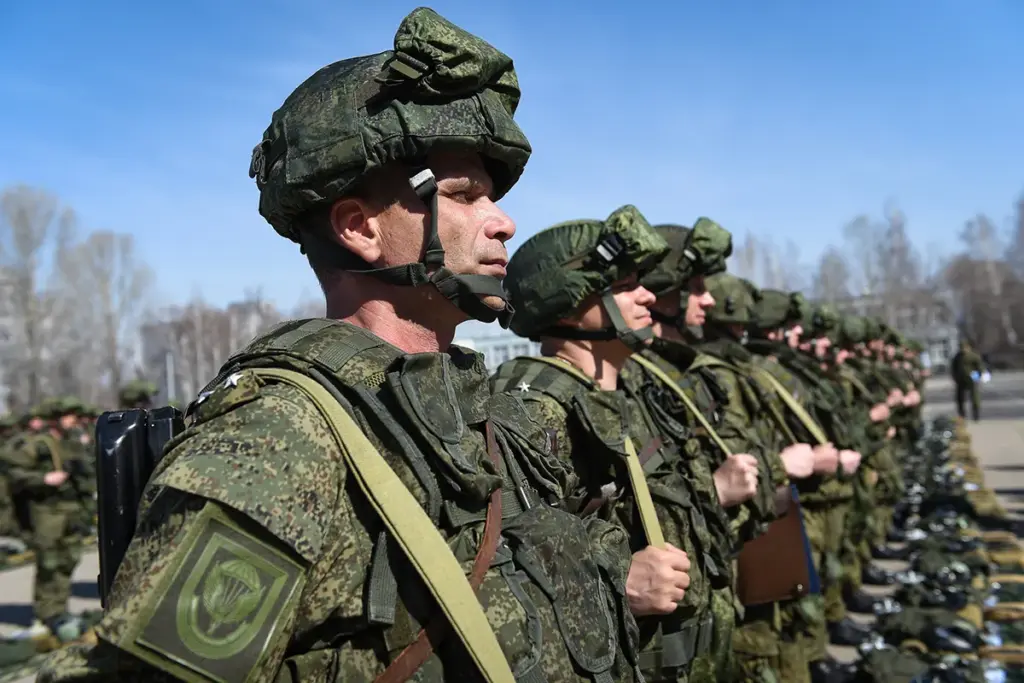
Russian soldiers in camouflage uniforms and helmets stand in formation outdoors.

In an 11 August 2026 address, Ukrainian President Volodymyr Zelenskyy stated Russia is preparing a new mass mobilization drive after its parliamentary elections this fall, citing an assessment by Ukrainian military intelligence.

Moscow plans to mobilize several hundred thousand people by the end of 2026 and roughly the same number by the end of 2027, he said. The mobilization would come on top of continuing contract recruitment. 

Moscow has relied on contract soldiers and foreign troops to avoid the political cost of another compulsory draft. But Russia has struggled to recruit soldiers as quickly as it loses them. A mass call-up could replace losses and maintain offensive operations, although Ukrainian officials say it may initially do little more than offset battlefield losses.

Zelenskyy said internal Russian documents support the intelligence assessment. The documents have not been published. 

According to Zelenskyy, Putin plans to wait until after Russia’s parliamentary elections, then use the result to claim the Russians support continuing the war. He described the vote as an “imitation,” claiming every party allowed to compete opposes peace. Russia’s Supreme Court barred Yabloko, the country’s only officially registered party opposing the war, from contesting the election, Reuters reported.

Russia avoided a second draft since 2022. Now recruitment can't keep up

The Kremlin has largely avoided another compulsory call-up since its September 2022 mobilization triggered mass protests and an exodus of Russians. Instead, Moscow has used financial incentives and recruited prisoners and foreigners to replenish its forces in Ukraine.

In March 2026, then-Commander-in-Chief Oleksandr Syrskyi said Russia aimed to recruit 409,000 troops during 2026 and form at least 11 divisions. Ukrainian intelligence then warned in July that Moscow could mobilize 500,000 people that fall. 

195,000 new contracts signed—but losses keep outpacing recruitment

Russia has struggled to meet those targets while covering battlefield losses. Ukraine said Moscow had failed to replace its losses for five consecutive months by April. By mid-July, Russia had signed 195,000 military contracts against a target of 204,500, while Ukraine’s Foreign Intelligence Service estimated its 2026 personnel losses at 196,700.

In his 11 August 2026 address, Zelenskyy claimed Russia is losing at least 30,000 personnel monthly, 60% of them killed, and that its force in Ukraine is gradually shrinking. The figures could not be independently verified.

Zelenskyy also said Putin expects the recruits and North Korean troops to prolong the war and expand Russian offensive capacity. The president stated that he had ordered Ukraine’s intelligence agencies and special services to make Moscow’s plans harder to carry out, but gave no details.

  • ✇Euromaidan Press
  • Newer drones haven’t dethroned the FPV, and Russia fears our bomber drones, Ukrainian commander says
    Ukraine's first-person-view (FPV) drones are not being displaced by newer unmanned systems, a Ukrainian officer told Ukrinform. They remain a central tool for precision strikes, while Ukrainian forces claim a separate advantage in larger bomber drones. Unmanned systems have become a defining weapon of Russia's war against Ukraine, and both sides race to out-innovate each other, a contest in which a cheap UAV can down a platform costing dozens of times more. FPVs re
     

Newer drones haven’t dethroned the FPV, and Russia fears our bomber drones, Ukrainian commander says

12 août 2026 à 10:16

A Ukrainian soldier with a drone on the frontline. Photo: General Staff via Facebook

Ukraine's first-person-view (FPV) drones are not being displaced by newer unmanned systems, a Ukrainian officer told Ukrinform. They remain a central tool for precision strikes, while Ukrainian forces claim a separate advantage in larger bomber drones.

Unmanned systems have become a defining weapon of Russia's war against Ukraine, and both sides race to out-innovate each other, a contest in which a cheap UAV can down a platform costing dozens of times more.

FPVs remain central

"Since FPVs appeared in service, they have become a leading means of precision engagement. This trend will continue," said Captain Anton Bobrovskyi, who commands a company training unmanned-systems specialists at the 199th Training Center of the Air Assault Forces.

Bobrovskyi conceded that Russia also uses drones effectively and that Ukraine learns from it, but said Ukraine keeps a lead in one category: bomber drones.

The Russian Sokol-I anti-drone UAV. Source: The 57th Separate Motorized Infantry Brigade
Explore further

Ukrainian drone that downed Russia’s rarest spy UAV just bagged its anti-drone interceptor too

Ukraine's bomber-drone advantage

Russian forces fear Ukrainian bomber drones, according to Bobrovskyi. He said Ukraine outmatches Russia many times over in such systems, and that Russian troops who encounter one often do not know what to do with it.

The distinction matters because bomber drones work differently from single-use FPVs. Rather than flying into a target and exploding, larger bomber drones carry and release munitions, then fly on. Euromaidan Press has documented the growing role of these systems, including reusable platforms capable of returning to base after dropping their payloads. Developers have also adapted them to fly through Russian electronic warfare, with upgraded Vampire drones built to resist jamming.

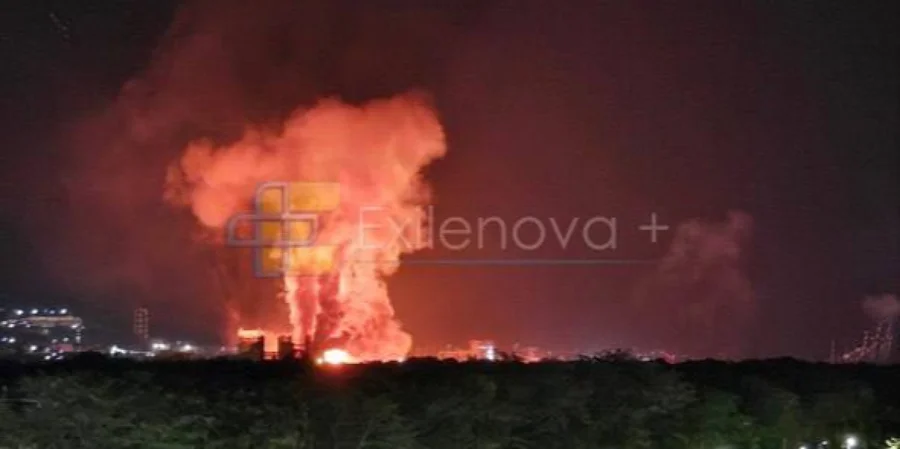
sea drones jet neptune missiles hit one russian port single night · post fire burns novorossiysk early hours 12 2026 пожежа у новоросійську ніч проти серпня фото exilenova+ ukraine news
Explore further

Sea drones, jet drones, and Neptune missiles hit one Russian port in a single night

Bobrovskyi said Ukraine's advantage does not mean Russia lacks comparable technology. Instead, he argued that Ukrainian forces and society initiated many of the current battlefield drone trends and have kept the initiative in using them.

Each new drone class draws a countermeasure, so the side that keeps iterating fastest holds the battlefield initiative. How long Ukraine's bomber-drone edge lasts will depend on its ability to keep protecting and upgrading those platforms.

  • ✇Euromaidan Press
  • Russia’s tank shield shot down seven drones—Ukraine destroyed the tank anyway
    Russia wants its tanks moving again after two years of Ukrainian drones freezing its armored assaults, the Institute for the Study of War (ISW) reported. Its main bet is a tank-mounted system that fires interceptors at incoming drones. The system worked on at least one tank, but Russia lost it anyway. Since 2022, cheap Ukrainian FPV drones have turned the open approach to any position into ground where armor rarely survives, forcing Russia into slow, infantry-led as
     

Russia’s tank shield shot down seven drones—Ukraine destroyed the tank anyway

11 août 2026 à 12:52

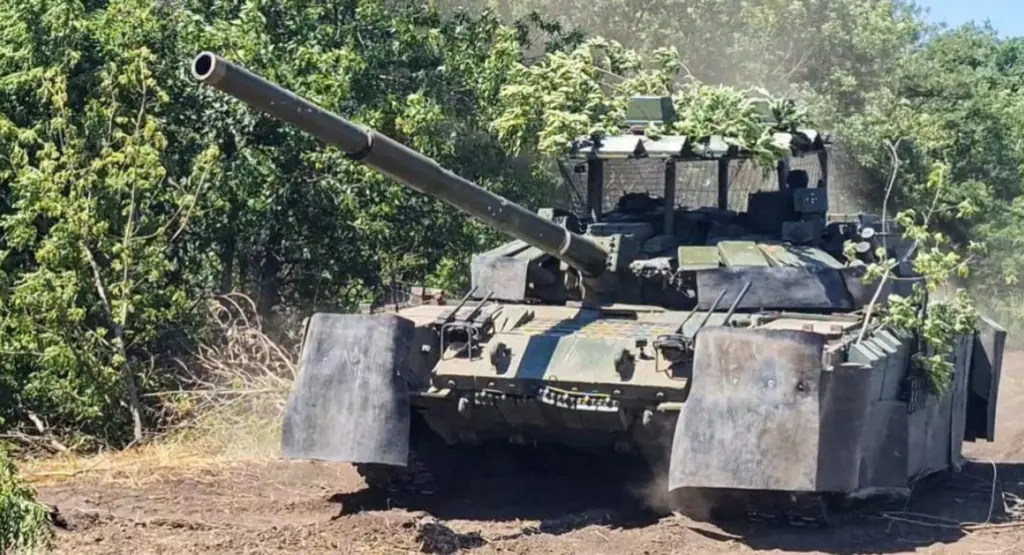
T-72B3A tank equipped with the Arena-M active protection system (APS). Photo: iz.ru/Dmitry Astrakhan

Russia wants its tanks moving again after two years of Ukrainian drones freezing its armored assaults, the Institute for the Study of War (ISW) reported. Its main bet is a tank-mounted system that fires interceptors at incoming drones. The system worked on at least one tank, but Russia lost it anyway.

Since 2022, cheap Ukrainian FPV drones have turned the open approach to any position into ground where armor rarely survives, forcing Russia into slow, infantry-led assaults and years of experiments to armor its tanks against drones.

The shield shot down some drones. Ukraine still killed the tank.

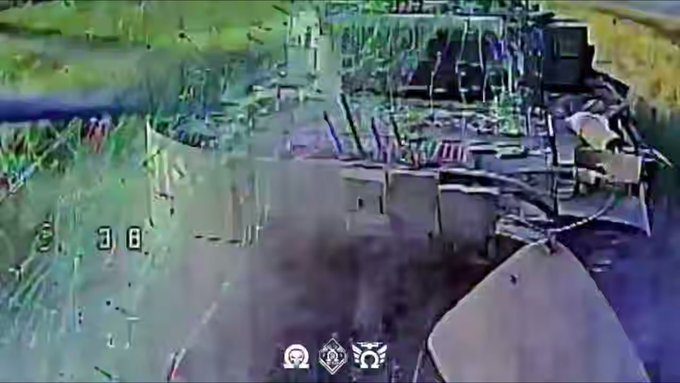
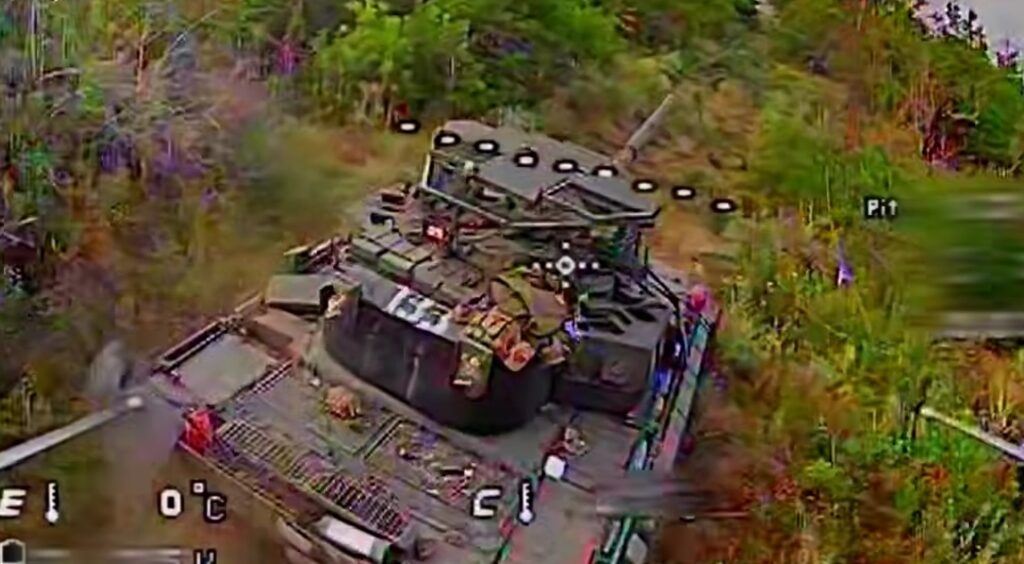
In early August, footage surfaced of Ukrainian drones destroying a Russian tank fitted with the Arena-M active protection system in the Dobropillia sector of Donetsk Oblast. Militarnyi identified the vehicle as a T-72B3A, side number 133, and Militarnyi reported that Ukraine's Security Service (SBU) released the clip. ISW geolocated the footage near occupied Volodymyrivka, east of Dobropillia.

A T-72B3A the moment before a Ukrainian drone strikes.
Explore further

Russia took the cages off its newest tanks. The new Arena-M shield bought them a few minutes.

Dmytro Putiata, a Ukrainian combat drone specialist who posts as kriegsforscherD, spoke with the unit involved. On that tank, Arena-M shot down seven drones before its magazine ran dry, he said.

"Unfortunately, it works," Putiata wrote.

It still wasn't enough. Ukrainian crews finished the tank off with more drones. It took 15 to 20 first-person-view (FPV) drones to kill each vehicle, Putiata said. Footage shows the tank moving with its interceptor cells empty. It was the first time the Arena-M was credited with shooting drones down in combat.

Russia keeps sending tanks into that ground for a reason

Russian forces are experimenting with new technology to restore mechanized maneuver and break out of positional warfare—the static, trench-like fighting that has defined the front, ISW reported. They are fitting tanks with active protection systems to help armor survive in the "kill zone," the open ground where drones and other weapons destroy almost anything that moves.

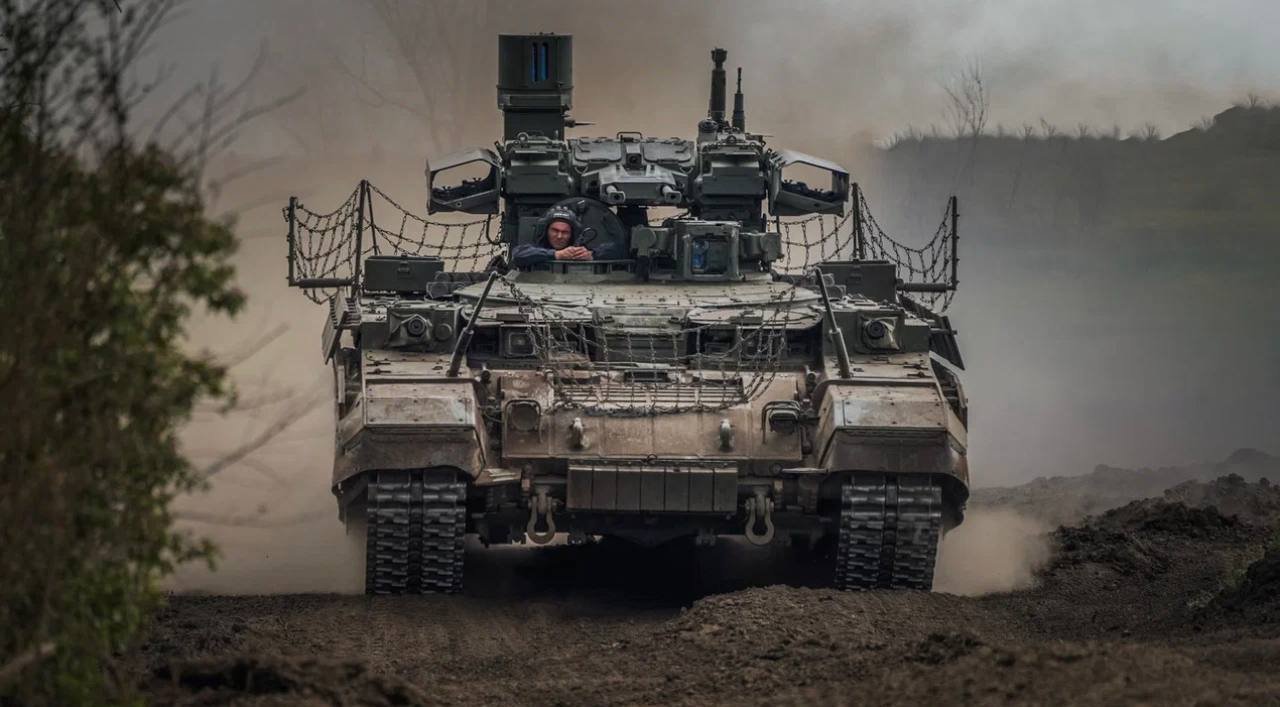
A BMP-T in 2026.
Explore further

Russia’s weirdest armored vehicle was built to fight infantry. The infantry stopped coming

ISW judged that Arena-M alone cannot shield Russian assaults from the drones, let alone the rest of Ukraine's weapons. Russian commanders have largely kept tanks off the roads because drones kill them faster than factories rebuild them. In these assaults, the tank's job is less to fight than to survive long enough to drop infantry closer to Ukrainian lines. Russia will likely keep trying to restore maneuver even after its late-July mechanized assault in the Dobropillia sector failed, ISW added.

Why Russia wants the shield: the cages don't let tanks fight

The bolt-on armor carries a cost. Cope cages and "turtle" shells weigh tanks down and often jam the turret so the main gun can't aim. That trade-off is part of why Russia wants Arena-M: protection without the bulk, so a tank can still move and shoot. Russia recently sent tanks stripped of the welded cages, carrying the shield instead.

Moment of impact of the T-72B3M tank “133,” equipped with the Arena active protection system and empty countermeasure launcher cells.
Moment of impact of the T-72B3M tank “133,” equipped with the Arena active protection system and empty countermeasure launcher cells. Screenshot from an SBU video.

Arena-M is not new. Active protection systems like it were first built to stop anti-tank missiles, and Russia adapted this one to catch drones. The system's lineage dates back to the late Soviet era, and Russian industry has for years claimed mass deployment that never came. Designers worked on fitting it to T-72B3 and T-90M tanks since at least 2019, yet only single vehicles turned up by 2024—some used to shoot a propaganda film rather than fight.

❌