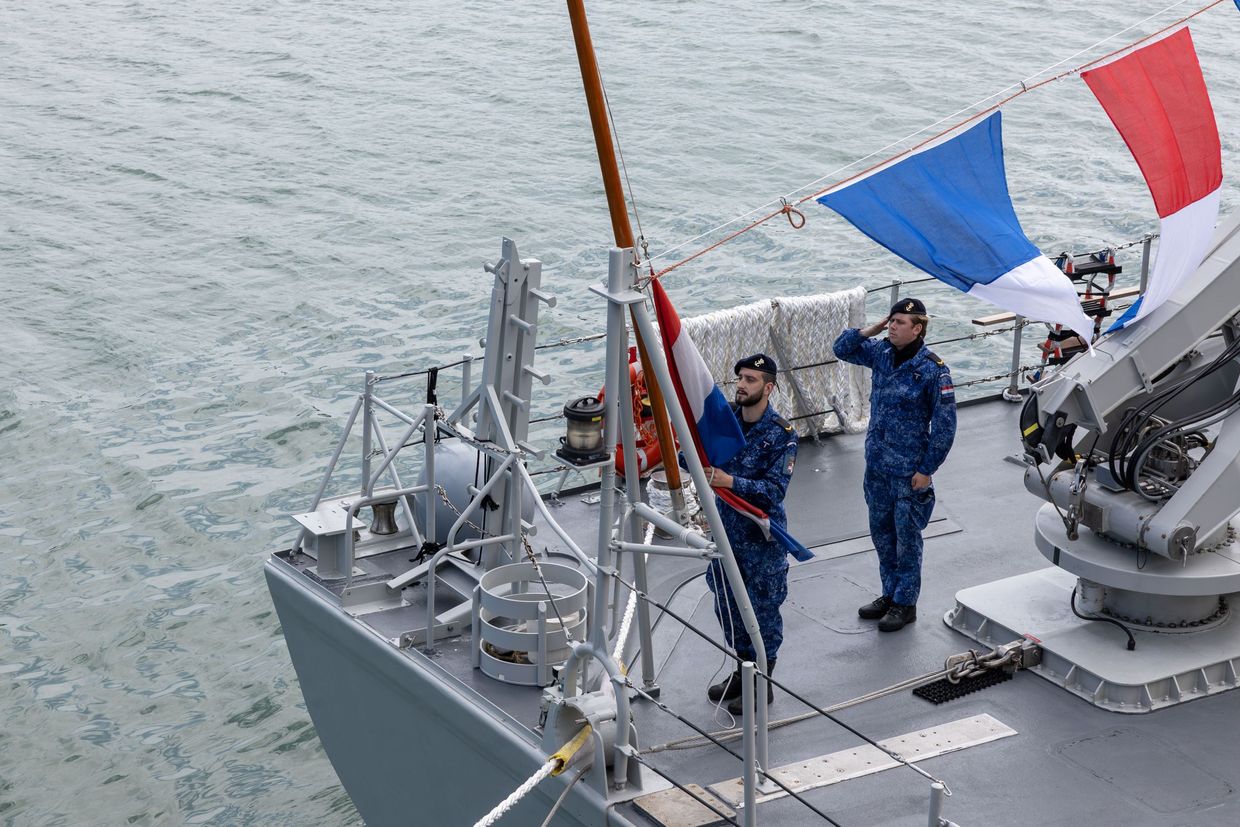
The Netherlands and Belgium have delivered two minehunter vessels to Ukraine to support maritime security in the Black Sea, Dutch Defense Minister Ruben Brekelmans announced on June 26."The Netherlands and Belgium are transferring two minehunters to Ukraine. A vital contribution to Black Sea security, and key to safeguarding trade routes and global food supply," Brekelmans said on X. He added that Ukrainian crews and technicians were trained "in record time." According to the Dutch Defense Minis
The Netherlands and Belgium have delivered two minehunter vessels to Ukraine to support maritime security in the Black Sea, Dutch Defense Minister Ruben Brekelmans announced on June 26.
"The Netherlands and Belgium are transferring two minehunters to Ukraine. A vital contribution to Black Sea security, and key to safeguarding trade routes and global food supply," Brekelmans said on X. He added that Ukrainian crews and technicians were trained "in record time."
According to the Dutch Defense Ministry, the vessels involved are the Belgian ship BNS Narcis and the Dutch Zr.Ms. Vlaardingen. The official handover ceremony took place earlier in Zeebrugge, Belgium, but was disclosed only later due to security concerns.
"The major ports of Odesa and the Black Sea shipping lanes are the lifeblood of the Ukrainian economy," Brekelmans said. "And (they are) under constant threat. Ukraine may not win the war at sea, but it can certainly lose the war there. We simply cannot let that happen. That is why it is so important for maritime security and free passage that Ukraine can use minehunters."
Since Russia's full-scale invasion of Ukraine began in February 2022, the Netherlands has provided Kyiv with a combined 8.4 billion euros ($9.4 billion) in support, according to the Kiel Institute for the World Economy while Belgium has allocated over two billion euros (about $2.2 billion) in support, including military, financial, and humanitarian assistance.
The Dutch Defense Ministry will finance the production of 20 Ermine ground vehicles for Ukraine, German defense manufacturer Rheinmetall announced on June 25.The contract, signed during the NATO summit in The Hague, marks the first order for the new-generation tactical platform. Ukraine will become the first country in the world to receive the Ermine.The Ermine, developed by Rheinmetall Defence Nederland, is designed primarily for front-line evacuation missions.The light buggies provide fast, ma
The Dutch Defense Ministry will finance the production of 20 Ermine ground vehicles for Ukraine, German defense manufacturer Rheinmetall announced on June 25.
The contract, signed during the NATO summit in The Hague, marks the first order for the new-generation tactical platform. Ukraine will become the first country in the world to receive the Ermine.
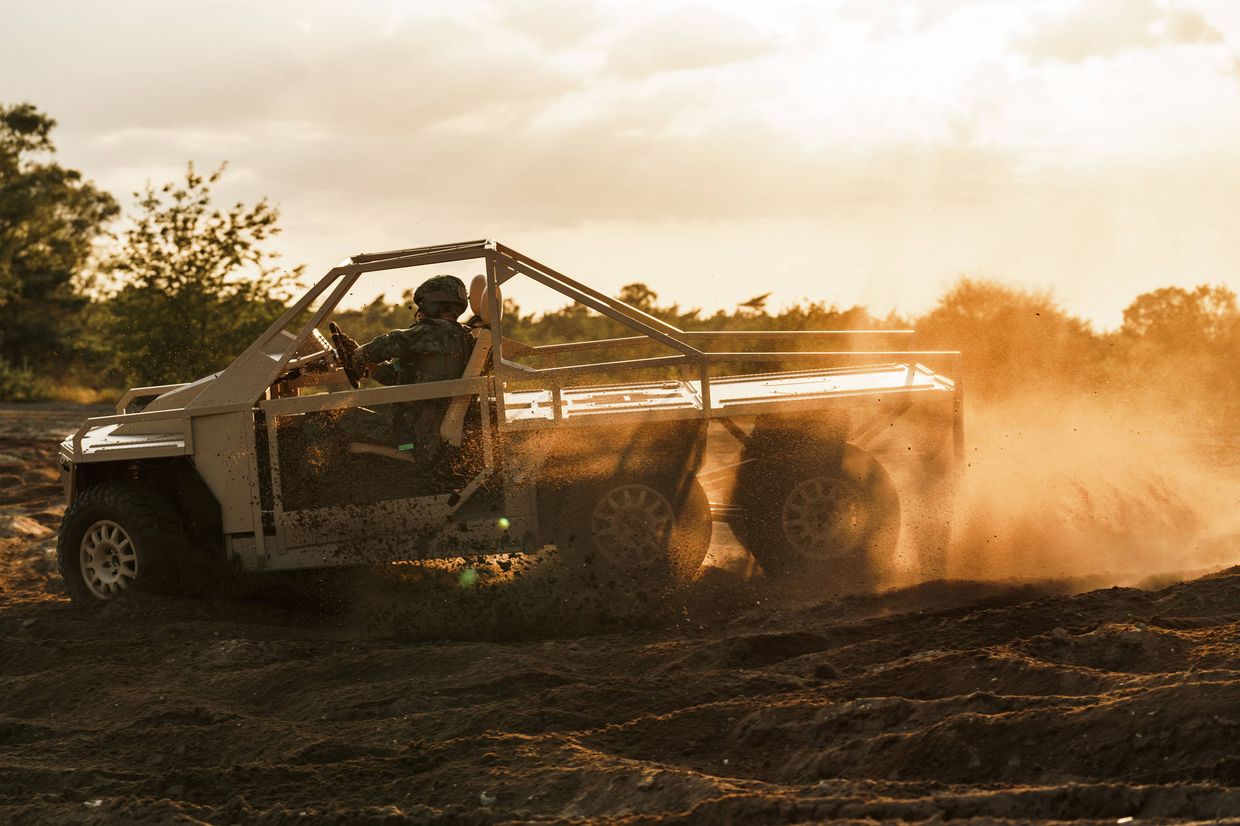
The Ermine, developed by Rheinmetall Defence Nederland, is designed primarily for front-line evacuation missions.
The light buggies provide fast, maneuverable transport for wounded personnel in combat zones. Rheinmetall said the deliveries are expected to begin in 2026.
According to Rheinmetall, the Ermine is a "lightweight tactical system that combines the robustness of a diesel unit with many advantages of an electric drive."
It's a modular system that comes in four configurations — 4x4 quad, 4x4/6x6 buggy, or Unmanned Ground Vehicle (UGV).
The Ermine combines a diesel engine with an electric motor that allows for what Rheinmetall describes as "Silent Move & Silent Watch," and has a range of up 1,200 kilometers, and can carry up to a tonne.
"The electrical powertrain makes the Ermine almost silent. It is capable of driving up to 50 km silently through heavy terrain and up to 100 km on the road," the company said.
"The system offers its users significant tactical advantages in avoiding enemy reconnaissance."
The electrical engine can even provide charging points for soldiers out in the field.
An Ermine ground vehicle developed by Rheinmetall Defence Nederland mainly for front-line evacuation missions (Rheinmetall)
On June 24, Dutch Prime Minister Dick Schoof presented a new military aid package for Ukraine, including 100 drone radar systems, front-line vehicles, and 80 million euros (over $90 million) for the drone initiative.
The NATO summit concluded on June 25 with a joint pledge by member states to raise defense spending to 5% of GDP by 2035. The updated target reflects shifting priorities within the Alliance as the war in Ukraine drags into its fourth year.
Unlike in previous years, the 2025 summit communique did not include an explicit condemnation of Russia's invasion. Still, the final statement reaffirmed support for Ukraine and said assistance to its defense industry will count toward the new spending benchmark.
President Volodymyr Zelensky met with U.S. President Donald Trump during the summit, where the two leaders discussed battlefield developments, Kyiv's need for additional air defense systems, and the potential for co-production of drones.
"They (Ukraine) do want to have the anti-missiles, as they call them, the Patriots, and we're going to see if we can make some available," Trump said. "They are very hard to get. We need them too. We are supplying them for Israel, and they are very effective."
Trump's remarks signal a potential boost to Ukraine's air defense capabilities, which have come under increasing strain amid intensifying Russian attacks.
President Volodymyr Zelensky met outgoing Dutch Prime Minister Dick Schoof on June 24 in The Hagueon the first day of the NATO summit.Welcoming Zelensky at the Catshuis official residence, Schoof presented a new military aid package for Ukraine, including 100 drone radar systems, front-line vehicles for evacuating the wounded, and 80 million euros (over $90 million) for the drone initiative. The Netherlands will also start producing drones for Ukraine, according to Ukrainian specifications.Zelen
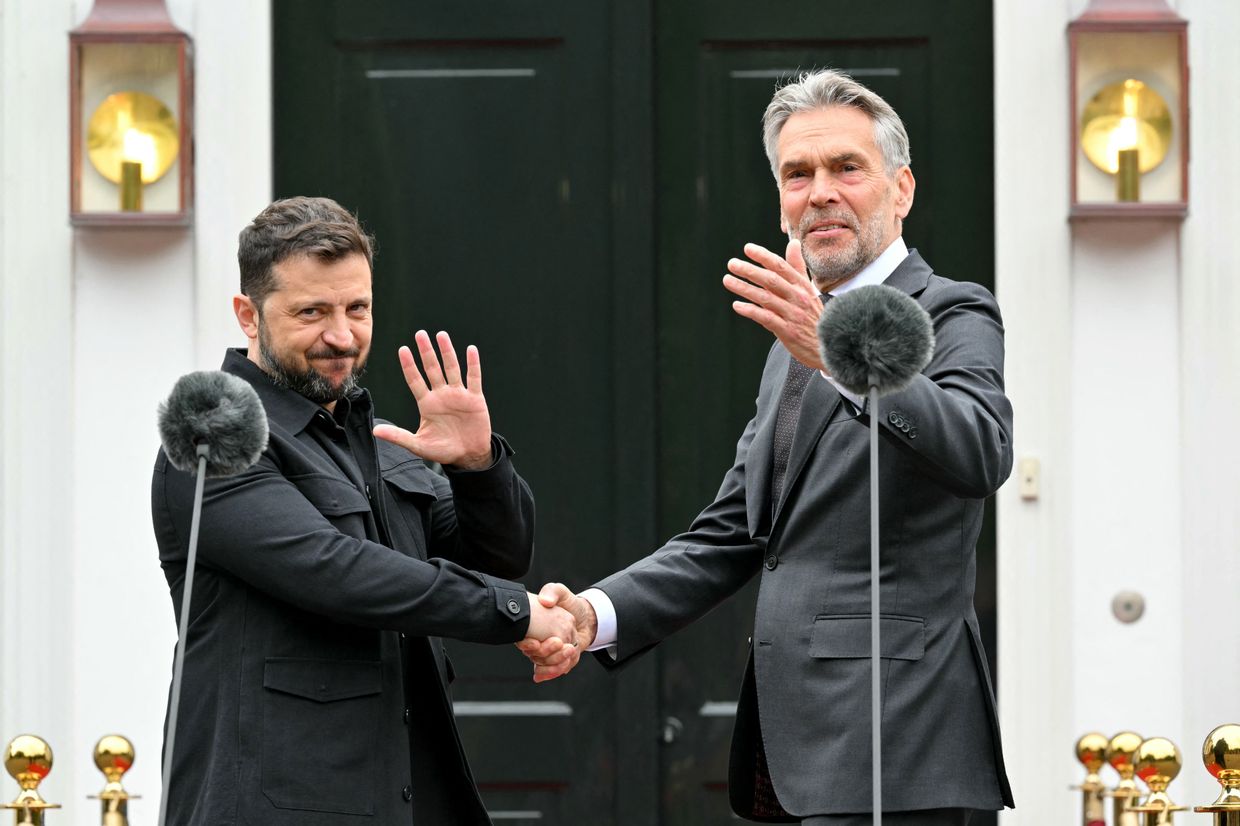
President Volodymyr Zelensky met outgoing Dutch Prime Minister Dick Schoof on June 24 in The Hagueon the first day of the NATO summit.
Welcoming Zelensky at the Catshuis official residence, Schoof presented a new military aid package for Ukraine, including 100 drone radar systems, front-line vehicles for evacuating the wounded, and 80 million euros (over $90 million) for the drone initiative. The Netherlands will also start producing drones for Ukraine, according to Ukrainian specifications.
Zelensky arrived in the Netherlands on the evening of June 23, planning to meet allied leaders – including U.S. President Donald Trump – to discuss NATO's response to Russia's war against Ukraine during the annual summit.
"Let me be clear: Ukraine is part of the family that we call the Euro-Atlantic family," Schoof told Zelensky in front of reporters.
The new aid package is valued at 175 million euros ($200 million) and comes after a 500 million euros ($580 million) agreement to produce 600,000 drones with the Ukrainian defense industry, Dutch Defense Minister Ruben Brekelmans said separately at the summit.
"We have these technologies, we want to share them with our partners. In The Hague, we begin to work with some countries on co-production," Zelensky said when talking about Ukraine's drone manufacturing capabilities.
Calling The Hague the "city of justice," Zelensky also said he counts on allied support in "holding Russia accountable for its crimes" and named the Netherlands among Ukraine's leading European supporters.
Zelensky's arrival was preceded by rumors that he might skip the event if Trump does not attend either. Nevertheless, the Ukrainian president later confirmed he plans to meet the U.S. leader on June 25, potentially marking their third meeting since Trump took office after the expected talks at the G7 summit in Canada fell through.
This year's NATO summit is taking place as Russia continues to launch large-scale deadly attacks on Ukrainian cities, disregarding calls by Kyiv and its Western partners for a ceasefire.
Allied leaders also face growing uncertainty about the Trump administration's commitment to both Ukraine and NATO's collective security as new conflicts emerge in the Middle East.
The lower house of the Dutch parliament on June 19 officially recognized the 1944 mass deportation of Crimean Tatars by the Soviet Union as genocide, according to a statement from the parliamentary press service.The motion cited precedent from other countries that have recognized the forced deportations as genocide, including Poland, the Czech Republic, Canada, Latvia, Lithuania, and Ukraine.In the adopted text, Dutch lawmakers declared that the Soviet-led deportation of Crimean Tatars, which to
The lower house of the Dutch parliament on June 19 officially recognized the 1944 mass deportation of Crimean Tatars by the Soviet Union as genocide, according to a statement from the parliamentary press service.
The motion cited precedent from other countries that have recognized the forced deportations as genocide, including Poland, the Czech Republic, Canada, Latvia, Lithuania, and Ukraine.
In the adopted text, Dutch lawmakers declared that the Soviet-led deportation of Crimean Tatars, which took place between May 18 and 21, 1944, constitutes genocide by contemporary legal and historical definitions.
The 1944 deportation was carried out under direct orders from Soviet dictator Joseph Stalin, who labeled the entire Crimean Tatar population as traitors following the peninsula's liberation from Nazi occupation.
Over 190,000 Tatars were forcibly removed from Crimea in a matter of days, though some estimates place the number closer to 430,000, and sent to remote areas in Central Asia, mainly Uzbekistan, in brutal conditions that led to mass deaths.
The document pointed to the ongoing repression of Crimean Tatars under Russian occupation since 2014. It said that "many Crimean Tatars have been unjustly imprisoned, subjected to torture by the Russian Federation, or forcibly disappeared," and added that "Russia has likely continued a policy of genocide against Crimean Tatars."
Foreign Minister Andrii Sybiha welcomed the decision, calling it "a powerful gesture of solidarity with the Crimean Tatar people, who are still facing persecution under Russia’s temporary occupation of the Ukrainian Crimea peninsula."
Sybiha noted that the Netherlands is now the seventh country to formally recognize the deportation as genocide and urged other nations to follow suit.
"Recognizing this historical injustice is critical not only for establishing truth and justice, but also for preventing future atrocities," the minister wrote.
Ukraine's parliament recognized the deportation as genocide in 2015 and established May 18 as the official Day of Remembrance for the Victims of the Genocide of the Crimean Tatar People.

 Connexion
 The Kyiv IndependentChris York