Vue normale

  • ✇The Kyiv Independent
  • Satellite images show expansion at 5 Russian nuclear sites near Europe
    Satellite images reveal that Russia has expanded and modernized at least five nuclear-related facilities near European borders in recent years, Swedish broadcaster SVT reported on June 16, citing new imagery obtained from Planet Labs. One of the most notable developments is in Kaliningrad, where the suspected nuclear weapons storage site has undergone significant reconstruction. Images taken in May 2025 show the addition of triple-layered fencing, new buildings, and advanced communications equip
     

Satellite images show expansion at 5 Russian nuclear sites near Europe

16 juin 2025 à 04:45
Satellite images show expansion at 5 Russian nuclear sites near Europe

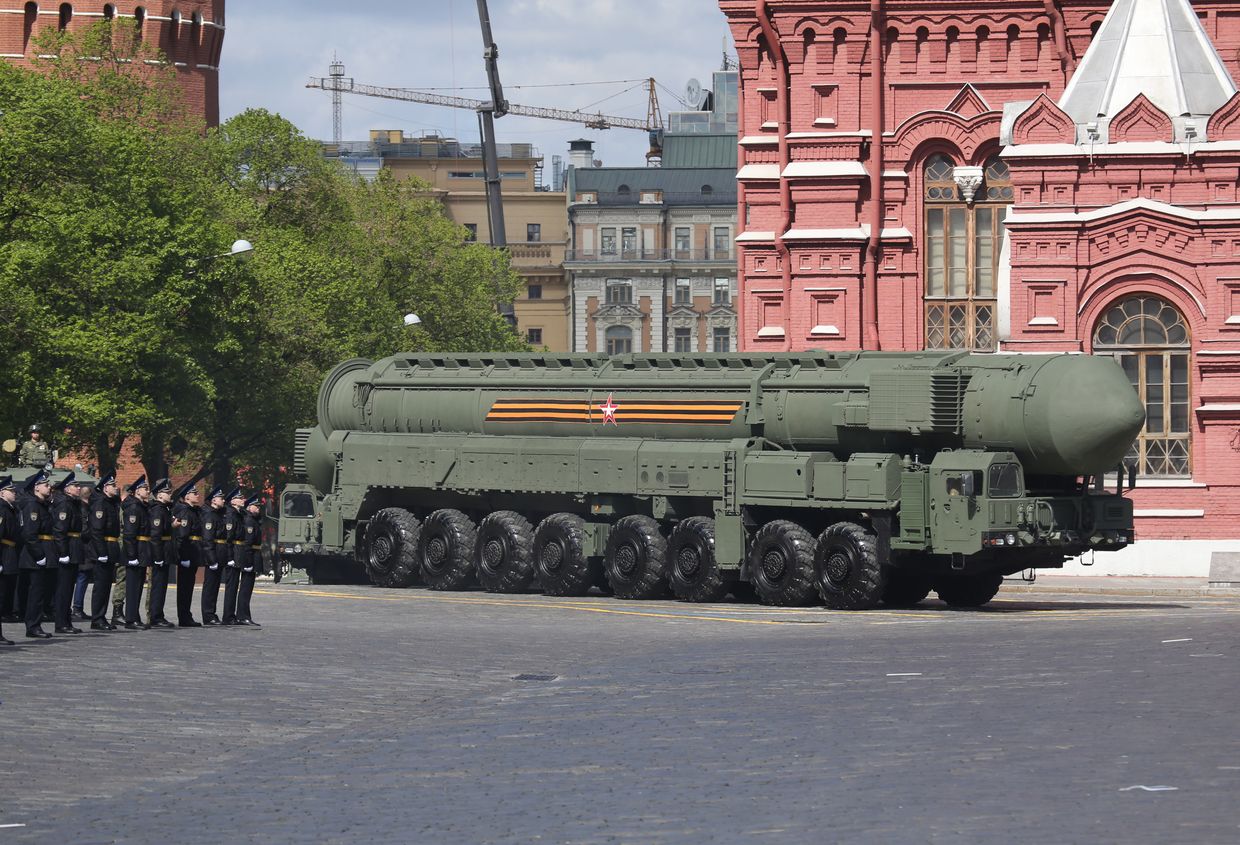
Satellite images reveal that Russia has expanded and modernized at least five nuclear-related facilities near European borders in recent years, Swedish broadcaster SVT reported on June 16, citing new imagery obtained from Planet Labs.

One of the most notable developments is in Kaliningrad, where the suspected nuclear weapons storage site has undergone significant reconstruction.

Images taken in May 2025 show the addition of triple-layered fencing, new buildings, and advanced communications equipment. Polish Foreign Minister Radoslaw Sikorski previously said that up to 100 tactical nuclear warheads might be stored at the site.

Kaliningrad, a militarized Russian exclave between Poland and Lithuania, is a key concern for NATO because of its advanced missile systems and expanding nuclear infrastructure.
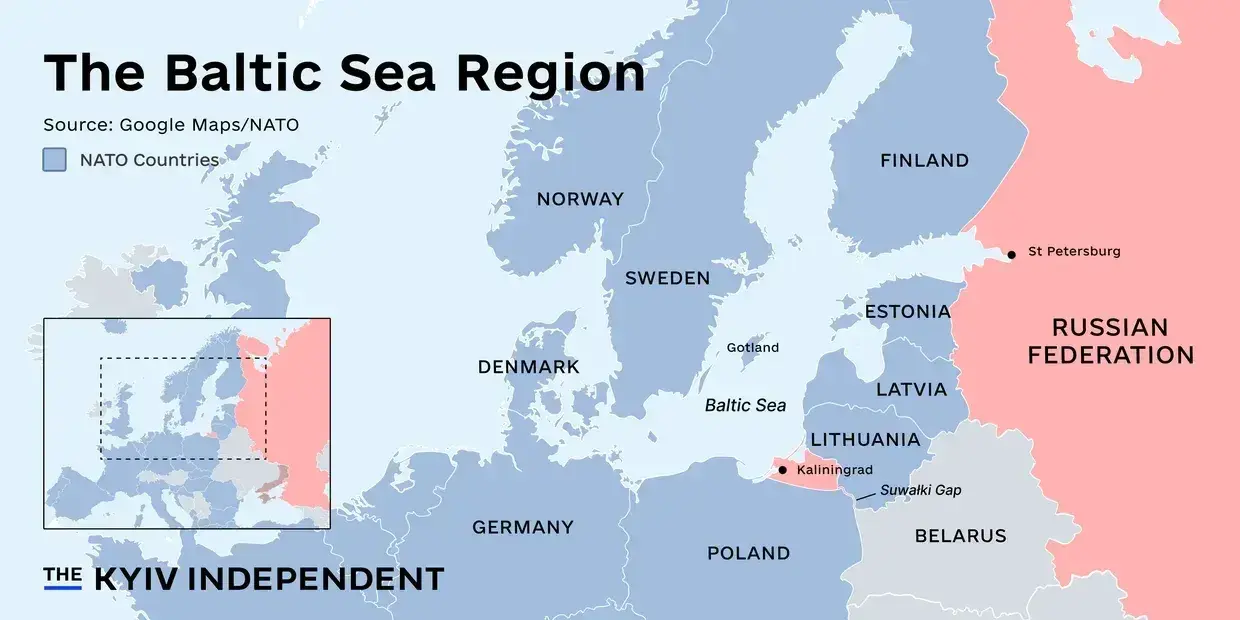
Satellite images show expansion at 5 Russian nuclear sites near Europe
A map of the Baltic Sea Region. (Lisa Kukharska / The Kyiv Independent)

The Osipovichi base in Belarus, a former Soviet nuclear storage facility, is also being renovated. Satellite imagery shows new air defense installations and a modernized loading platform for rail-based logistics.

In Novaya Zemlya, a remote Arctic archipelago long linked to Soviet-era nuclear testing, several new buildings have appeared, reinforcing its role as a potential site for future test activities.

On the Kola Peninsula, near the borders with Finland and Norway, Russia has built about 50 storage bunkers for submarine-launched ballistic missiles and constructed a specialized pier for loading those missiles onto submarines, according to the imagery.

Swedish Defense Minister Pal Jonson responded to the findings, saying Stockholm is "closely monitoring" Russian nuclear capabilities. Sweden officially joined NATO in March 2024 after years of non-alignment, citing escalating Russian threats as a primary reason.

The Kremlin has repeatedly used nuclear threats to pressure Ukraine and Western countries since the start of its full-scale invasion in February 2022.

‘Russians lie about everything’ — Ukraine hits out at Kremlin claims after yet another drone strike on Kyiv
“This is a deliberate tactic of terror,” Tymur Tkachenko, head of the Kyiv City Military Administration, said.
Satellite images show expansion at 5 Russian nuclear sites near EuropeThe Kyiv IndependentTim Zadorozhnyy
Satellite images show expansion at 5 Russian nuclear sites near Europe
  • ✇The Kyiv Independent
  • Europe must prepare for US scaling down support for Ukraine, Pistorius says
    German Defense Minister Boris Pistorius said Europe must begin preparing for a gradual reduction in U.S. military support for both the continent and Ukraine, Tagesschau reported on June 13."Yes, that's right. That would be so, and we have to deal with that," Pistorius told journalists in response to a question about the U.S. potentially scaling down its support. He noted that the discussions focus on a reduction in U.S. backing rather than a full halt.The comments come after U.S. Defense Secreta
     

Europe must prepare for US scaling down support for Ukraine, Pistorius says

13 juin 2025 à 08:41
Europe must prepare for US scaling down support for Ukraine, Pistorius says

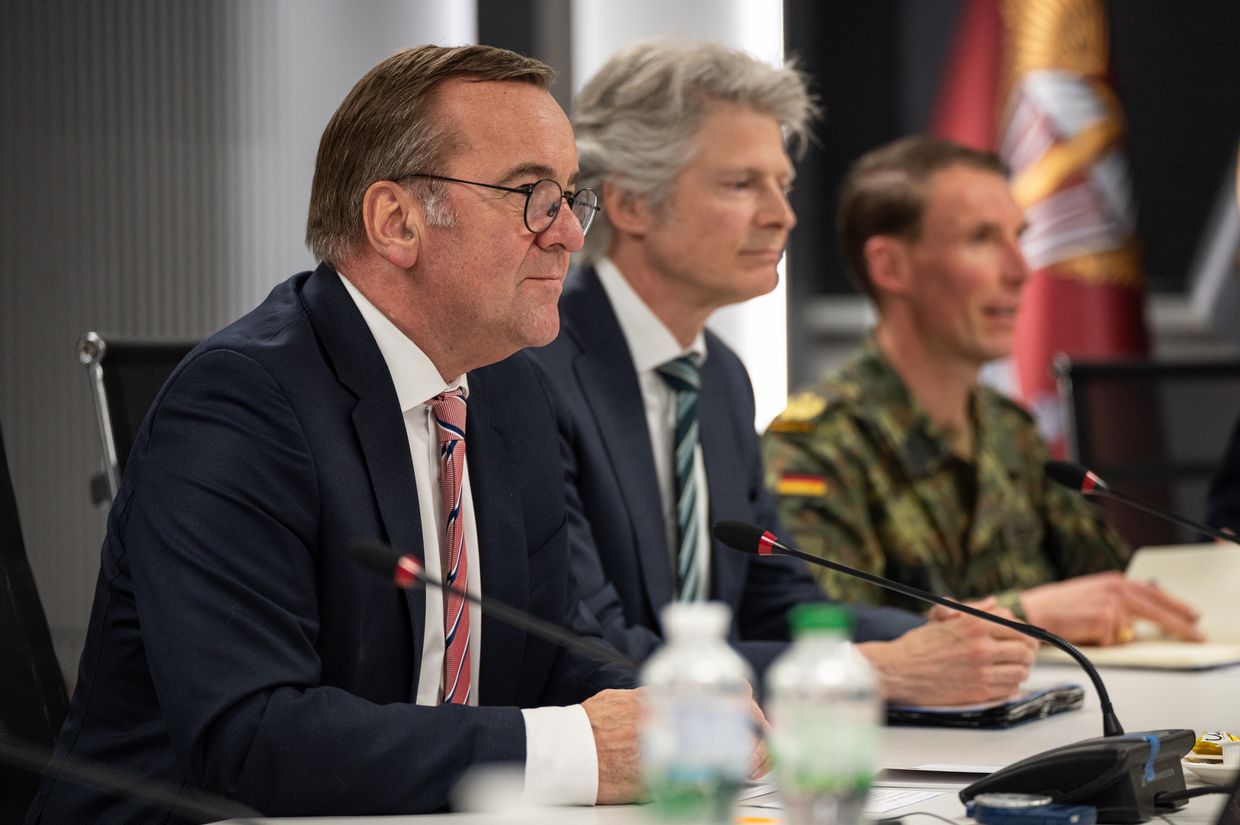
German Defense Minister Boris Pistorius said Europe must begin preparing for a gradual reduction in U.S. military support for both the continent and Ukraine, Tagesschau reported on June 13.

"Yes, that's right. That would be so, and we have to deal with that," Pistorius told journalists in response to a question about the U.S. potentially scaling down its support. He noted that the discussions focus on a reduction in U.S. backing rather than a full halt.

The comments come after U.S. Defense Secretary Pete Hegseth announced that Washington would reduce the assistance allocated to Ukraine in the next year's federal budget.

"We now have to look at how much support drops and whether Europeans can compensate for it," Pistorius added.

While the U.S. has been Ukraine's leading military backer under former President Joe Biden, the Trump administration has yet to approve any aid packages and has become increasingly disengaged from peace talks.

Pistorius's comments come amid increasing uncertainty in transatlantic relations. U.S. Ambassador to NATO Matthew Whitaker confirmed on May 16 that the United States plans to begin discussions with European allies later this year about reducing its military presence on the continent.

Speaking at a security conference in Estonia, Whitaker said the talks would begin after the NATO summit in The Hague in June.

"Nothing has been determined," Whitaker said, according to Reuters. "But as soon as we do, we are going to have these conversations in the structure of NATO."

Whitaker emphasized that any drawdown would be closely coordinated to avoid creating security gaps. Still, he reiterated U.S. President Donald Trump's position that long-standing U.S. efforts to reduce its European military footprint must now be implemented.

"This is going to be orderly, but we are not going to have any more patience for foot-dragging in this situation," he said.

In February, Hegseth reportedly told NATO allies that "stark strategic realities" prevent the United States from being primarily focused on Europe's security. Leaks reported by the Atlantic in March revealed that both Hegseth and Vice President JD Vance privately criticized European defense spending, with Hegseth allegedly expressing his "loathing of European free-loading."

Trump called on NATO member states to increase defense spending up to 5% of GDP. Ahead of the upcoming NATO summit in The Hague on June 24–25, U.S. Secretary of State Marco Rubio said that member states will have agreed to a new goal of increasing defense spending.

"We are headed for a summit in six weeks in which virtually every member of NATO will be at or above 2%, but more importantly, many of them will be over 4%, and all will have agreed on a goal of reaching 5% over the next decade," Rubio told Fox News on May 15.

Such a move would mark a historic shift, with NATO partners collectively accounting for more than half of the alliance's military capacity, according to Rubio.

Since the beginning of Russia's full-scale war against Ukraine in 2022, NATO members have significantly increased their defense spending, with countries like Poland and the Baltic nations aiming to reach the 5% target in the coming years.

Ukraine bracing for ‘painful’ reduction in US military aid after Hegseth announces cuts
Editor’s note: For security reasons, the real names of the soldiers mentioned in this story have not been used. A reduction in U.S. military aid to Ukraine would be “painful” and could have potentially “dire consequences” for the global order, Ukrainian lawmakers and soldiers have told the Kyiv Independent.
Europe must prepare for US scaling down support for Ukraine, Pistorius saysThe Kyiv IndependentKateryna Hodunova
Europe must prepare for US scaling down support for Ukraine, Pistorius says
  • ✇The Kyiv Independent
  • NATO to strengthen missile defenses in Eastern Europe to counter Russian threats, Bloomberg reports
    NATO plans to enhance its missile defense systems on its eastern flank in response to a growing threat from Russia, Bloomberg reported on June 12, citing its undisclosed sources.For the first time, member states of NATO are reportedly considering combining the alliance's ballistic missile shield with other integrated missile defense assets. The talks are taking place behind closed doors and involve sensitive deliberations, Bloomberg reported, citing its sources.Moscow has long opposed NATO's mis
     

NATO to strengthen missile defenses in Eastern Europe to counter Russian threats, Bloomberg reports

13 juin 2025 à 01:58
NATO to strengthen missile defenses in Eastern Europe to counter Russian threats, Bloomberg reports

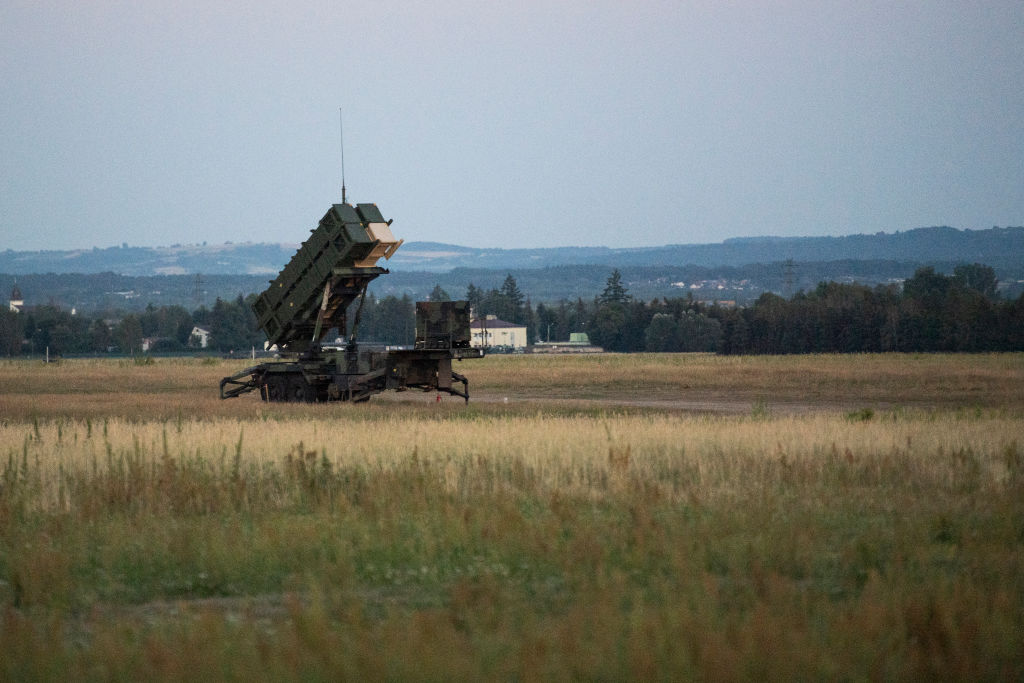
NATO plans to enhance its missile defense systems on its eastern flank in response to a growing threat from Russia, Bloomberg reported on June 12, citing its undisclosed sources.

For the first time, member states of NATO are reportedly considering combining the alliance's ballistic missile shield with other integrated missile defense assets. The talks are taking place behind closed doors and involve sensitive deliberations, Bloomberg reported, citing its sources.

Moscow has long opposed NATO's missile defense infrastructure, particularly the U.S.-built interceptors deployed in Poland and Romania, states neighboring Ukraine. The alliance has previously said those systems are intended to counter potential long-range threats from Iran, not Russia.

The so-called "NATO expansion to the east" is one of the key narratives used by Russian propaganda to justify its large-scale war against Ukraine.

The proposed integration of ballistic missile defense with NATO's broader air and missile defense network would address threats from any direction in the future. This shift suggests the effort would increasingly be focused on deterring Russian capabilities, according to Bloomberg's sources.

The move comes as NATO ramps up its defense posture more than three years after Russia launched its full-scale invasion of Ukraine. The alliance recently agreed on the most ambitious new weapons targets since the Cold War.

NATO Secretary General Mark Rutte called on alliance members to make a "quantum leap" in defense investment in response to the enduring threat from Russia. Speaking at Chatham House in London, Rutte urged allies to increase air and missile defense by 400%.

Talks on integrating the systems may wrap up ahead of the NATO summit in The Hague on June 24–25, but could continue afterward, the sources said. Ukraine is invited to attend the summit. It remains unclear whether the initiative will still officially cite Iran as a threat or move fully toward addressing Russia.

The effort is part of a broader strategy to reinforce NATO's eastern flank, but some officials have raised concerns about how it might affect peace efforts in Ukraine and whether the United States will fully support the integration, Bloomberg reported.

Previously, U.S. President Donald Trump echoed Russian claims that Kyiv provoked the invasion by pursuing its NATO ambitions.

Earlier, Bloomberg reported that NATO is deploying a new satellite surveillance system aimed at monitoring military activity in Ukraine and along the alliance's eastern borders. The system, known as Smart Indication and Warning Broad Area Detection (SINBAD), will use AI-powered analysis to scan large areas and detect potential threats with unprecedented frequency.

NATO expands satellite surveillance to monitor Ukraine, eastern flank
The initiative, named Smart Indication and Warning Broad Area Detection (SINBAD), will allow NATO to scan vast territories with unprecedented frequency, using AI-powered analysis to detect changes and alert allies to potential threats.
NATO to strengthen missile defenses in Eastern Europe to counter Russian threats, Bloomberg reportsThe Kyiv IndependentAnna Fratsyvir
NATO to strengthen missile defenses in Eastern Europe to counter Russian threats, Bloomberg reports
❌