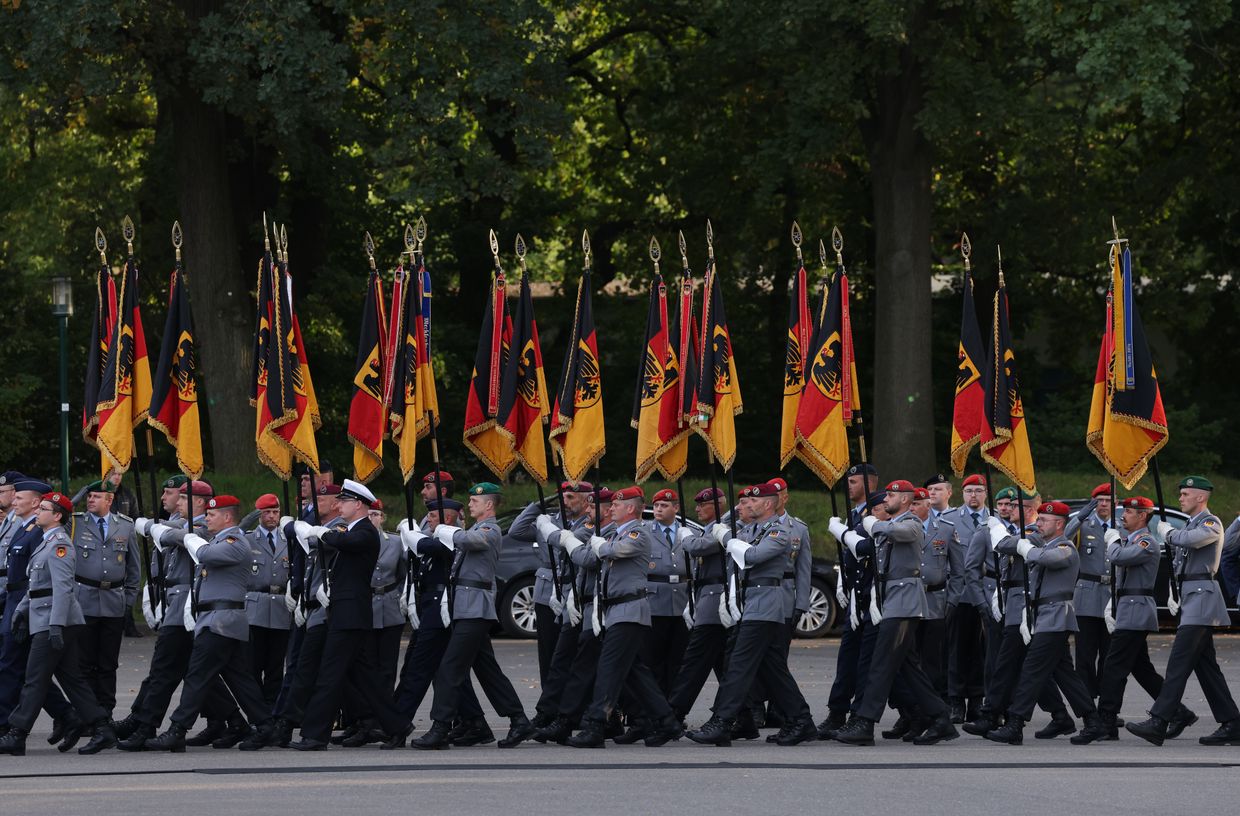
Germany aims to prioritize defense spending in the next EU budget while firmly opposing any increase in national contributions, according to a position paper obtained by the Financial Times (FT). As the bloc’s largest economy and top net contributor, Berlin wants EU funds to support joint arms procurement and help expand production capacity among European weapons manufacturers.The paper reportedly reflects Germany’s broader shift toward higher domestic military spending in response to Russia’s o
Germany aims to prioritize defense spending in the next EU budget while firmly opposing any increase in national contributions, according to a position paper obtained by the Financial Times (FT).
As the bloc’s largest economy and top net contributor, Berlin wants EU funds to support joint arms procurement and help expand production capacity among European weapons manufacturers.
The paper reportedly reflects Germany’s broader shift toward higher domestic military spending in response to Russia’s ongoing threat and amid calls by U.S. President Donald Trump for Europe to shoulder more of its own defense.
Berlin argues the EU budget should also fund dual-use technologies, military transport corridors, and other security-related initiatives despite current treaty restrictions on defence spending from the common budget, according to FT.
To free up funds for these priorities, Germany proposes cutting administrative costs and simplifying the EU budget structure. The government supports reducing the number of programes, granting the European Commission more flexibility to shift funds, and focusing spending on strategic areas such as cross-border infrastructure, energy security, digitalisation, and innovation.
Germany also opposes any extension of the EU’s post-Covid joint borrowing programme, stressing that repayments for the 800 billion euro fund must begin in 2028 as scheduled. While Berlin is open to discussing new EU-level revenue sources such as a carbon border levy or minimum corporate tax, it continues to reject an increase in direct national contributions to the budget, which currently total about 1% of EU GDP.
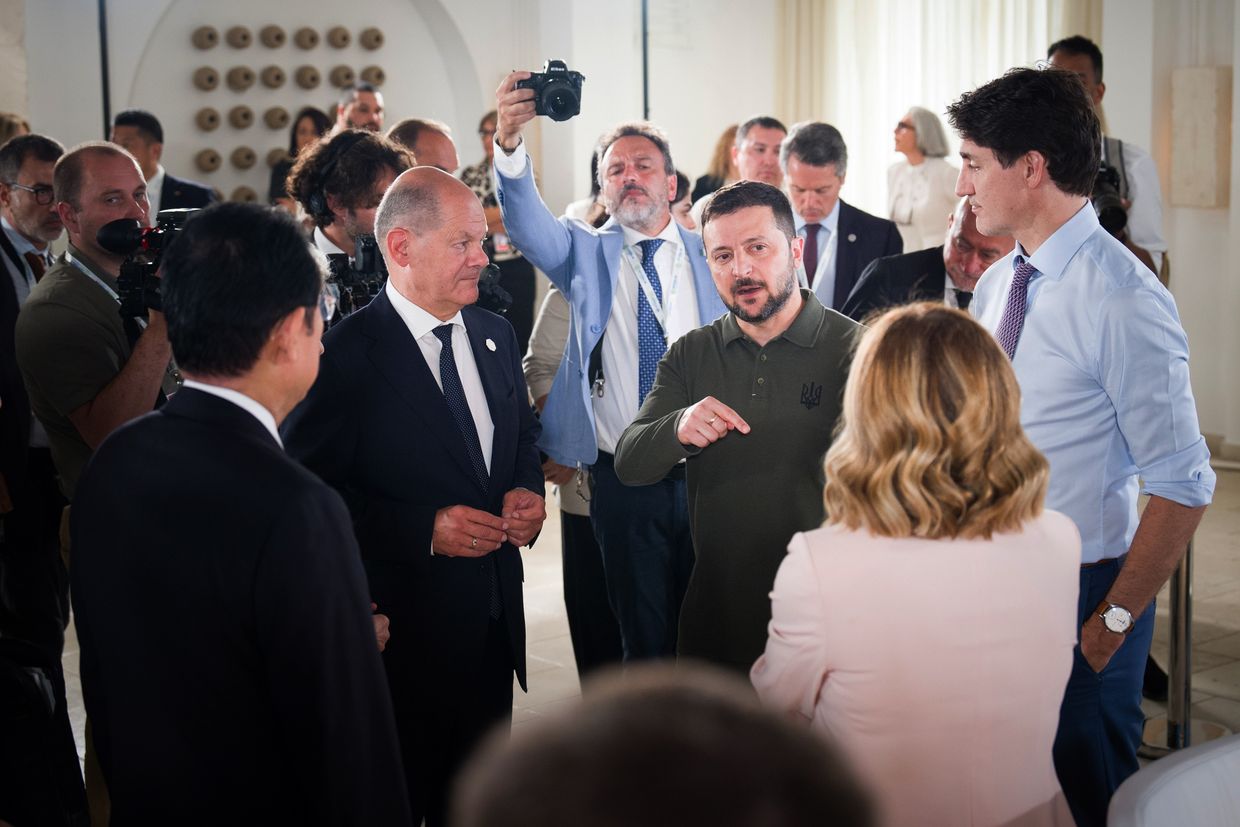
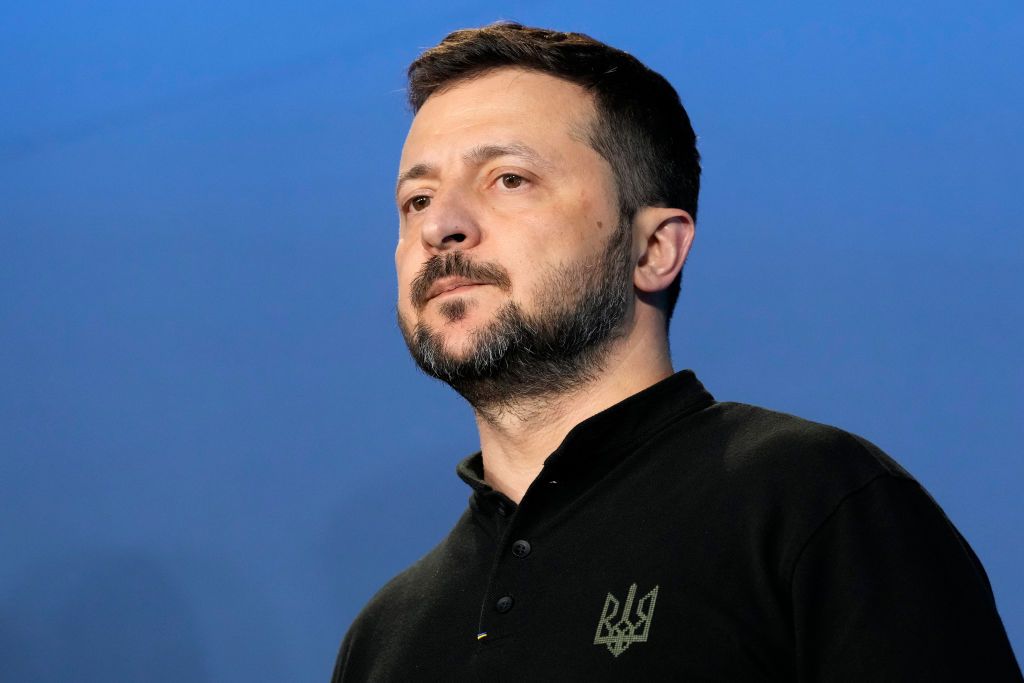
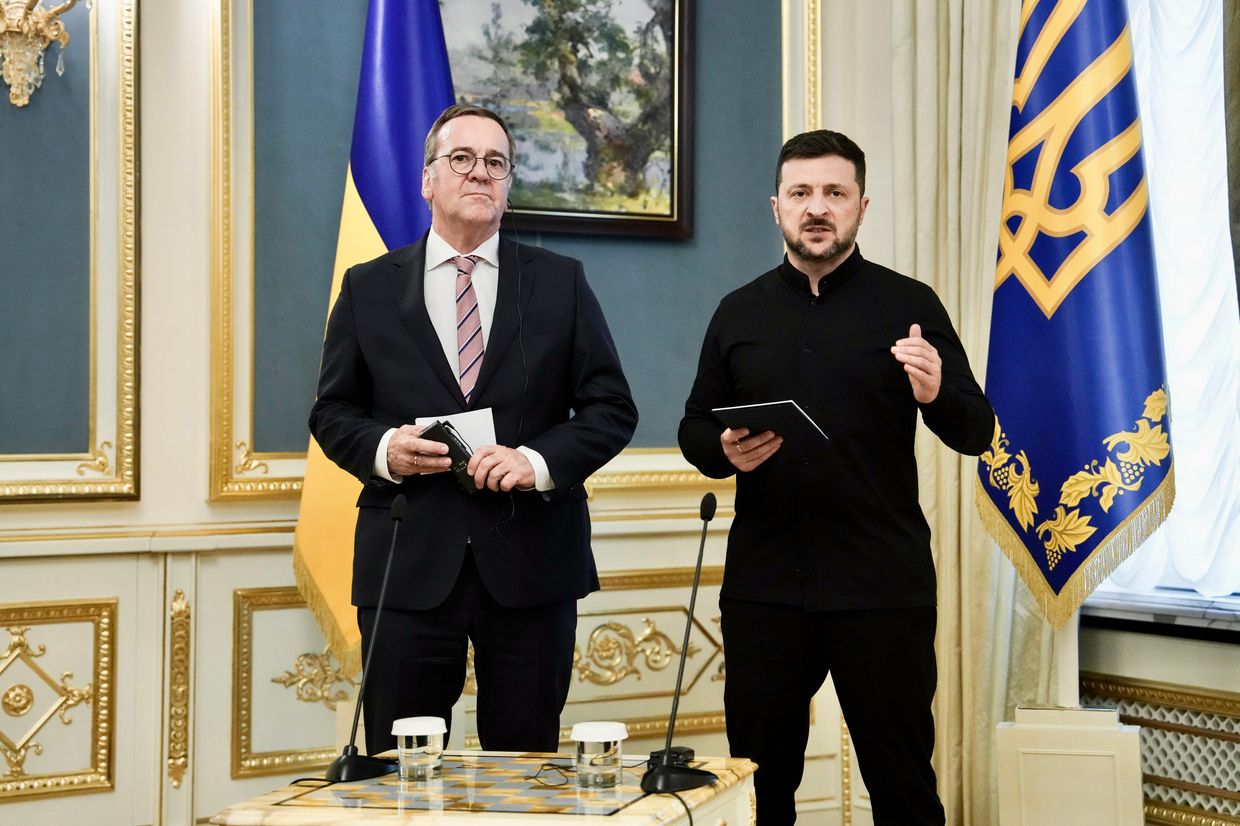
President Volodymyr Zelensky's office has confirmed plans for a high-stakes meeting with U.S. President Donald Trump at the upcoming G7 summit on June 17, according to the Kyiv Independent journalist who attended a closed-door briefing with Zelensky on June 13. "Both teams are working to ensure we meet," Zelensky said. The meeting would mark the third in-person encounter between the two leaders during Trump's second term in the White House. Their most recent meeting took place on April 26 at St
President Volodymyr Zelensky's office has confirmed plans for a high-stakes meeting with U.S. President Donald Trump at the upcoming G7 summit on June 17, according to the Kyiv Independent journalist who attended a closed-door briefing with Zelensky on June 13.
"Both teams are working to ensure we meet," Zelensky said.
The meeting would mark the third in-person encounter between the two leaders during Trump's second term in the White House. Their most recent meeting took place on April 26 at St. Peter's Basilica in the Vatican, where they spoke privately on the sidelines of Pope Francis' funeral. Both sides described the meeting as productive and constructive, though details remained sparse.
Earlier in February, Zelensky met Trump and Vice President JD Vance in the White House when the infamous tense Oval Office exchange erupted, with Trump criticizing Kyiv's perceived lack of gratitude for U.S. support
Zelensky said his priority is to discuss with Trump sanctions against Russia, peace talks, weapons purchase, and U.S.-Ukraine economic cooperation.
"The United States communicates with the EU on sanctions at the level of senators and congressmen. But I want to raise this issue personally with President Trump," Zelensky said.
"There are steps forward we can take — but we need the political will of the U.S. president, if he wants."
He added that Ukraine has long prepared a "strong" weapons package to purchase from Washington. "Only at the presidential level can we finalize it," Zelensky said ahead of the G7 summit.
Russian offensives in Sumy, Dnipropetrovsk oblasts
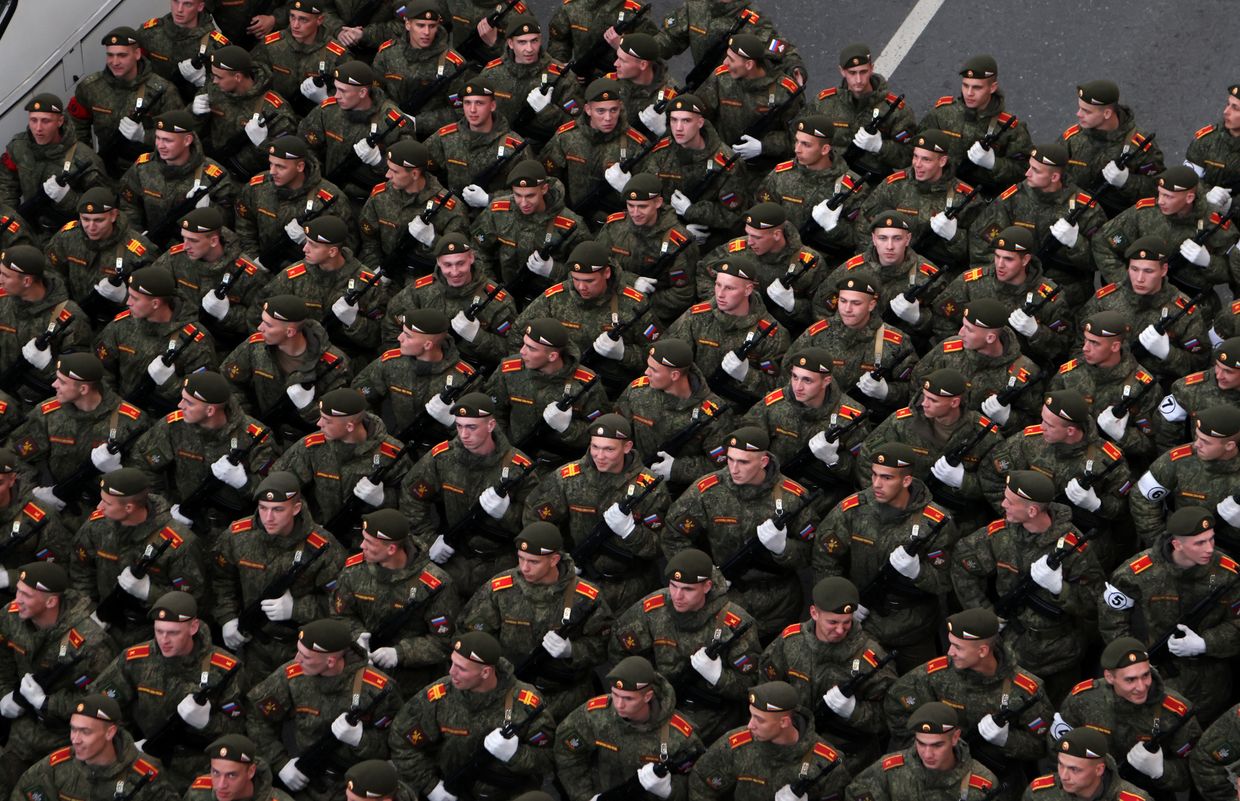
Zelensky said that heavy fighting is ongoing along Ukraine's northeastern border. Russian forces have concentrated around 53,000 troops in the Sumy sector, pushing into multiple settlements such as Andriivka, Kindrativka, and Oleksiivka.
According to the open-source monitoring group DeepState, Russian troops have been advancing along the border in Sumy Oblast, with the current front line lying just about 20 kilometers away from the regional capital of Sumy.
According to media reports, Russia exploited a thinning of Ukraine's front-line forces, which were later replaced by newer, under-equipped formations.
Zelensky said that Russia only pushed seven kilometers deep into Sumy, adding that the Russian army "has been stopped there."
Zelensky added that Ukrainian forces had successfully struck Russian positions in the neighboring Russian Kursk Oblast, near Tyotkino, to stall Russian momentum and split their offensive groups.
In Dnipropetrovsk Oblast, Zelensky confirmed that small Russian reconnaissance groups had briefly crossed into Ukrainian territory — likely for propaganda purposes. One six-man unit was reportedly eliminated one kilometer from the administrative border.
"For them (Russia), it's an important story, to take a photo, video," Zelensky said. "That's why they are launching small working groups to do just that."
Earlier, the Kremlin has claimed the operations in Dnipropetrovsk are part of an effort to create a so-called "buffer zone." Ukrainian officials have rejected these claims as disinformation.
When speaking about the recent escalation between Israel and Iran in the Middle East, Zelensky said that the subsequent regional tension had driven up oil prices, enhancing Russia's war financing through energy exports.
"This factor clearly doesn't help us," he said, adding that Ukraine will urge Washington to implement stricter price caps on Russian oil at the G7.
He further revealed that U.S. weapons previously allocated to Ukraine, including 20,000 air-defense interceptors used to counter Iranian-designed Shahed drones, were redirected to support Israel ahead of its recent strikes on Iran.
"That was a serious blow... We were counting on these missiles," Zelensky said.
Zelensky warned that Ukraine must not become "a bargaining chip" in larger geopolitical negotiations involving the U.S., Russia, and the Middle East. Russia and Iran have deepened their cooperation since 2022, with Iran supplying weapons and technology to boost Moscow's war machine.
"I was constantly afraid that we could become a bargaining chip, just one factor in the negotiations between the United States and the Russians. So, along with the situation with Iran, the situation with Ukraine was also a factor. They are really dependent on each other," he said.
Zelensky voiced concerns about a slowdown in Western diplomatic momentum, particularly around the "coalition of the willing" initiative led by France and the UK.
Earlier, media reported that the "coalition of the willing," aimed at offering post-ceasefire security guarantees to Ukraine, has faced delays due to the absence of U.S. commitment.
"Europe hasn't yet decided what to do if America steps back," he said. "Their energy depended on U.S. resolve. Without it, things slow down."
Still, Zelensky made clear that Ukraine would not accept any ultimatums from Moscow amid the uncertainty of Western support. He described the latest Russian ceasefire proposals as capitulation.
"They pretend to be ready for talks, but all they offer is an ultimatum," Zelensky said. "We won't go along with that. Not now, not ever."
Zelesnky also expressed optimism that the European Union's 18th sanctions package would pass later this month and said he would personally push for closer U.S.-EU coordination at the G7.
Zelensky confirmed that prisoner exchanges with Russia are continuing and that another round of direct peace talks with Moscow may take place soon after.
"We expect that they (prisoner swaps) can be completed on the 20th or 21st (of June)," he said.
Over the week, Ukraine and Russia held a series of exchanges under an agreement reached during peace talks in Istanbul. Most recently, on June 12, Ukraine brought home another group of severely wounded and seriously ill service members.
The June 12 operation followed a similar swap two days earlier, both conducted without immediate disclosure of the number of released prisoners.
The June exchanges are part of a phased prisoner swap arrangement agreed during the second round of direct talks between Ukrainian and Russian delegations in Istanbul on June 2. While no political breakthroughs emerged from the discussions, both sides agreed to continue exchanging POWs and repatriating the remains of fallen soldiers.
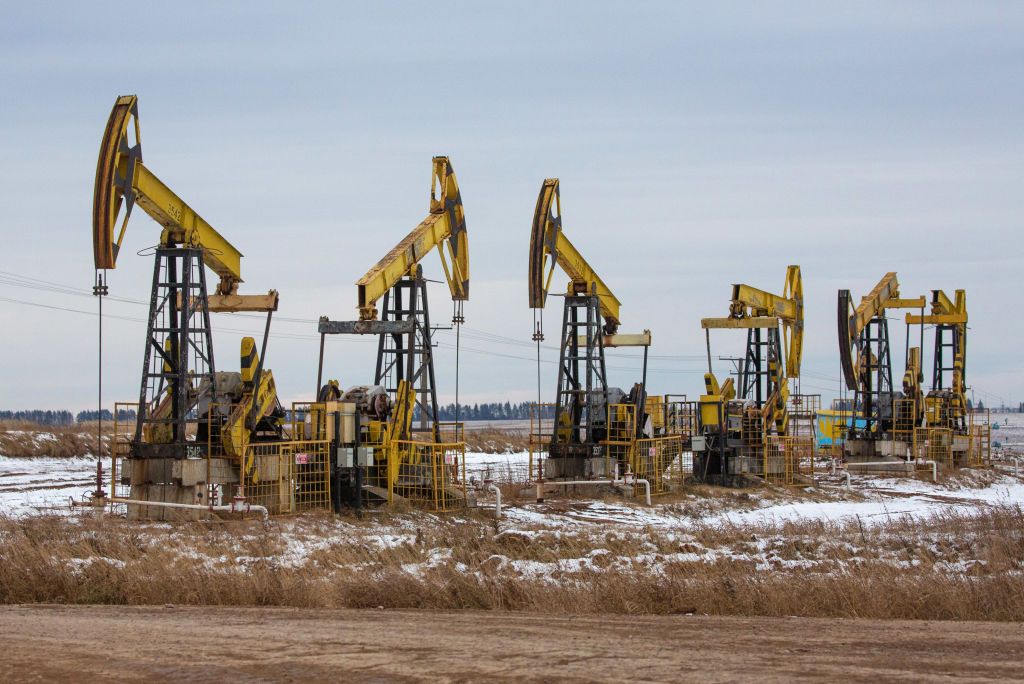
The United States is opposing a proposal by other Group of Seven nations to lower the price cap on Russian oil, Bloomberg reported on June 13.Citing unnamed sources, Bloomberg said the U.S. remains opposed to reducing the cap from $60 to $45 per barrel – a position it first took earlier this year when Treasury Secretary Scott Bessent declined to support a similar effort.The price cap, introduced in December 2022 as a measure to limit the Kremlin's ability to finance its war against Ukraine, proh
The United States is opposing a proposal by other Group of Seven nations to lower the price cap on Russian oil, Bloomberg reported on June 13.
Citing unnamed sources, Bloomberg said the U.S. remains opposed to reducing the cap from $60 to $45 per barrel – a position it first took earlier this year when Treasury Secretary Scott Bessent declined to support a similar effort.
The price cap, introduced in December 2022 as a measure to limit the Kremlin's ability to finance its war against Ukraine, prohibits Western companies from shipping, insuring, or otherwise servicing Russian oil sold above $60 per barrel.
One source told Bloomberg that the EU and U.K. could explore lowering the cap without the U.S., as most of Russia's oil is transported in European waters. However, a unified G7 agreement would carry greater impact if it could be enforced by the U.S.
The price cap debate has become more urgent as oil prices, which had fallen below the $60 cap in recent months, surged following Israel's strikes against Iran in the past 24 hours.
G7 leaders will revisit the price cap discussion during the upcoming summit, hosted by Canada from June 15-17 in Kananaskis County, Alberta.
The summit agenda will also include topics such as support for Ukraine in the Russian war, global economic stability, digital transformation, and climate change.
The G7 currently includes Canada, France, Germany, Italy, Japan, the United Kingdom, and the United States. The European Union is also represented in the group.
Ukraine has received another 1 billion euros ($1.1 billion) in macro-financial assistance from the European Union as part of a G7 loan, Prime Minister Denys Shmyhal announced on June 13."This is the fifth tranche of macro-financial assistance from the EU under the ERA Extraordinary Revenue Acceleration) initiative," Shmyhal wrote on social media. "The funds will be directed toward key expenditures of the state budget."Shmyhal thanked Ukraine's partners for their "consistent and reliable support,
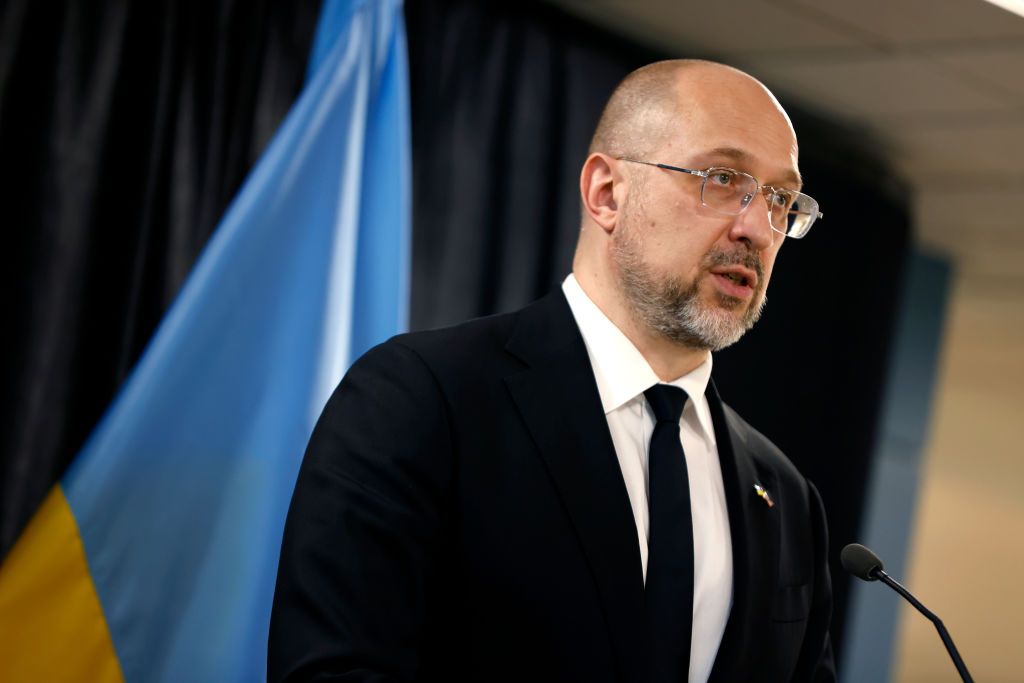
Ukraine has received another 1 billion euros ($1.1 billion) in macro-financial assistance from the European Union as part of a G7 loan, Prime Minister Denys Shmyhal announced on June 13.
"This is the fifth tranche of macro-financial assistance from the EU under the ERA Extraordinary Revenue Acceleration) initiative," Shmyhal wrote on social media. "The funds will be directed toward key expenditures of the state budget."
Shmyhal thanked Ukraine's partners for their "consistent and reliable support," adding, "Together, we will make (Russia) pay for all the damage caused to Ukraine."
According to Shmyhal, Ukraine has received a total of 7 billion euros ($8 billion) from the European Union under the ERA initiative, which is funded by the windfall profits generated from immobilized Russian sovereign assets.
The ERA mechanism, launched by the G7 and backed by the EU and the United States, is a $50 billion program designed to support Ukraine through loans repaid using future income from frozen Russian assets. Since Russia's full-scale invasion in 2022, G7 countries have frozen around $300 billion in Russian sovereign assets.
Ukraine received the previous 1-billion-euro tranche on May 8 as part of the fourth installment of EU aid under ERA.
Ylva Johansson, former European Commissioner for Home Affairs, will serve as the European Union's new special envoy for Ukrainians in the bloc, POLITICO reported on June 12.According to anonymous officials that spoke to POLITICO, Johansson will fill the newly created post, overseeing the Commission's long-term strategy for Ukrainian refugees currently residing in the European Union.Johansson, a former Swedish minister and European Commission official, previously visited Ukraine on several occasi
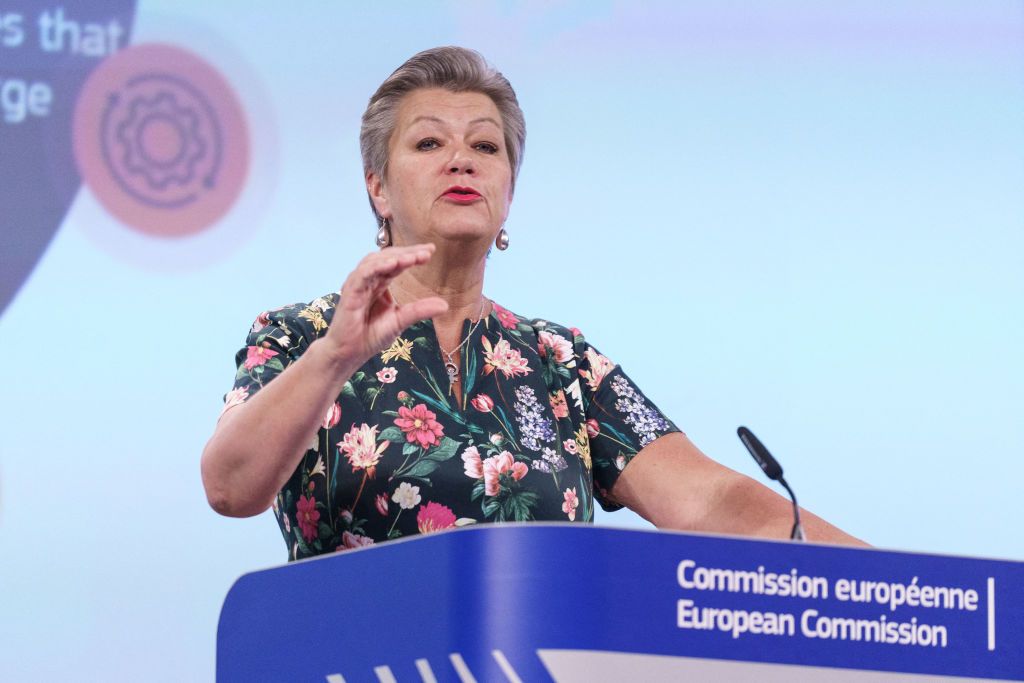
Ylva Johansson, former European Commissioner for Home Affairs, will serve as the European Union's new special envoy for Ukrainians in the bloc, POLITICO reported on June 12.
According to anonymous officials that spoke to POLITICO, Johansson will fill the newly created post, overseeing the Commission's long-term strategy for Ukrainian refugees currently residing in the European Union.
Johansson, a former Swedish minister and European Commission official, previously visited Ukraine on several occasions, including a refugee camp on the border with Romania. She received the Ukrainian order of merit in September 2024.
As special envoy, Johansson will be responsible for EU initiatives focused on helping Ukrainian refugees transition into permanent legal statuses or return home.
As part of these initiatives, the EU will launch "unity hubs" – information centers jointly managed with the Ukrainian government. The hubs will support Ukrainian refugees to integrate with EU host countries or repatriate to Ukraine.
Germany, which has has taken in more than 1 million Ukrainian refugees since the start of the full-scale invasion, recently committed to establishing unity hubs in Berlin. The unity hubs in Berlin will provide Ukrainians with access to educational and career opportunities both in Ukraine and Germany.
The European Commission also recently extended temporary protection Ukrainian refugees who fled to the EU following Russia's invasion of Ukraine.
According to Eurostat, 4.26 million Ukrainians currently hold temporary protection status in the EU as of April 2025.
Most Group of Seven (G7) nations are prepared to lower the Russian oil price cap from $60 to $45 a barrel even without support from the United States, Reuters reported on June 12, citing unnamed sources familiar with the matter.According to Reuters, the European Union and United Kingdom, backed by other European G7 countries and Canada, are ready to lead the charge in lowering the Russian oil price cap – even if U.S. President Donald Trump opts out.The price cap, which bans Western companies fro
Most Group of Seven (G7) nations are prepared to lower the Russian oil price cap from $60 to $45 a barrel even without support from the United States, Reuters reported on June 12, citing unnamed sources familiar with the matter.
According to Reuters, the European Union and United Kingdom, backed by other European G7 countries and Canada, are ready to lead the charge in lowering the Russian oil price cap – even if U.S. President Donald Trump opts out.
The price cap, which bans Western companies from shipping, insuring, or otherwise servicing Russian oil sold above $60 per barrel, was first introduced in December 2022 as a measure to limit the Kremlin's ability to finance its war against Ukraine.
The G7 had previously attempted to lower the Russian oil price cap; however, the proposal was dropped after U.S. Treasury Secretary Scott Bessent reportedly declined to support it.
It is unclear whether the U.S. will support the decision this time around. Japan's position is also undecided.
Participating country leaders will revisit the price cap discussion at the upcoming G7 summit. Canada, which holds the G7 presidency this year, will host the summit on June 15-17 in Kananaskis County, located in the western province of Alberta.
The summit agenda will include topics such as support for Ukraine in the Russian war, global economic stability, digital transformation, and climate change.
President Volodymyr Zelensky is expected to attend the summit and seek a meeting with U.S. President Donald Trump.
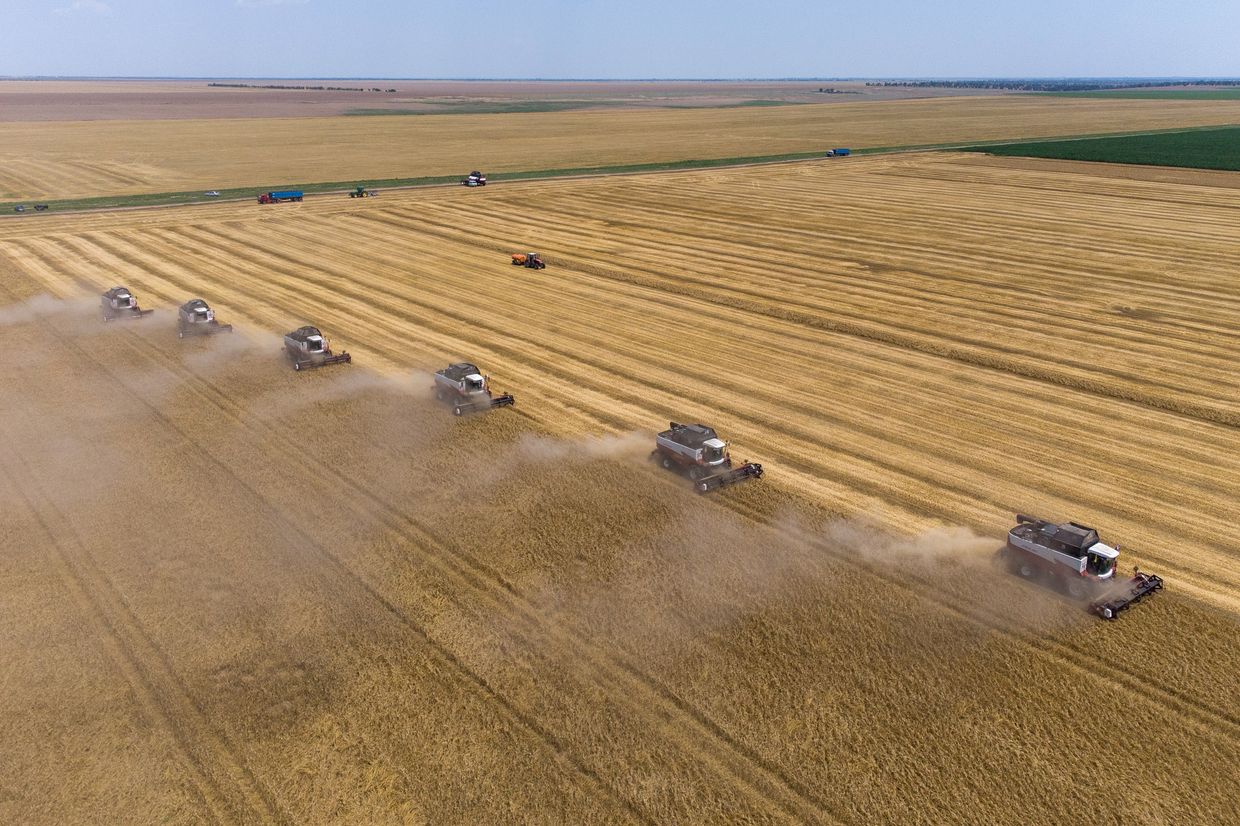
The Council of the EU on June 12 approved fresh tariffs on fertilizers and remaining agricultural goods from Russia and Belarus, aiming to reduce Russian export revenues.The measures target those goods that have not yet been subject to additional customs duties and will enter into force on July 1. The tariffs on fertilizers will increase gradually over the next three years.The step comes as the EU readies additional sanctions against Russia as it continues to wage its all-out war against Ukraine
The Council of the EU on June 12 approved fresh tariffs on fertilizers and remaining agricultural goods from Russia and Belarus, aiming to reduce Russian export revenues.
The measures target those goods that have not yet been subject to additional customs duties and will enter into force on July 1. The tariffs on fertilizers will increase gradually over the next three years.
"Polish Presidency motto is 'Security, Europe!' and these measures increase our economic security by reducing dependencies from Russia," said Michal Baranowski, the trade undersecretary at the Polish Economy Ministry.
"We are further reducing Russia’s export revenues and therefore its ability to finance its brutal war. This is united Europe at its best," he said in a statement.
The new tariffs will apply to goods that made up around 15% of all agricultural imports from Russia in 2023. Fertilizer tariffs will focus on certain nitrogen-based products, the Council said in a statement.
Russian fertilizers accounted for more than a quarter of all of the EU's imports in this sector in 2023, worth almost $1.5 billion.
Apart from stifling Russia's trade revenue, the step also aims to reduce the EU's dependence on Russian and Belarusian goods, protect European farmers, and diversify the supply.
The EU adopted higher tariffs on cereals, oilseeds, and some other products from Russia and Belarus in May 2024. Earlier this year, the European Commission proposed imposing similar measures on all remaining agricultural products from the two countries.

 Connexion
 The Kyiv IndependentDmytro Basmat