Vue normale

Reçu — 30 juillet 2026 Euromaidan Press

EU releases another €3.47 billion for Ukraine’s “urgent needs” – drones, missiles, air defense, and Gripen jets
30 juillet 2026 à 12:36

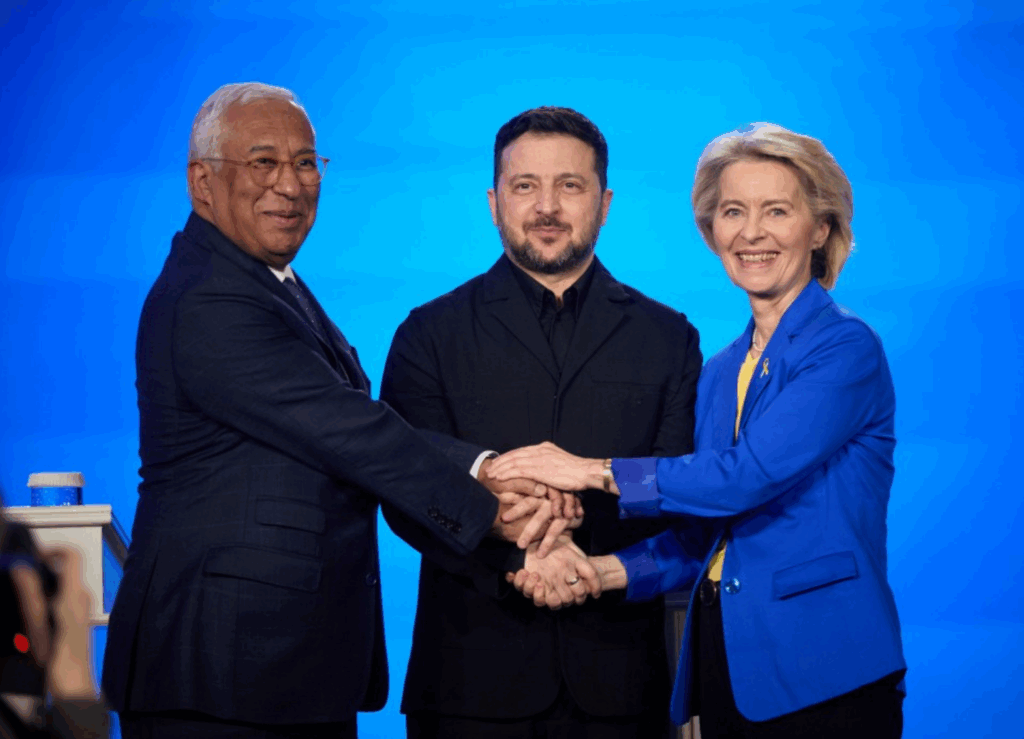
antónio costa, volodymyr zelenskyy and ursula von der leyen in kyiv on 24 february 2026

The European Commission has disbursed an additional €3.47 billion to Ukraine under the defense component of its €90 billion Ukraine Support Loan, providing funding for drones, missiles, air defense systems, and Gripen fighter jets.

The latest tranche comes as Ukraine faces intensified Russian missile and drone attacks and seeks to bolster its defense capabilities.

Funding to strengthen Ukraine's defense

European Commission President Ursula von der Leyen said the new funding would help Ukraine defend its skies while deepening defense industrial cooperation between Kyiv and the European Union.

"Today, we are investing an additional €3.47 billion to help protect Ukraine's skies," von der Leyen said.

"With this new disbursement under our €90 billion loan package, we are helping Ukraine defend its people. We are also bringing our defense industries closer together, combining Europe's industrial scale with Ukraine's unmatched innovation. This is our new Drone Deal taking shape."

With this disbursement, we are helping Ukraine protect its skies and defend its people.

At the same time, we are combining Europe's industrial scale with Ukraine's unmatched innovation.

Our drone deal is taking shape.https://t.co/6hcfBQ6cCo pic.twitter.com/0bERiAQ0uD

— Ursula von der Leyen (@vonderleyen) July 30, 2026

According to the Commission, the package includes another tranche under its drone procurement program and additional funding for drones, including long-range jet-powered drones, missiles, and Gripen fighter jets to help Ukraine rapidly acquire critical military equipment.

“The funding is provided in response to Ukraine's urgent military needs, as it continues to require capability support to defend itself against Russia's war of aggression,” the statement reads.

The Commission said further funding for drones, ammunition, air defense, and missiles would be approved and disbursed in the coming weeks.

Part of broader Ukraine Support Loan

The Ukraine Support Loan consists of €60 billion dedicated to strengthening Ukraine's defense capabilities and industrial capacity, alongside €30 billion in budget support to help keep the Ukrainian state functioning.

The latest payment follows previous disbursements of €3.2 billion under the EU's Macro-Financial Assistance program on 25 June, €3.9 billion under the defense window on 30 June, and €1.1 billion on 15 July.

The Commission said a total of €28.3 billion is expected to be allocated to Ukraine's defense industrial capacity during 2026, with the remaining funding scheduled for disbursement before the end of the year.

Ukraine welcomes latest tranche

Ukrainian Prime Minister Serhii Koretskyi confirmed that Ukraine had received the €3.47 billion payment, saying the funds would strengthen the country's defenses and help finance its most urgent needs.

"These funds will strengthen our defense and help finance Ukraine's most urgent needs," Koretskyi wrote on X.

He said Ukraine has secured €11.6 billion under the Ukraine Support Loan so far this year, including €3.2 billion in budget support and €8.4 billion for defense, out of the €45 billion available under the mechanism in 2026.

"I am sincerely grateful to the European Commission and all EU Member States for their consistent and unwavering support," Koretskyi said. "Every euro invested in Ukraine strengthens our resilience, protects our people, and brings us closer to a just and lasting peace."

Ukraine has received another €3.47 billion tranche from the European Union under the Ukraine Support Loan. These funds will strengthen our defense and help finance Ukraine’s most urgent needs.

A total of €45 billion is available to Ukraine under this mechanism in 2026. To…

— Sergii Koretskyi (@KoretskyiUA) July 30, 2026

Since the start of Russia's full-scale invasion in 2022, the European Union and its member states have provided more than €220 billion in support to Ukraine, including assistance financed through proceeds from immobilized Russian sovereign assets.

  • ✇Euromaidan Press
  • Europe deepens trade with India while Western parts keep reaching Russia’s weapons
    An Iskander missile that Russia fired at Kyiv Oblast on 10 July was built from more than 140 foreign parts, 62 of them American, and at least 20 were made in 2025—components that cleared every Western control and reached a Russian assembly line within about a year, Euromaidan Press reported.Without those parts, Ukraine’s presidential sanctions commissioner Vladyslav Vlasiuk said, Russia could not build the weapon.
     

Europe deepens trade with India while Western parts keep reaching Russia’s weapons

30 juillet 2026 à 10:31

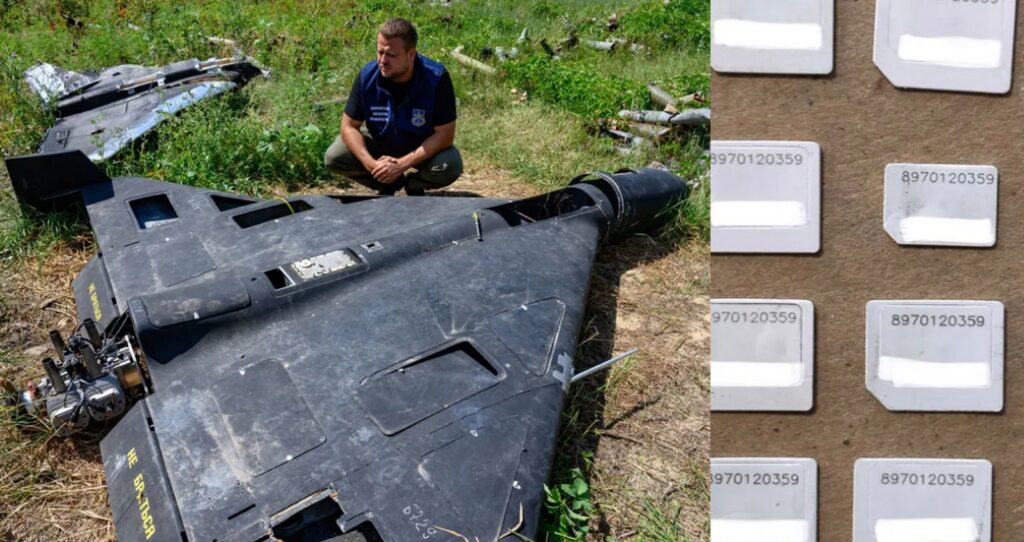
tele2 sim cards recovered in downed russian drones

An Iskander missile that Russia fired at Kyiv Oblast on 10 July was built from more than 140 foreign parts, 62 of them American, and at least 20 were made in 2025—components that cleared every Western control and reached a Russian assembly line within about a year, Euromaidan Press reported.

Without those parts, Ukraine’s presidential sanctions commissioner Vladyslav Vlasiuk said, Russia could not build the weapon.

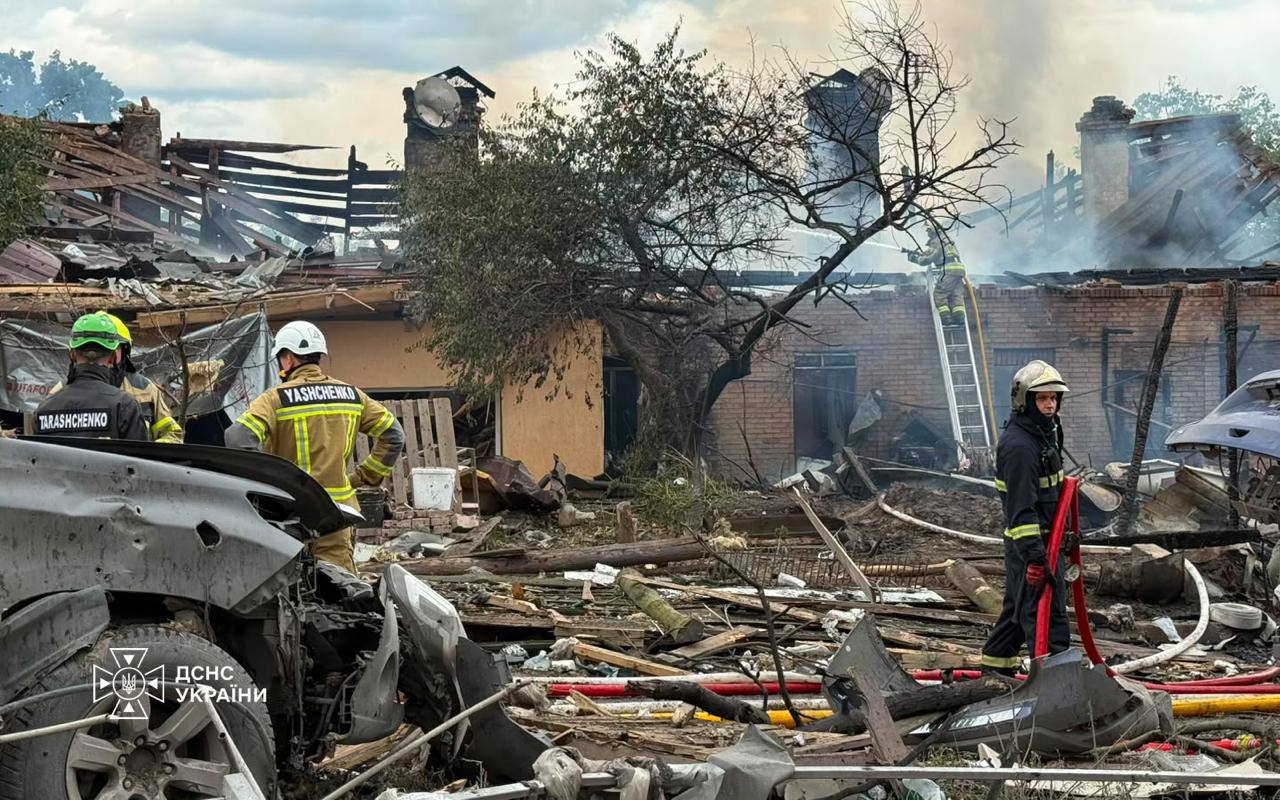
Aftermath of a Russian ballistic missile attack on Bucha district in Kyiv Oblast, Ukraine, 24 July 2026. Photo: Zelenskyy
Explore further

62 of the 140 foreign parts in this Russian missile were American. Ukraine wants that gap closed

A paradox runs through Europe’s answer to that problem. The EU is preparing to blacklist more than 1,600 companies for helping Russia’s war industry, its largest single batch of corporate designations, Bloomberg reported, while at the same time deepening trade with India, a country the same Western parts move through on their way to Russia.

And closing that gap will matter even after the war ends: a new study of Russia’s arms makers finds they will keep producing weapons at wartime speed—and keep needing imported parts to do it—whether or not the fighting stops.

Ukraine has been pulling the same finding out of downed Russian drones and missiles for two years—Indian electronics in Shahed drones among them.

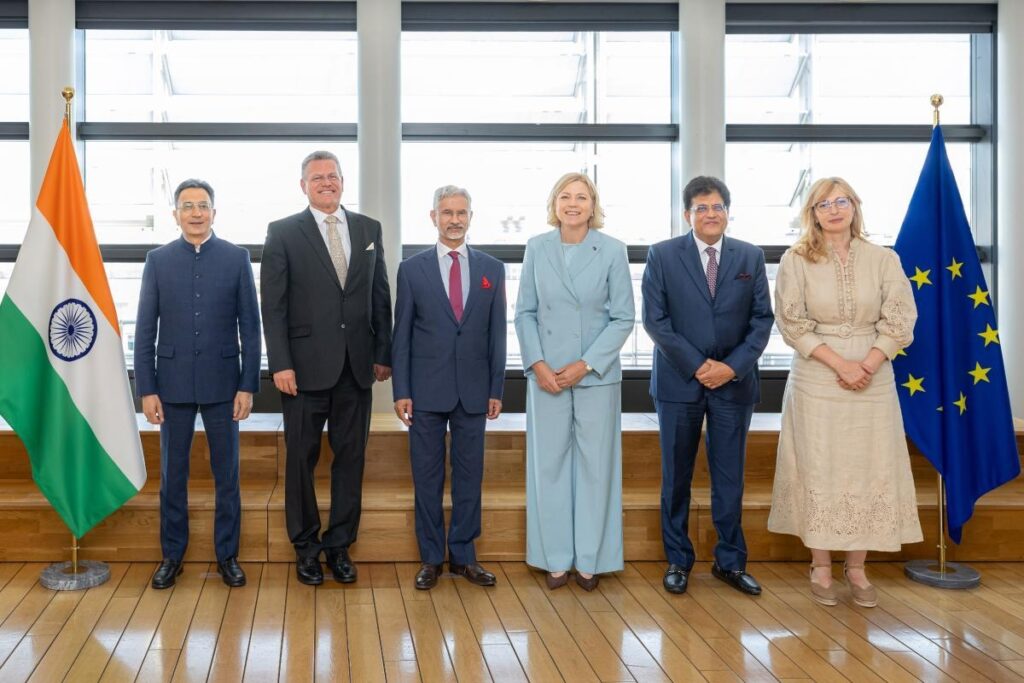
eu and indian officials meet in brussels on 15 july 2026 to deepen cooperation on trade, tech and supply chains
EU and Indian officials meet in Brussels on 15 July 2026 to deepen cooperation on trade, technology, and supply chains. From left: Jitin Prasada, Maroš Šefčovič, Subrahmanyam Jaishankar, Henna Virkkunen, Piyush Goyal, and Ekaterina Zaharieva. Photo: Xavier Lejeune / European Union, 2026.

The India route grew before the trade deals arrived

A 29 July report by the strategic intelligence company Strider put a number on the wider channel: more than 50,000 sensitive goods, or goods with potential dual-use applications, reached Russian defense companies through Indian supply chains after the full-scale invasion.

The security intelligence firm compared totals from 2019 to 2021 with those from 2022 through the first quarter of 2025. Since the invasion, sensitive exports from India to Russia have multiplied several times over—and the sharpest jumps come from the countries deepening their own trade with India.

Swedish-origin goods rose almost sixfold. British, Swiss, and French exports of the same kind roughly doubled or more. The pattern extends beyond Europe: American-origin goods more than five times over, Australian goods even faster. German trade was the exception, falling by more than a third—though Germany still ships more of these goods through India than anyone.

Without those parts, Ukraine’s presidential sanctions commissioner Vladyslav Vlasiuk said, Russia could not build the weapon.

French carbon fiber—used in aircraft, drones, and missiles—reached Polymer Company LLC in Russia through India in 2025, according to Strider. The Russian government has designated the firm part of its military-industrial complex, and it supplies several restricted entities.

None of this shows that a part in the 10 July Iskander passed through India. It shows Western goods moving through the country where Britain’s trade deal took effect on 15 July and where the EU is targeting entry into force in 2027. Those deals expand legitimate commerce, not evasion.

Strider’s warning concerns what happens after Western goods enter long, opaque supply chains, and the report urged end-use monitoring to be written into the agreements themselves.

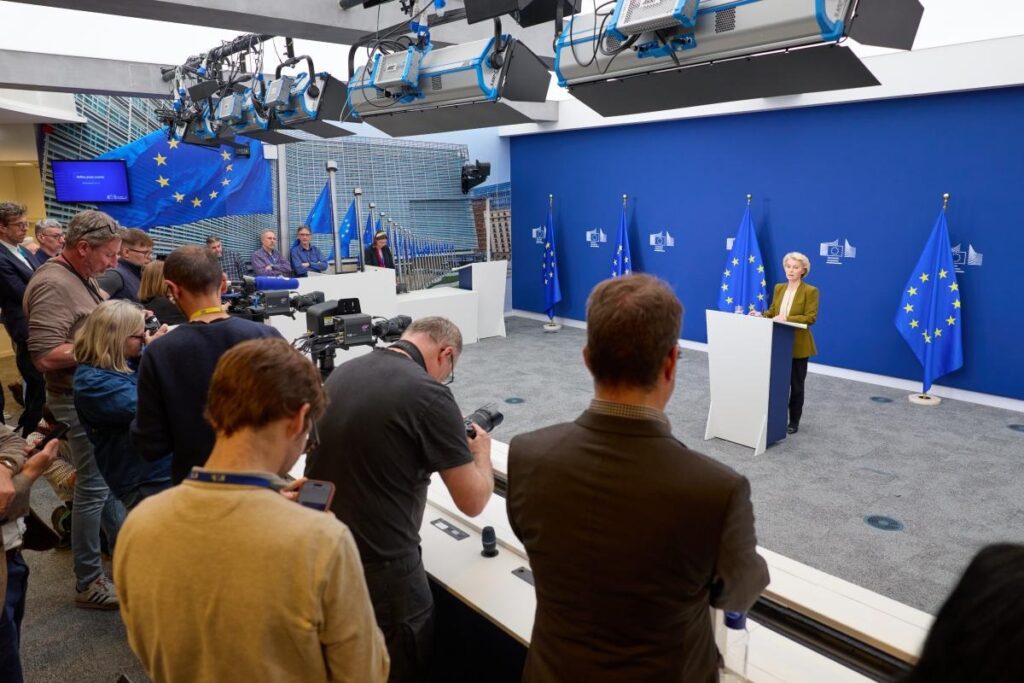
eu commission president ursula von der leyen presents the 21st sanctions package
European Commission President Ursula von der Leyen presents the proposed 21st sanctions package against Russia in Brussels on 9 June 2026. The EU adopted the package on 23 July. Photo: Dati Bendo / European Union, 2026.

Brussels is preparing 1,600 more names

The blacklist Brussels is drafting would target companies rather than whole industries, reaching corners of Russia’s military supply chain that earlier rounds missed.

The firms have a combined annual turnover of more than $20 billion and employ more than a quarter of a million people. If members approve it, the number of EU-sanctioned entities would jump by half. Foreign ministers are expected to take it up in October.

The bloc’s 21st package, adopted on 23 July, had already tightened dual-use export curbs on dozens of firms, some outside the EU. Six days later, the firm published the scale of one route around exactly those curbs.

votki
A production hall at Russia’s Votkinsk Plant in Udmurtia, one of the addresses identified as a destination for sanctioned goods. Photo: Delovaya Reputatsiya, 2021.

Russia plans to keep producing

That is why the flow of parts outlasts the war. A 14 July study of five major Russian defense manufacturers found them still dependent on imported components despite sanctions, corruption, labor shortages, and inflated costs—and likely to hold high output in select weapons while slowly rebuilding reserves.

Its sharpest warning is about time: Russia’s arms industry will probably stay on a wartime footing even if the shooting in Ukraine stops, while Western industry is unlikely to mobilize on that scale until a major war is already underway.

The Iskander compresses that long problem into a single year. At least 20 of its foreign parts were made in 2025, fitted into the missile, and fired at Kyiv Oblast on 10 July 2026.

❌