Vue normale

  • ✇Euromaidan Press
  • Ukraine is deliberately building the fragmented fighter fleet every air force is trained to avoid
    France's promise to hand Ukraine its first Rafale fighters will leave Kyiv operating one of the most mixed combat-jet fleets in the world—eight types built in four countries—according to RFE/RL. Analysts say Ukraine is taking on that complexity by choice—a wartime bridge it means to dismantle once its Soviet jets are gone. Ukraine entered the full-scale war with a Soviet-built air force and has spent years remaking it under fire, leaning on whatever hardware allies will par
     

Ukraine is deliberately building the fragmented fighter fleet every air force is trained to avoid

16 juillet 2026 à 15:50

dassault says it’s ready send rafales ukraine — kyiv asks · post rafale fighter jet aviation da00044906_s french aircraft manufacturer has confirmed deliver jets requests le journal du dimanche reports

France's promise to hand Ukraine its first Rafale fighters will leave Kyiv operating one of the most mixed combat-jet fleets in the world—eight types built in four countries—according to RFE/RL. Analysts say Ukraine is taking on that complexity by choice—a wartime bridge it means to dismantle once its Soviet jets are gone.

Ukraine entered the full-scale war with a Soviet-built air force and has spent years remaking it under fire, leaning on whatever hardware allies will part with. Every jet it adds now folds into an air campaign reaching ever deeper into Russian-held skies.

The Rafale pledge, and the fleet it caps

Paris announced on 14 July that Ukraine will receive an initial four Rafales from a batch of 16, once Ukrainian pilots and ground crews have completed conversion to the type. That training could start in 2026, France and Ukraine said in a joint statement, with the jets expected over Ukraine around 2028-2029.

By RFE/RL's count, the deliveries will leave Ukraine flying eight combat-jet types from four countries: the Soviet MiG-29s and Su-27s it inherited, older Su-24 and Su-25 strike aircraft, and four Western fighters— American F-16s, French Mirage 2000s and Rafales, and Swedish Gripens. Almost no air force runs a lineup that wide.

Why does everyone else standardize

Militaries converge on one or two jet types for hard economic reasons. Each type needs its own supply chain, its own trained mechanics, its own spare parts, its own pilot pipeline. Germany and France, both large and well-funded, field just two fighter types each. Several NATO members fly only one.
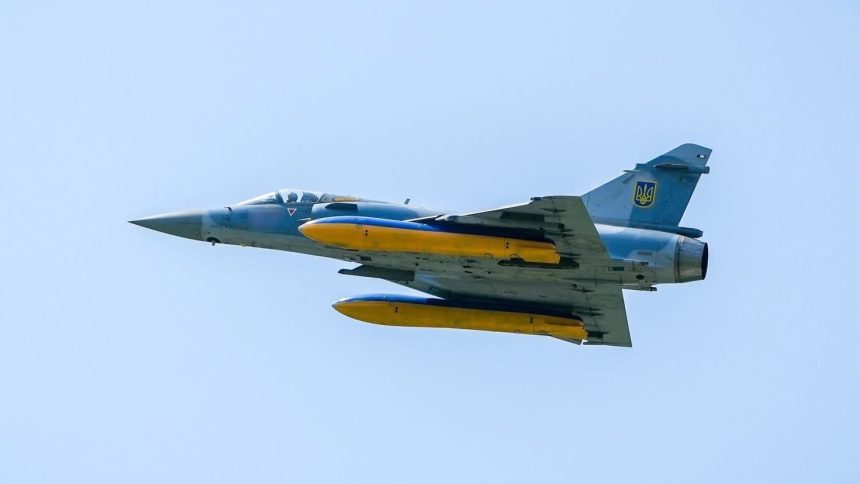
A Ukrainian Mirage 2000.
Explore further

Paris reportedly offers Athens a deal — 43 Greek Mirage 2000 jets for Ukraine, discounted Rafales in return

Christoph Bergs, an air power analyst at the Royal United Services Institute, told RFE/RL the fragmentation is a passing cost, not a fixed design. Kyiv wants to swap out its Soviet fleet entirely, he said, and the small batches of Gripens and Rafales arriving this decade will first cover "a transitionary, likely accelerated period of training and tactical integration."

Why Ukraine has no choice

The Soviet jets still at the core of Ukraine's fighting fleet became a liability after Russia seized Crimea in 2014 and cut off the flow of spare parts. Each year they keep flying, they grow harder to maintain and riskier to keep aloft. Kyiv cannot wait for one Western type to arrive in bulk while Russia attacks now, so it takes whatever allies will send, whenever they send it.

That is how the fleet became a patchwork—by wartime arithmetic, not design. F-16s came first because the US and its European operators had them in numbers and the parts to keep them airworthy. Mirages came because France had a few to spare. Gripens are coming because Sweden signed on for as many as 150, Rafales because Kyiv wants 100. Each deal made sense on its own, together, they hand Ukraine a training and maintenance load no peacetime planner would ever take on.

What the complexity buys

The mix pays Ukraine back in two ways. It builds combat air power faster because Kyiv accepts whatever airframe is available instead of waiting for a single standardized type. And it spreads the risk, so no lone supply cutoff or political reversal grounds the whole force. When Washington wavered over F-16 munitions and rules of engagement, the other jets kept flying.
1,500 British and French troops are heading to Poland in September—the first physical test of Europe’s plan to guarantee Ukraine’s security

16 juillet 2026 à 08:05

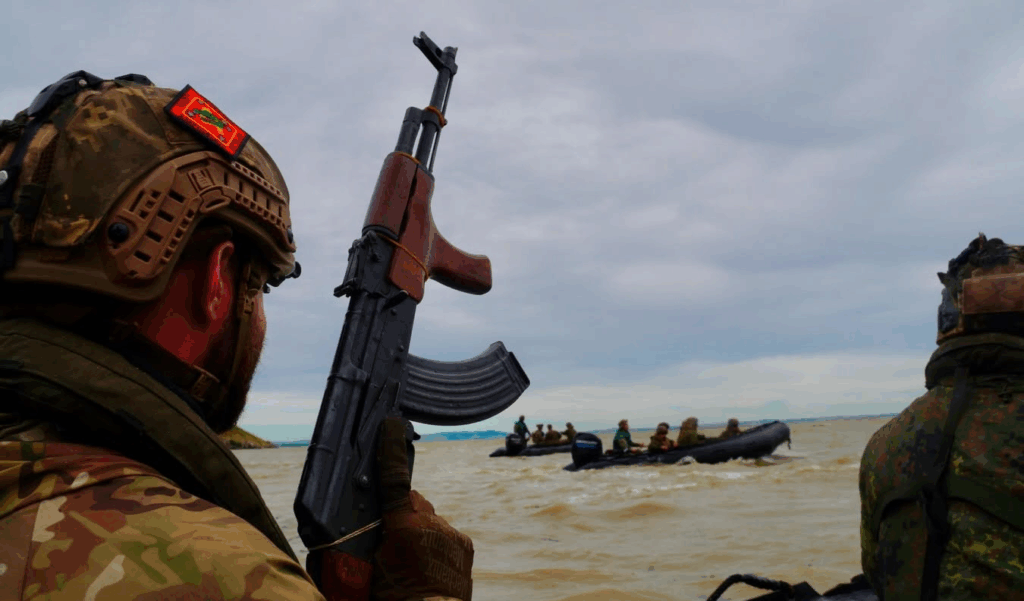
Ukrainian soldiers during the Sea Breeze 2026 exercises in Romania. Source: The 30th Marine Corps of the Ukrainian Navy

1,500 British and French troops will deploy to Poland in September for the first joint exercises of the Coalition of the Willing, Poland's Deputy Defense Minister Paweł Bejda said on TVP Info. The maneuvers will focus on moving troops and equipment at scale—transport and logistics, not combat.

"We are preparing for operations connected with the transfer and transport of forces. We want to show that we know how to do this," Bejda said.

The Coalition of the Willing was formed in March 2025 as a European-led framework to guarantee Ukraine's security after any ceasefire, and it has spent more than a year turning pledges into forces it can actually send. By April 2025, only six of 30 member countries had committed troops. British military planners floated a 64,000-strong force. European ministers doubted they could muster even 25,000. The September exercise puts the coalition's central promise—that Britain and France can lead a credible multinational force—to its first test with troops on the ground rather than in a communiqué.

Why logistics is the real test

Since Russia's full-scale war, Poland has handled 95% of allied military aid transiting to Ukraine, Bejda noted. The September drills rehearse that same task: moving forces and equipment through the corridor a security-guarantee force would rely on.

Poland's Defense Minister Władysław Kosiniak-Kamysz said the country is becoming the site of Europe's most important military exercises. Prime Minister of Poland Donald Tusk said the maneuvers would prepare the coalition for "real security guarantees for Ukraine, but also for the region."

What still isn't resolved

In February 2026, British and French paratroopers rehearsed rapid Ukraine deployment in Exercise Orion. Days earlier, a growing number of coalition members had privately conceded their troop contributions depended on Moscow's approval—effectively handing President of Russia Vladimir Putin a veto over the force meant to deter him.

Thank you. I was thinking of adding one more sentence at the end. Do you think that's enough, or is there anything else I should expand or improve?

Ukraine hit 147 Russian shadow-fleet ships in 10 days. Now Moscow is pulling its best drone unit off the front to guard the tankers, partisans say

16 juillet 2026 à 05:38

Russian shadow fleet tanker in the crosshairs of a Ukrainian drone in the Mediterranean Sea. Screenshot from video: hromadske

The Ukrainian partisan movement Atesh says Russia is responding by pulling scarce military units—including operators from its elite Rubicon (also spelled Rubikon) drone center—off other duties to guard the tankers. This comes as Ukraine struck 147 vessels of Russia's sanctions-dodging shadow fleet between 6 and 16 July, collapsing maritime traffic in the Sea of Azov and pushing the campaign into the Black Sea.

Russia's "shadow fleet" is a network of 1,400+ aging tankers used to move Russian oil in violation of Western sanctions and the G7 price cap. The ships fly flags of convenience, use opaque ownership structures, and engage in ship-to-ship transfers designed to obscure the oil's origin.

Oil is Russia's largest export earner and the financial foundation of its war. The shadow fleet is how Moscow keeps that revenue flowing despite sanctions—and, increasingly, how it moves fuel to Russian forces in occupied Ukraine, including Crimea, amid the fuel crisis Ukrainian strikes have created.

Through 2026, Ukraine has turned cheap drones into a blockade of that revenue at both ends—the refineries that turn oil into cash, and the tankers that move it. Between 6 and 15 July, Ukrainian drones struck 136 vessels of the shadow fleet across the Sea of Azov and the Black Sea, according to Unmanned Systems Forces commander Robert "Madyar" Brovdi. The past 24 hours added 11 more ships to the tally, according to the SBS' scoreboard.

Ship movements in the Sea of Azov dropped from 132 vessels on 6 July to 43 by 12 July, synthetic-aperture-radar imagery cited by the open-source channel Oko Gora showed.

The partisans inside Russia's own ranks

Atesh—"fire" in Crimean Tatar and Turkish—is a partisan movement of Ukrainians and Crimean Tatars operating inside Russia and Russian-occupied territory. It gathers intelligence on Russian military movements, recruits agents within Russian ranks, and passes targeting data to Ukraine's Defense Forces.

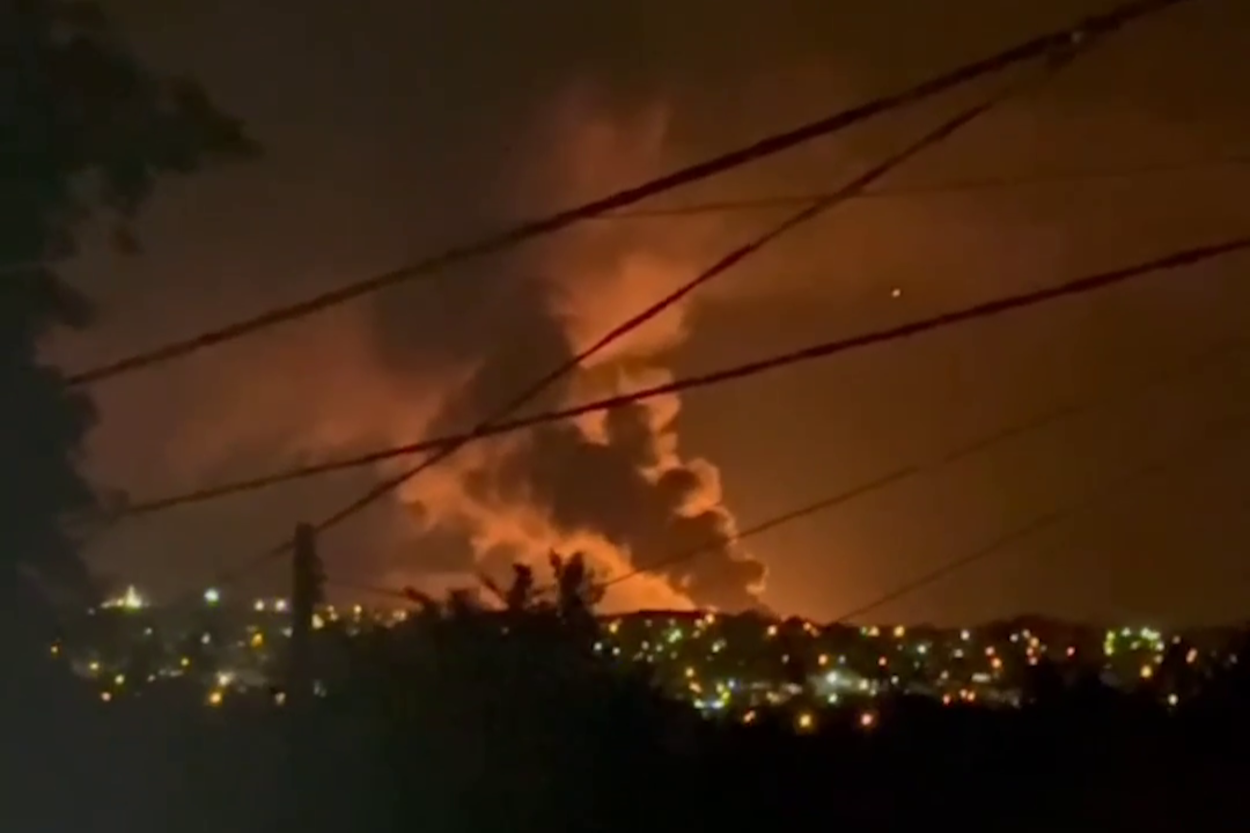
Smoke rising from the site of a Ukrainian strike somewhere around the Crimean Bridge, 21 June 2026. Screenshot from video: Zelenskyy
Explore further

Crimea occupation officials pack up as some reportedly flee to Russia on state fuel as Ukrainian strikes intensify, ATESH claims

Russia's best drone unit, reportedly set to guard tankers

An Atesh agent embedded at the Black Sea Fleet headquarters reportedly said Russia plans to redeploy scarce, high-value military units to protect its tankers in the Black and Azov seas. Among the units named are the operators from the Rubicon drone center, the 51st Air Defense Division, and the 1096th Anti-Aircraft Missile Regiment of the Black Sea Fleet.

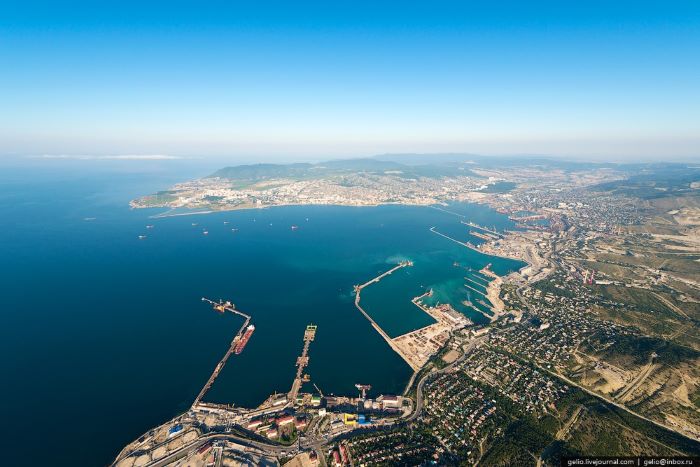
novorossiysk-sea-port-russia-
Explore further

Atesh partisans: Russia mines Novorossiysk harbor amid Ukraine’s maritime drone threats

According to the report, Russia plans to assign up to three service members to each tanker, armed with twin machine guns, man-portable air-defense systems (MANPADS), and anti-aircraft drones to repel Ukrainian drone attacks. Atesh framed the reported redeployment as evidence of the Russian command's alarm at the pace of losses:

"The reason for the command's panic is obvious," the group wrote, citing more than the 136 vessels struck in just over a week.

If accurate, the redeployment would carry a cost for Russia beyond the ships themselves. Rubicon— Russia's Center for Advanced Unmanned Technologies—is one of Moscow's most effective drone formations, built to disrupt Ukrainian logistics and hunt down drone operator teams. It has been a central element of Russia's pressure on the Pokrovsk axis. Pulling Rubicon operators to guard tankers would divert a scarce, specialized capability from the front line to defensive maritime duty—a reallocation Ukraine's campaign would have forced.

Ukraine built a sea denial with no navy

Ukraine has no conventional navy in the Black Sea. It has instead built sea denial from nothing, using unmanned systems alone—first driving the Russian Black Sea Fleet out of Sevastopol, now hunting the commercial fleet that funds the war. The shadow-fleet campaign extends that logic from warships to the economic infrastructure behind them.

Ukraine's drones hit 11 more shadow-fleet ships in a single day, pushing the 10-day total to 147

Ukraine's Unmanned Systems Forces (SBS) struck 11 vessels of Russia's sanctions-dodging shadow fleet on 16 July, commander Robert "Madyar" Brovdi said. The day's haul, in the Black… pic.twitter.com/4iZPIjoT2B

— Euromaidan Press (@EuromaidanPress) July 16, 2026

The strategic effect is already visible in Russia's export data: roughly 135 million barrels of Russian oil are now sitting in floating storage, loaded but undelivered, as buyers slow their liftings and tankers idle for weeks. Whether or not Russia specifically redirects Rubicon, the campaign has forced Moscow into a defensive posture over a maritime supply chain it previously treated as low-risk—assigning armed crews, escorts, and air defense to civilian tankers that were never built to be defended.

 "The shadow fleet will go to the bottom, following the Black Sea [Fleet]." Atesh closed its report 

❌