Vue normale

Reçu — 13 juillet 2026 Euromaidan Press
  • ✇Euromaidan Press
  • Ukraine hits 15 Russian vessels as drone blockade of Crimea spreads across Azov Sea
    Ukraine's drone blockade of Crimea widened across the Sea of Azov overnight on 12–13 July. The Unmanned Systems Forces said they struck 15 Russian vessels, nine energy nodes, and four air-defense assets. Commander Robert “Madyar” Brovdi said the maritime targets included seven tankers, five dry-cargo ships, one ferry, and two tugs. Censor reported that the same operation hit the “Crimea” electricity-transfer point on the Kuban-Crimea energy bridge for the second time in
     

Ukraine hits 15 Russian vessels as drone blockade of Crimea spreads across Azov Sea

13 juillet 2026 à 09:37

Russian ships burning after successful Ukrainian strikes on 12-13 July 2026.

Ukraine's drone blockade of Crimea widened across the Sea of Azov overnight on 12–13 July. The Unmanned Systems Forces said they struck 15 Russian vessels, nine energy nodes, and four air-defense assets.

Commander Robert “Madyar” Brovdi said the maritime targets included seven tankers, five dry-cargo ships, one ferry, and two tugs. Censor reported that the same operation hit the “Crimea” electricity-transfer point on the Kuban-Crimea energy bridge for the second time in 48 hours. Brovdi also claimed the destruction of an S-400 launcher, a Tor system, and two radar complexes. The damage could not be independently confirmed.
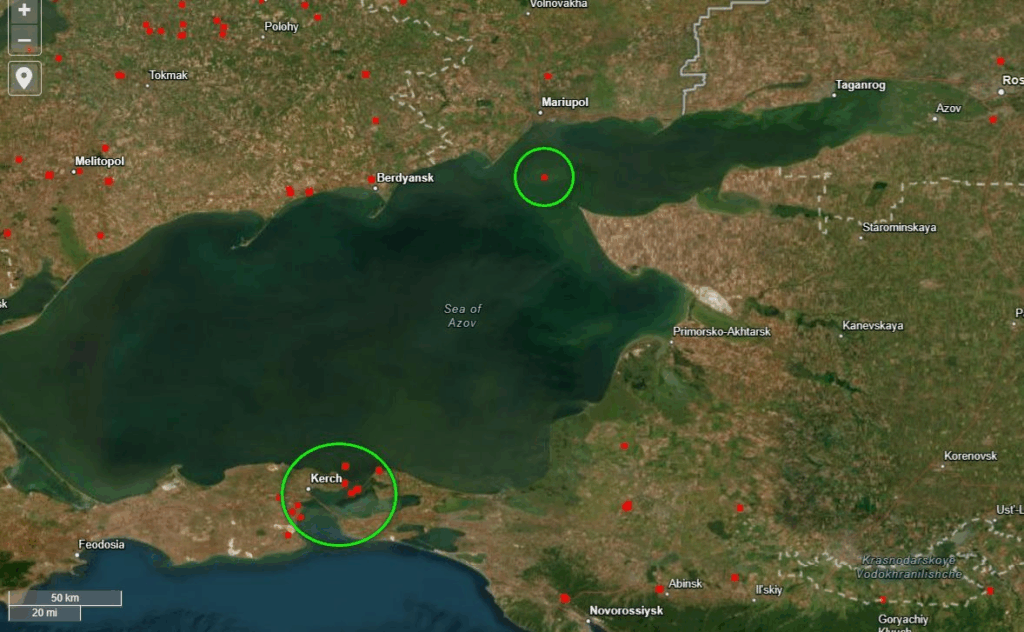
NASA FIRMS registered thermal anomalies across the Sea of Azov, including south of occupied Mariupol and around Kerch. Credit: NASA FIRMS.

RBC-Ukraine reported that NASA FIRMS satellite data showed thermal anomalies in the Sea of Azov and at the Port Kavkaz railway station, a transport hub serving routes to Crimea.

A wider FIRMS screenshot also showed a hotspot south of the occupied city of Mariupol. NASA FIRMS detects heat signatures but cannot determine their cause.
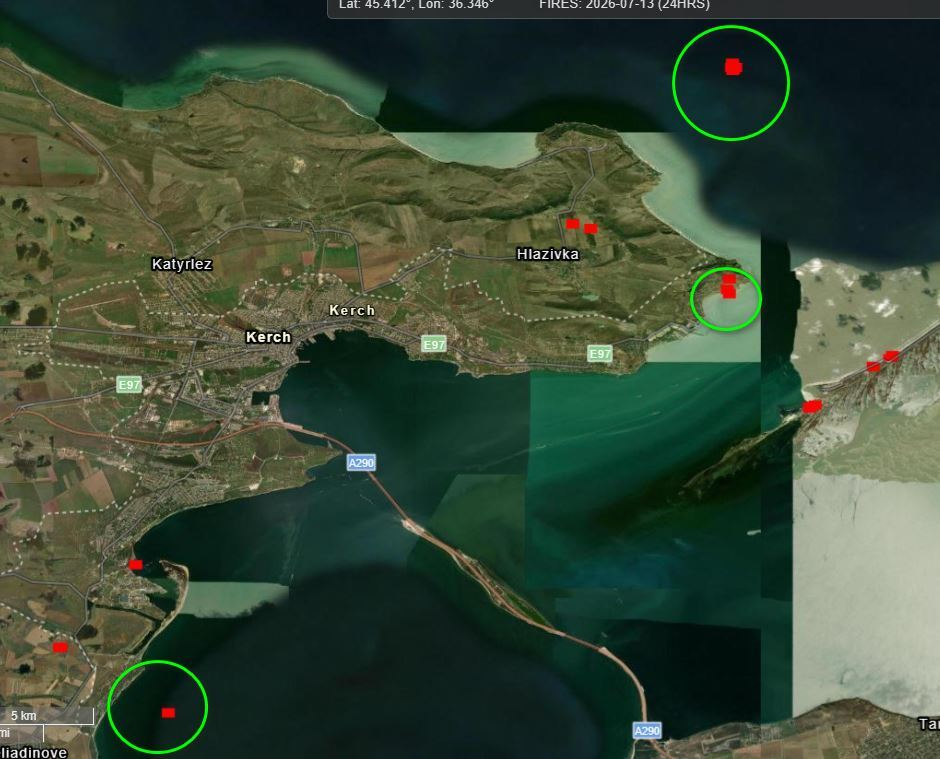
Thermal anomalies appeared north and south of Kerch following Ukraine’s overnight drone operation. Credit: NASA FIRMS.

The strikes targeted several parts of the network linking occupied Crimea to Russia. By hitting shipping, power infrastructure, and air defenses together, Ukraine is tightening the noose around occupied Crimea's supply lines. Each strike makes the remaining links harder to use.

Crimea.Realities reported that Russian authorities kept the Kerch Bridge closed for more than 11 hours, from 9:51 p.m. on 12 July until 9:06 a.m. the next morning. Local residents reported drones, air-defense fire, and explosions around Kerch throughout the closure

Citing the Crimean Wind monitoring channel, Ukrinform reported that fires broke out near Cape Fonar, where Russian air defense units are deployed.

How Ukraine tightened the ring around Crimea

The operation followed a week of strikes on the same routes. On 10 July, Ukrainian forces hit vessels, both Azov loading ports, five oil depots, and Crimea’s power grid.

Russia then halted traffic through the Don-Azov shipping channel and stopped accepting requests for passage through the Kerch Strait. By 12 July, the Unmanned Systems Forces said they had struck 90 vessels in seven days. Brovdi put the total for 6–13 July at 105 successful strikes on vessels.

  • ✇Euromaidan Press
  • New York Times: Russian spies used Japan to source technology for war
    Russia has turned Japan into a key base for obtaining high-tech equipment to sustain its war against Ukraine. A New York Times investigation reveals how GRU military intelligence operatives work under cover in Tokyo to acquire banned components for Russian weapons. The investigation found that officers from Russia’s GRU military intelligence service operated in Japan under diplomatic and commercial cover. GRU officers sought to acquire electronics, machine tools and oth
     

New York Times: Russian spies used Japan to source technology for war

13 juillet 2026 à 07:10

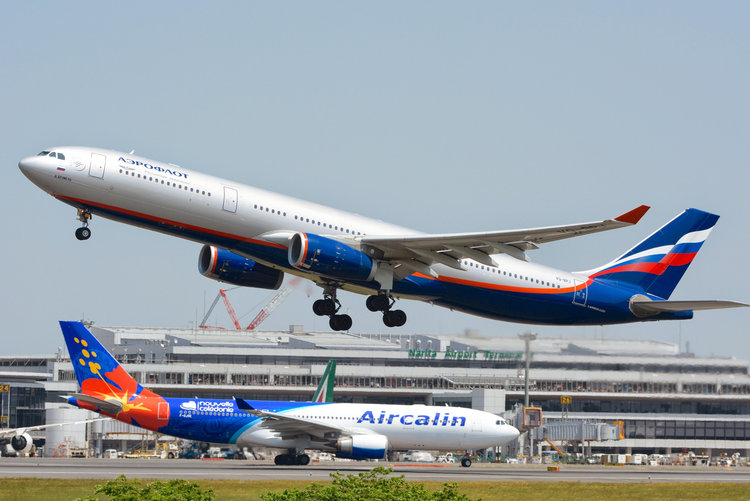
Aeroflot Airbus A330 at Narita Airport, illustrating the airline’s reported role as cover for Russian industrial espionage in Japan.

Russia has turned Japan into a key base for obtaining high-tech equipment to sustain its war against Ukraine. A New York Times investigation reveals how GRU military intelligence operatives work under cover in Tokyo to acquire banned components for Russian weapons.

The investigation found that officers from Russia’s GRU military intelligence service operated in Japan under diplomatic and commercial cover. GRU officers sought to acquire electronics, machine tools and other technology for routing to Russia and use in weapons production.

At the center of the operation is the GRU’s little-known 20th Directorate, according to current and former Western intelligence officials interviewed by the Times.

One of its key figures is Maksim Vladimirovich Filchenkov, a 49-year-old GRU veteran who arrived in Tokyo in February 2024. He officially works for Russia’s state airline, Aeroflot.

Western officials told the Times that Filchenkov oversees the directorate’s work from an Aeroflot office about a 10-minute walk from Japan’s National Police Agency.

Russian and Soviet intelligence officers have used Aeroflot positions as cover for industrial espionage since the Soviet era.

The network reportedly relies on relationships with shipping and logistics companies. Russian agents send sensitive goods first to countries where Aeroflot still operates, then route them to Russia through intermediaries and misleading paperwork.

According to the Times, Filchenkov developed ties with Tokyo logistics company Proco Air. Proco Air denied knowingly transporting prohibited goods and has not faced charges of wrongdoing.

Japanese components continue to reach Russian weapons

Japan is especially valuable to Russia because of its large high-tech industry and comparatively weak espionage laws.

Ukraine has repeatedly warned Tokyo that Japanese-made components are reaching Russian weapons. Vladyslav Vlasiuk, Ukraine's presidential sanctions commissioner, said Japanese parts appear in around 90% of Russian cruise missiles, ballistic missiles and drones. Vlasiuk made the remarks to Kyodo News, as reported by 47News.

He also named 13 Japanese companies whose products had been found in Russian weapons. Kyiv is now pressing Tokyo to tighten export controls on civilian dual-use goods rerouted through third countries.

There is no evidence that Japanese manufacturers knowingly supplied Russia’s military. Components can pass through several distributors and countries before reaching Russian weapons producers.

❌