Sberbank has reported another jump in profit, on course to pay a dividend even bigger than the record one it handed shareholders earlier this summer. Shareholders in the European Union, the United States, and every other country Moscow calls “unfriendly” will not see a ruble of it.The bank earned more than 1 trillion rubles ($12 billion) in the first half of 2026 alone, up nearly a fifth on the year, a gain in an economy the Central Bank of Russia itself describes as only
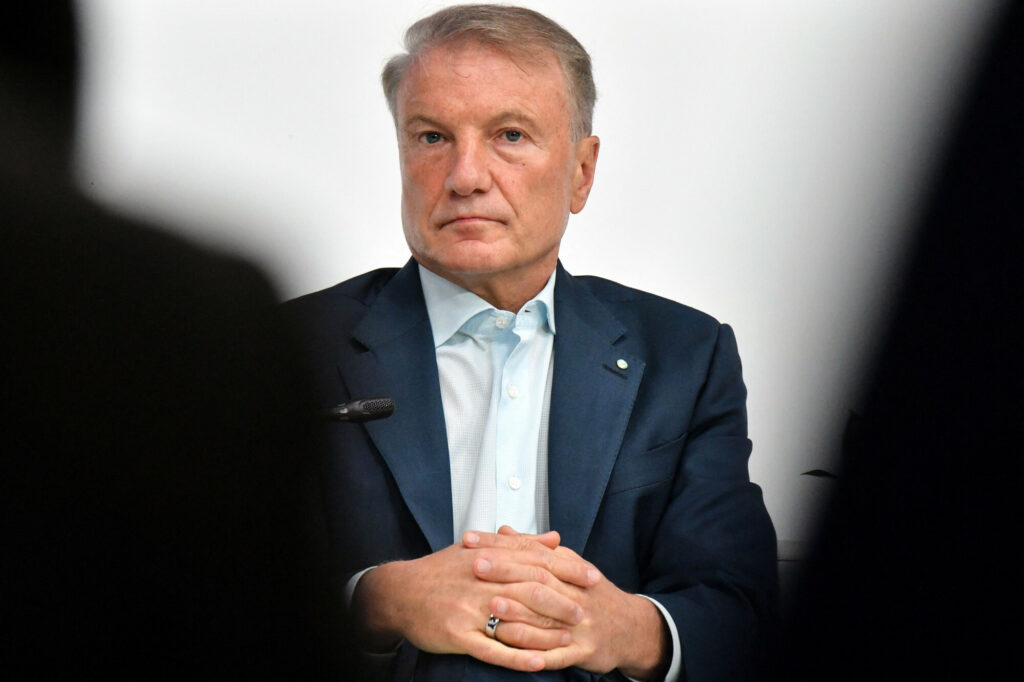
Sberbank has reported another jump in profit, on course to pay a dividend even bigger than the record one it handed shareholders earlier this summer. Shareholders in the European Union, the United States, and every other country Moscow calls “unfriendly” will not see a ruble of it.
The bank earned more than 1 trillion rubles ($12 billion) in the first half of 2026 alone, up nearly a fifth on the year, a gain in an economy the Central Bank of Russia itself describes as only moderateafter a downturn at the start of the year.
For a shareholder in New York or Frankfurt, none of it is money he can spend.
Full-year profit hit a third straight record in 2025. Sberbank pays out half its profit, and the dividend it set for 2025 was already the biggest it had ever paid.
For a shareholder in New York or Frankfurt, none of it is money he can spend. About a quarter of the 2024 payout was set aside in restricted “type-C” accounts for holders from “unfriendly” countries, and nothing has changed since: the dividend is credited to him and then locked.
The Russian state, which owns just over half of Sberbank, faces no such block. It collects roughly half of every payout, while its budget deficit runs past 6 trillion rubles ($71 billion) in five months.
Explore further
Russia’s oil money is drying up—so its own people are paying for the war
The market moves the other way
The records are landing on a market that has barely moved in four years. The MOEX index, the main gauge of the Moscow Exchange, had fallen 17 straight weeks by mid-July, its longest losing streak since 1997, back near where it stood the week Russia launched its full-scale invasion in February 2022; anyone who bought Russian shares at the start of the war has made almost nothing since.
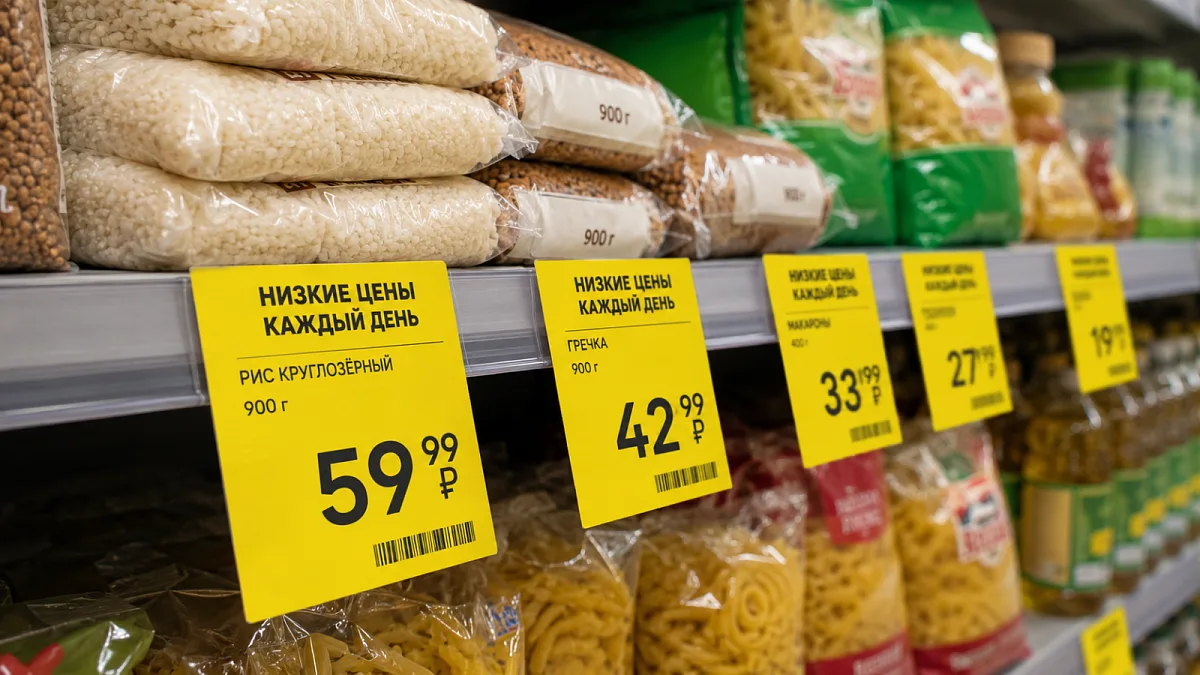
Sberbank yields more than 10% on paper, but the stock has fallen about 14% over the past year, so the record dividend does not even cover the price drop, and the foreign holder takes that loss without the payout that might soften it.
Moscow keeps tightening the lock
Russia built the type-C system in 2022 as a countermeasure to Western sanctions that froze its reserves abroad, and officials say the money stays until those reserves are freed.
Within that system, dividends owed to “unfriendly” foreigners are deposited into blocked ruble accounts that they can spend only on Russian taxes, government bonds, and fees.
In June 2026, the block reached ordinary bank deposits after a few words were added to the founding decree: “bank deposits (deposits).” Repayments and interest above 10 million rubles (about $120,000) a month now go the same way.
One court opens a crack
In a ruling dated 14 April 2025, the Supreme Court held that a bank cannot refuse to swap an investor’s frozen depositary receipts—certificates that stand in for shares held abroad—for the actual Russian shares, merely because those securities sit in a blocked type-C account.
A Moscow court then sided with the investor, Vladimir Pelevin, and fined Raiffeisenbank for the delay. The ruling allows a holder to swap receipts for shares, but it does not affect the dividends those shares pay, which still land in type-C.
A compensation scheme, based on a March 2024 decree, pays out only when no “unfriendly” foreigner is anywhere in the ownership chain.
A draft law before Russian lawmakers would allow the state to seize the balances in type-C accounts outright. The decree that created them, in 2022, is titled “On the temporary procedure.”
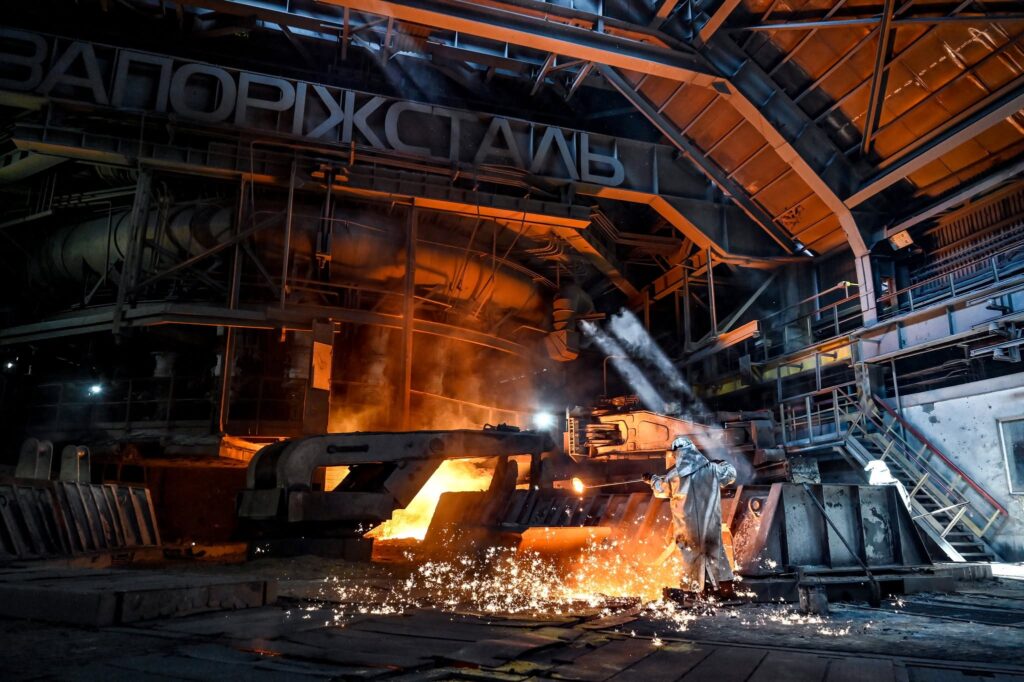
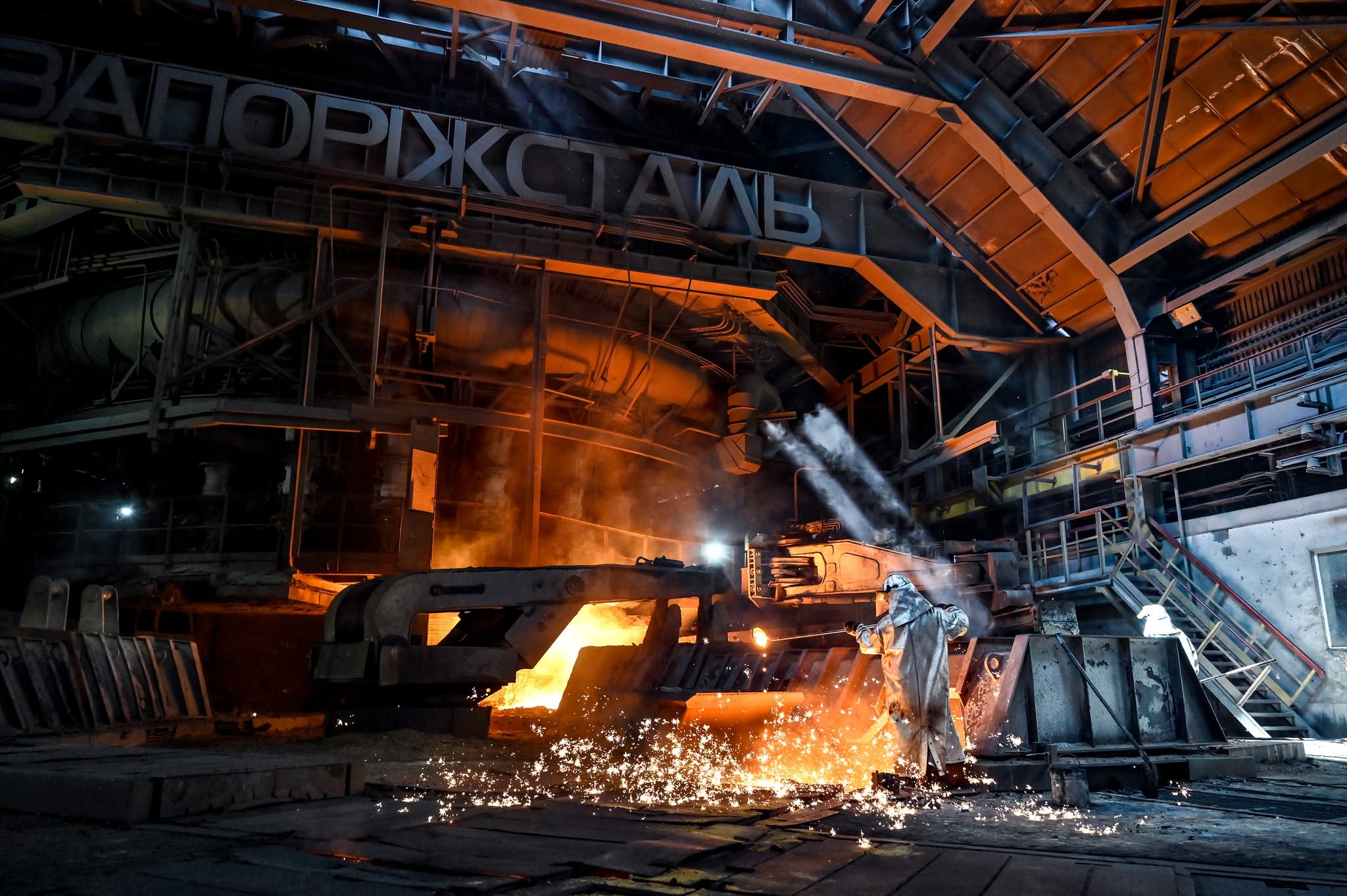
Ukraine’s Zaporizhstal plant plans to shift much of its output to lower-value pig iron to keep exporting under the European Union’s new steel quotas. The move would idle up to half the plant’s capacity, its parent company, Metinvest, says.
Ukraine’s new allowance runs to roughly 1 million metric tons, about 60% below its 2025 shipments to the bloc.
The EU says the quotas shield its own producers from a global steel surplus. For Ukraine, whose steel entered duty-free
Ukraine’s Zaporizhstal plant plans to shift much of its output to lower-value pig iron to keep exporting under the European Union’s new steel quotas. The move would idle up to half the plant’s capacity, its parent company, Metinvest, says.
Ukraine’s new allowance runs to roughly 1 million metric tons, about 60% below its 2025 shipments to the bloc.
The EU says the quotas shield its own producers from a global steel surplus. For Ukraine, whose steel entered duty-free after Brussels lifted tariffs after the 2022 invasion, they land on an industry already hit repeatedly by Russian strikes and cut off from the sea. The tariff-free quota fell by half on 1 July, with a 50% duty on anything above it.
Ukraine’s new allowance runs to roughly 1 million metric tons, about 60% below its 2025 shipments to the bloc, the Kyiv consultancy GMK Center calculates.
Steel makes up about 15% of Ukraine’s exports, and the EU buys close to four-fifths of it. The country’s Federation of Employers estimates the curbs could cost $1.2 billion in foreign earnings and cut GDP by 0.6%.
Falling back on pig iron
Pig iron, a semi-finished product, falls outside the quota, so lifting its share keeps the furnaces earning. But the switch would force the plant to reassign the workers behind those idled lines, Oleksandr Myronenko told Reuters. “Instead of support from the European Union, we face restrictions,” said the Metinvest chief operating officer.
Ukrainian mills cannot easily sell elsewhere: they are less efficient than cheaper Turkish and Chinese suppliers and are undercut in Europe’s own market, Myronenko said.
With the Black Sea route closed, importing coking coal through other European ports now runs $30 to $40 more a metric ton. Rail freight rose 30% this month, and an EU carbon charge has been applied to steel imports since 1 January.
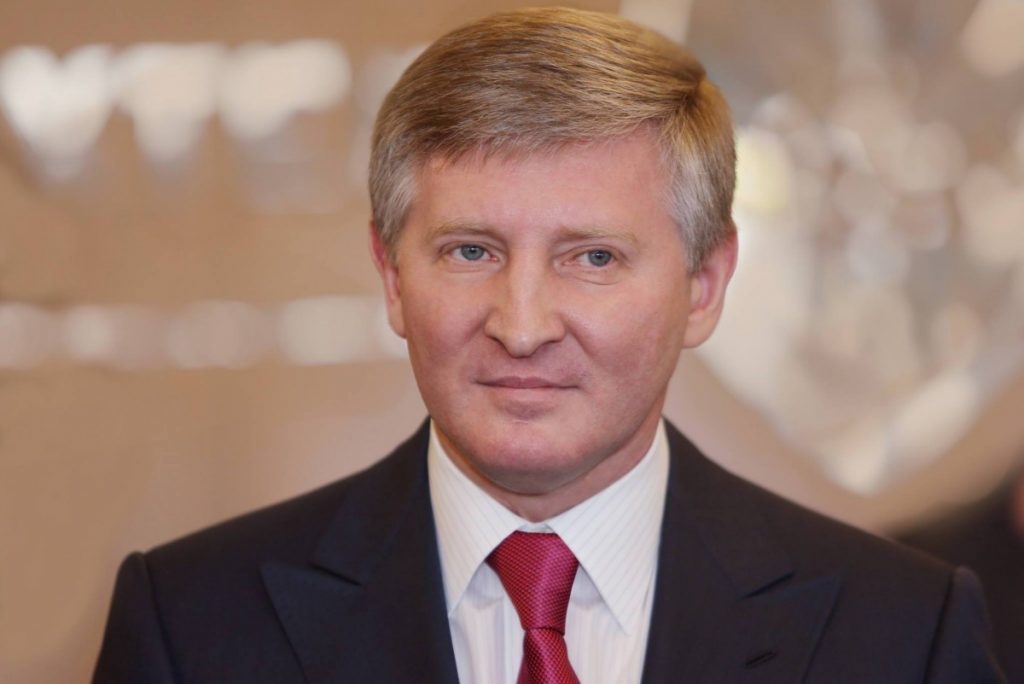
Ukrainian businessman Rinat Akhmetov is the majority owner of Metinvest. Photo: open source
A strike, and a plan in doubt
A Russian ballistic missile killed seven Zaporizhstal workers and shut the plant on 11 August.
Explore further
North Korean ballistic missile kills 7 steelworkers on their way to shelter, shuts down Zaporizhstal plant
The fate of Metinvest’s $8 billion, 15-year plan to convert to cleaner “green steel” is unclear; Myronenko called the modernization unrealistic in wartime. Zaporizhstal is the largest employer in the Zaporizhzhia region and, with the rest of Metinvest, is majority-owned by Rinat Akhmetov, Ukraine’s richest man.
On the plant floor, senior foreman Artem Kalinevych said: “As of today it’s not clear what comes next.”
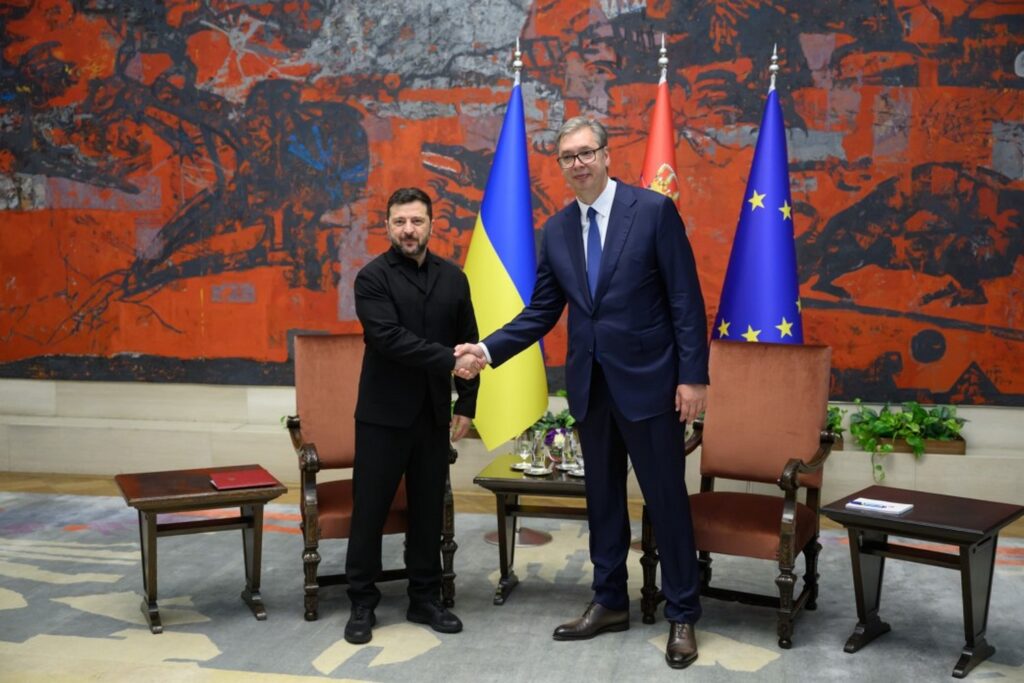
During President Volodymyr Zelenskyy’s recent visit to Serbia, he was asked whether Belgrade could continue to count on Ukraine’s position on Kosova. Zelenskyy reaffirmed that position, saying that Ukraine respects Serbia’s territorial integrity and international law and that its stance on Kosova’s “unilateral declaration of independence” remains unchanged.
Explore further
During President Volodymyr Zelenskyy’s recent visit to Serbia, he was asked whether Belgrade could continue to count on Ukraine’s position on Kosova. Zelenskyy reaffirmed that position, saying that Ukraine respects Serbia’s territorial integrity and international law and that its stance on Kosova’s “unilateral declaration of independence” remains unchanged.
Explore further
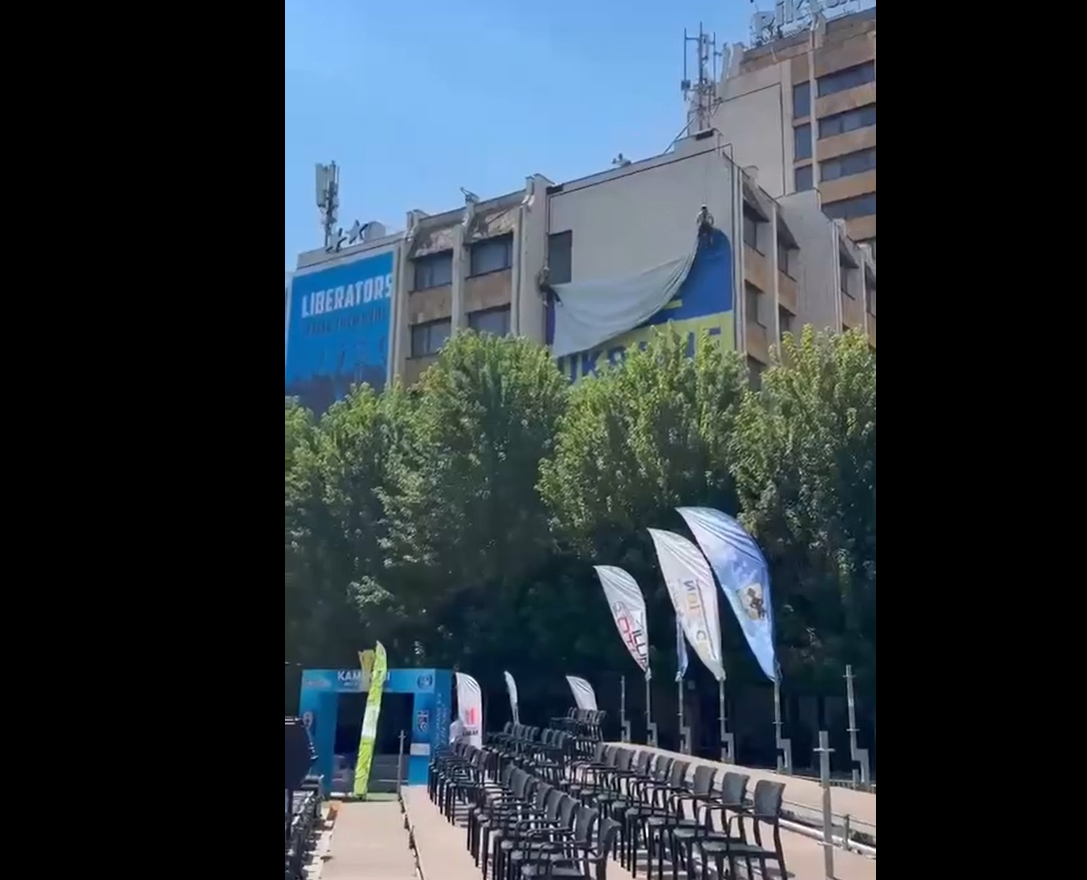
Zelenskyy’s Kosovo comments in Belgrade prompt flag removal in Prishtina
For many Kosovars, who have stood firmly with Ukraine since Russia’s full-scale invasion, this is difficult to understand. There is particular pain in hearing President Zelenskyy appear to dismiss what Kosovars endured—when it is precisely that memory of war, displacement, and atrocities that made Kosova one of Ukraine’s most instinctive supporters.
Kosova emerged from an international process designed to resolve a conflict; Russia manufactured “independence” as an instrument of conquest.
The danger of “unilateral”
There is a big problem with the way Kosova is being discussed by President Zelenskyy. Describing its independence simply as a “unilateral declaration” removes everything that matters about how Kosova actually became independent.
It also plays directly into an argument Vladimir Putin has been making for years: if the West accepted Kosova, why should it reject what Russia has done in Crimea, Donetsk, or Luhansk?
Ukraine should be dismantling that argument, not inadvertently reinforcing it. Kosova’s declaration was unilateral in one narrow sense: Serbia did not consent. But Ukrainians should understand the problem with treating the aggressor’s consent as the decisive test.
Imagine telling a community in Ukraine devastated by Russian forces that Moscow must retain a permanent veto over the political settlement that determines its future.
Kosova’s path to independence
Kosova did not simply decide one day in 2008 to break away from Serbia. The declaration came at the end of a process that had lasted years. Kosova’s path to statehood came through the violent dissolution of Yugoslavia, a federation that ultimately fragmented into seven independent states, and after years of systematic repression of Kosova’s overwhelmingly Albanian population. The culmination was the 1998–99 Kosova war.
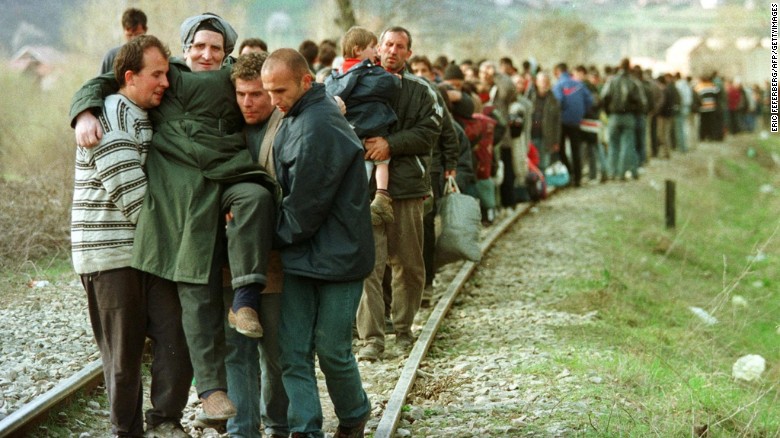
Serbian and Yugoslav forces conducted a campaign of violence and forced displacement against Kosovar Albanians. Nearly 800,000 people were expelled from Kosova in a matter of months because of a violent ethnic cleansing campaign of the Serbian army against Kosovars.
Hundreds of thousands more were internally displaced. Thousands of civilians were killed, cities and villages burned, homes destroyed, and women subjected to sexual violence.
Kosovar refugees fleeing their homeland. 01 March 1999, Blace area, the former Yugoslav Republic of Macedonia. Photograph: UN Photo
When the war ended in 1999, Kosova did not declare independence. Nor did Albania invade Kosova and annex it. Instead, Kosova was placed under UN Security Council Resolution 1244. For almost nine years, its institutions developed under international administration while its final status remained unresolved.
And then there were negotiations. UN Secretary-General Kofi Annan appointed former Finnish President Martti Ahtisaari to lead talks between Belgrade and Pristina over Kosova’s final status. After those negotiations failed to produce an agreement, Ahtisaari concluded that returning Kosova to Serbian rule was no longer a viable option and recommended internationally supervised independence.
This matters because Kosova’s declaration in February 2008 did not reject that international process. It embraced it. The declaration committed Kosova to implementing the Ahtisaari settlement and invited continued international involvement, including an EU rule-of-law mission and NATO’s security presence.
Call the final declaration unilateral if you wish. The process that produced it was anything but.
What the ICJ found
Even after independence, the issue was subjected to further international scrutiny. At Serbia’s initiative, the UN General Assembly asked the International Court of Justice to examine the declaration. In 2010, the court concluded that Kosova’s declaration “did not violate international law.” It also found that it did not violate UN Security Council Resolution 1244.
None of this means Kosova’s path to independence was simple or uncontested. Clearly, it was not. But reducing this history to the word “unilateral” creates precisely the opening Russia needs to manufacture a parallel with Ukraine.
Crimea breaks the comparison
Putin has used Kosova for years to claim that the West created a precedent Russia merely followed: Kosova separated from Serbia without Belgrade’s consent, so why should Crimea be different? Because that is clearly where the similarity ends.
Crimea, Donetsk, and Luhansk were annexed following a Russian invasion. Moscow occupied Ukrainian territory, installed or backed proxy authorities, staged referendums under military occupation, and ultimately claimed Ukrainian land as its own.
Kosova emerged from an international process designed to resolve a conflict; Russia manufactured “independence” as an instrument of conquest. Ukraine should insist on that distinction every time Moscow invokes Kosova.
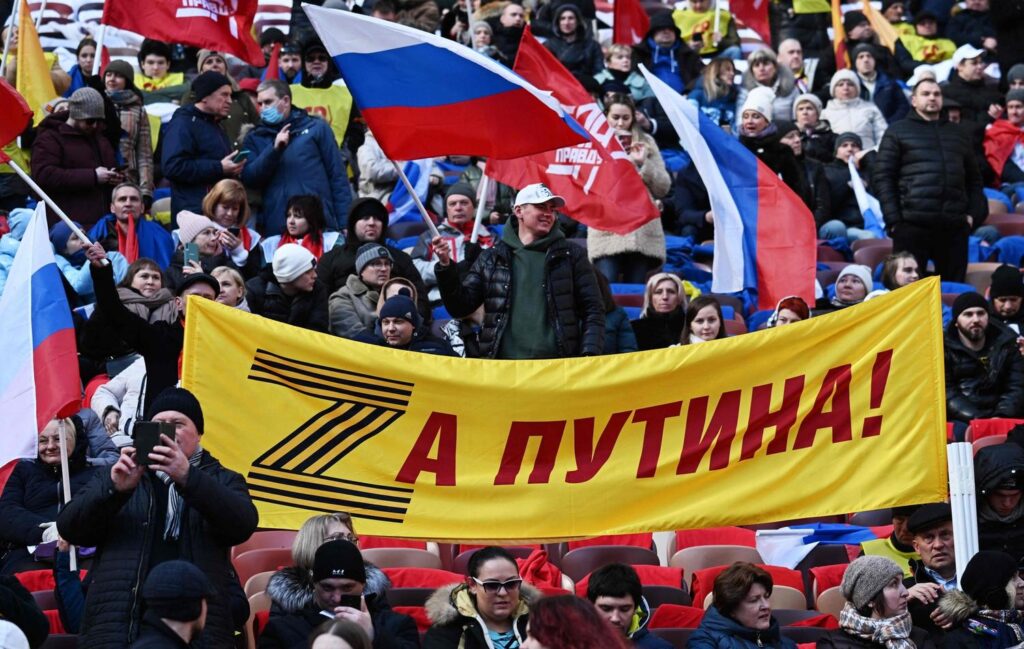
People gather for a concert marking the eight anniversary of Russia's annexation of Crimea at the Luzhniki stadium in Moscow on 18 March 2022. - The banner bearing the letter "Z" in the colours of the ribbon of Saint George, which has become a symbol of support for Russian military action in Ukraine, reads "For Putin!" (Photo by Pavel BEDNYAKOV / various sources / AFP)
Ukraine understandably approaches Kosova cautiously. A country fighting for its territorial integrity is wary of anything that might appear to weaken that principle. But acknowledging the exceptional circumstances of Kosova does not weaken Ukraine’s argument. Treating Kosova and Crimea as comparable cases does.
Russia wants Kosova to be its precedent. Ukraine does not have to accept the premise. Ukraine, in fact, has a particular interest in explaining the difference, because Ukrainians know better than almost anyone what Russian-manufactured "self-determination” actually looks like. That is not Kosova’s story.
Kosova chose Ukraine first
There is also an irony here that is difficult for Kosovars to ignore. Kosova has stood with Ukraine since the beginning of Russia’s full-scale invasion. It imposed sanctions against Russia and Belarus, provided assistance to Ukraine, and offered refuge to Ukrainian journalists.
It did all of this without being recognized by Kyiv—Kosovars did not need recognition to know which side they were on.
Ukraine’s experience resonates deeply in Kosova. We know what it means to live through war and displacement. We also know what it means when a larger neighbor invokes history to argue that it has the right to determine your future.
That does not make the two cases identical—but it should make Ukrainians skeptical when Russia tries to turn Kosova into a justification for its own imperial project.
The Ukrainian flag is removed from a public display in Pristina after President Volodymyr Zelenskyy reaffirmed Ukraine’s support for Serbia’s territorial integrity. Video still: Përparim Rama/Facebook.
Kosovars did not expect President Zelenskyy to arrive in Belgrade and announce that Ukraine had suddenly changed its position on Kosova. But it is reasonable to expect Kyiv to revisit its approach to Kosova and to recognize the process by which Kosova came to be, a process that Ukraine’s closest allies today understood, supported, and ultimately recognized.
That requires abandoning a framing that reduces Kosova’s history to a “unilateral declaration” and inadvertently gives credibility to the parallel Russia has spent years trying to construct. For Kosovars, the hope is that a more honest understanding of that history will eventually lead Ukraine to reconsider recognition, too.
Not as a reward for Kosova’s support for Ukraine, but as the natural outcome of seeing Kosova on its own terms rather than through the precedent Moscow wants it to be.
Putin has spent years trying to make Kosova his precedent. Ukraine should take that argument away from him. Doing so would bring Kyiv closer to the position of the allies standing beside it today—and perhaps, in time, recognition would follow.
Nezir Sinani is executive director of the B4Ukraine Coalition, an alliance of more than 100 civil society organizations pressing companies and financial institutions to stop enabling Russia’s war against Ukraine. A longtime Kosovar activist, his work is rooted in Kosova’s own experience of war and displacement.
Editor's note. The opinions expressed in our Opinion section belong to their authors. Euromaidan Press' editorial team may or may not share them.
Since mid-July, Ukrainian drones have burned their way through the warehouses of Wildberries, Russia’s answer to Amazon, and how much of it is gone has become a question with too many answers.Estimates in circulation range from a fifth of the company’s network to well over half, and they clash because each counts something different.
Only by sorting out what each figure measures can you see what the campaign has actually done—and what it has done is heavier, where it co
Since mid-July, Ukrainian drones have burned their way through the warehouses of Wildberries, Russia’s answer to Amazon, and how much of it is gone has become a question with too many answers.
Estimates in circulation range from a fifth of the company’s network to well over half, and they clash because each counts something different.
Only by sorting out what each figure measures can you see what the campaign has actually done—and what it has done is heavier, where it counts, than the modest numbers suggest.
Ukraine has concentrated its drones on a couple of dozen hubs that move most of the goods, while the hundreds of small depots that pad the total remain mostly untouched.
Wildberries’ network is scattered across hundreds of small sorting points that would hardly be missed if one burned.
Wildberries is no marginal target. Nearly half of everything Russians buy online runs through it, a marketplace as woven into daily life there as Amazon is in the West. And Kyiv is not burning it for the sneakers.
Estonian military intelligence reports that Wildberries, though not a military firm, supplies the Russian armed forces with kit bought straight off the platform—body armor and drone parts—a case Ukraine makes too. Wildberries denies it.
Yet once the strikes began, the company pulled its “SVO” tag, the label that had gathered those goods in one place, while the goods stayed on sale under other categories; it also barred warehouse workers from carrying camera phones.
Explore further
Russia’s largest retailer is taking cameras away from its own workers month after eight of its warehouses burned
Count the hubs, and the damage jumps
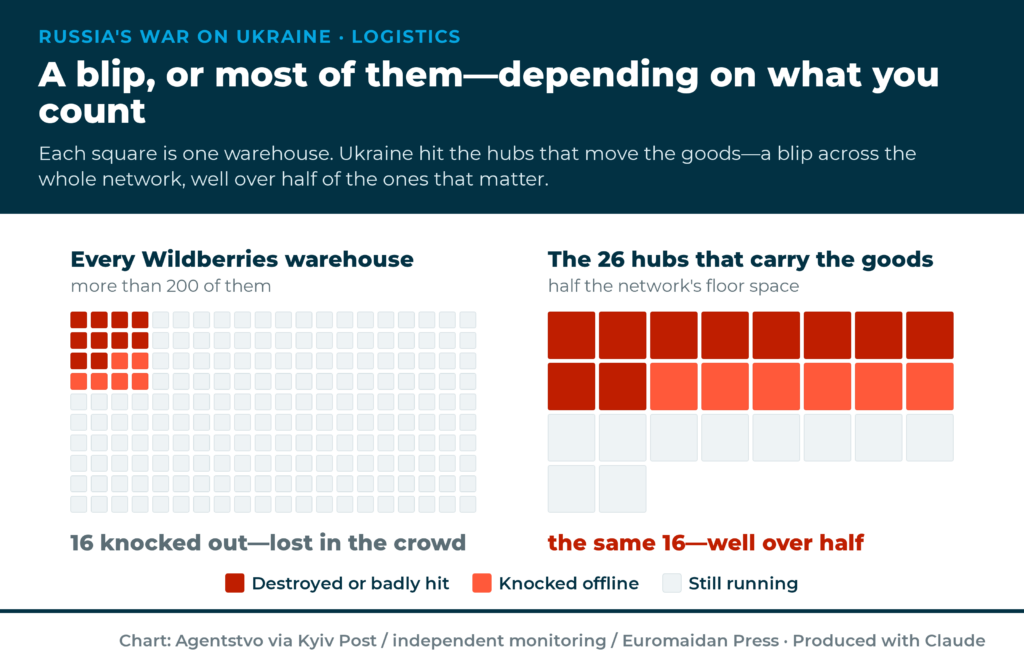
The clash comes down to the word “network.” Most of Wildberries’ floor space is scattered across small sorting points that would hardly be missed if one burned. Set the damage against all of it, and the loss—about a fifth—looks minor.
But the parcels move through these two dozen hubs that hold more than half the company’s space, and those are the ones Ukraine has hit: more than a third are damaged, and by another count, well over half are out of action. It is the same campaign counted in two ways, and only the second shows its aim.
The gap between a building’s size and its damage is easy to miss, and the biggest hub shows how. Koledino, outside Moscow, covers more than 200,000 square meters, and that number keeps getting logged as a loss.
It shouldn’t be. When a drone came down there on 28 July, the fire took a neighboring warehouse—a separate operator that stocks shelves for chains like Lenta and Auchan—while the Wildberries hub kept working.
Ukraine has concentrated its drone strikes on the major hubs that move most of Russia's goods. Measured against all 200-plus Wildberries warehouses, the damage looks like a blip; measured against the largest hubs, it takes out well over half. Chart: Agentstvo via Kyiv Post / independent monitoring / Euromaidan Press · Produced with Claude
Damage reaches beyond the warehouses
The Wildberries strikes are one arm of a declared campaign. On 25 June, Zelenskyy announced a 40-day operation to pressure Russia to end the war.
The cost runs beyond floor space. At least eight people have been killed in the strikes so far—warehouse staff and residents caught near the hubs when the drones came down. And the pressure is pushing the company outward: Wildberries is scouting for storage in Kazakhstan, hunting warehouse space beyond the reach of Ukrainian drones.
Explore further
Ukraine’s strikes gave Kazakhstan leverage over Russian retail giant Wildberries
The fires have become a line in Russia’s budget. The Kremlin is weighing state loans to keep Wildberries upright—at a point when the federal deficit had, halfway through 2026, already outrun the shortfall the Treasury set aside for the entire year.
Oil and gas revenue, the Kremlin’s main source of war funding, keeps falling short. Russia appears unwilling to let a company this central fail. Paying to save it, hub by burned hub, is the bill Ukraine is now handing Moscow.
Moldova has overtaken Poland and Germany to become the largest foreign buyer of Ukrainian dairy products in the first seven months of 2026. It is not the win it sounds like.A country of some 2.5 million people now buys more Ukrainian dairy than any EU member, as falling European prices make EU sales less attractive and cheap imports capture a growing share of Ukraine’s home market.
Ukraine now buys about as much dairy from abroad as it sells—unusual for a country used t
Moldova has overtaken Poland and Germany to become the largest foreign buyer of Ukrainian dairy products in the first seven months of 2026. It is not the win it sounds like.
A country of some 2.5 million people now buys more Ukrainian dairy than any EU member, as falling European prices make EU sales less attractive and cheap imports capture a growing share of Ukraine’s home market.
Ukraine now buys about as much dairy from abroad as it sells—unusual for a country used to exporting it.
Why the EU sales stopped paying
Over that period, the Association of Milk Producers reports, dairy exports shrank by almost a fifth in value against last year, while imports rose by more than a third. Ukraine now buys about as much dairy from abroad as it sells—unusual for a country used to exporting it.
What pushed producers toward a small neighbor rather than the EU was price: European wholesale prices for butter and milk powder fell throughout the summer, until selling into the EU stopped paying. The association expects that to reverse only if prices climb again in the autumn.
The pull shows up most in butter, where Moldova is now the largest butter buyer, taking more than four of every ten kilograms Ukraine exports, even as the total shrinks.
Explore further
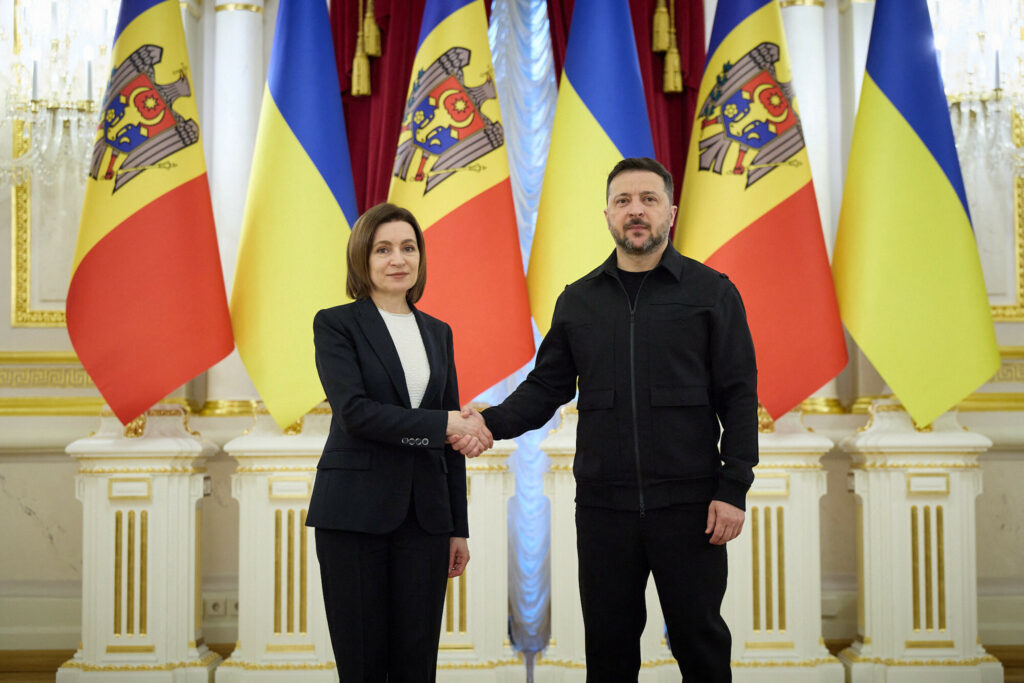
Ukraine and Moldova discuss rail corridor for grain amid Russian Black Sea attacks
Cheaper cheese from Poland and other EU states now feeds more than half of Ukraine’s cheese market, up from under 40 percent at the start of 2025, and Ukrainian cheesemakers have cut production rather than compete.
According to the association, a large share is declared as humanitarian aid, allowing it to enter without being tested, without Ukrainian labels, and free of duties and VAT. The association estimates that this costs the budget at least 730 million hryvnias ($16 million) a year.
Moldova subsidizes its own dairy farmers for every liter of milk they sell, yet it now buys more Ukrainian dairy products than any other country.
Russia’s war budget got a brief respite this spring, when the Iran war pushed oil prices up. By July, it was gone. A single month swung from a rare surplus to an $8.8 billion deficit, leaving the seven-month shortfall already bigger than the entire deficit Russia ran last year, with five months still to run.As oil money drains away, the Kremlin is covering the gap by taxing ordinary Russians harder and eyeing their savings.
Moscow will not run out of cash soon, but it i
Russia’s war budget got a brief respite this spring, when the Iran war pushed oil prices up. By July, it was gone. A single month swung from a rare surplus to an $8.8 billion deficit, leaving the seven-month shortfall already bigger than the entire deficit Russia ran last year, with five months still to run.
As oil money drains away, the Kremlin is covering the gap by taxing ordinary Russians harder and eyeing their savings.
Moscow will not run out of cash soon, but it is running out of politically affordable ways to raise it.
Oil-and-gas income, long the war’s financial engine, fell by about a sixth from a year earlier to 4.6 trillion rubles ($56 billion), Finance Ministry figures show. Spending outpaced revenue, with state procurement up by nearly two-fifths.
The hole was plugged by value-added tax, whose receipts jumped by a quarter after Moscow raised the rate to 22% at the start of the year—a tax levied on ordinary Russians’ spending, not on oil prices or economic growth.
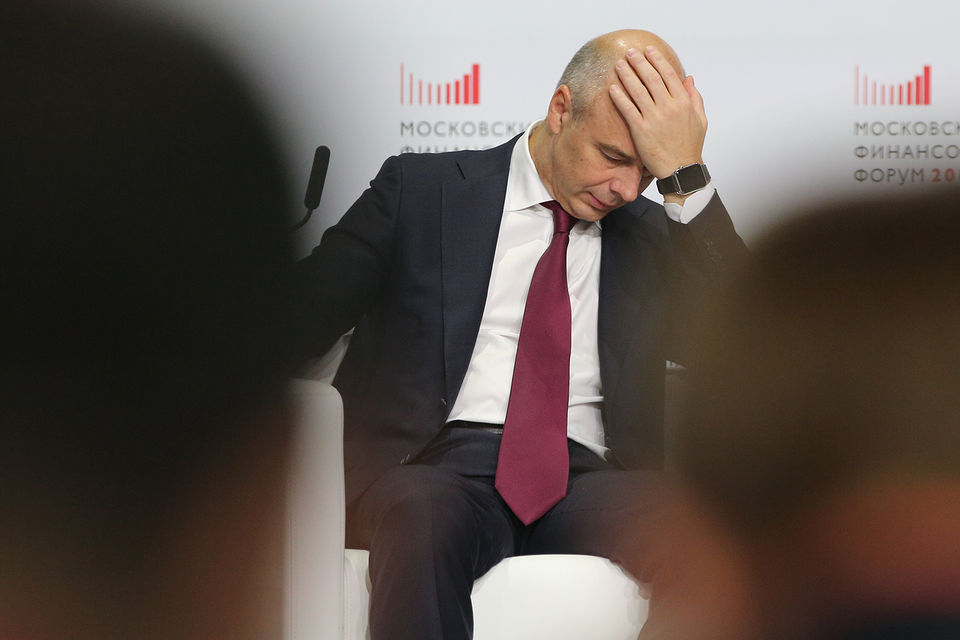
Anton Siluanov, Russian Finance Minister. Photo: vedomosti.ru
One month of relief, then the gap reopened
The reprieve proved brief. July’s deficit followed June’s surplus even though spring’s higher oil prices should have cushioned the books, Bloomberg calculations showed.
Russia’s oil revenues collapse 24% as global prices slide further (INFOGRAPHICS)
With the economy barely growing in the first half, a second-half recession could knock out another chunk of tax revenue just as the shortfall widens. Yaroslav Kabakov of the Finam brokerage expects the full-year deficit to approach double last year’s by year-end. Even as revenue shrinks, the military reportedly wants roughly 40% more than planned.
Borrowing, the other fallback, is jamming too. Russia suspended government bond auctions in July after investors balked and it could no longer raise money cheaply at home, even as Finance Minister Anton Siluanov vowed to shield defense and social spending.
Moscow shifts the burden to households
The burden is shifting onto households. The VAT rise alone will raise about $13 billion a year—barely a month of military spending—yet, unlike seizures aimed at billionaires, it reaches nearly every Russian, columnist Agathe Demarais wrote in Foreign Policy.
A draft law would allow the state to move around $40 billion from private pension accounts, and Communist leader Gennady Zyuganov has urged Vladimir Putin to tap the savings Russians hold in banks. Moscow will not run out of cash soon, Demarais argued, but it is “running out of politically affordable ways to raise it.”
Ordinary Russians are already moving their money. Through the first half of 2026, they withdrew cash from the banking system at the fastest pace since the pandemic, and the Central Bank has begun allowing banks to flag and freeze “suspicious” withdrawals, Euromaidan Press reported.
Ukraine’s sustained drone strikes on Russian refineries have reversed the country’s position as a net fuel exporter. Moscow now imports gasoline from as far as India and Morocco while rushing crude oil through the Arctic to reach Asian buyers it can no longer supply with finished fuel. The flows are scaling up—and running on the same sanctioned, EU-listed tankers.The reversal is tightening global fuel markets. Russia runs the world’s third-largest refining industry, and th
Ukraine’s sustained drone strikes on Russian refineries have reversed the country’s position as a net fuel exporter. Moscow now imports gasoline from as far as India and Morocco while rushing crude oil through the Arctic to reach Asian buyers it can no longer supply with finished fuel. The flows are scaling up—and running on the same sanctioned, EU-listed tankers.
The reversal is tightening global fuel markets. Russia runs the world’s third-largest refining industry, and the combined disruptions have acted to squeeze supply worldwide, with Moscow banning exports of both gasoline and diesel to keep its own pumps supplied.
With refining at a 24-year low, Russia is exporting crude through the Arctic while importing refined fuel from India.
Russian refining falls to its lowest since 2002
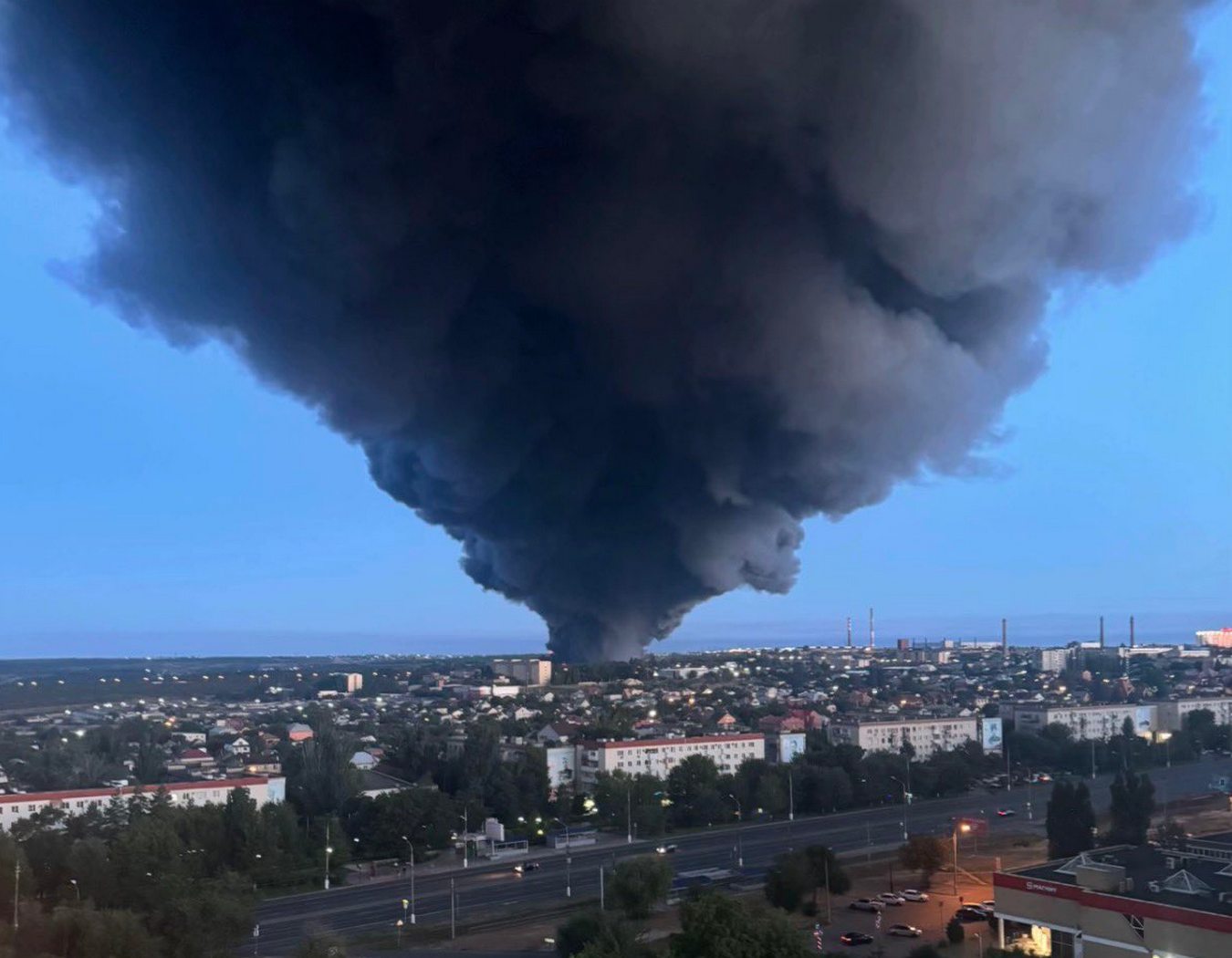
Ukrainian drone strikes have driven Russian crude processing to 3.6 million barrels a day in July—its lowest level since 2002 and roughly a third below the seasonal norm, according to EA Analytics data cited by Bloomberg.
Explore further
Ukraine’s drones force oil-giant Russia to import gasoline—now from Morocco
Ukraine hit at least 24 of Russia’s 34 largest refineries in some 50 strikes, with five more struck last week and at least two this week. With refining at a 24-year low, Russia is exporting crude through the Arctic while importing refined fuel from India.
Fuel shortages and rationing now affect about 50 million people—a third of Russia’s population. Moscow is subsidizing both the damaged refineries and the imported fuel replacing their output.
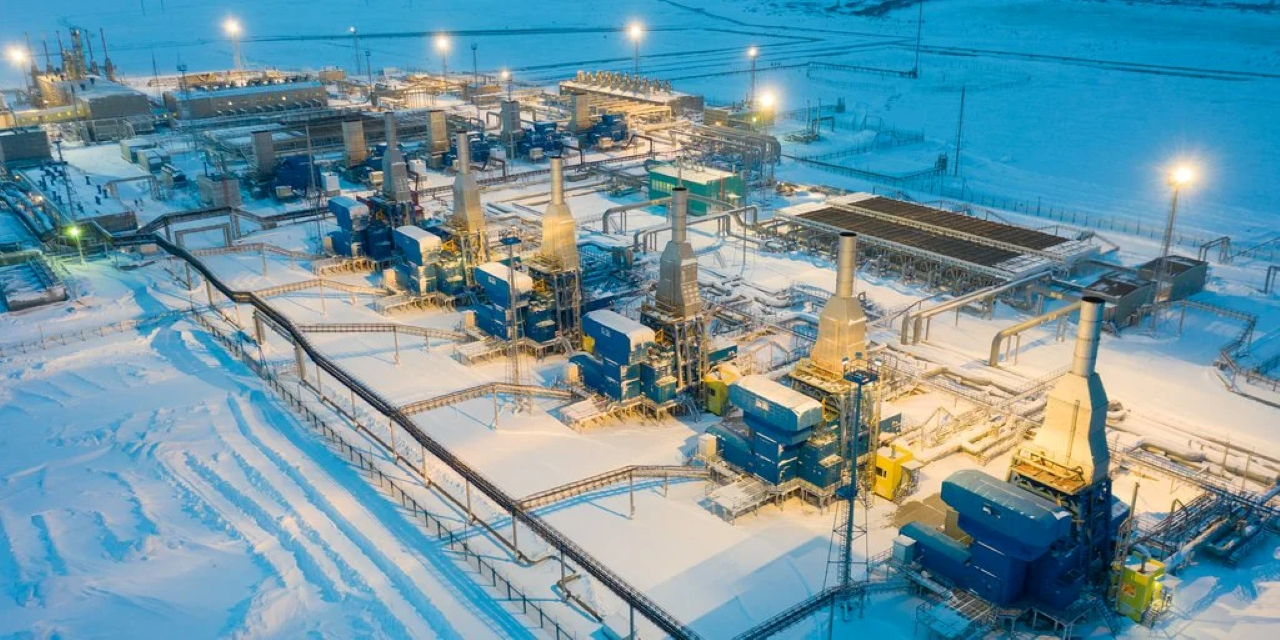
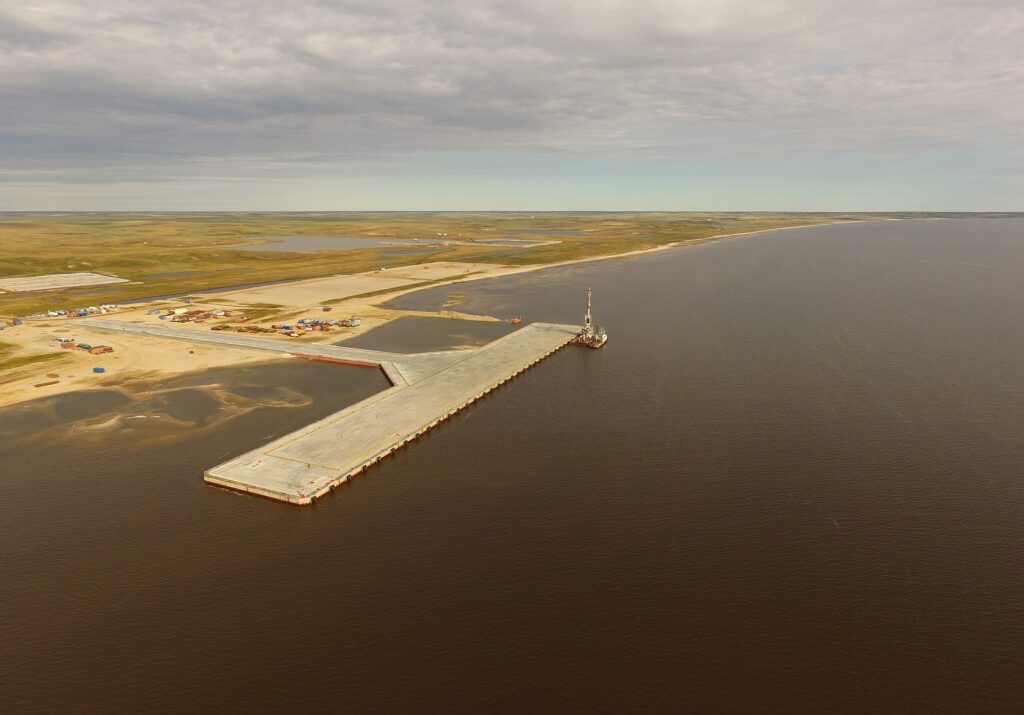
A jetty serving the Utrenneye (Salmanovskoye) field extends into Ob Bay in Russia’s Far North. The port is along the Northern Sea Route, which Russia is increasingly using to ship crude to Asia. Photo: SlavaGol/Wikimedia Commons, CC BY-SA 4.0
Sanctioned tankers take crude toward the North Pole
Seven tankers carrying about six million barrels of crude were heading to Asia through the Northern Sea Route as of 11 August. That volume already amounts to nearly half the approximately 13 million barrels the route carried during the entire 2025 season.
The route cuts two weeks off the voyage to China compared with the Suez Canal, and ice conditions are relatively mild this year, one trader told Reuters.
But speed is only part of the surge. Tankers on the Arctic route bypass European waters, where enforcement has led to inspections and detentions of sanctioned vessels, and Ukraine’s strikes on Black Sea shipping and the Iran–US standoff at Hormuz have narrowed the alternatives.
Vessel-tracking data show the convoy following a route north of the Severnaya Zemlya archipelago rather than through the traditional and more southern Vilkitsky Strait—putting sanctioned oil tankers within 500 nautical miles of the North Pole. Maritime experts said commercial traffic at this scale has never operated that far north.
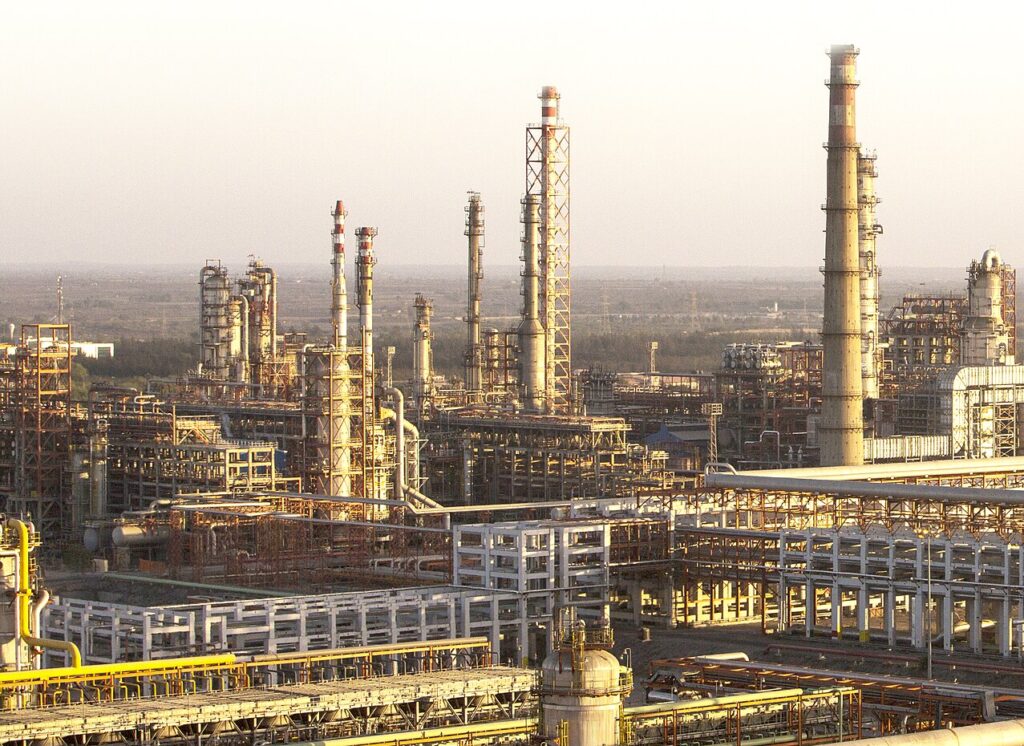
The Rosneft-controlled Nayara Energy refinery at Vadinar, Gujarat, India. Photo: AgarwalSimran / Wikimedia Commons, CC BY-SA 4.0
Russian crude returns home as Indian gasoline
In the opposite direction, gasoline refined from Russian crude at Nayara Energy’s Vadinar refinery in western India is flowing back to Russia through a chain of ship-to-ship handoffs at Egypt’s Damietta Port. At least three cargoes have cycled through the hub since June. The first reached Russia on 5 August.
Bloomberg’s tracking data show the tanker Cyclone loaded 42,000 tons of gasoline at Vadinar on 18 June, transferred the cargo to the Oman-flagged Garnet off Damietta on 6 July, and the Garnet reached Russia in early August. Two more tankers, Varg and Photon, followed the same route in July, with Photon’s cargo handed to the Russian-flagged Talisman on 28–29 July.
All these vessels are under EU sanctions. Garnet and Talisman are also under US sanctions.
Nayara’s refinery, which processes 400,000 barrels a day, is 49% owned by Rosneft. EU sanctions in July 2025 drove away its non-Russian crude suppliers, so the plant switched to processing only Russian oil and now buys and sells through traders—which is how its gasoline reaches Russia without a direct India-to-Russia sale, as Euromaidan Press reported.
The expected September launch of Rosneft’s Vostok Oil project could push more crude through the Northern Sea Route, traders told Reuters. NSR crude shipments fell 4% in 2025. This year’s opening weeks have already matched half the full-season total.
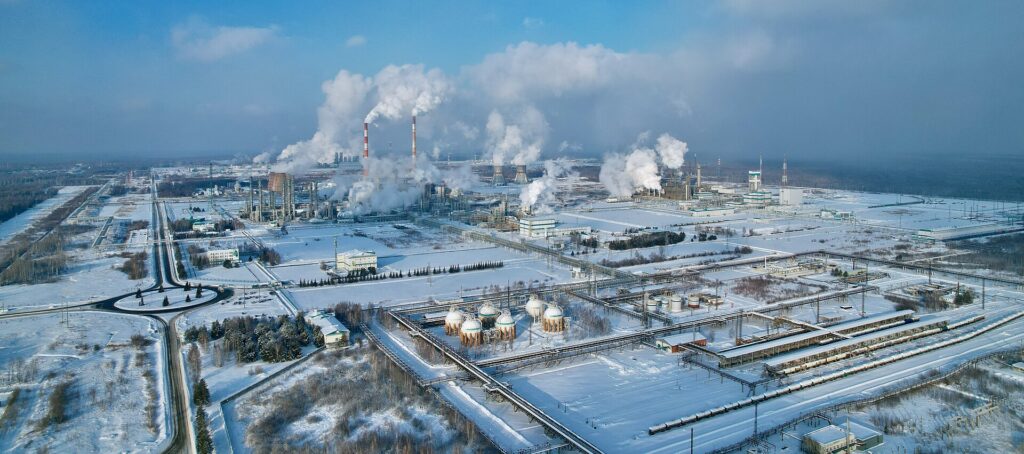
A Ukrainian drone strike shut the plant that produces 40% of Russia’s liquefied petroleum gas on 10 August, and the country’s fuel crisis snapped back across at least 16 regions within days.The shutdown of the Sibur ZapSibNefteKhim complex in Tobolsk, western Siberia, removes about six million metric tons of annual LPG capacity from a fuel system that was already under strain.
Explore furthe
A Ukrainian drone strike shut the plant that produces 40% of Russia’s liquefied petroleum gas on 10 August, and the country’s fuel crisis snapped back across at least 16 regions within days.
The shutdown of the Sibur ZapSibNefteKhim complex in Tobolsk, western Siberia, removes about six million metric tons of annual LPG capacity from a fuel system that was already under strain.
Explore further
“This is money of his accomplices burning”: Russian partisans and Ukraine hit Siberian plant tied to Putin’s inner circle
Gasoline restrictions had begun easing across Russia at the end of July, when Ukrainian drones temporarily shifted to other targets. When the strikes resumed in early August, fuel rationing returned immediately, the independent Russian outlet 7×7 reported.
Three industry sources told Reuters on Tuesday that the complex stopped operations indefinitely “while the extent of the damage and its consequences are being assessed.”
No LPG volumes were offered from the Tobolsk delivery point on Russia’s commodity exchange—a point that earlier this year handled about 4,000 metric tons of propane-butane mix per day. Sibur declined to comment.
The shutdown of the Sibur ZapSibNefteKhim complex in western Siberia, removes six million metric tons of annual LPG capacity from a fuel system already under strain.
The ZapSibNefteKhim and Tobolsk-Polymer industrial sites in Tobolsk, western Siberia, seen in February 2023. A Ukrainian drone strike shut ZapSibNefteKhim indefinitely on 10 August 2026, taking 40% of Russia’s LPG production offline. Photo: Vyacheslav Bukharov/Wikimedia Commons, CC BY-SA 4.0.
A strike on one unit stopped the entire plant
Tyumen Oblast Governor Aleksandr Moor confirmed a fire at an industrial site following a drone attack but did not identify the facility.
Ukraine’s Special Operations Forces Deep Strike units, working with the Russian insurgent movement Chornaya Iskra (Black Spark), claimed the strike. The plant sits more than 2,200 kilometers from the front line.
Militarnyi’s OSINT analysis identified the specific target as the complex’s central gas fractionation unit—the plant’s entry point, where raw hydrocarbons are separated into usable products before anything else in the production chain can run. About half of ZapSibNefteKhim’s output feeds Sibur’s own petrochemical complex in Tobolsk; the rest goes to market.
Sibur held contracts to supply feedstock to defense-industry enterprises, including the Kamenskiy Kombinat, which produces solid rocket fuel and motors for the Grad, Smerch, and Uragan rocket systems.
Sibur also supplied the Perm Gunpowder Plant, which makes charges for multiple-launch rocket systems, air-defense complexes, and cruise missile boosters, Militarnyi also reported. The Sverdlov Plant and Biysk Oleum Plant, both explosives manufacturers, were also Sibur clients.
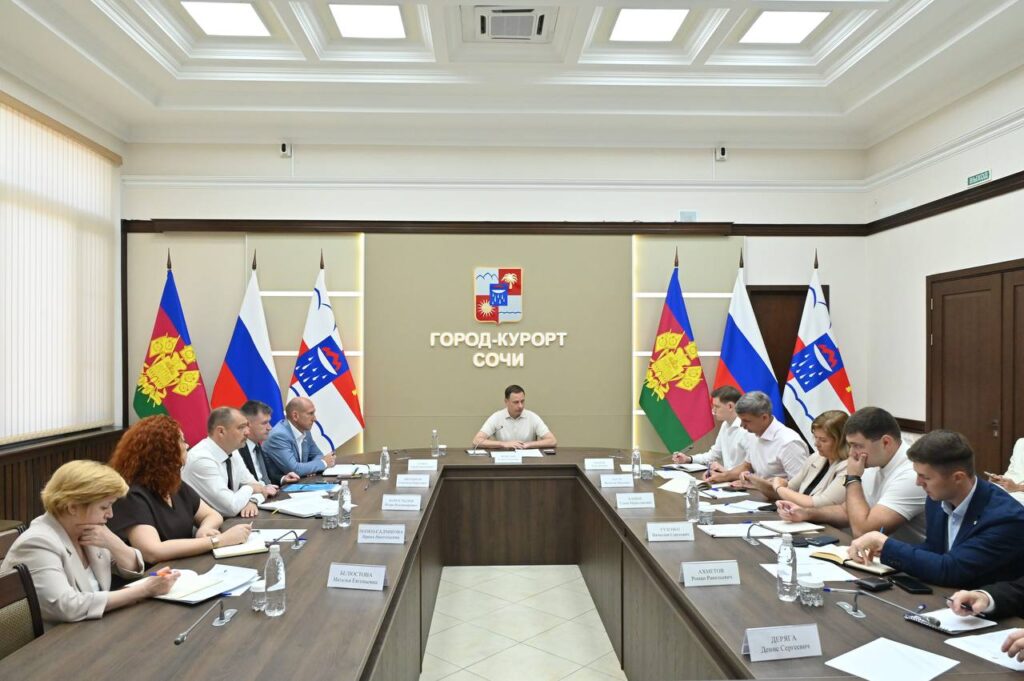
Sochi Mayor Andrei Proshunin meets with city officials as fuel remains available at only 38 of the resort’s 58 gas stations. Photo: Andrei Proshunin/Telegram
Fuel rationing returned within days
Across at least 16 regions, the fuel restrictions that had briefly eased in July are back, 7×7 reported.
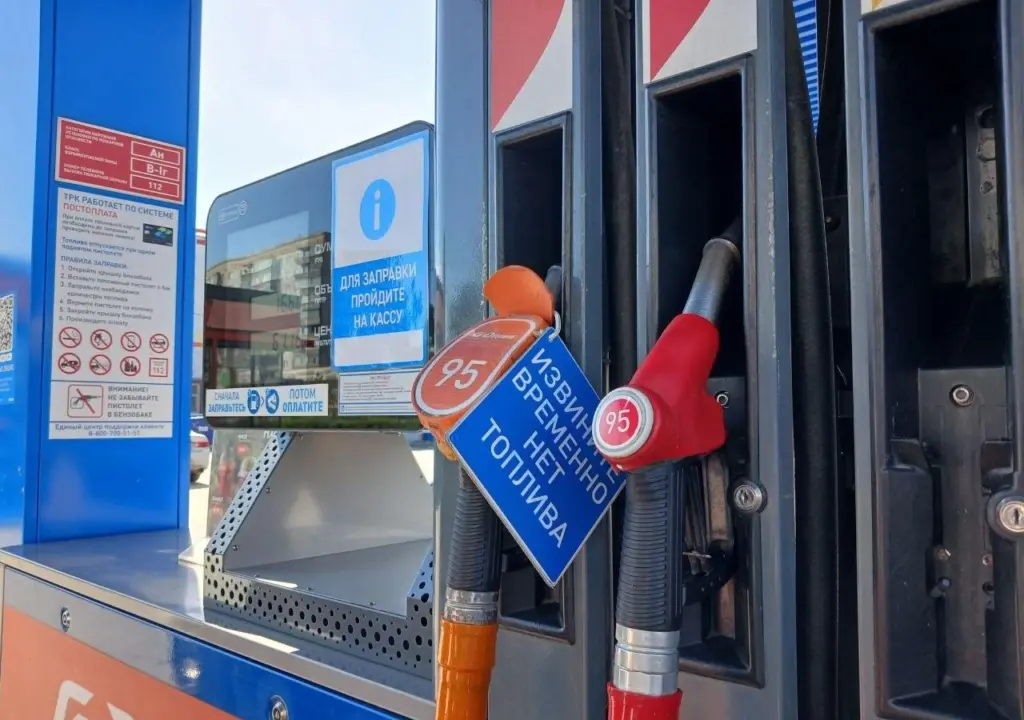
In Sochi—Russia’s most famous beach resort—Mayor Andrei Proshunin said on Telegram that fuel was available at only 38 of the city’s 58 gas stations. Deputy Mayor Vyacheslav Bauer told residents and tourists to use public transport or stop driving, the Moscow Times reported.
In Bashkortostan, authorities banned gasoline sales in canisters, leaving at least one resident unable to fuel his lawnmower—as he complained to regional head Radiy Khabirov during a televised address, a Bashkortostan outlet reported. Production at the Ufa petrochemical complex is unaffected by the drone strikes, Khabirov said.
Still, the shortage persists for a different reason: every time a drone-alert protocol is activated, fuel tankers halt en route to gas stations, regional official Elena Prochakovsky explained at a briefing reported by Prufy. Three districts remain in a fuel “red zone,” and 19 of 26 gas stations in Sterlitamak are operating.
Lipetsk Oblast Governor Igor Artamonov told residents not to expect improvement for one to two weeks, Lipetsk outlet Ploshchad reported. “If you can leave 10 liters unfilled, the person arriving on empty will thank you,” he said.
Russia’s fuel system was already breaking
The Tobolsk shutdown lands on an already fractured system. By mid-July, fuel rationing had spread to more than half of Russia’s regions. Ukraine’s drone campaign had struck Russian refineries 194 times in the first half of 2026 alone—eleven times the previous year’s pace—knocking nearly half the country’s refining capacity offline, Ukraine’s General Staff reported on 4 July.
Repair timelines keep slipping because sanctions block the spare parts Russian plants need. To plug the gap, Russia has banned gasoline exports, permitted lower-grade fuel, and begun importing gasoline from India and Morocco, refined from its own crude—shipping it 14,000 kilometers home because its refineries cannot meet domestic demand.
The Tobolsk shutdown removes more LPG output than any single strike of the war. Russia was already rationing fuel in more than half its regions before this strike.
When Sweden’s Anton Källberg walks into the arena on Tuesday to face Vladimir Sidorenko at Europe Smash, the match carries a weight that reaches beyond the table.Sidorenko is Russian, and unlike the Russian players who spent recent years competing as neutrals, he now takes the table representing Russia, under its flag and anthem.
Flags and anthems are written into international sport precisely because they carry national and political meaning.
The change follows a Ju
When Sweden’s Anton Källberg walks into the arena on Tuesday to face Vladimir Sidorenko at Europe Smash, the match carries a weight that reaches beyond the table.
Sidorenko is Russian, and unlike the Russian players who spent recent years competing as neutrals, he now takes the table representing Russia, under its flag and anthem.
Flags and anthems are written into international sport precisely because they carry national and political meaning.
The change follows a July decision by the International Table Tennis Federation (ITTF) to lift the restrictions on athletes holding Russian passports. It took effect on 28 July, and Russian players can now enter under the same ordinary rules as everyone else.
For critics, the question is hard to avoid: what has changed in Ukraine to justify the change in sport?
What changed in Ukraine? Nothing
Russia’s full-scale invasion has not ended. Yet the penalty imposed in its wake—that Russian athletes compete without representing the Russian state—has now been lifted in international table tennis.
The Swedish Table Tennis Association has openly opposed the move. Its chairman, Tomas Eriksson, said in July that he saw no change in Ukraine that would justify shifting Swedish sport’s position toward Russian participation. The association has said it will not boycott the tournaments.
That tension now lands on Swedish soil.
Källberg and Sidorenko were drawn against each other at Europe Smash, held in Malmö from 8 to 16 August.
For Swedish supporters of Ukraine, the evening presents a real dilemma. Nobody needs to aim hostility at Sidorenko himself, and no one is claiming individual Russian athletes bear responsibility for their government’s actions. The question is what an athlete is asked to represent.
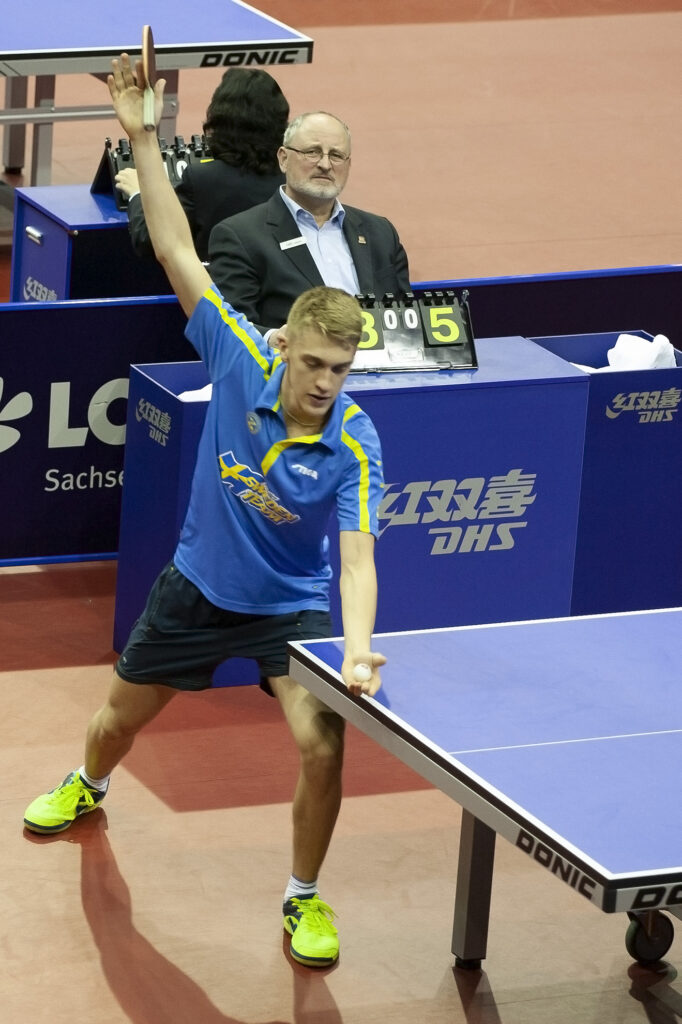
Sweden’s Anton Källberg, who faces Russia’s Vladimir Sidorenko at Europe Smash in Malmö. Photo: Peter Porai-Koshits / Wikimedia Commons, CC BY-SA 4.0
A flag is never neutral
A neutral athlete competes as an individual. Someone introduced beneath a national flag stands in, however indirectly, for a state. Flags and anthems are written into international sport precisely because they carry national and political meaning.
So restoring the Russian flag is more than an administrative tweak. It is a statement—and a pointed one while Russia’s war on Ukraine continues.
The dispute has an unmistakable Swedish dimension. ITTF is headed by Petra Sörling, the Swedish official who was re-elected president of world table tennis in 2025 for another four-year term. She is a former president of the Swedish Table Tennis Association.
Explore further
Sport is letting Russia back in. This Ukrainian tennis player says no.
That does not make the reinstatement hers alone to decide; the ITTF Executive Board considered the issue on 10 July. But leadership carries responsibility. ITTF has justified the change by citing equal treatment and proportionality—yet proportionate to what change in circumstances? With Russia’s war on Ukraine still ongoing, the federation has yet to explain what has materially shifted to make the earlier restrictions disproportionate now.
On the evening of 11 August 2026, all of it narrows to something plainer: two players and a table, in front of a Swedish crowd.
Källberg deserves what any Swedish athlete would want at a major home tournament: loud, passionate backing from the crowd. And those who object to the return of the Russian flag have every right to voice it, peacefully, from the same seats.
Symbols cut both ways
Sport does not stand outside the world around it. International federations prove as much every time they raise a flag or set a country’s name beside an athlete.
If those symbols matter when a nation celebrates victory, they matter when a governing body decides who may use them.
And until the reasons for restricting Russia’s national representation have gone, the question facing table tennis stays simple: Why should the restriction disappear first?
Russia can’t refine its way out of its fuel crisis, so it is changing who controls the already existing fuel. Months of Ukrainian drone strikes on refineries have driven shortages and rationing across much of the country. The government’s answer isn’t more fuel—it is a different market.Faced with the shortage, the Kremlin had options. In June, analysts urged it to raise the exchange quota to push more fuel onto the open market and toward the regions running dry.
The gov
Russia can’t refine its way out of its fuel crisis, so it is changing who controls the already existing fuel. Months of Ukrainian drone strikes on refineries have driven shortages and rationing across much of the country. The government’s answer isn’t more fuel—it is a different market.
Faced with the shortage, the Kremlin had options. In June, analysts urged it to raise the exchange quota to push more fuel onto the open market and toward the regions running dry.
The government’s answer isn’t more fuel—it is a different market.
It did the opposite. The mandatory share of gasoline that producers must sell on the open exchange was cut from 15% to 10%, with the majors pushing for 2%, and the exchange was closed to anyone but buyers who will use the fuel themselves, shutting out traders who bought to resell.
That choice adds no fuel. It moves distribution off the exchange that set prices for a decade and into direct contracts between the big producers and the buyers they pick—handing the majors the chain from refinery to pump. Part of the package came straight from proposals Rosneft head Igor Sechin sent to President Vladimir Putin.
Winners and losers
The winners are the big, vertically integrated oil companies, which refine up to three-quarters of Russia’s oil. Direct deals let them keep the margin that once went to middlemen and choose who gets supplied; drop the quota to 2%, and about 5 million tonnes of gasoline a year move into their private channels.
The losers are the independent stations—60% to 72% of Russia’s roughly 25,000 gas stations, depending on who’s counting, and now unable to buy at the exchange price.
Alexander Moiseev, who owns the Kostroma Fuel Company, has been hauling gasoline from Surgut, 2,000 kilometers away, at 118 rubles a liter ($1.45) with freight, because the majors won’t sell to him wholesale. He works on a minimal markup. Rosneft, meanwhile, has multiplied sales at its own pumps.
What stabilization there is has been narrow. Prices eased mainly where supply was steered—Moscow, St. Petersburg, the big cities—while regions thick with independent gas stations stayed short, independent analyst Kirill Rodionov told Kommersant.
None of this is hidden. Facing the crunch, the government also let refiners sell banned Euro-2 gasoline again; online marketplaces pulled fuel listings; and Deputy Prime Minister Alexander Novak called the market “challenging but under control.”
In occupied Crimea it goes furthest: this week, the occupation authorities announced fuel sales were stabilizing, even as they capped each car at 20 liters and fixed the price of AI-92, the Crimean Tatar Resource Center reported.
Explore further
Occupied Sevastopol puts fuel back on open sale—then caps every car at 20 liters
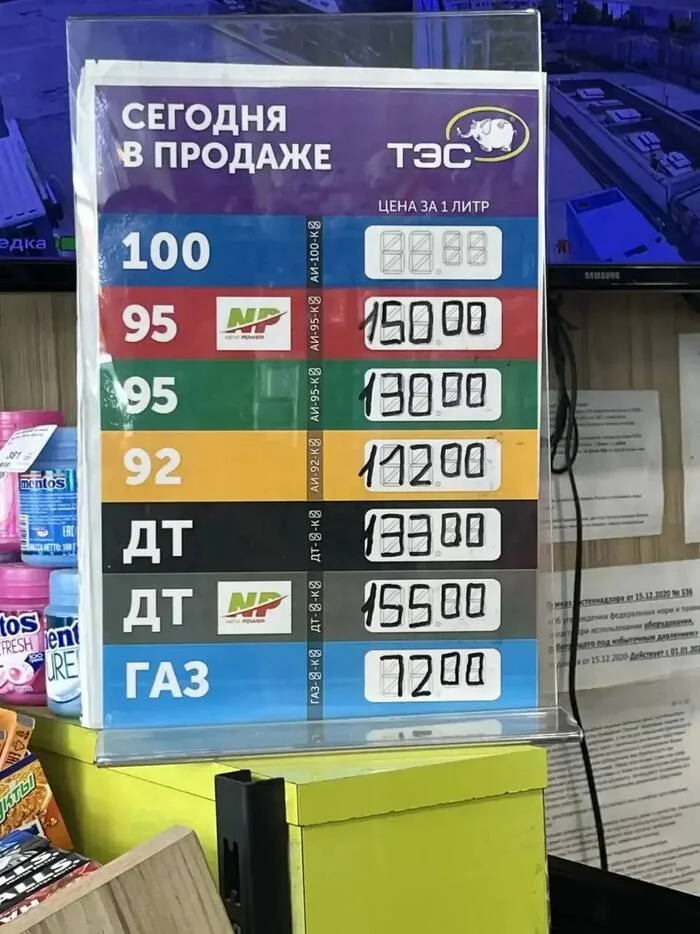
Fuel prices written by hand at a Sevastopol filling station, 27 June 2026—changed manually as often as prices shift. Sales were restricted to holders of QR codes issued the previous day; resellers charged 350 rubles ($4.53) per liter for AI-95 outside. Photo: Nishebrodushka / Pikabu
The market goes dark
As the exchange shrinks, its prices no longer reflect the market, and the state publishes less information on output, stocks, and regional supply. The people who most need to see where Russia’s fuel balance is breaking—regulators at home, and the sanctions monitors and energy analysts abroad who read that data—are left with less to look at, market participants told Kommersant. The market is going dark.
Whether the change sticks is contested. Some read the cuts as a passing emergency. Others expect the market to keep sliding toward closed, bilateral deals—less transparent, harder for newcomers, the independent stations ever more tied to the majors, Viktoria Trifonova, Senior Analyst at Yakov & Partners, told Kommersant. The state has reached for limits, subsidies, and hands-on redistribution ever since the 2018 price crisis.
Keeping the independent gas station chains alive was never the goal, NEFT Research’s Dmitry Prokofiev wrote in Kommersant—it was to keep fuel flowing to the big cities of European Russia and, above all, to the priority government sector.
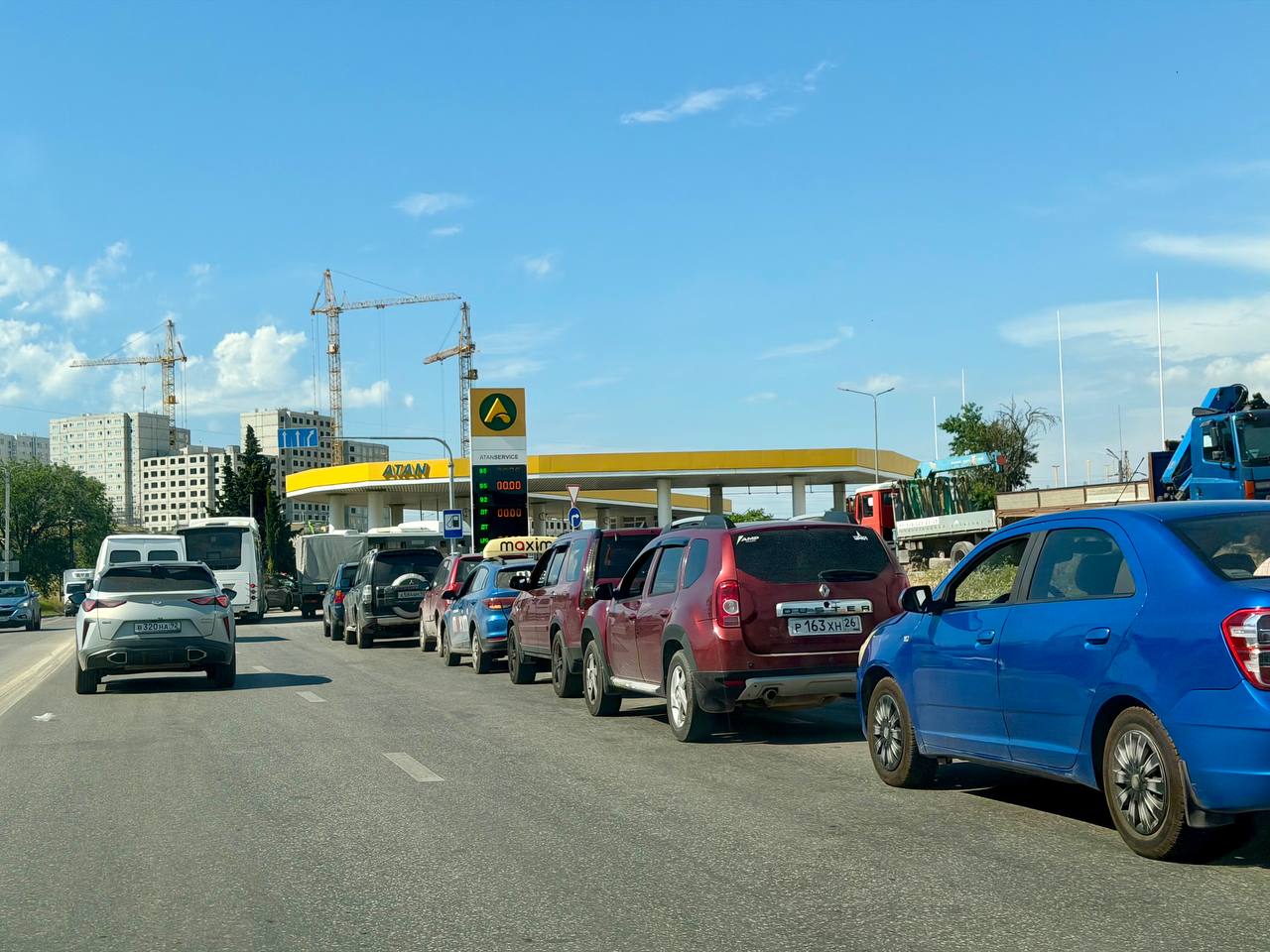
Occupation officials in Sevastopol and occupied Crimea are telling residents the fuel crisis is easing—and this week they resumed “free sale” at a handful of named stations. From 6 August, every grade would again be sold openly on the TES network, occupation governor Mikhail Razvozhaev said, and AI-92, he noted, has been cut and fixed at no more than 100 rubles per liter ($1.23).The catch is in the same announcement: no more than 20 liters per car, volumes the governor him
Occupation officials in Sevastopol and occupied Crimea are telling residents the fuel crisis is easing—and this week they resumed “free sale” at a handful of named stations. From 6 August, every grade would again be sold openly on the TES network, occupation governor Mikhail Razvozhaev said, and AI-92, he noted, has been cut and fixed at no more than 100 rubles per liter ($1.23).
The catch is in the same announcement: no more than 20 liters per car, volumes the governor himself called small, and—at ATAN’s seven stations the same day—no filling canisters.
Crimea is caught in a shortage that now stretches across Russia, from filling stations to farms.
In occupied Crimea, the ATAN network capped diesel at 30 liters per customer and charged 119 rubles per liter ($1.46), the Crimean Tatar Resource Center reported.
Occupation authorities blame logistics and promise the caps will loosen and prices will fall once supply stabilizes. But shortages, high prices, and rationing show that the peninsula’s supply problems are far from solved, the center said. Crimea is caught in a shortage that now stretches across Russia, from filling stations to farms.
Explore further
First the pumps, then the harvest, now the commute—Russia’s fuel shortage keeps finding new victims
None of this is new. Sevastopol restricted fuel sales on 22 May, Crimea on 29 May, and for weeks drivers have been buying by QR code. Through the summer, Ukraine’s drone campaign has been draining the seaborne lifeline that feeds the peninsula. The worsening supply of fuel, power, and water is a natural consequence of the war and the occupation, Ukraine’s military intelligence said.

 Connexion