
 Connexion
ISW: First Pokrovsk, then Huliaipole—now Russia points its logistics-killing air campaign at the Fortress Belt
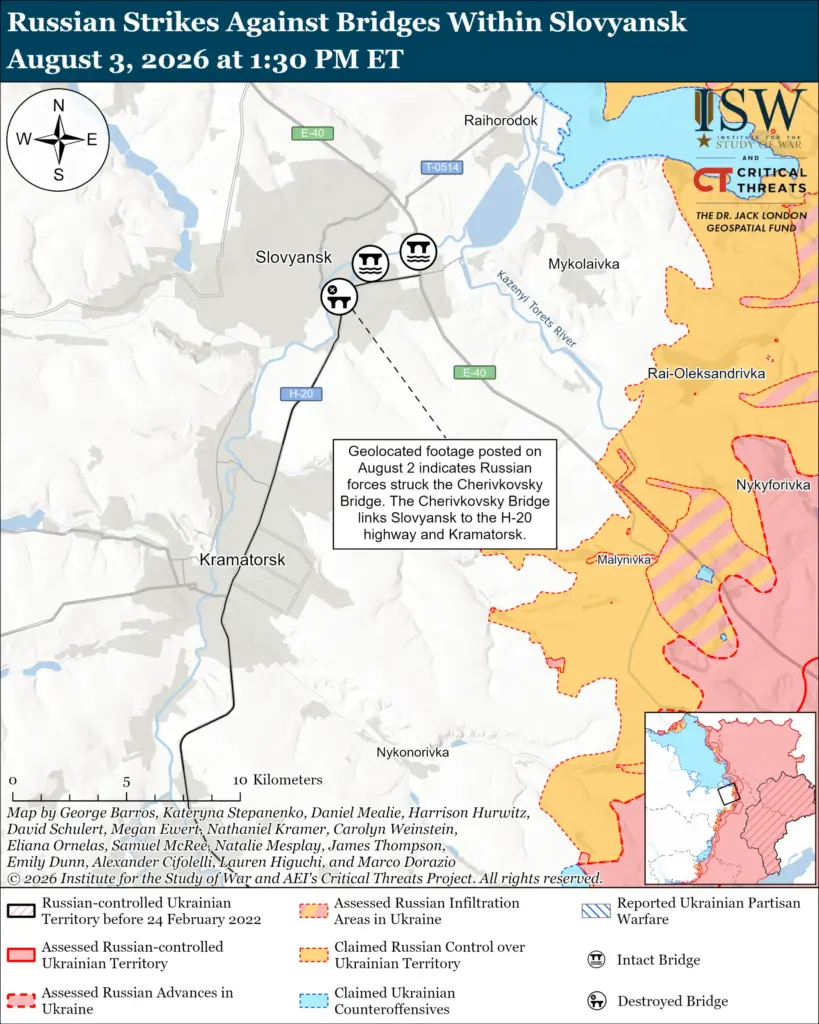
Russia is trying to cut off two of Ukraine's biggest remaining strongholds in the east before it ever storms them, according to the Institute for the Study of War (ISW). The think tank finds Moscow reviving a months-long air campaign against supply lines — the same method that preceded its 2025 advances elsewhere in eastern Ukraine. This time, the target is the Fortress Belt, and the effort leans more heavily on glide bombs than before.
Russia dusts off its 2025 logistics playbook
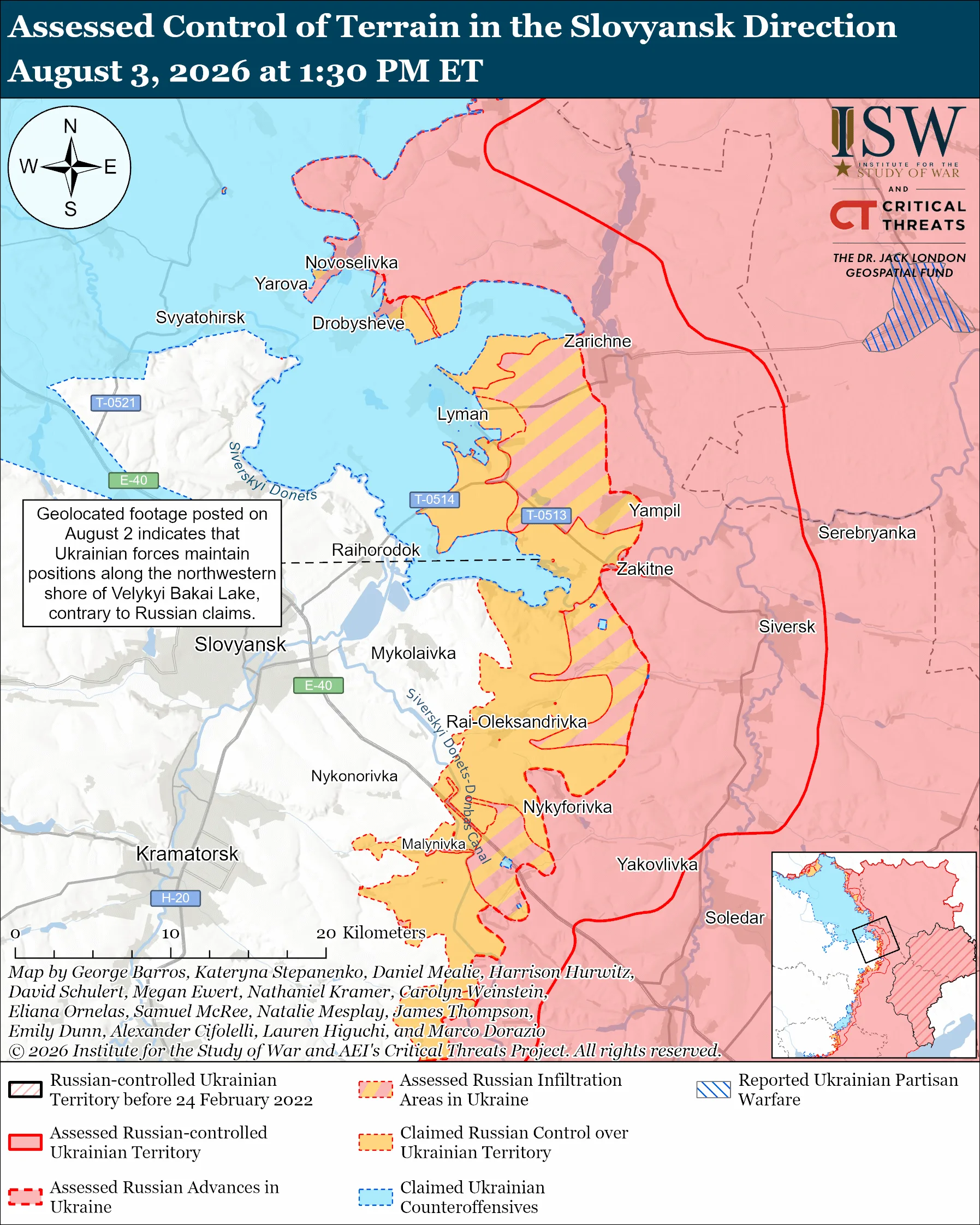
Through 2025, Russian forces ran long campaigns of drones, glide bombs, and missiles to sever Ukrainian supply lines before pushing near Pokrovsk and Huliaipole. ISW calls this battlefield air interdiction (BAI) — using airpower to strike rear targets behind the front and choke an enemy's logistics. Now the same approach has moved north, ISW assessed, aimed at Sloviansk and Kramatorsk, the twin cities anchoring the top of the Fortress Belt. The goal is to isolate the defenders there from steady resupply. Ukrainian and Russian commentators alike have described the strain, noting that nighttime logistics runs into the two cities have become hard to pull off.
The target list: bridges, rails, and the roads between
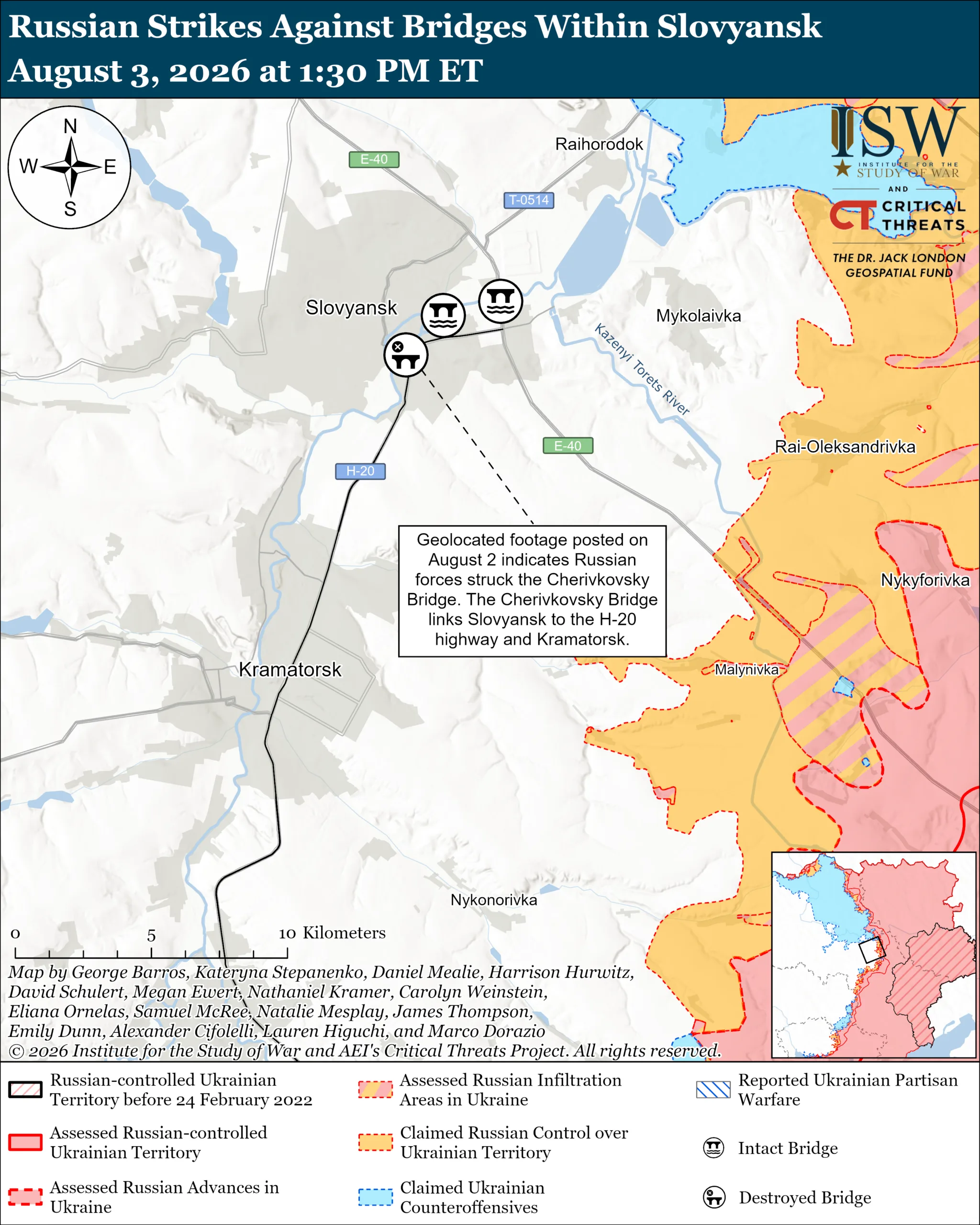
Russia has increasingly gone after the locomotives that keep Ukrainian supplies moving, and reportedly handed troops 1,000 Molniya loitering munitions in July 2026 with orders to intensify strikes near Kramatorsk. It has also begun hitting major bridges. Geolocated footage posted on 2 August showed a heavily damaged crossing over the Kazennyi Torets River in eastern Sloviansk. The bridge linked the city to the highway leading to Kramatorsk.
More glide bombs, fewer drones
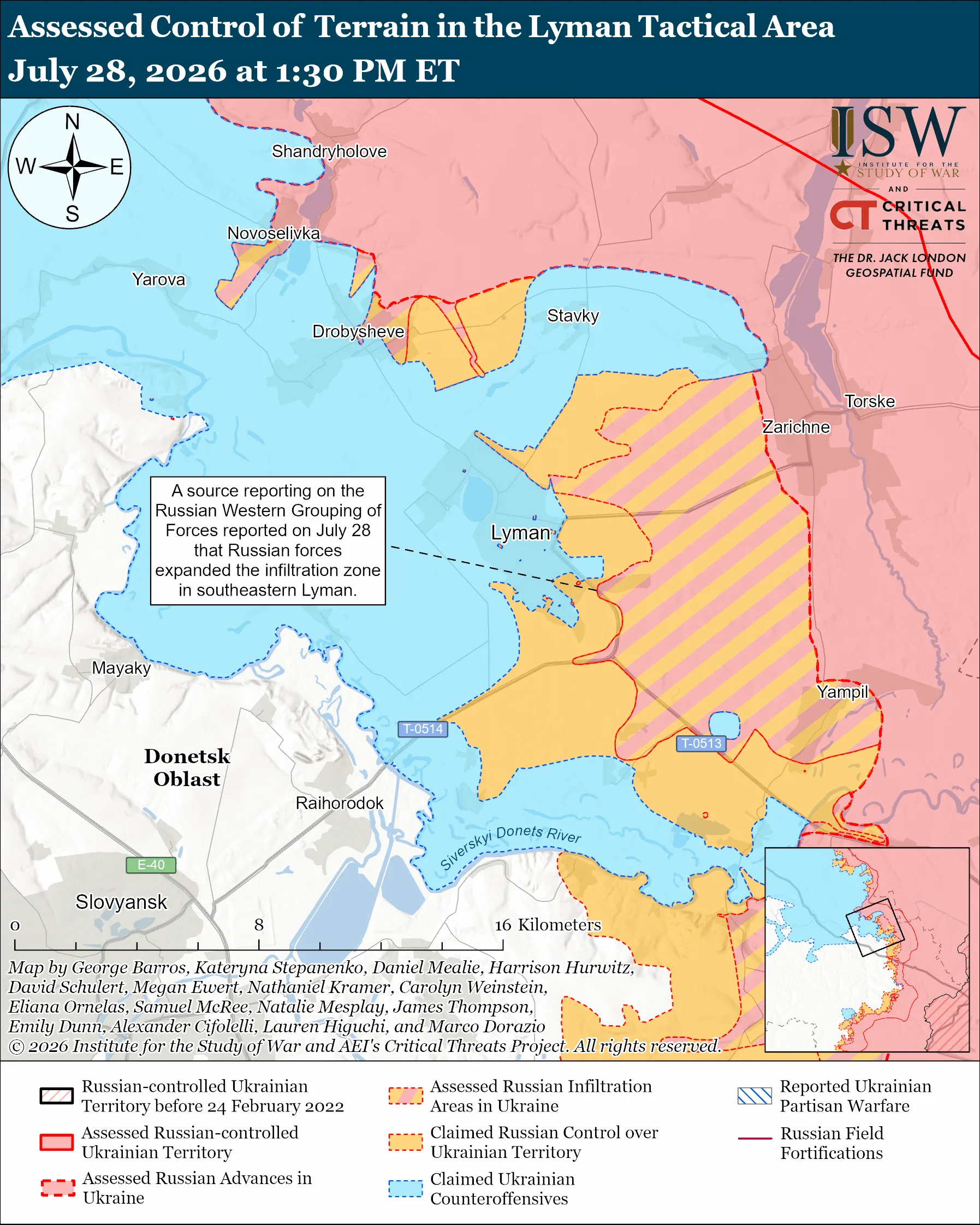
This year's campaign appears to lean more heavily on glide bombs than the 2025 versions did, ISW found, with many reports of guided glide-bomb strikes on Sloviansk, Kramatorsk, and surrounding settlements over recent weeks. ISW assessed that Russia may be reaching for these heavy bombs because Ukrainian jamming and interceptors have blunted its capacity to field drones as widely as before. The bombs do more than break fortifications. ISW noted the strikes reduce cities to rubble that Russian troops then use as cover, as they have in Kostiantynivka.
A slow build, not a quick breakthrough
The point of the campaign, ISW assessed, is to shape the battlefield for a future offensive against Sloviansk and Kramatorsk — not to seize them now. ISW does not expect Russian forces to reach or push through the cities soon. Russian troops have been infiltrating Kostiantynivka for months without capturing it, despite Russian claims otherwise. Russia's 2025 campaigns needed months to prepare later advances, and ISW expects this one to move just as slowly.
ISW: First Pokrovsk, then Huliaipole—now Russia points its logistics-killing air campaign at the Fortress Belt
At the same time, Ukraine's Joint Forces spokesman Viktor Trehubov gave a similar read on Lyman. He told national television that Russia wants the town as a launchpad toward Sloviansk and Kramatorsk. But he said Russian forces still cannot dig in there, and Ukraine's growing drone advantage is tipping the fight toward Kyiv.
