President Trump ordered U.S. warships and aircraft to stop vessels going to and from Iran. Enforcing a blockade takes a huge commitment of warships and aircraft.
President Trump ordered U.S. warships and aircraft to stop vessels going to and from Iran. Enforcing a blockade takes a huge commitment of warships and aircraft.
The U.S.S. Abraham Lincoln in San Diego in 2022. According to the U.S. Naval Institute, as of Monday it is anchoring one of two aircraft carrier strike groups deployed in the Northern Arabian Sea.
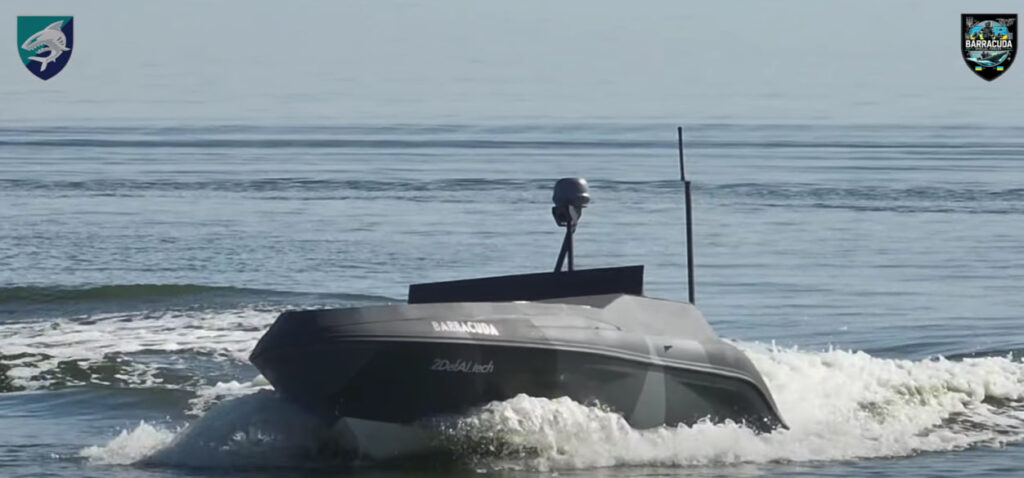
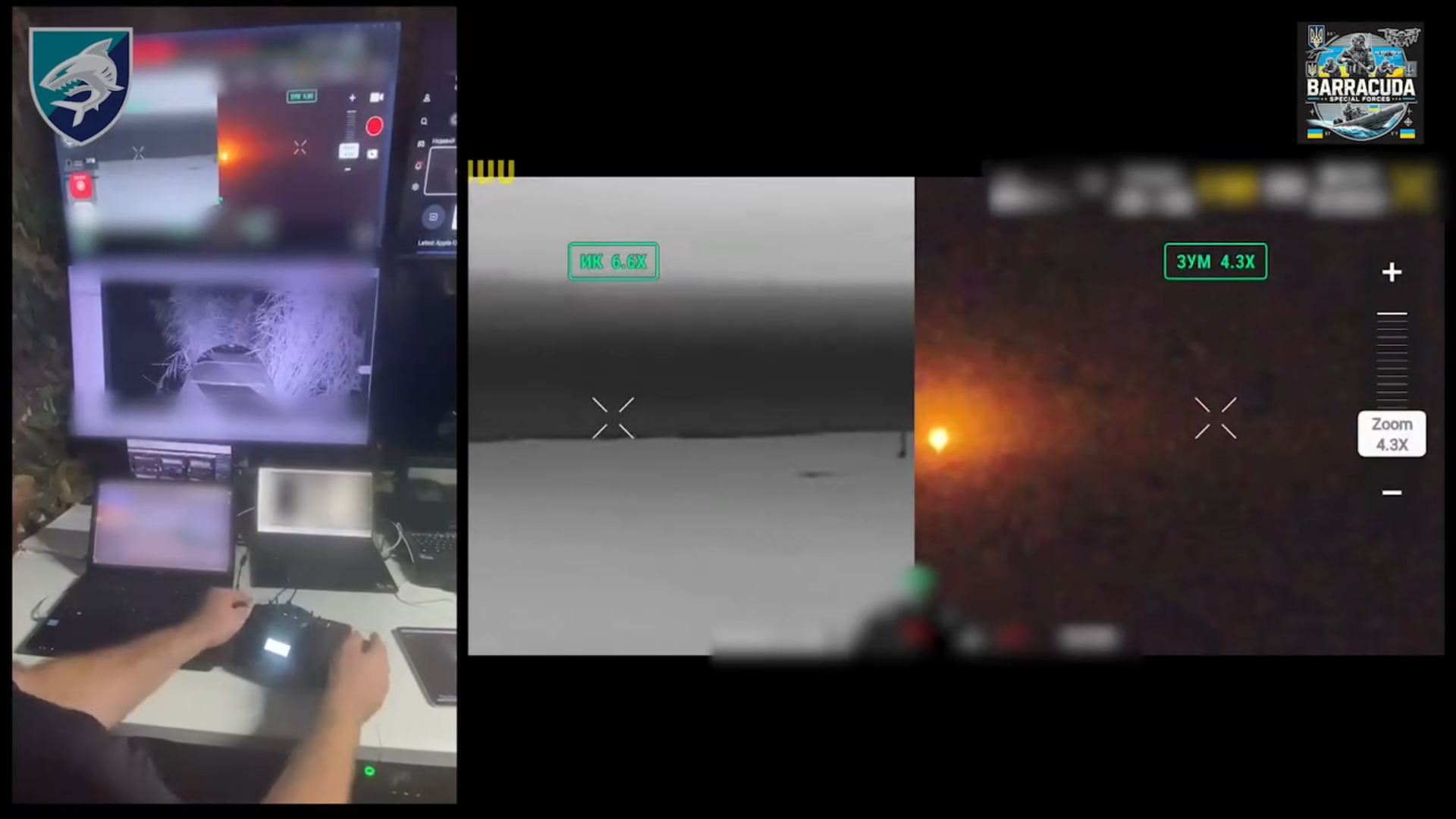
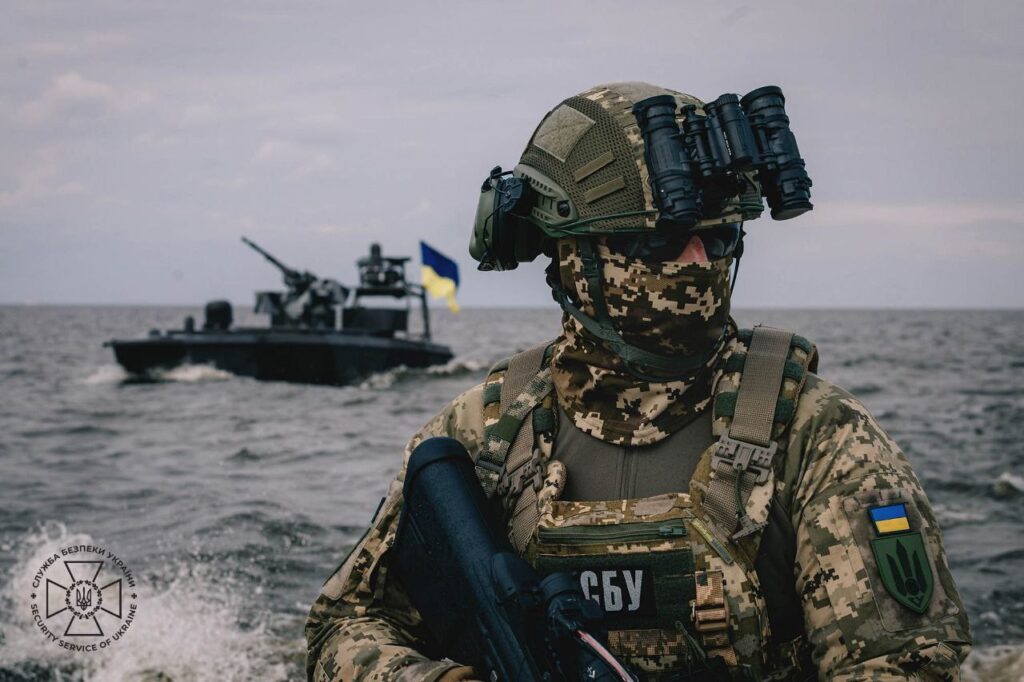
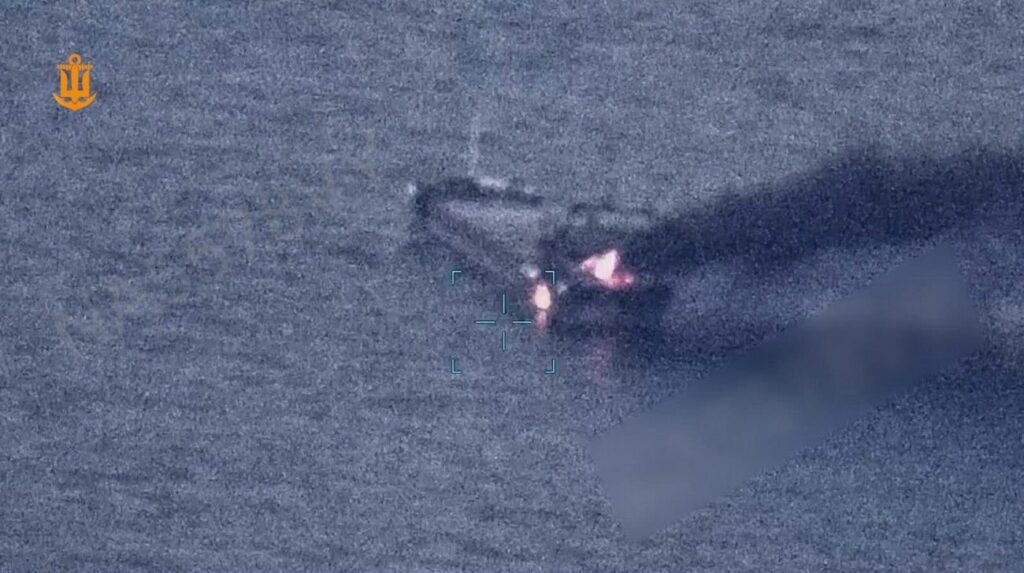
Ukraine's Navy released footage on 14 July showing three types of unmanned systems working through a single strike sequence. A Barracuda kamikaze sea drone opened by striking an abandoned vessel that Russian forces were using as an observation post. An uncrewed boat armed with an unguided rocket module then hit the shoreline where Ukrainian forces said Russian shelters were located. Finally, a naval drone acting as a UAV carrier launched reconnaissance and FPV drones that l
Ukraine's Navy released footage on 14 July showing three types of unmanned systems working through a single strike sequence. A Barracuda kamikaze sea drone opened by striking an abandoned vessel that Russian forces were using as an observation post. An uncrewed boat armed with an unguided rocket module then hit the shoreline where Ukrainian forces said Russian shelters were located. Finally, a naval drone acting as a UAV carrier launched reconnaissance and FPV drones that located and struck camouflaged Russian positions.
The Barracuda itself is not new—Euromaidan Press has already reported its combat use, in which it delivered FPV drones that destroyed a Russian boat in October 2025, and sneaked through Dnipro wetlands to blow up a Russian ammunition site in November. What is new is the integration: one platform striking, one suppressing, one finding and killing.
"Look how the Barracuda's multi-tier strike system works," the Navy said.
Custom Code
The pattern this fits
The demonstration lands inside a year of rapid Ukrainian naval-drone evolution that has moved well beyond the kamikaze-boat attacks that first drove Russia's Black Sea Fleet out of Sevastopol. In April 2026, an uncrewed Ukrainian boat shot down a Russian Shahed drone with an interceptor launched from its deck—what Ukraine called a world first.
Ukrainian Barracuda naval drone sneaks through Dnipro wetlands to blow up Russian ammo site (VIDEO)
The common thread is the removal of the human from the point of contact. Ukraine is assembling naval operations in which surface drones strike, carry, launch, and defend—and the sailor stays ashore.
Explore further
Ukraine sank Russian ship that shot at its sailors in 2018 with Sargan-3000 naval drone
What comes next
Ukraine's Defense Intelligence has said it is developing a new system for naval drones that would go beyond destroying targets to intercepting sanctioned vessels in the Black Sea and escorting them to port for confiscation. According to HUR unit commander with the callsign "Ninth," the concept centers on the upgraded multipurpose Katran drone.
That doctrine would sit alongside a campaign already underway: Ukraine's drone operators had struck 116 Russian vessels supplying occupied Crimea in nine days by 14 July—the destructive arm of the same push to seal off the peninsula by sea.
As President Trump resumes his war, the focus is now on the Strait of Hormuz. But it remains unclear how far the U.S. military will go to exert control.
As President Trump resumes his war, the focus is now on the Strait of Hormuz. But it remains unclear how far the U.S. military will go to exert control.
President Trump in the Oval Office on Tuesday. The latest phase of the U.S. military campaign in Iran has a new focus, but not necessarily a clearer strategy.
Defense Secretary Pete Hegseth has repeatedly claimed that the military has focused too much on promoting minority and female officers, at the expense of white men.
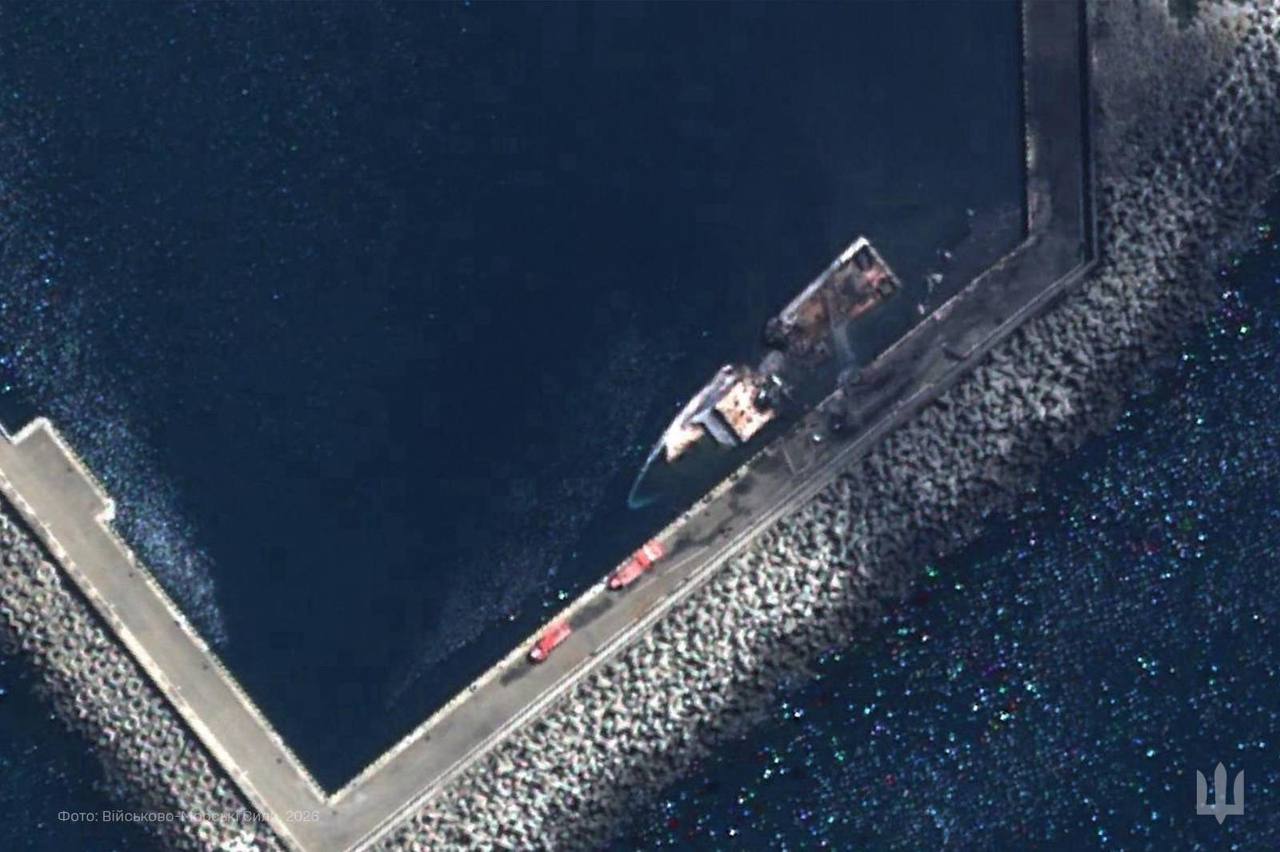
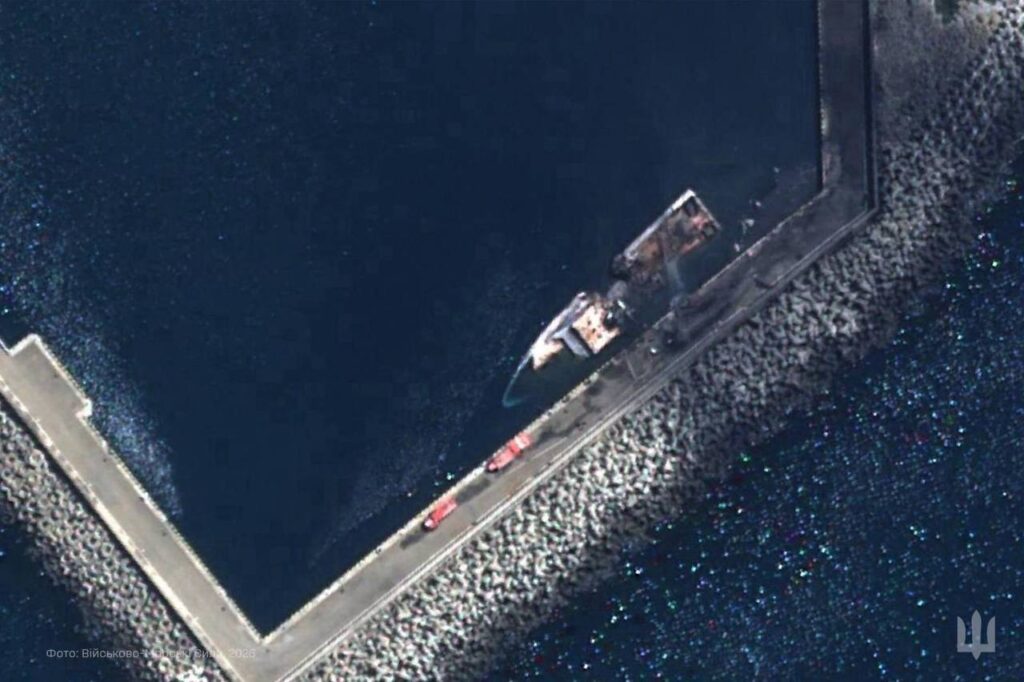
Ukraine sank a Russian ship that shot at its sailors. The Ukrainian Navy said it destroyed the Russian second-rank border patrol ship Izumrud or "Emerald" with a Sargan-3000 naval drone.
The crew suffered dead and wounded. The Navy later published satellite imagery showing the pier around the ship blackened by fire and Izumrud settling into the water at its mooring.
What did Izumrud do in 2018?
On 25 November 2018, Izumrud opened fire on Ukrainian Navy vessels in the Kerch
Ukraine sank a Russian ship that shot at its sailors. The Ukrainian Navy said it destroyed the Russian second-rank border patrol ship Izumrud or "Emerald" with a Sargan-3000 naval drone.
The crew suffered dead and wounded. The Navy later published satellite imagery showing the pier around the ship blackened by fire and Izumrud settling into the water at its mooring.
What did Izumrud do in 2018?
On 25 November 2018, Izumrud opened fire on Ukrainian Navy vessels in the Kerch Strait, wounding Ukrainian sailors. Ukraine's General Staff published intercepted radio communications from the attack showing that Izumrud, hull number 354, was the ship that fired.
The Berdiansk's captain radioed that he was undertaking no illegal action and was leaving for open sea. The answer was a salvo from Izumrud's 30mm gun, followed by lethal fire.
The captain and two crew members were wounded by shrapnel. Russia seized the tugboat Yany Kapu and the armored boats Berdiansk and Nikopol and took 24 Ukrainian sailors prisoner.
"The satellite image confirms the destruction of the Russian border patrol ship Izumrud at the mooring wall. We continue to reduce the Russian aggressor's potential at sea," the Navy said.
What Izumrud did in 2018
In 2018, the Ukrainian ships were sailing from Odesa to Mariupol. Russia closed the Kerch Strait without lawful notice, blocked the passage under the bridge with a cargo vessel, and moved it aside to let its own ships through.
The FSB border guard ship Don rammed the tugboat, Yany Kapu.
Bellingcat later found the tug was intentionally rammed at least four times over the course of an hour. Russian intercepts captured the crews discussing how to do it. When the Ukrainian boats turned back and crossed into neutral waters, Izumrud opened fire.
Year after annexation
Russian special forces boarded the vessels. The 24 captured sailors were paraded on Russian state television, making forced confessions.
They were held for nearly a year. Russia returned the ships in November 2019, with the ramming damage on Yany Kapu clearly visible and the bullet holes on Berdiansk painted over with black rectangles.
Izumrud was launched in 2014, the year Russia annexed Crimea. Project 22460, 62.5 meters long, 630 to 750 tons, up to 27 knots, with a helicopter pad. It served in the FSB's coast guard.
Navy acquisition reforms upended a $2.1 billion contract competition. When it was over, several companies with ties to the Trump administration had made the cut.
Navy acquisition reforms upended a $2.1 billion contract competition. When it was over, several companies with ties to the Trump administration had made the cut.
The Corsair, an unmanned vessel made by Saronic Technologies, demonstrated at a defense industry event last year. Saronic, which has twice made the Navy’s list of potential contract winners, has forged strong connections to allies of President Trump.
An MH-60 Seahawk helicopter over the Arabian Sea in 2019. Three members of a four-person crew were rescued at sea after an MH-60 helicopter went down on July 1.
Beijing had long tested nuclear missiles only within its borders. A rare launch over an ocean shows it is determined to narrow the gap with the United States.
Beijing had long tested nuclear missiles only within its borders. A rare launch over an ocean shows it is determined to narrow the gap with the United States.
The cause of the crash was still under investigation, but the military said it was not the result of hostile fire. A total of 14 U.S. service members have been killed in the war against Iran.
The cause of the crash was still under investigation, but the military said it was not the result of hostile fire. A total of 14 U.S. service members have been killed in the war against Iran.
The military has suspended the search for a crashed MH-60 Seahawk helicopter in the Persian Gulf like the one pictured here, in a file photo from 2018.
Three crew members were rescued, though a fourth remained missing. There is no indication that the landing was caused by “hostile action,” the Navy said.
Three crew members were rescued, though a fourth remained missing. There is no indication that the landing was caused by “hostile action,” the Navy said.
Kyiv continues the operation to isolate occupied Crimea. Last night, Ukraine struck a railway bridge feeding Russian forces in the peninsula, the General Staff said, while monitors reported drones set a power plant in western Crimea on fire — strikes the country's navy casts as stages of a years-long plan to isolate the territory. The targets stretched from the occupied peninsula to an ammunition depot in Donetsk Oblast. A navy spokesman said the whole effort points to one
Kyiv continues the operation to isolate occupied Crimea. Last night, Ukraine struck a railway bridge feeding Russian forces in the peninsula, the General Staff said, while monitors reported drones set a power plant in western Crimea on fire — strikes the country's navy casts as stages of a years-long plan to isolate the territory. The targets stretched from the occupied peninsula to an ammunition depot in Donetsk Oblast. A navy spokesman said the whole effort points to one place: the Kerch Strait crossing.
Occupied since 2014, Crimea has served as Moscow's main staging base for its forces across southern Ukraine, and Kyiv's drive to sever the peninsula's handful of supply routes keeps turning that dependence into a recurring weakness. Ukraine's ongoing Logistics Lockdown -mid-range strike campaign has been hunting for Russian fuel and supply trucks all across the occupied territories, while occupied Crimea sustains massive daily attacks on military installations, bridges, and energy facilities.
A bridge near İçki, a depot in the Donbas
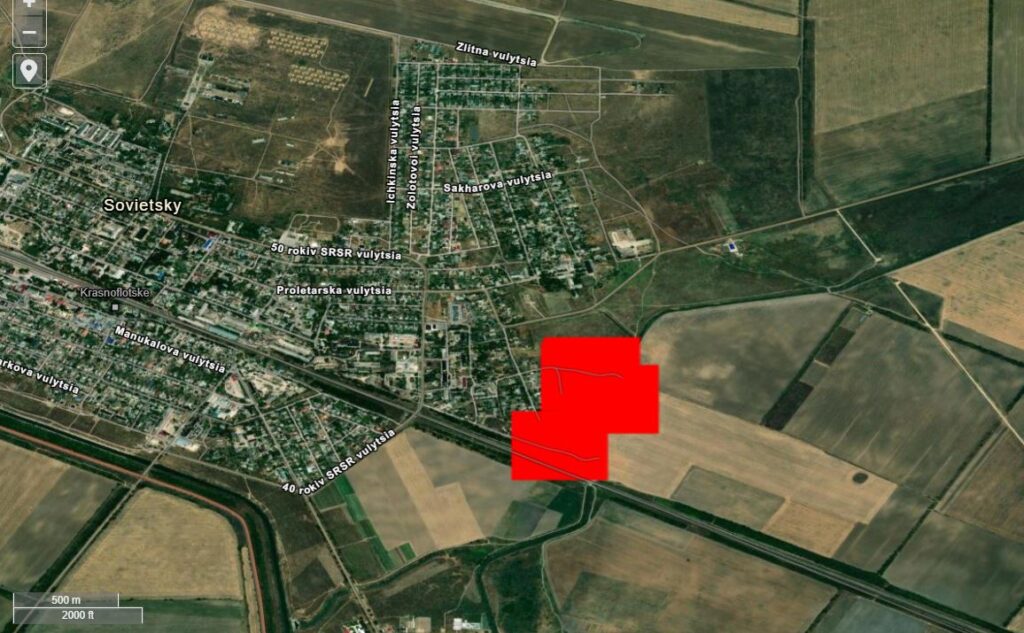
The Defense Forces of Ukraine hit a railway bridge near İçki in occupied Crimea, the General Staff said. Russian forces used the crossing to move troops and supplies across the peninsula. The same statement reported a strike on an enemy ammunition depot near Amvrosiivka in Donetsk Oblast. Results of both hits were still being assessed.
İçki is the indigenous Crimean Tatar name of the settlement. The Soviets renamed it Sovietskyi after the 1944 deportation of the Crimean Tatars, and Ukraine legally restored the name İçki in its 2016 decommunization. Several rail crossings sit by the settlement: one over the Mokryi Indol river, one over the Bulhanak river, and a railway overpass above a road in the town itself.
Explore further
Crimea isolation: SBU hits two Russian spy ships and an S-400 in occupied Kerch as 2,760 cars piled up trying to get off the peninsula
NASA's FIRMS satellite fire data points to the Bulhanak River bridge as the one that burned. The crossing is a separate target from the rail bridge over the North Crimean Canal near Rozdolne, which Ukraine's special forces destroyed earlier.
The General Staff post also confirmed strikes on Russian oil refineries near Yaroslavl and at Slavyansk-na-Kubani.
Explore further
Russia’s refinery feeding occupied Crimea is burning after an overnight Ukrainian strike
A power plant on fire near Saky
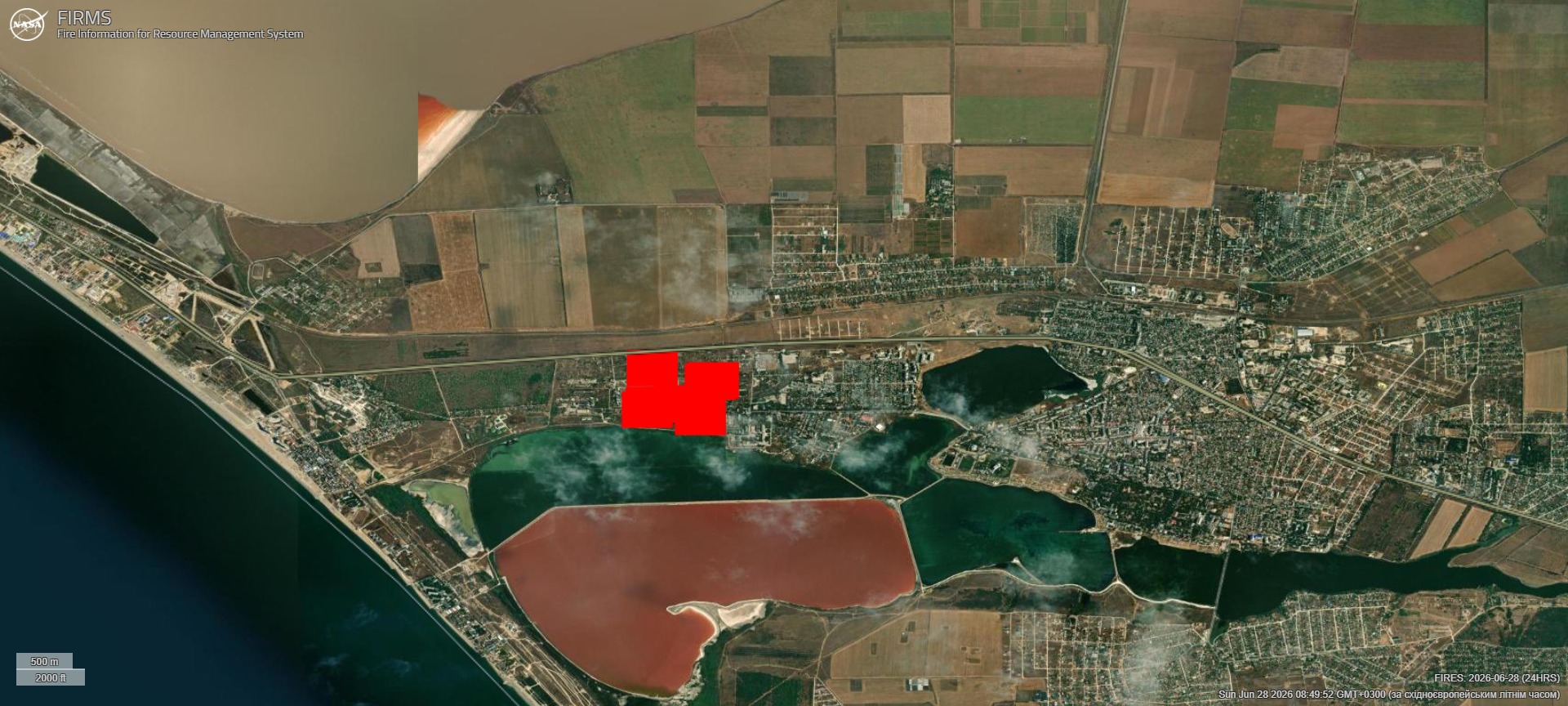
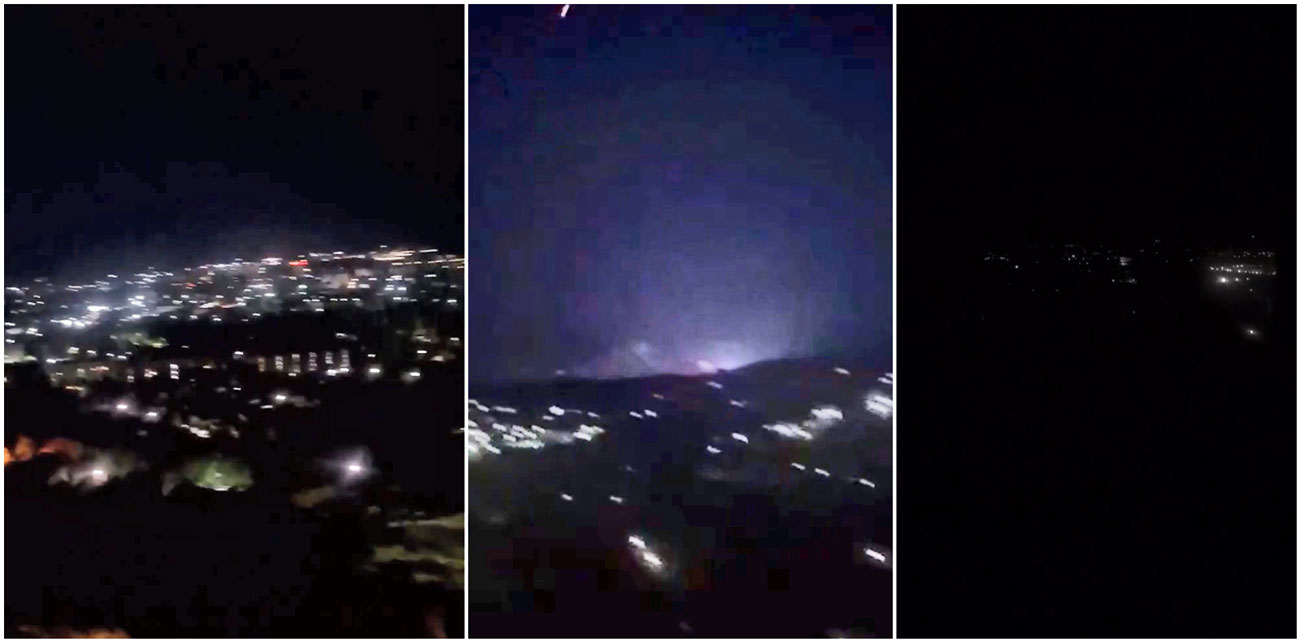
Overnight, drones attacked the Sakska thermal power plant near the western Crimean town of Saky, starting a fire, Militarnyi reported. Locals heard 16 explosions in the area before the flames rose, the monitoring channel Krymsky Veter said. NASA's FIRMS satellite system caught the blaze at around 03:13.
NASA FIRMS satellite data showing fire heat signatures at the Sakska thermal power plant near Saky in occupied Crimea, 28 June 2026. Map: NASA FIRMS
The Sakska plant is one of the key energy sites in western Crimea, with an output of 149.4 megawatts.
"It all leads to the Crimean Bridge"
Navy spokesman Dmytro Pletenchuk said the strikes on Russian logistics are part of a multi-stage operation built over years, not months. He told a national broadcast that the fuel shortages and gas-station queues on the peninsula are not the goal in themselves.
"What we are observing is the next stage of a multi-step operation. Where someone might see emotion — to cut something off here and now — no. This was preceded by a whole set of measures, and it lasted not even months, but years," he said.
Explore further
Occupied Crimea’s grid takes another night of strikes as Yalta and Sevastopol lose power
He traced the sequence from the start. First, Ukraine cut the naval logistics, the large landing ships. Then came the large railway ferries that formed the backbone of Crimea's sea supply, and after them the ordinary ferries that could serve the same role. Russian air defenses were destroyed in parallel, and Ukrainian forces struck targets in the so-called land corridor at the same time.
"It all essentially comes down to the so-called Crimean Bridge," Pletenchuk noted, calling the plan's execution "fairly successful."
The Kerch Strait bridge is the artery Russia built after seizing Crimea and uses to move fuel, ammunition, and troops onto the peninsula and onward to its forces across Ukraine's south.
Ukrainian forces destroyed three Russian sea drones before they reached the coast. The Ukrainian Navy reported on 24 June that the unmanned surface vessels were destroyed in a coordinated action with the Defense Intelligence Directorate (HUR).
Russia is continuing to attempt the naval drone warfare model that Ukraine pioneered in the Black Sea. The destroyed USVs were fitted with Starlink satellite terminals, per Defense Ministry advisor Serhii "Flash" Beskrestnov. This com
Ukrainian forces destroyed three Russian sea drones before they reached the coast. The Ukrainian Navy reported on 24 June that the unmanned surface vessels were destroyed in a coordinated action with the Defense Intelligence Directorate (HUR).
Russia is continuing to attempt the naval drone warfare model that Ukraine pioneered in the Black Sea. The destroyed USVs were fitted with Starlink satellite terminals, per Defense Ministry advisor Serhii "Flash" Beskrestnov. This comes despite SpaceX cutting unauthorized Russian Starlink access in February 2026. Russia has no other long-range control system for unmanned surface vessels, per Beskrestnov.
Ukrainian military units detected the vessels before they reached the coastline. The interception allegedly took place in the Black Sea near the Kinburn Spit, south of Ochakiv, along the Mykolaiv-Kherson coastline.
Beskrestnov says Starlink onboard because Russia has no alternative
"As I explained earlier, Starlink was installed on the destroyed boats because the enemy has no other long-range control systems," Beskrestnov said.
Russian forces have been unable to develop their own functional long-range satellite communication system for naval drones, with various alternatives either failing or proving too unstable for practical use.
The Ukrainian Navy said the destroyed vessels were detected and destroyed through coordinated action with the Defense Intelligence Directorate.
"Every such successfully repelled attack saves lives and is another blow to the aggressor's plans," the Navy reported.
The Navy did not specify the exact area of detection in its statement.
Russia's 2026 naval drone campaign collapsed before it began
Russia had planned a major campaign in 2026 involving unmanned surface vessels, but those plans were disrupted after SpaceX, at Kyiv's request, blocked Russian access to Starlink satellite communications in February 2026, per Euromaidan Press citing Beskrestnov in May 2026.
Russia has obtained Starlink terminals through third-party supply chains despite the service not being officially available in Russia, per Maritime Executive.
Black Sea USV warfare now goes in both directions
Ukraine has extensively used naval drones in the Black Sea since 2022, targeting Russian warships, patrol vessels, and military infrastructure in occupied Crimea. Ukrainian USV operations forced parts of Russia's Black Sea Fleet to relocate from occupied Sevastopol to ports farther east. Russia began studying and replicating Ukrainian USV designs in 2024-2025.
The Black Sea USV space is no longer one-sided. Russia is now contesting it with its own naval drones.
A Russian drone strike killed a sailor and set a civilian cargo ship ablaze in the Black Sea overnight on 22 June, as the vessel sailed toward a Ukrainian port, Ukrainian officials said. Russian drones damaged two more merchant ships in the same attack. The Ukrainian Navy rescued the surviving crew.
Since quitting the UN grain deal in 2023, Russia has tried to choke Ukraine's sea exports, the lifeline that still carries much of the country's grain to the world. Since then,
A Russian drone strike killed a sailor and set a civilian cargo ship ablaze in the Black Sea overnight on 22 June, as the vessel sailed toward a Ukrainian port, Ukrainian officials said. Russian drones damaged two more merchant ships in the same attack. The Ukrainian Navy rescued the surviving crew.
Since quitting the UN grain deal in 2023, Russia has tried to choke Ukraine's sea exports, the lifeline that still carries much of the country's grain to the world. Since then, Ukrainian drones and missiles destroyed or damaged up to 1/3 of Russia's Black Sea Fleet, forcing most of its remaining ships to flee from occupied Crimea to a safer remote base in Novorossiysk. Russia continued to occasionally target the greater Odesa seaports and Danube ports. Recently, Russia resumed targeting foreign commercial ships.
A burning ship and a dead crewman
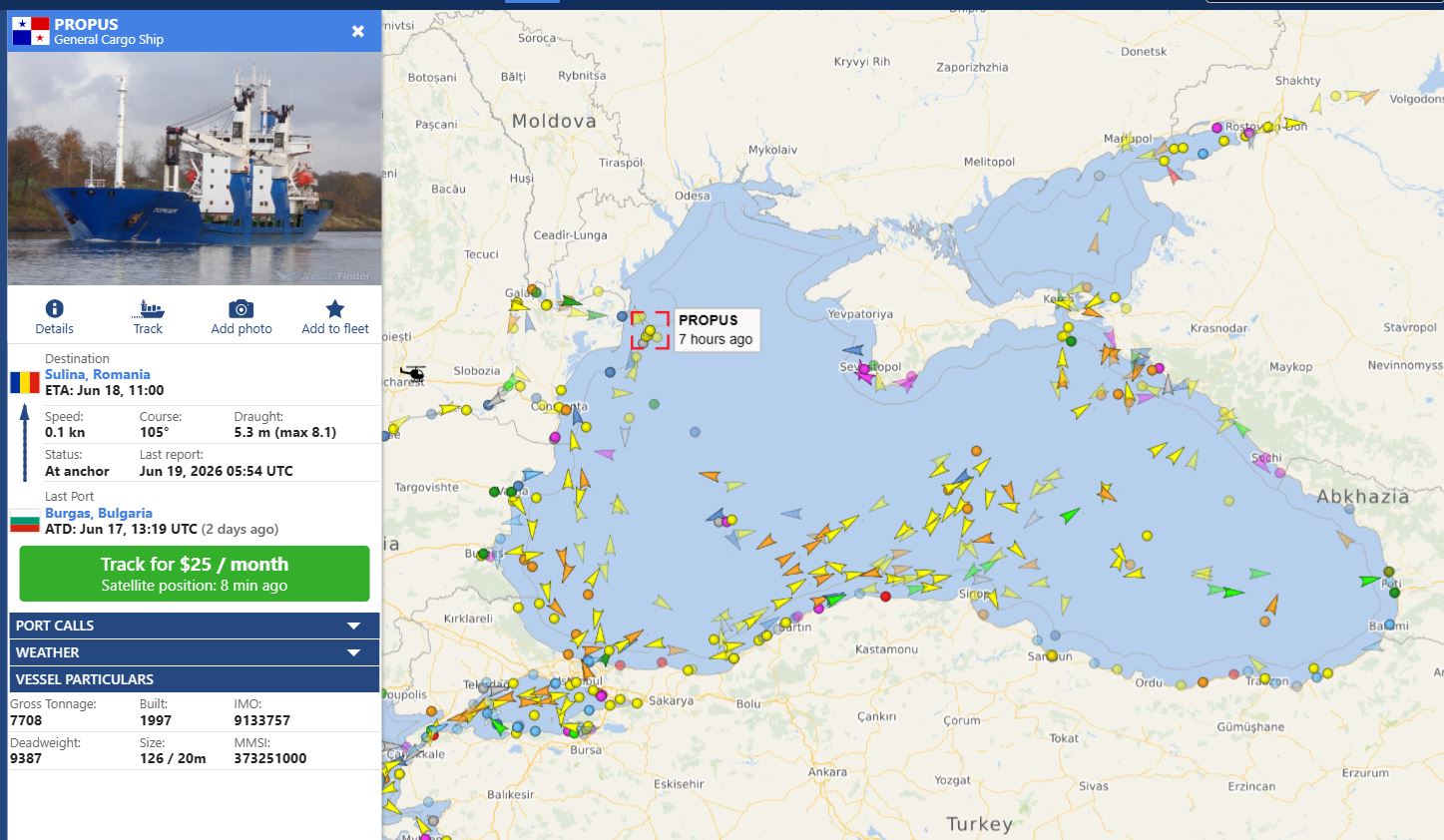
A drone set fire to a Panama-flagged vessel, Deputy Prime Minister for Restoration Oleksii Kuleba said. A fire broke out, and the ship lost seaworthiness. Other sources identified the vessel as the Turkish-owned bulk carrier Victress.
The dead crewman was a 58-year-old cook, an Egyptian citizen. Eight other sailors, citizens of Türkiye and India, escaped onto a life raft. The crew of nine had been sailing to a Black Sea port in Odesa Oblast. The Ukrainian Navy rescued them, Foreign Minister Andrii Sybiha said.
Explore further
Russian drones kill one sailor and wound five in attack on two civilian ships in the Black Sea
Three vessels, three flags
Russian drones struck three civilian merchant ships bound for ports in Odesa Oblast, the region's head, Oleh Kiper, reported. Only the Victress caught fire and lost seaworthiness. The ships under Palau and Belize flags took damage, but their crews were unharmed. Both continued their voyage. The Ukrainian Sea Ports Authority said the targeting of civilian shipping breaks international law.
Explore further
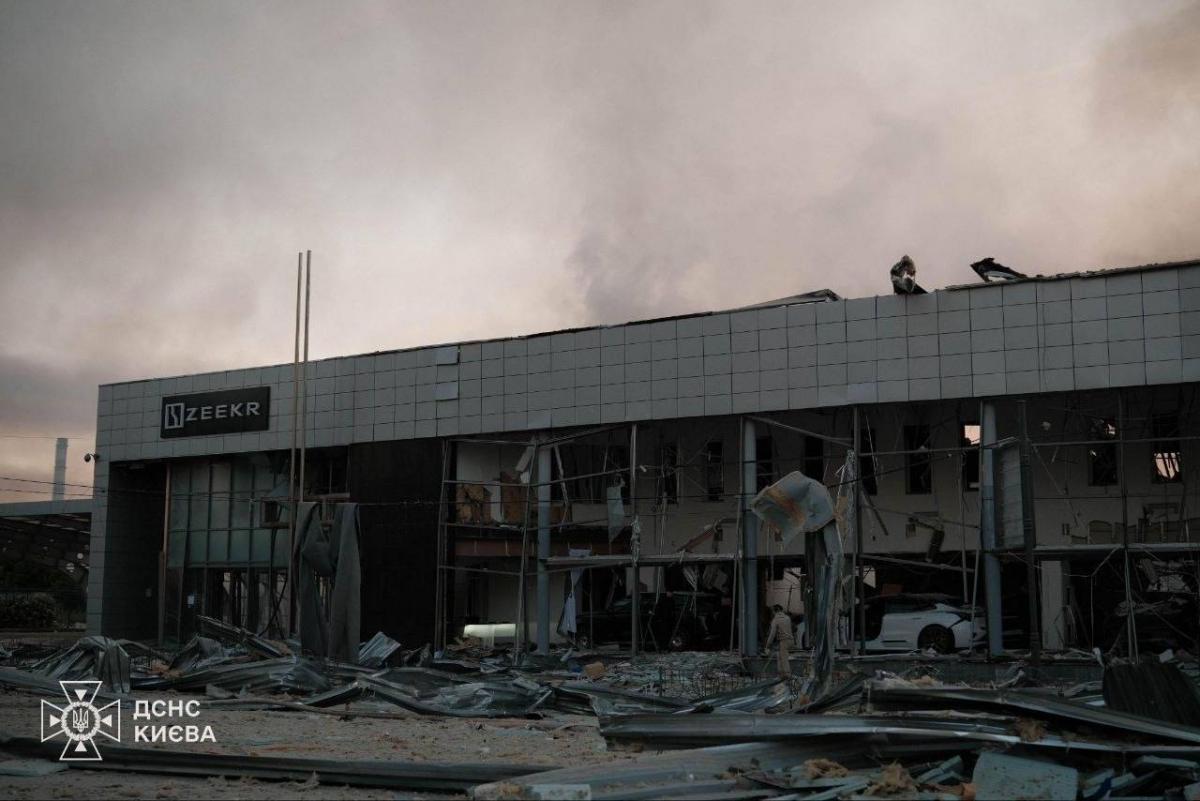
Russian strike damages Chinese Zeekr dealership in Kyiv, while Chinese components have been documented in Russian weapons
A strike timed after a Turkish visit
The attack came right after a high-level Turkish visit to Russia, Sybiha said. He called Russia the main threat to Black Sea security. Kyiv is informing every state and the International Maritime Organization, he added, and wants a strong international response. Kuleba called the strike another Russian war crime and a threat to global food and economic security.
A pattern in the Black Sea
Russia has hit civilian shipping in the corridor repeatedly. On 19 June, drones killed one sailor and wounded five on two ships. On 29 May, they struck three foreign-flagged vessels in the same corridor. On 18 May, a drone hit a ship tied to China, Moscow's closest war ally.
Editor's note: This is a developing story and is being updated.A deputy commander of Russia's navy has been killed in a Ukrainian strike in Kursk Oblast, a Russian official confirmed on July 3.Major General Mikhail Yevgenyevich Gudkov was killed alongside his deputy and several other Russian soldiers, Oleg Kozhemyako, governor of Russia's Primorsky Krai, said in a post on social media.According to Russian milbloggers, 22 people in total were killed as a result of a Ukrainian HIMARS strike in Rus
Editor's note: This is a developing story and is being updated.
A deputy commander of Russia's navy has been killed in a Ukrainian strike in Kursk Oblast, a Russian official confirmed on July 3.
Major General Mikhail Yevgenyevich Gudkov was killed alongside his deputy and several other Russian soldiers, Oleg Kozhemyako, governor of Russia's Primorsky Krai, said in a post on social media.
According to Russian milbloggers, 22 people in total were killed as a result of a Ukrainian HIMARS strike in Russia's Kursk Oblast bordering Ukraine. Kyiv has yet to comment on the attack.
Gudkov was appointed deputy commander-in-chief of the Russian Navy in March 2025. Prior to that, he led the 155th Separate Marine Brigade, which has been involved in combat operations against Ukraine.
Ukraine has accused the 155th Separate Marine Brigade of committing numerous war crimes. According to the country's Air Assault Forces, members of the brigade are responsible for executing prisoners of war and humiliating captured Ukrainian soldiers.
Gudkov held the titles of Hero of Russia and Hero of Primorye, Russia's far eastern region where he previously served, Kozhemyako said.
HIMARS, whose prowess became a popular motif of internet memes, was a game-changer for Ukraine when they first arrived in the summer of 2022.
Initially supplied with GMLRS rockets with a range of around 70 kilometers, they allowed Ukraine to target Russian forces on the other side of the front line far more accurately than they had previously.
In the fall of 2023, the U.S. began supplying Kyiv with an older model of ATACMS – fired from HIMARS launchers – with a range of around 165 kilometers, greatly increasing the range that Ukraine could strike within.
Russia's high-ranking military officials have been killed on a regular basis throughout the full-scale invasion — a recent report from BBC Russia identified ten generals 10 generals and 524 lieutenant colonels and colonels.
Ukrainian forces launched a cross-border incursion into Russia's Kursk Oblast in August 2024, making it the first large-scale invasion of Russian territory by foreign troops since World War II. The move was intended to disrupt a planned Russian offensive targeting Ukraine's Sumy Oblast and to relieve pressure on the Donetsk front.
Since then, Ukraine claims it has inflicted 63,402 Russian troop casualties in the oblast, including 25,625 killed and 971 captured. Ukrainian forces also say they have destroyed or damaged over 5,664 pieces of Russian military equipment in the area.
Russia retook most of the lost territory during a renewed offensive in March 2025, supported by North Korean troops.

 Connexion