❌

Vue lecture

Ukraine wins seat on UN Human Rights Council, vows to seek accountability for Russian abuses
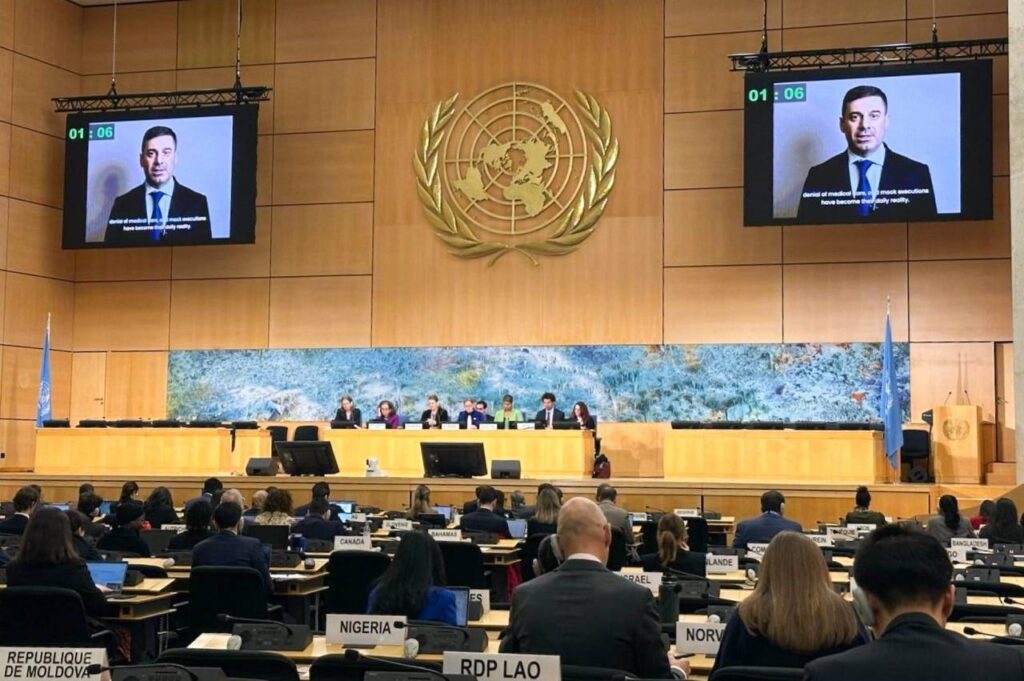
Ukraine’s Human Rights Commissioner Dmytro Lubinets addressing the UN Human Rights Council, 3 March 2026. Photo: Dmytro Lubinets

Ukraine has been elected to the UN Human Rights Council for the 2027–2029 term, receiving support from 162 UN member states in a vote by the UN General Assembly on 13 October, Ukraine’s Permanent Mission to the UN said.

The three-year term gives Ukraine an opportunity to shape international human rights discussions while drawing attention to abuses stemming from Russia’s war. Kyiv says it will work with partners to strengthen accountability mechanisms and protect civilians affected by conflict.

Ukraine’s Permanent Mission to the UN called the result a major diplomatic achievement, saying its team had spent more than a year securing support for the candidacy.

Ukraine’s Foreign Minister Andrii Sybiha said Kyiv would use its membership to push for accountability for Russian human rights violations, support international investigations, and advocate for prisoners of war and civilians unlawfully detained by Russia.

Ukraine will also continue efforts to secure the return of Ukrainian children deported or forcibly transferred by Russia, Sybiha said.

Ukraine to focus on accountability for Russian violations

Ukraine’s election comes as Russia continues its full-scale war against the country, which has brought grave violations of human rights and international humanitarian law consistently since 2022.

As a council member, Ukraine plans to work with international partners to strengthen mechanisms for documenting and investigating abuses, protect human dignity, and reinforce international human rights institutions, Sybiha said.

Ukraine has been elected to the UN Human Rights Council for 2027-2029. I thank all UN Member States that supported Ukraine’s candidacy.

Ukraine joins the Council while continuing to defend its people and its sovereignty against Russia’s ongoing aggression, which has brought…

— Andrii Sybiha 🇺🇦 (@andrii_sybiha) October 13, 2026

Ukraine is returning to the council after previously serving multiple terms, most recently from 2021 to 2023. It was among the council’s founding members when the body was established in 2006.

Russia was suspended from the UN Human Rights Council in April 2022 following reports of gross and systematic human rights violations during its war against Ukraine. Moscow subsequently announced it was withdrawing from the council.

15 countries elected to the council

Alongside Ukraine, the General Assembly elected Brazil, Ghana, the Dominican Republic, Zambia, Ireland, Jordan, Kuwait, Moldova, Nepal, Nigeria, Germany, Uruguay, and Japan to the Human Rights Council.

The 47-member council is the UN’s principal intergovernmental body responsible for promoting and protecting human rights worldwide. Members serve three-year terms.

  •  

Finland calls for EU tourist visa ban on Russians until Moscow ends war against Ukraine as bloc weighs tougher restrictions

Finland’s Foreign Minister Elina Valtonen, 20 September 2025. Photo: Elina Valtonen / X

Finland’s Foreign Minister Elina Valtonen has called on the European Union to stop issuing tourist visas to Russian citizens until Russia ends its war against Ukraine, urging the bloc to adopt a unified policy. Her call comes as the EU discusses broader restrictions on Russian diplomats, tourists, and former combatants.

Russia has intensified its hybrid campaign across Europe in recent months, with suspected sabotage, arson attacks, and other covert operations targeting infrastructure and undermining security. European officials have increasingly called for a coordinated response, arguing that tighter controls on Russian diplomats, travel, and former combatants could help reduce security risks and limit opportunities for Russian intelligence operations.

In a statement published on 12 October, Finland’s Ministry for Foreign Affairs said Valtonen was calling on the European Commission to introduce stricter guidelines for processing Russian visa applications and propose changes to EU legislation needed to implement a complete ban on tourist visas.

“As long as Russia continues its invasion, Russian citizens should not be issued tourist visas,” Valtonen said. “It is not right that Russians can travel to Europe to enjoy the way of life and freedoms here while their country bombs the homes of Ukrainians.”

Finland banned visas for non-essential travel by Russian citizens in 2022. Valtonen said the same restriction should now be adopted at the EU level.

The Finnish minister has invited other EU member states to join a joint letter to the European Commission. Beyond a complete ban on tourist visas, the letter proposes barring Schengen visas for people in Russian President Vladimir Putin’s inner circle, restricting visas for Russian athletes, and enforcing an EU-agreed visa ban on former Russian combatants.

We must stop issuing tourist visas for Russian citizens across the EU.

I have invited other EU Member States to join a letter addressed to the European Commission. I am calling for a complete EU ban on Russian tourist visas for as long as Russia continues its war of aggression.…

— Elina Valtonen (@elinavaltonen) October 12, 2026

EU considers wider restrictions on Russians

The proposal comes as EU foreign ministers discuss additional measures to counter Russian hybrid threats. EU foreign policy chief Kaja Kallas said after a meeting of the bloc’s foreign ministers in Luxembourg on 12 October that the EU was considering reducing the number of tourist visas issued to Russians, restricting Russian diplomats’ movements within the bloc, and accelerating entry bans for former Russian combatants, Radio Svoboda reported.

Kallas said the EU needed a comprehensive response to Russian hybrid threats, including new sanctions, stronger enforcement of existing restrictions, action against Russia’s shadow fleet, accountability for hybrid attacks, and improved intelligence sharing.

One proposal would require Russian diplomats to obtain advance permission before traveling to other EU member states, rather than simply notifying authorities of their trips.

Polish Deputy Foreign Minister Marcin Bosacki said tighter rules were necessary because some acts of sabotage and subversion were coordinated, at least in part, through Russian diplomatic missions.

Kallas said the European External Action Service and European Commission would also prepare proposals for further isolating Russia in international sport. She argued that sport and culture should not be used to whitewash Russian aggression.

EU divided over tourist visa restrictions

Several EU countries have pushed to reduce tourist visas for Russian citizens. In June, a group of member states jointly called for fewer visas, according to DW. The Finnish ministry said Schengen countries issued nearly 500,000 tourist visas to Russian citizens in 2025.

Estonia has also proposed measures to bar former Russian military personnel who fought against Ukraine from entering the EU. Estonian Foreign Minister Margus Tsahkna warned that large numbers of Russian veterans could try to enter Europe after the war, potentially with support from Russian intelligence services. 

The European Commission has supported including a mechanism targeting former combatants in the EU’s 21st sanctions package, and officials are working on how to implement it.

However, EU countries remain divided over the scope of visa restrictions. France and Italy have previously opposed a blanket isolation of Russian tourists. Member states are also debating how to prevent former Russian combatants from entering the bloc without restricting entry for military deserters or opponents of the war.

No timeline has been announced for the proposed restrictions on Russian tourists and diplomats. The measures remain under discussion and have not been adopted as a bloc-wide ban.

  •  

US continues sharing intelligence with Ukraine, Trump says amid Russia deal backlash. Questions remain over missed warning for latest attack

Ukrainian President Volodymyr Zelenskyy meets US President Donald Trump in Ankara, Türkiye, on 8 July 2026.

US President Donald Trump said on 13 October that the US continues to share intelligence with Ukraine, following reports that Washington had threatened to suspend intelligence assistance unless Kyiv stopped striking Russian oil refineries, POLITICO reported.

The comments came after Ukraine received no advance warning from its partners ahead of Russia's latest ballistic missile strike, raising fresh questions about intelligence sharing between Kyiv and Washington.

“We are helping them, and we are sharing intel. We want the war to end,” Trump told reporters at the White House, according to POLITICO, reaffirming US support after his recent efforts to reach an agreement with Russian President Vladimir Putin drew criticism over his approach to the war.

Trump reaffirms support after backlash over Russia deal

Last week, the US threatened to cut intelligence sharing if Ukraine did not stop attacking Russian oil refineries. Zelenskyy did not publicly confirm the reported threat.

The reports came amid criticism of Trump’s announcement of a deal to buy Russian oil and his pressure on Kyiv to make concessions, even as Russia continued attacking Ukraine.

Zelenskyy said Ukraine had refrained from striking Russian oil refineries and the energy sector for two days after Trump announced an energy ceasefire. Russia, however, continued attacking Ukrainian energy facilities and critical infrastructure, he said, with 19 Ukrainian regions coming under attack during those two days.

Trump said Monday that both Russia and Ukraine had violated the energy ceasefire, arguing that each side was responsible. He also said Putin wanted a deal and that Washington needed to persuade Zelenskyy to agree.

Trump's latest comments publicly reaffirm that intelligence sharing is continuing. However, the circumstances surrounding the latest Russian strike have raised questions about whether Ukraine is receiving the early warnings it needs to protect civilians.

Ukraine received no warning before latest Russian strike

Early warnings of incoming Russian ballistic missiles give Ukrainians a brief window to reach shelter before impact. US intelligence helps make those warnings possible, giving civilians crucial time to protect themselves.

Zelenskyy said Russia's latest attack involved five ballistic missiles and more than 100 drones, and that Ukraine received no warning from its partners before the strike.

“Intelligence on Russian ballistic missile launches helps save lives,” Zelenskyy said Tuesday. “This is precisely what helps prevent people from being killed — when there is an early warning about ballistic missiles.”

He added that Ukraine had received no warning ahead of the attack.

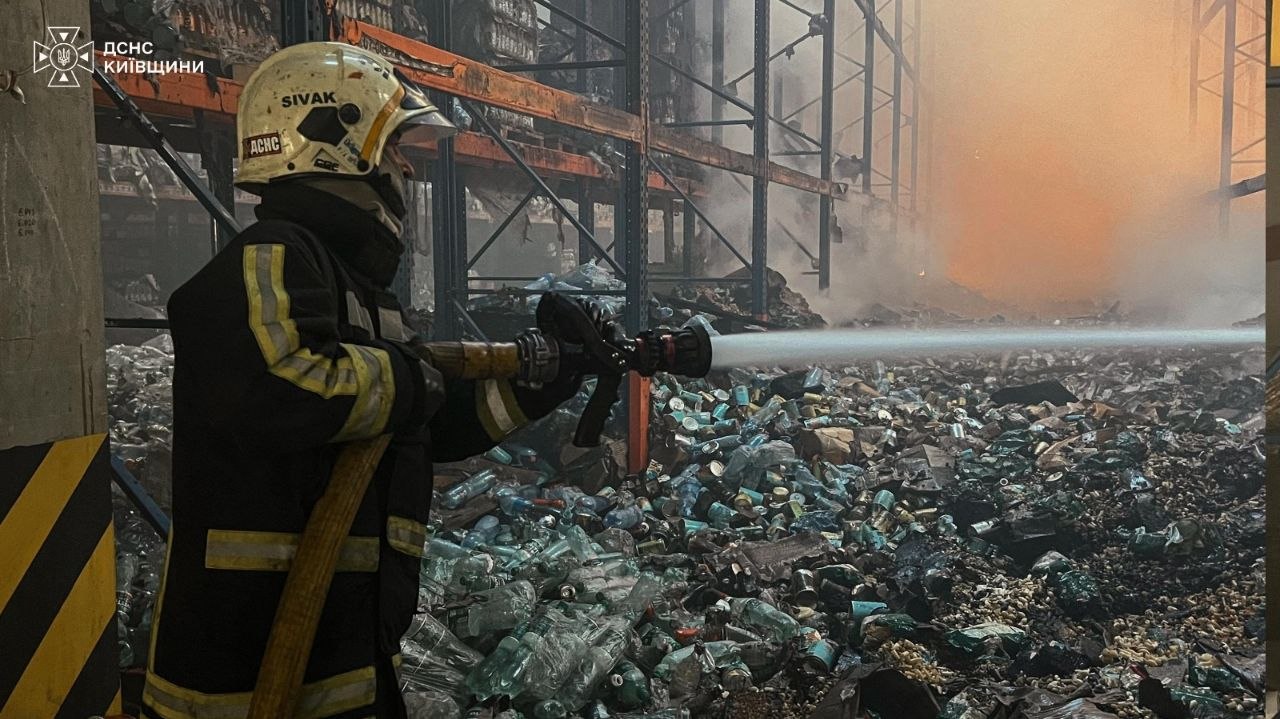
just power plants russia’s drones also went after warehouses groceries hardware chain · post firefighter puts out fire warehouse burned food drink stock hit russian attack bucha district kyiv oblast
Explore further

Russian ballistic missiles hit Kyiv before sirens, gap that lands hard amid fears that Washington could cut data that warns of launches

Ukraine normally receives alerts about impending Russian missile launches through the Battlespace Command and Control Center, a system operated by the US military and NATO members, among others, POLITICO reported.

Citing an unnamed official familiar with the matter, POLITICO reported that US officials attributed the missing warning to bad weather. The explanation reportedly raised doubts among Ukrainian officials.

Ukrainian Air Force spokesperson Yurii Ihnat said the warning system had failed to transmit information on previous occasions. He said specialists would work with international partners to resolve any technical problems.

Ukrainian Foreign Minister Andrii Sybiha said Tuesday that intelligence sharing through the platform was continuing, according to POLITICO.

  •  

Russia used civilians as human shields, then shelled them near Kupiansk, Ukraine’s Khartiia says

Ukrainian Khartiia Corps reconnaissance footage shows a group of civilians near Kupiansk who were allegedly shelled by Russian forces on 13 October 2026, according to the unit. Screenshot from video: Khartiia Corps

Ukraine's Khartiia Corps has accused Russian forces of using civilians as human shields and then shelling them near a gas pipeline in Kupiansk, Kharkiv Oblast, on 13 October. The group included two women, a child, and several men, according to the Ukrainian military unit.

Khartiia warned that Russian media could use footage of the incident to accuse Ukrainian forces of attacking civilians. The corps said the shelling came from Russian-held territory and described the incident as a deliberate provocation.

The corps said Russian troops led the civilians toward the Shebelinka–Ostrogozhsk gas pipeline before the group came under repeated mortar and artillery fire. Aerial reconnaissance footage recorded casualties among the civilians, the unit said.

Russian forces used civilians as human shields before shelling them near Kupiansk, Ukraine’s Khartiia Corps alleges.

The group included two women, a child, and several men who were being led toward a gas pipeline when they came under mortar and artillery fire, according to the… pic.twitter.com/XvbcwRIwLb

— Euromaidan Press (@EuromaidanPress) October 13, 2026

Khartiia says Russian forces fired from occupied side of Oskil River

According to Khartiia, Ukrainian forces did not open fire on the group. 

The corps said an analysis of the explosions indicated that the shelling came from the eastern bank of the Oskil River, from territory held by Russian forces.

The unit described the incident as a deliberate provocation, warning that Russian media could use footage from the scene to falsely accuse Ukraine of attacking civilians.

Evidence to be submitted for war crimes investigation

Khartiia said it would submit the collected materials for investigation into potential war crimes.

The corps did not provide a confirmed number of civilian casualties or further details about the condition of those shown in the reconnaissance footage.

The allegations have not been independently verified.

  •  

France seizes Russian shadow fleet tanker in Indian Ocean, vows to combat illicit oil trade “wherever it may be in the world”

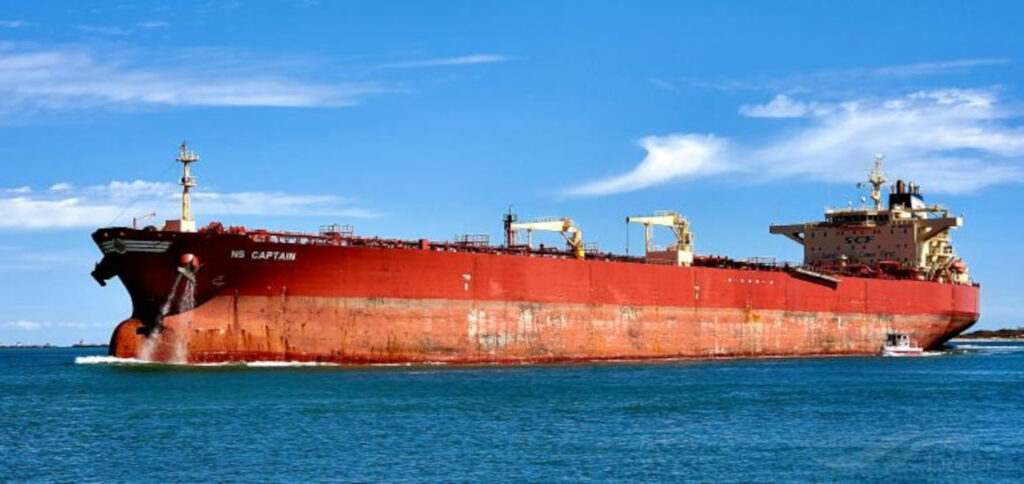
The DF Peak crude oil tanker, part of Russia's shadow fleet. Photo: VesselFinder

France has seized an oil tanker suspected of belonging to Russia’s shadow fleet after intercepting it more than 450 nautical miles south of Réunion in the Indian Ocean, French President Emmanuel Macron announced on 12 October.

The seizure targets a network Russia relies on to keep oil revenues flowing despite Western sanctions imposed over its full-scale invasion of Ukraine. The shadow fleet allows Moscow to continue exporting oil and funding its war in Ukraine. 

The French Navy boarded the DF Peak over suspicions that it was sailing under a false flag and involved in illegal fuel transportation, Macron said. French forces escorted the vessel to an anchorage near Réunion for further checks as part of a judicial investigation. 

La France est déterminée à lutter contre la flotte fantôme, partout dans le monde.

Ce matin, à plus de 450 nautiques au sud de La Réunion, notre Marine nationale a arraisonné le pétrolier DF Peak, suspecté de naviguer sous un faux pavillon et impliqué dans des activités… pic.twitter.com/GS91egdvzN

— Emmanuel Macron (@EmmanuelMacron) October 12, 2026

What is Russia’s shadow fleet?

Russia’s shadow fleet consists of oil tankers used to keep Russian oil and petroleum exports moving despite Western sanctions imposed after Moscow launched its full-scale invasion of Ukraine in 2022.

The vessels often operate through opaque ownership structures, change names or flags, and use registration practices that make it harder to establish who controls them and where their cargo originates. These methods help Russia maintain oil revenue while limiting the impact of sanctions and restrictions on shipping and insurance. 

The fleet also raises safety and environmental concerns. Many of the vessels are older tankers operating with unclear insurance coverage or limited oversight, increasing the risk of accidents and oil spills.

DF Peak previously sailed under different name

The DF Peak was previously named Kaliningrad and sailed under the flag of Benin. It has been subject to US, UK, and EU sanctions since 2024, according to Reuters. Ukrainian military intelligence has also linked the tanker to Russian crude oil transportation and the shipping company Sovcomflot. 

The tanker was last tracked near Madagascar on 12 October after departing from Venezuela, according to shipping data cited by Reuters. French authorities said the vessel would be taken to Réunion for a closer examination of its registration and activities. 

Russia condemns seizure

Russia’s embassy in France condemned the seizure, calling it a violation of international law and describing the operation as “piracy,” according to Russian state media cited by Reuters. The embassy said France had not notified Moscow about the seizure and that it was checking whether Russian citizens were among the crew. 

The seizure is part of wider European efforts to enforce sanctions against Russia’s oil exports and target vessels suspected of using false flags. France has seized at least five Russian-linked tankers since 2024, Reuters reported. 

  •  
❌