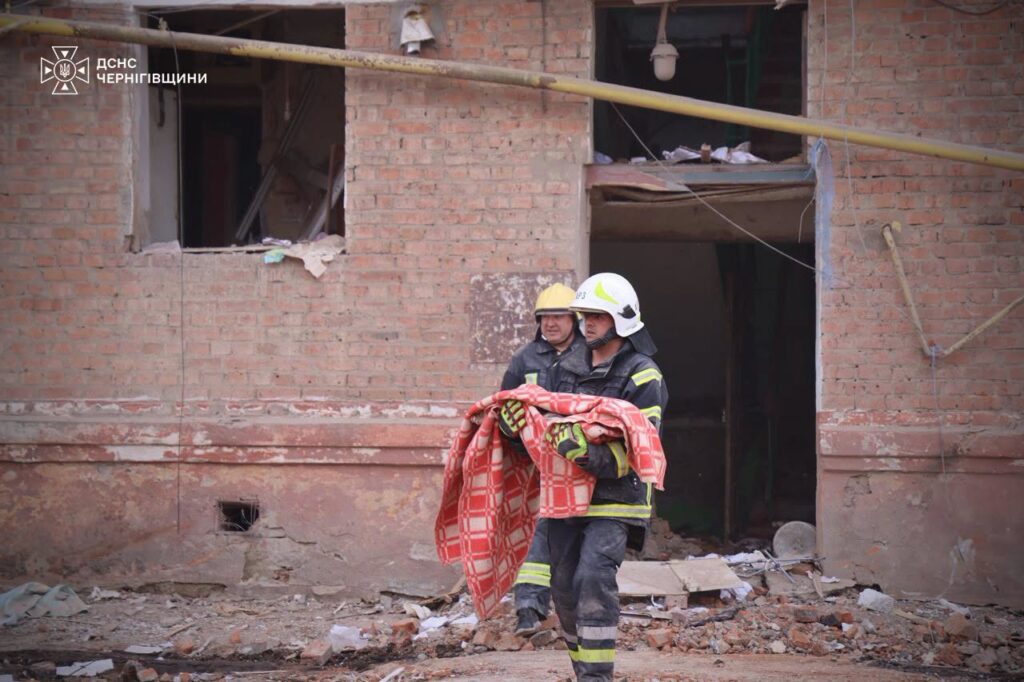
Ukrainian rescuers are still pulling bodies from a collapsed apartment block in Pryluky. A Russian missile strike on the five-story residential building in the city of Chernihiv Oblast that borders both Russia and Belarus killed 19 people, including five children, and injured 55, Ukraine's State Emergency Service reported on 7 October.
Russia hit Kyiv and a dozen other regions overnight. Air defense downed five ballistic missiles, 39 cruise missiles, and 117 drones, while missiles and drones hit 18 locations, the Air Force said. The nationwide strike killed at least 24 people, including four children.
Among the dead in Pryluky were three one-year-old boys, Oleksandr, Kyrylo, and Serhii, and eight-year-old Maksym, President Volodymyr Zelenskyy says. Seven of the injured are children. Some residents are still unreachable, and all emergency services are working at the site. Russia keeps using missiles against Ukrainian cities and civilians by deliberate choice, he states.
"My condolences to all the families and loved ones," Zelenskyy says.
The strike comes on Putin's birthday
The attack came on Russian President Vladimir Putin's birthday on 7 October.
"Continuing to use missiles against Ukraine, against our people, our children, is an absolutely conscious choice of terror. This is what Moscow chooses despite all our efforts with partners to bring peace closer," Zelenskyy says.
He urges partners to increase pressure on Russia and bolster defense support for Ukraine, saying it is important that world leaders understand this and that the world not remain silent.
A pattern of strikes on Chernihiv Oblast
Pryluky, about 150 kilometers east of Kyiv, lies in a region Russia has hit repeatedly. The overnight barrage also damaged civilian and utility infrastructure across the Pryluky community, the city council said.
Ukraine had seen the attack. The day before, Zelenskyy warned that intelligence indicated a massive Russian strike was in preparation. Russia fired about 70 missiles overnight, killing two people each in the capital Kyiv and in the cities of Kremenchuk and Oleksandriia in addition to the Pryluky dead.
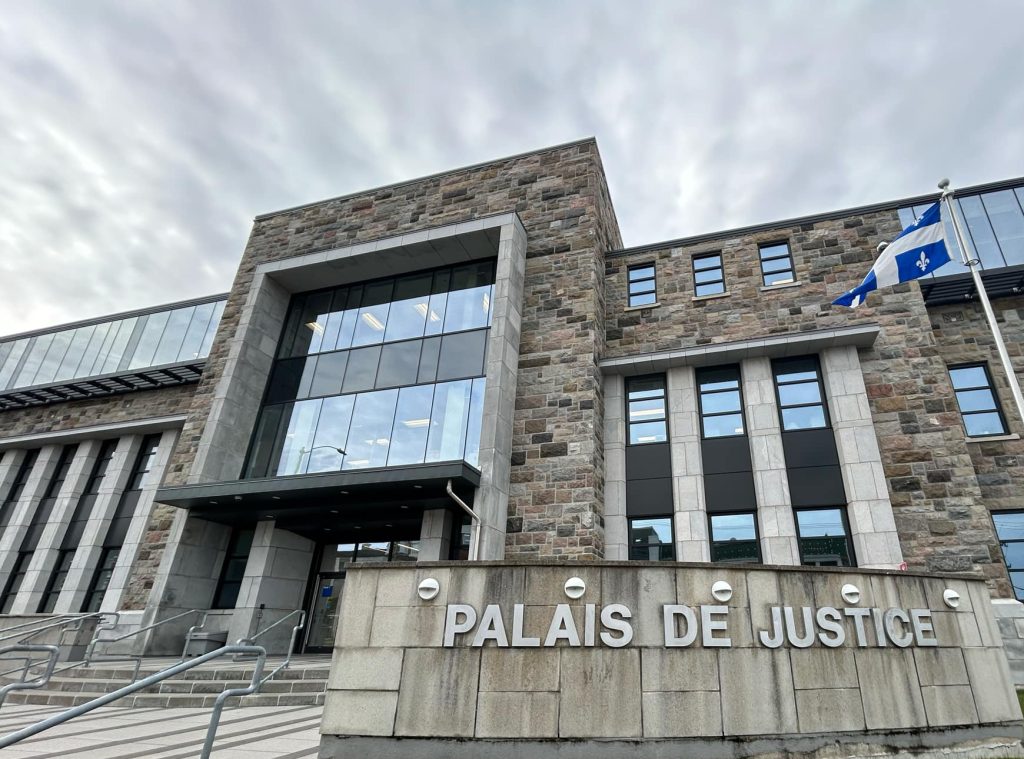
La date retenue pour la tenue des plaidoiries dans le premier procès de Ronald Audet, qui est accusé de crimes de nature sexuelle sur une personne mineure, est finalement connue. La reprise du procès aura lieu le 14 janvier 2027 au palais de justice de Rimouski.
C’est ce que les parties ont mentionné ce lundi matin au juge de la Cour du Québec, Éric Morin.
Au terme de la 3e journée du procès, le 15 mai 2026, l’avocate de Ronald Audet, Me Caroline Bérubé, a annoncé qu’elle n’aurait pas de preuve à présenter lors du procès de l’homme de 88 ans, de Mont-Joli.
Au début du procès, le 22 janvier 2026, elle avait annoncé avoir deux témoins à faire entendre, dont l’accusé. « J’ai parlé à mon client hier. Nous n’aurons pas de preuve à présenter en défense. Nous serions donc rendus aux plaidoiries », avait mentionné Me Bérubé.
Trois jours de procès
Amorcé les 22 et 23 janvier derniers, le procès a repris le 15 mai pour la 3e journée d’audience.
Me Bérubé a poursuivi son contre-interrogatoire de la plaignante, dont l’identité est frappée par une ordonnance de non-publication.
Le palais de justice de Rimouski (Photo Le Soir.ca- Olivier Therriault)
Elle a soulevé des contradictions entre la déclaration de la victime faite en 2023 à l’enquêteur de la Sûreté du Québec et sa version des faits livrée dans son témoignage en janvier 2026.
La plaignante a expliqué que ses souvenirs s’étaient précisés grâce à une thérapie. « Je n’ai pas utilisé les mêmes mots, mais ce dont je suis sûre, c’est que j’ai été agressée par Ronald Audet dans le salon et dans une chambre à l’étage », a-t-elle répété à quelques reprises.
Témoignage de la plaignante
En début de procès, en janvier dernier, la plaignante a raconté qu’elle allait souvent chez l’accusé quand elle était enfant parce que sa mère était amie avec la conjointe de l’accusé.
Elle mentionne que les gestes ont eu lieu sur le La-Z-Boy, dans le salon. « C’était sous forme de jeux. Il me disait de brasser son pénis pour le faire rallonger et que de l’eau allait sortir. C’était devenu une habitude. Ça se faisait en douceur, sans violence ».
La plaignante a ajouté qu’elle se souvenait qu’il lui avait demandé de mettre son pénis dans sa bouche.
« Je raconte ce qui est clair dans ma tête. J’obéissais. Je ne savais pas ce qu’était une érection. Je ne savais rien de la masturbation. Quand j’ai compris, j’ai eu peur et honte », a-t-il affirmé.
Les événements se seraient produits entre le 4 janvier 1983 et le 31 décembre 1986 à Mont-Joli. « Je ne peux pas dire le nombre de fois, mais c’était chaque fois qu’on allait chez lui et qu’il était là », a précisé la plaignante, qui avait entre quatre et 10 ans au moment des gestes allégués.
Trois des cinq individus arrêtés dans la nuit du 4 au 5 octobre à la suite d’une introduction par effraction survenue dans une résidence de la rue Principale, à Saint-Gabriel-de-Rimouski, seront de retour en cour ce mercredi 7 octobre, au palais de justice de Rimouski, pour leur enquête sur remise en liberté.
Marc Arthur Kelian Bineli Mvogo,18 ans, Steven Loumbou, 18 ans et Xavier Pellerin, 20 ans, ont comparu une première fois lundi en fin de journée sous un chef d’accusation d’introduction par effraction dans une maison d’habitation et d’y avoir commis un acte criminel, soit des voies de fait armées.
Les trois étaient sans avocat. La procureure de la Couronne, Me Annie-Claude Breron, s’est objectée à leur remise en liberté.
Ils sont donc demeurés détenus en attendant leur retour en cour pour leur enquête sur remise en liberté, mais aussi pour l’orientation et déclaration, c’est-à-dire pour l’enregistrement d’un plaidoyer et le choix du type de procès désiré.
Le dossier de Mathias Charafeddine, 18 ans, qui fait face à la même accusation, a été reporté au 9 octobre pour enquête sur la mise en liberté et orientation/déclaration. Il n’avait pas non plus d’avocat lors de sa première comparution et il est demeuré détenu.
Un 5e accusé est d’âge mineur (16 ans). Il a comparu lundi devant le tribunal de la jeunesse. Son statut de mineur protège son identité.
Selon les premiers éléments de l’enquête, les suspects se seraient introduits dans l’habitation avant d’agresser les deux occupants.
Les victimes, un homme et une femme dans la quarantaine, ont subi des blessures importantes et ont été transportés à l’Hôpital régional de Rimouski. Leur vie n’est pas en danger.
L’enquête policière a permis d’établir que cet événement ne serait pas attribuable au hasard. « Les informations recueillies jusqu’à maintenant indiquent plutôt que les victimes auraient été visées de façon spécifique », mentionne le corps policier.
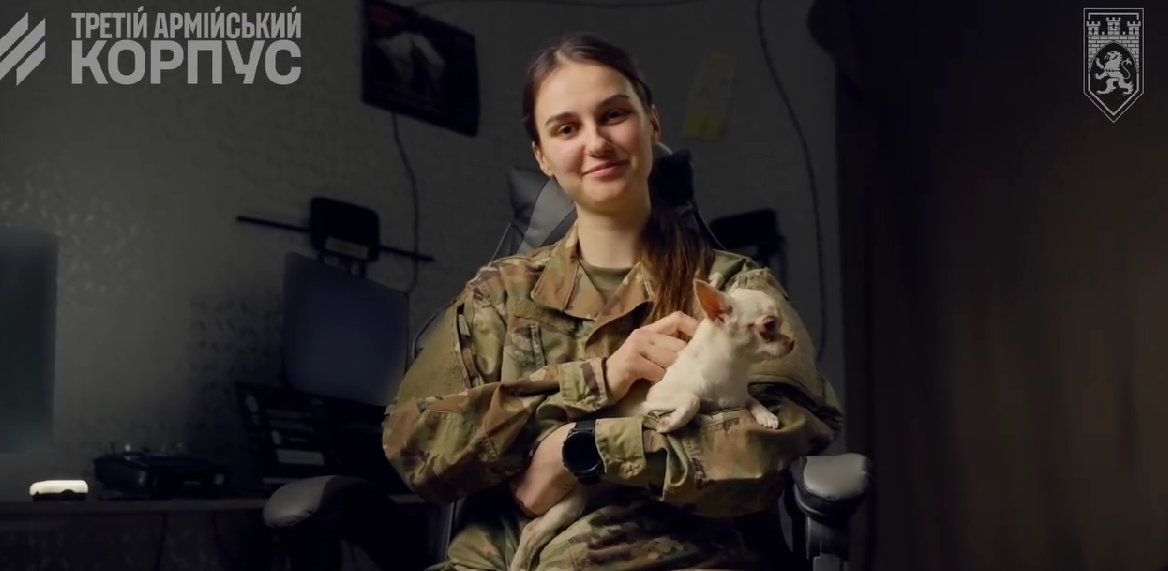
Natalia is 25 years old and from Odesa. She has served in two armies—the Israeli and Ukrainian militaries. In the Armed Forces of Ukraine, she has, among other things, carried out missions as part of a UAV, FPV drone, and strike-wing crew on the Zaporizhzhia and Kupiansk fronts, NV reported on 5 October.
During the Russo-Ukrainian war, women in Ukraine have the right to voluntarily enlist in the military. As of March, more than 75,000 women were serving in the armed forces, more than 55,000 of them as service members, the commander-in-chief said, and their number has been growing every year. Recently, discussion around the mandatory mobilization of women has intensified. Keith Kellogg, former US Special Presidential Envoy for Ukraine under President Donald Trump, said that he considered mobilizing women in Ukraine appropriate. In response, Iryna Vereshchuk, Deputy Head of the Office of the President of Ukraine, said she would rather see more missiles and more will from the United States than advice to mobilize women.
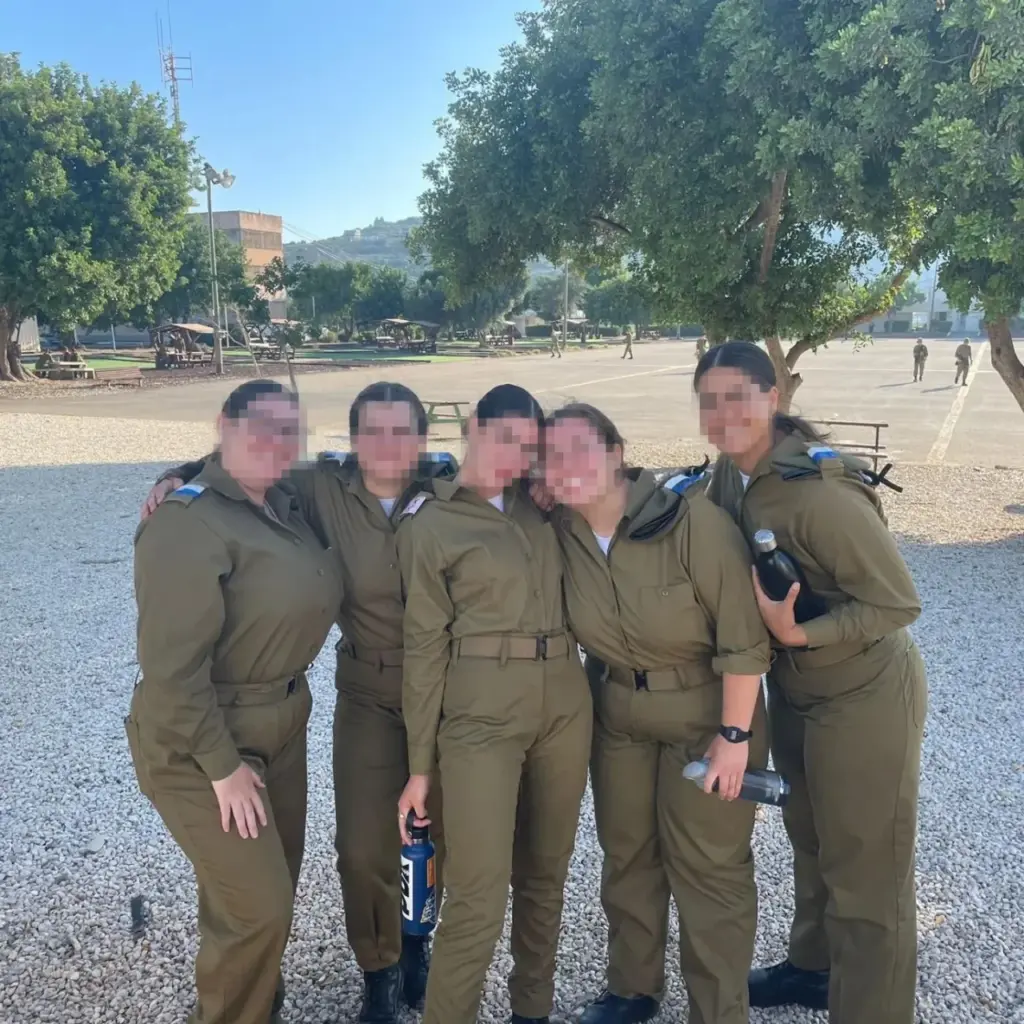
In Israel, Natalia served in a search-and-rescue brigade as a rescue soldier and in the engineering corps during a deployment along the northern border.
Natalia was born in Russia’s Saint Petersburg but does not remember her life there
The young woman was born in St. Petersburg, where her family lived at the time. When she was a year and a half old, her mother returned to Odesa with her and her older son. Natalia says she remembers her life exclusively in Ukraine.
She spent the first nearly two years studying at Lviv University, but later decided to leave the university and look for other educational opportunities. Natalia studied, among other places, in Denmark through a scholarship program. After completing it, she planned to enroll at a European university to study sound engineering, but the coronavirus pandemic began at that time.
She moved to Israel under a program for Jewish youth at the end of 2020. After the program ended, due to quarantine restrictions and closed airports, Natalia faced a choice: obtain a work visa or acquire citizenship under the Law of Return. She chose the latter—and with it, she also became obligated to perform military service.
In May 2022, Natalia joined the Israeli military and chose a combat unit.
“When the war started in Israel itself, I still had six months of mandatory service left. I was discharged and immediately transferred to reserve service. Once I managed to resolve all the bureaucratic issues so that this would not be considered desertion, I returned to Ukraine,” the young woman says.
Natalia returned to Ukraine in March 2025, and in August signed a contract with the Armed Forces of Ukraine.
Natalia (right) and her fellow servicewoman. Photo courtesy of Natalia/NV
“The army—both Israeli and Ukrainian—gives you a deeper understanding of what society is made of”
Among the advantages of the Ukrainian army, she highlights its ability to quickly adapt to circumstances. In particular, she mentions the use of drones, OSINT, and solving complex technological tasks with minimal resources.
“The West could learn from this situational agility. They often spend huge budgets on developments that should be cheap and mass-produced,” the veteran says.
However, such Ukrainian ingenuity is largely a consequence of a lack of funding, Natalia notes.
In the Israeli military, Natalia highlights society’s readiness for the constant threat of war and more systematic planning of military service.
“There, preparation for and perception of the army begin at school: by the age of 14–15, teenagers already understand where they want to go, what skills they need, and undergo selection for special or intelligence units,” the young woman says.
She then gives the opposite example of the situation in Ukraine.
Explore further
This Ukrainian female soldier flies one of war’s heaviest drones. She turns down promotion twice to keep doing it
“In Ukraine, with very rare exceptions, people hide until they are mobilized, and suddenly face the reality of conscription without having any understanding of the system,” the veteran says.
Asked how adapted the Ukrainian army is to women, she answered: “In no way,” adding that the Israeli army is “also largely not fully adapted.”
In Ukraine, this is reflected, in particular, in the provision of clothing and equipment that often does not correspond to women’s sizes and physiology. She says she had to purchase her own anatomically fitted body armor. She cited the example of veteran Natalia Lishchyshyna, who had her breasts amputated due to prolonged wearing of body armor that was not adapted to the female anatomy.
In Israel, by contrast, there is a practice of reimbursing expenses for equipment that service members purchase at their own expense.
Serving in the military in both countries provides an opportunity to better understand what society is actually made of, the young woman says.
“The army—both Israeli and Ukrainian—gives you a deeper understanding of what society is made of. You encounter people you would never have crossed paths with in your civilian bubble because of differences in views or socioeconomic circumstances,” Natalia says.
She believes this makes it easier to accept mistakes, difficulties, and new challenges.
The Ukrainian army is not adapted to women in any way, Natalia says
In Natalia’s view, the problem is not only the living and working conditions but, above all, the lack of mechanisms necessary for the systematic mandatory mobilization of women. At the same time, she believes voluntary recruitment should be encouraged and expanded.
One of the problems is the lack of a legal procedure for temporary childcare in cases when both parents are simultaneously carrying out combat missions, Natalia says, stressing that she means the period of their service, rather than situations involving the death of one of the parents.
Another shortcoming is insufficient protection against sexual violence and harassment in the Ukrainian military.
“Here, any complaint goes through the direct chain of command. If the commander is not interested in resolving the problem or is involved in it themselves, the woman is left defenseless,” the veteran says.
In Israel, by contrast, there is a separate hotline and mechanisms for documenting such cases without directly approaching a commander.
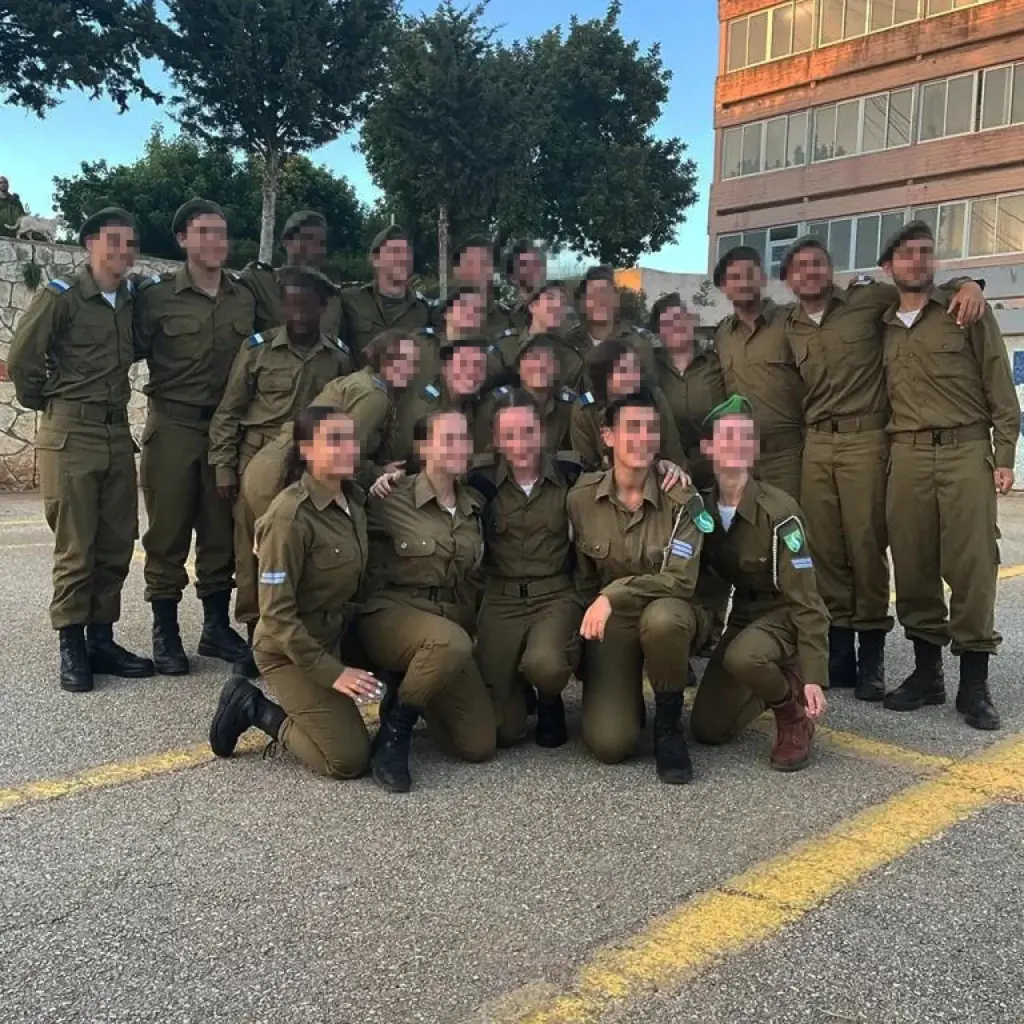
Natalia (second from left) during her service in the Israeli army. Photo courtesy of Natalia/NV
Women in combat positions can also still be taken insufficiently seriously, denied participation in combat missions, or transferred to staff positions without their consent.
Natalia also emphasizes the lack of systematic military training for civilian women “at any level” and gives school education as an example.
“Even with the weak level of the school curriculum for the subject ‘Defense of Ukraine,’ boys had at least some basic knowledge. Girls were not involved in it at all,” the veteran says.
For now, Natalia believes that women’s military service should remain voluntary, as society as a whole is still not ready to fully accept women in the military.
The authorities in Rhode Island had a breakthrough in a case from 1985 after they tailed a suspect to a rock concert and collected his DNA from a discarded water bottle.

 Connexion