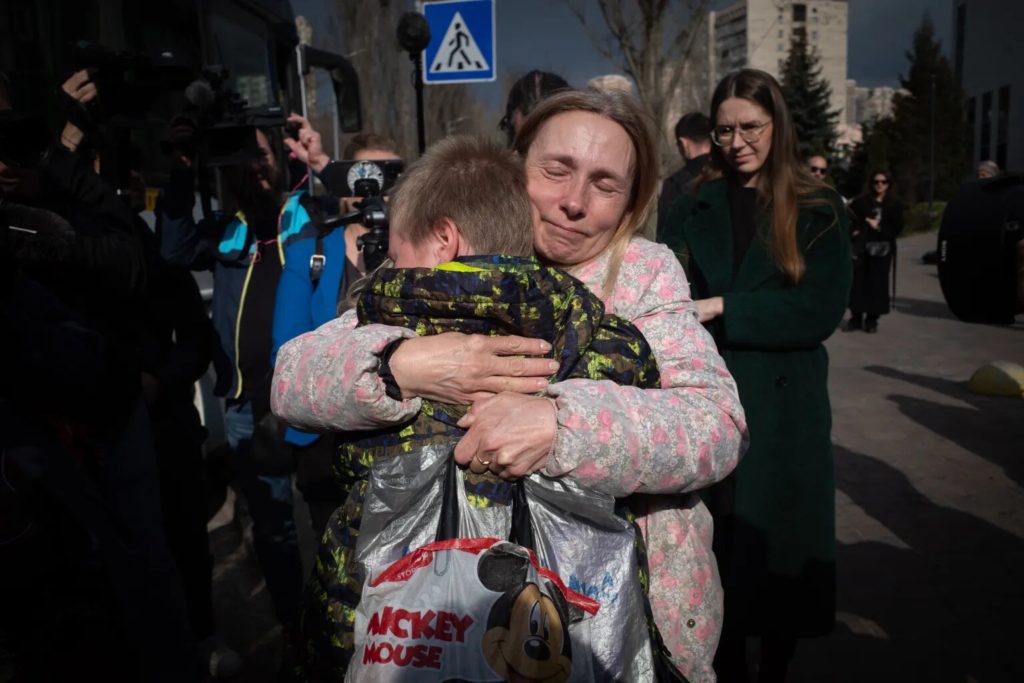
Fourteen more Ukrainian children have crossed from Russian-occupied Kherson Oblast back onto Ukrainian-held ground, the oblast's military administration said on 29 September. They join a years-long effort to recover children from land Russia seized in 2022, with thousands more still deported or unaccounted for.
Ukrainian authorities say Russia has deported nearly 20,000 children since its 2022 full-scale invasion, and Zelenskyy insists the true figure is far higher. Those taken to Russia are placed in institutions or Russian families and pushed through Russian "re-education" aimed at erasing their Ukrainian identity.
These 14 add to roughly 2,000 children Ukraine has brought back since 2022—a recovery effort still dwarfed by the numbers Russia holds and keeps adding to.
Who made it out
The 14 are four boys and 10 girls, aged 6 to 17, said Oleksandr Prokudin, who heads the administration. Rescuers also brought back one young adult who had been deprived of parental care.
Each case shows what pushed the children toward the return. One 16-year-old boy was being forced onto Russia's military registration rolls under occupation, part of a pipeline that moves teenagers from a Russian passport toward conscription at 18. A 17-year-old girl had sought a Ukrainian education despite the risks and Russian control, Prokudin said. A 10-year-old girl, he added, had longed to come home and did all she could to reach safety.
The running tally
The children left through Bring Kids Back UA, the repatriation program President Volodymyr Zelenskyy launched in 2023, working with the Ukrainian charity Save Ukraine. That brings to 204 the number of children returned from occupied Kherson Oblast since the start of 2026, regional authorities said.
The wider deportation campaign
In 2023, the International Criminal Court in The Hague issued arrest warrants for Russian leader Vladimir Putin and his children's rights commissioner, Maria Lvova-Belova, over the illegal deportation of children from occupied Ukraine to Russia.
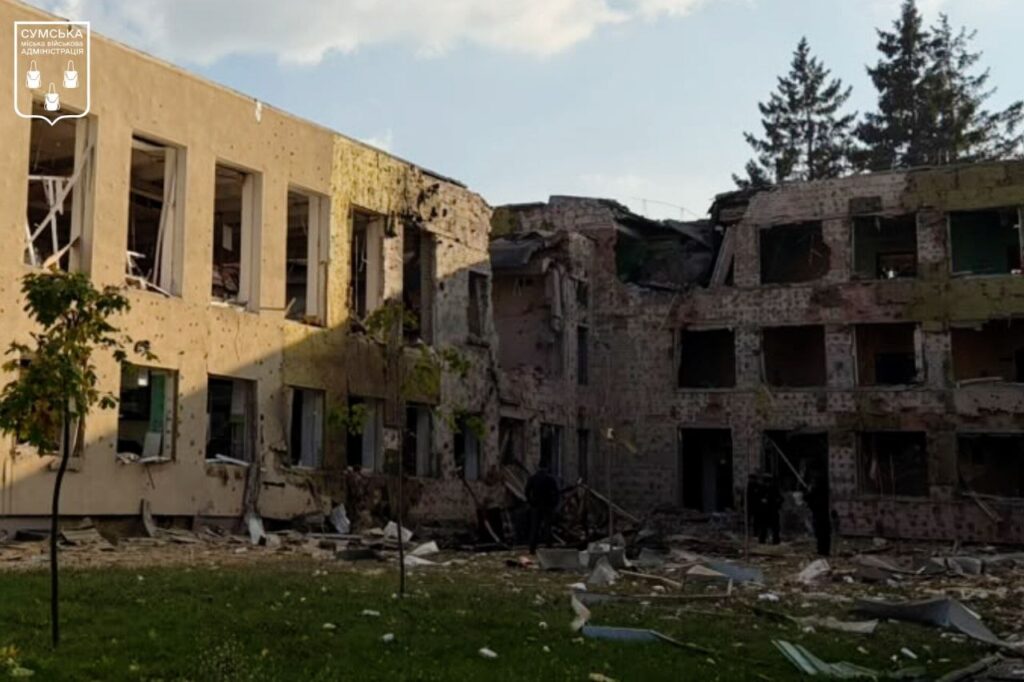
The Russian army deliberately struck a school in Sumy with a 250-kilogram aerial bomb while students—children in grades 1–4—were there, Serhii Kryvosheienko, head of the Sumy City Military Administration, reported on 29 September. The strike was one of a series of mass attacks on Ukrainian territory over the past 24 hours.
Across Ukraine, children now begin the school year in bomb shelters, because Russian missiles, drones, and glide bombs keep hitting schools, hospitals, and homes far from the front. The first eight months of 2026 brought more civilian casualties than all of last year, the UN says, and places where children gather are part of that toll.
Kryvosheienko said the Russians aimed the bomb at the school on purpose.
"With no pity or compassion whatsoever, they strike at children? There is nothing human in the enemy! He is not fighting on the battlefield—he is destroying a nation," Kryvosheienko said.
About 40 students were in the school's shelter at the time, a school employee told Suspilne correspondents. Preliminary reports indicate the children were not injured, Suspilne said.
Ukrainian President Volodymyr Zelenskyy confirmed the strike on the school.
"Four KABs struck the city center, right at the school building, where classes were underway. Thank you to the teachers and the school administration: the children and teachers were in the shelter, a total of 100 people were evacuated in time," he wrote.
Two people were killed in Sumy, and children are among those injured
Over the past 24 hours, Russian forces carried out more than 60 strikes on 25 population centers in 13 territorial communities of Sumy Oblast, the Sumy Regional Military Administration reported. Two people were killed and 15 others were injured, including two children, according to the administration's figures for each community. Over the course of the day, the oblast was under an air-raid alert for 22 hours and two minutes.
In particular, a 74-year-old man and a 70-year-old woman were killed in the Sumy community as a result of strikes by guided aerial bombs (KABs), the report said. Four people were injured and three people sustained trauma as a result of the Russian attack, including a one-year-old girl. A six-year-old girl was also injured, while a 49-year-old man sustained injuries in a UAV attack.
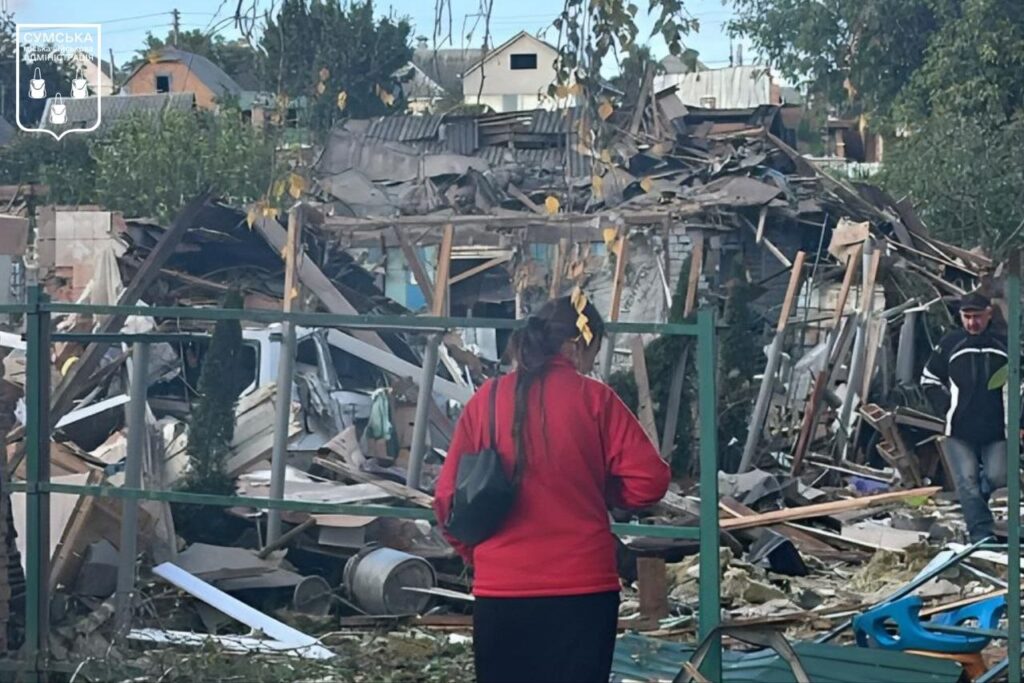
Aftermath of the Russian attack on Sumy Oblast, Ukraine, 29 September 2026. Photo: Sumy City Military Administration
Over the past 24 hours, the Russians attacked Mykolaiv Oblast with Shahed/Gerbera-type attack UAVs, killing a 56-year-old man, the Mykolaiv Regional State Administration reported. The attack destroyed one detached house, damaged two others and four outbuildings, and caused fires, according to the report.
An 8-year-old girl and an 85-year-old woman suffered acute stress reactions as a result of Russian shelling
Russian forces attacked Kharkiv and 10 population centers in Kharkiv Oblast, according to Oleh Syniehubov, head of the Kharkiv Regional Military Administration. Two people were hurt, both with acute stress reactions.
In Kharkiv, an 8-year-old girl suffered an acute stress reaction, as did an 85-year-old woman in the village of Ohurtsivka, Syniehubov reported.
The Russians used various types of weapons against Kharkiv Oblast: one guided aerial bomb (KAB), one multiple rocket launcher system (MLRS), five Molniya-type UAVs, seven FPV drones, and eight UAVs whose type is still being determined, according to the report.
In Kharkiv, Russian shelling damaged the windows of an apartment building, two cars, a private house, and the roof of a shopping center. A car was also damaged in the village of Myronivka, and three cars in the village of Mali Fesky.
A car damaged in the Russian attack on Kharkiv Oblast, Ukraine, 29 September 2026. Photo: Kharkiv Regional Military Administration
The Russians also injured six residents of Donetsk Oblast: three people in Bilbasivka, one person in Sloviansk, one person in Shabelkivka, and one person in Druzhkivka, Donetsk Regional State Administration head Vadym Filashkin reported on his social media.
Over the past day, 18 population centers in Kherson Oblast came under Russian airstrikes, drone attacks, and artillery shelling, leaving five people injured, says Oleksandr Prokudin, head of the Kherson Regional Military Administration. He adds that Russian forces targeted critical and social infrastructure as well as residential areas, damaging two detached houses in particular.
Russian forces carried out 686 strikes on Zaporizhzhia Oblast
Over the past 24 hours, the Russians carried out 686 strikes on 51 population centers in Zaporizhzhia Oblast, but no civilians were injured, co-chair of the Zaporizhzhia Regional Defense Council Ivan Fedorov reported, adding that:
Russian forces carried out 22 airstrikes on 18 population centers.
530 UAVs of various modifications, predominantly FPV drones, attacked 37 population centers.
Five MLRS strikes were recorded against Orikhiv, Novoandriivka, and Kosivtseve.
129 artillery strikes hit 19 population centers.
44 reports were received concerning damage to infrastructure, homes, and vehicles.
A house damaged in the Russian attack on Zaporizhzhia, Ukraine, 29 September 2026. Photo: Zaporizhzhia Regional Defense Council
Seven facilities in Zhytomyr Oblast were damaged during the evening and overnight hours leading into 30 September, says Vitalii Bunechko, head of the Zhytomyr Regional Military Administration. Food and processing industry enterprises as well as energy facilities came under Russian attack. Four cars also burned as a result of the attack, Bunechko added.
The Russian army attacked three districts of Dnipropetrovsk Oblast with UAVs, Dnipropetrovsk Regional Military Administration head Oleksandr Hanzha wrote on social media. The attacks damaged infrastructure, and a fire broke out in one of the communities, he said, adding that there were no casualties.
Air defense forces neutralized three Russian UAVs over Cherkasy Oblast, with no casualties, Ihor Taburets, head of the Cherkasy Regional Military Administration, reported. However, the fall of an enemy target caused a fire at an infrastructure facility, which was quickly extinguished, he added.

 Connexion