❌

Vue lecture

Ukraine destroys record 76 Russian air-defense systems this month, losses analyst says Russia “will never be able to restore”

Russian Buk-M1 air defense system as seen by Ukrainian drone before strike. Screenshot from video: Robert "Magyar" Brovdi on Telegram

Ukraine has destroyed a record 76 Russian air-defense systems this month, and September is not over. The tally beats a record that had stood since July 2023 and reflects a systematic Ukrainian campaign to hunt down Russia's air defenses, opening the skies over occupied territory and inside Russia, the analyst Oleksandr Kovalenko said on Telegram.

Ukraine is methodically peeling apart Russia's layered air defense, and September has been its worst month yet: 76 systems destroyed, past the 73 lost in July 2023, by Kovalenko's count, with days still to go.

It is part of a campaign in which Ukrainian drones and special forces have hunted Russian radars and missile launchers across occupied territory and Crimea, and each one destroyed opens a corridor for the next strike.

The record falls with days to spare

Kovalenko credited Ukraine's Defense Forces' sustained hunt for Russian anti-air, which he said pays off twice: it clears the defenses that would otherwise stop Ukraine's strikes, making later attacks on occupied territory and on Russia itself more effective.

Each kill opens a corridor

Ukrainian drone and special-operations units have picked off Pantsir, Tor, Buk, and pieces of S-300 and S-400 systems across occupied territory and Crimea, sometimes several in a single night throughout 2026.

As Russia pulls its scarce long-range systems back to guard Moscow, fewer are left to cover occupied Ukraine, widening the openings for the next wave of Ukrainian strikes.

Russia cannot replace the losses

Over the full-scale war, Kovalenko said, Russia has lost more than 1,673 air-defense systems of every kind, from radars to surface-to-air missiles and self-propelled anti-aircraft guns.

That, he argued, is a level Moscow can no longer make good with a defense industry already stretched thin by the war.

"Such a quantity of equipment Russia will never be able to restore and compensate," he thinks.

He added that this means it would no longer be able to return to the pre-war level of closing the sky, neither technically nor technologically."

  •  

Asked if Ukraine would send troops to defend NATO, Zelenskyy offered something else: know-how to stop drones now reaching its neighbors

Ukraine, the country under daily Russian attack, is offering to help defend others from it. President Volodymyr Zelenskyy says Ukraine will share its drone-defense experience with partners facing Russia's hybrid and drone attacks, NATO members and non-members alike, through its "Drone Deal" agreements, according to UNIAN.

Russia's hybrid and drone attacks are spreading past Ukraine, to Moldova, Germany, and Romania, and Kyiv is casting itself as the country that knows how to counter them.

Asked whether he would send Ukrainian troops to defend NATO members, Zelenskyy instead pointed to the drone agreements, bilateral pacts open to partners in or out of NATO, that pair weapons sales and joint production with the transfer of Ukraine's combat experience.

Ukraine had signed such deals with nine countries by early August and is negotiating more than a dozen others, becoming, as its officials put it, "a security provider for Europe."

The attacks spread past NATO

"Russia will continue hybrid attacks against various countries, and not only NATO members," Zelenskyy said, pointing to drone incursions over Moldova, which belongs to neither NATO nor the EU.

Those crossings have become routine: Moldova logged 39 Russian drone incursions in the first eight months of the year, and on 24 September, drones entered both Moldova and Romania as Poland scrambled fighters. Ukraine has offered help, Zelenskyy said, "above all to those countries that help us during the war."

The Drone Deal shares experience

The Drone Deal agreements cover the sale of drones and missiles and joint production, he added, "but also an exchange of experience."

He offered a precedent: "How we sent our specialists to the Middle East, how we helped protect critical infrastructure." Sharing how to defend against drones, he said, is "precisely part of this exchange."

Ukraine turns security provider

Zelenskyy did not answer the question on whether Ukraine would put troops into NATO countries under attack, steering instead to what Ukraine can already give, its hard-won experience of fighting the very weapons now reaching its neighbors' skies.

  •  

Combat shows speed alone can’t catch Russia’s jet-powered drones, despite eight Ukrainian makers’ assurances. So why can’t they stop them?

money engineering what stands between ukraine russia's fastest drones zelenskyy says · post russia’s new “geran-4 seeker” shahed variant geran-4 news ukrainian reports

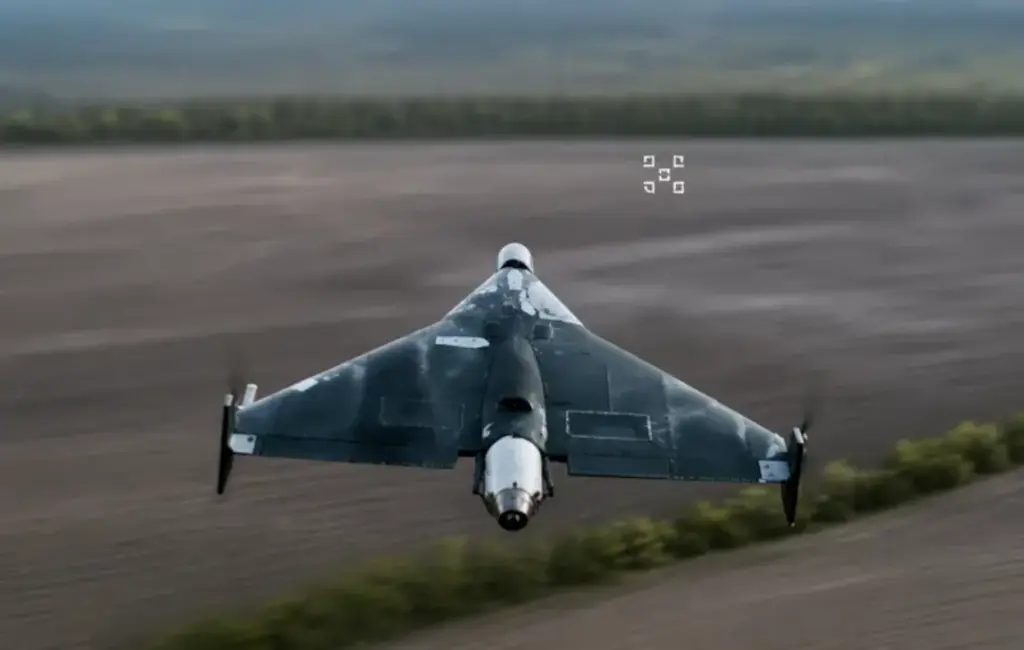
Last winter, eight Ukrainian companies told the defense minister that their interceptors were ready to knock Russia's jet-powered drones out of the sky. They were not. A fast-flying drone is the easy part of the design, while combat testing exposed what the interceptors lacked in key features to chase an evading jet-powered Geran, presidential adviser Serhii Beskrestnov, known as Flash, said in an interview with NV.

Ukraine's answer to Russia's fast, hard-to-stop jet drones was supposed to be cheap interceptors, and last winter, their makers said they had them. But a jet Geran flies 450 to 500 kilometers an hour, up from the Geran-3's 320, varies its speed to slip past defenses, and will dodge harder once interceptors appear.

Catching one takes maneuverability, machine-vision target-lock, and fuel to loiter and search, not just speed, Flash said. Ukraine's cheap interceptors have already downed about half of Russia's slower drones, but the jet-powered systems have stayed a step ahead.

Eight makers said "ready"

At a meeting last winter called by Mykhailo Fedorov, then-defense minister, all eight interceptor makers reported the same thing: "everything's ready, the solution exists, it flies, we tested it, speed is sufficient," Flash recalled.

The mistake, he said, was that no one checked on them week to week. There were also too few jet Gerans in the skies then to test against.

"On the range, they showed: it flies. That was the problem," explained Flash.

Speed is the easy part

The engines are not the obstacle, Flash continues, since they can be bought abroad, and neither is a plane that flies fast in a straight line. The hard part is a machine agile enough to chase a jet-powered Geran, which is far more maneuverable than the propeller kind and will start changing altitude and throwing evasive maneuvers once interceptors appear.

Because an operator's aim frays at such speeds, he said, the decisive pieces are automatic target capture by machine vision and automatic terminal guidance.

"Building a construction that just flies fast is the easiest part," he added.

Mass orders must wait

That is why Ukraine cannot simply order thousands to blanket the country, Flash said: it first needs a proven design that works for any crew, from Security Service specialists to territorial defense soldiers, and is simple to launch, operate, and maintain.

Once such a sample exists, he said, scaling up is only a question of money. Meanwhile, the work is moving: a Ukrainian interceptor recently notched its first kills against jet Gerans and is heading toward mass production.

  •  

Russia’s air defenses can’t protect all its strategic sites once Ukraine’s ballistic missiles are ready, expert says

Ukraine ballistic missile program

Russia's best defenses against ballistic missiles ring Moscow, leaving much of the rest of the country exposed to Ukraine's growing missile arsenal. That concentration is why Ukraine's homegrown ballistic missiles could cause Russia real trouble beyond the capital, even as Russia's air defenses show gaps elsewhere, expert Vadym Kushnikov says, Ukrainian Radio reports.

Russia has the systems to stop ballistic missiles, Kushnikov continues, but it has massed the best of them around Moscow: the S-500 "Prometey", with interceptors adapted from the A-135, the Soviet-era shield built to defend the capital from missiles.

Other regions, by his assessment, are left more open to Ukraine's massed and combined strikes. That matters now that Ukraine's own ballistic missile, such as the Sapsan, is entering combat.

The best defenses ring Moscow

"If you analyze the characteristics, Russia today has concentrated its most modern S-500 complexes, with 77N6-N and 77N6-N1 interceptors, in Moscow Oblast," Kushnikov says.

Elsewhere, he said, Russia is short of air-defense complexes, the S-400 among them, a shortfall he said is visible in satellite imagery.

Ukraine's ballistic program grows

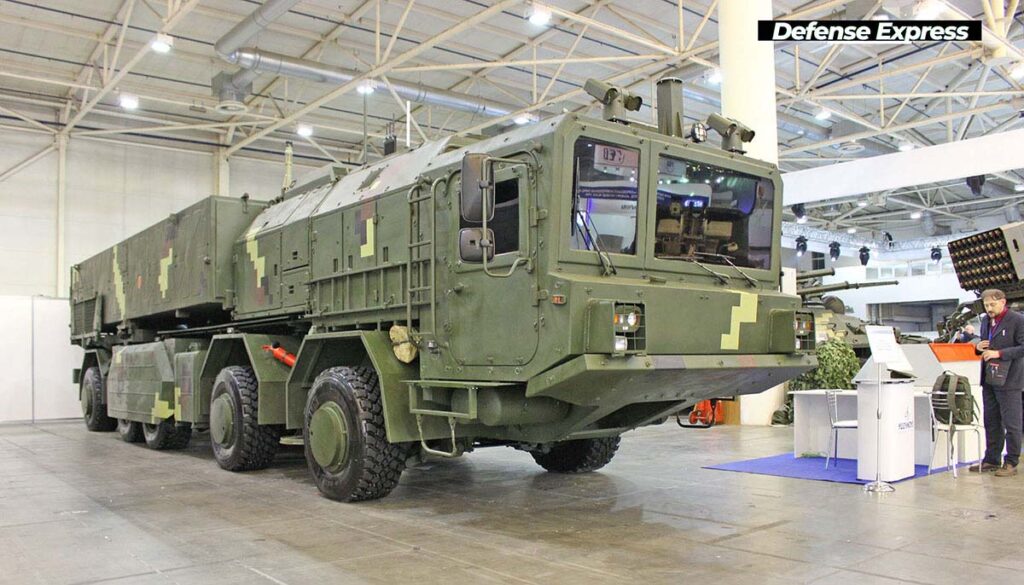
Ukraine's deep-strike arsenal has been shifting from foreign-supplied systems to homegrown ones. Alongside its Neptune and Flamingo cruise missiles, it now fields the Sapsan, an Iskander-class ballistic missile with a range of about 500 kilometers, which President Volodymyr Zelenskyy confirmed was in combat late last year.

A domestic ballistic missile will let Ukraine strike deep inside Russia without waiting for a Western green light.

Production faces hard hurdles

Building them is the hard part. Ukraine's rocket-engineering tradition runs deep, Kushnikov suggests, but its production sites, mostly in the east, are direct targets of Russian strikes.

The missiles also depend on components that are difficult to make, chiefly solid-fuel rocket engines and the guidance that steers a warhead flying at five times the speed of sound along a ballistic arc.

"The combination of all these factors is exactly what our engineers have worked on for years, building the Ukrainian ballistic shield," he adds.

  •  
❌